


June 2026: New Standards for Medical Devices and Lab Technology
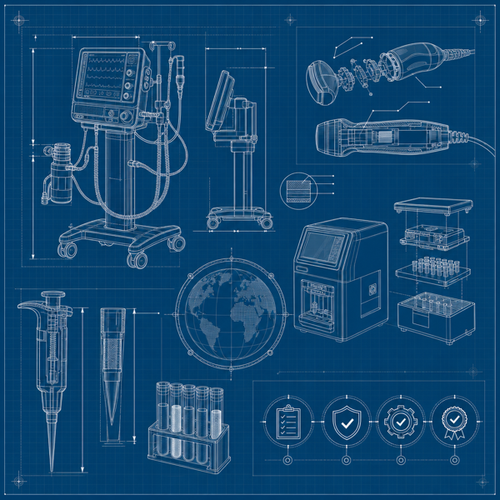
Health care technology continues its rapid progression with new and revised international standards, setting the benchmark for accuracy, safety, and innovation across clinical laboratories, device manufacturers, and patient care settings. The June 2026 publications bring five pivotal updates influencing everything from in vitro diagnostic methods and certified reference materials to artificial intelligence in medical devices, assistive personal hygiene products, and high-precision dental equipment. For professionals across health technology, laboratory medicine, quality management, and compliance, these standards provide the framework for trust, interoperability, and regulatory alignment.
Overview / Introduction
Health care technology is a field where precision, reliability, and user safety are paramount. International standards play a critical role by ensuring consistency in laboratory results, managing complex risks from AI-driven devices, and defining the safety of products used by patients and professionals alike.
This article—Part 2 of a 4-part June 2026 series from iTeh Standards—guides you through five newly published or revised standards. You'll discover the scope and significance of each standard, compliance needs, and technical insights to help your organization stay ahead in an evolving regulatory and quality landscape.
Detailed Standards Coverage
ISO 15193:2026 - Reference Measurement Procedures in Lab Medicine
In vitro diagnostic medical devices — Requirements for reference measurement procedures
ISO 15193:2026 provides a comprehensive framework for establishing and validating reference measurement procedures (RMPs) vital for laboratory medicine. These procedures underpin the traceability of results in in vitro diagnostics (IVD), ensuring consistent, accurate, and reproducible patient care across geographies and timeframes.
The standard covers all elements required for RMPs: from clear terminology, sample preparation, calibration, apparatus, and step-by-step analytical operations, to rigorous validation and measurement of uncertainty. New in this edition are harmonized definitions aligned with related standards (ISO 17511, ISO 15194, ISO 15195), additional emphasis on quality management, and transparent organization of requirements.
Who must comply? IVD device manufacturers, medical laboratories, reference material producers, and accreditation bodies who establish or use RMPs.
Practical impact: Implementation assures traceable, reliable results, reduces patient risk, and supports regulatory compliance.
Key highlights:
- Updated requirements ensuring harmonization with related laboratory standards
- Expanded scope to cover all types of measurands (quantitative, ordinal, nominal)
- Enhanced validation and quality assurance measures for RMPs
Access the full standard:View ISO 15193:2026 on iTeh Standards
ISO 15194:2026 - Certified Reference Materials in Diagnostics
In vitro diagnostic medical devices — Requirements for certified reference materials and the content of supporting documentation
ISO 15194:2026 is essential for organizations producing or relying on higher order certified reference materials (CRMs) for IVD calibration and trueness controls. This thoroughly revised standard lays out the requirements for documentation, certification, uncertainty reporting, intended use, and commutability—critical for ensuring calibration hierarchies traceable to international standards.
Key areas include supports for calibration hierarchies, assignment and certification of property values, homogeneity/stability assessments, and clear labeling/certification reporting. The revision broadens CRM application scope, strengthens documentation expectations, and brings definitions in line with ISO 17511:2020.
Who must comply? Producers of CRMs, medical device QA and compliance officers, laboratory managers, and device manufacturers relying on CRMs for calibration or trueness assessment.
Practical impact: Properly certified CRMs underpin traceable, trusted diagnostic results and regulatory conformity.
Key highlights:
- Expanded CRM definition and requirements for higher order calibration
- Robust documentation and reporting obligations
- Stronger focus on commutability and intended use
Access the full standard:View ISO 15194:2026 on iTeh Standards
ISO TS 24971-2:2026 - Risk Management for ML-Enabled Medical Devices
Medical devices - Guidance on the application of ISO 14971 - Part 2: Machine learning in artificial intelligence
With artificial intelligence and machine learning (ML) rapidly transforming health care, ISO TS 24971-2:2026 addresses the unique risks ML brings to medical devices. This technical specification provides detailed guidance for applying the risk management principles of ISO 14971 specifically to ML-enabled medical devices (MLMD), excluding those using large language models or generative AI.
The standard guides manufacturers and risk managers through:
- Concept development, algorithm training/testing, and clinical deployment of MLMDs
- Identifying and mitigating new hazards (e.g., bias, explainability, autonomy)
- Managing post-market monitoring and retraining requirements
- Requirements for data governance, feature extraction, validation, and residual risk disclosure
Who must comply? Developers and regulatory teams for ML-enabled medical devices, risk managers, systems engineers, and QA professionals working with AI/ML.
Practical impact: Proactive adoption ensures device safety, regulatory approval, and end-user trust in AI-powered innovation.
Key highlights:
- Risk identification and mitigation specific to ML/AI algorithms
- Guidance on lifecycle risk management from training to deployment
- Post-market monitoring and retraining strategies for MLMDs
Access the full standard:View ISO TS 24971-2:2026 on iTeh Standards
prEN ISO 17966 - Assistive Products for Toileting, Bathing, and Showering
Assistive products for toileting, bathing and showering - Requirements and test methods (ISO/DIS 17966:2024)
prEN ISO 17966 aims to standardize the requirements and testing methods for a wide array of assistive products that facilitate personal hygiene for individuals with disabilities. Covering devices from commode chairs to bath boards, shower chairs, and handrails, this draft European Standard sets out safety, usability, mechanical, biological, and environmental requirements.
It covers performance under normal and foreseeable misuse, measurement of control forces, user safety (e.g., pinch points, structural integrity), material requirements (biocompatibility, flammability, corrosion resistance), and hygiene. Notably, it addresses not just device users but also assistants involved in personal care.
Who must comply? Manufacturers of medical devices for assisted toileting and bathing, clinical procurement teams, health facility planners, and disability support agencies.
Practical impact: Helps ensure safer, more reliable assistive hygiene products in hospitals, care homes, and private settings.
Key highlights:
- Extensive coverage of device types and divisions per ISO 9999
- Safety and ergonomic testing, including assistive products’ impact on user and assistant
- Rigorous chemical, electrical, and microbiological requirements
Access the full standard:View prEN ISO 17966 on iTeh Standards
EN ISO 3964-1:2026 - Handpiece Connector Dimensions for Dentistry
Dentistry - Coupling dimensions for handpiece connectors - Part 1: Mechanical properties (ISO 3964-1:2026)
Modern dental care relies on the precise fit and function of high-speed handpieces and their connectors. EN ISO 3964-1:2026 revises and clarifies the nominal dimensions, tolerances, and extraction force for coupling systems used between dental unit handpieces and motors (without electronic terminals). It ensures compatibility for the safe transmission of water, air, light, and rotational energy.
The latest revision features updated technical drawings, expanded coupling options, and standardized test methods. It affects dental equipment manufacturers, suppliers, and clinics seeking to ensure interoperability and equipment longevity.
Who must comply? Dental equipment designers, manufacturers, procurement specialists, and quality managers.
Practical impact: Adoption reduces compatibility issues, enhances safety, and supports cross-manufacturer equipment integration.
Key highlights:
- Updated and clarified mechanical dimensions and tolerances
- Standardized extraction force and fit, minimizing device malfunctions
- Refined test and sampling procedures for consistent manufacturing
Access the full standard:View EN ISO 3964-1:2026 on iTeh Standards
Industry Impact & Compliance
These five newly published standards have immediate implications for health care technology organizations across the supply chain:
- Compliance mandates: Align with latest international requirements to meet regulatory approvals and avoid costly delays.
- Cross-institutional reliability: Standardized measurements and device interfaces reduce errors, foster interoperability, and build clinical trust.
- Quality assurance: Adoption of these standards leads to more robust quality management systems and audit readiness.
- User and patient safety: Enhanced procedures, component standards, and risk management directly reduce incidence of device errors or patient harm.
Compliance timelines vary—early engagement is recommended. Some standards (e.g., for assistive products or handpiece connectors) may become referenced in national or regional regulations by year-end or 2027.
Risks of non-compliance:
- Product recalls or market access delays
- Elevated liability exposure
- Loss of institutional reputation/trust
- Increased cost due to rework or failed audits
Technical Insights
Common technical requirements and considerations:
- Metrological traceability: For lab medicine, maintaining traceable calibration through RMPs and CRMs is essential for regulatory and clinical acceptance.
- Documentation and transparency: Each standard emphasizes clear documentation (measurement reports, certification docs, instructions for use) to facilitate validation and audits.
- Risk management: A systematic process, especially for AI/ML medical devices, is now required—not just recommended. This includes bias analysis, explainability, and ongoing risk monitoring.
- Material safety: Across hygiene and dental devices, the focus is on chemical, biological, and mechanical testing, aligned with rising demands for biocompatibility, resistance to corrosion, and fire safety.
- Testing and certification: Standardized test methods, verification protocols, and sampling plans are common threads for demonstrating compliance and device robustness.
- Usability and human factors: Emphasis on ergonomic design and clarity in user/operator documentation, particularly for assistive products.
Implementation best practices:
- Gap assessment: Review internal processes and products versus the new standards.
- Training and awareness: Upskill staff in key technical changes and compliance requirements.
- Supplier engagement: Ensure external partners’ certifications align with updated references.
- Early adoption: Plan for phased integration to leverage benefits and mitigate transition risks.
Conclusion / Next Steps
The June 2026 cycle of standards marks a significant leap for health care technology, laboratory medicine, AI-driven medical devices, assistive hygiene products, and dental equipment. Early and thorough adoption will empower organizations to:
- Guarantee accuracy and traceability in IVD and laboratory results
- Safely harness AI/ML capability in clinical devices
- Provide safer, compliant, patient-centered products
- Compete confidently in global markets
Recommendations:
- Conduct a detailed standards impact review for your portfolio and workflows.
- Engage with standards consultants or iTeh’s resources to clarify compliance steps.
- Update risk management, documentation, and validation practices in line with latest requirements.
- Keep staff current with training and subscribe to standards update services.
Explore the full texts and implementation resources at iTeh Standards. Stay tuned for Parts 3 and 4 as we continue covering essential updates in health care technology standards.
Categories
- Latest News
- New Arrivals
- Generalities
- Services and Management
- Natural Sciences
- Health Care
- Environment
- Metrology and Measurement
- Testing
- Mechanical Systems
- Fluid Systems
- Manufacturing
- Energy and Heat
- Electrical Engineering
- Electronics
- Telecommunications
- Information Technology
- Image Technology
- Precision Mechanics
- Road Vehicles
- Railway Engineering
- Shipbuilding
- Aircraft and Space
- Materials Handling
- Packaging
- Textile and Leather
- Clothing
- Agriculture
- Food technology
- Chemical Technology
- Mining and Minerals
- Petroleum
- Metallurgy
- Wood technology
- Glass and Ceramics
- Rubber and Plastics
- Paper Technology
- Paint Industries
- Construction
- Civil Engineering
- Military Engineering
- Entertainment