

October 2026: New Standards Elevate Manufacturing Engineering Best Practices
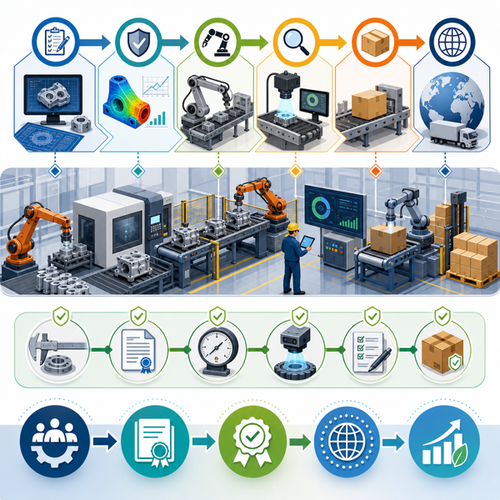
The manufacturing engineering sector enters a new era this October 2026 with the publication of five pivotal international standards. These newly released documents encompass areas from digital asset management and additive manufacturing to foundational welding procedures, all aiming to boost efficiency, interoperability, and product quality. As the pace of innovation accelerates, professionals, quality managers, engineers, and compliance officers must be attuned to the latest specifications to remain competitive and compliant in today’s rapidly evolving industrial landscape.
Overview / Introduction
Manufacturing engineering sits at the crossroads of digital transformation and stringent production requirements. The adoption of robust standards ensures consistency, safety, and technological growth across a diverse sector—including factory automation, advanced material processing, system integration, and infrastructure maintenance. This article distills the essentials from five newly published standards released in October 2026, guiding industry leaders, engineers, and compliance officers through the significant updates, expectations, and implementation challenges ahead.
You will learn about:
- The application and integration of asset administration shells in industrial environments
- Design guidelines for additive manufacturing with ceramics
- Advanced models for enterprise-control system integration
- Best practices in rail restoration through electric arc welding
- Updated requirements for brazing procedures in metallic materials
Detailed Standards Coverage
EN IEC 63278-4:2026 - Applications of Asset Administration Shell
Asset Administration Shell for industrial applications – Part 4: Applications of Asset Administration Shell
This standard provides an in-depth framework for deploying the Asset Administration Shell (AAS) in industrial settings, underpinning the next phase of smart manufacturing and digital twin applications. EN IEC 63278-4:2026 outlines the usage, governance, and practical examples of integrating AAS for both physical assets (machinery, equipment) and virtual assets (software components, digital models). Its extensive guidance includes:
- Topologies for asset networking and life cycle management
- Best practices for modifying assets and their digital representations
- Mechanisms for information sharing and secure data exposure among AASs
- Methods for integrating asset services and supporting asset-related applications
Professionals involved in industrial automation, digital transformation, and plant asset management will find these guidelines critical for achieving interoperability and ensuring that digital representations remain accurate, up-to-date, and secure over an asset’s life cycle.
Key highlights:
- Practical governance models and real-world examples for deployment
- Lifecycle management for both tangible and intangible assets
- Enhanced data exposure, accountability, and information traceability
Access the full standard:View EN IEC 63278-4:2026 on iTeh Standards
ISO/ASTM 52957:2026 - Additive Manufacturing of Ceramics—Design Guidelines
Additive manufacturing of ceramics — Design — Design guidelines
This comprehensive standard sets forth requirements, knowledge, and recommendations for designing ceramic components produced using additive manufacturing (AM) technologies. Aimed at product planners and designers—regardless of their prior experience with ceramics—ISO/ASTM 52957:2026 brings clarity on:
- Material properties and application-specific strengths of AM ceramics
- Functional design freedom, limitations, and challenges (e.g., geometry, shrinkage, support structures, anisotropy)
- Optimization avenues such as topology optimization and functional integration
- Suitability and design considerations for key AM process categories, including material extrusion, binder jetting, vat photopolymerization, and material jetting
Practical explanations enable organizations to expand the use of ceramics in advanced manufacturing, facilitating innovation in industries such as electronics, medical device fabrication, and aerospace components.
Key highlights:
- Detailed coverage of process-specific design limitations and freedoms
- Guidance on support structures, sintering, and post-processing
- Terminology and best practices for both new and seasoned design teams
Access the full standard:View ISO/ASTM 52957:2026 on iTeh Standards
prEN IEC 62264-4:2025 - Objects Models Attributes for Manufacturing Operations Management Integration
Enterprise-control system integration – Part 4: Objects models attributes for manufacturing operations management integration
Focusing on the backbone of advanced manufacturing operations, this standard presents information models, object attributes, and data exchange networks vital for seamless integration between enterprise-level systems and manufacturing operations management (MOM) layers. prEN IEC 62264-4:2025 addresses:
- Modelling and mapping of production resources, work definitions, personnel, equipment, and materials
- Attribute definitions for effective data exchange and workflow control in MOM systems
- Structures for workflow, scheduling, performance monitoring, and resource capabilities
Organizations seeking to unify plant floor systems with enterprise resource planning (ERP) and business analytics will benefit from these clearly articulated models and integration frameworks.
Key highlights:
- Standardized data model for uniform operations and system interoperability
- Support for advanced workflow automation, traceability, and analytics
- Basis for compliance in modern digital manufacturing environments
Access the full standard:View prEN IEC 62264-4:2025 on iTeh Standards
EN 15594:2026 - Restoration of Rails by Electric Arc Welding
Railway applications – Infrastructure – Restoration of rails by electric arc welding
With an emphasis on harmonizing repair methods and safety standards across Europe, EN 15594:2026 delivers new requirements for the restoration of rail infrastructure via electric arc welding. This edition incorporates:
- Updated processes limited to the rail head, focusing on shielded metal arc welding (SMAW/Process No 111) and flux cored arc welding (FCAW/Process No 114)
- Expanded coverage of rail steel grades and clear approval systems for consumables, welding procedures, contractors, and personnel
- Requirements for qualification, documentation, inspection, and quality management
Applicable for contractors, welders, inspection agencies, and railway infrastructure managers, these guidelines enhance track reliability, extend asset life, and help ensure operational safety for Europe’s rail networks.
Key highlights:
- Enhanced steel grade coverage and updated normative references
- Comprehensive contractor approval and personnel qualification criteria
- Strengthened quality management and traceability for welded repairs
Access the full standard:View EN 15594:2026 on iTeh Standards
ISO 17779:2026 - Specification and Qualification of Brazing Procedures for Metallic Materials
Brazing — Specification and qualification of brazing procedures for metallic materials
This second edition establishes the requirements for qualifying brazing procedures, focusing on an extended range of brazing processes and test methods. Notable aspects include:
- Step-by-step qualification and testing protocols for brazed joints
- Acceptance criteria, test specimen preparation, and essential variable controls
- Completion and documentation requirements for the brazing procedure specification (BPS) and brazing procedure qualification record (BPQR)
Industries ranging from manufacturing to construction, electronics, and automotive will rely on ISO 17779:2026 to ensure repeatable, high-quality joints while fulfilling customer, regulatory, and internal quality obligations.
Key highlights:
- Broadened process coverage (e.g., furnace, vacuum, dip-bath, laser, arc weld brazing)
- Clear requirements for personnel, quality assurance, and record-keeping
- Updated acceptance values and harmonization with international testing benchmarks
Access the full standard:View ISO 17779:2026 on iTeh Standards
Industry Impact & Compliance
The October 2026 standards deliver far-reaching impact across manufacturing engineering by:
- Facilitating smart manufacturing and digital transformation through standardized digital asset management (AAS)
- Offering actionable design guidance for the adoption of advanced ceramics, extending product performance and competitive possibilities
- Enhancing system interoperability and data transparency at all layers of manufacturing operations
- Improving infrastructure resiliency through proven, harmonized repair techniques
- Ensuring global quality, traceability, and compliance in joining technologies
Compliance considerations and timelines:
- Organizations should begin immediate gap analyses and planning for seamless integration with these new requirements
- Consideration for personnel training, updates to quality management systems, and documentation is critical
- Adopting these standards early ensures competitive advantage and reduces risks of compliance lags, product liability, or operational disruptions
Risks of non-compliance include disqualification from key contracts, safety failures, and loss of certification.
Technical Insights
Common requirements and trends:
- Emphasis on interoperability and standardized data exchange for digital and physical assets
- Stringent qualification and approval processes for joining and restoration procedures
- Clear documentation and record-keeping for traceability and audit-readiness
- Robust frameworks for personnel qualification and ongoing competency management
Best practices for implementation:
- Map current processes and systems against the new requirements
- Upgrade IT and automation infrastructure to facilitate digital twins and interoperable communications
- Train personnel in new methods, focusing on both technical skills and documentation accuracy
- Engage with certification bodies early for process and product qualification
- Foster a culture of continuous improvement to keep pace with rapid standard revisions
Testing and Certification Considerations:
- Plan for additional pilot and validation runs before full operational deployment
- Invest in updated measurement, inspection, and NDT (non-destructive testing) tools aligned with new criteria
- Document all process qualifications, equipment certifications, and personnel credentials
Conclusion / Next Steps
The release of these five new standards in October 2026 signals a decisive shift in manufacturing engineering toward smarter operations, increased digitalization, and global harmonization of best practices. Organizations should:
- Assess relevance and applicability of each standard to their operations
- Develop comprehensive compliance and integration roadmaps
- Prioritize ongoing personnel training and quality system updates
Explore the full texts and stay ahead—visit iTeh Standards to access, compare, and implement the latest documents tailored to your manufacturing needs. Proactive adoption will ensure sustained operational excellence, safety, and market leadership.
Categories
- Latest News
- New Arrivals
- Generalities
- Services and Management
- Natural Sciences
- Health Care
- Environment
- Metrology and Measurement
- Testing
- Mechanical Systems
- Fluid Systems
- Manufacturing
- Energy and Heat
- Electrical Engineering
- Electronics
- Telecommunications
- Information Technology
- Image Technology
- Precision Mechanics
- Road Vehicles
- Railway Engineering
- Shipbuilding
- Aircraft and Space
- Materials Handling
- Packaging
- Textile and Leather
- Clothing
- Agriculture
- Food technology
- Chemical Technology
- Mining and Minerals
- Petroleum
- Metallurgy
- Wood technology
- Glass and Ceramics
- Rubber and Plastics
- Paper Technology
- Paint Industries
- Construction
- Civil Engineering
- Military Engineering
- Entertainment