


Materials Handling Equipment Standards: July 2026 Key Updates
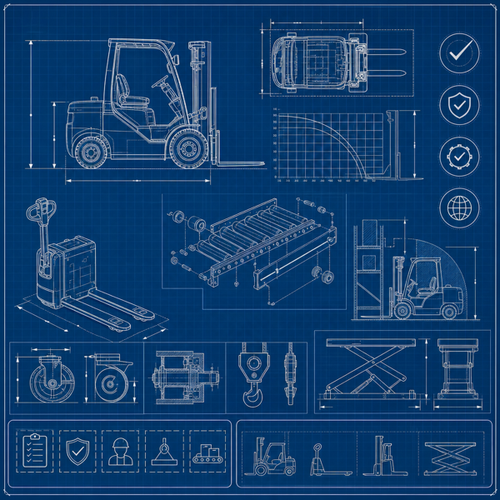
July 2026 marks a significant milestone for the materials handling equipment sector, with the publication of five key international standards. These documents address safety, performance, and design requirements for industrial trucks and cranes, reflecting the latest technological progress and evolving regulatory needs. Whether you manage compliance for a warehouse fleet, oversee crane installations, or are involved in equipment procurement, understanding these updates is crucial for operational safety and efficiency. In this article, we provide a detailed analysis of each standard, practical insights for compliance, and guidance on what these changes mean for your business.
Overview
Materials handling equipment is fundamental to industrial operations, enabling the safe and efficient movement, storage, and control of materials across various sectors—manufacturing, logistics, warehousing, and construction. International standards play a critical role in harmonizing safety practices, optimizing equipment performance, and ensuring interoperability. The July 2026 update includes standards that set new benchmarks for operator visibility, safety features, access provisions, and the specification of equipment for industrial trucks and cranes. In the following sections, you’ll find:
- An explanation of the revised and new standards
- Key requirements and who must comply
- Industry and technical implications
- Actionable guidance on implementation and best practices
Detailed Standards Coverage
EN 16842-11:2026 - Rider-Controlled Pallet-Stacking Trucks Visibility
Powered Industrial Trucks - Visibility - Test Methods and Verification - Part 11: Pallet-Stacking Trucks (Rider Controlled)
This new part of the EN 16842 series focuses on the visibility requirements for rider-controlled pallet-stacking trucks, ensuring operators have optimal 360° visibility when maneuvering their equipment. The standard addresses both direct and indirect visibility, specifying test methods and acceptance criteria to reduce blind spots and hazardous situations.
Key requirements include:
- Detailed test procedures for both stand-on and sit-on operated trucks
- Visibility benchmarks for travel, maneuvering, and fork arm operations
- Application to ride-on pedestrian-controlled trucks with foldable platforms
- Exclusions for trucks operated solely from a pedestrian perspective
The standard is vital for:
- Manufacturers of rider-controlled pallet-stacking trucks and similar equipment
- Organizations in sectors such as warehousing, logistics, and manufacturing that use these machines
Practical implications:
- Enhanced safety for operators and bystanders through better visibility
- Consistent verification procedures for equipment conformity
- Specific guidance for scenarios where operator faces different directions during travel
- Alignment with EN 16842-1 for general requirements
Notable changes:
- Focuses on unique hazards associated with operator visibility in stand-on pallet stackers
- Complements, rather than replaces, the general visibility requirements of earlier EN 16842 parts
Key highlights:
- Clear 360° operator visibility requirements and test procedures
- Applies to stand-on pallet stackers and certain ride-on pedestrian trucks
- Establishes standardized acceptance criteria for both direct and indirect visibility
Access the full standard:View EN 16842-11:2026 on iTeh Standards
ISO 10245-5:2026 - Limiting and Indicating Devices for Bridge and Gantry Cranes
Cranes — Limiting and Indicating Devices — Part 5: Bridge and Gantry Cranes
This updated ISO standard defines safety and performance requirements for limiting and indicating devices specifically used in bridge and gantry cranes. The document covers devices that protect against excessive loads, limit dangerous motions, and provide critical operational indications to crane operators.
Scope and requirements:
- Devices ensuring load, motion, performance, and environment are safely monitored
- Integration with other parts of the ISO 10245 series, notably ISO 10245-1 for general requirements
- Inclusion of rated capacity limiters, motion and stop limiters, buffers, and backup limiters
- Requirements for event recorders and data loggers (Annex A)
The standard targets:
- Crane manufacturers, system integrators, and safety engineers specializing in bridge and gantry applications
- Maintenance managers for industrial facilities using such cranes
Practical implications:
- Improved operator safety through mandatory limiting and indicating devices
- Ensures cranes cannot operate outside their design limits, reducing risks of overload or mechanical failure
- Harmonized functionality across manufacturers and installations
Notable revisions:
- Updated to align with the latest structural design principles and international best practices
- Provides clarified device definitions and application scenarios
- Expanded guidance for multiple hoist and crane combinations
Key highlights:
- Mandatory rated capacity limiters and performance indicators
- Event recorder/data logger requirements
- Enhanced definitions for slow down, stop, and backup limiters
Access the full standard:View ISO 10245-5:2026 on iTeh Standards
prEN 16307-1 - Supplementary Safety for Self-Propelled Industrial Trucks
Industrial Trucks — Safety Requirements and Verification — Part 1: Supplementary Requirements for Self-Propelled Industrial Trucks, Other than Variable-Reach Trucks, Towing Tractors, and Burden-Carrier Trucks
This draft European Standard outlines additional safety and verification requirements for a large subset of self-propelled industrial trucks, complementing the basic requirements in prEN ISO 3691-1:2025. It reflects the latest advancements in truck design and safety expectations.
Scope and requirements:
- Applies supplementary safety principles to electrical, mechanical, and ergonomic systems
- Covers operator restraint systems, overhead guard design, lift chains, loading controls, and information for use
- Specifies requirements related to visibility, noise emission, and vibration
- Detailed guidance for brakes and travel/braking controls, especially for pedestrian-controlled and stand-on platforms
Who should comply:
- Manufacturers and designers of industrial trucks that fall outside variable-reach, driverless, towing tractors, and burden-carriers
- Health and safety officers in logistics and manufacturing operations using these truck types
Practical implications:
- Improved safety against hazards unique to this class of industrial trucks
- Clear verification methods to support regulatory compliance
- Detailed instruction handbook and labelling guidance for user safety
Notable changes from previous versions:
- New provisions for battery charging systems, overhead guard design for double-stackers, and operator restraint interlocking
- Revised approaches to visibility testing and noise/vibration measurement
Key highlights:
- Focus on electrical safety, braking, and operator protection
- Supplementary requirements for operator's seat, overhead guards, and lift chain safety
- Alignment with EU Machinery Regulation and related directives
Access the full standard:View prEN 16307-1 on iTeh Standards
EN 13135:2026 - Equipment Design and Selection for Cranes
Cranes - Safety - Requirements for Equipment
The 2026 revision of EN 13135 sets comprehensive safety and design criteria for electrical, mechanical, hydraulic, and pneumatic equipment integral to all crane types. It's a cornerstone document for ensuring the safety of personnel and reliability of crane operations.
Coverage and key requirements:
- Equipment selection principles for maintaining safety and function under varied operational and environmental conditions
- Specifications for electrical systems, including power supplies, control circuits, and protection against electric shock
- Safety measures for mechanical equipment such as brakes, gear drives, wheels, rope, chain, and belt systems
- Fluid power system requirements for both hydraulic and pneumatic applications
- Controls for safeguarding against hazards, including measures for high-risk applications like transporting molten metal
Intended users:
- Crane manufacturers, system designers, procurement specialists
- Site and facility engineers overseeing crane safety and equipment reliability
Practical implications:
- Ensures all installed equipment aligns with safety and health regulations
- Provides a harmonized reference for equipment procurement and installation
- Aids in compliance documentation under the EU Machinery Regulation
Noteworthy revisions:
- Updated normative references and hazard listings
- Enhanced requirements for safeguarding functions and anti-collision devices
- Refined selection criteria for fixed lifting attachments and specific equipment
Key highlights:
- Systematic requirements for selecting safe crane equipment
- Emphasis on both operator and bystander protection
- Updates align with latest regulatory frameworks and best practices
Access the full standard:View EN 13135:2026 on iTeh Standards
EN 13586:2026 - Access Design for Cranes
Cranes - Access
This revised European Standard specifies design requirements for permanent, non-powered means of access on cranes, providing clarity on stairs, ladders, platforms, and handrails to maximize safety for operators and maintenance personnel.
Scope and requirements:
- Applies to fixed means of access for crane control stations, maintenance, assembly, and disassembly tasks
- Sets out design principles for access routes, walkways, stairs, step and rung ladders, rest platforms, handrails, and protection structures
- Classifies main (Type 1) and secondary (Type 2) access ways depending on frequency and purpose
- Material and slip-resistance requirements for construction
- Specifies spacing, handholds, obstacle avoidance, and safety features
Stakeholders affected:
- Crane manufacturers, installation contractors, occupational safety managers
- Maintenance planners ensuring compliance with access and egress requirements
Practical benefits:
- Improved operator and maintenance safety while reducing fall and access-related accidents
- Better compliance with Machinery Regulation and fall protection requirements
- Detailed, harmonized design specifications to streamline audits and inspections
Changes from the previous edition:
- Updated hazard listings in Annex A
- Refined requirements for handrails, access spacing, and supporting structures
- Greater alignment with harmonized EU standards for machinery safety
Key highlights:
- Benchmarks for safe, ergonomic access for operators and technicians
- Prioritizes permanent protective installations over personal protection equipment
- Supports compliance with both European and international machinery directives
Access the full standard:View EN 13586:2026 on iTeh Standards
Industry Impact & Compliance
The July 2026 updates have far-reaching implications for organizations designing, building, operating, or maintaining materials handling equipment. Compliance with these new and revised standards is no longer optional for businesses seeking to:
- Maintain legal conformity under international and European machinery directives
- Reduce incident rates and improve workplace safety
- Optimize equipment reliability and performance
- Provide evidence-based safety assurance to clients and regulators
Compliance Considerations & Timelines:
- Organizations must review and update their internal specifications and procurement requirements
- Existing equipment should be evaluated for retrofit or operational changes where feasible
- Training for operators, maintenance staff, and safety professionals should be scheduled promptly
- Documentation, including hazard assessments and user instructions, must reflect the latest standards
Benefits of Adopting New Standards:
- Lower risk of accidents and legal penalties
- Increased trust with supply chain partners and regulatory bodies
- Future-proofed operations capable of adapting to further innovations
Risks of Non-Compliance:
- Regulatory fines, equipment decommissioning, or legal action
- Workplace injuries and associated costs
- Operational disruptions due to non-conforming equipment
Technical Insights
Across these standards, several recurring technical themes and best practices emerge:
- Operator Visibility: Implementation of direct and indirect visibility protocols ensures compliance with EN 16842-11:2026 and reduces maneuvering risks.
- Limiting and Indicating Devices: The deployment of rated capacity, motion, and backup limiters (ISO 10245-5:2026) is essential for crane safety.
- Supplementary Safety Features: Enhanced brakes, restraint systems, overhead protection, and operator ergonomics are mandatory for industrial trucks (prEN 16307-1).
- Robust Equipment Selection: Careful equipment choices, including electrical and fluid power systems, enhance reliability and operator protection (EN 13135:2026).
- Safe Access Provisions: Permanent, non-powered access means, handrails, and secured egress routes (EN 13586:2026) support safe maintenance and emergency procedures.
- Testing & Certification: Routine verification, documentation, and testing (as outlined in each standard) are central to compliance and ongoing safety assurance.
Implementation Best Practices:
- Conduct a comprehensive gap analysis of existing equipment and processes
- Update procedures and staff training based on the new requirements
- Work closely with qualified equipment manufacturers and suppliers aligned with the updated standards
- Use accredited test facilities for certification where applicable
- Integrate compliance monitoring into regular safety management systems
Conclusion / Next Steps
July 2026’s standards releases represent a transformative leap in materials handling equipment and crane safety. The latest requirements directly support safer, more efficient operations and greater legal certainty for all stakeholders. To stay ahead:
- Download & study the full text of each newly published standard
- Initiate organization-wide reviews of current compliance status
- Engage with professional partners—engineers, consultants, and manufacturers—familiar with these standards
- Monitor further updates and guidance via iTeh Standards
By embracing these new specifications and integrating them into your workflows, your organization can lead on safety, regulatory alignment, and operational resilience in the rapidly evolving field of materials handling equipment.
Categories
- Latest News
- New Arrivals
- Generalities
- Services and Management
- Natural Sciences
- Health Care
- Environment
- Metrology and Measurement
- Testing
- Mechanical Systems
- Fluid Systems
- Manufacturing
- Energy and Heat
- Electrical Engineering
- Electronics
- Telecommunications
- Information Technology
- Image Technology
- Precision Mechanics
- Road Vehicles
- Railway Engineering
- Shipbuilding
- Aircraft and Space
- Materials Handling
- Packaging
- Textile and Leather
- Clothing
- Agriculture
- Food technology
- Chemical Technology
- Mining and Minerals
- Petroleum
- Metallurgy
- Wood technology
- Glass and Ceramics
- Rubber and Plastics
- Paper Technology
- Paint Industries
- Construction
- Civil Engineering
- Military Engineering
- Entertainment