


June 2026 Brings New Standards for Organization, Management, and Sustainability in Services and Transport
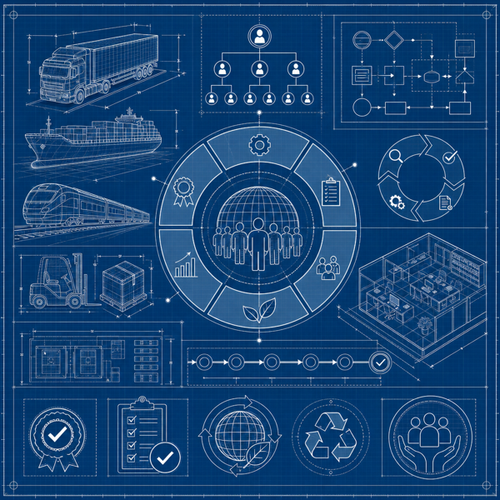
New June 2026 Standards: Organization, Management, and Sustainability Advances
June 2026 marks a pivotal month for professionals working in services, company organization, quality management, administration, transport, and social research. Five newly published international standards deliver cutting-edge frameworks for operational excellence, personnel competency, sustainable financing, facility management, and innovative methods for human resources and product development. These standards set new benchmarks for safety, performance, stakeholder value, and compliance across multiple sectors—including shipping, facilities, investment, and human resources.
Overview / Introduction
The fields of services, organization, management, quality, administration, transport, and sociology are experiencing rapid transformation. Regulatory expectations, workforce mobility, environmental responsibility, and technological change all drive the need for robust, internationally recognized standards.
Why do standards matter here? Adhering to current international standards:
- Safeguards operational quality and consistency
- Reduces compliance risk
- Drives innovation and stakeholder confidence
- Ensures effective management and sustainable development
Professionals reading this article will find a clear landscape of the latest standards published in June 2026—each with links to the authoritative text on iTeh Standards. Discover how these documents will support your strategy, operational practices, and regulatory alignment.
Detailed Standards Coverage
ISO 24037:2026 - Training and Competency for Submersible System Crews
Ships and Marine Technology — Requirements and Guidance for Training, Qualification and Competency of Submersible System Crew and Other Key Personnel
Operational safety for crewed submersible systems (CSS) is now a focal point with the release of ISO 24037:2026. This standard establishes the requirements and guidance for the training, qualification, and competency of personnel operating submersibles, excluding conventional military submarines and diving bells.
The standard covers:
- Mandatory and recommended training pathways (apprenticeship, in-house, accredited programs)
- Competency frameworks for critical roles: pilots, maintenance techs, operations managers, passenger safety, launch/recovery supervisors
- Certification, appraisal, and career progression best practices
- Integration with human resource (HR) management and company training systems
- Reference to IMO (International Maritime Organization) best practices
Any organization operating crewed submersibles—commercial, research, tourism, or industrial—should adopt ISO 24037 to benchmark skills, streamline onboarding, and document personnel records. Modern training methods, including simulators and virtual reality, are encouraged for real-world readiness.
Key highlights:
- Defines critical roles and required competencies for CSS operations
- Provides a baseline framework for recruiting, training, and certifying staff
- Supports safe, efficient, and compliant submersible operations
Access the full standard:View ISO 24037:2026 on iTeh Standards
ISO/TR 16355-9:2026 – Unified QFD Case Study for New Product and Service Development
Applications of Statistical and Related Methods to New Technology and Product Development Process — Part 9: Unified Case Study Applying QFD to Hardware, Service, Software, and Hybrid Products
ISO/TR 16355-9:2026 provides a comprehensive, hands-on guide to applying Quality Function Deployment (QFD) across hardware, software, service, and hybrid offerings. The standard exemplifies the end-to-end flow of customer needs into product development through a detailed, unified food and beverage industry case study, reflecting best practices from the ISO 16355 series.
This technical report is invaluable for cross-functional teams—from R&D, engineering, and manufacturing to marketing, sales, IT, procurement, and regulatory affairs—that require a structured approach to ensure customer satisfaction throughout new product or service development cycles.
Key highlights:
- Demonstrates QFD methods in real-world scenarios
- Integrates voice of customer (VOC) and project (VOP) analyses into development
- Supports alignment between business, technical, and regulatory objectives
Access the full standard:View ISO/TR 16355-9:2026 on iTeh Standards
ISO 30201:2026 – Requirements for Modern Human Resources Management Systems
Human Resources Management Systems — Requirements
ISO 30201:2026 defines the requirements for designing, implementing, and continuously improving human resources management systems (HRMS) within any type of organization. This standard addresses the full HR lifecycle: attraction, deployment, development, succession, mobility, and exit of workers.
Key aspects include:
- Integration of HRMS with broader organizational risk and quality management
- Stakeholder-centered HR policies and objectives
- Focus on continual improvement, PDCA (Plan-Do-Check-Act) methodology, and internal/external audit practices
- Human capital reporting and alignment with UN Sustainable Development Goals
- Applicability to organizations of any size, sector, or constitution (public, private, for- or not-for-profit)
Implementing ISO 30201 is a clear pathway toward better workforce performance, improved risk management, and an enhanced employer brand. It explicitly supports strategic alignment, stakeholder value creation, and organizational resilience.
Key highlights:
- Details full HR management lifecycle requirements
- Emphasizes alignment of HR strategy to business objectives
- Provides a framework for stakeholder engagement and regulatory compliance
Access the full standard:View ISO 30201:2026 on iTeh Standards
ISO 41002:2026 – Strategic Development of Facility Management Organizations
Facility Management — Development of the Facility Management Organization
ISO 41002:2026 delivers guidance for establishing and advancing facility management (FM) organizations—applicable to internal FM teams, outsourced service providers, and hybrid models. Covering governance, leadership, value drivers, risk management, stakeholder engagement, and operational maturity, this standard supports FM entities at strategic, tactical, and operational levels.
Crucially, ISO 41002 assists organizations in:
- Creating efficient governance and management structures
- Engaging stakeholders, managing compliance, and safeguarding asset value
- Minimizing environmental impact and supporting sustainability goals
- Integrating digital technologies and continuous improvement practices
Facility management professionals, property owners, and support service providers benefit from a common language and best-practice framework for delivering safe, efficient, and responsive workplace environments.
Key highlights:
- Outlines FM structures across three management tiers
- Provides processes for stakeholder engagement and compliance
- Supports climate change adaptation and sustainable operations
Access the full standard:View ISO 41002:2026 on iTeh Standards
EN ISO 14097:2026 – Reporting on Climate Change Investments and Financing
Greenhouse Gas Management and Related Activities – Framework Including Principles and Requirements for Assessing and Reporting Investments and Financing Activities Related to Climate Change (ISO 14097:2021)
EN ISO 14097:2026 introduces a crucial framework for assessing, measuring, monitoring, and reporting on investments and financing activities from a climate change risk and opportunity perspective.
The standard is tailored for financial institutions—investors, asset managers, banks, insurers, and lenders—helping them:
- Assess how investments align with low-carbon and climate adaptation pathways
- Report on the climate impact of investment and lending decisions
- Set targets and determine key metrics for tracking climate action
- Disclose climate risks to stakeholders (shareholders, clients, regulators)
- Foster transparency, long-term orientation, and evidence-based decision-making
With the global organizational emphasis on climate action and regulatory demands for transparency, EN ISO 14097 enables organizations to provide reliable, comparable climate-related financial disclosures.
Key highlights:
- Provides a universal reporting and assessment framework for climate-related finance
- Supports Paris Agreement alignment and risk management
- Enhances credibility with regulators, investors, and the public
Access the full standard:View EN ISO 14097:2026 on iTeh Standards
Industry Impact & Compliance
The June 2026 standards bring significant shifts for organizations involved in services, management, marine operations, HR, facilities, finance, and sustainability. Key impacts include:
- Enhanced safety and operational competence (ISO 24037)
- Customer-centric and efficient development cycles (ISO/TR 16355-9)
- Modern HR management and reporting (ISO 30201)
- Strategic, resilient, and compliant facility operations (ISO 41002)
- Transparent, climate-aligned investment processes (EN ISO 14097)
Organizations are advised to:
- Conduct a gap analysis against new requirements
- Update internal policies to align with latest frameworks
- Provide training for staff and management on standard updates
- Engage with auditors or certification bodies (where applicable)
- Track implementation milestones to maintain regulatory alignment
Benefits of timely adoption:
- Increased operational efficiency and safety
- Reduced legal and reputational risks
- Improved market credibility and stakeholder trust
Risks of non-compliance:
- Regulatory penalties or exclusion from procurements
- Lost opportunities in climate finance and sustainable development
- Operational inefficiencies and workforce challenges
Technical Insights
Across these standards, several technical themes emerge:
- Competency-based qualification (ISO 24037, ISO 30201):
- Structured frameworks for training, assessment, and professional development
- Lifecycle and Process Orientation:
- PDCA cycles for ongoing improvement (ISO 30201, ISO 41002)
- End-to-end QFD deployment in innovation (ISO/TR 16355-9)
- Sustainability and ESG Reporting:
- Climate risk and impact tracking (EN ISO 14097)
- Embedding sustainable operations in facility management (ISO 41002)
- Cross-functional Integration:
- QFD drives collaboration across marketing, R&D, procurement, production, and quality
- HRMS integration with other business functions for resilience
Implementation Best Practices:
- Establish cross-disciplinary teams for standard adoption
- Leverage simulators, digital tools, and process modeling for training and operations
- Implement robust documentation and audit trails
- Engage leadership to set the tone for culture and compliance
Testing and Certification:
- Consider third-party certification to validate compliance (e.g., for ISO 30201 and ISO 41002)
- Prepare for stakeholder and regulatory audits—regularly review compliance status
Conclusion / Next Steps
June 2026’s advances in organization, management, and sustainability standards mark a new era for quality, safety, and environmental leadership in services, administration, transport, and organizational practice. Key takeaways for professionals:
- Review and update internal documentation and training to match new standards
- Align HR, facility, and finance operations with the latest international requirements
- Invest in certification, gap analysis, and best-practice adoption
- Leverage these documents as the backbone for sustainable growth and compliance
Stay ahead: Visit iTeh Standards to explore the full texts, access supporting documentation, and subscribe to future updates. Proactive engagement with these standards is not just about compliance—it’s about leadership, resilience, and sustainable value creation.
Categories
- Latest News
- New Arrivals
- Generalities
- Services and Management
- Natural Sciences
- Health Care
- Environment
- Metrology and Measurement
- Testing
- Mechanical Systems
- Fluid Systems
- Manufacturing
- Energy and Heat
- Electrical Engineering
- Electronics
- Telecommunications
- Information Technology
- Image Technology
- Precision Mechanics
- Road Vehicles
- Railway Engineering
- Shipbuilding
- Aircraft and Space
- Materials Handling
- Packaging
- Textile and Leather
- Clothing
- Agriculture
- Food technology
- Chemical Technology
- Mining and Minerals
- Petroleum
- Metallurgy
- Wood technology
- Glass and Ceramics
- Rubber and Plastics
- Paper Technology
- Paint Industries
- Construction
- Civil Engineering
- Military Engineering
- Entertainment