

October 2026 Testing Standards: Advances in Vibration, Leak Detection, and Additive Manufacturing
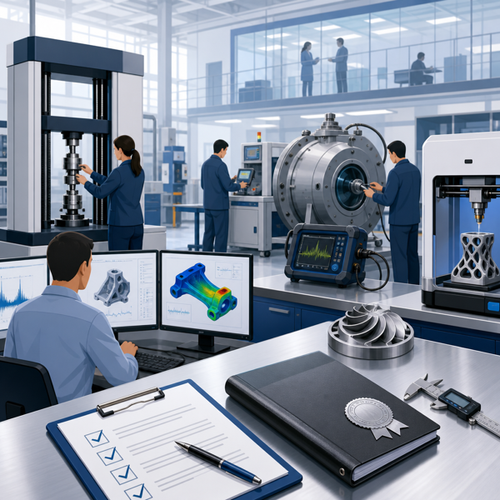
October 2026 Testing Standards: Advances in Vibration, Leak Detection, and Additive Manufacturing
October 2026 brings a significant update for quality assurance and reliability engineering in the testing sector, as three new or revised international standards redefine best practices and technical requirements. This article explores the latest editions of IEC 60068-2-64:2026 (Vibration Testing), EN 1779:2026 (Leak Detection in Non-Destructive Testing), and prEN ISO/ASTM 52969 (Imperfection Classification for Additive Manufacturing of Metals). The fresh requirements, clarified procedures, and updated test selection guidance will profoundly affect technical professionals, compliance officers, and industry managers worldwide.
Overview: Transforming Testing with New Standards
The Role of Testing Standards
Testing standards sit at the core of global industry, ensuring the safety, reliability, and functional integrity of products ranging from aerospace systems to medical devices, industrial machinery, and next-generation materials. By harmonizing testing protocols, they provide a shared foundation for suppliers and regulators, reduce risks, and pave the way for international trade and regulatory approval.
Why October 2026 Matters
With the publication of these three significant standards, the Testing sector faces not only technical updates but also clarified criteria for selecting test methods, innovative directions for non-destructive evaluation (NDE), and formal classification of imperfections in the fast-growing field of additive manufacturing.
What you'll gain from this article:
- A clear summary of what each standard covers and its intended industry applications
- Key requirements, updates, and best practices for implementation
- Insights into how these changes impact compliance, testing quality, and risk management
Detailed Standards Coverage
IEC 60068-2-64:2026 – Environmental Testing: Vibration, Broadband Random and Guidance
Environmental Testing – Part 2-64: Tests – Test Fh: Vibration, Broadband Random and Guidance
The third edition of IEC 60068-2-64:2026 sets the global benchmark for vibration testing under environmental stress. Applicable across sectors including electronics, aerospace, automotive, industrial equipment, packaging, and more, this standard demonstrates a specimen’s resilience to dynamic loads—using broadband random vibration tests—to prevent unacceptable degradation of functional or structural integrity.
Scope and Key Requirements
- Defines test methods for assessing product response to random (stochastic) vibration, representing real-world conditions such as transportation or operational environments.
- Introduces both Gaussian and non-Gaussian vibration profiles for comprehensive analysis.
- Outlines measurement points, control techniques, and severity levels, including preconditioning and performance checks.
- Details apparatus setup, mounting strategies, and reporting requirements for reproducible and verifiable results.
- Specifies selection and use of vibration tolerances, statistical accuracy, and frequency resolution.
Notable 2026 Technical Revisions:
- Annex A: Updated with case examples for vibration severities in transport, fixed installations, storage, and more.
- Organizational deviation: New guidelines for systematically documenting and managing permissible deviations from the specified protocols.
- Detailed clarification on critical requirements, expanding clarity around measurement and reporting.
Target Industries & Implementation
- Electronics and electrical equipment manufacturers
- Aerospace (both commercial and military)
- Automotive and heavy vehicles
- Industrial machinery
- Packaging and logistics teams handling vibration-sensitive products
Aligning with IEC 60068-2-64 ensures products can endure actual transportation and service environments, providing assurance to suppliers, end users, and regulators alike.
Key highlights:
- Emphasizes reproducibility and comparability of vibration test results across labs
- Recommends severity levels tailored to specific use cases (Annex A and B)
- Integrates random and combined deterministic/random vibration approaches
Access the full standard:View IEC 60068-2-64:2026 on iTeh Standards
EN 1779:2026 – Non-Destructive Testing: Leak Testing – Criteria for Method and Technique Selection
Non-Destructive Testing – Leak Testing – Criteria for Method and Technique Selection
Released as a robust revision to the 1999 edition, EN 1779:2026 provides a comprehensive framework for selecting the most suitable leak test methods and techniques, focusing on gas leakage assessment for systems that can be either evacuated or pressurized.
Scope and Core Content
- Details criteria and procedures for assessing leak tightness by measuring or indicating gas leakage.
- Excludes hydrostatic and electromagnetic leak detection, focusing on gas phase methods.
- Includes a normative Annex A to compare standard test methods and guidance tables (e.g., test type, measurement vs. localization, test object design, functional/environmental requirements).
- Clarifies units and terminology in alignment with EN ISO 20484:2017, ensuring consistent application.
New in the 2026 Edition:
- Updated table and figures for method comparison and test selection
- Fresh section 8.1 providing enhanced principles for method and technique selection
- Revised normative references, ensuring latest global alignment
Who Should Use EN 1779:2026?
- NDT/NDE professionals in manufacturing, plant maintenance, and product verification
- Component and system designers requiring assurance of functional and environmental leak tightness
- Quality assurance and compliance managers responsible for critical containment or pressurized systems
Applied in fields such as process industries, energy utilities, pharmaceuticals, medical devices, and automotive systems, EN 1779:2026 ensures safety, regulatory compliance, and product reliability.
Key highlights:
- Systematic test method selection based on leakage rates, type of gas, geometry, operational risk, and safety/environmental concerns
- Identification and measurement of leaks in both local and total areas
- Consideration of pressure, temperature, flow regime, and corresponding test method factors
Access the full standard:View EN 1779:2026 on iTeh Standards
prEN ISO/ASTM 52969 – Additive Manufacturing of Metals: Non-Destructive Testing and Evaluation – Classification of Imperfections in DED Parts
Additive Manufacturing of Metals – Non-Destructive Testing and Evaluation – Classification of Imperfections in DED Parts (ISO/ASTM DIS 52969:2025)
Reflecting the rapid growth of additive manufacturing (AM) for metal parts, prEN ISO/ASTM 52969 brings new clarity to the classification of imperfections that can occur during Directed Energy Deposition (DED) processes. While it stops short of providing acceptance criteria, this standard defines and illustrates the main imperfection types and their typical causes—essential for both manufacturing process development and subsequent inspection.
What’s Covered?
- Systematic classification scheme for imperfections in DED-manufactured metal parts:
- Crack types and formation origins
- Porosity/cavity characteristics
- Solid inclusion types
- Lack of fusion (including cross-layer, vertical/horizontal, and operational influences)
- Shape/dimensional imperfections
- Other irregularities
- Links imperfection types to probable process causes and includes visual illustrations in Annex A.
- Adopts a numbering system for clear communication of defect types in industry documentation.
Industry Application
- Particularly valuable for AM part designers, NDT specialists, and quality personnel
- Facilitates clear communication between AM service bureaus, customers, and regulators
- Supports the implementation of robust inspection and quality monitoring regimes without dictating go/no-go criteria (since those depend on application-specific standards)
Key highlights:
- Endorsed by both ISO and ASTM, reflecting maximum international alignment
- Offers a tool for root-cause analysis and continuous improvement in metal additive manufacturing
- Covers DED variants: laser, electron beam, arc/wire (WAAM), including powder and wire feed processes
Access the full standard:View prEN ISO/ASTM 52969 on iTeh Standards
Industry Impact & Compliance
These standards collectively raise the bar for quality, risk mitigation, and global competitiveness in manufacturing and testing. Here’s what you need to know about compliance and transition:
- Mandatory or Voluntary? Depending on contractual obligations, regulatory demands, and industry sector, adherence may be required or strongly recommended.
- Transition Timelines: For revised standards, organizations should monitor transition periods or co-existence clauses as specified by industry or national regulatory bodies.
- Benefits of Early Adoption:
- Reduces likelihood of test errors and ambiguous results
- Enhances market access by ensuring alignment with presiding regulations and global buyers’ requirements
- Strengthens internal quality management and continuous improvement
- Risks of Non-Compliance:
- Potential for failed audits, rejected products, or unsafe equipment
- Legal liability if products fail in service
- Loss of certification or negative brand reputation
Action Points:
- Quality and compliance managers should promptly review how these standards interact with relevant design, testing, and inspection workflows.
- Ensure all relevant personnel are trained on new procedures and documentation practices.
- Update internal specifications to reflect terminology, reporting requirements, and selection criteria as outlined in each publication.
Technical Insights: Core Requirements and Implementation Best Practices
Common Threads Across the 2026 Testing Standards
- Clear Test Selection Guidance: All three standards emphasize the necessity to systematically select and justify appropriate test methods—including detailed tables, checklists, and cross-references to relevant terminology.
- Control of Environmental and Process Variables: From vibration frequency bands to gas selection in leak testing and machine setup in DED manufacturing, precise control and documentation are essential.
- Emphasis on Data Recording and Reporting: Each standard requires that specifications and test results be unambiguously recorded and reported to facilitate traceability, repeatability, and regulatory inspection.
- Competence of Personnel: Qualification of staff—either via internal assessment or certification to standards like EN ISO 9712:2022 (for NDT personnel)—is highlighted as a foundation for reliable results.
Implementation Best Practices
- Gap Assessment: Benchmark current lab/test facility practices against the new requirements, identifying necessary updates in equipment, procedures, and documentation.
- Documentation & Reporting: Adopt recommended tables and templates from each standard, especially for reporting test results, deviations, and severity levels.
- Calibration & Metrological Control: Ensure all measurement systems are up-to-date with latest traceability and calibration protocols.
- Cross-Disciplinary Collaboration: Especially for leak detection and AM imperfection classification, bring together design, production, maintenance, and quality teams for holistic review.
- Industry-specific Customization: Tailor severity levels, acceptance criteria, and imperfection designations to your specific application and regulatory context.
Testing and Certification Considerations
- For vibration and environmental testing, consider third-party laboratory certification (such as ISO/IEC 17025 accreditation).
- For additive manufacturing and leak testing, participation in round-robin or proficiency testing can demonstrate compliance and build customer trust.
Conclusion: Key Takeaways and Next Steps
The October 2026 testing standards update demonstrates the ongoing evolution and harmonization of international best practices in quality assurance, safety, and industrial innovation. Whether your organization is launching new products, scaling up additive manufacturing operations, or refining testing and compliance programs, active engagement with these standards is essential.
Recommendations:
- Review: Download and study the full text of each relevant standard.
- Train: Educate your teams on new requirements and procedures—especially for roles affected by updated test selection criteria or reporting protocols.
- Integrate: Update internal documentation, specifications, and workflows to reflect these new requirements.
- Monitor: Regularly consult trusted sources—like iTeh Standards—for further updates and implementation guidance.
Stay competitive, compliant, and ahead of the curve—start implementing the October 2026 testing standards today.
Categories
- Latest News
- New Arrivals
- Generalities
- Services and Management
- Natural Sciences
- Health Care
- Environment
- Metrology and Measurement
- Testing
- Mechanical Systems
- Fluid Systems
- Manufacturing
- Energy and Heat
- Electrical Engineering
- Electronics
- Telecommunications
- Information Technology
- Image Technology
- Precision Mechanics
- Road Vehicles
- Railway Engineering
- Shipbuilding
- Aircraft and Space
- Materials Handling
- Packaging
- Textile and Leather
- Clothing
- Agriculture
- Food technology
- Chemical Technology
- Mining and Minerals
- Petroleum
- Metallurgy
- Wood technology
- Glass and Ceramics
- Rubber and Plastics
- Paper Technology
- Paint Industries
- Construction
- Civil Engineering
- Military Engineering
- Entertainment