


June 2026: Major Textile and Leather Technology Standards Released
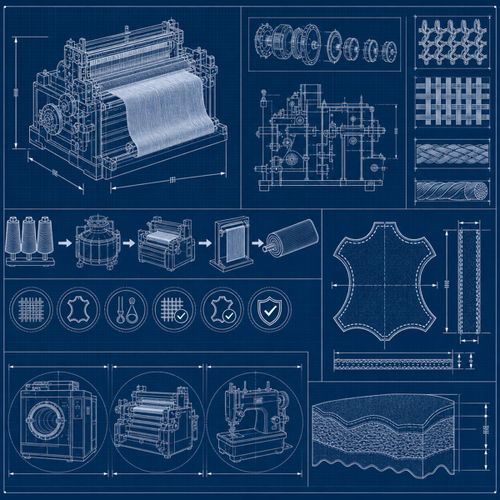
In June 2026, the textile and leather technology field took a significant leap forward, with five pivotal international standards published to guide organizations and professionals in quality, compliance, safety, and innovation. From geosynthetic design for erosion control to advanced wearable technologies, these newly released ISO and IEC standards provide the framework for best practices across global supply chains. Whether you’re an engineer, compliance manager, researcher, or product developer, understanding these updates is critical for remaining competitive and compliant in the rapidly evolving textile and leather sectors.
Overview / Introduction
The textile and leather industry is a cornerstone of global manufacturing, spanning applications from fashion and furnishings to infrastructure, composites, and advanced wearable electronics. As innovation accelerates, so do the challenges of ensuring product quality, environmental sustainability, functional performance, and regulatory compliance. International standards offer the common language and criteria needed for reliable testing, safe design, and consistent quality worldwide.
This article delivers an in-depth examination of five new standards published in June 2026, covering:
- Geosynthetics for erosion control
- Colour fastness testing of textiles
- Offshore fibre rope specifications
- Designation of recycled carbon fibres
- Testing of wearable heating e-textile products
You’ll gain an understanding of each standard’s scope, specific requirements, significance, and business implications—empowering you to implement best practices and anticipate regulatory trends.
Detailed Standards Coverage
ISO/TR 18228-8:2026 – Design Using Geosynthetics – Part 8: Surface Erosion Control
Design using geosynthetics — Part 8: Surface erosion control
This technical report provides comprehensive guidance on the use of geosynthetics for the control of surface erosion on slopes and river or channel banks. It offers practical design methodologies—excluding applications directly related to slope stability or coastal protection—and covers the unique challenges of maintaining soil integrity during infrastructure projects or environmental remediation.
Key requirements include:
- Assessment of site-specific factors: soil composition, topography, climate, and precipitation
- Types and properties of geosynthetic products for erosion and sediment control (geogrids, geomats, geocells, geotextiles, etc.)
- Scientific approaches such as the Revised Universal Soil Loss Equation (RUSLE) for predicting potential erosion
- Testing methods: index testing, bench-scale, and large-scale performance testing
Who needs to comply?
- Civil engineers and designers involved in infrastructure, riverbank stabilization, or restoration projects
- Construction companies and environmental consultants
Practical implications: Utilizing these guidelines leads to more resilient designs, reduces sediment loss during construction, and supports regulatory compliance for environmental protection.
Key highlights:
- Systematic consideration of hydrological and geological variables
- Wide range of geosynthetic erosion control solutions described
- Benchmark testing methods for performance validation
Access the full standard:View ISO/TR 18228-8:2026 on iTeh Standards
ISO 105-X11:2026 – Textiles — Tests for Colour Fastness to Hot Pressing
Textiles — Tests for colour fastness — Part X11: Colour fastness to hot pressing
This updated standard specifies procedures for assessing the resistance of textile colors to ironing and hot cylinder processes. It is applicable to textiles in all forms (woven, knitted, non-woven) and covers pressing under dry, damp, or wet conditions, adapting to typical end-use scenarios.
Key requirements include:
- Defined test temperatures (120°C, 160°C, and 210°C) aligned with modern ironing and textile processing practices
- Detailed preparation, testing, and evaluation protocols for colorfastness
- Clear procedures for test specimen conditioning, apparatus setup, and assessment of color changes and staining
Who needs to comply?
- Textile manufacturers and processors
- Apparel brands and quality assurance professionals
- Laboratories conducting textile colorfastness testing
Practical implications: Ensures products retain visual appeal through typical consumer and industrial use, reducing returns and warranty claims.
Key highlights:
- Improved alignment with latest ISO pressing temperature standards
- Methods for both dry, damp, and wet textile conditions
- Robust reporting and assessment framework
Access the full standard:View ISO 105-X11:2026 on iTeh Standards
ISO 18692-1:2026 – Fibre Ropes for Offshore Stationkeeping — Part 1: General Specification
Fibre ropes for offshore stationkeeping — Part 1: General specification
A keystone standard for anyone involved in offshore mooring and marine infrastructure, this second edition outlines the essential characteristics, manufacturing specifications, and test methods for new fibre ropes used in offshore stationkeeping. It applies broadly to all rope materials, with further technical details provided in other parts of the ISO 18692 series for specific fibre types.
Key requirements include:
- Minimum material standards (tenacity, marine grade, cover requirements)
- Construction and layout specifications for different operational contexts
- Performance testing: breaking strength, cyclic loading, particle ingress, and cover durability
- Certification, marking, and labeling guidelines
Who needs to comply?
- Marine equipment manufacturers
- Offshore energy and infrastructure operators
- Rope manufacturers and suppliers
Practical implications: Adhering to this specification assures operational reliability, safety, and regulatory acceptance for offshore mooring systems.
Key highlights:
- Updated structure allowing flexible fibre material qualification
- Addressing safety implications in rope handling and selection
- Detailed prototype and production testing for consistent quality
Access the full standard:View ISO 18692-1:2026 on iTeh Standards
ISO 19374:2026 – Recycled Carbon Fibres — Designation System for Recycled Carbon Fibres
Recycled carbon fibres — Designation system for recycled carbon fibres
As the circular economy and advanced composites grow in importance, ISO 19374:2026 establishes a global designation system for recycled carbon fibres (rCFs) used in polymer composites. The standard enables clear specification and identification of recycled fibres based on key mechanical properties, supporting their broader integration into commercial applications.
Key requirements include:
- Classification of recycled carbon fibres by tensile modulus and tensile strength
- Modular data blocks for additional properties (e.g., source, sizing, mechanical metrics)
- Optional blocks allowing for application- or customer-specific requirements
- Reference to established test methods for key attributes
Who needs to comply?
- Composite manufacturers
- Raw material suppliers focused on recycled content
- Procurement teams seeking traceable, sustainable material options
Practical implications: Facilitates reliable sourcing, quality comparability, and traceability for materials, essential for both technical performance and regulatory/ESG compliance.
Key highlights:
- Supports global trade in recycled fibres through standardized codes
- Responds to sustainability imperatives in composites and textiles
- Enhances downstream quality assurance and material selection
Access the full standard:View ISO 19374:2026 on iTeh Standards
IEC 63517:2026 – Wearable Electronic Textiles — Test Method for Performance of Heating Products
Wearable electronic textiles — Test method for performance of heating products — Heating temperature and power consumption
This forward-looking IEC standard delivers a definitive test method for evaluating the heating performance (temperature and power consumption) of wearable electronic textile (e-textile) heating products, including jackets, vests, and similar garments. Critical for the growing sector of smart textiles and personal heating wearables, the standard details objective, repeatable procedures for product assessment.
Key requirements include:
- Standardized test protocols for measuring heating temperature and energy consumption
- Apparatus and specimen preparation: environmental conditioning, placement of measuring points, and use of thermal imaging
- Exclusion of battery safety (addressed separately in other IEC standards)
- Uniform reporting formats for product comparison and certification
Who needs to comply?
- Manufacturers and developers of heated clothing and wearable e-textiles
- Testing laboratories and certification bodies
- Retailers and brands seeking consistent performance metrics
Practical implications: Delivers trusted benchmarks for product development and consumer safety while streamlining compliance for global markets.
Key highlights:
- Test procedures that closely simulate real-world garment usage
- Focused evaluation on heating characteristics, distinct from electrical safety
- Encourages innovation and consumer trust in wearable technology
Access the full standard:View IEC 63517:2026 on iTeh Standards
Industry Impact & Compliance
The publication of these five standards will drive foundational changes for textile and leather technology professionals worldwide. Their collective application will strengthen efficacy, safety, sustainability, and marketability across:
- Infrastructure and construction (with advanced erosion control)
- Apparel and industrial textiles (through improved color fastness testing)
- Offshore and marine applications (ensuring robust mooring solutions)
- Composite manufacturing (by formalizing recycled carbon fibre usage)
- Wearable electronics (with verifiable heating performance benchmarks)
Compliance considerations:
- Early adoption may be required for new projects or regulatory approvals
- Documentation, testing, and certification processes will need to reference the latest versions
- Cross-functional teams (R&D, QA, procurement, compliance) should update internal policies and supplier agreements
Benefits of adoption:
- Enhanced global market access and product acceptability
- Evidence-based design and procurement decisions
- Reduced liability and improved risk management
Risks of non-compliance:
- Increased exposure to product recalls or legal ramifications
- Loss of customer and regulatory confidence
- Barriers to export or tender opportunities in markets with mandated international standards
Technical Insights
Common Technical Themes
- Testing rigor: All five standards emphasize robust, repeatable testing—whether for erosion control effectiveness, fiber rope properties, color stability, or heating performance.
- Traceability and reporting: Standards require thorough documentation, traceability, and reporting, reinforcing quality assurance and supply chain transparency.
- Performance criteria: Each document prescribes minimum performance thresholds and clear evaluation methodologies, supporting uniformity across geographies and applications.
- Sustainability focus: The introduction of recycled carbon fibre standards highlights the industry's accelerating shift toward sustainable and circular supply chains.
Implementation Best Practices
- Gap assessment: Map new requirements against existing practices and identify areas needing adjustment or investment.
- Training: Ensure relevant personnel (lab technicians, design engineers, procurement officers) are trained on updated standards and protocols.
- Supplier engagement: Communicate new requirements to upstream suppliers and verify their capabilities and certifications.
- Verification and audit: Update audit checklists and internal controls to reflect new testing, documentation, and labeling requirements.
Testing and Certification
- Invest in accredited laboratory facilities or trusted third-party partners to maintain compliance.
- Anticipate the need for multi-part testing protocols, especially for geosynthetic, rope, or wearable textile evaluations.
- Monitor ongoing standard update cycles to ensure continuous compliance and readiness for further changes.
Conclusion / Next Steps
June 2026 marks a defining moment for textile and leather technology standards, with advances that respond directly to industry complexities and innovation frontiers. By adopting and internalizing the latest ISO and IEC benchmarks, organizations can:
- Drive product excellence and differentiation
- Enhance sustainability profiles and supply chain confidence
- Mitigate compliance risks and reduce market barriers
Recommendations:
- Review the full text of the standards relevant to your business
- Update product development, quality assurance, and procurement protocols
- Engage with iTeh Standards for ongoing updates and expert guidance
Stay ahead of industry change—explore these standards on iTeh Standards and subscribe for the next installment covering additional Textile and Leather Technology innovations from June 2026.
Categories
- Latest News
- New Arrivals
- Generalities
- Services and Management
- Natural Sciences
- Health Care
- Environment
- Metrology and Measurement
- Testing
- Mechanical Systems
- Fluid Systems
- Manufacturing
- Energy and Heat
- Electrical Engineering
- Electronics
- Telecommunications
- Information Technology
- Image Technology
- Precision Mechanics
- Road Vehicles
- Railway Engineering
- Shipbuilding
- Aircraft and Space
- Materials Handling
- Packaging
- Textile and Leather
- Clothing
- Agriculture
- Food technology
- Chemical Technology
- Mining and Minerals
- Petroleum
- Metallurgy
- Wood technology
- Glass and Ceramics
- Rubber and Plastics
- Paper Technology
- Paint Industries
- Construction
- Civil Engineering
- Military Engineering
- Entertainment