


June 2026: Updates in Textile and Leather Technology Standards
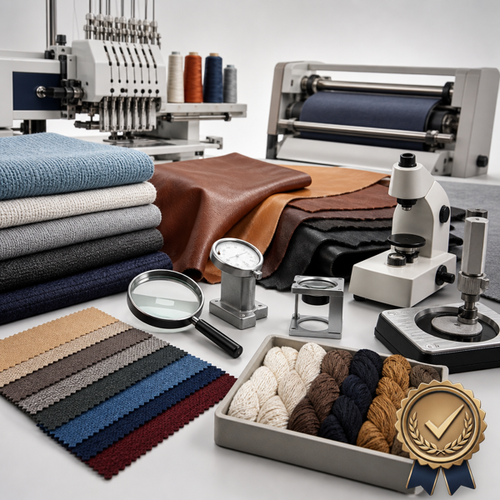
Exciting developments in Textile and Leather Technology have arrived in June 2026, as three major international standards are unveiled to support the industry’s ongoing drive for innovation, safety, and performance. These fresh updates span rope manufacturing, textile comfort testing, and advanced upholstery materials, targeting a broad spectrum of stakeholders from manufacturers to compliance specialists. Here’s a comprehensive look into the standards professionals need to know to stay ahead this month.
Overview
The textile and leather sector remains at the cutting edge of materials engineering, quality assurance, and end-user satisfaction. As functional and technical requirements evolve, international standards play a pivotal role in establishing harmonized practices, ensuring product reliability, and opening opportunities in global trade.
This article explores the latest standards published in June 2026 for Textile and Leather Technology, providing:
- Key technical requirements for fibre ropes, textile physiological testing, and PVC-coated fabrics
- Insights into compliance implications for businesses and quality managers
- Practical guidance for implementation
- Notable changes from previous editions
Whether you manage procurement, oversee production, or handle product certification, the details below will prepare your organization for the latest international compliance expectations.
Detailed Standards Coverage
ISO 10325:2026 – Fibre Ropes Made of High Modulus Polyethylene
Fibre ropes — High modulus polyethylene — 8-strand braided ropes, 12-strand braided ropes and covered ropes
Released in June 2026, ISO 10325:2026 introduces robust specifications for 8-strand and 12-strand braided ropes, as well as covered rope constructions (single braid, double braid, multi-core) made from high modulus polyethylene (HMPE) fibres. The standard provides rules for designation, highlighting distinctions between heat-set and non-heat-set ropes and recognizing the variety of HMPE fibre grades used in general-purpose applications.
Key elements of the standard encompass materials, construction, labeling, physical property requirements, marking, and safety warnings. It references established ISO terminology and test methods, ensuring global alignment.
Who should comply?
- Rope manufacturers
- Marine, construction, and industrial users
- Quality managers and procurement teams
Practical implications:
- Ensures consistent strength, safety, and performance specifications
- Provides guidance on product designation and material selection
- Helps in proper labeling, packaging, and delivery documentation
What’s new in 2026 revision?
- Enhanced safety warnings
- Revised material descriptions
- Updated construction figures and physical property tables
- Clarified values and definitions for general-purpose use
Key highlights:
- Comprehensive requirements for HMPE fibre rope constructions
- Clear designation and classification system (heat-set vs. non-heat-set)
- Up-to-date safety and labeling guidelines
Access the full standard:View ISO 10325:2026 on iTeh Standards
EN ISO 11092:2026 – Measurement of Thermal and Water-Vapour Resistance of Textiles
Textiles – Physiological effects – Measurement of thermal and water-vapour resistance under steady-state conditions (sweating guarded-hotplate test) (ISO 11092:2026)
EN ISO 11092:2026 sets the international benchmark for measuring textile comfort through precise assessment of thermal resistance and water-vapour resistance under steady-state conditions. Using the sweating guarded-hotplate method—often called the "skin model"—the standard is crucial for evaluating clothing, upholstery, quilts, sleeping bags, foams, coatings, and even multilayer textile assemblies.
The revised 2026 edition provides clear definitions for crucial terms such as thermal resistance, water-vapour resistance, and the water-vapour permeability index. It emphasizes test preparation, apparatus calibration, environmental controls, and specimen conditioning, ensuring reproducibility and accuracy.
Who should comply?
- Textile testing laboratories
- Clothing and upholstery manufacturers
- R&D and certification teams focused on product comfort or performance
Practical implications:
- Essential for designing and validating comfortable, breathable, and thermally efficient materials
- Supports certification and product claims related to physiological comfort
- Enables comparison of multilayer and specialty textile assemblies
What’s new in the 2026 update?
- Updated apparatus requirements and normative references
- Precision and reproducibility improvements
- Inclusion of Grade 3 water as per ISO 3696 for testing
- Clarified correction procedures and inclusion of a normative annex for swelling materials
Key highlights:
- Detailed, standardized method for assessing textile thermal and moisture management
- Ensures reliable Comfort Index data for consumer-driven markets
- Integrated with European requirements for broad adoption
Access the full standard:View EN ISO 11092:2026 on iTeh Standards
ISO 7617-2:2026 – Specification for PVC-Coated Woven Fabrics for Upholstery
Plastics-coated fabrics for upholstery — Part 2: Specification for PVC-coated woven fabrics
ISO 7617-2:2026 addresses the requirements for upholstery fabrics produced by applying a continuous layer of plasticized poly(vinyl chloride) (PVC) to one side of a woven substrate. The standard covers two grades of material (A and B), responding to diverse market needs in furniture and automotive applications.
This latest, fourth edition brings the standard up to date with revised physical property tables, new test methods for abrasion and flex resistance, and expanded requirements for color fastness, dimensional stability, coating adhesion, and fire behavior. Manufacturers must ensure visual uniformity, color grain, and defined width and thickness for compliance.
Who should comply?
- Upholstery and seating fabric producers
- Procurement and quality assurance teams in furniture and automotive sectors
- Laboratories performing PVC fabric testing
Practical implications:
- Guarantees furniture materials offer required durability, abrasion resistance, and fire safety
- Supports competitive product development in contract and retail upholstery markets
- Enables technical benchmarking and qualification of suppliers
What’s new in 2026 revision?
- Added abrasion and flex test requirements
- Updated normative references and marking guidance
- Enhanced coverage of sampling and conformance procedures
Key highlights:
- Comprehensive technical and color fastness specifications for PVC-coated textiles
- Defined testing and sampling methodology
- Critical for market access and long-term product reliability
Access the full standard:View ISO 7617-2:2026 on iTeh Standards
Industry Impact & Compliance
Adopting the latest standards in Textile and Leather Technology delivers measurable benefits for organizations:
- Risk reduction: Updated safety warnings, technical definitions, and test procedures minimize misinterpretation and compliance failures.
- Consistent quality: Specified material properties and test methods ensure global product comparability and performance consistency across batches and regions.
- Market competitiveness: Certification to international standards is a prerequisite for market entry in regulated sectors, enhances supplier credibility, and meets demanding client and consumer expectations.
Compliance considerations:
- Review existing quality manuals and update procurement requirements to reference the latest standard editions.
- Align laboratory test protocols and calibrate equipment according to new apparatus and environmental specifications.
- Implement timelines for transition and retraining, particularly where new physical or safety requirements apply.
- Maintain records and appropriate marking, labeling, and documentation as described in each standard.
Failure to comply may result in:
- Product recalls or rejection
- Increased liability and safety risks (especially with ropes and upholstery)
- Ineligibility for high-value contracts or certifications
Technical Insights
Across these three standards, several key technical aspects warrant particular attention for professionals in the sector:
- Test Specimens and Conditioning: All standards emphasize precise selection, handling, and conditioning of test specimens to ensure that reported values are replicable and reflect true material performance.
- Apparatus Requirements: For physiological testing, strict specifications for apparatus construction and calibration ensure the reliability of thermal and moisture management test results.
- Material Grades and Designation: Proper identification (heat-set or non-heat-set for ropes, A or B grades for PVC textiles) is essential for traceability and specification to end users.
- Documentation and Marking: Clear marking and reporting requirements streamline procurement and compliance verification, reducing the risk of mislabelling throughout the supply chain.
- Testing and Certification: Accredited laboratories and regularly calibrated equipment are crucial for demonstrating adherence—particularly for products destined for international trade or regulated markets such as marine, construction, and public seating.
Best practices for implementation:
- Establish a project team including technical, QA, and procurement specialists to review revised clauses and tables.
- Conduct a gap analysis between current practices and the new requirements, focusing on test methods, materials, and documentation.
- Update training curricula and supplier communications to incorporate new definitions, safety warnings, and measurement requirements.
- Perform pilot tests or audits before full transition.
Conclusion & Next Steps
The June 2026 standards in Textile and Leather Technology reflect the industry’s rapid pace of innovation, customer demand for quality, and the importance of harmonized technical benchmarks. By understanding and adopting these new and revised standards, organizations ensure safer products, greater market reach, and sustained competitive advantage.
Recommendations for organizations:
- Review the latest standards in detail and assess current product lines for compliance
- Train key personnel on new technical requirements and best practices
- Encourage early supplier engagement and proactive documentation updates
- Explore the full text of each standard via iTeh Standards for the latest clauses and interpretation guidance
Stay at the forefront of Textile and Leather Technology by regularly monitoring standard updates and leveraging expert resources at iTeh Standards.
Categories
- Latest News
- New Arrivals
- Generalities
- Services and Management
- Natural Sciences
- Health Care
- Environment
- Metrology and Measurement
- Testing
- Mechanical Systems
- Fluid Systems
- Manufacturing
- Energy and Heat
- Electrical Engineering
- Electronics
- Telecommunications
- Information Technology
- Image Technology
- Precision Mechanics
- Road Vehicles
- Railway Engineering
- Shipbuilding
- Aircraft and Space
- Materials Handling
- Packaging
- Textile and Leather
- Clothing
- Agriculture
- Food technology
- Chemical Technology
- Mining and Minerals
- Petroleum
- Metallurgy
- Wood technology
- Glass and Ceramics
- Rubber and Plastics
- Paper Technology
- Paint Industries
- Construction
- Civil Engineering
- Military Engineering
- Entertainment