


August 2026 Manufacturing Engineering Standards: Additive, Brazing, Welding, and Heating Updates
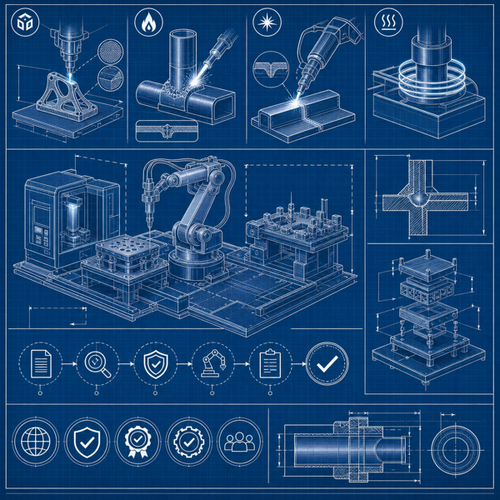
In August 2026, the manufacturing engineering sector saw the release of five impactful international standards, addressing advanced manufacturing methods, welding technologies, and industrial heating solutions. This set of standards introduces enhanced requirements, qualification methods, and technical procedures that reflect the latest innovations and compliance needs in aerospace, brazing, resistance welding, and heating system applications. For industry professionals committed to quality, productivity, and global competitiveness, understanding these updates is essential.
Overview / Introduction
Manufacturing engineering is a field defined by continual innovation, efficiency, and rigorous quality assurance. International standards play a transformative role by codifying best practices, ensuring product safety, enhancing reliability, and enabling global interoperability.
This article, Part 3 of 5 in our August 2026 manufacturing standards series, provides insight into five newly released standards. Ranging from qualification of additive manufacturing systems in aerospace to specification of brazing procedures and standardized test methods for advanced heating installations, these publications address critical sectors including aerospace, automotive, energy, electronics, and industrial fabrication.
Whether you are an engineer, quality manager, compliance officer, or procurement specialist, this comprehensive guide delivers the context, requirements, and practical implications essential for informed decision-making.
Detailed Standards Coverage
ISO/ASTM 52941:2026 – Additive Manufacturing for Aerospace Machine Qualification
Additive manufacturing for aerospace — System performance and reliability tests for laser metal powder-bed fusion machines for metallic materials
This latest edition of ISO/ASTM 52941 addresses the system qualification and ongoing performance verification for laser metal powder bed fusion (PBF-LB/M) additive manufacturing machines—technologies pivotal to aerospace component fabrication. It outlines both initial and periodic re-qualification requirements, applicable not only to aerospace but to other high-stakes manufacturing sectors by contractual agreement.
Key requirements and specifications:
- Laser power measurement and stability assessment using calibrated instruments
- Evaluation of laser beam characteristics, minimum beam waist positioning, scanning speed, and trajectory accuracy
- Mechanical inspections focused on platform positioning, powder feeding, and spreading device movement
- Environmental and operational monitoring (temperature, humidity, gas purity)
- Data logging, safety features review, and optional area/gas flow assessments
- Comprehensive test reporting, including practical examples in annexes
Organizations manufacturing critical metallic components—especially for aerospace—must conduct qualification after installation and again after significant maintenance or upgrades. This ensures reliability and process control, directly impacting component quality and traceability.
Key highlights:
- Expanded scope to non-aerospace applications by contract
- Updated test requirements and reporting formats
- Emphasis on calibrated measurement and traceability
Access the full standard:View ISO/ASTM 52941:2026 on iTeh Standards
ISO 5183-1:2026 – Resistance Welding Equipment Adaptors
Resistance welding equipment — Electrode adaptors, male taper 1:10 — Part 1: Conical fixing, taper 1:10
ISO 5183-1:2026 details the dimensions, tolerances, and material requirements for male taper electrode adaptors used in resistance spot welding systems. This standard is foundational for maintaining interchangeability and performance in automated and semi-automated spot welding, which is common in the automotive and heavy machinery industries.
Key requirements and specifications:
- Standardized male taper (1:10 conical fixing) for secure and reproducible electrode fit
- Dimensional specifications ensure compatibility across manufacturers and systems
- Material and marking requirements for durability and traceability
- Designation and nomenclature updates for global harmonization with ISO 5821 and ISO 1089
Quality-minded organizations rely on this standard to reduce downtime, ensure electrode cap compatibility, and facilitate the procurement of spare parts.
Key highlights:
- Updated to harmonize international terminology and references
- Ensures global component compatibility
- Supports efficient maintenance and reduced operational risk
Access the full standard:View ISO 5183-1:2026 on iTeh Standards
IEC 61308:2026 – High-Frequency Dielectric Heating Output Test Methods
High-frequency dielectric heating installations - Test methods for the determination of power output
IEC 61308:2026 specifies the test methods for quantifying useful high-frequency power output in industrial dielectric heating equipment. Employed in applications such as plastics processing, wood drying, and material bonding, these machines operate across 100 kHz to 300 MHz (focusing on industrial ISM bands: 6.78 MHz, 13.56 MHz, 27.12 MHz, 40.68 MHz).
Key requirements and specifications:
- Calorimetric, lamp, matched resistive, and wet-sand load test methods for precise power determination
- Detailed guidance for both Type A (separable generator and applicator) and Type B (integrated) equipment
- Updated procedures for tuning circuits, impedance matching, and measurement corrections
- Applicability to continuous rated operation; excludes household, laboratory, or medical HF devices
- Alignment with current IEC 60519-1 and IEC 60519-6 for safety and process control
Manufacturers and users of dielectric heating equipment must apply these methods to ensure machine performance, energy efficiency, and process repeatability—critical for quality and regulatory conformance.
Key highlights:
- Expanded details for calorimetric load tests and power evaluation for plastic welders
- Harmonization with modern safety standards
- Clearer differentiation between industrial and commercial equipment use
Access the full standard:View IEC 61308:2026 on iTeh Standards
prEN ISO 17779 – Brazing Procedure Specification and Qualification
Brazing - Specification and qualification of brazing procedures for metallic materials (ISO/DIS 17779:2026)
This draft international standard introduces robust requirements for the specification and qualification of brazing procedures when working with metallic materials. It covers test piece preparation, essential variables, acceptance criteria, required documentation, and both non-destructive and destructive test methods.
Key requirements and specifications:
- Scope spans multiple brazing methods: infrared, flame/torch, laser, electron beam, induction, resistance, diffusion, furnace, vacuum, dip- and salt-bath, flux bath, immersion, arc weld brazing
- Detailed instructions for creating Preliminary Brazing Procedure Specifications (pBPS), conducting brazing procedure tests, and evaluating joint quality
- Criteria for test specimen geometry, process variables, filler materials, joint configuration, post-braze treatments
- Emphasis on traceable record-keeping: Brazing Procedure Qualification Record (BPQR) and Brazing Procedure Specification (BPS)
- Annexes on quality requirements and material grouping
Applicable to a wide spectrum of industries, from electronics to heavy engineering—and essential for companies seeking qualified brazing operations, improved joint reliability, and documented process compliance.
Key highlights:
- Applies 14 major brazing processes, accommodating both local and global heating techniques
- Provides comprehensive testing, acceptance, and documentation frameworks
- Enhances reliability of metallic joints for safety-critical and high-performance applications
Access the full standard:View prEN ISO 17779 on iTeh Standards
IEC 61307:2026 – Industrial Microwave Heating Power Output Test Methods
Industrial microwave heating installations - Test methods for the determination of power output
IEC 61307:2026 delivers state-of-the-art methods for evaluating the performance and efficiency of industrial microwave heating equipment. Covering frequency ranges from 300 MHz to 300 GHz (with a focus below 6 GHz), this standard supports accurate measurement of microwave output, operational flexibility, and energy consumption modes (cold start, standby, holding power).
Key requirements and specifications:
- Distinguishes between available and workload microwave power
- Calorimetric liquid water tests, dummy load tests, and open container water/dehydration assessments
- Defines effective microwave power, electrical input, overall and conversion efficiency
- Addresses both Type A (generator and applicator separable) and Type B (integrated) equipment
- Includes expanded requirements for standby/hibernation, start-up, and holding power
- Not applicable to consumer, commercial, or laboratory microwave equipment
This publication is essential for manufacturers and operators of industrial microwave systems used in food processing, material drying, chemical synthesis, and waste treatment—helping ensure safety, productivity, and regulatory compliance.
Key highlights:
- Improved testing methods for evolving industrial microwave technologies
- Thorough energy efficiency and power measurement guidance
- Enhanced operational flexibility assessment, including power consumption in all modes
Access the full standard:View IEC 61307:2026 on iTeh Standards
Industry Impact & Compliance
The adoption of these five standards represents both an opportunity and a responsibility for organizations in manufacturing engineering:
Impact on businesses:
- Reinforces a culture of quality, testing, and documentation
- Enables compliance with international requirements across supply chains
- Facilitates entry into regulated sectors, from aerospace to electronics
Compliance considerations and timelines:
- New or updated standards often require re-qualification of equipment, audits, and personnel training
- Documentation, reporting, and traceability must follow the detailed procedures outlined
- A transition period may be provided to phase in the latest editions; consult official timelines and guidance
Benefits of adoption:
- Enhanced operational safety and efficiency
- Improved reliability and repeatability of manufacturing processes
- Increased customer and regulatory trust
- Competitive advantage through state-of-the-art validation methods and demonstrable compliance
Risks of non-compliance:
- Product failures and costly recalls
- Regulatory penalties or lost certifications
- Barriers to entry in international or specialized markets
Technical Insights
Despite their differences, these standards display common technical principles vital to modern manufacturing:
Common requirements:
- Calibration and traceability of test and measurement equipment
- Rigorous record-keeping and documentation
- Control of environmental and process variables
- Suitability of personnel qualification
Implementation best practices:
- Integrate standardized testing protocols into preventative maintenance and process validation schedules
- Train staff on updated test methods and reporting documentation
- Review procurement policies to align with the dimensional and material criteria specified
- Engage with suppliers and partners to ensure IT and data systems support traceable compliance
Testing and certification considerations:
- Employ only certified, calibrated measurement equipment for all acceptance/qualification procedures
- Maintain up-to-date records (test results, specifications, qualification reports)
- Consider third-party assessment or certification, especially in aerospace and critical applications
Conclusion / Next Steps
The August 2026 set of manufacturing engineering standards demonstrates the international community's commitment to robust quality control, reliable process qualification, and enhanced operational flexibility. These updates particularly reinforce additive manufacturing qualification, the integrity of welding and brazing operations, and the safe, efficient deployment of high-frequency heating technologies.
Key takeaways:
- Updated standards reflect current practices and technology advances
- Implementation is vital for maintaining safety, quality, and market access
- Comprehensive documentation and periodic re-qualification are mandatory in many cases
Recommendations for organizations:
- Review and update internal quality and maintenance procedures with reference to the new standards
- Communicate changes and provide training for engineers, technicians, and compliance teams
- Use iTeh Standards as a reliable resource for accessing full, current standards documentation
Stay ahead of the curve by exploring these standards in detail through iTeh Standards, and ensure your organization remains a leader in quality-driven, compliant manufacturing operations.
Categories
- Latest News
- New Arrivals
- Generalities
- Services and Management
- Natural Sciences
- Health Care
- Environment
- Metrology and Measurement
- Testing
- Mechanical Systems
- Fluid Systems
- Manufacturing
- Energy and Heat
- Electrical Engineering
- Electronics
- Telecommunications
- Information Technology
- Image Technology
- Precision Mechanics
- Road Vehicles
- Railway Engineering
- Shipbuilding
- Aircraft and Space
- Materials Handling
- Packaging
- Textile and Leather
- Clothing
- Agriculture
- Food technology
- Chemical Technology
- Mining and Minerals
- Petroleum
- Metallurgy
- Wood technology
- Glass and Ceramics
- Rubber and Plastics
- Paper Technology
- Paint Industries
- Construction
- Civil Engineering
- Military Engineering
- Entertainment