

Understanding ISO 4210 Bicycle Safety Standards: Requirements, Testing, and Terminology
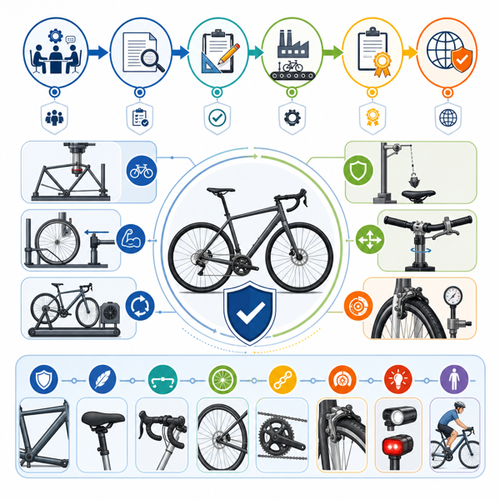
Enhancing bicycle safety has never been more vital for manufacturers, importers, and technology innovators in the cycling industry. As bicycles become integral to urban mobility and as technological advancements change bicycle design and manufacturing, rigorous safety standards are a must—not only to meet legal and consumer expectations but also to drive productivity, security, and scalability within businesses. In this comprehensive guide, we explore four core international standards from the ISO 4210 series, detailing the requirements, test methods, and terminology that underpin modern bicycle safety. By understanding and implementing these standards, organizations can ensure robust compliance, foster innovation, and position themselves strongly in a competitive market.
Overview / Introduction
The bicycle industry plays a pivotal role in sustainable transport and recreational activities worldwide. With increased adoption of e-bikes, smart cycling technology, and urban cycling infrastructure, the need for standardized and harmonized safety requirements has never been more pronounced. Safety and reliability are non-negotiable for both manufacturers and end-users, particularly as bicycles must withstand a variety of real-world stresses while offering exceptional performance.
International standards, particularly the ISO 4210 series for bicycles, provide a globally recognized framework that covers every aspect from terminology through to detailed testing methods for frames, forks, and brakes. These standards not only mitigate risk but also enhance quality assurance, user trust, and the ability of businesses to scale operations and introduce innovations confidently.
In this article, you will learn:
- The scope and key features of ISO 4210-1, ISO 4210-2, ISO 4210-4, and ISO 4210-6
- How terminology standardization supports clear communication across the industry
- Why comprehensive safety and performance requirements are essential
- What rigorous testing looks like for braking systems, frames, and forks
- The practical implications and compliance strategies for implementing these standards
Detailed Standards Coverage
ISO 4210-1:2023 - Bicycle Safety Terminology and Vocabulary
Cycles — Safety requirements for bicycles — Part 1: Vocabulary
ISO 4210-1:2023 establishes the fundamental terms and definitions related to the safety and performance of bicycles and their sub-assemblies. This standard is the bedrock for clear, global communication—ensuring that everyone, from engineers to regulatory officials and retailers, speaks the same technical language when it comes to bicycle design, assembly, and testing.
The scope of this standard encompasses bicycles with a maximum saddle height of 635 mm or more. It excludes specialized bicycles such as BMX, recumbent, cargo, tandem, and those designed for stunt or competition use.
Key areas covered include:
- Types of bicycles (city, trekking, mountain, racing, folding)
- General terms (pedal, brake, head assembly, frame, fork)
- Driving environments and use cases
- Component-specific terminology (wheel and rim, pedal systems, saddles)
Organizations across the bicycle value chain rely on this standard to ensure precise specifications in technical documentation, product labeling, and cross-border transactions. Clear vocabulary is crucial when integrating new technology, such as e-bike systems or advanced materials, where communication errors could introduce safety risks or costly misunderstandings.
Key highlights:
- Unifies global bicycle terminology for design, assembly, and testing
- Facilitates accurate technical communication, reducing errors
- Essential for regulatory compliance and international trade
Access the full standard:View ISO 4210-1:2023 on iTeh Standards
ISO 4210-2:2023 - Requirements for City, Trekking, Young Adult, Mountain, and Racing Bicycles
Cycles — Safety requirements for bicycles — Part 2: Requirements for city and trekking, young adult, mountain and racing bicycles
ISO 4210-2:2023 is the comprehensive requirements specification for a range of bicycle types commonly used on public roads and pathways, including young adult, city, trekking, mountain, and racing bicycles. This standard sets out the essential safety and performance benchmarks for manufacturers, assemblers, and quality inspectors.
The standard covers every critical system and subsystem of the bicycle:
- Frame and fork requirements: Materials, impact and fatigue performance
- Braking systems: Multiple requirements for strength, performance in dry and wet conditions, and heat resistance
- Handlebar and steering assemblies: Strength, security, and ergonomics
- Wheels and tyres: Rotational accuracy, retention, and durability tests
- Pedals, crank drives, and chains: Static and dynamic strength, fatigue analysis
- Saddles, seat-posts, and safety devices: Limits and endurance
- Lighting, reflectors, and other safety accessories
- User instructions and mandatory markings: Guidance for proper usage and maintenance
Practically, this means manufacturers and assemblers must incorporate robust quality control and testing regimes before a bicycle ever reaches the consumer. The requirements also encourage sustainable manufacturing practices by demanding durability, hence reducing waste. As cycling technology evolves, alignment with ISO 4210-2 ensures that innovations like integrated electronics, lightweight composites, or new suspension designs are safely introduced without compromising end-user security.
Key highlights:
- Sets global safety and performance requirements for common bicycle types
- Covers all major systems: frames, brakes, steering, wheels, and safety accessories
- Mandates manufacturer user instructions and durability marking
Access the full standard:View ISO 4210-2:2023 on iTeh Standards
ISO 4210-4:2023 - Braking Test Methods for Bicycles
Cycles — Safety requirements for bicycles — Part 4: Braking test methods
ISO 4210-4:2023 provides the detailed laboratory and track test methods for evaluating the braking systems of bicycles specified in ISO 4210-2. As braking is the single most critical active safety feature on any bicycle, this standard is indispensable for quality assurance managers, manufacturers, and test laboratories.
The document prescribes a series of comprehensive tests:
- Brake lever grip measurements: Ensures ergonomic accessibility and lever design fitness
- Security and strength tests: Evaluates both hand-operated and back-pedal braking systems for mechanical robustness
- Braking performance, both dry and wet: Simulates real-world conditions to guarantee safe stopping distances
- Brake-block and pad security: Confirms system integrity after usage cycles
- Heat-resistance testing: Validates brake performance under sustained use and high-temperature scenarios
- Specific procedures for secondary brake levers, rim brakes, disc brakes, and composite wheels
For organizations, following ISO 4210-4 protocols means reduced liability, more predictable component sourcing, and a foundation for innovative braking technology (such as electronic braking or heat-resistant materials). It enables effective global market entry—since safety compliance is often a non-negotiable regulatory and consumer demand.
Key highlights:
- Standardizes comprehensive laboratory and track braking tests
- Validates brake system safety across real-world and extreme conditions
- Essential for quality assurance, legal compliance, and innovation in braking technology
Access the full standard:View ISO 4210-4:2023 on iTeh Standards
ISO 4210-6:2023 - Frame and Fork Test Methods
Cycles — Safety requirements for bicycles — Part 6: Frame and fork test methods
ISO 4210-6:2023 specifies a rigorous suite of mechanical tests to ensure the structural integrity of bicycle frames and forks. Given the crucial role these components play in rider safety, robust test protocols are central to the standard’s impact.
Core test methods include:
- Frame impact tests: Simulate collision and drop scenarios to evaluate strength and deformation
- Fatigue tests with simulated pedaling, horizontal, and vertical forces: Assess durability over the product lifecycle
- Rear brake mount testing: Ensures that high loads from braking are safely absorbed
- Front fork tensile, bending, and impact tests: Validate front-end safety in both static and emergency conditions
- Fatigue and torque tests for forks: Especially for forks intended for disc or hub brakes
- Specialized requirements for composite forks and suspension systems
Conformance to ISO 4210-6 is essential for manufacturers seeking to introduce advanced materials (like carbon fiber or new alloy composites) and innovative designs (such as integrated suspension or modular frame systems). This standard provides a scientific, repeatable basis for validating new products—enabling safe scaling from prototype to mass production while maintaining structural safety across variants.
Key highlights:
- Specifies stringent fatigue and impact tests for frames and forks
- Addresses new materials and advanced design architectures
- Builds confidence for market releases and product innovation
Access the full standard:View ISO 4210-6:2023 on iTeh Standards
Industry Impact & Compliance
Global harmonization of bicycle safety standards like ISO 4210 is not just a legislative requirement—it’s a commercial and reputational necessity. Industry adoption of these standards brings multiple benefits:
Business Productivity and Innovation:
- Streamlines product development cycles through clear technical benchmarks
- Reduces errors and costly redesigns due to standardized testing protocols
- Enables rapid introduction of new technologies, such as e-bike systems, advanced composites, or connected bicycle features
Security & Risk Mitigation:
- Lowers legal and liability risk by demonstrating due diligence and foreseeable use planning
- Protects end-users and reduces incident rates, fostering trust and brand loyalty
- Empowers manufacturers to compete in regulated international markets
Scaling and Global Market Access:
- Facilitates access to new markets, as many regions mandate ISO compliance for imported bicycle products
- Simplifies the compliance process for multi-site, international operations
- Lays groundwork for certification and quality management (ISO 9001, for example)
Risks of Non-Compliance:
- Increased liability and potential for recalls or bans from key markets
- Added costs and complexity in product redesign after failure to meet baseline safety
- Reputational harm and consumer distrust
Implementation Guidance
For organizations aiming to implement bicycle safety standards efficiently:
Common Approaches
- Gap Analysis: Assess current manufacturing and testing processes against ISO 4210 requirements.
- Staff Training: Ensure engineering, quality, and assembly staff are familiar with the requirements and terminology.
- Integrated Quality Systems: Embed standard test methods into regular quality control workflows.
- Supplier and Component Alignment: Source only from suppliers who maintain requisite quality and test documentation.
- Certification and Regulatory Strategy: Establish documentation for product certification in regulated markets.
Best Practices
- Prioritize risk-based testing—targeting critical safety features for early validation
- Regularly update testing labs and equipment to accommodate evolving technologies
- Leverage digital documentation and traceability for all compliance records
- Maintain open channels with standards bodies and keep current with updates and amendments
- Include user feedback and real-world incident data in ongoing product improvements
Resources
- ISO and national standards organizations (technical guides, workshops, online platforms)
- Professional training providers specializing in bicycle standardization and testing
- Industry groups and consortia that share best practices and regulatory insights
- iTeh Standards (standards.iteh.ai) for the latest official documents, amendments, and interpretations
Conclusion / Next Steps
Comprehensive bicycle safety is built on more than design expertise and innovative ideas—it relies on a foundation of proven, harmonized international standards. The ISO 4210 series, including its detailed guidance on terminology, requirements, braking systems, and frame/fork testing, delivers that foundation. For businesses seeking to scale production, deploy new technology, enhance productivity, and protect their reputation, there is no substitute for rigorous standards compliance.
Key Takeaways:
- Adopting ISO 4210 standards is crucial for safety, legal compliance, and successful innovation
- Clear terminology and test methods reduce costly errors and drive market access
- Proactive implementation raises organizational capability and consumer trust
Recommendations:
- Conduct a standards gap analysis now—identify where your processes align or need improvement
- Train your staff in the vocabulary and practical applications of ISO 4210
- Stay updated with standards revisions to future-proof your compliance
- Access the full standards from iTeh Standards to ensure you have the latest requirements
Take the next step in enhancing your operations—review your conformance to the international bicycle safety standards today and empower your organization for a safer, more innovative future in cycling.
Categories
- Latest News
- New Arrivals
- Generalities
- Services and Management
- Natural Sciences
- Health Care
- Environment
- Metrology and Measurement
- Testing
- Mechanical Systems
- Fluid Systems
- Manufacturing
- Energy and Heat
- Electrical Engineering
- Electronics
- Telecommunications
- Information Technology
- Image Technology
- Precision Mechanics
- Road Vehicles
- Railway Engineering
- Shipbuilding
- Aircraft and Space
- Materials Handling
- Packaging
- Textile and Leather
- Clothing
- Agriculture
- Food technology
- Chemical Technology
- Mining and Minerals
- Petroleum
- Metallurgy
- Wood technology
- Glass and Ceramics
- Rubber and Plastics
- Paper Technology
- Paint Industries
- Construction
- Civil Engineering
- Military Engineering
- Entertainment