


Thermoplastic Materials Standards: Boosting Quality, Safety, and Productivity in Rubber and Plastics
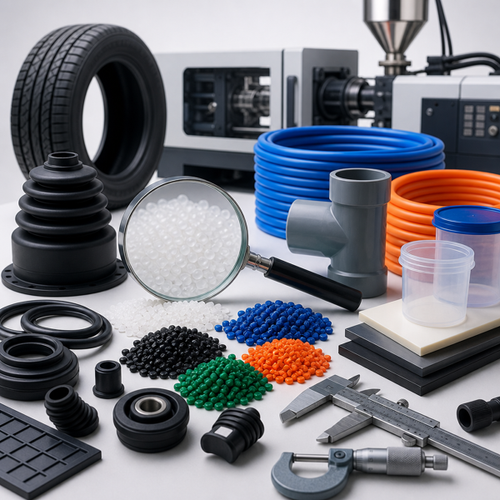
Thermoplastics have become integral to modern manufacturing, impacting sectors from automotive to healthcare, electronics to packaging. Staying competitive in these fast-changing industries depends on applying up-to-date standards that guarantee quality, safety, and efficiency. This article provides an in-depth overview of four internationally recognized standards within the rubber and plastics sector, focusing on critical aspects such as testing, designation, and classification of thermoplastic materials. By adopting these standards, businesses not only ensure product reliability and regulatory compliance but also unlock scalable productivity and robust market access.
Overview / Introduction
Thermoplastics are transforming manufacturing processes across countless industries. Unlike thermosets, these materials can be repeatedly melted and reshaped, offering versatility in production and design. Their widespread application calls for stringent quality control, robust classification systems, and consistent testing methods. This is where international standards come into play—ensuring thermoplastic components perform reliably in end-use applications, regardless of geography or sector.
In today’s global market, standards such as ISO 14446:1999, ISO 16365-2:2014, ISO 182-2:1990, and ISO 21301-1:2019 are essential tools for professionals aiming to achieve high levels of productivity, security, and product scalability. They provide clear frameworks for material testing, property determination, safety assurance, and product identification. Through this article, you’ll learn about each standard’s scope, requirements, and business benefits—empowering you to make informed decisions for your organization and processes.
Detailed Standards Coverage
ISO 14446:1999 – Viscosity Determination and Classification of Cellulose Nitrate Solutions
Binders for paints and varnishes — Determination of the viscosity of industrial cellulose nitrate solutions and classification of such solutions
What the standard covers: ISO 14446:1999 standardizes a method for determining the viscosity of industrial cellulose nitrate—commonly known as nitrocellulose—which is extensively used as a binder in paints, varnishes, inks, and coatings. The standard applies to cellulose nitrate solutions with nitrogen content ranging from 10.7% to 12.6% by mass. A crucial part of the standard is a classification system for nitrocellulose solutions based on viscosity values measured using the prescribed methods.
Key requirements and specifications:
- Specifies use of an acetone/water mixture to prepare nitrocellulose samples.
- Employs a falling-ball viscometer (Höppler method) for viscosity determination.
- Standardizes sample preparation and testing temperature (20°C ± 0.1°C).
- Details safety requirements due to cellulose nitrate’s hazardous properties (always moisten and handle carefully).
- Provides a classification system to define solution types, reducing confusion from variable test methods and solvents.
Who needs to comply:
- Manufacturers and suppliers of paints, varnishes, and inks
- Quality control labs in chemical and coatings industries
- Raw material suppliers in the thermoplastics sector
Practical implications: Adopting ISO 14446:1999 improves consistency in nitrocellulose-based products and helps avoid misclassification, which can lead to costly process failures or performance issues. The standard guides labs and manufacturers towards harmonized practices, ensuring products meet both regulatory and application-specific expectations.
Notable features:
- Sets a unified reference for viscosity measurements
- Reduces variability between batches and suppliers
- Supports international trade and regulatory compliance
Key highlights:
- Unified method for reliable viscosity measurement
- Enhanced product classification and comparability
- Improved safety and product handling protocols
Access the full standard:View ISO 14446:1999 on iTeh Standards
ISO 16365-2:2014 – Preparation and Property Testing of Thermoplastic Polyurethanes (TPU)
Plastics — Thermoplastic polyurethanes for moulding and extrusion — Part 2: Preparation of test specimens and determination of properties
What the standard covers: ISO 16365-2:2014 specifies the correct procedures for preparing test specimens from thermoplastic polyurethane (TPU) materials, and outlines the standard test methods used to determine key material properties. This standard is fundamental for ensuring that the measured properties reliably represent the behavior of TPU in actual applications. It details everything from sample conditioning to precise handling and drying methods.
Key requirements and specifications:
- Outlines methods for preparing, conditioning, and testing TPU granules or compounds before moulding.
- Defines moisture content limits (≤ 0.02% by mass) before processing.
- Prescribes drying techniques to ensure material stability.
- Lists required and recommended equipment (dehumidified air dryers, ovens, viscometers, etc.).
- Calls out a range of international test standards (e.g., ISO 527, ISO 37 for tensile properties, ISO 868 for hardness, ISO 1133 for melt flow).
- Ensures that dimensions, preparation, and conditioning of specimens are consistent to enable reproducible and comparable results.
Who needs to comply:
- Polymer processors and manufacturers of TPU
- Research and development labs
- Quality control and materials testing organizations
- Product designers and engineers working with polyurethane thermoplastics
Practical implications: By establishing robust, reproducible testing protocols, ISO 16365-2:2014 helps manufacturers eliminate variability that could impact product quality, durability, or performance. The standard bolsters both internal process efficiency and customer trust by ensuring test results are both meaningful and comparable between different batches, facilities, or geographies.
Notable features:
- Comprehensive guidance from material preparation through testing
- Increases efficiency by avoiding product failures early in development
- Facilitates reliable benchmarking and materials comparison
Key highlights:
- Standardized test specimen preparation
- Universal property determination methods for TPU
- Enhances reliability of end-product quality control
Access the full standard:View ISO 16365-2:2014 on iTeh Standards
ISO 182-2:1990 – Assessing Stability of PVC Compounds by pH Determination
Plastics — Determination of the tendency of compounds and products based on vinyl chloride homopolymers and copolymers to evolve hydrogen chloride and any other acidic products at elevated temperatures — Part 2: pH method
What the standard covers: ISO 182-2:1990 details a pH-based method to assess the thermal stability of compounds and products containing polyvinyl chloride (PVC) when heated. It specifically quantifies the tendency of these materials to release hydrogen chloride (HCl) gas, which is critical for both process safety and product performance.
Key requirements and specifications:
- Primarily aimed at compounded PVC materials, including products and colored compounds
- Not suitable for PVC dry blends (due to lack of homogeneity)
- Uses a gas stream to expose samples at a set elevated temperature, collecting released HCl in a sodium chloride solution
- Monitors and measures pH change as a direct indicator of HCl evolution
- Includes detailed apparatus diagrams and cleaning instructions for reliable and repeatable testing
- Safety guidelines are highlighted due to hazardous materials
Who needs to comply:
- PVC manufacturers and compounders
- Quality assurance and control laboratories
- Product designers and converter organizations, especially those concerned with long-term stability or regulatory compliance
Practical implications: Thermal stability testing using the pH method is essential for qualifying PVC products in sectors such as construction, medical devices, and consumer goods. Adherence to ISO 182-2:1990 allows manufacturers to select stabilizers and compounding strategies with confidence, ensuring products will not degrade or release harmful acids prematurely or in use. This supports brand trust and minimizes post-market liabilities.
Notable features:
- Suitable for both routine process control and R&D
- Provides metrics that directly translate to product longevity and safety
- Harmonized international reference for regulatory and customer requirements
Key highlights:
- Reliable test method for PVC dehydrochlorination
- Supports health, safety, and regulatory compliance
- Enhances long-term product stability and brand reputation
Access the full standard:View ISO 182-2:1990 on iTeh Standards
ISO 21301-1:2019 – Designation and Specification of Ethylene-Vinyl Acetate (EVAC) Materials
Plastics — Ethylene-vinyl acetate (EVAC) moulding and extrusion materials — Part 1: Designation system and basis for specifications
What the standard covers: ISO 21301-1:2019 establishes a systematic approach to the designation and classification of ethylene-vinyl acetate copolymers (EVAC), which are widely used in applications ranging from packaging films to shoe soles and cable insulation. The standard outlines how to construct a product designation code based on key compositional and performance properties, intended applications, and processing methods.
Key requirements and specifications:
- Applies to EVAC with vinyl acetate content ranging from 3% to 50% by mass
- Introduces a modular designation system based on:
- Vinyl acetate content
- Melt mass-flow rate (MFR)
- Intended use or processing method
- Key properties, additives, fillers, colorants, and reinforcements
- Coverage includes both unmodified and modified materials—powder, granules, or pellets
- Does not guarantee identical performance for materials with the same designation; further testing may be required for specific applications
Who needs to comply:
- Producers and suppliers of EVAC resin
- Product designers and specifiers in plastics processing industries
- Purchasing departments and regulatory compliance staff
Practical implications: The use of ISO 21301-1:2019 enables manufacturers and users to select the right EVAC material for a given application based on clearly defined performance and processing parameters. It supports international sourcing and specification, reduces sourcing ambiguity, and facilitates the rapid communication of technical requirements between business partners.
Notable features:
- Simplified yet comprehensive designation system for EVAC materials
- Facilitates traceability and quality assurance in supply chains
- Supports efficient material selection and procurement
Key highlights:
- Universal, modular system for EVAC classification
- Ensures compatibility and reduces sourcing risks
- Aids scaling through global recognition and harmonization
Access the full standard:View ISO 21301-1:2019 on iTeh Standards
Industry Impact & Compliance
The rubber and plastics sector is under constant pressure to deliver products that are safer, more consistent, and compliant with diverse international regulations. Adopting these thermoplastic material standards drives substantial benefits:
- Quality Assurance: Standardized test methods ensure that products meet performance expectations consistently, reducing the risk of in-field failures or non-compliance recalls.
- Productivity Gains: Streamlined testing, material specification, and procurement reduce delays and errors, accelerating time-to-market.
- Enhanced Security: Rigorous assessment of material stability and safety properties (e.g., hydrogen chloride evolution, moisture content control) protect workers and end-users, and help mitigate liability risks.
- Competitive Advantage: Businesses that comply with up-to-date international standards are better positioned for global trade, supply chain integration, and long-term scalability.
- Market Access: Many markets and contracts require products to meet or exceed specific ISO standards, making compliance a prerequisite for growth.
Risks of non-compliance include:
- Increased likelihood of regulatory penalties or legal action
- Damaged reputation from product recalls or failures
- Loss of market opportunities, especially in industries with strict procurement requirements
Implementation Guidance
Successfully integrating thermoplastic materials standards into your business involves several best practices:
- Staff Training: Ensure laboratory and production staff understand the test methods, apparatus handling, and safety measures required by each standard.
- Quality Management Systems: Embed standards requirements into internal quality protocols (e.g., ISO 9001 integration).
- Controlled Environment: Use modern lab equipment and regularly calibrate tools as specified (e.g., viscometers, dryers, pH meters).
- Supplier Engagement: Select suppliers who demonstrate adherence to relevant standards for material consistency and traceability.
- Documentation and Traceability: Archive all testing and material designation records for accountability and continuous improvement.
- Stay Connected: Regularly consult with standardization bodies and use platforms like iTeh Standards for updates and resources.
Available resources:
- iTeh Standards’ rich library for full versions and latest updates
- International and regional standardization bodies’ training modules
- Laboratory and equipment suppliers familiar with ISO requirements
Conclusion / Next Steps
The ongoing evolution of thermoplastic materials and industrial processes requires businesses to stay ahead through robust adoption of international standards. The four standards discussed—ISO 14446:1999, ISO 16365-2:2014, ISO 182-2:1990, and ISO 21301-1:2019—not only help ensure the integrity and performance of rubber and plastic components but also enhance productivity, security, and global competitiveness.
Key takeaways:
- Implementing these standards delivers measurable gains in consistency, quality, and process efficiency.
- Compliance minimizes business risk and opens the door to new markets and partnerships.
- Practical adoption involves a mix of investment in equipment, staff training, and robust documentation.
Recommendations for organizations:
- Review your current testing and specification protocols against these standards.
- Invest in standards-based training and audits.
- Use trusted sources such as iTeh Standards to access, maintain, and update your library of current international standards.
Stay proactive—explore, implement, and benefit from the latest in thermoplastic materials standards. Your business, your customers, and your reputation depend on it.
Categories
- Latest News
- New Arrivals
- Generalities
- Services and Management
- Natural Sciences
- Health Care
- Environment
- Metrology and Measurement
- Testing
- Mechanical Systems
- Fluid Systems
- Manufacturing
- Energy and Heat
- Electrical Engineering
- Electronics
- Telecommunications
- Information Technology
- Image Technology
- Precision Mechanics
- Road Vehicles
- Railway Engineering
- Shipbuilding
- Aircraft and Space
- Materials Handling
- Packaging
- Textile and Leather
- Clothing
- Agriculture
- Food technology
- Chemical Technology
- Mining and Minerals
- Petroleum
- Metallurgy
- Wood technology
- Glass and Ceramics
- Rubber and Plastics
- Paper Technology
- Paint Industries
- Construction
- Civil Engineering
- Military Engineering
- Entertainment