

ASTM B701/B701M-22e1
(Specification)Standard Specification for Concentric-Lay-Stranded Self-Damping Aluminum Conductors, Steel Reinforced (ACSR/SD)
General Information
- Abstract
ABSTRACT
This specification covers concentric-lay-stranded self-damping aluminum conductors, steel-reinforced, and its component wires for use as overhead electrical conductors. The tensile strength and elongation requirements of the round and trapezoidal wires shall be the same except for the shape and diameter tolerance. Joints shall not be made in the finished steel wires. The lay factor and direction are specified. The strength and electrical resistance of a complete conductor are calculated. Tests for mechanical and electrical properties of aluminum and steel core wires shall be made before stranding. Gap dimensions shall be measured during fabrication of the conductor.
SCOPE
1.1 This specification covers concentric-lay-stranded self-damping aluminum conductor, steel-reinforced (ACSR/SD), and its component wires for use as overhead electrical conductors (Explanatory Notes 1 and 2).
1.2 The values stated in inch-pound or SI units are to be regarded separately as standard. Each system shall be used independently of the other. Combining values from the two systems may result in non-conformance with the specification. For conductor sizes designated by AWG or kcmil, the requirements in SI units have been numerically converted from corresponding values stated or derived in inch-pound units. For conductor sizes designated by SI units only, the requirements are stated or derived in SI units.
1.2.1 For density, resistivity, and temperature, the values stated in SI units are to be regarded as standard.
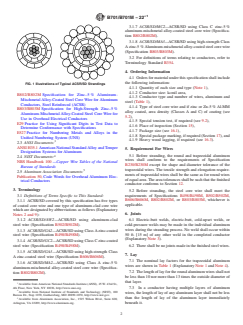
Note 1: ACSR/SD is designed to control aeolian vibration by integral damping. The conductors consist of a central core of a round steel wire or wires surrounded by two layers of trapezoidal aluminum 1350-H19 wires or two layers of trapezoidal aluminum 1350-H19 wires and one layer of round aluminum 1350-H19 wires (Fig. 1). The trapezoidal-wire layers are separated from each other and from the steel core by two small annular gaps that provide the conductors self-damping characteristics. The round aluminum wires are in tight layer contact between themselves and the underlying trapezoidal wire layer. Different strandings of the same size of conductor are identified by type, which is the approximate ratio of steel area to aluminum area, expressed in percent (Table 1 and Table 2).
FIG. 1 Illustrations of Typical ACSR/SD Strandings
Note 2: The aluminum and temper designations conform to ANSI Standard H 35.1. Aluminum 1350 corresponds to UNS A91350 in accordance with Practice E527.
1.3 This standard does not purport to address all of the safety concerns, if any, associated with its use. It is the responsibility of the user of this standard to establish appropriate safety, health, and environmental practices and determine the applicability of regulatory limitations prior to use.
1.4 This international standard was developed in accordance with internationally recognized principles on standardization established in the Decision on Principles for the Development of International Standards, Guides and Recommendations issued by the World Trade Organization Technical Barriers to Trade (TBT) Committee.
- Status
- Published
- Publication Date
- 30-Nov-2022
- Technical Committee
- B01 - Electrical Conductors
- Drafting Committee
- B01.07 - Conductors of Light Metals
Overview
ASTM B701/B701M-22e1 is the standard specification covering concentric-lay-stranded self-damping aluminum conductors, steel-reinforced (ACSR/SD) and their component wires. These specialized overhead electrical conductors are designed for electricity transmission lines, offering both robust mechanical strength and self-damping properties that help mitigate aeolian vibrations. This document, maintained by ASTM International, ensures that ACSR/SD conductors meet rigorous requirements for mechanical and electrical performance, dimensional accuracy, and construction quality.
Key Topics
- Self-Damping Design: ACSR/SD conductors include annular gaps between trapezoidal aluminum wire layers and the steel core, providing built-in vibration damping for improved performance in overhead applications.
- Component Wires: The conductors feature a steel core (can be zinc-coated or aluminum-coated) surrounded by two or more layers of high-purity aluminum (Aluminum 1350-H19), with both round and trapezoidal profiles.
- Mechanical and Electrical Properties: The standard mandates tensile strength, elongation, and resistivity requirements for both aluminum and steel wires, ensuring consistent performance and durability in service.
- Dimensional Tolerances: Requirements are established for conductor diameter, gap thickness, and lay factor (the ratio of wire lay length to outside diameter) to assure compliance and interchangeability.
- Stranding Configurations: Different strandings, identified by the ratio of steel to aluminum area, provide flexibility to meet design requirements for strength and conductivity.
- Testing and Inspection: The standard specifies test methods for mechanical and electrical verification of wires before stranding, as well as requirements for gap measurement during conductor fabrication.
- Packaging and Marking: Guidance is provided for packaging, marking, and shipment to maintain product integrity and traceability.
Applications
ACSR/SD conductors manufactured in accordance with ASTM B701/B701M-22e1 are widely used in:
- Overhead Power Transmission Lines: The self-damping capability reduces vibration-induced fatigue, minimizing the risk of conductor failure in harsh environments.
- Utility and Grid Expansions: Their high strength-to-weight ratio and reliable mechanical performance make them ideal for integrating into new transmission projects or upgrading existing infrastructure.
- Long-Span Installations: The robust design and controlled vibration characteristics are especially beneficial in long-span and high-wind areas.
Industry professionals value these conductors for their longevity, low maintenance, and excellent performance under dynamic loading.
Related Standards
Adherence to ASTM B701/B701M-22e1 often involves consideration of multiple related standards, including but not limited to:
- ASTM B230/B230M: Specification for Aluminum 1350-H19 Wire for Electrical Purposes
- ASTM B232/B232M: Specification for Concentric-Lay-Stranded Aluminum Conductors, Coated-Steel Reinforced (ACSR)
- ASTM B498/B498M: Specification for Zinc-Coated (Galvanized) Steel Core Wire
- ASTM B502/B502M: Specification for Aluminum-Clad Steel Core Wire
- ASTM B606/B606M: Specification for High-Strength Zinc-Coated Steel Core Wire
- ASTM B802/B802M, B803/B803M: Specifications for Zinc-5% Aluminum-Mischmetal Alloy-Coated Steel Core Wires
Complying with these standards ensures interoperability, safety, and quality across the supply chain for aluminum overhead conductors, supporting energy utilities and infrastructure providers worldwide.
Keywords: ACSR/SD, self-damping aluminum conductor, steel reinforced, overhead electrical conductors, ASTM B701, power transmission, aluminum 1350-H19, aeolian vibration, stranded aluminum conductors, conductor standard, utility infrastructure.
Relations
- Effective Date
- 01-Apr-2024
- Effective Date
- 01-Apr-2024
- Effective Date
- 01-Oct-2023
- Effective Date
- 01-Oct-2023
- Effective Date
- 01-Oct-2023
- Effective Date
- 01-Jan-2020
- Effective Date
- 01-Oct-2019
- Effective Date
- 01-Apr-2017
- Effective Date
- 01-Oct-2016
- Effective Date
- 01-Oct-2016
- Effective Date
- 01-Oct-2016
- Effective Date
- 01-Oct-2016
- Effective Date
- 01-Sep-2016
- Effective Date
- 01-Apr-2014
- Effective Date
- 01-Apr-2013
Get Certified
Connect with accredited certification bodies for this standard

IMQ S.p.A. (Certification)
Italian electrical product certification.

SLG Prüf- und Zertifizierungs GmbH
German testing and certification body.

UL Solutions
Global safety science company with testing, inspection and certification.
Sponsored listings
Frequently Asked Questions
ASTM B701/B701M-22e1 is a technical specification published by ASTM International. Its full title is "Standard Specification for Concentric-Lay-Stranded Self-Damping Aluminum Conductors, Steel Reinforced (ACSR/SD)". This standard covers: ABSTRACT This specification covers concentric-lay-stranded self-damping aluminum conductors, steel-reinforced, and its component wires for use as overhead electrical conductors. The tensile strength and elongation requirements of the round and trapezoidal wires shall be the same except for the shape and diameter tolerance. Joints shall not be made in the finished steel wires. The lay factor and direction are specified. The strength and electrical resistance of a complete conductor are calculated. Tests for mechanical and electrical properties of aluminum and steel core wires shall be made before stranding. Gap dimensions shall be measured during fabrication of the conductor. SCOPE 1.1 This specification covers concentric-lay-stranded self-damping aluminum conductor, steel-reinforced (ACSR/SD), and its component wires for use as overhead electrical conductors (Explanatory Notes 1 and 2). 1.2 The values stated in inch-pound or SI units are to be regarded separately as standard. Each system shall be used independently of the other. Combining values from the two systems may result in non-conformance with the specification. For conductor sizes designated by AWG or kcmil, the requirements in SI units have been numerically converted from corresponding values stated or derived in inch-pound units. For conductor sizes designated by SI units only, the requirements are stated or derived in SI units. 1.2.1 For density, resistivity, and temperature, the values stated in SI units are to be regarded as standard. Note 1: ACSR/SD is designed to control aeolian vibration by integral damping. The conductors consist of a central core of a round steel wire or wires surrounded by two layers of trapezoidal aluminum 1350-H19 wires or two layers of trapezoidal aluminum 1350-H19 wires and one layer of round aluminum 1350-H19 wires (Fig. 1). The trapezoidal-wire layers are separated from each other and from the steel core by two small annular gaps that provide the conductors self-damping characteristics. The round aluminum wires are in tight layer contact between themselves and the underlying trapezoidal wire layer. Different strandings of the same size of conductor are identified by type, which is the approximate ratio of steel area to aluminum area, expressed in percent (Table 1 and Table 2). FIG. 1 Illustrations of Typical ACSR/SD Strandings Note 2: The aluminum and temper designations conform to ANSI Standard H 35.1. Aluminum 1350 corresponds to UNS A91350 in accordance with Practice E527. 1.3 This standard does not purport to address all of the safety concerns, if any, associated with its use. It is the responsibility of the user of this standard to establish appropriate safety, health, and environmental practices and determine the applicability of regulatory limitations prior to use. 1.4 This international standard was developed in accordance with internationally recognized principles on standardization established in the Decision on Principles for the Development of International Standards, Guides and Recommendations issued by the World Trade Organization Technical Barriers to Trade (TBT) Committee.
ABSTRACT This specification covers concentric-lay-stranded self-damping aluminum conductors, steel-reinforced, and its component wires for use as overhead electrical conductors. The tensile strength and elongation requirements of the round and trapezoidal wires shall be the same except for the shape and diameter tolerance. Joints shall not be made in the finished steel wires. The lay factor and direction are specified. The strength and electrical resistance of a complete conductor are calculated. Tests for mechanical and electrical properties of aluminum and steel core wires shall be made before stranding. Gap dimensions shall be measured during fabrication of the conductor. SCOPE 1.1 This specification covers concentric-lay-stranded self-damping aluminum conductor, steel-reinforced (ACSR/SD), and its component wires for use as overhead electrical conductors (Explanatory Notes 1 and 2). 1.2 The values stated in inch-pound or SI units are to be regarded separately as standard. Each system shall be used independently of the other. Combining values from the two systems may result in non-conformance with the specification. For conductor sizes designated by AWG or kcmil, the requirements in SI units have been numerically converted from corresponding values stated or derived in inch-pound units. For conductor sizes designated by SI units only, the requirements are stated or derived in SI units. 1.2.1 For density, resistivity, and temperature, the values stated in SI units are to be regarded as standard. Note 1: ACSR/SD is designed to control aeolian vibration by integral damping. The conductors consist of a central core of a round steel wire or wires surrounded by two layers of trapezoidal aluminum 1350-H19 wires or two layers of trapezoidal aluminum 1350-H19 wires and one layer of round aluminum 1350-H19 wires (Fig. 1). The trapezoidal-wire layers are separated from each other and from the steel core by two small annular gaps that provide the conductors self-damping characteristics. The round aluminum wires are in tight layer contact between themselves and the underlying trapezoidal wire layer. Different strandings of the same size of conductor are identified by type, which is the approximate ratio of steel area to aluminum area, expressed in percent (Table 1 and Table 2). FIG. 1 Illustrations of Typical ACSR/SD Strandings Note 2: The aluminum and temper designations conform to ANSI Standard H 35.1. Aluminum 1350 corresponds to UNS A91350 in accordance with Practice E527. 1.3 This standard does not purport to address all of the safety concerns, if any, associated with its use. It is the responsibility of the user of this standard to establish appropriate safety, health, and environmental practices and determine the applicability of regulatory limitations prior to use. 1.4 This international standard was developed in accordance with internationally recognized principles on standardization established in the Decision on Principles for the Development of International Standards, Guides and Recommendations issued by the World Trade Organization Technical Barriers to Trade (TBT) Committee.
ASTM B701/B701M-22e1 is classified under the following ICS (International Classification for Standards) categories: 29.240.20 - Power transmission and distribution lines. The ICS classification helps identify the subject area and facilitates finding related standards.
ASTM B701/B701M-22e1 has the following relationships with other standards: It is inter standard links to ASTM B232/B232M-24, ASTM B500/B500M-24, ASTM B502/B502M-23, ASTM B606/B606M-23, ASTM B802/B802M-23, ASTM B263/B263M-14(2020), ASTM B502/B502M-19, ASTM B502/B502M-10(2017), ASTM B606/B606M-08(2016), ASTM B803/B803M-08(2016), ASTM B498/B498M-08(2016), ASTM B802/B802M-10(2016), ASTM B354-16, ASTM B263/B263M-14, ASTM B549-13. Understanding these relationships helps ensure you are using the most current and applicable version of the standard.
ASTM B701/B701M-22e1 is available in PDF format for immediate download after purchase. The document can be added to your cart and obtained through the secure checkout process. Digital delivery ensures instant access to the complete standard document.
Standards Content (Sample)
This international standard was developed in accordance with internationally recognized principles on standardization established in the Decision on Principles for the
Development of International Standards, Guides and Recommendations issued by the World Trade Organization Technical Barriers to Trade (TBT) Committee.
´1
Designation: B701/B701M −22
Standard Specification for
Concentric-Lay-Stranded Self-Damping Aluminum
Conductors, Steel Reinforced (ACSR/SD)
This standard is issued under the fixed designation B701/B701M; the number immediately following the designation indicates the year
of original adoption or, in the case of revision, the year of last revision. A number in parentheses indicates the year of last reapproval.
A superscript epsilon (´) indicates an editorial change since the last revision or reapproval.
ε NOTE—Added publication information to Footnote 1 editorially in January 2023.
1. Scope 1.4 This international standard was developed in accor-
dance with internationally recognized principles on standard-
1.1 This specification covers concentric-lay-stranded self-
ization established in the Decision on Principles for the
damping aluminum conductor, steel-reinforced (ACSR/SD),
Development of International Standards, Guides and Recom-
and its component wires for use as overhead electrical conduc-
mendations issued by the World Trade Organization Technical
tors (Explanatory Notes 1 and 2).
Barriers to Trade (TBT) Committee.
1.2 The values stated in inch-pound or SI units are to be
regarded separately as standard. Each system shall be used
2. Referenced Documents
independently of the other. Combining values from the two
2.1 The following documents of the issue in effect on date
systems may result in non-conformance with the specification.
of material purchase form a part of this specification to the
For conductor sizes designated byAWG or kcmil, the require-
extent referenced herein.
ments in SI units have been numerically converted from
correspondingvaluesstatedorderivedininch-poundunits.For 2.2 ASTM Standards:
B230/B230M Specification for Aluminum 1350–H19 Wire
conductor sizes designated by SI units only, the requirements
are stated or derived in SI units. for Electrical Purposes
B232/B232M Specification for Concentric-Lay-Stranded
1.2.1 For density, resistivity, and temperature, the values
stated in SI units are to be regarded as standard. Aluminum Conductors, Coated-Steel Reinforced (ACSR)
B263/B263M Test Method for Determination of Cross-
NOTE 1—ACSR/SD is designed to control aeolian vibration by integral
Sectional Area of Stranded Conductors
damping. The conductors consist of a central core of a round steel wire or
B354 Terminology Relating to Uninsulated Metallic Electri-
wires surrounded by two layers of trapezoidal aluminum 1350-H19 wires
or two layers of trapezoidal aluminum 1350-H19 wires and one layer of
cal Conductors
round aluminum 1350-H19 wires (Fig. 1). The trapezoidal-wire layers are
B498/B498M Specification for Zinc-Coated (Galvanized)
separated from each other and from the steel core by two small annular
Steel Core Wire for Use in Overhead Electrical Conduc-
gaps that provide the conductors self-damping characteristics. The round
tors
aluminum wires are in tight layer contact between themselves and the
underlying trapezoidal wire layer. Different strandings of the same size of B500/B500M Specification for Metallic Coated or Alumi-
conductor are identified by type, which is the approximate ratio of steel
num Clad Stranded Steel Core for Use in Overhead
area to aluminum area, expressed in percent (Table 1 and Table 2).
Electrical Conductors
NOTE 2—The aluminum and temper designations conform to ANSI
B502/B502M Specification for Aluminum-Clad Steel Core
Standard H 35.1. Aluminum 1350 corresponds to UNS A91350 in
Wire for Use in Overhead Electrical Aluminum Conduc-
accordance with Practice E527.
tors
1.3 This standard does not purport to address all of the
B549 Specification for Concentric-Lay-Stranded Aluminum
safety concerns, if any, associated with its use. It is the
Conductors, Aluminum-Clad Steel Reinforced for Use in
responsibility of the user of this standard to establish appro-
Overhead Electrical Conductors
priate safety, health, and environmental practices and deter-
B606/B606M Specification for High-Strength Zinc-Coated
mine the applicability of regulatory limitations prior to use.
(Galvanized) Steel Core Wire for Aluminum and
Aluminum-Alloy Conductors, Steel Reinforced
This specification is under the jurisdiction of ASTM Committee B01 on
Electrical Conductors and is the direct responsibility of Subcommittee B01.07 on
Conductors of Light Metals. For referenced ASTM standards, visit the ASTM website, www.astm.org, or
Current edition approved Dec. 1, 2022. Published December 2022. Originally contact ASTM Customer Service at service@astm.org. For Annual Book of ASTM
approved in 1981. Last previous edition approved in 2018 as B701/B701M – 13 Standards volume information, refer to the standard’s Document Summary page on
(2018). DOI: 10.1520/B0701_B0701M-22E01. the ASTM website.
Copyright © ASTM International, 100 Barr Harbor Drive, PO Box C700, West Conshohocken, PA 19428-2959. United States
´1
B701/B701M − 22
3.1.7 ACSR/SD/MC2—ACSR/SD using Class C zinc-5 %
aluminum-mischmetal alloy-coated steel core wire (Specifica-
tion B802/B802M).
3.1.8 ACSR/SD/MA3—ACSR/SD using high-strength Class
Azinc-5 %Aluminum-mischmetal alloy-coated steel core wire
(Specification B803/B803M).
3.2 For definitions of terms relating to conductors, refer to
Terminology Standard B354.
4. Ordering Information
4.1 Orders for material under this specification shall include
the following information:
FIG. 1 Illustrations of Typical ACSR/SD Strandings
4.1.1 Quantity of each size and type (Note 1),
4.1.2 Conductor size: kcmil area,
B802/B802M Specification for Zinc–5 % Aluminum-
4.1.3 Conductor type and number of wires, aluminum and
Mischmetal Alloy-Coated Steel Core Wire for Aluminum
steel (Table 1),
Conductors, Steel Reinforced (ACSR)
4.1.4 Type of steel core wire and if zinc or Zn-5 % Al-MM
B803/B803M Specification for High-Strength Zinc–5 %
alloy coated, area density (Classes A and C) of coating (see
Aluminum-Mischmetal Alloy-Coated Steel Core Wire for
5.2),
Use in Overhead Electrical Conductors
4.1.5 Special tension test, if required (see 9.2),
E29 Practice for Using Significant Digits in Test Data to
4.1.6 Place of inspection (Section 15),
Determine Conformance with Specifications
4.1.7 Package size (see 16.1),
E527 Practice for Numbering Metals and Alloys in the
4.1.8 Specialpackagemarking,ifrequired(Section17),and
Unified Numbering System (UNS)
4.1.9 Heavy wood lagging, if required (see 16.3).
2.3 ANSI Documents:
ANSI H35.1 American National StandardAlloy and Temper
5. Requirement For Wires
Designation Systems for Aluminum
4 5.1 Before stranding, the round and trapezoidal aluminum
2.4 NIST Documents:
wires shall conform to the requirements of Specification
NBS Handbook 100 —Copper Wire Tables of the National
B230/B230M except for shape and diameter tolerance of the
Bureau of Standards
5 trapezoidal wires. The tensile strength and elongation require-
2.5 Aluminum Association Documents:
ments of trapezoidal wires shall be the same as for round wires
Publication 50, Code Words for Overhead Aluminum Elec-
ofequalarea.Theareatolerancesshallbesuchthatthefinished
trical Conductors
conductor conforms to Section 12.
3. Terminology
5.2 Before stranding, the steel core wire shall meet the
requirements of Specifications B498/B498M, B502/B502M,
3.1 Definitions of Terms Specific to This Standard:
B606/B606M, B802/B802M,or B803/B803M, whichever is
3.1.1 ACSR/SD covered by this specification has five types
applicable.
of coated core wire and one type of aluminum-clad core wire
which are designated by abbreviations as follows (Explanatory
6. Joints
Notes 2 and 9):
3.1.2 ACSR/SD/AW2—ACSR/SD using aluminum-clad
6.1 Electric-butt welds, electric-butt, cold-upset welds, or
steel wire (Specification B502/B502M).
cold-pressure welds may be made in the individual aluminum
wires during the stranding process. No weld shall occur within
3.1.3 ACSR/SD/GA2—ACSR/SD using ClassAzinc-coated
50 ft. [15 m] of any other weld in the completed conductor
steel wire (Specification B498/B498M).
(Explanatory Note 3).
3.1.4 ACSR/SD/GC2—ACSR/SD using Class C zinc-coated
6.2 There shall be no joints made in the finished steel wires.
steel wire (Specification B498/B498M).
3.1.5 ACSR/SD/GA3—ACSR/SD using high-strength Class
7. Lay
A zinc-coated steel wire (Specification B606/B606M).
7.1 The nominal lay factors for the trapezoidal aluminum
3.1.6 ACSR/SD/MA2—ACSR/SD using Class A zinc-5 %
wires are shown in Table 1 (Explanatory Note 1 and Note 4).
aluminum-mischmetal alloy-coated steel core wire (Specifica-
tion B802/B802M). 7.2 Thelengthoflayfortheroundaluminumwiresshallnot
be less than 10 nor more than 13 times the outside diameter of
that layer.
Available fromAmerican National Standards Institute (ANSI), 25 W. 43rd St.,
4th Floor, New York, NY 10036, http://www.ansi.org.
7.3 In a conductor having multiple layers of aluminum
Available from National Institute of Standards and Technology (NIST), 100
wires, the length of lay of any aluminum layer shall not be less
Bureau Dr., Stop 1070, Gaithersburg, MD 20899-1070, http://www.nist.gov.
than the length of lay of the aluminum layer immediately
Available from Aluminum Association, Inc., 1525 Wilson Blvd., Suite 600,
Arlington, VA 22209, http://www.aluminum.org. beneath it.
´1
B701/B701M − 22
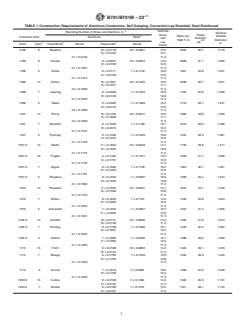
TABLE 1 Construction Requirements of Aluminum Conductors, Self Damping, Concentric-Lay-Stranded, Steel-Reinforced
A
Nominal
Stranding Number of Wires and Diameter, in.
Nominal
Alumi- Rated
C Mass per Outside
Conductor Size Aluminum Steel
num Strength,
1000 ft, lb Diameter,
A,B
Lay kip
D E F in.
kcmil Type Code Word Round Trapezoidal Round
Factor
2156 8 Bluebird 10 × 0.2179 19 × 0.0961 14.5 2504 60.7 1.716
15 × 0.2184 12.1
21 × 0.2145 11.0
1780 8 Chukar 9 × 0.2041 19 × 0.0874 14.5 2068 51.1 1.565
13 × 0.2150 12.0
21 × 0.1957 11.0
1780 5 Smew 8 × 0.2171 7 × 0.1144 16.0 1921 43.6 1.531
14 × 0.2128 12.5
21 × 0.1914 11.5
1590 13 Falcon 10 × 0.1891 19 × 0.1030 13.5 2039 55.1 1.521
14 × 0.1977 11.7
24 × 0.1690 11.5
1590 7 Lapwing 8 × 0.2059 7 × 0.1253 15.9 1791 42.6 1.468
12 × 0.2130 12.8
21 × 0.1835 11.5
1590 5 Ratite 8 × 0.2095 7 × 0.1083 15.4 1715 39.1 1.447
13 × 0.2143 12.5
23 × 0.1669 11.5
1431 13 Plover 10 × 0.1792 19 × 0.0977 13.5 1835 49.6 1.448
14 × 0.1868 11.7
24 × 0.1609 11.5
1431 7 Bobolink 8 × 0.1946 7 × 0.1189 15.1 1612 38.9 1.398
12 × 0.2015 12.2
21 × 0.1747 11.5
1431 5 Popinjay 8 × 0.1936 7 × 0.1025 16.0 1544 35.3 1.381
13 × 0.1972 12.5
21 × 0.1726 11.5
1351.5 13 Martin 11 × 0.1604 19 × 0.0949 14.7 1733 46.8 1.417
15 × 0.1652 12.8
21 × 0.1772 11.5
1351.5 10 Frigate 9 × 0.1786 7 × 0.1377 14.5 1629 41.7 1.389
14 × 0.1757 12.2
21 × 0.1735 11.0
1351.5 7 Dipper 8 × 0.1890 7 × 0.1155 15.2 1522 36.7 1.361
12 × 0.1954 12.2
21 × 0.1701 11.0
1351.5 5 Ringdove 8 × 0.1946 7 × 0.0997 16.0 1458 33.4 1.344
12 × 0.1949 12.8
21 × 0.1680 11.5
1272 13 Pheasant 11 × 0.1552 19 × 0.0921 14.7 1631 44.1 1.378
15 × 0.1599 12.8
21 × 0.1723 11.5
1272 7 Bittern 8 × 0.1829 7 × 0.1121 14.5 1433 34.6 1.323
12 × 0.1894 12.3
21 × 0.1653 11.5
1272 5 Scissortail 7 × 0.1929 7 × 0.0967 15.7 1372 31.4 1.305
11 × 0.2029 12.3
21 × 0.1631 11.5
1192.5 13 Grackle 10 × 0.2147 19 × 0.0892 14.2 1526 41.9 1.274
16 × 0.2138 11.5
1192.5 7 Bunting 8 × 0.1768 7 × 0.1085 15.1 1343 32.4 1.284
12 × 0.1831 12.2
21 × 0.1604 11.5
1192.5 5 Oxbird 7 × 0.1868 7 × 0.0936 15.7 1286 29.5 1.266
11 × 0.1960 12.3
21 × 0.1582 11.5
1113 13 Finch 9 × 0.2188 19 × 0.0862 14.2 1424 39.1 1.233
15 × 0.2133 11.5
1113 7 Bluejay 8 × 0.1705 7 × 0.1049 15.9 1254 30.3 1.242
12 × 0.1765 12.8
21 × 0.1553 11.5
1113 5 Avocet 7 × 0.1818 7 × 0.0904 16.0 1200 27.5 1.226
12 × 0.1798 12.4
21 × 0.1533 11.5
1033.5 13 Curlew 9 × 0.2106 7 × 0.1383 14.2 1329 36.3 1.191
14 × 0.2129 11.5
1033.5 7 Ortolan 8 × 0.2168 7 × 0.1010 15.2 1161 28.1 1.145
14 × 0.2167 11.5
´1
B701/B701M − 22
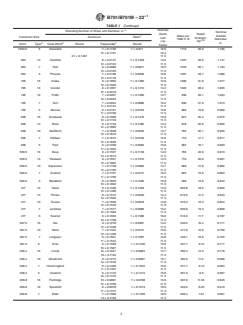
TABLE 1 Continued
A
Nominal
Stranding Number of Wires and Diameter, in.
Nominal
Alumi- Rated
C Mass per Outside
Conductor Size Aluminum Steel
num Strength,
1000 ft, lb Diameter,
A,B
Lay kip
D E F in.
kcmil Type Code Word Round Trapezoidal Round
Factor
1033.5 5 Snowbird 7 × 0.1746 7 × 0.871 16.0 1115 25.9 1.185
12 × 0.1731 12.4
21 × 0.1481 11.5
954 13 Cardinal 8 × 0.2147 7 × 0.1329 14.2 1227 33.5 1.147
13 × 0.2122 11.5
954 7 Rail 8 × 0.2080 7 × 0.0971 15.2 1073 26.1 1.103
13 × 0.2163 11.5
954 5 Phoenix 7 × 0.2196 7 × 0.0836 15.6 1027 23.7 1.088
13 × 0.2178 11.5
795 16 Drake 9 × 0.1865 7 × 0.1360 13.9 1093 31.8 1.077
13 × 0.1926 11.5
795 13 Condor 8 × 0.1957 7 × 0.1213 14.2 1023 28.2 1.055
12 × 0.2018 11.5
795 10 Puffin 7 × 0.2067 7 × 0.1056 14.7 956 25.1 1.034
12 × 0.2033 11.5
795 7 Tern 7 × 0.2034 7 × 0.0886 15.2 893 21.9 1.013
11 × 0.2144 11.5
795 5 Macaw 6 × 0.2167 7 × 0.0764 15.6 856 19.8 0.999
11 × 0.2160 11.5
636 16 Grosbeak 9 × 0.1666 7 × 0.1216 13.9 874 25.4 0.975
13 × 0.1723 11.5
636 13 Rook 8 × 0.1749 7 × 0.1085 14.3 818 22.9 0.955
12 × 0.1806 11.5
636 10 Goldfinch 7 × 0.1848 7 × 0.0945 14.7 765 20.1 0.935
12 × 0.1819 11.5
636 7 Killdeer 7 × 0.1815 7 × 0.0793 15.2 715 17.7 0.917
12 × 0.1838 11.5
636 5 Pipit 6 × 0.1938 7 × 0.0684 15.8 684 16.1 0.903
11 × 0.1932 11.5
556.5 16 Dove 9 × 0.1557 7 × 0.1138 14.0 765 22.6 0.919
13 × 0.1613 11.5
556.5 13 Parakeet 8 × 0.1637 7 × 0.1015 14.3 716 20.0 0.901
13 × 0.1662 11.5
556.5 10 Sapsucker 7 × 0.1728 7 × 0.0884 14.7 669 17.8 0.882
12 × 0.1702 11.5
556.5 7 Sunbird 7 × 0.1707 7 × 0.0741 15.2 625 15.5 0.863
11 × 0.1790 11.5
556.5 5 Blackbird 6 × 0.1820 1 × 0.1692 15.8 599 13.6 0.843
10 × 0.1892 11.5
477 16 Hawk 9 × 0.1438 7 × 0.1053 14.0 655.8 19.5 0.860
13 × 0.1496 11.5
477 13 Flicker 8 × 0.1515 7 × 0.0940 14.4 613.5 17.2 0.843
13 × 0.1502 11.5
477 10 Toucan 7 × 0.1599 7 × 0.0818 14.8 573.4 15.3 0.824
12 × 0.1576 11.5
477 7 Jackdaw 7 × 0.1577 7 × 0.0686 15.2 535.8 13.3 0.808
12 × 0.1589 11.5
477 5 Kestrel 6 × 0.1656 1 × 0.1566 16.0 513.3 11.7 0.787
10 × 0.1768 11.5
397.5 16 Ibis 9 × 0.1278 7 × 0.0961 14.2 546.5 16.4 0.771
14 × 0.1338 11.5
397.5 10 Stork 7 × 0.1424 7 × 0.0747 15.0 477.9 12.9 0.750
12 × 0.1459 11.5
397.5 7 Longspur 6 × 0.1501 1 × 0.1657 15.8 446.1 10.6 0.725
11 × 0.1544 11.5
397.5 5 Erne 6 × 0.1558 1 × 0.1430 15.6 427.7 9.74 0.717
10 × 0.1587 11.5
336.4 16 Linnet 10 × 0.1041 7 × 0.0884 14.7 462.4 14.3 0.716
16 × 0.1194 11.5
336.4 10 Woodcock 8 × 0.1215 7 × 0.0687 15.1 404.5 11.0 0.688
14 × 0.1249 11.5
336.4 7 Hummingbird 6 × 0.1406 1 × 0.1525 15.6 377.7 9.13 0.664
11 × 0.1407 11.5
336.4 5 Cowbird 6 × 0.1416 1 × 0.1315 15.9 361.9 8.5 0.667
10 × 0.1470 11.5
266.8 16 Partridge 10 × 0.0881 7 × 0.0788 15.0 367.0 11.35 0.645
12 × 0.1256 11.5
266.8 10 Spoonbill 8 × 0.0978 1 × 0.1619 16.0 320.0 8.45 0.610
11 × 0.1315 11.3
266.8 7 Eider 7 × 0.1080 1 × 0.1358 16.0 299.4 7.61 0.601
13 × 0.1193 11.2
´1
B701/B701M − 22
TABLE 1 Continued
A
Nominal
Stranding Number of Wires and Diameter, in.
Nominal
Alumi- Rated
C Mass per Outside
Conductor Size Aluminum Steel
num Strength,
1000 ft, lb Diameter,
A,B
Lay kip
D E F in.
kcmil Type Code Word Round Trapezoidal Round
Factor
266.8 5 Titmouse 6 × 0.1183 1 × 0.1171 16.0 286.9 6.92 0.593
12 × 0.1234 11.1
A
Conversion Factors:
1 kcmil = 0.5067 mm ; 1 in. = 25.4 mm; 1 kip = 1000 lbf = 4.448 kN.
B
Rated strengths of complete conductors are calculated in accordance with 9.1 and with Class A zinc-coated steel core wire in accordance with Specification B498/B498M.
C
Lay factors for steel core are the same as for equivalent stranding of conventional ACSR.
D
The type number is the approximate ratio of the steel to aluminum area in percent.
E
Code words shown in this column are obtained from, “Publication 50, Code Words for Overhead Aluminum Electrical Conductors,” by the Aluminum Association. They
are provided here for information only.
F
Wire size indicates equal area round wire diameter.
TABLE 2 Comparison of ACSR/SD with Equivalent Stranding of
the trapezoidal aluminum wires, and the number and diameter
A
ACSR
...