


ASTM B624-07(2017)
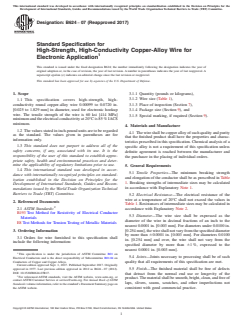
(Specification)Standard Specification for High-Strength, High-Conductivity Copper-Alloy Wire for Electronic Application
Standard Specification for High-Strength, High-Conductivity Copper-Alloy Wire for Electronic Application
ABSTRACT
This specification covers high-strength, high conductivity round copper-alloy wire used for electronic hook-up wire. The wires shall conform to the required minimum breaking strength and elongation. Electrical resistance and diameter of the wire shall be measured. The finished material shall be free of defects that detract from the normal end use or longevity of the product. Joints necessary to processing shall be of such quality that all requirements are met.
SCOPE
1.1 This specification covers high-strength, high-conductivity round copper-alloy wire 0.00099 to 0.0720 in. [0.025 to 1.829 mm] in diameter, used for electronic hookup wire. The tensile strength of the wire is 60 ksi [414 MPa] minimum and the electrical conductivity at 20°C is 85 % IACS minimum.
1.2 The values stated in inch-pound units are to be regarded as the standard. The values given in parentheses are for information only.
1.3 This standard does not purport to address all of the safety concerns, if any, associated with its use. It is the responsibility of the user of this standard to establish appropriate safety, health and environmental practices and determine the applicability of regulatory limitations prior to use.
1.4 This international standard was developed in accordance with internationally recognized principles on standardization established in the Decision on Principles for the Development of International Standards, Guides and Recommendations issued by the World Trade Organization Technical Barriers to Trade (TBT) Committee.
General Information
- Status
- Published
- Publication Date
- 31-Aug-2017
- Technical Committee
- B01 - Electrical Conductors
- Drafting Committee
- B01.04 - Conductors of Copper and Copper Alloys
Relations
- Effective Date
- 01-Sep-2017
- Effective Date
- 01-Apr-2016
- Effective Date
- 01-Apr-2014
- Effective Date
- 01-Sep-2008
- Effective Date
- 01-Apr-2004
- Effective Date
- 10-Jul-2003
- Effective Date
- 10-Apr-2002
- Effective Date
- 10-Apr-2002
- Effective Date
- 10-Apr-2002
- Effective Date
- 10-Oct-2001
- Effective Date
- 10-Oct-2001
- Effective Date
- 10-Oct-2001
- Effective Date
- 10-Oct-2001
- Effective Date
- 01-Sep-2017
Overview
ASTM B624-07(2017): Standard Specification for High-Strength, High-Conductivity Copper-Alloy Wire for Electronic Application defines the requirements for high-strength, high-conductivity copper-alloy wire used specifically as round wire for electronic hook-up applications. This standard, developed by ASTM International, ensures that copper-alloy wires used in electronic devices meet strict requirements for mechanical strength, electrical conductivity, dimensional tolerances, and surface quality.
The specification covers copper-alloy wire with diameters from 0.00099 to 0.0720 inch (0.025 to 1.829 mm), tensile strength of at least 60 ksi (414 MPa), and electrical conductivity at 20°C of minimum 85% IACS (International Annealed Copper Standard). The document outlines essential attributes, test methods, inspection criteria, and packaging guidelines to guarantee wire quality and performance.
Key Topics
Material Requirements
- Only copper alloys of specified purity and quality are allowed, ensuring uniform electrical and mechanical properties.
- Surface finish must be free of laps, slivers, seams, scratches, or other imperfections that may impact durability or performance.
Mechanical Properties and Performance
- Minimum breaking strength and elongation, as detailed in ASTM B624, must be met to ensure wire reliability and lifespan.
- Mechanical tests include tensile testing for breaking strength and elongation, following ASTM E8 methods.
Electrical Properties
- Electrical resistance is verified at 20°C, and the wire's conductivity must be at least 85% IACS.
- Resistance measurements follow ASTM B193 procedures.
Dimensional Tolerances
- Wire diameters are tightly controlled and measured with micrometers or equivalent precision calipers to ensure compliance within the specified range.
Quality Assurance and Inspection
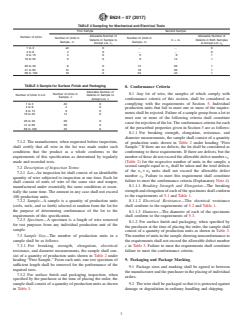
- Inspection protocols for mechanical, electrical, dimensional, and surface requirements.
- Sampling plans and conformance criteria are specified to ensure lot-to-lot consistency.
- Certification of compliance and random sampling for verification are required.
Packaging and Marking
- Packaging must protect wires from damage or degradation during handling and transportation.
- Orders should specify package size and any special marking requirements.
Applications
High-strength, high-conductivity copper-alloy wire manufactured according to ASTM B624 is primarily used for electronic hook-up wire in various electronic assemblies and devices. Common applications include:
- Internal wiring in electronic equipment, where consistent electrical performance and mechanical robustness are critical.
- Printed circuit board (PCB) connections and component leads, especially where wiring flexibility and strength are required.
- Telecommunications and signal transmission within devices, benefiting from high conductivity and durability.
- Automotive, aerospace, and defense electronics, where wires frequently face mechanical stresses and must maintain reliable conductivity.
Industries benefit from ASTM B624-compliant wire by ensuring extended lifespan, minimized risk of failure, and optimal performance in sensitive electronic environments.
Related Standards
For comprehensive application and testing, ASTM B624 references and aligns with several key related standards, including:
- ASTM B193 - Test Method for Resistivity of Electrical Conductor Materials
- ASTM E8 - Test Methods for Tension Testing of Metallic Materials
Other relevant standards for copper conductors and electrical wires may include:
- ASTM B170 - Standard Specification for Oxygen-Free Electrolytic Copper
- ASTM B33 - Standard Specification for Tinned Soft or Annealed Copper Wire for Electrical Purposes
- IEC and IEEE standards for electronic and electrical copper conductors
By adhering to ASTM B624-07(2017), manufacturers, suppliers, and end-users ensure wire quality, safety, and consistency suitable for demanding electronic applications.

Get Certified
Connect with accredited certification bodies for this standard

Intertek Testing Services NA Inc.
Intertek certification services in North America.

UL Solutions
Global safety science company with testing, inspection and certification.

ANCE
Mexican certification and testing association.
Sponsored listings
Frequently Asked Questions
ASTM B624-07(2017) is a technical specification published by ASTM International. Its full title is "Standard Specification for High-Strength, High-Conductivity Copper-Alloy Wire for Electronic Application". This standard covers: ABSTRACT This specification covers high-strength, high conductivity round copper-alloy wire used for electronic hook-up wire. The wires shall conform to the required minimum breaking strength and elongation. Electrical resistance and diameter of the wire shall be measured. The finished material shall be free of defects that detract from the normal end use or longevity of the product. Joints necessary to processing shall be of such quality that all requirements are met. SCOPE 1.1 This specification covers high-strength, high-conductivity round copper-alloy wire 0.00099 to 0.0720 in. [0.025 to 1.829 mm] in diameter, used for electronic hookup wire. The tensile strength of the wire is 60 ksi [414 MPa] minimum and the electrical conductivity at 20°C is 85 % IACS minimum. 1.2 The values stated in inch-pound units are to be regarded as the standard. The values given in parentheses are for information only. 1.3 This standard does not purport to address all of the safety concerns, if any, associated with its use. It is the responsibility of the user of this standard to establish appropriate safety, health and environmental practices and determine the applicability of regulatory limitations prior to use. 1.4 This international standard was developed in accordance with internationally recognized principles on standardization established in the Decision on Principles for the Development of International Standards, Guides and Recommendations issued by the World Trade Organization Technical Barriers to Trade (TBT) Committee.
ABSTRACT This specification covers high-strength, high conductivity round copper-alloy wire used for electronic hook-up wire. The wires shall conform to the required minimum breaking strength and elongation. Electrical resistance and diameter of the wire shall be measured. The finished material shall be free of defects that detract from the normal end use or longevity of the product. Joints necessary to processing shall be of such quality that all requirements are met. SCOPE 1.1 This specification covers high-strength, high-conductivity round copper-alloy wire 0.00099 to 0.0720 in. [0.025 to 1.829 mm] in diameter, used for electronic hookup wire. The tensile strength of the wire is 60 ksi [414 MPa] minimum and the electrical conductivity at 20°C is 85 % IACS minimum. 1.2 The values stated in inch-pound units are to be regarded as the standard. The values given in parentheses are for information only. 1.3 This standard does not purport to address all of the safety concerns, if any, associated with its use. It is the responsibility of the user of this standard to establish appropriate safety, health and environmental practices and determine the applicability of regulatory limitations prior to use. 1.4 This international standard was developed in accordance with internationally recognized principles on standardization established in the Decision on Principles for the Development of International Standards, Guides and Recommendations issued by the World Trade Organization Technical Barriers to Trade (TBT) Committee.
ASTM B624-07(2017) is classified under the following ICS (International Classification for Standards) categories: 29.060.10 - Wires. The ICS classification helps identify the subject area and facilitates finding related standards.
ASTM B624-07(2017) has the following relationships with other standards: It is inter standard links to ASTM B624-07(2012), ASTM B193-16, ASTM B193-02(2014), ASTM B193-02(2008), ASTM E8-04, ASTM E8-03, ASTM B193-01, ASTM B193-00, ASTM B193-02, ASTM E8-01, ASTM E8-01e2, ASTM E8-01e1, ASTM E8-00b, ASTM B961-13(2019). Understanding these relationships helps ensure you are using the most current and applicable version of the standard.
ASTM B624-07(2017) is available in PDF format for immediate download after purchase. The document can be added to your cart and obtained through the secure checkout process. Digital delivery ensures instant access to the complete standard document.
Standards Content (Sample)
This international standard was developed in accordance with internationally recognized principles on standardization established in the Decision on Principles for the
Development of International Standards, Guides and Recommendations issued by the World Trade Organization Technical Barriers to Trade (TBT) Committee.
Designation:B624 −07 (Reapproved 2017)
Standard Specification for
High-Strength, High-Conductivity Copper-Alloy Wire for
Electronic Application
This standard is issued under the fixed designation B624; the number immediately following the designation indicates the year of
original adoption or, in the case of revision, the year of last revision. A number in parentheses indicates the year of last reapproval. A
superscript epsilon (´) indicates an editorial change since the last revision or reapproval.
This standard has been approved for use by agencies of the U.S. Department of Defense.
1. Scope 3.1.1 Quantity (pounds or kilograms),
3.1.2 Wire size (Table 1),
1.1 This specification covers high-strength, high-
3.1.3 Place of inspection (Section 7),
conductivity round copper-alloy wire 0.00099 to 0.0720 in.
[0.025 to 1.829 mm] in diameter, used for electronic hookup
3.1.4 Package size (Section 9), and
wire. The tensile strength of the wire is 60 ksi [414 MPa]
3.1.5 Special marking, if required (Section 9).
minimum and the electrical conductivity at 20°C is 85 % IACS
minimum.
4. Materials and Manufacture
1.2 The values stated in inch-pound units are to be regarded
4.1 The wire shall be copper alloy of such quality and purity
as the standard. The values given in parentheses are for
that the finished product shall have the properties and charac-
information only.
teristics prescribed in this specification. Chemical analysis of a
1.3 This standard does not purport to address all of the
specific alloy is not a requirement of this specification unless
safety concerns, if any, associated with its use. It is the
definite agreement is reached between the manufacturer and
responsibility of the user of this standard to establish appro-
the purchaser in the placing of individual orders.
priate safety, health and environmental practices and deter-
mine the applicability of regulatory limitations prior to use.
5. General Requirements
1.4 This international standard was developed in accor-
5.1 Tensile Properties—The minimum breaking strength
dance with internationally recognized principles on standard-
and elongation of the conductor shall be as prescribed in Table
ization established in the Decision on Principles for the
1. Breaking strengths of intermediate sizes may be calculated
Development of International Standards, Guides and Recom-
in accordance with Explanatory Note 1.
mendations issued by the World Trade Organization Technical
Barriers to Trade (TBT) Committee.
5.2 Electrical Resistance—The electrical resistance of the
wire at a temperature of 20°C shall not exceed the values in
2. Referenced Documents
Table 1. Resistances of intermediate sizes may be calculated in
2.1 ASTM Standards:
accordance with Explanatory Note 2.
B193 Test Method for Resistivity of Electrical Conductor
5.3 Diameter—The wire size shall be expressed as the
Materials
diameter of the wire in decimal fractions of an inch to the
E8 Test Methods for Tension Testing of Metallic Materials
nearest 0.0001 in. [0.003 mm]. For diameters under 0.0100 in.
[0.254mm],thewireshallnotvaryfromthespecifieddiameter
3. Ordering Information
by more than 60.0001 in. [0.003 mm]. For diameters 0.0100
3.1 Orders for wire furnished to this specification shall
in. [0.254 mm] and over, the wire shall not vary from the
include the following information:
specified diameter by more than 61 %, expressed to the
nearest 0.0001 in. [0.003 mm].
This specification is under the jurisdiction of ASTM Committee B01 on
5.4 Joints—Joints necessary to processing shall be of such
Electrical Conductors and is the direct responsibility of Subcommittee B01.04 on
Conductors of Copper and Copper Alloys. quality that all requirements of this specification are met.
Current edition approved Sept. 1, 2017. Published September 2017. Originally
5.5 Finish—The finished material shall be free of defects
approved in 1977. Last previous edition approved in 2012 as B624 – 07 (2012).
DOI: 10.1520/B0624-07R17.
that detract from the normal end use or longevity of the
For referenced ASTM standards, visit the ASTM website, www.astm.org, or
product.Thematerialshallbesmooth,bright,clean,andfreeof
contact ASTM Customer Service at service@astm.org. For Annual Book of ASTM
laps, slivers, seams, scratches, and other imperfections not
Standards volume information, refer to the standard’s Document Summary page on
the ASTM website. consistent with good commercial practice.
Copyright © ASTM International, 100 Barr Harbor Drive, PO Box C700, West Conshohocken, PA 19428-2959. United States
B624−07 (2017)
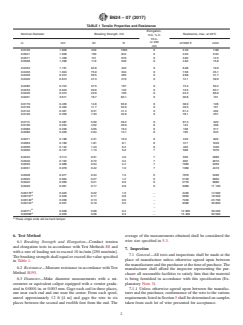
TABLE 1 Tensile Properties and Resistance
Elongation,
Nominal Diameter Breaking Strength, min Resistance, max, at 20°C
min, % in
10 in.
or 250
in. mm lbf N Ω/1000 ft Ω/km
mm
0.0720 1.829 239 1065 9 2.40 7.88
0.0641 1.628 190 844 9 3.03 9.94
0.0571 1.450 151 670 9 3.82 12.5
0.0508 1.290 119 530 9 4.82 15.8
0.0453 1.151 94.8 422 9 6.08 19.9
0.0403 1.024 75.0 334 9 7.66 25.1
0.0359 0.912 59.5 265 9 9.68 31.7
0.0320 0.813 47.3 210 9 12.1 39.9
0.0285 0.724 37.5 167 9 15.3 50.2
0.0253 0.643 29.6 132 9 19.5 63.7
0.0226 0.574 23.6 105 9 24.3 80.0
0.0201 0.511 18.7 83.1 9 30.8 101
0.0179 0.455 14.8 65.8 9 38.9 128
0.0159 0.404 11.7 52.0 9 49.5 161
0.0142 0.361 9.31 41.4 9 61.4 202
0.0126 0.320 7.33 32.6 9 78.1 257
0.0113 0.287 5.90 26.2 9 97.3 320
0.0100 0.254 4.62 20.6 8 124 408
0.0089 0.226 3.65 16.2 8 158 517
0.0080 0.203 2.94 13.1 8 195 643
0.0071 0.180 2.31 10.3 8 249 820
0.0063 0.160 1.81 8.1 8 317 1040
0.0056 0.142 1.43 6.3 8 403 1330
0.0050 0.127 1.13 5.0 7 508 1670
0.0045 0.114 0.91 4.0 7 630 2080
0.0040 0.102 0.72 3.2 7 802 2610
0.0035 0.089 0.54 2.4 7 1060 3450
0.0031 0.079 0.42 1.9 7 1360 4410
0.0028 0.071 0.34 1.5 6 1670 5490
0.0025 0.064 0.27 1.2 6 2120 6950
0.0022 0.056 0.21 0.9 6 2770 9080
0.0020 0.051 0.17 0.8 6 3380 11 100
A
0.00176 0.045 0.22 1.0 . 4430 14 500
A
0.00157 0.040 0.17 0.8 . 5650 18 500
A
0.00140 0.036 0.13 0.6 . 7220 23 700
A
0.00124 0.031 0.10 0.5 . 9390 30 800
...
A
0.00111 0.028 0.08 0.4 . 12 000 39 200
A
0.00099 0.025 0.06 0.3 . 15 400 50 500
A
These single ends will be hard temper.
6. Test Method average of the measurements obtained shall be considered the
wire size specified in 5.3.
6.1 Breaking Strength and Elongation—Conduct tension
and elongation tests in accordance with Test Methods E8 and
7. Inspection
with a rate of loading not to exceed 10 in./min [250 mm/min].
7.1 General—All tests and inspections shall be made at the
The breaking strength shall equal or exceed the value specified
place of manufacture unless otherwise agreed upon between
in Table 1.
themanufacturerandthepurchaseratthetimeofpurchase.The
6.2 Resistance—Measure resistance in accordance with Test
manufacturer shall afford the inspector representing the pur-
Method B193.
chaser all reasonable facilities to satisfy him that the material
6.3 Diameter—Make diameter measurements with a mi- is being furnished in accordance with this specification (Ex-
crometer or equivalent caliper equipped with a vernier gradu- planatory Note 3).
ated in 0.0001 in. or 0.003 mm. Gage each coil in three places, 7.1.1 Unless otherwise agreed upon between the manufac-
one near each end and one near the center
...
Questions, Comments and Discussion
Ask us and Technical Secretary will try to provide an answer. You can facilitate discussion about the standard in here.
Loading comments...