


ASTM D3121-17
(Test Method)Standard Test Method for Tack of Pressure-Sensitive Adhesives by Rolling Ball
Standard Test Method for Tack of Pressure-Sensitive Adhesives by Rolling Ball
SIGNIFICANCE AND USE
5.1 The rolling-ball tack test is fast, easy to run, and requires little investment in equipment and little operator training. This test is intended primarily for quality control use since it demonstrates good reproducibility within a single laboratory and ability to detect batch-to-batch variations accurately if adhesive film thickness is held constant. Rolling ball tack is not intended as an investigative tool since for most pressure sensitive adhesive applications rolling ball tack results do not correlate well with application tack requirements.
SCOPE
1.1 This test method covers measurement of the comparative tack of pressure-sensitive adhesives by a rolling ball and is most appropriate for low-tack adhesives. This test method is only one of several available for the measurement of tack.
1.1.1 This test method is not recommended for the specification of end use products.
1.2 Values stated in either SI or inch-pound units are to be regarded separately as standard. The values stated in each system may not be exact equivalents, therefore, each system must be used independently without combining values in any way.
1.3 This standard does not purport to address all of the safety concerns, if any, associated with its use. It is the responsibility of the user of this standard to establish appropriate safety and health practices and determine the applicability of regulatory limitations prior to use.
1.4 This international standard was developed in accordance with internationally recognized principles on standardization established in the Decision on Principles for the Development of International Standards, Guides and Recommendations issued by the World Trade Organization Technical Barriers to Trade (TBT) Committee.
General Information
- Status
- Published
- Publication Date
- 30-Apr-2017
- Technical Committee
- D10 - Packaging
- Drafting Committee
- D10.14 - Tape and Labels
Relations
- Effective Date
- 01-May-2017
- Effective Date
- 01-Jul-2012
- Effective Date
- 01-May-2012
- Effective Date
- 01-Dec-2011
- Effective Date
- 01-Jan-2011
- Effective Date
- 01-Oct-2008
- Effective Date
- 15-Aug-2008
- Effective Date
- 01-Mar-2008
- Effective Date
- 01-Apr-2007
- Effective Date
- 01-Dec-2006
- Effective Date
- 01-Apr-2006
- Effective Date
- 01-Apr-2005
- Effective Date
- 01-Apr-2005
- Effective Date
- 01-Dec-2004
- Effective Date
- 01-Apr-2004
Overview
ASTM D3121-17: Standard Test Method for Tack of Pressure-Sensitive Adhesives by Rolling Ball provides a widely recognized procedure for comparing the tack-the initial stickiness-of pressure-sensitive adhesives (PSAs) using a rolling ball method. Developed by ASTM International, this standard offers a fast and cost-effective way to monitor production quality, especially for low-tack adhesives such as those used in tapes and labels. The method is characterized by its simplicity, reproducibility within a single laboratory, and minimal equipment requirements.
Key Topics
- Purpose and Scope: ASTM D3121-17 outlines the measurement of comparative tack for PSAs using a rolling ball, making it best suited for adhesives with relatively low initial tack.
- Test Method Summary:
- A steel ball is released down an incline onto a horizontal adhesive-coated surface.
- The distance the ball travels before stopping is measured, reflecting the tackiness of the adhesive.
- Major influencing factors include adhesive film thickness, bond to backing, and the rigidity of the backing.
- Quality Control Focus: The rolling ball tack test is primarily used for quality control to detect batch-to-batch variations in PSA products. It is not designed for determining suitability for end-use applications, as results may not directly correlate with application-specific tack needs.
- Practical Considerations:
- The standard provides detailed instructions for sample preparation, conditioning, cleaning procedures (including recommended solvents), and reporting.
- Users must observe appropriate health and safety practices, particularly when handling chemicals.
Applications
The ASTM D3121-17 standard is primarily used in the following contexts:
- Quality Control in Manufacturing: The method helps monitor consistency in the production of pressure-sensitive adhesives, particularly identifying shifts in tack between batches.
- Comparative Testing: Manufacturers and laboratories can use this standard to rank and compare the tack of various adhesive products or formulations.
- Research and Development: While not intended as a broad investigative tool, the test can still provide quick data on the immediate stickiness of prototype adhesive films during development when carefully controlled.
- Process Optimization: By consistently applying this test, producers can better control the performance attributes of tapes, labels, and similar PSA-based products.
- Regulatory and Internal Compliance: Adherence to ASTM D3121-17 can support documented quality management systems in the adhesives industry.
Related Standards
For organizations or professionals engaged with pressure-sensitive adhesives, several related standards are noteworthy:
- ASTM D907: Terminology of Adhesives (defines industry terms referenced in D3121).
- ASTM E171: Practice for Conditioning and Testing Flexible Barrier Packaging (pertinent to specimen preparation and conditioning).
- ASTM D5750/D5750M: Guide for Width and Length of Pressure-Sensitive Tape (provides standard guidelines relevant for tape samples).
- Other Tack Test Methods: ASTM and ISO offer alternative tack measurement procedures such as loop tack or probe tack tests that may provide more application-specific data.
Practical Value
Implementing ASTM D3121-17 enables manufacturers and testers to effectively control the properties of pressure-sensitive adhesives with minimal investment in apparatus or operator training. Its reproducibility for in-lab comparisons assures reliable tracking of manufacturing process changes, ensuring the consistent quality vital for customer satisfaction and regulatory compliance. By understanding its intended use and limitations, businesses can pair this method with other tack tests for a well-rounded adhesive performance assessment.
For companies producing tapes, labels, or other PSA products, ASTM D3121-17 remains an essential part of the quality assurance toolkit, enabling precise and efficient measurement of adhesive tack in a standardized format.


Get Certified
Connect with accredited certification bodies for this standard

Smithers Quality Assessments
US management systems and product certification.

DIN CERTCO
DIN Group product certification.
Sponsored listings
Frequently Asked Questions
ASTM D3121-17 is a standard published by ASTM International. Its full title is "Standard Test Method for Tack of Pressure-Sensitive Adhesives by Rolling Ball". This standard covers: SIGNIFICANCE AND USE 5.1 The rolling-ball tack test is fast, easy to run, and requires little investment in equipment and little operator training. This test is intended primarily for quality control use since it demonstrates good reproducibility within a single laboratory and ability to detect batch-to-batch variations accurately if adhesive film thickness is held constant. Rolling ball tack is not intended as an investigative tool since for most pressure sensitive adhesive applications rolling ball tack results do not correlate well with application tack requirements. SCOPE 1.1 This test method covers measurement of the comparative tack of pressure-sensitive adhesives by a rolling ball and is most appropriate for low-tack adhesives. This test method is only one of several available for the measurement of tack. 1.1.1 This test method is not recommended for the specification of end use products. 1.2 Values stated in either SI or inch-pound units are to be regarded separately as standard. The values stated in each system may not be exact equivalents, therefore, each system must be used independently without combining values in any way. 1.3 This standard does not purport to address all of the safety concerns, if any, associated with its use. It is the responsibility of the user of this standard to establish appropriate safety and health practices and determine the applicability of regulatory limitations prior to use. 1.4 This international standard was developed in accordance with internationally recognized principles on standardization established in the Decision on Principles for the Development of International Standards, Guides and Recommendations issued by the World Trade Organization Technical Barriers to Trade (TBT) Committee.
SIGNIFICANCE AND USE 5.1 The rolling-ball tack test is fast, easy to run, and requires little investment in equipment and little operator training. This test is intended primarily for quality control use since it demonstrates good reproducibility within a single laboratory and ability to detect batch-to-batch variations accurately if adhesive film thickness is held constant. Rolling ball tack is not intended as an investigative tool since for most pressure sensitive adhesive applications rolling ball tack results do not correlate well with application tack requirements. SCOPE 1.1 This test method covers measurement of the comparative tack of pressure-sensitive adhesives by a rolling ball and is most appropriate for low-tack adhesives. This test method is only one of several available for the measurement of tack. 1.1.1 This test method is not recommended for the specification of end use products. 1.2 Values stated in either SI or inch-pound units are to be regarded separately as standard. The values stated in each system may not be exact equivalents, therefore, each system must be used independently without combining values in any way. 1.3 This standard does not purport to address all of the safety concerns, if any, associated with its use. It is the responsibility of the user of this standard to establish appropriate safety and health practices and determine the applicability of regulatory limitations prior to use. 1.4 This international standard was developed in accordance with internationally recognized principles on standardization established in the Decision on Principles for the Development of International Standards, Guides and Recommendations issued by the World Trade Organization Technical Barriers to Trade (TBT) Committee.
ASTM D3121-17 is classified under the following ICS (International Classification for Standards) categories: 83.180 - Adhesives. The ICS classification helps identify the subject area and facilitates finding related standards.
ASTM D3121-17 has the following relationships with other standards: It is inter standard links to ASTM D3121-06, ASTM D907-12a, ASTM D907-12, ASTM D907-11a, ASTM D907-11, ASTM D907-08b, ASTM D907-08a, ASTM D907-08, ASTM E171-94(2007), ASTM D907-06, ASTM D5750/D5750M-95(2006), ASTM D907-05e1, ASTM D907-05, ASTM D907-04a, ASTM D907-04. Understanding these relationships helps ensure you are using the most current and applicable version of the standard.
ASTM D3121-17 is available in PDF format for immediate download after purchase. The document can be added to your cart and obtained through the secure checkout process. Digital delivery ensures instant access to the complete standard document.
Standards Content (Sample)
This international standard was developed in accordance with internationally recognized principles on standardization established in the Decision on Principles for the
Development of International Standards, Guides and Recommendations issued by the World Trade Organization Technical Barriers to Trade (TBT) Committee.
Designation: D3121 − 17
Standard Test Method for
Tack of Pressure-Sensitive Adhesives by Rolling Ball
This standard is issued under the fixed designation D3121; the number immediately following the designation indicates the year of
original adoption or, in the case of revision, the year of last revision. A number in parentheses indicates the year of last reapproval. A
superscript epsilon (´) indicates an editorial change since the last revision or reapproval.
1. Scope 3. Terminology
3.1 Definitions—Many of the terms found in this test
1.1 This test method covers measurement of the compara-
method are defined in Terminology D907.
tive tack of pressure-sensitive adhesives by a rolling ball and is
most appropriate for low-tack adhesives. This test method is
4. Summary of Test Method
only one of several available for the measurement of tack.
4.1 In the determination of tack by the rolling-ball method,
1.1.1 This test method is not recommended for the specifi-
a steel ball is released at the top of an incline, allowed to
cation of end use products.
accelerate down the incline and roll on to a horizontal surface
1.2 Values stated in either SI or inch-pound units are to be
covered with a pressure-sensitive adhesive. Tack is determined
regarded separately as standard. The values stated in each
by measuring the distance that the ball travels across the
system may not be exact equivalents, therefore, each system
adhesive before stopping. There are two major retarding forces
must be used independently without combining values in any
applied by the adhesive to the ball: (1) the adhesion between
way.
the ball and the adhesive, often called “grab,” and (2) the
“plowing effect” or energy required to push the adhesive out of
1.3 This standard does not purport to address all of the
the ball’s path.
safety concerns, if any, associated with its use. It is the
responsibility of the user of this standard to establish appro-
4.2 Test results are influenced by (1) adhesive film
priate safety and health practices and determine the applica-
thickness, (2) bond of adhesive to backing, and (3) backing
bility of regulatory limitations prior to use.
rigidity, so these factors must be carefully controlled for
satisfactory comparisons.
1.4 This international standard was developed in accor-
dance with internationally recognized principles on standard-
5. Significance and Use
ization established in the Decision on Principles for the
Development of International Standards, Guides and Recom-
5.1 Therolling-balltacktestisfast,easytorun,andrequires
mendations issued by the World Trade Organization Technical
little investment in equipment and little operator training. This
Barriers to Trade (TBT) Committee.
test is intended primarily for quality control use since it
demonstrates good reproducibility within a single laboratory
2. Referenced Documents
and ability to detect batch-to-batch variations accurately if
adhesivefilmthicknessisheldconstant.Rollingballtackisnot
2.1 ASTM Standards:
intended as an investigative tool since for most pressure
D907 Terminology of Adhesives
sensitive adhesive applications rolling ball tack results do not
E171 Practice for Conditioning and Testing Flexible Barrier
correlate well with application tack requirements.
Packaging
D5750/D5750M Guide for Width and Length of Pressure-
6. Apparatus (Fig. 1 and Fig. 2)
Sensitive Tape
6.1 Inclined Trough equipped with a release lever at the top
through which the ball gains downhill momentum. The ball is
a11mm( ⁄16in.)diametersteelballunlessotherwisespecified.
This test method is under the jurisdiction of ASTM Committee D10 on
Packaging and is the direct responsibility of Subcommittee D10.14 on Tape and
7. Reagents
Labels.
CurrenteditionapprovedMay1,2017.PublishedJuly2017.Originallyapproved
7.1 Purity of Reagents—Reagent grade chemicals should be
in 1973. Last previous edition approved in 2006 as D3121 – 06 which was
used in all tests. Other grades may be used, provided it is first
withdrawn January 2015 and reinstated in May 2017. DOI: 10.1520/D3121-17.
For referenced ASTM standards, visit the ASTM website, www.astm.org, or ascertained that the reagent is of sufficiently high purity to
contact ASTM Customer Service at service@astm.org. For Annual Book of ASTM
permit its use without lessening accuracy of the determination.
Standards volume information, refer to the standard’s Document Summary page on
the ASTM website. 7.2 Solvents:
Copyright © ASTM International, 100 Barr Harbor Drive, PO Box C700, West Conshohocken, PA 19428-2959. United States
D3121 − 17
10.2 Prior to the tests of each lot of adhesive, dispense one
ofthesolventslistedin7.2.1ontothetrough,wipingtodryness
with fresh absorbent cleaning material (see 7.3). Repeat for a
total of three washes. The final cleaning shall be with an
alternate solvent, either MEK or acetone. Do not touch cleaned
surfaces with fingers.The cleaned surface should be allowed to
dry at standard conditions for at least 10 min. If cleaned
apparatus is not used within 10 h, it should be recleaned.
NOTE 1—All operations with solvents should be conducted in a
well-ventilated hood.
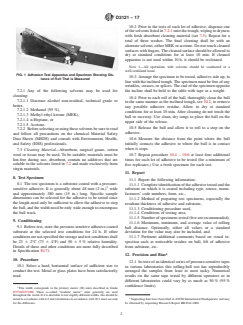
FIG. 1 Adhesion Test Apparatus and Specimen Showing Dis-
10.3 Arrange the specimen to be tested, adhesive side up, in
tance of Roll That is Measured
linewiththeinclinedtrough.Thespecimenmu
...
Questions, Comments and Discussion
Ask us and Technical Secretary will try to provide an answer. You can facilitate discussion about the standard in here.
Loading comments...