

ASTM E1490-19
(Guide)Standard Guide for Two Sensory Descriptive Analysis Approaches for Skin Creams and Lotions
General Information
- Abstract
SIGNIFICANCE AND USE
5.1 The procedures recommended in this guide can be used to assess the sensory characteristics before, during, and after usage of skin care products.
5.2 This guide is applicable to product categories that include skin lotions and creams, facial moisturizers, hand lotions and creams, anti-aging lotions and creams, suntan lotions, personal repellents, and other skin care products.
5.3 Procedures of the type described herein may be used to communicate perceived sensory properties within and between manufacturers and to the consumer through the media. These guidelines are suggested to meet the need for ascertaining the performance of experimental and commercial products.
5.4 These procedures are to be used by assessors who are screened for sensory acuity, trained to use their senses to evaluate products, and in the procedures outlined by the panel method of choice, either technical assessor or consumer behavioral approach.
5.5 This guide provides suggested procedures and is not meant to exclude alternate procedures that may be effective in training skinfeel panels and providing sensory evaluation descriptions.
SCOPE
1.1 The objective of this guide is to provide procedures for two different descriptive analysis approaches that may be used to qualitatively describe the sensory attributes of skin creams and lotions and quantitatively measure their intensity, similarities, and differences over time. Descriptive analysis can be used to define the sensory experience of skin care products that can then be used to provide direction in product formulation, competitive assessment, ingredient substitutions, research guidance, and advertising claim substantiation.
1.2 Guidelines are provided to assist the reader in determining which approach best meets their research objectives, either the (1) technical assessor or (2) consumer behavior approach to language development and evaluation.
1.3 Guidelines are provided for the selection and training of assessors, defining sensory attributes, measuring intensities on rating scales, developing procedures for the manipulation of the product alone and the product on the skin, product handling, and evaluation of skin condition before testing.
1.4 Units—The values stated in inch-pound units are to be regarded as the standard. The values given in parentheses are mathematical conversions to SI units that are provided for information only and are not considered standard.
1.5 This standard does not purport to address all of the safety concerns, if any, associated with its use. It is the responsibility of the user of this standard to establish appropriate safety, health, and environmental practices and determine the applicability of regulatory limitations prior to use.
1.6 This international standard was developed in accordance with internationally recognized principles on standardization established in the Decision on Principles for the Development of International Standards, Guides and Recommendations issued by the World Trade Organization Technical Barriers to Trade (TBT) Committee.
- Status
- Published
- Publication Date
- 31-Oct-2019
- Technical Committee
- E18 - Sensory Evaluation
- Drafting Committee
- E18.07 - Personal Care and Household Evaluation
Buy Documents
ASTM E1490-19 - Standard Guide for Two Sensory Descriptive Analysis Approaches for Skin Creams and Lotions
REDLINE ASTM E1490-19 - Standard Guide for Two Sensory Descriptive Analysis Approaches for Skin Creams and Lotions
Overview
ASTM E1490-19: Standard Guide for Two Sensory Descriptive Analysis Approaches for Skin Creams and Lotions provides comprehensive guidelines for qualitative and quantitative assessment of the sensory attributes of skin care products, including lotions, creams, moisturizers, and related formulations. Developed by ASTM Committee E18 on Sensory Evaluation, this standard aims to enhance understanding of the sensory experience before, during, and after product use through two principal approaches: the technical assessor methodology and the consumer behavior panel. These approaches support product development, quality assurance, and marketing activities by enabling effective evaluation, documentation, and communication of sensory properties.
Key Topics
Descriptive Sensory Analysis Techniques:
- Outlines two principal sensory evaluation methods for skin creams and lotions:
- Technical Assessor Approach: Utilizes trained expert panels to objectively describe and quantify product attributes.
- Consumer Behavior Approach: Employs panels of actual product users to describe sensory perceptions using everyday language.
- Outlines two principal sensory evaluation methods for skin creams and lotions:
Panel Selection and Training:
- Guidelines for recruiting, screening, and training both expert assessors and consumer panels, including consideration of sensory acuity and ability to articulate sensory experiences.
- Training protocols designed to ensure reliability and repeatability in attribute measurement.
Attribute Measurement and Evaluation:
- Describes procedures for defining sensory attributes (appearance, pick-up, rub-out, afterfeel) and measuring their intensity using reference standards and rating scales.
- Procedures for both product-only and on-skin assessment are defined, reflecting real-world usage scenarios.
Data Analysis and Reporting:
- Statistical methods, such as Analysis of Variance, are recommended to analyze sensory data, evaluate panel performance, and distinguish between products.
- Guidance on interpreting and presenting results using charts, spider plots, and tables.
Applications
ASTM E1490-19 has significant practical value across the personal care industry. Its applications include:
Product Development & Reformulation:
- Assists R&D professionals in optimizing the sensory profile of lotions and creams to align with consumer preferences and market trends.
- Aids in assessing the impact of ingredient substitutions or new formulations on tactile and olfactory attributes.
Quality Control & Competitive Assessment:
- Enables quality assurance teams to monitor product consistency over time and benchmark against competitor products.
- Provides objective criteria for identifying sensory differences and similarities across a product range.
Supporting Marketing Claims:
- Sensory data generated in accordance with this standard can substantiate advertising claims related to product performance and user experience.
- Facilitates effective communication of perceived benefits to consumers and regulatory agencies.
Panel Training & Sensory Research:
- Offers a structured pathway for organizations to develop competent sensory panels, ensuring panelists are both sensitive and articulate about product characteristics.
- Useful in research guidance, including longitudinal studies assessing performance over time.
Related Standards
The methodologies and terminology referenced in ASTM E1490-19 align with other key ASTM and industry standards, including:
- ASTM E253: Terminology Relating to Sensory Evaluation of Materials and Products.
- ASTM MNL 13: Manual on Descriptive Analysis Testing for Sensory Evaluation.
- ASTM MNL 26: Sensory Testing Methods, Second Edition.
These related documents provide additional background and best practices for sensory evaluation, supporting a standardized approach across the personal care and cosmetics sectors.
Keywords: ASTM E1490-19, sensory analysis, skin creams, lotions, descriptive sensory evaluation, technical assessor, consumer panel, panel training, product development, quality assurance, personal care products, skincare sensory testing, marketing claims, sensory attributes.
Relations
- Effective Date
- 01-Nov-2019
- Effective Date
- 15-Oct-2019
- Effective Date
- 01-Oct-2018
- Effective Date
- 15-Jun-2018
- Effective Date
- 01-May-2017
- Effective Date
- 01-Jun-2016
- Effective Date
- 01-Dec-2015
- Effective Date
- 01-Jun-2015
- Effective Date
- 15-Jan-2015
- Effective Date
- 01-Nov-2013
- Effective Date
- 01-May-2013
- Effective Date
- 01-Nov-2012
- Effective Date
- 01-May-2012
- Effective Date
- 01-Dec-2011
- Effective Date
- 15-Apr-2011
Buy Documents
ASTM E1490-19 - Standard Guide for Two Sensory Descriptive Analysis Approaches for Skin Creams and Lotions
REDLINE ASTM E1490-19 - Standard Guide for Two Sensory Descriptive Analysis Approaches for Skin Creams and Lotions
Get Certified
Connect with accredited certification bodies for this standard

ECOCERT
Organic and sustainability certification.

Eurofins Food Testing Global
Global leader in food, environment, and pharmaceutical product testing.

Intertek Bangladesh
Intertek certification and testing services in Bangladesh.
Sponsored listings
Frequently Asked Questions
ASTM E1490-19 is a guide published by ASTM International. Its full title is "Standard Guide for Two Sensory Descriptive Analysis Approaches for Skin Creams and Lotions". This standard covers: SIGNIFICANCE AND USE 5.1 The procedures recommended in this guide can be used to assess the sensory characteristics before, during, and after usage of skin care products. 5.2 This guide is applicable to product categories that include skin lotions and creams, facial moisturizers, hand lotions and creams, anti-aging lotions and creams, suntan lotions, personal repellents, and other skin care products. 5.3 Procedures of the type described herein may be used to communicate perceived sensory properties within and between manufacturers and to the consumer through the media. These guidelines are suggested to meet the need for ascertaining the performance of experimental and commercial products. 5.4 These procedures are to be used by assessors who are screened for sensory acuity, trained to use their senses to evaluate products, and in the procedures outlined by the panel method of choice, either technical assessor or consumer behavioral approach. 5.5 This guide provides suggested procedures and is not meant to exclude alternate procedures that may be effective in training skinfeel panels and providing sensory evaluation descriptions. SCOPE 1.1 The objective of this guide is to provide procedures for two different descriptive analysis approaches that may be used to qualitatively describe the sensory attributes of skin creams and lotions and quantitatively measure their intensity, similarities, and differences over time. Descriptive analysis can be used to define the sensory experience of skin care products that can then be used to provide direction in product formulation, competitive assessment, ingredient substitutions, research guidance, and advertising claim substantiation. 1.2 Guidelines are provided to assist the reader in determining which approach best meets their research objectives, either the (1) technical assessor or (2) consumer behavior approach to language development and evaluation. 1.3 Guidelines are provided for the selection and training of assessors, defining sensory attributes, measuring intensities on rating scales, developing procedures for the manipulation of the product alone and the product on the skin, product handling, and evaluation of skin condition before testing. 1.4 Units—The values stated in inch-pound units are to be regarded as the standard. The values given in parentheses are mathematical conversions to SI units that are provided for information only and are not considered standard. 1.5 This standard does not purport to address all of the safety concerns, if any, associated with its use. It is the responsibility of the user of this standard to establish appropriate safety, health, and environmental practices and determine the applicability of regulatory limitations prior to use. 1.6 This international standard was developed in accordance with internationally recognized principles on standardization established in the Decision on Principles for the Development of International Standards, Guides and Recommendations issued by the World Trade Organization Technical Barriers to Trade (TBT) Committee.
SIGNIFICANCE AND USE 5.1 The procedures recommended in this guide can be used to assess the sensory characteristics before, during, and after usage of skin care products. 5.2 This guide is applicable to product categories that include skin lotions and creams, facial moisturizers, hand lotions and creams, anti-aging lotions and creams, suntan lotions, personal repellents, and other skin care products. 5.3 Procedures of the type described herein may be used to communicate perceived sensory properties within and between manufacturers and to the consumer through the media. These guidelines are suggested to meet the need for ascertaining the performance of experimental and commercial products. 5.4 These procedures are to be used by assessors who are screened for sensory acuity, trained to use their senses to evaluate products, and in the procedures outlined by the panel method of choice, either technical assessor or consumer behavioral approach. 5.5 This guide provides suggested procedures and is not meant to exclude alternate procedures that may be effective in training skinfeel panels and providing sensory evaluation descriptions. SCOPE 1.1 The objective of this guide is to provide procedures for two different descriptive analysis approaches that may be used to qualitatively describe the sensory attributes of skin creams and lotions and quantitatively measure their intensity, similarities, and differences over time. Descriptive analysis can be used to define the sensory experience of skin care products that can then be used to provide direction in product formulation, competitive assessment, ingredient substitutions, research guidance, and advertising claim substantiation. 1.2 Guidelines are provided to assist the reader in determining which approach best meets their research objectives, either the (1) technical assessor or (2) consumer behavior approach to language development and evaluation. 1.3 Guidelines are provided for the selection and training of assessors, defining sensory attributes, measuring intensities on rating scales, developing procedures for the manipulation of the product alone and the product on the skin, product handling, and evaluation of skin condition before testing. 1.4 Units—The values stated in inch-pound units are to be regarded as the standard. The values given in parentheses are mathematical conversions to SI units that are provided for information only and are not considered standard. 1.5 This standard does not purport to address all of the safety concerns, if any, associated with its use. It is the responsibility of the user of this standard to establish appropriate safety, health, and environmental practices and determine the applicability of regulatory limitations prior to use. 1.6 This international standard was developed in accordance with internationally recognized principles on standardization established in the Decision on Principles for the Development of International Standards, Guides and Recommendations issued by the World Trade Organization Technical Barriers to Trade (TBT) Committee.
ASTM E1490-19 is classified under the following ICS (International Classification for Standards) categories: 71.100.70 - Cosmetics. Toiletries. The ICS classification helps identify the subject area and facilitates finding related standards.
ASTM E1490-19 has the following relationships with other standards: It is inter standard links to ASTM E1490-11, ASTM E253-19, ASTM E253-18a, ASTM E253-18, ASTM E253-17, ASTM E253-16, ASTM E253-15b, ASTM E253-15a, ASTM E253-15, ASTM E253-13a, ASTM E253-13, ASTM E253-12a, ASTM E253-12, ASTM E253-11a, ASTM E253-11. Understanding these relationships helps ensure you are using the most current and applicable version of the standard.
ASTM E1490-19 is available in PDF format for immediate download after purchase. The document can be added to your cart and obtained through the secure checkout process. Digital delivery ensures instant access to the complete standard document.
Standards Content (Sample)
This international standard was developed in accordance with internationally recognized principles on standardization established in the Decision on Principles for the
Development of International Standards, Guides and Recommendations issued by the World Trade Organization Technical Barriers to Trade (TBT) Committee.
Designation: E1490 − 19
Standard Guide for
Two Sensory Descriptive Analysis Approaches for Skin
Creams and Lotions
This standard is issued under the fixed designation E1490; the number immediately following the designation indicates the year of
original adoption or, in the case of revision, the year of last revision. A number in parentheses indicates the year of last reapproval. A
superscript epsilon (´) indicates an editorial change since the last revision or reapproval.
1. Scope 2. Referenced Documents
1.1 The objective of this guide is to provide procedures for 2.1 ASTM Standards:
two different descriptive analysis approaches that may be used E253 Terminology Relating to Sensory Evaluation of Mate-
to qualitatively describe the sensory attributes of skin creams rials and Products
and lotions and quantitatively measure their intensity, MNL 13 Manual on Descriptive Analysis Testing for Sen-
similarities,anddifferences over time. Descriptive analysiscan sory Evaluation
be used to define the sensory experience of skin care products MNL 26 Sensory Testing Methods: Second Edition
that can then be used to provide direction in product
3. Terminology
formulation, competitive assessment, ingredient substitutions,
research guidance, and advertising claim substantiation.
3.1 Terms used in this guide are in accordance with Termi-
nology E253.
1.2 Guidelines are provided to assist the reader in determin-
ing which approach best meets their research objectives, either
3.2 Definitions:
the (1)technicalassessoror (2)consumerbehaviorapproachto 3.2.1 application, n—process of applying the skin care
language development and evaluation.
product.
3.2.2 delivery, n—stage during which the product is dis-
1.3 Guidelines are provided for the selection and training of
assessors, defining sensory attributes, measuring intensities on charged onto the finger(s) or skin.
rating scales, developing procedures for the manipulation of
3.2.3 panel leader/moderator, n—person who is responsible
the product alone and the product on the skin, product
for conducting descriptive panels, protocols, and panel main-
handling, and evaluation of skin condition before testing.
tenance.
1.4 Units—The values stated in inch-pound units are to be
3.2.4 pick-up, n—stage during which the product is manipu-
regarded as the standard. The values given in parentheses are
lated between the fingers, as it might be after the product is
mathematical conversions to SI units that are provided for
dispensed onto the finger or lifted from a jar.
information only and are not considered standard.
3.2.5 reference anchors, n—products that are used to define
1.5 This standard does not purport to address all of the
intensities of a specific attribute.
safety concerns, if any, associated with its use. It is the
3.2.6 rub-out, n—stage during which the product is rubbed
responsibility of the user of this standard to establish appro-
onto the skin.
priate safety, health, and environmental practices and deter-
mine the applicability of regulatory limitations prior to use.
4. Summary of Guide
1.6 This international standard was developed in accor-
4.1 Overview—This guide describes two approaches to the
dance with internationally recognized principles on standard-
descriptive analysis of skin care products; technical assessor
ization established in the Decision on Principles for the
and consumer behavior approaches. The appropriate ap-
Development of International Standards, Guides and Recom-
proaches for identifying, selecting, and training of assessors to
mendations issued by the World Trade Organization Technical
evaluate the intensity and duration of sensory characteristics
Barriers to Trade (TBT) Committee.
for skin care products are discussed. See Table 1.
4.1.1 Technical Assessor Approach—The technical assessor
approach for descriptive analysis is based in the training of
This guide is under the jurisdiction of ASTM Committee E18 on Sensory
Evaluation and is the direct responsibility of Subcommittee E18.07 on Personal
Care and Household Evaluation. For referenced ASTM standards, visit the ASTM website, www.astm.org, or
Current edition approved Nov. 1, 2019. Published December 2019. Originally contact ASTM Customer Service at service@astm.org. For Annual Book of ASTM
approved in 1992. Last previous edition approved in 2011 as E1490 – 11. DOI: Standards volume information, refer to the standard’s Document Summary page on
10.1520/E1490-19. the ASTM website.
Copyright © ASTM International, 100 Barr Harbor Drive, PO Box C700, West Conshohocken, PA 19428-2959. United States
E1490 − 19
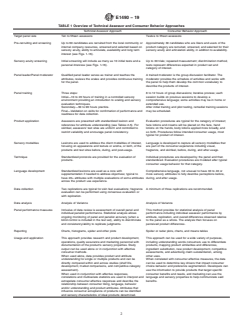
TABLE 1 Overview of Technical Assessor and Consumer Behavior Approaches
Technical Assessor Approach Consumer Behavior Approach
Target panel size Ten to fifteen assessors Twelve to fifteen assessors
Pre-recruiting and screening Up to 60 candidates are recruited from the local community or Approximately 30 candidates who are likers and users of the
internal company resources, screened and selected based on product category are recruited, screened, and selected for their
sensory acuity, ability to articulate, availability and long term sensory acuity and articulation ability, in addition to availability.
interest (see Figs. 1-16).
Sensory acuity screening Initial screening will include as many as 10 initial tests and a Up to 30 trials; repeated measurement; discrimination method,
personal interview (see Figs. 1-16). tests represent differences expected in product set and
category of interest.
Panel leader/Panel moderator Qualified panel leader serves as trainer and teaches the A trained moderator is the group discussion facilitator. The
attributes, reviews the scales and provides continuous training moderator provides the schedule of activities and works with
for the panel. the panel to help them develop the common vocabulary to
describe the products of interest.
Panel training Three steps: 8 to 12 hours of group discussions; iterative process; each
Initial—10 to 20 hours of training in a controlled sensory session builds on previous sessions to develop a
environment providing an introduction to scaling and sensory comprehensive language; some activities may be in home or
evaluation techniques. extended use.
Secondary—50 to 90 hours practice. After initial training and pilot testing, remedial training sessions
Final—Validation on skills for confirmation of performance and may be scheduled.
readiness for data collection.
Product application Assessors are presented with standardized lexicon and Evaluation procedures are typical for the category of interest;
references for attribute understanding (see Tables 2-5). For face lotions and creams will be placed on the face, hand
skinfeel, assessors’ test sites are uniform and controlled to lotions on the hands, body lotions applied more broadly, and
restrict variability and encourage panel consistency. so forth. Procedures follow intended consumer usage, most
typical for product of interest.
Sensory modalities Lexicons are used to address the client modalities of interest, Language is developed to capture all sensory modalities that
focusing on appearance and texture or aroma, or both, of the are part of the consumer experience including visual,
products and test sites before, during, and post-usage. fragrance, and skinfeel, before, during, and after usage.
Technique Standardized protocols are provided for the evaluation of Individual procedures are developed by the panel and then
products. standardized. Evaluation procedures are modeled after typical
consumer usage behavior for that category.
Language development Standardized lexicons are used as a core with Comprehensive language, not unusual to have 30 to 40 or
supplementation if needed to address objectives; typical to more sensory attributes to fully describe perceptions before,
have 20+ attributes with multiple evaluations of some attributes during, and after usage.
across the product use experience.
Data collection Two replications are typical for skin feel evaluations; fragrance A minimum of three replications are recommended.
evaluation can be performed using consensus evaluation or
with replication.
Data analysis Analysis of Variance Analysis of Variance
Panel performance measures Inclusive of data review is assessment of overall panel and This method provides for statistical analysis of panel
individual panelist performance. Statistical analysis allows performance including individual assessor performance by
ongoing monitoring of panel and panelist accuracy (when a attribute, replication, and overall differences observed relative
blind control is included in the test set), ability to discriminate to the panel as a whole. The analysis then focuses on
and consistency/ability to replicate judgments. perceived product differences.
Reporting Charts, histograms, spider and other plots Spider or radar plots, charts, and means tables
Usage and application This approach provides research and product development, This approach can be used for a wide variety of purposes,
operations, quality assurance and marketing personnel with including understanding words consumers use to differentiate
documentation of the product’s sensory properties. Study products, mapping product similarities and differences,
output can be used alone or in conjunction with affective ingredient substitution, new product development, competitive
consumer methods. assessments, and advertising claim substantiation, among
When used alone, data provides product and attribute other uses.
understanding for single or multiple products and can be When correlated with consumer affective measures, the data
directly compared within and across studies (shelf life, can be used to determine key drivers that impact consumer
development, market comparisons, and competitive category choice behavior and preference segmentation. Developers can
assessment). use the information to provide products that target specific
When used in conjunction with affective responses, consumer benefits and needs, and marketing can use the
correlations and multivariate statistics are used to interpret and language and sensory properties to help communicate said
extrapolate consumer affective responses and describe the benefits.
relationship between consumer liking, language, behavior
and/or understanding and product attributes. Attributes that
influence consumer acceptance of products can be identified
and sensory characteristics of ideal products determined.
E1490 − 19
assessors on lexicon(s) and intensity references to create a applied to the hands, body lotions applied more broadly, face
panel that performs as a calibrated human instrument. This creams on the face, and so forth. The protocols and evaluation
procedures are developed by the panel in conjunction with the
method uses a trained panel using descriptors that focus on
appearance and tactile qualities of products. Additionally, qualified panel moderator. Once a common language is agreed
upon by the panel as a group, assessors rate their individual
evaluation of product fragrance can be performed using either
perceptions of each product in the array on an unstructured 6
the same panel or a separate panel. In both cases, the panel
in. (15 cm) graphic rating scale, one at a time, using at least
performing the evaluations is trained using fragrance descrip-
three repeated measures (replications). The data are analyzed
tors and references for fragrance evaluation. Participants in
statistically to determine reliability and validity of the results.
these panels have been screened to exclude preexisting condi-
The analysis includes individual assessor performance, perfor-
tions or health issues (for tactile evaluations to exclude
mance as a group, and analyses to determine similarities and
candidates with eczema, allergies, and hypersensitivity; for
differences among products for each sensory attribute (before,
fragrance evaluations to exclude candidates with specific
during, and after usage). This approach requires about four
anosmias, conditions affecting the sense of smell, allergies, or
weeks from start to finish to recruit, screen, train, and evaluate
hypersensitivities to fragrances). The screening process dis-
an array of products. Subsequent panel and language develop-
qualifies assessors with personal habits that would impair or
ment time can be reduced once the evaluation techniques are
prevent their ability to evaluate a product (for example,
clearly understood and an initial language has been developed.
activities that could lead to heavy callusing of the fingertips).
Screened and selected assessors receive 70 to 100 h of training
5. Significance and Use
per sensory modality using intensity references. Intensity
5.1 The procedures recommended in this guide can be used
reference scales include a wide assortment of products within
to assess the sensory characteristics before, during, and after
a category. Products are tested at different stages including
usage of skin care products.
before application; during application on specific predeter-
mined sites within specific measured areas; and after applica- 5.2 This guide is applicable to product categories that
tion. The intensity of attributes is measured using a predeter- include skin lotions and creams, facial moisturizers, hand
mined scale (for example, 10, 15, 100 point scales, and so lotions and creams, anti-aging lotions and creams, suntan
forth). Guidelines (protocols) are provided for all facets of lotions, personal repellents, and other skin care products.
evaluation and include the manipulation of the product alone
5.3 Procedures of the type described herein may be used to
and on the area on which it is to be tested. Continuous
communicate perceived sensory properties within and between
repetition of exposure to scales and evaluation techniques
manufacturers and to the consumer through the media. These
provides understanding of the attributes, scaling for intensities,
guidelines are suggested to meet the need for ascertaining the
and use of protocols. Assessor performance is tested through
performance of experimental and commercial products.
validation exercises before participating in any formal studies.
5.4 These procedures are to be used by assessors who are
Once the panel is validated, it is ready to evaluate products.
screened for sensory acuity, trained to use their senses to
The data gathered are analyzed statistically, which allows for
evaluate products, and in the procedures outlined by the panel
differentiation of products both qualitatively (presence of
method of choice, either technical assessor or consumer
sensory features in some products and not others) and quanti-
behavioral approach.
tatively (differentiation in level or intensity of attributes). Data
5.5 This guide provides suggested procedures and is not
gathered provide specific guidelines for those seeking to
meant to exclude alternate procedures that may be effective in
identify sensory properties perceived in a single product or in
training skinfeel panels and providing sensory evaluation
agivensetofproducts.Thepanelismonitoredforperformance
descriptions.
and periodic training and recalibration occur as necessary.
Assessors are often trained to evaluate multiple product types.
6. Panel Selection and Training
4.1.2 Consumer Behavior Approach—The consumer behav-
6.1 Objective—To select and train a panel of 10 to 15
ior approach uses the panel as the instrument and acknowl-
assessors to evaluate sensory properties before, during, and
edges that there are inherent differences in perception based on
after usage of skin lotions and creams using descriptive
behavioral and genetic differences at the receptor level. This
analysis methods that quantify sensory attributes over time.
approach uses consumers (assessors) who are current users and
likersoftheproductcategoryofinterest.Selectedassessorsare
6.2 Panel Selection:
screened for their sensory acuity and articulation ability, along
6.2.1 Assessors are recruited from within a company or the
with their willingness to participate on a panel. Twelve of the local community. The choice to use employees allows a
most sensitive assessors are selected for the descriptive analy-
company to have the assessors on site and to keep proprietary
sis panel. Under the guidance of a qualified panel moderator, information confidential.The use of local community residents
selected assessors describe their sensory perceptions of the
providesasmallerrisktoassessorattritionbothonadailybasis
product(s) of interest using a common everyday descriptive and long term.
language. Qualitative references are used as necessary to assist
6.2.2 A large group of candidates are recruited from the
with concept alignment and clarification of definitions of local community by contacting community groups, posting on
terms. Products are evaluated following typical usage behavior bulletin boards, websites, placing newspaper ads, or other such
expected for that product, for example, hand lotions would be ways to communicate. Candidates from within the company
E1490 − 19
arecontactedbyinterofficememo,e-mail,companynewsletter, 8.1.8 Petri Dishes.
or notices posted on regular and electronic bulletin boards. 8.1.9 Weigh Boats.
Before the prescreening questionnaire, candidates should be
8.1.10 Hygrometer.
informed of the time commitment for training, potential
duration of the panel, use of the panel, and expectation of each
9. Panel Recruitment and Qualifications
assessor relative to the responsibilities of the panel. The
9.1 Forapanelof10to15assessors,upto60candidatesare
prescreening questionnaire is recommended for determining
initially selected based on a prescreening questionnaire to
current product usage, skin type, and documentation of poten-
participate in further screening to include acuity screening,
tial causes of limited perception, availability, interest, and
rating/rankingtests,andapersonalinterview.Theprescreening
candidates’ ability to articulate perceptions.
questionnaire intent is to gather personal information including
6.3 Skin Types—Skin types, skin condition, and age may be
availability, health, perception issues specific to the sensory
considered when recruiting assessors for a skincare product
modality for which the panel is being trained, and preexisting
panel. This may be important because skin care products are
knowledgeandarticulationforthesensorymodalityofinterest.
frequently formulated to address the characteristics of a spe-
Fig. 1 and Fig. 2 can be used for prescreening a tactile panel,
cific skin type, and assessors may generate varying product
Figs. 3-5 for prescreening a fragrance panel. Prescreening
descriptions of particular attributes based on skin-type differ-
includes administering a scaling questionnaire to evaluate the
ences.
candidate’s ability to learn scaling.
6.4 Since the technical assessor and consumer behavior
9.2 Acuity Screening and Rating/Ranking Tests—Candidates
methods have different methods for assessor screening,
meeting the prescreening criteria are invited to an onsite
selection, and language development, the next sections of this
session for assessment of sensory abilities. Candidates partici-
guide will outline the technical assessor approach and the
pate in three or more exercises related to comprehension of
consumer behavior approach in detail.
sensory properties and scaling. Acuity screening tests aim to
demonstrate candidates’ ability to detect and describe charac-
TECHNICAL ASSESSOR APPROACH
teristics present in creams and lotions as well as detect and
describe intensity differences in these characteristics among
7. Project Scope
products. Rating/ranking tests aim to assess the candidates’
7.1 Before screening assessors, the scope of the panel
ability to rate products and to record differences.
evaluations needs to be determined. Based on needs and
9.2.1 Acuity Screening and Rating/Ranking Tests for Ap-
strategic planning, it is imperative to decide whether the newly
pearance and Tactile Evaluation:
developed panel(s) will perform tactile and visual evaluations
9.2.1.1 Candidates are asked to rate the intensity of skin
only, fragrance evaluations only, or both.
attributesforsampleschosenspecificallytorepresenttherange
fortheattributestested.Itisrecommendedthatoneattributebe
8. Equipment
chosen from each evaluation category: appearance (for
8.1 The following equipment may be used during the
example, integrity of shape), pick-up (for example, firmness or
evaluation process.
stickiness), rub-out (for example, ease to spread or thickness),
8.1.1 Template—Used to outline the 2-in. (51-mm) diameter
and afterfeel (for example, greasiness or amount of residue).
circles on the forearm. It assures that consistent, measured
9.2.1.2 Test products are delivered in a controlled way on
areas are delineated for product application and evaluation (for
the test site, such as the back of hand, fingertips or 2-in.
example, a flexible plastic material with 2-in. (51-mm) diam-
(51-mm) diameter circles on the volar forearm. For example,
eter circles cut out for outlining with an appropriate marker).
for rub-out and afterfeel attributes, the three test products are
8.1.2 Light Source/Viewing Conditions—A consistent light
applied in premeasured amounts to three 2-in. (51-mm) circles
source for each assessor is recommended for use during the
on each arm. Candidates can use one arm for the rub-out
evaluation of shine.The type of light source will depend on the
attribute evaluation and the other arm for the afterfeel attribute
specific nature of the product being evaluated. It is important
evaluation to avoid contamination of test sites. Candidates
that all assessors receive the same amount of light on the arms
should have at least two thirds of the total products tested rated
and the same angle of light and that the distance from the test
properly for three of the four attributes to qualify as having
site and light be the same for each assessor (for example,
high sensory acuity. Each attribute used should be defined on
high-intensity desk lamps).
3 the screening ballot. (See Fig. 6).
8.1.3 Skin Thermometer.
9.2.2 Acuity Screening and Ranking/Rating Tests for Fra-
8.1.4 Stopwatch.
grance Evaluation—Candidatesarefirstpresentedwithaseries
8.1.5 Repeater Pipette.
of tests that might include 10 to 15 fragrances such as
8.1.6 Metronome.
peppermint oil, cassia oil, triplal, and eugenol to which the
8.1.7 Syringe.
candidate is asked to describe the fragrance by common name
or association. Other tests may include fragrance matching,
Two telethermometers that would satisfy the guidelines identified in this guide
ranking of a specific stimuli (for example, spruce oil), and
are Telethermometer Model 44TA, marketed by YSI (Yellow Springs Instrument
describing the fragrance/aroma characteristics of lotions di-
Company, Inc.),Yellow Springs, OH or DigitalThermometer Model No. 5650 from
Markson Science, Inc., Del Mar, CA. rectly from a container or after rubbing on the skin.
E1490 − 19
FIG. 1 Prescreening Questionnaire for a Technical Assessor Panel
9.3 Personal Interview: 9.3.2.3 Correct and comprehensive descriptive answers to
9.3.1 Each candidate is interviewed by the panel adminis- 75 % or more of the open-ended tactile or fragrance questions
trator or trainer to determine attitude; interest; ability to learn or both in the prescreening questionnaire;
and work in a group dynamics situation, and availability for 9.3.2.4 Correct ratings of 80 % or more of the scaling
orientation, practice, and panel sessions on a routine basis. exercise in the prescreening questionnaire;
9.3.2 Amongthecandidatesscreened,10to15assessorsare 9.3.2.5 Correct ratings for two thirds of the products for
selected for training based on a series of exercises and criteria three of the four attribute scales for appearance and tactile
(see Figs. 1-9), as follows: evaluation and/or correct description of fragrances, fragrance
9.3.2.1 Availability for the complete orientation and 80 to matching, and ranking of fragrance intensities for at least 80 %
100 % of the practice sessions during training; of the tests; and
9.3.2.2 No health-related problems—skin irritations, central 9.3.2.6 Demonstration of good verbal skills, a high interest
nervoussystemdisorders,ormedicationsthatinterferewiththe in descriptive and group dynamics tasks, and a cooperative yet
central nervous system and could reduce skin and muscle confident personality demonstrated in the interview.
sensitivity. For fragrance evaluations, the candidates should
10. Panel Training, Orientation, and Practice
have no chronic colds or sinus infections, no hypersensitivity
and allergies to fragrances, lotions, creams, soaps, or other 10.1 Panel Orientation and Training:
topical products, and no previous history of allergy to lotions, 10.1.1 To begin training of the 10 to 15 selected assessors,
creams, soaps, or other topical products; the panel trainer shall orient them first to the general concepts,
E1490 − 19
FIG. 2 Prescreening Touch Quiz—Technical Assessor Panel
suchasthedefinition,components,andapplicationsofdescrip- demonstrate noticeable differences in perception. The scale
tive analysis testing, focusing on the modalities of interest. intensity of each reference represents grand mean values from
This takes up to 2 h. It is recommended that for panel multiple panel evaluations. Commercially available products
evaluating multiple modalities, training should focus on one are used, with emphasis on including single ingredient prod-
modality at a time. ucts that are widely available over time, such as petrolatum,
10.1.2 Assessors are introduced to the need for strictly Johnson’s Baby Oil and aloe vera gel. Reference values are
controlled procedures for the manipulation and application of subject to change if manufacturers change the product or
samples and the careful definition of each sensory attribute. process, or if there is production variability. Reference prod-
This takes up to 2 h. (See Table 2 for procedures.) ucts may be substituted if the original product is unavailable
10.1.3 Discussion and demonstration of each attribute are and are assigned scale values based on assessment against the
conducted for each stage: before application (appearance, other references for the attribute. Some practitioners choose to
pick-up, and/or fragrance), during application (rub-out or represent scale intensity values using a range, such as 15-20,
fragrance or both) and after-feel (skin feel or fragrance or while others use the single value approach shown in Table 3.
both). This establishes the overall structure of the descriptive
10.2 Panel Practice:
analysis of skincare properties. Assessors are encouraged to
10.2.1 Several practice sessions totaling 20 to 24 h per
discuss each term, its definition, the protocol for evaluation,
sensory modality are held to review the orientation material.
and the corresponding rating scale after they are demonstrated
These include the following:
by the panel trainer. This takes 2 to 3 h (see Table 3).
10.2.1.1 Review of the procedure, definition, and rating
10.1.4 For each attribute, the procedure, definition, and
scale for each attribute.
scale are discussed and demonstrated using three to five
quantitative references that represent the full intensity range 10.2.1.2 Evaluation of products—these are evaluated inde-
from none or extremely low to high. This training exercise pendently with the scale references, as needed, and are
takes 4 to 5 h (see Tables 2 and 3). References are selected to reviewed with the group.
E1490 − 19
FIG. 3 Prescreening Questionnaire for a Technical Assessor Panel
10.2.2 Five to six pairs of samples, with initial pairs quite for which consumers have demonstrated understanding and an
different from each other, are evaluated on all attributes for all
ability to differentiate among products. If the panel data has a
stages. For appearance/tactile panels, this includes appearance,
high correlation with the previously validated consumer re-
pick-up, rub-out, and afterfeel. For fragrance panels, this may
sponses for similar attributes, the panel data can be considered
include product from container, in use, and/or after application
valid.
at defined time points. This takes 10 to 12 h.
NOTE 1—A lack of correlation may be a function of consumer terms
10.3 Validation—Any one of the following methods can be
that are not related to the panel attributes or are not understood by the
used for panel validation.
consumers.
10.3.1 Choosethreetofourdifferentproductsfromthesame
10.4 Panel Monitoring for Skin Feel Evaluation—Three
product category (lotions, creams, gels, mousses, and so forth)
different factors can be monitored when reviewing data from
that demonstrate significant differences on several attributes.
the panel and assessors.
When there is an established panel, the panel results from the
10.4.1 Ameasure of the variability within the panel (that is,
recently trained panel are compared to the results of the same
among panel members) can be determined with three replica-
samples from the established panel. The recently trained panel
tions of several samples for all attributes and all assessors. The
should provide similar results in 80 % of all attributes.
10.3.2 Choose panel data across three to four different mean value and standard deviation for each sample for each
attribute is computed. The assessors and panel leader can then
products from the results of the recently trained panel. Com-
parethesedatawithconsumerattributedataforthoseattributes look at the mean value for each sample and attribute versus
E1490 − 19
Prescreening Fragrance Quiz – Technical Assessor Panel Prescreening Fragrance Quiz – Technical Assessor Panel
(Answer Key)
PLEASE ANSWER EACH QUESTION IN YOUR OWN WORDS. PLEASE ANSWER EACH QUESTION IN YOUR OWN WORDS.
1. If a perfume is “floral” in type, what other words would you use to 1. If a perfume is “floral” in type, what other words would you use to
describe it? describe it?
_________________________________________________________ Flowery, perfumey, sweet, fresh, woody, rose, lavender.
2. What are some products that have an herbal smell? 2. What are some products that have an herbal smell?
_________________________________________________________ Chamomile tea, verbena candle, minty toothpaste.
3. What are some products that have a sweet smell? 3. What are some products that have a sweet smell?
_________________________________________________________ Baby powder, vanilla.
4. What types of odors are associated with clean and fresh? 4. What types of odors are associated with clean and fresh?
_________________________________________________________ Spring-like and flowery, orange and lemony, citrusy.
5. How would you define the difference between fruity and lemony? 5. How would you define the difference between fruity and lemony?
_________________________________________________________ Fruity is sweeter, lemony is sharper, sour and citrusy.
6. Briefly, what words would you use to describe the difference between 6. Briefly, what words would you use to describe the difference between
a feminine fragrance and a masculine fragrance? a feminine fragrance and a masculine fragrance?
_________________________________________________________ Feminine is light and fresh, often floral, and sweet; masculine is strong,
rich, spicy and woodsy.
7. What are some of the words which would describe the smell of a 7. What are some of the words which would describe the smell of a
hamper full of clothes? hamper full of clothes? .
_________________________________________________________ Sour, mildewed, bad, strong, reminiscent of wet cats or dogs
8. Describe some of the noticeable smells in{ 8. Describe some of the noticeable smells in{
A bakery __________________________________________________ A bakery: Caramelized yeasty warm bread
A liquid dish detergent _______________________________________ A liquid dish detergent: Spring-like and floral and soapy
Bar soaps _________________________________________________ Bar soaps: Soapy, sharp and perfumey
A basement ________________________________________________ A basement: musty, dusty, mildewed
FIG. 4 Prescreening Fragrance Quiz—Technical Assessor Panel
each assessor’s score. This permits the panel leader to deter- 11. Procedure
mine whether one or more assessors are rating consistently
11.1 Sample Preconditioning—Samples should be precon-
higher or lower than the panel as a whole on one or more
ditionedbeforeconductingthedescriptiveevaluations.Precon-
attributes. Review of the standard deviations across attributes
ditioning consists of storing the samples in an area with similar
demonstrates whether some assessors have standard deviations
temperature and humidity conditions (see 11.5) until the
that are higher than most assessors and on which attributes.
samples equilibrate to those conditions.
Large panel standard deviations indicate the need for a review
ofdefinitions,evaluationprocedures,orreferencestandardsfor
11.2 Skin Preconditioning—For products evaluated on skin,
the attribute in question.
skin should be preconditioned. The assessors should not apply
10.4.2 Ameasureoftherepeatabilityofthepanelasawhole
lotions, creams, or any topical products to the volar forearms
can be monitored by analyzing three replications of the panel’s
for approximately 4 h before an evaluation session. The test
evaluation of two or three samples of the same product type.
sites may be reused within4hifthe sites are cleansed and
An analysis of variance will determine whether the panel
dried thoroughly. However, possible product buildup or re-
scores are the same for the same sample across the replicates.
sidual effect or both from prior treatments may affect the rating
This analysis should be conducted for each attribute.
of subsequent treatments. This is especially true if the skin has
10.4.3 Analysisofthedatacollectedfromthreereplicatesof
been treated with antiperspirants or deodorants.
different samples (as used in 10.3.2) can provide information
on judge-by-treatment interactions in the analysis of variance.
11.3 Preparation of Test Sites—Before product application,
Asignificant Fvalueonanyattributeindicatesthatoneormore
the assessors should cleanse and prepare the test areas.
assessors are evaluating samples differently. Data for these
11.3.1 The assessors may wash each forearm at the test
attributes should be plotted to determine the assessors whose
facility under supervised conditions before the evaluation
values are different from the panel as a whole.
session, or they may wash at home before the evaluation
10.4.4 Ongoing Monitoring—Every two to six months,
session. Immediately following the wash, the arms should be
repeat procedures (see 10.4).
E1490 − 19
FIG. 5 Pre-Screening Scaling Exercise—Technical Assessor Panel
E1490 − 19
FIG. 6 Acuity Screening Scaling Exercise—Technical Assessor Panel
rinsedthoroughlywithtepidtapwaterandpatdriedthoroughly 11.4.2 A record of the temperature readings should be
with absorbent paper towels (non-fragranced, non-moisturized, placed in the study records. A history of skin temperature
and non-softened). measurements may be used to correlate the effects of skin
11.3.1.1 Arecommended procedure for a supervised cleans- temperaturewiththerateofabsorption,thewithinandbetween
ing would include a 1-min wash with a mild soap (non- assessor variability, and other variables that may be influenced
fragranced and non-moisturized) and a 15-min dry-out period. by skin temperature.
11.3.2 Approximately 15 min after drying, the test sites
11.5 Environmental Conditions—The environmental condi-
(location for product application) should be marked on the
tions of the panel room should be controlled as much as
forearms of each assessor. Using an appropriate skin marker
possible.
(that is, eyebrow pencil or skin scribe), mark two 2-in.
11.5.1 For discussion and training, seating should be pro-
(51-mm) diameter circles on the inner aspect of the forearm.
vided for the entire panel at a round table or in a table
The circles should be located 2-in. (51-mm) above the wrist
arrangement that facilitates group interaction. The assessors
and 2-in. (51-mm) below the elbow.
may sit at individual booths during the actual evaluation
11.4 Skin Temperature Reading—The skin temperature of sessions.
the test sites may be measured 15 min after the wash 11.5.2 All outside distractions and interruptions should be
procedure. During the 15-min wait, the assessors should be prohibited while the panel is in session.
seated in the panel room. 11.5.3 The temperature and, if possible, relative humidity of
11.4.1 The temperature of each site (2-in. [51-mm] circle) the panel room should be maintained at a constant level.
should be measured by placing the skin probe of the thermom- Comfortable levels should be established by the panel leader
eter against the skin surface for approximately 1 min. Depend- before the start of the session. The comfort level of the panel
ing on the instrument used, the length of time per measurement members should be taken into consideration.
may vary; however, the instrument should be used consistently 11.5.3.1 Ambienttemperatureandhumidityreadingsshould
among the assessors. berecordedbeforethestartofthesessionandat approximately
E1490 − 19
FIG. 7 Acuity Screening—Technical Assessor Compare and Contrast Exercise
E1490 − 19
FIG. 8 Acuity Screening—Technical Assessor Compare and Contrast Exercise (Answer Key)
FIG. 9 Interview Questionnaire—Technical Assessor Panel
every hour interval throughout. A drastic change in room diately following such a drop, skin temperature measurements
temperature or relative humidity (that is, 5°F (–15°C) or 8 % should be retaken (see 11.4).
relative humidity or both) should be considered in the final 11.5.4 Room lighting should be consistent for each panel
interpretation of the data and noted in the final report. Imme- member and remain standard within a given study. Individual
E1490 − 19
TABLE 2 Terms Used to Describe Skinfeel of Lotions and Creams—Technical Assessor Approach
1. Appearance
Definition: The attributes of a product measured by the sense of vision that may include, but not limited to, optical, rheological attributes
of a product measured by manipulation between the fingers.
In a Petri dish, dispense the product in a spiral shape. Using a nickel-size circle, fill from edge to center.
a. Integrity of shape Degree to which product holds its shape:
[Flattens---------------------Retains shape]
b. Integrity of shape Degree to which product holds its shape after 10 s:
[Flattens---------------------Retains shape]
c. Gloss The amount of reflected light from product:
[Dull/flat--------------------Shiny/glossy]
2. Pick Up
Definition: The rheological attributes of a product measured by manipulation between the fingers.
Using automatic pipette, deliver 0.1 cm of product to tip of thumb or index finger. Compress product slowly between finger and thumb
one time.
a. Firmness Force required to fully compress product between thumb and index finger:
[Noforce----------------------Highforce]
b. Stickiness Force required to separate fingertips:
[Notsticky---------------------Verysticky]
c. Cohesiveness Amount sample strings rather than breaks when fingers are separated:
[Nostrings--------------------Highstrings]
d. Amount of peaking Degree to which product makes stiff peaks on fingertips:
[No peaks/flat-------------------Stiff peaks]
3. Rub out
Definition: The physical and rheological attributes of a product on the skin measured by rubbing the product on the skin to the point of
product absorbency as well as kinesthetic sensations that may occur.
Using automatic pipette, deliver 0.05 cm of product to center of 2-in. (51-mm) circle on inner forearm. Gently spread product within the
circle using index or middle finger, at a rate of two strokes per second.
After Three Rubs, Evaluate for:
a. Wetness Amount of water perceived while rubbing:
[None----------------------High amount]
b. Spreadability Ease of moving product over the skin:
[Difficult/drag-------------------- Easy/slip]
After 12 Rubs, Evaluate for:
c. Thickness Amount of product felt between fingertip and skin:
[Thin, almost no product----Thick,lotsofproduct]
After 15–20 Rubs, Evaluate for:
d. Oil Amount of oil perceived in the product during rub-out:
[None--------------------------Extreme]
e. Wax Amount of wax perceived in the product during rubout:
[None--------------------------Extreme]
f. Grease Amount of grease perceived in the product during rubout:
[None--------------------------Extreme]
Continue Rubbing and Evaluate for:
g. Absorbency The number of rubs at which the product loses wet, moist feel and a resistance to continue is
perceived [upper limit = 120 rubs]
4. Afterfeel
(Immediate) Definition: The physical and kinesthetic attributes of the skin surface after use of a product to include measurement of product residues.
a. Gloss Amount or degree of light reflected off skin:
[Dull----------------------------Shiny]
b. Sticky Degree to which fingers adhere to product:
[Notsticky---------------------Verysticky]
c. Slipperiness Ease of moving fingers across skin:
[Difficult/drag-------------------- Easy/slip]
d. Amount of residue Amount of product on skin:
[None----------------------Large amount]
e. Type of residue Naming of all residues present on the skin to include, but not limited to oily, waxy, greasy, silicone
(dry/slick), powdery, and chalky
5. Afterfeel
(Additional time Definition: The physical and kinesthetic attributes of the skin surface after use of a product to include measurement of product residues.
points) a. Gloss Amount or degree of light reflected off skin:
[Dull----------------------------Shiny]
b. Sticky Degree to which fingers adhere to product:
[Notsticky---------------------Verysticky]
c. Slipperiness Ease of moving fingers across skin:
[Difficult/drag-------------------- Easy/slip]
d. Amount of residue Amount of product on skin:
[None----------------------Large amount]
e. Type of residue Naming of all residues present on the skin to include, but not limited to oily, waxy, greasy, silicone
(dry/slick), powdery, and chalky
E1490 − 19
TABLE 3 Example of Scale Values (0–100) for Skinfeel Texture Attributes
Scale Value Product Manufacturer
1. Integrity of Shape (Immediate)
7 Johnson’s Baby Oil Johnson & Johnson
40 Keri, Original Daily Moisture GlaxoSmithKline
85 Vaseline Intensive Care, Essential Healing Unilever
92 Lanacane Reckitt Benckiser
2. Integrity of Shape (After 10 sec)
3 Johnson’s Baby Oil Johnson & Johnson
30 Keri, Original Daily Moisture GlaxoSmithKline
80 Vaseline Intensive Care, Essential Healing Unilever
92 Lanacane Reckitt Benckiser
3. Gloss
5 Gillette Foamy Reg. Shave Cream Procter & Gamble
72 Neutrogena Hand Cream, Norwegian Formula Johnson & Johnson
78 Vaseline Intensive Care, Essential Healing Unilever
98 Johnson’s Baby Oil Johnson & Johnson
4. Firmness
0 Johnson’s Baby Oil Johnson & Johnson
32 Vaseline Intensive Care, Essential Healing Unilever
55 Ponds Cold Cream Unilever
84 Petrolatum Generic
98 Lanolin AAA Lubrizol
5. Stickiness
1 Johnson’s Baby Oil Johnson & Johnson
26 Vaseline Intensive Care, Essential Healing Unilever
62 Neutrogena Hand Cream, Norwegian Formula Johnson & Johnson
84 Petrolatum Generic
99 Lanolin AAA Lubrizol
6. Cohesiveness
5 Noxzema Original Cleansing Cream Unilever
10 Vaseline Intensive Care, Essential Healing Unilever
58 Dove Cream Oil Unilever
82 Petrolatum Generic
90 Zinc Oxide 40% Ointment Generic
7. Peaking
0 Johnson’s Baby Oil Johnson & Johnson
36 Vaseline Intensive Care, Essential Healing Unilever
40 Curel Daily Healing Kao Brands
77 Zinc oxide 40% Ointment Generic
96 Petrolatum Generic
8. Wetness
0 Talc Whitaker, Clark & Daniels, Inc.
22 Petrolatum Generic
35 Johnson’s Baby Oil Johnson & Johnson
60 Vaseline
...
This document is not an ASTM standard and is intended only to provide the user of an ASTM standard an indication of what changes have been made to the previous version. Because
it may not be technically possible to adequately depict all changes accurately, ASTM recommends that users consult prior editions as appropriate. In all cases only the current version
of the standard as published by ASTM is to be considered the official document.
Designation: E1490 − 11 E1490 − 19
Standard Guide for
Two Sensory Descriptive Analysis Approaches for Skin
Creams and Lotions
This standard is issued under the fixed designation E1490; the number immediately following the designation indicates the year of
original adoption or, in the case of revision, the year of last revision. A number in parentheses indicates the year of last reapproval. A
superscript epsilon (´) indicates an editorial change since the last revision or reapproval.
1. Scope
1.1 The objective of this guide is to provide procedures for two different descriptive analysis approaches that may be used to
qualitatively describe the sensory attributes of skin creams and lotions and quantitatively measure their intensity, similarities, and
differences over time. Descriptive analysis can be used to define the sensory experience of skin care products that can then be used
to provide direction in product formulation, competitive assessment, ingredient substitutions, research guidance, and advertising
claim substantiation.
1.2 Guidelines are provided to assist the reader in determining which approach best meets their research objectives, either the
(1) technical expertassessor or (2) consumer behavior approach to language development and evaluation.
1.3 Guidelines are provided for the selection and training of assessors, defining sensory attributes, measuring intensities on
rating scales, developing procedures for the manipulation of the product alone and the product on the skin, product handling, and
evaluation of skin condition before testing.
1.4 Units—The values stated in inch-pound units are to be regarded as the standard. The values given in parentheses are
mathematical conversions to SI units that are provided for information only and are not considered standard.
1.5 This standard does not purport to address all of the safety concerns, if any, associated with its use. It is the responsibility
of the user of this standard to establish appropriate safety safety, health, and healthenvironmental practices and determine the
applicability of regulatory limitations prior to use.
1.6 This international standard was developed in accordance with internationally recognized principles on standardization
established in the Decision on Principles for the Development of International Standards, Guides and Recommendations issued
by the World Trade Organization Technical Barriers to Trade (TBT) Committee.
2. Referenced Documents
2.1 ASTM Standards:
E253 Terminology Relating to Sensory Evaluation of Materials and Products
MNL 13 Manual on Descriptive Analysis Testing for Sensory Evaluation
MNL 26 Sensory Testing Methods: Second Edition
3. Terminology
3.1 Terms used in this guide are in accordance with Terminology E253.
3.2 Definitions:
3.2.1 application, n—process of applying the skin care product.
3.2.2 delivery, n—stage during which the product is discharged onto the finger(s) or skin.
3.2.3 panel leader/moderator, n—person who is responsible for conducting descriptive panels, protocols, and panel
maintenance.
This guide is under the jurisdiction of ASTM Committee E18 on Sensory Evaluation and is the direct responsibility of Subcommittee E18.07 on Personal Care and
Household Evaluation.
Current edition approved Sept. 1, 2011Nov. 1, 2019. Published March 2012December 2019. Originally approved in 1992. Last previous edition approved in 20032011
as E1490 – 03.E1490 – 11. DOI: 10.1520/E1490-11.10.1520/E1490-19.
For referenced ASTM standards, visit the ASTM website, www.astm.org, or contact ASTM Customer Service at service@astm.org. For Annual Book of ASTM Standards
volume information, refer to the standard’s Document Summary page on the ASTM website.
Copyright © ASTM International, 100 Barr Harbor Drive, PO Box C700, West Conshohocken, PA 19428-2959. United States
E1490 − 19
3.2.4 pick-up, n—stage during which the product is manipulated between the fingers, as it might be after the product is dispensed
onto the finger or lifted from a jar.
3.2.5 reference anchors, n—products that are used to define intensities of a specific attribute.
3.2.6 rub-out, n—stage during which the product is rubbed onto the skin.
4. Summary of Guide
4.1 Overview—This guide describes two approaches to the descriptive analysis of skin care products; technical expertassessor
and consumer behavior approaches. The appropriate approaches for identifying, selecting, and training of assessors to evaluate the
intensity and duration of sensory characteristics for skin care products are discussed. See Table 1.
4.1.1 Technical ExpertAssessor Approach—The technical expertassessor approach for descriptive analysis is based in the
training of assessors on lexicon(s) and intensity references to create a panel that performs as a calibrated human instrument. This
method uses a trained panel using descriptors that focus on appearance and tactile qualities of products. Additionally, evaluation
of product fragrance can be performed using either the same panel or a separate panel. In both cases, the panel performing the
evaluations is trained using fragrance descriptors and references for fragrance evaluation. Participants in these panels have been
screened to exclude preexisting conditions or health issues (for tactile evaluations to exclude candidates with eczema, allergies,
and hypersensitivity; for fragrance evaluations to exclude candidates with specific anosmias, conditions affecting the sense of
smell, allergies, or hypersensitivities to fragrances). The screening process disqualifies assessors with personal habits that would
impair or prevent their ability to evaluate a product (for example, activities that could lead to heavy callusing of the fingertips).
Screened and selected assessors receive 70 to 100 h of training per sensory modality using intensity references. Intensity reference
scales include a wide assortment of products within a category. Products are tested at different stages including before application;
during application on specific predetermined sites within specific measured areas; and after application. The intensity of attributes
is measured using a predetermined scale (for example, 10, 15, 100 point scales, and so forth). Guidelines (protocols) are provided
for all facets of evaluation and include the manipulation of the product alone and on the area on which it is to be tested. Continuous
repetition of exposure to scales and evaluation techniques provides understanding of the attributes, scaling for intensities, and use
of protocols. Assessor performance is tested through validation exercises before participating in any formal studies. Once the panel
is validated, it is ready to evaluate products. The data gathered are analyzed statistically, which allows for differentiation of
products both qualitatively (presence of sensory features in some products and not others) and quantitatively (differentiation in
level or intensity of attributes). Data gathered provide specific guidelines for those seeking to identify sensory properties perceived
in a single product or in a given set of products. The panel is monitored for performance and periodic training and recalibration
occur as necessary. Assessors are often trained to evaluate multiple product types.
4.1.2 Consumer Behavior Approach—The consumer behavior approach uses the panel as the instrument and acknowledges that
there are inherent differences in perception based on behavioral and genetic differences at the receptor level. This approach uses
consumers (assessors) who are current users and likers of the product category of interest. Selected assessors are screened for their
sensory acuity and articulation ability, along with their willingness to participate on a panel. Twelve of the most sensitive assessors
are selected for the descriptive analysis panel. Under the guidance of a qualified panel moderator, selected assessors describe their
sensory perceptions of the product(s) of interest using a common everyday descriptive language. Qualitative references are used
as necessary to assist with concept alignment and clarification of definitions of terms. Products are evaluated following typical
usage behavior expected for that product, for example, hand lotions would be applied to the hands, body lotions applied more
broadly, face creams on the face, and so forth. The protocols and evaluation procedures are developed by the panel in conjunction
with the qualified panel moderator. Once a common language is agreed upon by the panel as a group, assessors rate their individual
perceptions of each product in the array on an unstructured 6 in. (15 cm) graphic rating scale, one at a time, using at least three
repeated measures (replications). The data are analyzed statistically to determine reliability and validity of the results. The analysis
includes individual assessor performance, performance as a group, and analyses to determine similarities and differences among
products for each sensory attribute (before, during, and after usage). This approach requires about four weeks from start to finish
to recruit, screen, train, and evaluate an array of products. Subsequent panel and language development time can be reduced once
the evaluation techniques are clearly understood and an initial language has been developed.
5. Significance and Use
5.1 The procedures recommended in this guide can be used to assess the sensory characteristics before, during, and after usage
of skin care products.
5.2 This guide is applicable to product categories that include skin lotions and creams, facial moisturizers, hand lotions and
creams, anti-aging lotions and creams, suntan lotions, personal repellents, and other skin care products.
5.3 Procedures of the type described herein may be used to communicate perceived sensory properties within and between
manufacturers and to the consumer through the media. These guidelines are suggested to meet the need for ascertaining the
performance of experimental and commercial products.
5.4 These procedures are to be used by assessors who are screened for sensory acuity, trained to use their senses to evaluate
products, and in the procedures outlined by the panel method of choice, either technical expertassessor or consumer behavioral
approach.
E1490 − 19
TABLE 1 Overview of Technical ExpertAssessor and Consumer Behavior Approaches
Technical ExpertAssessor Approach Consumer Behavior Approach
Target panel size Ten to fifteen assessors Twelve to fifteen assessors
Pre-recruiting and screening Up to 60 candidates are recruited from the local community or Approximately 30 candidates who are likers and users of the
internal company resources, screened and selected based on product category are recruited, screened, and selected for their
sensory acuity, ability to articulate, availability and long term sensory acuity and articulation ability, in addition to availability.
interest (see Figs. 1-16).
Sensory acuity screening Initial screening will include as many as 10 initial tests and a Up to 30 trials; repeated measurement; discrimination method,
personal interview (see Figs. 1-16). tests represent differences expected in product set and
category of interest.
Panel leader/Panel moderator Qualified panel leader serves as trainer and teaches the A trained moderator is the group discussion facilitator. The
attributes, reviews the scales and provides continuous training moderator provides the schedule of activities and works with
for the panel. the panel to help them develop the common vocabulary to
describe the products of interest.
Panel training Three steps: 8 to 12 hours of group discussions; iterative process; each
Initial—10 to 20 hours of training in a controlled sensory session builds on previous sessions to develop a
environment providing an introduction to scaling and sensory comprehensive language; some activities may be in home or
evaluation techniques. extended use.
Secondary—50 to 90 hours practice. After initial training and pilot testing, remedial training sessions
Final—Validation on skills for confirmation of performance and may be scheduled.
readiness for data collection.
Product application Assessors are presented with standardized lexicon and Evaluation procedures are typical for the category of interest;
references for attribute understanding (see Tables 2-5). For face lotions and creams will be placed on the face, hand
skinfeel, assessors’ test sites are uniform and controlled to lotions on the hands, body lotions applied more broadly, and
restrict variability and encourage panel consistency. so forth. Procedures follow intended consumer usage, most
typical for product of interest.
Sensory modalities Lexicons are used to address the client modalities of interest, Language is developed to capture all sensory modalities that
focusing on appearance and texture or aroma, or both, of the are part of the consumer experience including visual,
products and test sites before, during, and post-usage. fragrance, and skinfeel, before, during, and after usage.
Technique Standardized protocols are provided for the evaluation of Individual procedures are developed by the panel and then
products. standardized. Evaluation procedures are modeled after typical
consumer usage behavior for that category.
Language development Standardized lexicons are used as a core with Comprehensive language, not unusual to have 30 to 40 or
supplementation if needed to address objectives; typical to more sensory attributes to fully describe perceptions before,
have 20+ attributes with multiple evaluations of some attributes during, and after usage.
across the product use experience.
Data collection Two replications are typical for skin feel evaluations; fragrance A minimum of three replications are recommended.
evaluation can be performed using consensus evaluation or
with replication.
Data analysis Analysis of Variance Analysis of Variance
Panel performance measures Inclusive of data review is assessment of overall panel and This method provides for statistical analysis of panel
individual panelist performance. Statistical analysis allows performance including individual assessor performance by
ongoing monitoring of panel and panelist accuracy (when a attribute, replication, and overall differences observed relative
blind control is included in the test set), ability to discriminate to the panel as a whole. The analysis then focuses on
and consistency/ability to replicate judgments. perceived product differences.
Reporting Charts, histograms, spider and other plots Spider or radar plots, charts, and means tables
Usage and application This approach provides research and product development, This approach can be used for a wide variety of purposes,
operations, quality assurance and marketing personnel with including understanding words consumers use to differentiate
documentation of the product’s sensory properties. Study products, mapping product similarities and differences,
output can be used alone or in conjunction with affective ingredient substitution, new product development, competitive
consumer methods. assessments, and advertising claim substantiation, among
When used alone, data provides product and attribute other uses.
understanding for single or multiple products and can be When correlated with consumer affective measures, the data
directly compared within and across studies (shelf life, can be used to determine key drivers that impact consumer
development, market comparisons, and competitive category choice behavior and preference segmentation. Developers can
assessment). use the information to provide products that target specific
When used in conjunction with affective responses, consumer benefits and needs, and marketing can use the
correlations and multivariate statistics are used to interpret and language and sensory properties to help communicate said
extrapolate consumer affective responses and describe the benefits.
relationship between consumer liking, language, behavior
and/or understanding and product attributes. Attributes that
influence consumer acceptance of products can be identified
and sensory characteristics of ideal products determined.
E1490 − 19
5.5 This guide provides suggested procedures and is not meant to exclude alternate procedures that may be effective in training
skinfeel panels and providing sensory evaluation descriptions.
6. Panel Selection and Training
6.1 Objective—To select and train a panel of 10 to 15 assessors to evaluate sensory properties before, during, and after usage
of skin lotions and creams using descriptive analysis methods that quantify sensory attributes over time.
6.2 Panel Selection:
6.2.1 Assessors are recruited from within a company or the local community. The choice to use employees allows a company
to have the assessors on site and to keep proprietary information confidential. The use of local community residents provides a
smaller risk to assessor attrition both on a daily basis and long term.
6.2.2 A large group of candidates are recruited from the local community by contacting community groups, posting on bulletin
boards, websites, placing newspaper ads, or other such ways to communicate. Candidates from within the company are contacted
by interoffice memo, e-mail, company newsletter, or notices posted on regular and electronic bulletin boards. Before the
prescreening questionnaire, candidates should be informed of the time commitment for training, potential duration of the panel,
use of the panel, and expectation of each assessor relative to the responsibilities of the panel. The prescreening questionnaire is
recommended for determining current product usage, skin type, and documentation of potential causes of limited perception,
availability, interest, and candidates’ ability to articulate perceptions.
6.3 Skin Types—Skin types, skin condition, and age may be considered when recruiting assessors for a skincare product panel.
This may be important because skin care products are frequently formulated to address the characteristics of a specific skin type,
and assessors may generate varying product descriptions of particular attributes based on skin-type differences.
6.4 Since the technical expertassessor and consumer behavior methods have different methods for assessor screening, selection,
and language development, the next sections of this guide will outline the technical expertassessor approach and the consumer
behavior approach in detail.
TECHNICAL EXPERTASSESSOR APPROACH
7. Project Scope
7.1 Before screening assessors, the scope of the panel evaluations needs to be determined. Based on needs and strategic
planning, it is imperative to decide whether the newly developed panel(s) will perform tactile and visual evaluations only, fragrance
evaluations only, or both.
8. Equipment
8.1 The following equipment may be used during the evaluation process.
8.1.1 Template—Used to outline the 2-in. (51-mm) diameter circles on the forearm. It assures that consistent, measured areas
are delineated for product application and evaluation (for example, a flexible plastic material with 2-in. (51-mm) diameter circles
cut out for outlining with an appropriate marker).
8.1.2 Light Source/Viewing Conditions—A consistent light source for each assessor is recommended for use during the
evaluation of shine. The type of light source will depend on the specific nature of the product being evaluated. It is important that
all assessors receive the same amount of light on the arms and the same angle of light and that the distance from the test site and
light be the same for each assessor (for example, high-intensity desk lamps).
8.1.3 Skin Thermometer.
8.1.4 Stopwatch.
8.1.5 Repeater Pipette.
8.1.6 Metronome.
8.1.7 Syringe.
8.1.8 Petri Dishes.
8.1.9 Weigh Boats.
8.1.10 Hygrometer.
9. Panel Recruitment and Qualifications
9.1 For a panel of 10 to 15 assessors, up to 60 candidates are initially selected based on a prescreening questionnaire to
participate in further screening to include acuity screening, rating/ranking tests, and a personal interview. The prescreening
questionnaire intent is to gather personal information including availability, health, perception issues specific to the sensory
modality for which the panel is being trained, and preexisting knowledge and articulation for the sensory modality of interest. Fig.
Two telethermometers that would satisfy the guidelines identified in this guide are Telethermometer Model 44TA, marketed by YSI (Yellow Springs Instrument Company,
Inc.), Yellow Springs, OH or Digital Thermometer Model No. 5650 from Markson Science, Inc., Del Mar, CA.
E1490 − 19
1 and Fig. 2 can be used for prescreening a tactile panel, Figs. 3-5 for prescreening a fragrance panel. Prescreening includes
administering a scaling questionnaire to evaluate the candidate’s ability to learn scaling.
9.2 Acuity Screening and Rating/Ranking Tests—Candidates meeting the prescreening criteria are invited to an onsite session
for assessment of sensory abilities. Candidates participate in three or more exercises related to comprehension of sensory properties
and scaling. Acuity screening tests aim to demonstrate candidates’ ability to detect and describe characteristics present in creams
and lotions as well as detect and describe intensity differences in these characteristics among products. Rating/ranking tests aim
to assess the candidates’ ability to rate products and to record differences.
9.2.1 Acuity Screening and Rating/Ranking Tests for Appearance and Tactile Evaluation:
9.2.1.1 Candidates are asked to rate the intensity of skin attributes for samples chosen specifically to represent the range for the
attributes tested. It is recommended that one attribute be chosen from each evaluation category: appearance (for example, integrity
of shape), pick-up (for example, firmness or stickiness), rub-out (for example, ease to spread or thickness), and afterfeel (for
example, greasiness or amount of residue).
9.2.1.2 Test products are delivered in a controlled way on the test site, such as the back of hand, fingertips or 2-in. (51-mm)
diameter circles on the volar forearm. For example, for rub-out and afterfeel attributes, the three test products are applied in
premeasured amounts to three 2-in. (51-mm) circles on each arm. Candidates can use one arm for the rub-out attribute evaluation
and the other arm for the afterfeel attribute evaluation to avoid contamination of test sites. Candidates should have at least two
thirds of the total products tested rated properly for three of the four attributes to qualify as having high sensory acuity. Each
attribute used should be defined on the screening ballot. (See Fig. 6).
FIG. 1 Prescreening Questionnaire for a Technical ExpertAssessor Panel
E1490 − 19
FIG. 2 Prescreening Touch Quiz—Technical ExpertAssessor Panel
9.2.2 Acuity Screening and Ranking/Rating Tests for Fragrance Evaluation—Candidates are first presented with a series of tests
that might include 10 to 15 fragrances such as peppermint oil, cassia oil, triplal, and eugenol to which the candidate is asked to
describe the fragrance by common name or association. Other tests may include fragrance matching, ranking of a specific stimuli
(for example, spruce oil), and describing the fragrance/aroma characteristics of lotions directly from a container or after rubbing
on the skin.
E1490 − 19
FIG. 3 Prescreening Questionnaire for a Technical ExpertAssessor Panel
9.3 Personal Interview:
9.3.1 Each candidate is interviewed by the panel administrator or trainer to determine attitude; interest; ability to learn and work
in a group dynamics situation, and availability for orientation, practice, and panel sessions on a routine basis.
9.3.2 Among the candidates screened, 10 to 15 assessors are selected for training based on a series of exercises and criteria (see
Figs. 1-9), as follows:
9.3.2.1 Availability for the complete orientation and 80 to 100 % of the practice sessions during training;
9.3.2.2 No health-related problems—skin irritations, central nervous system disorders, or medications that interfere with the
central nervous system and could reduce skin and muscle sensitivity. For fragrance evaluations, the candidates should have no
chronic colds or sinus infections, no hypersensitivity and allergies to fragrances, lotions, creams, soaps, or other topical products,
and no previous history of allergy to lotions, creams, soaps, or other topical products;
9.3.2.3 Correct and comprehensive descriptive answers to 75 % or more of the open-ended tactile or fragrance questions or both
in the prescreening questionnaire;
9.3.2.4 Correct ratings of 80 % or more of the scaling exercise in the prescreening questionnaire;
9.3.2.5 Correct ratings for two thirds of the products for three of the four attribute scales for appearance and tactile evaluation
and/or correct description of fragrances, fragrance matching, and ranking of fragrance intensities for at least 80 % of the tests; and
9.3.2.6 Demonstration of good verbal skills, a high interest in descriptive and group dynamics tasks, and a cooperative yet
confident personality demonstrated in the interview.
E1490 − 19
Prescreening Fragrance Quiz – Technical Assessor Panel Prescreening Fragrance Quiz – Technical Assessor Panel
(Answer Key)
PLEASE ANSWER EACH QUESTION IN YOUR OWN WORDS. PLEASE ANSWER EACH QUESTION IN YOUR OWN WORDS.
1. If a perfume is “floral” in type, what other words would you use to 1. If a perfume is “floral” in type, what other words would you use to
describe it? describe it?
_________________________________________________________ Flowery, perfumey, sweet, fresh, woody, rose, lavender.
2. What are some products that have an herbal smell? 2. What are some products that have an herbal smell?
_________________________________________________________ Chamomile tea, verbena candle, minty toothpaste.
3. What are some products that have a sweet smell? 3. What are some products that have a sweet smell?
_________________________________________________________ Baby powder, vanilla.
4. What types of odors are associated with clean and fresh? 4. What types of odors are associated with clean and fresh?
_________________________________________________________ Spring-like and flowery, orange and lemony, citrusy.
5. How would you define the difference between fruity and lemony? 5. How would you define the difference between fruity and lemony?
_________________________________________________________ Fruity is sweeter, lemony is sharper, sour and citrusy.
6. Briefly, what words would you use to describe the difference between 6. Briefly, what words would you use to describe the difference between
a feminine fragrance and a masculine fragrance? a feminine fragrance and a masculine fragrance?
_________________________________________________________ Feminine is light and fresh, often floral, and sweet; masculine is strong,
rich, spicy and woodsy.
7. What are some of the words which would describe the smell of a 7. What are some of the words which would describe the smell of a
hamper full of clothes? hamper full of clothes? .
_________________________________________________________ Sour, mildewed, bad, strong, reminiscent of wet cats or dogs
8. Describe some of the noticeable smells in{ 8. Describe some of the noticeable smells in{
A bakery __________________________________________________ A bakery: Caramelized yeasty warm bread
A liquid dish detergent _______________________________________ A liquid dish detergent: Spring-like and floral and soapy
Bar soaps _________________________________________________ Bar soaps: Soapy, sharp and perfumey
A basement ________________________________________________ A basement: musty, dusty, mildewed
FIG. 4 Prescreening Fragrance Quiz—Technical ExpertAssessor Panel
10. Panel Training, Orientation, and Practice
10.1 Panel Orientation and Training:
10.1.1 To begin training of the 10 to 15 selected assessors, the panel trainer shall orient them first to the general concepts, such
as the definition, components, and applications of descriptive analysis testing, focusing on the modalities of interest. This takes up
to 2 h. It is recommended that for panel evaluating multiple modalities, training should focus on one modality at a time.
10.1.2 Assessors are introduced to the need for strictly controlled procedures for the manipulation and application of samples
and the careful definition of each sensory attribute. This takes up to 2 h. (See Table 2 for procedures.)
10.1.3 Discussion and demonstration of each attribute are conducted for each stage: before application (appearance, pick-up,
and/or fragrance), during application (rub-out or fragrance or both) and after-feel (skin feel or fragrance or both). This establishes
the overall structure of the descriptive analysis of skincare properties. Assessors are encouraged to discuss each term, its definition,
the protocol for evaluation, and the corresponding rating scale after they are demonstrated by the panel trainer. This takes 2 to 3
h (see Table 3).
10.1.4 For each attribute, the procedure, definition, and scale are discussed and demonstrated using three to five quantitative
references (if possible) that represent the full intensity range from none or extremely low to very high. This training exercise takes
4 to 5 h (see Tables 2 and 3). References are selected to demonstrate noticeable differences in perception. The scale intensity of
each reference represents grand mean values from multiple panel evaluations. Commercially available products are used, with
emphasis on including single ingredient products that are widely available over time, such as petrolatum, Johnson’s Baby Oil and
aloe vera gel. Reference values are subject to change if manufacturers change the product or process.process, or if there is
production variability. Reference products may be substituted if the original product is unavailable and are assigned scale values
based on assessment against the other references for the attribute. Some practitioners choose to represent scale intensity values
using a range, such as 15-20, while others use the single value approach shown in Table 3.
10.2 Panel Practice:
10.2.1 Several practice sessions totaling 20 to 24 h per sensory modality are held to review the orientation material. These
include the following:
10.2.1.1 Review of the procedure, definition, and rating scale for each attribute.
E1490 − 19
FIG. 5 Pre-Screening Scaling Exercise—Technical ExpertAssessor Panel
E1490 − 19
FIG. 6 Acuity Screening Scaling Exercise—Technical ExpertAssessor Panel
10.2.1.2 Evaluation of products—these are evaluated independently with the scale references, as needed, and are reviewed with
the group.
10.2.2 Five to six pairs of samples, with initial pairs quite different from each other, are evaluated on all attributes for all stages.
For appearance/tactile panels, this includes appearance, pick-up, rub-out, and afterfeel. For fragrance panels, this may include
product from container, in use, and/or after application at defined time points. This takes 10 to 12 h.
10.3 Validation—Any one of the following methods can be used for panel validation.
10.3.1 Choose three to four different products from the same product category (lotions, creams, gels, mousses, and so forth) that
demonstrate significant differences on several attributes. When there is an established panel, the panel results from the recently
trained panel are compared to the results of the same samples from the established panel. The recently trained panel should provide
similar results in 80 % of all attributes.
10.3.2 Choose panel data across three to four different products from the results of the recently trained panel. Compare these
data with consumer attribute data for those attributes for which consumers have demonstrated understanding and an ability to
differentiate among products. If the panel data has a high correlation with the previously validated consumer responses for similar
attributes, the panel data can be considered valid.
NOTE 1—A lack of correlation may be a function of consumer terms that are not related to the panel attributes or are not understood by the consumers.
10.4 Panel Monitoring for Skin Feel Evaluation—Three different factors can be monitored when reviewing data from the panel
and assessors.
10.4.1 A measure of the variability within the panel (that is, among panel members) can be determined with three replications
of several samples for all attributes and all assessors. The mean value and standard deviation for each sample for each attribute
is computed. The assessors and panel leader can then look at the mean value for each sample and attribute versus each assessor’s
score. This permits the panel leader to determine whether one or more assessors are rating consistently higher or lower than the
panel as a whole on one or more attributes. Review of the standard deviations across attributes demonstrates whether some
E1490 − 19
FIG. 7 Acuity Screening—Technical ExpertAssessor Compare and Contrast Exercise
E1490 − 19
FIG. 8 Acuity Screening—Technical ExpertAssessor Compare and Contrast Exercise (Answer Key)
FIG. 9 Interview Questionnaire—Technical ExpertAssessor Panel
assessors have standard deviations that are higher than most assessors and on which attributes. Large panel standard deviations
indicate the need for a review of definitions, evaluation procedures, or reference standards for the attribute in question.
10.4.2 A measure of the repeatability of the panel as a whole can be monitored by analyzing three replications of the panel’s
evaluation of two or three samples of the same product type. An analysis of variance will determine whether the panel scores are
the same for the same sample across the replicates. This analysis should be conducted for each attribute.
E1490 − 19
TABLE 2 Terms Used to Describe Skinfeel of Lotions and Creams—Technical ExpertAssessor Approach
1. Appearance
Definition: The attributes of a product measured by the sense of vision that may include, but not limited to, optical, rheological attributes
of a product measured by manipulation between the fingers.
In a Petri dish, dispense the product in a spiral shape. Using a nickel-size circle, fill from edge to center.
a. Integrity of shape Degree to which product holds its shape:
[Flattens - - - - - - - - - - - - - - - - - - - - - Retains shape]
b. Integrity of shape Degree to which product holds its shape after 10 s:
[Flattens - - - - - - - - - - - - - - - - - - - - - Retains shape]
c. Gloss The amount of reflected light from product:
[Dull/flat - - - - - - - - - - - - - - - - - - - - Shiny/glossy]
2. Pick Up
Definition: The rheological attributes of a product measured by manipulation between the fingers.
Using automatic pipette, deliver 0.1 cm of product to tip of thumb or index finger. Compress product slowly between finger and thumb
one time.
a. Firmness Force required to fully compress product between thumb and index finger:
[No force - - - - - - - - - - - - - - - - - - - - - - High force]
b. Stickiness Force required to separate fingertips:
[Not sticky - - - - - - - - - - - - - - - - - - - - - Very sticky]
c. Cohesiveness Amount sample strings rather than breaks when fingers are separated:
[No strings - - - - - - - - - - - - - - - - - - - - High strings]
d. Amount of peaking Degree to which product makes stiff peaks on fingertips:
[No peaks/flat - - - - - - - - - - - - - - - - - - - Stiff peaks]
3. Rub out
Definition: The physical and rheological attributes of a product on the skin measured by rubbing the product on the skin to the point of
product absorbency as well as kinesthetic sensations that may occur.
Using automatic pipette, deliver 0.05 cm of product to center of 200 circle on inner forearm. Gently spread product within the circle using
index or middle finger, at a rate of two strokes per second.
Using automatic pipette, deliver 0.05 cm of product to center of 2-in. (51-mm) circle on inner forearm. Gently spread product within the
circle using index or middle finger, at a rate of two strokes per second.
After Three Rubs, Evaluate for:
a. Wetness Amount of water perceived while rubbing:
[None - - - - - - - - - - - - - - - - - - - - - - High amount]
b. Spreadability Ease of moving product over the skin:
[Difficult/drag - - - - - - - - - - - - - - - - - - - - Easy/slip]
After 12 Rubs, Evaluate for:
c. Thickness Amount of product felt between fingertip and skin:
[Thin, almost no product - - - - Thick, lots of product]
After 15–20 Rubs, Evaluate for:
d. Oil Amount of oil perceived in the product during rub-out:
[None - - - - - - - - - - - - - - - - - - - - - - - - - - Extreme]
e. Wax Amount of wax perceived in the product during rubout:
[None - - - - - - - - - - - - - - - - - - - - - - - - - - Extreme]
f. Grease Amount of grease perceived in the product during rubout:
[None - - - - - - - - - - - - - - - - - - - - - - - - - - Extreme]
Continue Rubbing and Evaluate for:
g. Absorbency The number of rubs at which the product loses wet, moist feel and a resistance to continue is
perceived [upper limit = 120 rubs]
4. Afterfeel
(Immediate) Definition: The physical and kinesthetic attributes of the skin surface after use of a product to include measurement of product residues.
a. Gloss Amount or degree of light reflected off skin:
[Dull - - - - - - - - - - - - - - - - - - - - - - - - - - - - Shiny]
b. Sticky Degree to which fingers adhere to product:
[Not sticky - - - - - - - - - - - - - - - - - - - - - Very sticky]
c. Slipperiness Ease of moving fingers across skin:
[Difficult/drag - - - - - - - - - - - - - - - - - - - - Easy/slip]
d. Amount of residue Amount of product on skin:
[None - - - - - - - - - - - - - - - - - - - - - - Large amount]
e. Type of residue Naming of all residues present on the skin to include, but not limited to oily, waxy, greasy, silicone
(dry/slick), powdery, and chalky
5. Afterfeel
(Additional time Definition: The physical and kinesthetic attributes of the skin surface after use of a product to include measurement of product residues.
points) a. Gloss Amount or degree of light reflected off skin:
[Dull - - - - - - - - - - - - - - - - - - - - - - - - - - - - Shiny]
b. Sticky Degree to which fingers adhere to product:
[Not sticky - - - - - - - - - - - - - - - - - - - - - Very sticky]
c. Slipperiness Ease of moving fingers across skin:
[Difficult/drag - - - - - - - - - - - - - - - - - - - - Easy/slip]
d. Amount of residue Amount of product on skin:
[None - - - - - - - - - - - - - - - - - - - - - - Large amount]
e. Type of residue Naming of all residues present on the skin to include, but not limited to oily, waxy, greasy, silicone
(dry/slick), powdery, and chalky
E1490 − 19
TABLE 3 Example of Scale Values (0–100) for Skinfeel Texture Attributes
Scale Value Product Manufacturer
1. Integrity of Shape (Immediate)
7 Johnson’s Baby Oil Johnson & Johnson
40 Keri Lotion, Original Novartis Consumer Health
40 Keri, Original Daily Moisture GlaxoSmithKline
85 Vaseline Intensive Care Unilever
85 Vaseline Intensive Care, Essential Healing Unilever
92 Lanacane Combe Inc.
92 Lanacane Reckitt Benckiser
2. Integrity of Shape (After 10 sec)
3 Johnson’s Baby Oil Johnson & Johnson
30 Keri Lotion, Original Novartis Consumer Health
30 Keri, Original Daily Moisture GlaxoSmithKline
80 Vaseline Intensive Care Unilever
80 Vaseline Intensive Care, Essential Healing Unilever
92 Lanacane Combe Inc.
92 Lanacane Reckitt Benckiser
3. Gloss
5 Gillette Foamy Reg. Shave Cream Gillette Co.
5 Gillette Foamy Reg. Shave Cream Procter & Gamble
72 Neutrogena Hand Cream Johnson & Johnson
72 Neutrogena Hand Cream, Norwegian Formula Johnson & Johnson
78 Vaseline Intensive Care Unilever
78 Vaseline Intensive Care, Essential Healing Unilever
98 Johnson’s Baby Oil Johnson & Johnson
4. Firmness
0 Johnson’s Baby Oil Johnson & Johnson
32 Vaseline Intensive Care Unilever
32 Vaseline Intensive Care, Essential Healing Unilever
55 Ponds Cold Cream Unilever
84 Petrolatum Generic
98 Lanolin AAA Amerchol
98 Lanolin AAA Lubrizol
5. Stickiness
1 Johnson’s Baby Oil Johnson & Johnson
26 Vaseline Intensive Care Unilever
26 Vaseline Intensive Care, Essential Healing Unilever
43 Jergens Kao Brands
62 Neutrogena Hand Cream, Norwegian Formula Johnson & Johnson
84 Petrolatum Generic
99 Lanolin AAA Amerchol
99 Lanolin AAA Lubrizol
6. Cohesiveness
5 Noxema Skin Care Procter and Gamble
5 Noxzema Original Cleansing Cream Unilever
10 Vaseline Intensive Care Unilever
10 Vaseline Intensive Care, Essential Healing Unilever
50 Jergens Kao Brands
58 Dove Cream Oil Unilever
82 Petrolatum Generic
90 Zinc Oxide 40% Ointment Generic
7. Peaking
0 Johnson’s Baby Oil Johnson & Johnson
36 Vaseline Intensive Care Unilever
36 Vaseline Intensive Care, Essential Healing Unilever
40 Curel Daily Healing Kao Brands
77 Zinc oxide 40% Ointment Generic
96 Petrolatum Generic
8. Wetness
0 Talc Whitaker, Clark & Daniels, Inc.
22 Petrolatum Generic
35 Johnson’s Baby Oil Johnson & Johnson
60 Vaseline Intensive Care Unilever
60 Vaseline Intensive Care, Essential Healing Unilever
70 Aloe Vera Gel Nature’s Family
70 Aloe Vera Gel Fruit of the Earth
100 Water —
9. Spreadability
E1490 − 19
Scale Value Product Manufacturer
2 Lanolin AAA Amerchol
2 Lanolin AAA Lubrizol
29 Petrolatum Generic
60 Vaseline Intensive Care Unilever
60 Vaseline Intensive Care, Essential Healing Unilever
97 Johnson’s Baby Oil Johnson & Johnson
10. Thickness
5 Isopropyl alcohol Generic
5 Isopropyl alcohol, 91% Generic
30 Vaseline Intensive Care Generic
30 Vaseline Intensive Care, Essential Healing Unilever
65 Petrolatum Unilever
65 Petrolatum Generic
87 Neutrogena Hand Cream Johnson & Johnson
87 Neutrogena Hand Cream, Norwegian Formula Johnson & Johnson
11. Amount of Residue
0 Untreated skin —
15 Vaseline Intensive Care Unilever
15 Vaseline Intensive Care, Essential Healing Unilever
48 Therapeutic Keri Lotion Novartis Consumer Health
40 Keri, Original Daily Moisture GlaxoSmithKline
65 Petrolatum Generic
10.4.3 Analysis of the data collected from three replicates of different samples (as used in 10.3.2) can provide information on
judge-by-treatment interactions in the analysis of variance. A significant F value on any attribute indicates that one or more
assessors are evaluating samples differently. Data for these attributes should be plotted to determine the assessors whose values
are different from the panel as a whole.
10.4.4 Ongoing Monitoring—Every two to six months, repeat procedures (see 10.4).
11. Procedure
11.1 Sample Preconditioning—Samples should be reconditionedpreconditioned before conducting the descriptive evaluations.
Preconditioning consists of storing the samples in an area with similar temperature and humidity conditions (see 11.5) until the
samples equilibrate to those conditions.
11.2 Skin Preconditioning—For products evaluated on skin, skin should be preconditioned. The assessors should not apply
lotions, creams, or any topical products to the volar forearms for approximately 4 h before an evaluation session. The test sites
may be reused within 4 h if the sites are cleansed and dried thoroughly. However, possible product buildup or residual effect or
both from prior treatments may affect the rating of subsequent treatments. This is especially true if the skin has been treated with
antiperspirants or deodorants.
11.3 Preparation of Test Sites—Before product application, the assessors should cleanse and prepare the test areas.
11.3.1 The assessors may wash each forearm at the test facility under supervised conditions before the evaluation session, or
they may wash at home before the evaluation session. Immediately following the wash, the arms should be rinsed thoroughly with
tepid tap w
...