


ASTM D3628-15(2021)
(Practice)Standard Practice for Selection and Use of Emulsified Asphalts
Standard Practice for Selection and Use of Emulsified Asphalts
SIGNIFICANCE AND USE
4.1 As indicated by Specifications D977 and D2397/D2397M, emulsified asphalts are classified by type (rapid, medium, or slow setting) and by grade within type (viscosity in the case of the rapid-setting type or characteristic of the residual asphalt in the case of the medium and slow-setting types). Selection for use of a particular type and grade is controlled by type of construction (whether an application or a mix type), properties of the mineral aggregate (both grading and mineral composition), and environmental conditions during construction. For surface treatments and seals, emulsified asphalts are formulated to set rapidly upon contact with the mineral aggregate or pavement surface. When used in mix types, slower breaking is required to allow time for mixing and laydown. If the mix aggregate is open graded without appreciable fines, a medium-setting emulsified asphalt may be used that deposits a relatively hard asphalt. If the aggregate is dense-graded but does not contain a large amount of very fine material (dust), a medium-setting emulsified asphalt with a soft residue may be a good choice. However, if the dense-graded aggregate contains a large amount of very fine mineral matter, a slow-setting emulsified asphalt may be required.
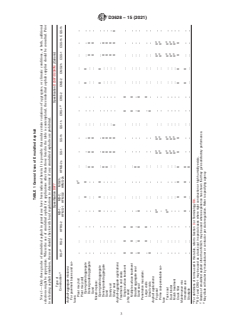
4.2 The recommendations in Table 1 should be considered only as a general guide for the selection of an emulsion for use. If the user is uncertain as to which to select for an intended use, the emulsified asphalt supplier should be contacted. (A) For definitions of terms used in this table, refer to Section 3 or Terminology D8.(B) RS-1 and CRS-1 may be used as a tack coat in special cases where night construction or high humidity exists.(C) Grades of emulsified asphalt other than MS-2h may be used where experience has shown that they give satisfactory performance.(D) May dilute with water by manufacturer or contractor per state regulation. Refer to specifying agency.
SCOPE
1.1 This practice covers the selection of emulsified asphalts for various paving and allied uses.
1.2 The values stated in SI units are to be regarded as standard. No other units of measurement are included in this standard.
1.3 This standard does not purport to address all of the safety concerns, if any, associated with its use. It is the responsibility of the user of this standard to establish appropriate safety, health, and environmental practices and determine the applicability of regulatory limitations prior to use.
1.4 This international standard was developed in accordance with internationally recognized principles on standardization established in the Decision on Principles for the Development of International Standards, Guides and Recommendations issued by the World Trade Organization Technical Barriers to Trade (TBT) Committee.
General Information
- Status
- Published
- Publication Date
- 31-Dec-2020
- Technical Committee
- D04 - Road and Paving Materials
- Drafting Committee
- D04.41 - Emulsified Asphalt Specifications
Relations
- Effective Date
- 01-Nov-2019
- Effective Date
- 01-Nov-2019
- Effective Date
- 01-Nov-2019
- Effective Date
- 01-Aug-2019
- Effective Date
- 01-May-2019
- Effective Date
- 01-May-2019
- Effective Date
- 15-Dec-2018
- Effective Date
- 15-Aug-2018
- Effective Date
- 01-Jul-2018
- Effective Date
- 01-Feb-2018
- Effective Date
- 15-Jul-2017
- Effective Date
- 15-Jun-2017
- Effective Date
- 01-Jun-2017
- Effective Date
- 01-Jun-2017
- Effective Date
- 01-May-2017
Overview
ASTM D3628-15(2021), "Standard Practice for Selection and Use of Emulsified Asphalts," provides comprehensive guidance on choosing the most appropriate emulsified asphalt for various paving and allied applications. Published by ASTM International, this standard addresses the selection process based on type of construction, aggregate properties, and environmental conditions. The document is widely relied upon by engineers, contractors, and material suppliers to ensure optimal performance and durability of roadways and pavement surfaces using emulsified asphalts.
Emulsified asphalts are categorized by setting rate (rapid, medium, or slow) and further classified by grade according to their viscosity or residual properties. ASTM D3628-15(2021) serves an important role in supporting project quality and performance by providing expert recommendations for matching emulsified asphalt types to project requirements.
Key Topics
- Classification of Emulsified Asphalts: Emulsified asphalts are classified into rapid, medium, and slow setting types. Each type is suited for specific applications such as surface treatments, seals, or mixtures.
- Selection Factors: The standard highlights critical factors influencing selection, including:
- Type of construction (application or mix type)
- Aggregate composition and grading
- Environmental and weather conditions during construction
- Guidance on Use: The document offers a general guide on the selection of emulsified asphalts, recommending consultation with suppliers for unusual or unlisted applications.
- Types of Applications: Covers a wide range of uses, such as:
- Plant and cold mixes for pavement bases and surfaces
- Mixed-in-place and sand mixes
- Surface and multiple surface treatments (chip seals, sand seals, graded aggregate seals)
- Advisories and Regulations: Stresses the importance of confirming regulatory limitations and local agency specifications prior to use.
Applications
ASTM D3628-15(2021) is a valuable resource for professionals involved in roadway maintenance, construction, and rehabilitation projects that use emulsified asphalt. Typical applications include:
- Pavement Bases and Surfaces: Selection of suitable emulsified asphalt for plant and cold mix processes, both for open-graded and dense-graded aggregates.
- Surface Treatments: Guidance for chip seals, sand seals, and graded aggregate seals to enhance wearing surfaces and extend pavement life.
- Slurry and Fog Seals: Utilization in treatments designed to seal surfaces, control dust, or provide light-wearing courses.
- Maintenance and Repairs: Use of emulsified asphalts for crack filling, immediate-use maintenance mixes, and stockpile maintenance materials.
- Specialized Uses: Recommendations for prime coats, tack coats, dust binding, and mulch treatments.
The standard encourages users to consult with material suppliers for specific scenarios, ensuring that the selected emulsified asphalt type and grade yield the most effective results for the given project and environmental conditions.
Related Standards
Professionals referring to ASTM D3628-15(2021) often consult the following related standards to inform selection and ensure compatibility:
- ASTM D977: Specification for Emulsified Asphalt, detailing key properties and grades.
- ASTM D2397/D2397M: Specification for Cationic Emulsified Asphalt, covering cationic types and their use cases.
- ASTM D8: Terminology Relating to Materials for Roads and Pavements, providing definitions for terms used in this and related standards.
By incorporating these standards with ASTM D3628-15(2021), stakeholders can achieve a comprehensive approach to the selection, application, and regulation of emulsified asphalt materials in a variety of paving projects. This ensures compliance, safety, and longevity of constructed and maintained roadways.
Keywords: emulsified asphalt, pavement materials, chip seal, surface treatment, ASTM D3628, road construction, asphalt emulsion selection, pavement maintenance, roadway standards.

Get Certified
Connect with accredited certification bodies for this standard

ICC Evaluation Service
Building products evaluation and certification.

QAI Laboratories
Building and construction product testing and certification.

Zavod za gradbeništvo Slovenije (ZAG) - Inšpekcija
ZAG inspection body for construction products, structures, and materials.
Sponsored listings
Frequently Asked Questions
ASTM D3628-15(2021) is a standard published by ASTM International. Its full title is "Standard Practice for Selection and Use of Emulsified Asphalts". This standard covers: SIGNIFICANCE AND USE 4.1 As indicated by Specifications D977 and D2397/D2397M, emulsified asphalts are classified by type (rapid, medium, or slow setting) and by grade within type (viscosity in the case of the rapid-setting type or characteristic of the residual asphalt in the case of the medium and slow-setting types). Selection for use of a particular type and grade is controlled by type of construction (whether an application or a mix type), properties of the mineral aggregate (both grading and mineral composition), and environmental conditions during construction. For surface treatments and seals, emulsified asphalts are formulated to set rapidly upon contact with the mineral aggregate or pavement surface. When used in mix types, slower breaking is required to allow time for mixing and laydown. If the mix aggregate is open graded without appreciable fines, a medium-setting emulsified asphalt may be used that deposits a relatively hard asphalt. If the aggregate is dense-graded but does not contain a large amount of very fine material (dust), a medium-setting emulsified asphalt with a soft residue may be a good choice. However, if the dense-graded aggregate contains a large amount of very fine mineral matter, a slow-setting emulsified asphalt may be required. 4.2 The recommendations in Table 1 should be considered only as a general guide for the selection of an emulsion for use. If the user is uncertain as to which to select for an intended use, the emulsified asphalt supplier should be contacted. (A) For definitions of terms used in this table, refer to Section 3 or Terminology D8.(B) RS-1 and CRS-1 may be used as a tack coat in special cases where night construction or high humidity exists.(C) Grades of emulsified asphalt other than MS-2h may be used where experience has shown that they give satisfactory performance.(D) May dilute with water by manufacturer or contractor per state regulation. Refer to specifying agency. SCOPE 1.1 This practice covers the selection of emulsified asphalts for various paving and allied uses. 1.2 The values stated in SI units are to be regarded as standard. No other units of measurement are included in this standard. 1.3 This standard does not purport to address all of the safety concerns, if any, associated with its use. It is the responsibility of the user of this standard to establish appropriate safety, health, and environmental practices and determine the applicability of regulatory limitations prior to use. 1.4 This international standard was developed in accordance with internationally recognized principles on standardization established in the Decision on Principles for the Development of International Standards, Guides and Recommendations issued by the World Trade Organization Technical Barriers to Trade (TBT) Committee.
SIGNIFICANCE AND USE 4.1 As indicated by Specifications D977 and D2397/D2397M, emulsified asphalts are classified by type (rapid, medium, or slow setting) and by grade within type (viscosity in the case of the rapid-setting type or characteristic of the residual asphalt in the case of the medium and slow-setting types). Selection for use of a particular type and grade is controlled by type of construction (whether an application or a mix type), properties of the mineral aggregate (both grading and mineral composition), and environmental conditions during construction. For surface treatments and seals, emulsified asphalts are formulated to set rapidly upon contact with the mineral aggregate or pavement surface. When used in mix types, slower breaking is required to allow time for mixing and laydown. If the mix aggregate is open graded without appreciable fines, a medium-setting emulsified asphalt may be used that deposits a relatively hard asphalt. If the aggregate is dense-graded but does not contain a large amount of very fine material (dust), a medium-setting emulsified asphalt with a soft residue may be a good choice. However, if the dense-graded aggregate contains a large amount of very fine mineral matter, a slow-setting emulsified asphalt may be required. 4.2 The recommendations in Table 1 should be considered only as a general guide for the selection of an emulsion for use. If the user is uncertain as to which to select for an intended use, the emulsified asphalt supplier should be contacted. (A) For definitions of terms used in this table, refer to Section 3 or Terminology D8.(B) RS-1 and CRS-1 may be used as a tack coat in special cases where night construction or high humidity exists.(C) Grades of emulsified asphalt other than MS-2h may be used where experience has shown that they give satisfactory performance.(D) May dilute with water by manufacturer or contractor per state regulation. Refer to specifying agency. SCOPE 1.1 This practice covers the selection of emulsified asphalts for various paving and allied uses. 1.2 The values stated in SI units are to be regarded as standard. No other units of measurement are included in this standard. 1.3 This standard does not purport to address all of the safety concerns, if any, associated with its use. It is the responsibility of the user of this standard to establish appropriate safety, health, and environmental practices and determine the applicability of regulatory limitations prior to use. 1.4 This international standard was developed in accordance with internationally recognized principles on standardization established in the Decision on Principles for the Development of International Standards, Guides and Recommendations issued by the World Trade Organization Technical Barriers to Trade (TBT) Committee.
ASTM D3628-15(2021) is classified under the following ICS (International Classification for Standards) categories: 91.100.50 - Binders. Sealing materials; 93.080.20 - Road construction materials. The ICS classification helps identify the subject area and facilitates finding related standards.
ASTM D3628-15(2021) has the following relationships with other standards: It is inter standard links to ASTM D977-19a, ASTM D977-19ae1, ASTM D2397/D2397M-19a, ASTM D8-19, ASTM D2397/D2397M-19, ASTM D977-19, ASTM D8-18c, ASTM D8-18b, ASTM D8-18a, ASTM D8-18, ASTM D8-17c, ASTM D8-17b, ASTM D2397/D2397M-17, ASTM D977-17, ASTM D8-17a. Understanding these relationships helps ensure you are using the most current and applicable version of the standard.
ASTM D3628-15(2021) is available in PDF format for immediate download after purchase. The document can be added to your cart and obtained through the secure checkout process. Digital delivery ensures instant access to the complete standard document.
Standards Content (Sample)
This international standard was developed in accordance with internationally recognized principles on standardization established in the Decision on Principles for the
Development of International Standards, Guides and Recommendations issued by the World Trade Organization Technical Barriers to Trade (TBT) Committee.
Designation:D3628 −15 (Reapproved 2021)
Standard Practice for
Selection and Use of Emulsified Asphalts
This standard is issued under the fixed designation D3628; the number immediately following the designation indicates the year of
original adoption or, in the case of revision, the year of last revision. A number in parentheses indicates the year of last reapproval. A
superscript epsilon (´) indicates an editorial change since the last revision or reapproval.
1. Scope 3.2.2 asphalt-aggregate mixtures—a combination of emul-
sified asphalt and aggregate that is physically mixed by
1.1 This practice covers the selection of emulsified asphalts
mechanical means, spread on the job site, and compacted.
for various paving and allied uses.
3.2.3 asphalt applications—the application of sprayed
1.2 The values stated in SI units are to be regarded as
emulsified asphalt not involving the use of aggregates.
standard. No other units of measurement are included in this
3.2.4 graded aggregate seal, n—a single surface treatment
standard.
in which the aggregate is graded with little or no mineral filler,
1.3 This standard does not purport to address all of the
typically with a nominal maximum size of about 19 mm, and
safety concerns, if any, associated with its use. It is the
containing sufficient sand that the emulsified asphalt will be
responsibility of the user of this standard to establish appro-
required to penetrate upward into the aggregate cover; the
priate safety, health, and environmental practices and deter-
nominal maximum aggregate size may vary depending on the
mine the applicability of regulatory limitations prior to use.
course thickness desired and aggregate availability. It is an
1.4 This international standard was developed in accor-
application method used in lieu of a chip seal to provide a
dance with internationally recognized principles on standard-
lower cost road.
ization established in the Decision on Principles for the
3.2.4.1 Discussion—In this case, nominal maximum size
Development of International Standards, Guides and Recom-
refers to the definition in Terminology D8.
mendations issued by the World Trade Organization Technical
3.2.5 multiple surface treatment—two or more single sur-
Barriers to Trade (TBT) Committee.
face treatments placed one on the other. The maximum
2. Referenced Documents
aggregate size of each successive treatment is usually one half
that of the previous one, and the total thickness is about the
2.1 ASTM Standards:
same as the nominal maximum size aggregate particles of the
D8 Terminology Relating to Materials for Roads and Pave-
first course.
ments
D977 Specification for Emulsified Asphalt
3.2.6 pavement bases and surfaces—the lower or underly-
D2397/D2397M Specification for Cationic Emulsified As- ing pavement course atop the subbase or subgrade and the top
phalt
or wearing course. Cold-laid mixtures that are bound together
with emulsified asphalts use either open or dense aggregate
3. Terminology
gradations.
3.1 For definitions of terms used in this practice, refer to
3.2.7 sand—a mineral aggregate material consisting of par-
Terminology D8.
ticles of rock passing a 4.75-mm sieve and only about 5 %
passing the 75-µm sieve.
3.2 Definitions of Terms Specific to This Standard:
3.2.1 asphalt-aggregate applications—applications of
3.2.8 sand seal—a bituminous-sand application to an exist-
emulsified asphalt to a prepared aggregate base or pavement
ing pavement surface to seal the surface and to function as a
surface followed by the application of aggregate.
light-wearing course.
3.2.9 sandy soil—a material consisting essentially of fine
1 aggregate particles smaller than 2.00-mm sieve and usually
This practice is under the jurisdiction of ASTM Committee D04 on Road and
Paving Materials and is the direct responsibility of D04.41 on Emulsified Asphalt containing material passing a 75-µm sieve. This material
Specifications.
usually exhibits plasticity characteristics.
Current edition approved Jan. 1, 2021. Published January 2021. Originally
3.2.10 single-surface treatment (chip seal)—a wearing sur-
approved in 1978. Last previous edition approved in 2015 as D3628 – 15. DOI:
10.1520/D3628-15R21.
faceofemulsifiedasphaltandaggregateinwhichtheaggregate
For referenced ASTM standards, visit the ASTM website, www.astm.org, or
is placed uniformly over the applied emulsified asphalt in a
contact ASTM Customer Service at service@astm.org. For Annual Book of ASTM
single layer, the thickness of which approximates the nominal
Standards volume information, refer to the standard’s Document Summary page on
the ASTM website. maximum size of the aggregate used.
Copyright © ASTM International, 100 Barr Harbor Drive, PO Box C700, West Conshohocken, PA 19428-2959. United States
D3628−15 (2021)
3.2.11 treatments and seals—a bituminous aggregate appli- types, slower breaking is required to allow time for mixing and
cation to any type of road or pavement surface for the purpose laydown. If the mix aggregate is open graded without appre-
of providing a wearing course, or a surface seal, or both. ciable fines, a medium-setting emulsified asphalt may be used
that deposits a relatively hard asphalt. If the aggregate is
4. Significance and Use
dense-graded but does not contain a large amount of very fine
4.1 As indicated by Specifications D977 and D2397/
material (dust), a medium-setting emulsified asphalt with a soft
D2397M, emulsified asphalts are classified by type (rapid,
residue may be a good choice. However, if the dense-grade
...
Questions, Comments and Discussion
Ask us and Technical Secretary will try to provide an answer. You can facilitate discussion about the standard in here.
Loading comments...