

ASTM C1852-20
(Guide)Standard Guide for Product Selection/Delivery Systems for Aerosol Foam Sealants and Adhesives
General Information
- Abstract
SIGNIFICANCE AND USE
5.1 The intended use of this guide is to provide a high level summary of relevant test methods and performance criteria of aerosol foam sealants that can be helpful in identifying material properties and suitable applications. Use of this guide can be leveraged to further understand how foam sealant materials can be expected to perform and are positioned for intended use by manufacturers in the marketplace.
5.2 This guide is limited in scope and does not cover all possible end use applications. Consult the Aerosol Foam Sealant Manufacturer for specific performance capability, third party reports, or International Code Council evaluation reports.
SCOPE
1.1 This guide covers the general use of aerosol polyurethane and aerosol latex foams extruded from pressurized containers intended for building envelope air barrier sealant and adhesive applications in building construction. It also provides an overview of associated standards and test methods that quantify key physical properties that are useful to design professionals, engineers, specifiers, and end users.
1.2 Currently two main foam sealant types are applicable to this practice, single component polyurethane and latex types.
1.3 The values stated in inch-pound units are to be regarded as standard. SI units provided are for information only and are not considered standard.
1.4 This standard does not purport to address all of the safety concerns, if any, associated with its use. It is the responsibility of the user of this standard to establish appropriate safety and health practices and determine the applicability of regulatory limitations prior to use. For specific safety considerations see Section 7.
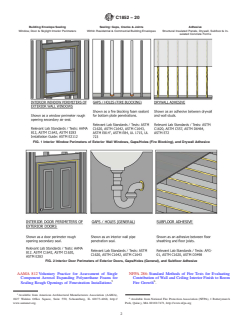
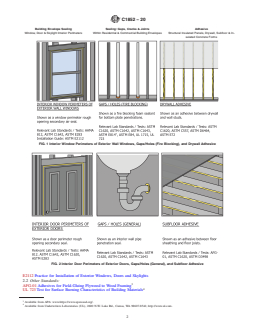
FIG. 2 Interior Door Perimeters of Exterior Doors, Gaps/Holes (General), and Subfloor Adhesive
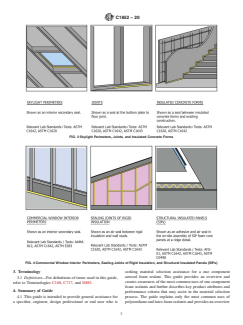
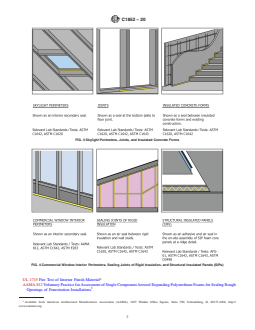
FIG. 3 Skylight Perimeters, Joints, and Insulated Concrete Forms
FIG. 4 Commercial Window Interior Perimeters, Sealing Joints of Rigid Insulation, and Structural Insulated Panels (SIPs)
1.5 This international standard was developed in accordance with internationally recognized principles on standardization established in the Decision on Principles for the Development of International Standards, Guides and Recommendations issued by the World Trade Organization Technical Barriers to Trade (TBT) Committee.
- Status
- Published
- Publication Date
- 31-Dec-2019
- Technical Committee
- C24 - Building Seals and Sealants
- Drafting Committee
- C24.61 - Aerosol Foam Sealants
Buy Documents
ASTM C1852-20 - Standard Guide for Product Selection/Delivery Systems for Aerosol Foam Sealants and Adhesives
REDLINE ASTM C1852-20 - Standard Guide for Product Selection/Delivery Systems for Aerosol Foam Sealants and Adhesives
Overview
ASTM C1852-20, the Standard Guide for Product Selection/Delivery Systems for Aerosol Foam Sealants and Adhesives, provides essential guidance for selecting and using aerosol polyurethane and latex foam products in construction. Developed by ASTM International, this guide summarizes the critical test methods and performance criteria used to compare and specify aerosol foam sealants, particularly for building envelope air barrier and adhesive applications. The document aids manufacturers, specifiers, engineers, architects, and end users in evaluating material properties and suitability for various construction tasks, helping ensure performance and compliance.
Key Topics
- Foam Types: Focuses on single-component aerosol polyurethane and latex foams used as sealants and adhesives.
- Physical Property Assessment: Offers a high-level summary of relevant test methods that measure key characteristics such as pressure build, air permeability, bead expansion, and fire resistance.
- Performance Criteria: Reviews standards and metrics-such as ASTM E283 for air leakage and ASTM E84 for surface burning characteristics-that help users evaluate material performance for specific applications.
- Delivery Systems: Details two major dispensing options-gun-dispensed and straw-dispensed foams-describing usability, control, and typical scenarios for each.
- Safety and Environmental Considerations: Outlines safety precautions, environmental influences on performance, and recommendations for storage and handling.
Applications
Aerosol foam sealants and adhesives addressed in ASTM C1852-20 are vital for a range of construction tasks, especially in building envelope systems:
- Air Barrier & Gap Sealing: Used to seal windows, doors, skylights, subfloors, rigid insulation joints, and structural insulated panels (SIPs) to minimize air infiltration and exfiltration.
- Fireblocking: Polyurethane and latex foam sealants are used for gaps and penetrations in framing, restricting hidden fire and smoke transfer. Code acceptance often requires evidence of suitable performance through modified ASTM E814 fire testing.
- Adhesive Bonding: Applicable for bonding drywall or gypsum wallboard to wood framing, adhering floor panels, or fastening insulated concrete forms, with reference to specific performance standards for structural strength and durability.
- Substrate Compatibility: Formulated to adhere to common building substrates like wood, gypsum, and concrete, with caution advised for plastics such as PTFE and conditions involving frequent moisture.
- Climate and Environmental Controls: Guidance is provided on suitable application temperatures and humidity, as performance and cure can be significantly affected by environmental factors.
Related Standards
For comprehensive evaluation and selection, ASTM C1852-20 references numerous other standards critical for testing, specifying, and understanding the properties and performance of aerosol foam sealants:
- ASTM C168 – Terminology Relating to Thermal Insulation
- ASTM C717 – Terminology of Building Seals and Sealants
- ASTM C1536 – Yield Measurement for Aerosol Foam Sealants
- ASTM C1620 – Specification for Aerosol Polyurethane and Latex Foam Sealants
- ASTM C1642 – Air Leakage Rates of Aerosol Foam Sealants
- ASTM C1643 – Volumetric Expansion of Aerosol Foam Sealants
- ASTM D883 – Terminology Relating to Plastics
- ASTM D6464 – Specification for Expandable Foam Adhesives
- ASTM E72, E283, E84, E119, E814 – Various test methods for structural, fire, and air leakage properties
- AAMA 812 – Assessment of Single Component Aerosol Expanding Polyurethane Foams for Sealing Fenestrations
- NFPA 286 – Standard Methods for Evaluating Fire Contribution of Wall and Ceiling Finishes
Practical Value
Implementing the recommendations and test methods within ASTM C1852-20 ensures that the most appropriate aerosol foam sealant is specified and used according to the unique demands of each building project. Compliance with these guidelines supports high performance in energy efficiency, fire safety, and structural durability. Additionally, referencing allied standards guarantees a holistic approach to product selection, installation, and long-term maintenance.
Keywords: aerosol foam sealant, polyurethane foam, latex foam sealant, air barrier, adhesive, building envelope, fireblocking, air leakage, ASTM C1852, sealant delivery systems.
Relations
- Effective Date
- 01-Jan-2020
- Effective Date
- 15-Apr-2024
- Effective Date
- 01-Feb-2024
- Effective Date
- 01-Dec-2023
- Effective Date
- 01-Nov-2023
- Effective Date
- 01-Sep-2023
- Effective Date
- 01-Aug-2020
- Effective Date
- 01-May-2020
- Effective Date
- 01-Jan-2020
- Effective Date
- 01-Oct-2019
- Effective Date
- 01-Aug-2019
- Effective Date
- 01-Jul-2019
- Effective Date
- 01-Jun-2019
- Effective Date
- 01-May-2019
- Effective Date
- 15-Apr-2019
Buy Documents
ASTM C1852-20 - Standard Guide for Product Selection/Delivery Systems for Aerosol Foam Sealants and Adhesives
REDLINE ASTM C1852-20 - Standard Guide for Product Selection/Delivery Systems for Aerosol Foam Sealants and Adhesives
Get Certified
Connect with accredited certification bodies for this standard

DIBt (Deutsches Institut für Bautechnik)
German Institute for Building Technology.
DIN CERTCO
DIN Group product certification.

Aboma Certification B.V.
Specialized in construction, metal, and transport sectors.
Sponsored listings
Frequently Asked Questions
ASTM C1852-20 is a guide published by ASTM International. Its full title is "Standard Guide for Product Selection/Delivery Systems for Aerosol Foam Sealants and Adhesives". This standard covers: SIGNIFICANCE AND USE 5.1 The intended use of this guide is to provide a high level summary of relevant test methods and performance criteria of aerosol foam sealants that can be helpful in identifying material properties and suitable applications. Use of this guide can be leveraged to further understand how foam sealant materials can be expected to perform and are positioned for intended use by manufacturers in the marketplace. 5.2 This guide is limited in scope and does not cover all possible end use applications. Consult the Aerosol Foam Sealant Manufacturer for specific performance capability, third party reports, or International Code Council evaluation reports. SCOPE 1.1 This guide covers the general use of aerosol polyurethane and aerosol latex foams extruded from pressurized containers intended for building envelope air barrier sealant and adhesive applications in building construction. It also provides an overview of associated standards and test methods that quantify key physical properties that are useful to design professionals, engineers, specifiers, and end users. 1.2 Currently two main foam sealant types are applicable to this practice, single component polyurethane and latex types. 1.3 The values stated in inch-pound units are to be regarded as standard. SI units provided are for information only and are not considered standard. 1.4 This standard does not purport to address all of the safety concerns, if any, associated with its use. It is the responsibility of the user of this standard to establish appropriate safety and health practices and determine the applicability of regulatory limitations prior to use. For specific safety considerations see Section 7. FIG. 2 Interior Door Perimeters of Exterior Doors, Gaps/Holes (General), and Subfloor Adhesive FIG. 3 Skylight Perimeters, Joints, and Insulated Concrete Forms FIG. 4 Commercial Window Interior Perimeters, Sealing Joints of Rigid Insulation, and Structural Insulated Panels (SIPs) 1.5 This international standard was developed in accordance with internationally recognized principles on standardization established in the Decision on Principles for the Development of International Standards, Guides and Recommendations issued by the World Trade Organization Technical Barriers to Trade (TBT) Committee.
SIGNIFICANCE AND USE 5.1 The intended use of this guide is to provide a high level summary of relevant test methods and performance criteria of aerosol foam sealants that can be helpful in identifying material properties and suitable applications. Use of this guide can be leveraged to further understand how foam sealant materials can be expected to perform and are positioned for intended use by manufacturers in the marketplace. 5.2 This guide is limited in scope and does not cover all possible end use applications. Consult the Aerosol Foam Sealant Manufacturer for specific performance capability, third party reports, or International Code Council evaluation reports. SCOPE 1.1 This guide covers the general use of aerosol polyurethane and aerosol latex foams extruded from pressurized containers intended for building envelope air barrier sealant and adhesive applications in building construction. It also provides an overview of associated standards and test methods that quantify key physical properties that are useful to design professionals, engineers, specifiers, and end users. 1.2 Currently two main foam sealant types are applicable to this practice, single component polyurethane and latex types. 1.3 The values stated in inch-pound units are to be regarded as standard. SI units provided are for information only and are not considered standard. 1.4 This standard does not purport to address all of the safety concerns, if any, associated with its use. It is the responsibility of the user of this standard to establish appropriate safety and health practices and determine the applicability of regulatory limitations prior to use. For specific safety considerations see Section 7. FIG. 2 Interior Door Perimeters of Exterior Doors, Gaps/Holes (General), and Subfloor Adhesive FIG. 3 Skylight Perimeters, Joints, and Insulated Concrete Forms FIG. 4 Commercial Window Interior Perimeters, Sealing Joints of Rigid Insulation, and Structural Insulated Panels (SIPs) 1.5 This international standard was developed in accordance with internationally recognized principles on standardization established in the Decision on Principles for the Development of International Standards, Guides and Recommendations issued by the World Trade Organization Technical Barriers to Trade (TBT) Committee.
ASTM C1852-20 is classified under the following ICS (International Classification for Standards) categories: 91.100.50 - Binders. Sealing materials. The ICS classification helps identify the subject area and facilitates finding related standards.
ASTM C1852-20 has the following relationships with other standards: It is inter standard links to ASTM C1852-17, ASTM C168-24, ASTM D883-24, ASTM E84-23d, ASTM D883-23, ASTM E84-23c, ASTM C1642-20, ASTM C1643-14(2020), ASTM D883-20, ASTM E119-19, ASTM D883-19c, ASTM E84-19b, ASTM D3498-19a, ASTM C1536-19, ASTM E2112-19b. Understanding these relationships helps ensure you are using the most current and applicable version of the standard.
ASTM C1852-20 is available in PDF format for immediate download after purchase. The document can be added to your cart and obtained through the secure checkout process. Digital delivery ensures instant access to the complete standard document.
Standards Content (Sample)
This international standard was developed in accordance with internationally recognized principles on standardization established in the Decision on Principles for the
Development of International Standards, Guides and Recommendations issued by the World Trade Organization Technical Barriers to Trade (TBT) Committee.
Designation:C1852 −20
Standard Guide for
Product Selection/Delivery Systems for Aerosol Foam
Sealants and Adhesives
This standard is issued under the fixed designation C1852; the number immediately following the designation indicates the year of
original adoption or, in the case of revision, the year of last revision. A number in parentheses indicates the year of last reapproval. A
superscript epsilon (´) indicates an editorial change since the last revision or reapproval.
1. Scope C717 Terminology of Building Seals and Sealants
C1536 Test Method for Measuring the Yield for Aerosol
1.1 This guide covers the general use of aerosol polyure-
Foam Sealants
thane and aerosol latex foams extruded from pressurized
C1620 Specification for Aerosol Polyurethane and Aerosol
containers intended for building envelope air barrier sealant
Latex Foam Sealants
and adhesive applications in building construction. It also
C1642 Practice for DeterminingAir Leakage Rates ofAero-
provides an overview of associated standards and test methods
sol Foam Sealants and Other Construction Joint Fill and
that quantify key physical properties that are useful to design
Insulation Materials
professionals, engineers, specifiers, and end users.
C1643 Test Method to Measuring the Post Dispensing Volu-
1.2 Currently two main foam sealant types are applicable to
metric Expansion of Aerosol Foam Sealants
this practice, single component polyurethane and latex types.
C1737 Guide for Evaluating Temperature Effects toAerosol
Foam Sealant During and After Dispensing
1.3 The values stated in inch-pound units are to be regarded
as standard. SI units provided are for information only and are D883 Terminology Relating to Plastics
D3498 Specification for Adhesives for Field-Gluing Wood
not considered standard.
Structural Panels (Plywood or Oriented Strand Board) to
1.4 This standard does not purport to address all of the
Wood Based Floor System Framing
safety concerns, if any, associated with its use. It is the
D6464 Specification for Expandable Foam Adhesives for
responsibility of the user of this standard to establish appro-
Fastening Gypsum Wallboard to Wood Framing
priate safety and health practices and determine the applica-
E72 Test Methods of Conducting Strength Tests of Panels
bility of regulatory limitations prior to use. For specific safety
for Building Construction
considerations see Section 7.
E84 Test Method for Surface Burning Characteristics of
1.5 This international standard was developed in accor-
Building Materials
dance with internationally recognized principles on standard-
E119 Test Methods for Fire Tests of Building Construction
ization established in the Decision on Principles for the
and Materials
Development of International Standards, Guides and Recom-
E283 Test Method for Determining Rate of Air Leakage
mendations issued by the World Trade Organization Technical
Through Exterior Windows, Skylights, Curtain Walls, and
Barriers to Trade (TBT) Committee.
Doors Under Specified Pressure Differences Across the
Specimen
2. Referenced Documents
E814 Test Method for Fire Tests of Penetration Firestop
2.1 ASTM Standards: Systems
E2112 Practice for Installation of Exterior Windows, Doors
C168 Terminology Relating to Thermal Insulation
C557 Specification for Adhesives for Fastening Gypsum and Skylights
Wallboard to Wood Framing
2.2 Other Standards:
AFG-01 Adhesives for Field-Gluing Plywood to Wood
Framing
ThistestmethodisunderthejurisdictionofASTMCommitteeC24onBuilding
UL723 Test for Surface Burning Characteristics of Building
Seals and Sealants and is the direct responsibility of Subcommittee C24.61 on
Materials
Aerosol Foam Sealants.
Current edition approved Jan. 1, 2020. Published January 2020. Originally UL 1715 Fire Test of Interior Finish Material
approved in 2017. Last previous edition approved in 2017 as C1852-17. DOI:
10.1520/C1852-20.
For referenced ASTM standards, visit the ASTM website, www.astm.org, or
contact ASTM Customer Service at service@astm.org. For Annual Book of ASTM Available from APA: www.https://www.apawood.org/.
Standards volume information, refer to the standard’s Document Summary page on Available from Underwriters Laboratories (UL), 2600 N.W. Lake Rd., Camas,
the ASTM website. WA 98607-8542, http://www.ul.com.
Copyright © ASTM International, 100 Barr Harbor Drive, PO Box C700, West Conshohocken, PA 19428-2959. United States
C1852−20
Building Envelope Sealing Sealing: Gaps, Cracks & Joints Adhesive
Window, Door & Skylight Interior Perimeters Within Residential & Commercial Building Envelopes Structural Insulated Panels, Drywall, Subfloor & In-
sulated Concrete Forms
FIG. 1Interior Window Perimeters of Exterior Wall Windows, Gaps/Holes (Fire Blocking), and Drywall Adhesive
FIG. 2Interior Door Perimeters of Exterior Doors, Gaps/Holes (General), and Subfloor Adhesive
AAMA 812 Voluntary Practice for Assessment of Single NFPA 286: Standard Methods of Fire Tests for Evaluating
Component Aerosol Expanding Polyurethane Foams for Contribution of Wall and Ceiling Interior Finish to Room
5 6
Sealing Rough Openings of Fenestration Installations Fire Growth .
Available from American Architectural Manufacturers Association (AAMA),
1827 Walden Office Square, Suite 550, Schaumburg, IL 60173-4268, http:// Available from National Fire Protection Association (NFPA), 1 Batterymarch
www.aamanet.org. Park, Quincy, MA 02169-7471, http://www.nfpa.org
C1852−20
FIG. 3Skylight Perimeters, Joints, and Insulated Concrete Forms
FIG. 4Commercial Window Interior Perimeters, Sealing Joints of Rigid Insulation, and Structural Insulated Panels (SIPs)
3. Terminology seeking material selection assistance for a one component
aerosol foam sealant. This guide provides an overview and
3.1 Definitions—For definitions of terms used in this guide,
creates awareness of the most common uses of one component
refer to Terminologies C168, C717, and D883.
foam sealants and further describes key product attributes and
4. Summary of Guide
performance criteria that may assist in the material selection
process. The guide explains only the most common uses of
4.1 This guide is intended to provide general assistance for
a specifier, engineer, design professional or end user who is polyurethaneandlatexfoamsealantsandprovidesanoverview
C1852−20
of aerosol foam sealant physical properties, climate condition 6.1.2 Air Infiltration:
considerations,dispensingcontainertypes,andproductstorage 6.1.2.1 Referenced Standards—Test Method E283, Practice
variables. The guide provides information on environmental C1642 with the air infiltration allowable designated in Speci-
conditions and effects that are known to detrimentally affect a fication C1620.
foam sealant.The guide further provides definitions relevant to
aerosol foam sealants, germane standards and test methods,
TABLE 2 Air Permeability
product storage best practices, substrate guidance, general
A
Maximum Allowable Air Permeation Air Leakage Condition
safety considerations, and shelf life information.
Metric in./lb
2 2
1.5 L/s·m 0.3 CFM/ft Gap Surface Area
4.2 In addition to the product considerations in this guide,
0.02 L/s·m 0.01 CFM/ft Gap Length@ 1.0 cm gap
consult the foam sealant manufacturer about applications and
width
limitations for its products and their proper use and installa-
A
Testing prepared in accordance with Practice C1642 and tested in accordance
tions. Considering the range of appropriate applications, the
with Test Method E283.
properties of commercially available foam sealants, and the
many conditions of use, the information contained herein is
general in nature.
6.1.2.2 Background of Performance Criteria—Practice
C1642 provides a method to build a test specimen before
5. Significance and Use
running Test Method E283 specifically for aerosol foam
5.1 The intended use of this guide is to provide a high level
sealants and other materials typically found in the rough
summary of relevant test methods and performance criteria of
opening gap between a window and wall system. Test Method
aerosolfoamsealantsthatcanbehelpfulinidentifyingmaterial
E283 designates how to apply a pressure differential across the
properties and suitable applications. Use of this guide can be
specimen using the test assembly called out in Practice C1642.
leveragedtofurtherunderstandhowfoamsealantmaterialscan
The performance criteria for air infiltration are designated in
be expected to perform and are positioned for intended use by
Specification C1620, Table 1.
manufacturers in the marketplace.
6.1.3 Foam Bead Expansion:
6.1.3.1 Many aerosol foam sealants will expand during
5.2 This guide is limited in scope and does not cover all
cure. This property has been found to be unrelated to Pressure-
possible end use applications. Consult the Aerosol Foam
Build described above. In general, this foam sealant character-
Sealant Manufacturer for specific performance capability, third
istic is useful when determining the best product for filling
party reports, or International Code Council evaluation reports.
gaps. Larger gaps may be best filled by a high expanding foam
6. Performance Overview and Guide to Key Physical sealant while smaller gaps are generally more easily filled with
Properties a low expansion foam sealant.
Matrix of Three Primary Application Categories for One
TABLE 3 Post Expansion
Component Aerosol Foam Sealants (See Figs. 1-4)
Foam Expansion Categories Percentage
6.1 Windows, Doors, and Skylights:
High Expanding Greater than 250 %
6.1.1 Pressure-Build: Medium Expansion 150–250 %
Minimal Expanding Less than 150 %
6.1.1.1 Referenced Voluntary Practice—AAMA 812.
6.1.1.2 Background of Performance Criteria—AAMA 812
is the voluntary practice referenced standard that reports three
6.1.4 Post Expansion:
values to the user of the document. It reports pressure-build
6.1.4.1 Reference Standard—Test Method C1643.
reported in psi, dimensional stability in volume %, and a
standardized beam deflection in inches. These three physical
6.2 Gaps, Cracks, Joints, Fireblocking:
characteristicsofthefoamsealantareusefulinasystemdesign
6.2.1 Surface Flame Spread and Fire Testing:
when the foam is applied next to a fenestration product. Table
6.2.1.1 Reference Standards:—Test Method E84, UL 1715,
1 provides guidance in product selection and supplements
Test Methods E119 time temperature curve, NFPA 286.
6.2.1.2 Firestopping is different than Fireblocking and ap-
proved Fireblocking materials should never be used in
TABLE 1 Pressure Build
Firestopping applications involving noncombustible construc-
Potential for Frame Distortion Measurement of Foam Pressure-Build
tion:
Highest Above 2 psi
Medium 1–2 psi (1) Fireblocking is the restriction of hidden fire and smoke
Lowest 0–1 psi
movement via the inside of hollow concealed spaces in wood
frame walls. Contrast this to Firestopping, which is the
prevention of fire spread from one side over to the other side of
AAMA 812. a fire rated wall or floor assembly. Fireblocking is typically
6.1.1.3 Foam pressure build is defined as a value for accomplished by the construction of top plate (usuallya2by
maximum pressure developed under specified conditions as 4) and the vertical wood studs in the wall. Gaps in the plates or
determinedinAAMAdescribedinpoundspersquareinch(psi) studs that accommodate wiring or piping could allow the free
or units of Pascal (Pa). passage of fire and smoke, and should be sealed with an
C1852−20
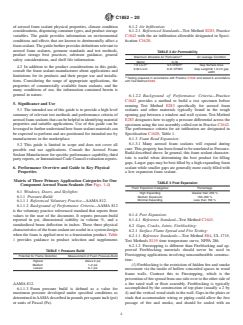
FIG. 5Post Expansion
TABLE 4 Surface Flame Spread and Fire Testing
6.3.1.2 Scope of Standard—This specification establishes
Application Testing Acceptable Results minimum performance requirements for determining
...
This document is not an ASTM standard and is intended only to provide the user of an ASTM standard an indication of what changes have been made to the previous version. Because
it may not be technically possible to adequately depict all changes accurately, ASTM recommends that users consult prior editions as appropriate. In all cases only the current version
of the standard as published by ASTM is to be considered the official document.
Designation: C1852 − 17 C1852 − 20
Standard Guide for
Product Selection/Delivery Systems for Aerosol Foam
Sealants and Adhesives
This standard is issued under the fixed designation C1852; the number immediately following the designation indicates the year of
original adoption or, in the case of revision, the year of last revision. A number in parentheses indicates the year of last reapproval. A
superscript epsilon (´) indicates an editorial change since the last revision or reapproval.
1. Scope
1.1 This guide covers the general use of aerosol polyurethane and aerosol latex foams extruded from pressurized containers
intended for building envelope air barrier sealant and adhesive applications in building construction. It also provides an overview
of associated standards and test methods that quantify key physical properties that are useful to design professionals, engineers,
specifiers, and end users.
1.2 Currently two main foam sealant types are applicable to this practice, single component polyurethane and latex types.
1.3 The values stated in inch-pound units are to be regarded as standard. SI units provided are for information only and are not
considered standard.
1.4 This standard does not purport to address all of the safety concerns, if any, associated with its use. It is the responsibility
of the user of this standard to establish appropriate safety and health practices and determine the applicability of regulatory
limitations prior to use. For specific safety considerations see Section 7.
1.5 This international standard was developed in accordance with internationally recognized principles on standardization
established in the Decision on Principles for the Development of International Standards, Guides and Recommendations issued
by the World Trade Organization Technical Barriers to Trade (TBT) Committee.
2. Referenced Documents
2.1 ASTM Standards:
C168 Terminology Relating to Thermal Insulation
C557 Specification for Adhesives for Fastening Gypsum Wallboard to Wood Framing
C717 Terminology of Building Seals and Sealants
C1536 Test Method for Measuring the Yield for Aerosol Foam Sealants
C1620 Specification for Aerosol Polyurethane and Aerosol Latex Foam Sealants
C1642 Practice for Determining Air Leakage Rates of Aerosol Foam Sealants and Other Construction Joint Fill and Insulation
Materials
C1643 Test Method to Measuring the Post Dispensing Volumetric Expansion of Aerosol Foam Sealants
C1737 Guide for Evaluating Temperature Effects to Aerosol Foam Sealant During and After Dispensing
D883 Terminology Relating to Plastics
D3498 Specification for Adhesives for Field-Gluing Wood Structural Panels (Plywood or Oriented Strand Board) to Wood Based
Floor System Framing
D6464 Specification for Expandable Foam Adhesives for Fastening Gypsum Wallboard to Wood Framing
E72 Test Methods of Conducting Strength Tests of Panels for Building Construction
E84 Test Method for Surface Burning Characteristics of Building Materials
E119 Test Methods for Fire Tests of Building Construction and Materials
E283 Test Method for Determining Rate of Air Leakage Through Exterior Windows, Skylights, Curtain Walls, and Doors Under
Specified Pressure Differences Across the Specimen
E814 Test Method for Fire Tests of Penetration Firestop Systems
This test method is under the jurisdiction of ASTM Committee C24 on Building Seals and Sealants and is the direct responsibility of Subcommittee C24.61 on Aerosol
Foam Sealants.
Current edition approved Feb. 1, 2017Jan. 1, 2020. Published March 2017January 2020. DOI: 10.1520/C1852-17.Originally approved in 2017. Last previous edition
approved in 2017 as C1852-17. DOI: 10.1520/C1852-20.
For referenced ASTM standards, visit the ASTM website, www.astm.org, or contact ASTM Customer Service at service@astm.org. For Annual Book of ASTM Standards
volume information, refer to the standard’s Document Summary page on the ASTM website.
Copyright © ASTM International, 100 Barr Harbor Drive, PO Box C700, West Conshohocken, PA 19428-2959. United States
C1852 − 20
Building Envelope Sealing Sealing: Gaps, Cracks & Joints Adhesive
Window, Door & Skylight Interior Perimeters Within Residential & Commercial Building Envelopes Structural Insulated Panels, Drywall, Subfloor & In-
sulated Concrete Forms
FIG. 1 Interior Window Perimeters of Exterior Wall Windows, Gaps/Holes (Fire Blocking), and Drywall Adhesive
FIG. 2 Interior Door Perimeters of Exterior Doors, Gaps/Holes (General), and Subfloor Adhesive
E2112 Practice for Installation of Exterior Windows, Doors and Skylights
2.2 Other Standards:
AFG-01 Adhesives for Field-Gluing Plywood to Wood Framing
UL 723 Test for Surface Burning Characteristics of Building Materials
Available from APA: www.https://www.apawood.org/.
Available from Underwriters Laboratories (UL), 2600 N.W. Lake Rd., Camas, WA 98607-8542, http://www.ul.com.
C1852 − 20
FIG. 3 Skylight Perimeters, Joints, and Insulated Concrete Forms
FIG. 4 Commercial Window Interior Perimeters, Sealing Joints of Rigid Insulation, and Structural Insulated Panels (SIPs)
UL 1715 Fire Test of Interior Finish Material
AAMA 812 Voluntary Practice for Assessment of Single Component Aerosol Expanding Polyurethane Foams for Sealing Rough
Openings of Fenestration Installations
Available from American Architectural Manufacturers Association (AAMA), 1827 Walden Office Square, Suite 550, Schaumburg, IL 60173-4268, http://
www.aamanet.org.
C1852 − 20
NFPA 286: Standard Methods of Fire Tests for Evaluating Contribution of Wall and Ceiling Interior Finish to Room Fire
Growth .
3. Terminology
3.1 Definitions—For definitions of terms used in this guide, refer to Terminologies C168, C717, and D883.
4. Summary of Guide
4.1 This guide is intended to provide general assistance for a specifier, engineer, design professional or end user who is seeking
material selection assistance for a one component aerosol foam sealant. This guide provides an overview and creates awareness
of the most common uses of one component foam sealants and further describes key product attributes and performance criteria
that may assist in the material selection process. The guide explains only the most common uses of polyurethane and latex foam
sealants and provides an overview of aerosol foam sealant physical properties, climate condition considerations, dispensing
container types, and product storage variables. The guide provides information on environmental conditions and effects that are
known to detrimentally affect a foam sealant. The guide further provides definitions relevant to aerosol foam sealants, germane
standards and test methods, product storage best practices, substrate guidance, general safety considerations, and shelf life
information.
4.2 In addition to the product considerations in this guide, consult the foam sealant manufacturer about applications and
limitations for its products and their proper use and installations. Considering the range of appropriate applications, the properties
of commercially available foam sealants, and the many conditions of use, the information contained herein is general in nature.
5. Significance and Use
5.1 The intended use of this guide is to provide a high level summary of relevant test methods and performance criteria of
aerosol foam sealants that can be helpful in identifying material properties and suitable applications. Use of this guide can be
leveraged to further understand how foam sealant materials can be expected to perform and are positioned for intended use by
manufacturers in the marketplace.
5.2 This guide is limited in scope and does not cover all possible end use applications. Consult the Aerosol Foam Sealant
Manufacturer for specific performance capability, third party reports, or International Code Council evaluation reports.
6. Performance Overview and Guide to Key Physical Properties
Matrix of Three Primary Application Categories for One Component Aerosol Foam Sealants (See Figs. 1-4)
6.1 Windows, Doors, and Skylights:
6.1.1 Pressure-Build:
6.1.1.1 Referenced Voluntary Practice—AAMA 812.
6.1.1.2 Background of Performance Criteria—AAMA 812 is the voluntary practice referenced standard that reports three values
to the user of the document. It reports pressure-build reported in psi, dimensional stability in volume %, and a standardized beam
deflection in inches. These three physical characteristics of the foam sealant are useful in a system design when the foam is applied
next to a fenestration product. Table 1 provides guidance in product selection and supplements AAMA 812.
TABLE 1 Pressure Build
Potential for Frame Distortion Measurement of Foam Pressure-Build
Highest Above 2 psi
Medium 1–2 psi
Lowest 0–1 psi
6.1.1.3 Foam pressure build is defined as a value for maximum pressure developed under specified conditions as determined
in AAMA described in pounds per square inch (psi) or units of Pascal (Pa).
6.1.2 Air Infiltration:
6.1.2.1 Referenced Standards—Test Method E283, Practice C1642 with the air infiltration allowable designated in Specification
C1620.
6.1.2.2 Background of Performance Criteria—Practice C1642 provides a method to build a test specimen before running Test
Method E283 specifically for aerosol foam sealants and other materials typically found in the rough opening gap between a
window and wall system. Test Method E283 designates how to apply a pressure differential across the specimen using the test
assembly called out in Practice C1642. The performance criteria for air infiltration are designated in Specification C1620, Table
1.
Available from National Fire Protection Association (NFPA), 1 Batterymarch Park, Quincy, MA 02169-7471, http://www.nfpa.org
C1852 − 20
TABLE 2 Air Permeability
Air Flow Categories Measurement of Foam Air
Permeability (Air Leakage)
Greater Air Permeability Max 0.01 cfm/ft
2 3
>1.5 L/ (s·m ) (0.3 ft /
(min·ft )
>0.02 L/ (s·m ) (0.01
3 2
ft /(min·ft )
Allowable Air Max 0.01 cfm/ft
2 3
Permeability <1.5 L/ (s·m ) (0.3 ft /
(min·ft )
<0.02 L/ (s·m ) (0.01
3 2
ft /(min·ft )
TABLE 2 Air Permeability
A
Maximum Allowable Air Permeation Air Leakage Condition
Metric in./lb
2 2
1.5 L/s·m 0.3 CFM/ft Gap Surface Area
0.02 L/s·m 0.01 CFM/ft Gap Length@ 1.0 cm gap
width
A
Testing prepared in accordance with Practice C1642 and tested in accordance
with Test Method E283.
6.1.3 Foam Bead Expansion:
6.1.3.1 Many aerosol foam sealants will expand during cure. This property has been found to be unrelated to Pressure-Build
described above. In general, this foam sealant characteristic is useful when determining the best product for filling gaps. Larger
gaps may be best filled by a high expanding foam sealant while smaller gaps are generally more easily filled with a low expansion
foam sealant.
TABLE 3 Post Expansion
Foam Expansion Categories Percentage
High Expanding Greater than 250 %
Medium Expansion 150–250 %
Minimal Expanding Less than 150 %
6.1.4 Post Expansion:
6.1.4.1 Reference Standard—Test Method C1643.
6.2 Gaps, Cracks, Joints, Fireblocking:
6.2.1 Surface Flame Spread and Fire Testing:
6.2.1.1 Reference Standards:—Test Method E84, UL 1715, Test Methods E119 time temperature curve, NFPA 286.
6.2.1.2 Firestopping is different than Fireblocking and approved Fireblocking materials should never be used in Firestopping
applications involving noncombustible construction:
(1) Fireblocking is the restriction of hidden fire and smoke movement via the inside of hollow concealed spaces in wood frame
walls. Contrast this to Firestopping, which is the prevention of fire spread from one side over to the other side of a fire rated wall
or floor assembly. Fireblocking is typically accomplished by the construction of top plate (usually a 2 by 4) and the vertical wood
FIG. 5 Post Expansion
C1852 − 20
TABLE 4 Surface Flame Spread and Fire Testing
Application Testing Acceptable Results
A,B
...