


ASTM D4309-18
(Practice)Standard Practice for Sample Digestion Using Closed Vessel Microwave Heating Technique for the Determination of Total Metals in Water
Standard Practice for Sample Digestion Using Closed Vessel Microwave Heating Technique for the Determination of Total Metals in Water
SIGNIFICANCE AND USE
5.1 The analysis of many types of water for metals using flame atomic absorption spectrophotometry, inductively coupled plasma emission spectrophotometry, direct current plasma emission spectrophotometry, or graphite furnace atomic absorption spectrophotometry necessitates the use of a digestion practice in order to ensure the proper statistical recovery of the metals from the sample matrix. The use of closed vessel microwave techniques will speed the complete recovery of metals from the water matrices and eliminate sample contamination from external sources.
SCOPE
1.1 This practice covers the general considerations for quantitative sample digestion for total metals in water using closed vessel microwave heating technique. This practice is applicable to surface, saline, domestic, and industrial wastewater.
1.2 Because of the differences among various makes and models of satisfactory instruments, no detailed operating instructions can be provided. Instead, the analyst should follow the instructions provided by the manufacturer of the particular instrument.
1.3 This practice can be used with the following ASTM standards, providing the user determines precision and bias based on this digestion practice: Test Method D857, Test Methods D858, Test Methods D1068, Test Methods D1687, Test Methods D1688, Test Methods D1691, Test Methods D1886, Test Method D1976, Practices D3370, Test Methods D3557, Test Methods D3559, Practice D3919, Test Method D4190, Practice D4453, Practice D4691, and Test Method D5673.
1.4 The values stated in SI units are to be regarded as standard. The values given in parentheses are mathematical conversion to inch-pound units that are provided for information only and are not considered standard.
1.5 This standard does not purport to address all of the safety concerns, if any, associated with its use. It is the responsibility of the user of this standard to establish appropriate safety, health, and environmental practices and determine the applicability of regulatory limitations prior to use. For specific hazard statements, see Section 9.
1.6 This international standard was developed in accordance with internationally recognized principles on standardization established in the Decision on Principles for the Development of International Standards, Guides and Recommendations issued by the World Trade Organization Technical Barriers to Trade (TBT) Committee.
General Information
- Status
- Published
- Publication Date
- 31-Jan-2018
- Technical Committee
- D19 - Water
- Drafting Committee
- D19.05 - Inorganic Constituents in Water
Relations
- Effective Date
- 01-Feb-2018
- Effective Date
- 01-Dec-2023
- Effective Date
- 01-May-2020
- Effective Date
- 01-May-2020
- Effective Date
- 01-Jul-2018
- Effective Date
- 01-Jun-2017
- Effective Date
- 01-Jun-2017
- Effective Date
- 01-Jun-2017
- Effective Date
- 01-Jun-2017
- Effective Date
- 01-Feb-2017
- Effective Date
- 15-Feb-2016
- Effective Date
- 01-Jul-2015
- Effective Date
- 01-Jun-2015
- Effective Date
- 01-Feb-2015
- Effective Date
- 01-Sep-2012
Overview
ASTM D4309-18: Standard Practice for Sample Digestion Using Closed Vessel Microwave Heating Technique for the Determination of Total Metals in Water is an established standard developed by ASTM International. This practice provides procedures and recommendations for quantitative sample digestion for total metals analysis in water matrices using a closed vessel microwave heating technique. This method is widely recognized for its ability to ensure complete recovery of metal contaminants from diverse water samples - including surface water, saline water, domestic, and industrial wastewater - while minimizing risks of contamination from external sources.
Closed vessel microwave digestion has become an essential preparatory step for accurate metals determination using instrumental methods such as flame atomic absorption spectrophotometry (FAAS), inductively coupled plasma emission spectrophotometry (ICP), direct current plasma emission spectrophotometry (DCP), graphite furnace atomic absorption spectrophotometry (GFAAS), and inductively coupled plasma-mass spectrometry (ICP-MS).
Key Topics
- Closed Vessel Microwave Digestion: Using microwave-transparent, pressure-rated vessels for rapid and complete acid digestion of samples.
- Applicability: Suitable for surface, saline, domestic, and industrial wastewaters.
- Sample Integrity: Reduces external contamination and promotes statistically valid recovery of dissolved and particulate-bound metals.
- Multi-technique Compatibility: Digestates can be analyzed using FAAS, ICP, DCP, GFAAS, ICP-MS, or combinations thereof.
- Standard Operations:
- Manufacturer guidelines must be followed for specific equipment.
- Consistent vessel fill levels and digestion conditions are necessary for uniform heating.
- Safety and Compliance: Reinforces the need to follow safety, health, and environmental protocols and relevant regulatory requirements.
Applications
The microwave digestion technique outlined in ASTM D4309-18 supports laboratories, environmental monitoring agencies, and industries by ensuring accurate determination of trace and total metals in various water samples. Key applications include:
- Regulatory Compliance: Essential for monitoring effluents and meeting environmental discharge limits for metals.
- Water Quality Assessment: Used in the analysis of drinking water, process water, and environmental waters for trace metals.
- Industrial and Municipal Wastewater Monitoring: Enables reliable quantification of heavy metals in waste streams.
- Method Flexibility: The practice integrates with multiple ASTM metals analysis test methods, supporting routine and advanced laboratory capabilities.
- Improved Data Quality: By minimizing sample contamination and ensuring complete digestion, the method enhances the accuracy and reliability of metals testing results.
Related Standards
ASTM D4309-18 is designed for use with a variety of ASTM standards for metals determination in water, including but not limited to:
- Test Method D857 - Aluminum in Water
- Test Methods D858 - Manganese in Water
- Test Methods D1068 - Iron in Water
- Test Methods D1687, D1688, D1691, D1886 - Chromium, Copper, Zinc, Nickel in Water
- Test Methods D3557, D3559 - Cadmium, Lead in Water
- Test Method D4190 - Elements by DCP Spectroscopy
- Practice D3919 - Trace Elements by Graphite Furnace AA
- Practice D4691 - Elements by Flame AAS
- Test Method D5673 - Elements by ICP-MS
Additional referenced guidance includes U.S. EPA methods for metals digestion and determination, as well as related safety and equipment regulations (CFR and FCC).
Keywords: sample digestion, microwave digestion, metals analysis, water quality, ASTM D4309, closed vessel digestion, ICP, FAAS, wastewater testing, environmental compliance
Buy Documents
ASTM D4309-18 - Standard Practice for Sample Digestion Using Closed Vessel Microwave Heating Technique for the Determination of Total Metals in Water
REDLINE ASTM D4309-18 - Standard Practice for Sample Digestion Using Closed Vessel Microwave Heating Technique for the Determination of Total Metals in Water
Get Certified
Connect with accredited certification bodies for this standard
NSF International
Global independent organization facilitating standards development and certification.

CIS Institut d.o.o.
Personal Protective Equipment (PPE) certification body. Notified Body NB-2890 for EU Regulation 2016/425 PPE.

Kiwa BDA Testing
Building and construction product certification.
Sponsored listings
Frequently Asked Questions
ASTM D4309-18 is a standard published by ASTM International. Its full title is "Standard Practice for Sample Digestion Using Closed Vessel Microwave Heating Technique for the Determination of Total Metals in Water". This standard covers: SIGNIFICANCE AND USE 5.1 The analysis of many types of water for metals using flame atomic absorption spectrophotometry, inductively coupled plasma emission spectrophotometry, direct current plasma emission spectrophotometry, or graphite furnace atomic absorption spectrophotometry necessitates the use of a digestion practice in order to ensure the proper statistical recovery of the metals from the sample matrix. The use of closed vessel microwave techniques will speed the complete recovery of metals from the water matrices and eliminate sample contamination from external sources. SCOPE 1.1 This practice covers the general considerations for quantitative sample digestion for total metals in water using closed vessel microwave heating technique. This practice is applicable to surface, saline, domestic, and industrial wastewater. 1.2 Because of the differences among various makes and models of satisfactory instruments, no detailed operating instructions can be provided. Instead, the analyst should follow the instructions provided by the manufacturer of the particular instrument. 1.3 This practice can be used with the following ASTM standards, providing the user determines precision and bias based on this digestion practice: Test Method D857, Test Methods D858, Test Methods D1068, Test Methods D1687, Test Methods D1688, Test Methods D1691, Test Methods D1886, Test Method D1976, Practices D3370, Test Methods D3557, Test Methods D3559, Practice D3919, Test Method D4190, Practice D4453, Practice D4691, and Test Method D5673. 1.4 The values stated in SI units are to be regarded as standard. The values given in parentheses are mathematical conversion to inch-pound units that are provided for information only and are not considered standard. 1.5 This standard does not purport to address all of the safety concerns, if any, associated with its use. It is the responsibility of the user of this standard to establish appropriate safety, health, and environmental practices and determine the applicability of regulatory limitations prior to use. For specific hazard statements, see Section 9. 1.6 This international standard was developed in accordance with internationally recognized principles on standardization established in the Decision on Principles for the Development of International Standards, Guides and Recommendations issued by the World Trade Organization Technical Barriers to Trade (TBT) Committee.
SIGNIFICANCE AND USE 5.1 The analysis of many types of water for metals using flame atomic absorption spectrophotometry, inductively coupled plasma emission spectrophotometry, direct current plasma emission spectrophotometry, or graphite furnace atomic absorption spectrophotometry necessitates the use of a digestion practice in order to ensure the proper statistical recovery of the metals from the sample matrix. The use of closed vessel microwave techniques will speed the complete recovery of metals from the water matrices and eliminate sample contamination from external sources. SCOPE 1.1 This practice covers the general considerations for quantitative sample digestion for total metals in water using closed vessel microwave heating technique. This practice is applicable to surface, saline, domestic, and industrial wastewater. 1.2 Because of the differences among various makes and models of satisfactory instruments, no detailed operating instructions can be provided. Instead, the analyst should follow the instructions provided by the manufacturer of the particular instrument. 1.3 This practice can be used with the following ASTM standards, providing the user determines precision and bias based on this digestion practice: Test Method D857, Test Methods D858, Test Methods D1068, Test Methods D1687, Test Methods D1688, Test Methods D1691, Test Methods D1886, Test Method D1976, Practices D3370, Test Methods D3557, Test Methods D3559, Practice D3919, Test Method D4190, Practice D4453, Practice D4691, and Test Method D5673. 1.4 The values stated in SI units are to be regarded as standard. The values given in parentheses are mathematical conversion to inch-pound units that are provided for information only and are not considered standard. 1.5 This standard does not purport to address all of the safety concerns, if any, associated with its use. It is the responsibility of the user of this standard to establish appropriate safety, health, and environmental practices and determine the applicability of regulatory limitations prior to use. For specific hazard statements, see Section 9. 1.6 This international standard was developed in accordance with internationally recognized principles on standardization established in the Decision on Principles for the Development of International Standards, Guides and Recommendations issued by the World Trade Organization Technical Barriers to Trade (TBT) Committee.
ASTM D4309-18 is classified under the following ICS (International Classification for Standards) categories: 13.060.50 - Examination of water for chemical substances. The ICS classification helps identify the subject area and facilitates finding related standards.
ASTM D4309-18 has the following relationships with other standards: It is inter standard links to ASTM D4309-12, ASTM D4190-15(2023), ASTM D1976-20, ASTM D1129-13(2020)e2, ASTM D1976-18, ASTM D1691-17, ASTM D857-17, ASTM D1687-17, ASTM D3557-17, ASTM D4453-17, ASTM D4453-16, ASTM D5673-15, ASTM D3559-15, ASTM D4190-15, ASTM D857-12. Understanding these relationships helps ensure you are using the most current and applicable version of the standard.
ASTM D4309-18 is available in PDF format for immediate download after purchase. The document can be added to your cart and obtained through the secure checkout process. Digital delivery ensures instant access to the complete standard document.
Standards Content (Sample)
This international standard was developed in accordance with internationally recognized principles on standardization established in the Decision on Principles for the
Development of International Standards, Guides and Recommendations issued by the World Trade Organization Technical Barriers to Trade (TBT) Committee.
Designation: D4309 − 18
Standard Practice for
Sample Digestion Using Closed Vessel Microwave Heating
Technique for the Determination of Total Metals in Water
This standard is issued under the fixed designation D4309; the number immediately following the designation indicates the year of
original adoption or, in the case of revision, the year of last revision.Anumber in parentheses indicates the year of last reapproval.A
superscript epsilon (´) indicates an editorial change since the last revision or reapproval.
1. Scope* mendations issued by the World Trade Organization Technical
Barriers to Trade (TBT) Committee.
1.1 This practice covers the general considerations for
quantitative sample digestion for total metals in water using
2. Referenced Documents
closed vessel microwave heating technique. This practice is
applicable to surface, saline, domestic, and industrial waste- 2.1 ASTM Standards:
water. D857Test Method for Aluminum in Water
D858Test Methods for Manganese in Water
1.2 Because of the differences among various makes and
D1068Test Methods for Iron in Water
models of satisfactory instruments, no detailed operating in-
D1129Terminology Relating to Water
structions can be provided. Instead, the analyst should follow
D1193Specification for Reagent Water
the instructions provided by the manufacturer of the particular
D1687Test Methods for Chromium in Water
instrument.
D1688Test Methods for Copper in Water
1.3 This practice can be used with the following ASTM
D1691Test Methods for Zinc in Water
standards, providing the user determines precision and bias
D1886Test Methods for Nickel in Water
based on this digestion practice: Test Method D857, Test
D1976Test Method for Elements in Water by Inductively-
Methods D858, Test Methods D1068, Test Methods D1687,
Coupled Argon Plasma Atomic Emission Spectroscopy
Test Methods D1688, Test Methods D1691, Test Methods
D3370Practices for Sampling Water from Closed Conduits
D1886, Test Method D1976, Practices D3370, Test Methods
D3557Test Methods for Cadmium in Water
D3557, Test Methods D3559, Practice D3919, Test Method
D3559Test Methods for Lead in Water
D4190, Practice D4453, Practice D4691, and Test Method
D3856Guide for Management Systems in Laboratories
D5673.
Engaged in Analysis of Water
1.4 The values stated in SI units are to be regarded as D3919Practice for Measuring Trace Elements in Water by
Graphite Furnace Atomic Absorption Spectrophotometry
standard. The values given in parentheses are mathematical
conversion to inch-pound units that are provided for informa- D4190TestMethodforElementsinWaterbyDirect-Current
Plasma Atomic Emission Spectroscopy
tion only and are not considered standard.
D4453Practice for Handling of High Purity Water Samples
1.5 This standard does not purport to address all of the
D4691Practice for Measuring Elements in Water by Flame
safety concerns, if any, associated with its use. It is the
Atomic Absorption Spectrophotometry
responsibility of the user of this standard to establish appro-
D5673Test Method for Elements in Water by Inductively
priate safety, health, and environmental practices and deter-
Coupled Plasma—Mass Spectrometry
mine the applicability of regulatory limitations prior to use.
For specific hazard statements, see Section 9. 2.2 U.S. Code of Federal Regulations:
1.6 This international standard was developed in accor- CFR 1.030.10Code of Federal Regulations, Volume 21
dance with internationally recognized principles on standard-
2.3 Federal Communications Commission Standard:
ization established in the Decision on Principles for the
Code of Federal Regulations,Volume 47, FCC Rule Part 18
Development of International Standards, Guides and Recom-
For referenced ASTM standards, visit the ASTM website, www.astm.org, or
This practice is under the jurisdiction ofASTM Committee D19 on Water and contact ASTM Customer Service at service@astm.org. For Annual Book of ASTM
is the direct responsibility of Subcommittee D19.05 on Inorganic Constituents in Standards volume information, refer to the standard’s Document Summary page on
Water. the ASTM website.
Current edition approved Feb. 1, 2018. Published May 2018. Originally Available from U.S. Government Printing Office, Superintendent of
approved in 1991. Last previous edition approved in 2012 as D4309–12. DOI: Documents, 732 N. Capitol St., NW, Washington, DC 20401-0001, http://
10.1520/D4309-18. www.access.gpo.gov.
*A Summary of Changes section appears at the end of this standard
Copyright © ASTM International, 100 Barr Harbor Drive, PO Box C700, West Conshohocken, PA 19428-2959. United States
D4309 − 18
2.4 U.S. EPA Method: holding 1 to 14 digestion vessels, to ensure even sample
U.S. EPAMethod:Methods for ChemicalAnalysis of Water heating. Safety interlocks, to shut off magnetron power output,
and Waste—March 1979, “Total Metals Digestion Proce- must be contained in the oven door opening mechanism. The
dure” 4.1.3, page Metals 6 unit may contain a temperature control device capable of
U.S. EPA Method: SW 846 Method 3015Microwave As- controlling vessel temperatures to 200°C and/or a pressure
sisted Acid Digestion of Aqueous Samples and Extracts control device capable of controlling vessel pressures to a
minimum 690 kPa (100 psi).
3. Terminology
7.1.1 The unit must comply with U.S. Health and Human
Services Standards under CFR Part 1030.10, sub parts (C) (1),
3.1 Definitions:
(C) (2), and (C) (3), for microwave leakage. The unit should
3.1.1 For definitions of terms used in this standard, refer to
have FCC-type approval for operations under FCC Rule Part
Terminology D1129.
18.
4. Summary of Practice
7.2 Closed Vessel, capable of holding 100 mL of solution.
4.1 A representative aliquot of a homogeneous sample is The vessel must be transparent to microwave energy and
digested with acid in a closed microwave transparent vessel,
capableofwithstandinginternalpressuresof690kPa(100psi)
using microwave heating. The digestate or a filtered digestate and temperatures of 200°C. The vessel must contain a safety
is then analyzed by direct aspiration or injection by flame
pressure relief valve, rupture disc, pressure venting system or
atomic absorption spectrophotometry (FAAS), inductively beconnectedtoanexternalsafetyreliefvalvethatwillprevent
coupled plasma emission techniques (ICP), direct current
possible vessel rupture or ejection of the vessel cap.
plasma emission techniques (DCP), graphite furnace atomic
7.3 Apparatus, to seal the vessel system to the manufactur-
absorption spectrophotometry (GFAAS), inductively coupled
er’s specified requirement.
plasma-mass spectrometry (ICP-MS), or a combination of
methods.
8. Reagents
8.1 Purity of Reagents—Reagent grade chemicals shall be
5. Significance and Use
used in this practice. Unless otherwise indicated, it is intended
5.1 The analysis of many types of water for metals using
that all reagents shall conform to the specifications for the
flame atomic absorption spectrophotometry, inductively
Committee onAnalytical Reagents of theAmerican Chemical
coupled plasma emission spectrophotometry, direct current
Society,wheresuchspecificationsareavailable. Othergrades
plasma emission spectrophotometry, or graphite furnace
may be used, provided it is first ascertained that the reagent is
atomic absorption spectrophotometry necessitates the use of a
of sufficiently high purity to permit its use without lessening
digestion practice in order to ensure the proper statistical
the accuracy of the determination.
recovery of the metals from the sample matrix. The use of
closed vessel microwave techniques will speed the complete 8.2 Purity of Water—Unless otherwise indicated, references
towatershallbeunderstoodtomeanreagentwaterconforming
recovery of metals from the water matrices and eliminate
sample contamination from external sources. to Specification D1193,Type I. Other reagent water types may
be used provided it is first ascertained that the water is of
6. Interferences
sufficiently high purity to permit its use without adversely
affecting the bias and precision of the method. Type II water
6.1 No interferences have been observed using microwave
was used for the data shown in Appendix X1.
heating.
8.3 Hydrochloric Acid (sp gr 1.19) (HCl).
6.2 Precautions should be exercised to avoid those interfer-
encesnormallyassociatedwiththeparticularanalyticalmethod
8.4 Nitric Acid (sp gr 1.42) (HNO ).
for metals determination.
8.5 Nitric Acid (1 + 1)—Add 1 volume of HNO (sp gr
6.3 This practice will not totally solubilize solid silicates
1.42) to 1 volume of water.
that are suspended in or settle out of the water sample.
9. Hazards
7. Apparatus
9.1 The microwave unit should be operated in accordance
7.1 Laboratory Microwave Heating System, capable of de-
with the manufacturer’s recommended operating and safety
livering 575 to 1000 W of power. The unit should be capable
precautions. Caution—It is not recommended to place a
of 1% power adjustment and 1 s time adjustment. The oven
microwaveunitinafumehood,whereitissurroundedbyacid
cavity should be fluorocarbon-coated or coated with a material
fumes, which can cause corrosion of the equipment. Acid
that has equivalent acid resistance and microwave properties
and be equipped with exhaust ventilation at 2.8 m /min (100
ft /min)foracidvaporprotectionoftheunitandoperator.The
Reagent Chemicals, American Chemical Society Specifications, American
unit must have a rotating or alternating turntable, capable of
Chemical Society, Washington, DC. For suggestions on the testing of reagents not
listed by the American Chemical Society, see Analar Standards for Laboratory
Chemicals, BDH Ltd., Poole, Dorset, U.K., and the United States Pharmacopeia
Available from NationalTechnical Information Service (NTIS), 5301 Shawnee and National Formulary, U.S. Pharmacopeial Convention, Inc. (USPC), Rockville,
Rd., Alexandria, VA 22312, http://www.ntis.gov. MD.
D4309 − 18
fumes generated inside the oven cavity should be air swept
away from the oven cavity to a hood.
9.2 Precaution—The closed vessel should be operated in
accordance with the manufacturer’s recommended operating
and safety instructions.
10. Procedure
10.1 Power Temperature Control—procedure for 7 to 12
vessel digestions:
NOTE 1—For fewer than seven samples, see 10.2.
10.1.1 Perform an instrument power check as outlined in
Annex A1.
10.1.2 Refer to ASTM test methods for sampling and
analysis (such as Guide D3856) to determine any sample
preservation requirements.
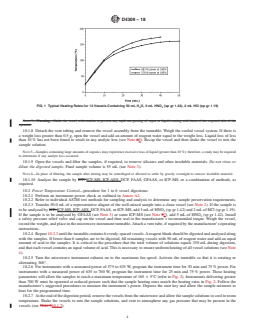
FIG. 1 Typical Heating Rates for 12 Vessels Containing 50 mL
10.1.3 Transfer 50.0 mL of a representative aliquot of the
H O, 3 mL HNO (spgr1.42),2mL HCl (spgr1.19)
2 3
well-mixed sample into a clean vessel (see Note 2). If the
sample is to be analyzed by ICP-MS, ICP-AES, DCP, or
FAAS, add 3 mL of HNO (sp gr 1.42) and 2 mL of HCl (sp
room temperature. Shake the vessels to mix the sample
gr 1.19). If the sample is to be analyzed by GFAAS, add 5 mL
solutions and vent to atmosphere any gas pressure that may be
of HNO (sp gr 1.42) (see Note 3). Install a safety pressure
present in the vessels. (Warning—Shake the vessel with
relief valve and cap on the vessel and seal to the manufactur-
caution to prevent any rapid out-gassing of vapor or liquid
er’srecommendedtorque.Weighthevessel,recordtheweight,
causing acid burns of the exposed skin of the operator.)
andplaceinthemicrowaveinstrumentturntable.Attachavent
10.1.8 Detachtheventtubingandremovethevesselassem-
tube, if required, by the manufacturer’s operating instructions.
blyfromtheturntable.Weighthecooledvesselsystem.Ifthere
is a weight loss greater than 0.5 g, open the vessel and add an
NOTE 2—Follow the manufacturer’s suggested vessel cleaning instruc-
tions to avoid possible sample contamination.
amount of reagent water equal to the weight loss. Liquid loss
NOTE 3—Final acid concentration of this procedure is 9%. This may
of less than 10% has not been found to result in any analyte
shorten graphite tube lifetime, which may cause deterioration of analyte
loss(seeNote5).Recapthevesselandthenshakethevesselto
recovery.Theanalystmaychoosetodilutethedigestedsolutiontoalower
mix the sample solution.
acid percentage to increase graphite tube life.
NOTE5—Samplescontaininglargeamountsoforganicsmayexperience
10.1.4 Repeat 10.1.3 until the turntable contains 12 vessels.
excessive loss of liquid (greater than 10%); therefore, a study may be
Areagentblankshouldbedigestedandanalyzedalongwiththe
required to determine if any analyte loss occurred.
samples. If less than 12 samples are to be digested, fill the
10.1.9 Openthevesselsandfilterthesamples,ifrequired,to
remaining vessels with 50 mL of water and add an equal
remove silicates and other insoluble materials. Do not rinse or
amount of acid as added to the sample. It is critical to the
dilute the digested sample. Final sample volume is 55 mL(see
procedure that the total volume of solutions equals 660 mL
Note 3).
duringdigestion,andthateachvesselcontainsanequalvolume
of acid. This is necessary to ensure uniform heating of all
NOTE 6—In place of filtering, the sample after mixing may be
vessel solutions.
centrifuged or allowed to settle by gravity overnight to remove insoluble
material.
NOTE 4—It is not necessary to weigh the blank vessels containing 50
10.1.10 Analyze the sample by ICP-MS, ICP-AES, DCP,
mL of reagent water.
FAAS, GFAAS, or ICP-MS, or a combination of methods, as
10.1.5 Turn the microwave instrument exhaust on to the
required.
maximumfanspeed.Activatetheturntablesothatitisrotating
or alternating 360°. 10.2 Power Temperature Control—procedure for 1 to 6
10.1.6 For instruments delivering a measured power of 575 vessel digestions:
to 635 W, program the instrument time for 50 min and the 10.2.1 Perform an instrument power check as outlined in
power to 100%. For instruments with a measured power of Annex A2.
635 to 700W, program the instrument time for 30 min and the 10.2.2 Refer to individualASTM test methods for sampling
power for 100%. These heating parameters will allow the and
...
This document is not an ASTM standard and is intended only to provide the user of an ASTM standard an indication of what changes have been made to the previous version. Because
it may not be technically possible to adequately depict all changes accurately, ASTM recommends that users consult prior editions as appropriate. In all cases only the current version
of the standard as published by ASTM is to be considered the official document.
Designation: D4309 − 12 D4309 − 18
Standard Practice for
Sample Digestion Using Closed Vessel Microwave Heating
Technique for the Determination of Total Metals in Water
This standard is issued under the fixed designation D4309; the number immediately following the designation indicates the year of
original adoption or, in the case of revision, the year of last revision. A number in parentheses indicates the year of last reapproval. A
superscript epsilon (´) indicates an editorial change since the last revision or reapproval.
1. Scope*
1.1 This practice covers the general considerations for quantitative sample digestion for total metals in water using closed vessel
microwave heating technique. This practice is applicable to surface, saline, domestic, and industrial wastewater.
1.2 Because of the differences among various makes and models of satisfactory instruments, no detailed operating instructions
can be provided. Instead, the analyst should follow the instructions provided by the manufacturer of the particular instrument.
1.3 This practice can be used with the following ASTM standards, providing the user determines precision and bias based on
this digestion practice: Test Method D857, Test Methods D858, Test Methods D1068, Test Methods D1687, Test Methods D1688,
Test Methods D1691, Test Methods D1886, Test Method D1976, Practices D3370, Test Methods D3557, Test Methods D3559,
Practice D3919, Test Method D4190, Practice D4453, Practice D4691, and Test Method D5673.
1.4 The values stated in SI units are to be regarded as standard. No other units of measurement are included in this The values
given in parentheses are mathematical conversion to inch-pound units that are provided for information only and are not considered
standard.
1.5 This standard does not purport to address all of the safety concerns, if any, associated with its use. It is the responsibility
of the user of this standard to establish appropriate safety safety, health, and healthenvironmental practices and determine the
applicability of regulatory limitations prior to use. For specific hazard statements, see Section 9.
1.6 This international standard was developed in accordance with internationally recognized principles on standardization
established in the Decision on Principles for the Development of International Standards, Guides and Recommendations issued
by the World Trade Organization Technical Barriers to Trade (TBT) Committee.
2. Referenced Documents
2.1 ASTM Standards:
D857 Test Method for Aluminum in Water
D858 Test Methods for Manganese in Water
D1068 Test Methods for Iron in Water
D1129 Terminology Relating to Water
D1193 Specification for Reagent Water
D1687 Test Methods for Chromium in Water
D1688 Test Methods for Copper in Water
D1691 Test Methods for Zinc in Water
D1886 Test Methods for Nickel in Water
D1976 Test Method for Elements in Water by Inductively-Coupled Argon Plasma Atomic Emission Spectroscopy
D3370 Practices for Sampling Water from Closed Conduits
D3557 Test Methods for Cadmium in Water
D3559 Test Methods for Lead in Water
D3856 Guide for Management Systems in Laboratories Engaged in Analysis of Water
D3919 Practice for Measuring Trace Elements in Water by Graphite Furnace Atomic Absorption Spectrophotometry
This practice is under the jurisdiction of ASTM Committee D19 on Water and is the direct responsibility of Subcommittee D19.05 on Inorganic Constituents in Water.
Current edition approved March 1, 2012Feb. 1, 2018. Published March 2012May 2018. Originally approved in 1991. Last previous edition approved in 20072012 as
D4309 – 02 (2007).D4309 – 12. DOI: 10.1520/D4309-12.10.1520/D4309-18.
For referenced ASTM standards, visit the ASTM website, www.astm.org, or contact ASTM Customer Service at service@astm.org. For Annual Book of ASTM Standards
volume information, refer to the standard’s Document Summary page on the ASTM website.
*A Summary of Changes section appears at the end of this standard
Copyright © ASTM International, 100 Barr Harbor Drive, PO Box C700, West Conshohocken, PA 19428-2959. United States
D4309 − 18
D4190 Test Method for Elements in Water by Direct-Current Plasma Atomic Emission Spectroscopy
D4453 Practice for Handling of High Purity Water Samples
D4691 Practice for Measuring Elements in Water by Flame Atomic Absorption Spectrophotometry
D5673 Test Method for Elements in Water by Inductively Coupled Plasma—Mass Spectrometry
2.2 U.S. Code of Federal Regulations:
CFR 1.030.10 Code of Federal Regulations, Volume 21
2.3 Federal Communications Commission Standard:
Code of Federal Regulations, Volume 47, FCC Rule Part 18
2.4 U.S. EPA Method:
U.S. EPA Method: Methods for Chemical Analysis of Water and Waste—March 1979, “Total Metals Digestion Procedure” 4.1.3,
page Metals 6
U.S. EPA Method: SW 846 Method 3015 Microwave Assisted Acid Digestion of Aqueous Samples and Extracts
3. Terminology
3.1 Definitions—Definitions: For definitions of terms used in this practice, refer to Terminology D1129.
3.1.1 For definitions of terms used in this standard, refer to Terminology D1129.
4. Summary of Practice
4.1 A representative aliquot of a homogeneous sample is digested with acid in a closed microwave transparent vessel, using
microwave heating. The digestate or a filtered digestate is then analyzed by direct aspiration or injection by flame atomic
absorption spectrophotometry (FAAS), inductively coupled plasma emission techniques (ICP), direct current plasma emission
techniques (DCP), graphite furnace atomic absorption spectrophotometry (GFAAS), inductively coupled plasma-mass spectrom-
etry (ICP-MS), or a combination of methods.
5. Significance and Use
5.1 The analysis of many types of water for metals using flame atomic absorption spectrophotometry, inductively coupled
plasma emission spectrophotometry, direct current plasma emission spectrophotometry, or graphite furnace atomic absorption
spectrophotometry necessitates the use of a digestion practice in order to ensure the proper statistical recovery of the metals from
the sample matrix. The use of closed vessel microwave techniques will speed the complete recovery of metals from the water
matrices and eliminate sample contamination from external sources.
6. Interferences
6.1 No interferences have been observed using microwave heating.
6.2 Precautions should be exercised to avoid those interferences normally associated with the particular analytical method for
metals determination.
6.3 This practice will not totally solubilize solid silicates that are suspended in or settle out of the water sample.
7. Apparatus
7.1 Laboratory Microwave Heating System, capable of delivering 575 to 1000 W of power. The unit should be capable of 1 %
power adjustment and 1 s time adjustment. The oven cavity should be fluorocarbon-coated or coated with a material that has
3 3
equivalent acid resistance and microwave properties and be equipped with exhaust ventilation at 2.8 m /min (100 ft /min) for acid
vapor protection of the unit and operator. The unit must have a rotating or alternating turntable, capable of holding 1 to 14 digestion
vessels, to ensure even sample heating. Safety interlocks, to shut off magnetron power output, must be contained in the oven door
opening mechanism. The unit may contain a temperature control device capable of controlling vessel temperatures to 200°C and/or
a pressure control device capable of controlling vessel pressures to a minimum 100 psi (690 kPa).690 kPa (100 psi).
7.1.1 The unit must comply with U.S. Health and Human Services Standards under CFR Part 1030.10, sub parts (C) (1), (C)
(2), and (C) (3), for microwave leakage. The unit should have FCC-type approval for operations under FCC Rule Part 18.
7.2 Closed Vessel, capable of holding 100 mL of solution. The vessel must be transparent to microwave energy and capable of
withstanding internal pressures of 100 psi (690 kPa)690 kPa (100 psi) and temperatures of 200°C. The vessel must contain a safety
pressure relief valve, rupture disc, pressure venting system or be connected to an external safety relief valve that will prevent
possible vessel rupture or ejection of the vessel cap.
7.3 Apparatus, to seal the vessel system to the manufacturer’s specified requirement.
Available from U.S. Government Printing Office, Superintendent of Documents, 732 N. Capitol St., NW, Mail Stop: SDE, Washington, DC 20401,20401-0001,
http://www.access.gpo.gov.
Available from National Technical Information Service (NTIS), 5301 Shawnee Rd., Alexandria, VA 22312, http://www.ntis.gov.
D4309 − 18
8. Reagents
8.1 Purity of Reagents—Reagent grade chemicals shall be used in this practice. Unless otherwise indicated, it is intended that
all reagents shall conform to the specifications for the Committee on Analytical Reagents of the American Chemical Society, where
such specifications are available. Other grades may be used, provided it is first ascertained that the reagent is of sufficiently high
purity to permit its use without lessening the accuracy of the determination.
8.2 Purity of Water—Unless otherwise indicated, references to water shall be understood to mean reagent water conforming to
Specification D1193, Type I. Other reagent water types may be used provided it is first ascertained that the water is of sufficiently
high purity to permit its use without adversely affecting the bias and precision of the method. Type II water was used for the data
shown in Appendix X1.
8.3 Hydrochloric Acid (sp gr 1.19) (HCl).
8.4 Nitric Acid (sp gr 1.42) (HNO ).
8.5 Nitric Acid (1 + 1)—Add 1 volume of HNO (sp gr 1.42) to 1 volume of water.
9. Hazards
9.1 The microwave unit should be operated in accordance with the manufacturer’s recommended operating and safety
precautions. Caution—It is not recommended to place a microwave unit in a fume hood, where it is surrounded by acid fumes,
which can cause corrosion of the equipment. Acid fumes generated inside the oven cavity should be air swept away from the oven
cavity to a hood.
9.2 Precaution—The closed vessel should be operated in accordance with the manufacturer’s recommended operating and
safety instructions.
10. Procedure
10.1 Power Temperature Control—procedure for 7 to 12 vessel digestions:
NOTE 1—For fewer than seven samples, see 10.2.
10.1.1 Perform an instrument power check as outlined in Annex A1.
10.1.2 Refer to ASTM test methods for sampling and analysis (such as Guide D3856) to determine any sample preservation
requirements.
10.1.3 Transfer 50.0 mL of a representative aliquot of the well-mixed sample into a clean vessel (see Note 2). If the sample is
to be analyzed by ICP, ICP-MS, ICP-AES, DCP, or FAAS, add 3 mL of HNO (sp gr 1.42) and 2 mL of HCl (sp gr 1.19). If the
sample is to be analyzed by GFAAS, add 5 mL of HNO (sp gr 1.42) (see Note 3). Install a safety pressure relief valve and cap
on the vessel and seal to the manufacturer’s recommended torque. Weigh the vessel, record the weight, and place in the microwave
instrument turntable. Attach a vent tube, if required, by the manufacturer’s operating instructions.
NOTE 2—Follow the manufacturer’s suggested vessel cleaning instructions to avoid possible sample contamination.
NOTE 3—Final acid concentration of this procedure is 9 %. This may shorten graphite tube lifetime, which may cause deterioration of analyte recovery.
The analyst may choose to dilute the digested solution to a lower acid percentage to increase graphite tube life.
10.1.4 Repeat 10.1.3 until the turntable contains 12 vessels. A reagent blank should be digested and analyzed along with the
samples. If less than 12 samples are to be digested, fill the remaining vessels with 50 mL of water and add an equal amount of
acid as added to the sample. It is critical to the procedure that the total volume of solutions equals 660 mL during digestion, and
that each vessel contains an equal volume of acid. This is necessary to ensure uniform heating of all vessel solutions.
NOTE 4—It is not necessary to weigh the blank vessels containing 50 mL of reagent water.
10.1.5 Turn the microwave instrument exhaust on to the maximum fan speed. Activate the turntable so that it is rotating or
alternating 360°.
10.1.6 For instruments delivering a measured power of 575 to 635 W, program the instrument time for 50 min and the power
to 100 %. For instruments with a measured power of 635 to 700 W, program the instrument time for 30 min and the power for
100 %. These heating parameters will allow the samples to reach a maximum temperature of 164 6 4°C (refer to Fig. 1).
Instruments delivering greater than 700 W must be operated at reduced powers such that the sample heating rates match the heating
rates in Fig. 1. Depress the start key and allow the sample mixtures to heat for the programmed time.
10.1.7 At the end of the digestion period, remove the vessels from the microwave and allow the sample solutions to cool to room
temperature. Shake the vessels to mix the sample solutions and vent to atmosphere any gas pressure that may be present in the
vessels. (Warning—Shake the vessel with caution to prevent any rapid out-gassing of vapor or liquid causing acid burns of the
exposed skin of the operator.)
Reagent Chemicals, American Chemical Society Specifications, , American Chemical Society, Washington, DC. For suggestions on the testing of reagents not listed by
the American Chemical Society, see Analar Standards for Laboratory Chemicals, BDH Ltd., Poole, Dorset, U.K., and the United States Pharmacopeia and National
Formulary, U.S. Pharmacopeial Convention, Inc. (USPC), Rockville, MD.
D4309 − 18
FIG. 1 Typical Heating Rates for 12 Vessels Containing 50 mL H O, 3 mL HNO (sp gr 1.42), 2 mL HCl (sp gr 1.19)
2 3
NOTE 5—Warning—Shake the vessel with caution to prevent any rapid out-gassing of vapor or liquid causing acid burns of the exposed skin of the
operator.
10.1.8 Detach the vent tubing and remove the vessel assembly from the turntable. Weigh the cooled vessel system. If there is
a weight loss greater than 0.5 g, open the vessel and add an amount of reagent water equal to the weight loss. Liquid loss of less
than 10 % has not been found to result in any analyte loss (see Note 65). Recap the vessel and then shake the vessel to mix the
sample solution.
NOTE 5—Samples containing large amounts of organics may experience excessive loss of liquid (greater than 10 %); therefore, a study may be required
to determine if any analyte loss occurred.
10.1.9 Open the vessels and filter the samples, if required, to remove silicates and other ins
...
Questions, Comments and Discussion
Ask us and Technical Secretary will try to provide an answer. You can facilitate discussion about the standard in here.
Loading comments...