

ASTM C88/C88M-24
(Test Method)Standard Test Method for Soundness of Aggregates by Use of Sodium Sulfate or Magnesium Sulfate
General Information
- Abstract
SIGNIFICANCE AND USE
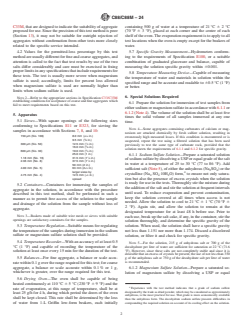
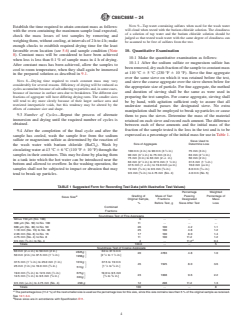
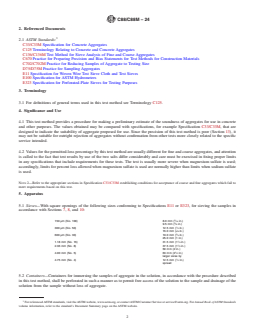
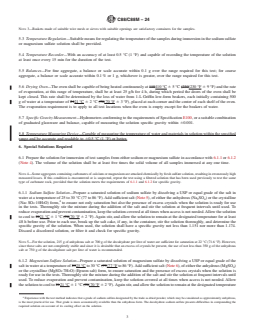
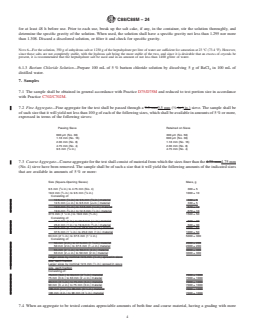
4.1 This test method provides a procedure for making a preliminary estimate of the soundness of aggregates for use in concrete and other purposes. The values obtained may be compared with specifications, for example Specification C33/C33M, that are designed to indicate the suitability of aggregate proposed for use. Since the precision of this test method is poor (Section 13), it may not be suitable for outright rejection of aggregates without confirmation from other tests more closely related to the specific service intended.
4.2 Values for the permitted-loss percentage by this test method are usually different for fine and coarse aggregates, and attention is called to the fact that test results by use of the two salts differ considerably and care must be exercised in fixing proper limits in any specifications that include requirements for these tests. The test is usually more severe when magnesium sulfate is used; accordingly, limits for percent loss allowed when magnesium sulfate is used are normally higher than limits when sodium sulfate is used.
Note 2: Refer to the appropriate sections in Specification C33/C33M establishing conditions for acceptance of coarse and fine aggregates which fail to meet requirements based on this test.
SCOPE
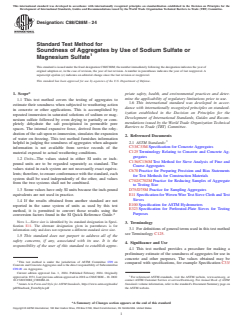
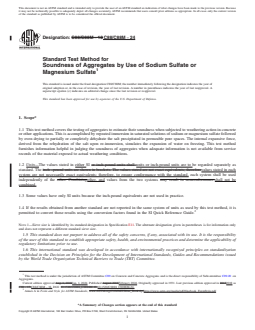
1.1 This test method covers the testing of aggregates to estimate their soundness when subjected to weathering action in concrete or other applications. This is accomplished by repeated immersion in saturated solutions of sodium or magnesium sulfate followed by oven drying to partially or completely dehydrate the salt precipitated in permeable pore spaces. The internal expansive force, derived from the rehydration of the salt upon re-immersion, simulates the expansion of water on freezing. This test method furnishes information helpful in judging the soundness of aggregates when adequate information is not available from service records of the material exposed to actual weathering conditions.
1.2 Units—The values stated in either SI units or inch-pound units are to be regarded separately as standard. The values stated in each system are not necessarily exact equivalents; therefore, to ensure conformance with the standard, each system shall be used independently of the other, and values from the two systems shall not be combined.
1.3 Some values have only SI units because the inch-pound equivalents are not used in practice.
1.4 If the results obtained from another standard are not reported in the same system of units as used by this test method, it is permitted to convert those results using the conversion factors found in the SI Quick Reference Guide.2
Note 1: Sieve size is identified by its standard designation in Specification E11. The alternate designation given in parentheses is for information only and does not represent a different standard sieve size.
1.5 This standard does not purport to address all of the safety concerns, if any, associated with its use. It is the responsibility of the user of this standard to establish appropriate safety, health, and environmental practices and determine the applicability of regulatory limitations prior to use.
1.6 This international standard was developed in accordance with internationally recognized principles on standardization established in the Decision on Principles for the Development of International Standards, Guides and Recommendations issued by the World Trade Organization Technical Barriers to Trade (TBT) Committee.
- Status
- Published
- Publication Date
- 31-Dec-2023
- Technical Committee
- C09 - Concrete and Concrete Aggregates
- Drafting Committee
- C09.20 - Aggregates
Buy Documents
ASTM C88/C88M-24 - Standard Test Method for Soundness of Aggregates by Use of Sodium Sulfate or Magnesium Sulfate
REDLINE ASTM C88/C88M-24 - Standard Test Method for Soundness of Aggregates by Use of Sodium Sulfate or Magnesium Sulfate
Overview
ASTM C88/C88M-24: Standard Test Method for Soundness of Aggregates by Use of Sodium Sulfate or Magnesium Sulfate is a key international standard developed by ASTM for estimating the soundness of aggregates intended for use in concrete and related applications. This test method simulates weathering actions-such as freezing and thawing-that aggregates may experience in service, using cyclic immersion in sodium sulfate or magnesium sulfate solutions followed by oven drying. The resulting changes in the aggregate help evaluate its resistance to weathering, providing a preliminary indication of its suitability for construction purposes.
This standard applies to both fine and coarse aggregates and can be performed using either SI or inch-pound units. It is widely referenced by construction, civil engineering, and materials testing professionals to ensure quality control and compliance with regulatory requirements.
Key Topics
- Purpose of the Test: Provides a laboratory method for preliminary estimation of aggregate soundness when service records are unavailable. Results are often compared against specifications such as ASTM C33/C33M.
- Test Procedure:
- Repeatedly immerse aggregate samples in saturated sodium sulfate or magnesium sulfate solution.
- Oven dry the samples to partially or fully dehydrate salts.
- The rehydration and expansion of salts upon re-immersion mimic freezing-thawing cycles.
- After several cycles, losses in sample mass are measured.
- Applicability:
- Fine and coarse aggregates are tested separately, and results for each fraction are reported.
- Magnesium sulfate tests are typically harsher, so permitted loss limits are higher than for sodium sulfate.
- Unit Conformance: Includes guidance for maintaining consistency when testing in SI or inch-pound units, and for converting results as necessary.
- Limitations:
- The precision of the method is limited; thus, results should not used for aggregate rejection without corroborating evidence from other relevant tests.
- Aggregates with both coarse and fine fractions may require separate testing and reporting.
Applications
ASTM C88/C88M-24 is fundamental in construction material quality control for projects where aggregate durability under weathering is critical. Common practical applications include:
- Quality Assurance of Aggregates: Used by producers and contractors to determine if aggregates meet soundness requirements prior to use in concrete, road base, and rail ballast.
- Prequalification of Materials: Required in project specifications where aggregate performance history is lacking, especially for projects exposed to severe weather cycles.
- Specification Compliance: Part of the approval process for aggregates in accordance with ASTM C33/C33M or other performance-based specifications.
- Risk Assessment: Assists engineers and project managers in assessing the likelihood of aggregate disintegration, which can impact long-term durability of concrete and pavements.
Related Standards
For a comprehensive approach to aggregate testing and specification, consider these related ASTM standards:
- ASTM C33/C33M: Specification for Concrete Aggregates
- ASTM C125: Terminology Relating to Concrete and Concrete Aggregates
- ASTM C136/C136M: Test Method for Sieve Analysis of Fine and Coarse Aggregates
- ASTM C702/C702M: Practice for Reducing Samples of Aggregate to Testing Size
- ASTM D75/D75M: Practice for Sampling Aggregates
- ASTM E11: Specification for Woven Wire Test Sieve Cloth and Test Sieves
These documents are frequently referenced in conjunction with ASTM C88/C88M-24 to ensure reliable aggregate characterization and compliance with industry best practices.
Keywords: ASTM C88/C88M-24, aggregate soundness, sodium sulfate soundness test, magnesium sulfate soundness test, concrete aggregates, weathering resistance, aggregate durability, ASTM standards, construction materials testing, specification compliance.
Relations
- Effective Date
- 01-Jan-2024
- Effective Date
- 01-Feb-2024
- Effective Date
- 01-Jan-2024
- Effective Date
- 15-Jun-2015
- Referred By
ASTM D6372-23 - Standard Practice for Design, Testing, and Construction of Microsurfacing - Effective Date
- 01-Jan-2024
- Effective Date
- 01-Jan-2024
- Effective Date
- 01-Jan-2024
- Effective Date
- 01-Jan-2024
- Effective Date
- 01-Jan-2024
- Referred By
ASTM D5106-22 - Standard Specification for Steel Slag Aggregates for Asphalt Paving Mixtures - Effective Date
- 01-Jan-2024
- Referred By
ASTM D692/D692M-20 - Standard Specification for Coarse Aggregate for Asphalt Paving Mixtures - Effective Date
- 01-Jan-2024
- Effective Date
- 01-Jan-2024
- Effective Date
- 01-Jan-2024
- Effective Date
- 01-Jan-2024
- Effective Date
- 01-Jan-2024
Buy Documents
ASTM C88/C88M-24 - Standard Test Method for Soundness of Aggregates by Use of Sodium Sulfate or Magnesium Sulfate
REDLINE ASTM C88/C88M-24 - Standard Test Method for Soundness of Aggregates by Use of Sodium Sulfate or Magnesium Sulfate
Get Certified
Connect with accredited certification bodies for this standard

DIBt (Deutsches Institut für Bautechnik)
German Institute for Building Technology.
DIN CERTCO
DIN Group product certification.

Aboma Certification B.V.
Specialized in construction, metal, and transport sectors.
Sponsored listings
Frequently Asked Questions
ASTM C88/C88M-24 is a standard published by ASTM International. Its full title is "Standard Test Method for Soundness of Aggregates by Use of Sodium Sulfate or Magnesium Sulfate". This standard covers: SIGNIFICANCE AND USE 4.1 This test method provides a procedure for making a preliminary estimate of the soundness of aggregates for use in concrete and other purposes. The values obtained may be compared with specifications, for example Specification C33/C33M, that are designed to indicate the suitability of aggregate proposed for use. Since the precision of this test method is poor (Section 13), it may not be suitable for outright rejection of aggregates without confirmation from other tests more closely related to the specific service intended. 4.2 Values for the permitted-loss percentage by this test method are usually different for fine and coarse aggregates, and attention is called to the fact that test results by use of the two salts differ considerably and care must be exercised in fixing proper limits in any specifications that include requirements for these tests. The test is usually more severe when magnesium sulfate is used; accordingly, limits for percent loss allowed when magnesium sulfate is used are normally higher than limits when sodium sulfate is used. Note 2: Refer to the appropriate sections in Specification C33/C33M establishing conditions for acceptance of coarse and fine aggregates which fail to meet requirements based on this test. SCOPE 1.1 This test method covers the testing of aggregates to estimate their soundness when subjected to weathering action in concrete or other applications. This is accomplished by repeated immersion in saturated solutions of sodium or magnesium sulfate followed by oven drying to partially or completely dehydrate the salt precipitated in permeable pore spaces. The internal expansive force, derived from the rehydration of the salt upon re-immersion, simulates the expansion of water on freezing. This test method furnishes information helpful in judging the soundness of aggregates when adequate information is not available from service records of the material exposed to actual weathering conditions. 1.2 Units—The values stated in either SI units or inch-pound units are to be regarded separately as standard. The values stated in each system are not necessarily exact equivalents; therefore, to ensure conformance with the standard, each system shall be used independently of the other, and values from the two systems shall not be combined. 1.3 Some values have only SI units because the inch-pound equivalents are not used in practice. 1.4 If the results obtained from another standard are not reported in the same system of units as used by this test method, it is permitted to convert those results using the conversion factors found in the SI Quick Reference Guide.2 Note 1: Sieve size is identified by its standard designation in Specification E11. The alternate designation given in parentheses is for information only and does not represent a different standard sieve size. 1.5 This standard does not purport to address all of the safety concerns, if any, associated with its use. It is the responsibility of the user of this standard to establish appropriate safety, health, and environmental practices and determine the applicability of regulatory limitations prior to use. 1.6 This international standard was developed in accordance with internationally recognized principles on standardization established in the Decision on Principles for the Development of International Standards, Guides and Recommendations issued by the World Trade Organization Technical Barriers to Trade (TBT) Committee.
SIGNIFICANCE AND USE 4.1 This test method provides a procedure for making a preliminary estimate of the soundness of aggregates for use in concrete and other purposes. The values obtained may be compared with specifications, for example Specification C33/C33M, that are designed to indicate the suitability of aggregate proposed for use. Since the precision of this test method is poor (Section 13), it may not be suitable for outright rejection of aggregates without confirmation from other tests more closely related to the specific service intended. 4.2 Values for the permitted-loss percentage by this test method are usually different for fine and coarse aggregates, and attention is called to the fact that test results by use of the two salts differ considerably and care must be exercised in fixing proper limits in any specifications that include requirements for these tests. The test is usually more severe when magnesium sulfate is used; accordingly, limits for percent loss allowed when magnesium sulfate is used are normally higher than limits when sodium sulfate is used. Note 2: Refer to the appropriate sections in Specification C33/C33M establishing conditions for acceptance of coarse and fine aggregates which fail to meet requirements based on this test. SCOPE 1.1 This test method covers the testing of aggregates to estimate their soundness when subjected to weathering action in concrete or other applications. This is accomplished by repeated immersion in saturated solutions of sodium or magnesium sulfate followed by oven drying to partially or completely dehydrate the salt precipitated in permeable pore spaces. The internal expansive force, derived from the rehydration of the salt upon re-immersion, simulates the expansion of water on freezing. This test method furnishes information helpful in judging the soundness of aggregates when adequate information is not available from service records of the material exposed to actual weathering conditions. 1.2 Units—The values stated in either SI units or inch-pound units are to be regarded separately as standard. The values stated in each system are not necessarily exact equivalents; therefore, to ensure conformance with the standard, each system shall be used independently of the other, and values from the two systems shall not be combined. 1.3 Some values have only SI units because the inch-pound equivalents are not used in practice. 1.4 If the results obtained from another standard are not reported in the same system of units as used by this test method, it is permitted to convert those results using the conversion factors found in the SI Quick Reference Guide.2 Note 1: Sieve size is identified by its standard designation in Specification E11. The alternate designation given in parentheses is for information only and does not represent a different standard sieve size. 1.5 This standard does not purport to address all of the safety concerns, if any, associated with its use. It is the responsibility of the user of this standard to establish appropriate safety, health, and environmental practices and determine the applicability of regulatory limitations prior to use. 1.6 This international standard was developed in accordance with internationally recognized principles on standardization established in the Decision on Principles for the Development of International Standards, Guides and Recommendations issued by the World Trade Organization Technical Barriers to Trade (TBT) Committee.
ASTM C88/C88M-24 is classified under the following ICS (International Classification for Standards) categories: 91.100.30 - Concrete and concrete products. The ICS classification helps identify the subject area and facilitates finding related standards.
ASTM C88/C88M-24 has the following relationships with other standards: It is inter standard links to ASTM C88/C88M-18, ASTM C670-24a, ASTM C670-24, ASTM C670-15, ASTM D6372-23, ASTM D6932/D6932M-21, ASTM C897-15(2020), ASTM D1139/D1139M-22, ASTM D8140-18(2023), ASTM D5106-22, ASTM D692/D692M-20, ASTM C513/C513M-11(2019), ASTM C796/C796M-19, ASTM C33/C33M-23, ASTM C902-22. Understanding these relationships helps ensure you are using the most current and applicable version of the standard.
ASTM C88/C88M-24 is available in PDF format for immediate download after purchase. The document can be added to your cart and obtained through the secure checkout process. Digital delivery ensures instant access to the complete standard document.
Standards Content (Sample)
This international standard was developed in accordance with internationally recognized principles on standardization established in the Decision on Principles for the
Development of International Standards, Guides and Recommendations issued by the World Trade Organization Technical Barriers to Trade (TBT) Committee.
Designation: C88/C88M − 24
Standard Test Method for
Soundness of Aggregates by Use of Sodium Sulfate or
Magnesium Sulfate
This standard is issued under the fixed designation C88/C88M; the number immediately following the designation indicates the year of
original adoption or, in the case of revision, the year of last revision. A number in parentheses indicates the year of last reapproval. A
superscript epsilon (´) indicates an editorial change since the last revision or reapproval.
This standard has been approved for use by agencies of the U.S. Department of Defense.
1. Scope* priate safety, health, and environmental practices and deter-
mine the applicability of regulatory limitations prior to use.
1.1 This test method covers the testing of aggregates to
1.6 This international standard was developed in accor-
estimate their soundness when subjected to weathering action
dance with internationally recognized principles on standard-
in concrete or other applications. This is accomplished by
ization established in the Decision on Principles for the
repeated immersion in saturated solutions of sodium or mag-
Development of International Standards, Guides and Recom-
nesium sulfate followed by oven drying to partially or com-
mendations issued by the World Trade Organization Technical
pletely dehydrate the salt precipitated in permeable pore
Barriers to Trade (TBT) Committee.
spaces. The internal expansive force, derived from the rehy-
dration of the salt upon re-immersion, simulates the expansion
2. Referenced Documents
of water on freezing. This test method furnishes information
2.1 ASTM Standards:
helpful in judging the soundness of aggregates when adequate
C33/C33M Specification for Concrete Aggregates
information is not available from service records of the
C125 Terminology Relating to Concrete and Concrete Ag-
material exposed to actual weathering conditions.
gregates
1.2 Units—The values stated in either SI units or inch-
C136/C136M Test Method for Sieve Analysis of Fine and
pound units are to be regarded separately as standard. The
Coarse Aggregates
values stated in each system are not necessarily exact equiva-
C670 Practice for Preparing Precision and Bias Statements
lents; therefore, to ensure conformance with the standard, each
for Test Methods for Construction Materials
system shall be used independently of the other, and values
C702/C702M Practice for Reducing Samples of Aggregate
from the two systems shall not be combined.
to Testing Size
1.3 Some values have only SI units because the inch-pound D75/D75M Practice for Sampling Aggregates
equivalents are not used in practice.
E11 Specification for Woven Wire Test Sieve Cloth and Test
Sieves
1.4 If the results obtained from another standard are not
E100 Specification for ASTM Hydrometers
reported in the same system of units as used by this test
E323 Specification for Perforated-Plate Sieves for Testing
method, it is permitted to convert those results using the
Purposes
conversion factors found in the SI Quick Reference Guide.
NOTE 1—Sieve size is identified by its standard designation in Speci-
3. Terminology
fication E11. The alternate designation given in parentheses is for
3.1 For definitions of general terms used in this test method
information only and does not represent a different standard sieve size.
see Terminology C125.
1.5 This standard does not purport to address all of the
safety concerns, if any, associated with its use. It is the
4. Significance and Use
responsibility of the user of this standard to establish appro-
4.1 This test method provides a procedure for making a
preliminary estimate of the soundness of aggregates for use in
concrete and other purposes. The values obtained may be
This test method is under the jurisdiction of ASTM Committee C09 on
compared with specifications, for example Specification C33/
Concrete and Concrete Aggregates and is the direct responsibility of Subcommittee
C09.20 on Aggregates.
Current edition approved Jan. 1, 2024. Published February 2024. Originally
approved in 1931. Last previous edition approved in 2018 as C88/C88M – 18. DOI: For referenced ASTM standards, visit the ASTM website, www.astm.org, or
10.1520/C0088_C0088M-24. contact ASTM Customer Service at service@astm.org. For Annual Book of ASTM
Annex A in Form and Style for ASTM Standards, https://www.astm.org/media/ Standards volume information, refer to the standard’s Document Summary page on
pdf/bluebook_FormStyle.pdf the ASTM website.
*A Summary of Changes section appears at the end of this standard
Copyright © ASTM International, 100 Barr Harbor Drive, PO Box C700, West Conshohocken, PA 19428-2959. United States
C88/C88M − 24
C33M, that are designed to indicate the suitability of aggregate containing 500 g of water at a temperature of 21 °C 6 2 °C
proposed for use. Since the precision of this test method is poor (70 °F 6 3 °F), placed at each corner and the center of each
(Section 13), it may not be suitable for outright rejection of shelf of the oven. The evaporation requirement is to apply to all
aggregates without confirmation from other tests more closely test locations when the oven is empty except for the beakers of
related to the specific service intended. water.
4.2 Values for the permitted-loss percentage by this test 5.7 Specific Gravity Measurement—Hydrometers conform-
method are usually different for fine and coarse aggregates, and ing to the requirements of Specification E100, or a suitable
attention is called to the fact that test results by use of the two combination of graduated glassware and balance, capable of
salts differ considerably and care must be exercised in fixing measuring the solution specific gravity within 60.001.
proper limits in any specifications that include requirements for
5.8 Temperature Measuring Device—Capable of measuring
these tests. The test is usually more severe when magnesium
the temperature of water and materials in solution within the
sulfate is used; accordingly, limits for percent loss allowed
specified range and be accurate and readable to 60.5 °C (1 °F)
when magnesium sulfate is used are normally higher than
or better.
limits when sodium sulfate is used.
6. Special Solutions Required
NOTE 2—Refer to the appropriate sections in Specification C33/C33M
establishing conditions for acceptance of coarse and fine aggregates which
6.1 Prepare the solution for immersion of test samples from
fail to meet requirements based on this test.
either sodium or magnesium sulfate in accordance with 6.1.1 or
6.1.2 (Note 4). The volume of the solution shall be at least five
5. Apparatus
times the solid volume of all samples immersed at any one
5.1 Sieves—With square openings of the following sizes
time.
conforming to Specifications E11 or E323, for sieving the
NOTE 4—Some aggregates containing carbonates of calcium or mag-
samples in accordance with Sections 7, 8, and 10:
nesium are attacked chemically by fresh sulfate solution, resulting in
150 μm (No. 100) 8.0 mm ( ⁄16 in.)
erroneously high measured losses. If this condition is encountered or is
9.5 mm ( ⁄8 in.)
suspected, repeat the test using a filtered solution that has been used
300 μm (No. 50) 12.5 mm ( ⁄2 in.)
previously to test the same type of carbonate rock, provided that the
16.0 mm ( ⁄8 in.)
solution meets the requirements of 6.1.1 and 6.1.2 for specific gravity.
600 μm (No. 30) 19.0 mm ( ⁄4 in.)
25.0 mm (1 in.)
6.1.1 Sodium Sulfate Solution—Prepare a saturated solution
1.18 mm (No. 16) 31.5 mm (1 ⁄4 in.)
of sodium sulfate by dissolving a USP or equal grade of the salt
2.36 mm (No. 8) 37.5 mm (1 ⁄2 in.)
in water at a temperature of 25 to 30 °C (77 to 86 °F). Add
50 mm (2 in.)
4.00 mm (No. 5) 63 mm (2 ⁄2 in.)
sufficient salt (Note 5), of either the anhydrous (Na SO ) or the
2 4
larger sizes by
crystalline (Na SO ·10H O) form, to ensure not only satura-
1 2 4 2
4.75 mm (No. 4) 12.5 mm ( ⁄2 in.)
tion but also the presence of excess crystals when the solution
spread
is ready for use in the tests. Thoroughly stir the mixture during
5.2 Containers—Containers for immersing the samples of
the addition of the salt and stir the solution at frequent intervals
aggregate in the solution, in accordance with the procedure
until used. To reduce evaporation and prevent contamination,
described in this test method, shall be perforated in such a
keep the solution covered at all times when access is not
manner as to permit free access of the solution to the sample
needed. Allow the solution to cool to 21 °C 6 1 °C (70 °F 6
and drainage of the solution from the sample without loss of
2 °F). Again stir, and allow the solution to remain at the
aggregate.
designated temperature for at least 48 h before use. Prior to
NOTE 3—Baskets made of suitable wire mesh or sieves with suitable
each use, break up the salt cake, if any, in the container, stir the
openings are satisfactory containers for the samples.
solution thoroughly, and determine the specific gravity of the
5.3 Temperature Regulation—Suitable means for regulating
solution. When used, the solution shall have a specific gravity
the temperature of the samples during immersion in the sodium
not less than 1.151 nor more than 1.174. Discard a discolored
sulfate or magnesium sulfate solution shall be provided.
solution, or filter it and check for specific gravity.
5.4 Temperature Recorder—With an accuracy of at least 0.5
NOTE 5—For the solution, 215 g of anhydrous salt or 700 g of the
°C (1 °F) and capable of recording the temperature of the decahydrate per litre of water are sufficient for saturation at 22 °C (71.6
°F). However, since these salts are not completely stable and since it is
solution at least once every 15 min for the duration of the test.
desirable that an excess of crystals be present, the use of not less than 350
5.5 Balances—For fine aggregate, a balance or scale accu-
g of the anhydrous salt or 750 g of the decahydrate salt per litre of water
is recommended.
rate within 0.1 g over the range required for this test; for coarse
aggregate, a balance or scale accurate within 0.1 % or 1 g,
6.1.2 Magnesium Sulfate Solution—Prepare a saturated so-
whichever is greater, over the range required for this test.
lution of magnesium sulfate by dissolving a USP or equal
5.6 Drying Oven—The oven shall be capable of being
heated continuously at 110 °C 6 5 °C (230 °F 6 9 °F) and the
Experience with the test method indicates that a grade of sodium sulfate
rate of evaporation, at this range of temperature, shall be at
designated by the trade as dried powder, which may be considered as approximately
least 25 g/h for 4 h, during which period the doors of the oven
anhydrous, is the most practical for use. That grade is more economically available
shall be kept closed. This rate shall be determined by the loss
than the anhydrous form. The decahydrate sodium sulfate presents difficulties in
of water from 1-L Griffin low-form beakers, each initially compounding the required solution on account of its cooling effect on the solution.
C88/C88M − 24
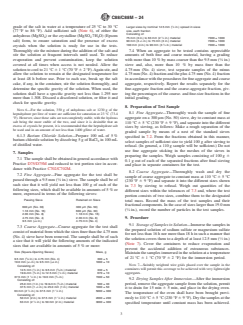
grade of the salt in water at a temperature of 25 °C to 30 °C
Larger sizes by nominal 12.5 mm ( ⁄2 in.) spread in sieve
size, each fraction
(77 °F to 86 °F). Add sufficient salt (Note 6), of either the
Consisting of:
anhydrous (MgSO ) or the crystalline (MgSO ·7H O) (Epsom
4 4 2
75 mm (3 in.) to 63 mm (2 ⁄2 in.) material 7000 ± 1000
salt) form, to ensure saturation and the presence of excess 90 mm (3 ⁄2 in.) to 75 mm (3 in.) material 7000 ± 1000
100 mm (4 in.) to 90 mm (3 ⁄2 in.) material 7000 ± 1000
crystals when the solution is ready for use in the tests.
Thoroughly stir the mixture during the addition of the salt and 7.4 When an aggregate to be tested contains appreciable
stir the solution at frequent intervals until used. To reduce amounts of both fine and coarse material, having a grading
evaporation and prevent contamination, keep the solution with more than 10 % by mass coarser than the 9.5 mm ( ⁄8 in.)
covered at all times when access is not needed. Allow the sieve and, also, more than 10 % by mass finer than the
solution to cool to 21 °C 6 1 °C (70 °F 6 2 °F). Again stir, and 4.75 mm (No. 4) sieve, test separate samples of the minus
allow the solution to remain at the designated temperature for 4.75 mm (No. 4) fraction and the plus 4.75 mm (No. 4) fraction
at least 48 h before use. Prior to each use, break up the salt in accordance with the procedures for fine aggregate and coarse
cake, if any, in the container, stir the solution thoroughly, and aggregate, respectively. Report the results separately for the
determine the specific gravity of the solution. When used, the fine-aggregate fraction and the coarse-aggregate fraction, giv-
solution shall have a specific gravity not less than 1.295 nor ing the percentages of the coarse- and fine-size fractions in the
more than 1.308. Discard a discolored solution, or filter it and
initial grading.
check for specific gravity.
8. Preparation of Test Sample
NOTE 6—For the solution, 350 g of anhydrous salt or 1230 g of the
8.1 Fine Aggregate—Thoroughly wash the sample of fine
heptahydrate per litre of water are sufficient for saturation at 23 °C (73.4
°F). However, since these salts are not completely stable, with the hydrous aggregate on a 300 μm (No. 50) sieve, dry to constant mass at
salt being the more stable of the two, and since it is desirable that an
110 °C 6 5 °C (230 °F 6 9 °F), and separate into the different
excess of crystals be present, it is recommended that the heptahydrate salt
sizes by sieving, as follows: Make a rough separation of the
be used and in an amount of not less than 1400 g/litre of water.
graded sample by means of a nest of the standard sieves
6.1.3 Barium Chloride Solution—Prepare 100 mL of 5 %
specified in 7.2. From the fractions obtained in this manner,
barium chloride solution by dissolving 5 g of BaCl in 100 mL
select samples of sufficient size to yield 100 g after sieving to
of distilled water.
refusal. (In general, a 110 g sample will be sufficient.) Do not
use fine aggregate sticking in the meshes of the sieves in
7. Samples
preparing the samples. Weigh samples consisting of 100 g 6
7.1 The sample shall be obtained in general accordance with
0.1 g out of each of the separated fractions after final sieving
Practice D75/D75M and reduced to test
...
This document is not an ASTM standard and is intended only to provide the user of an ASTM standard an indication of what changes have been made to the previous version. Because
it may not be technically possible to adequately depict all changes accurately, ASTM recommends that users consult prior editions as appropriate. In all cases only the current version
of the standard as published by ASTM is to be considered the official document.
Designation: C88/C88M − 18 C88/C88M − 24
Standard Test Method for
Soundness of Aggregates by Use of Sodium Sulfate or
Magnesium Sulfate
This standard is issued under the fixed designation C88/C88M; the number immediately following the designation indicates the year of
original adoption or, in the case of revision, the year of last revision. A number in parentheses indicates the year of last reapproval. A
superscript epsilon (´) indicates an editorial change since the last revision or reapproval.
This standard has been approved for use by agencies of the U.S. Department of Defense.
1. Scope*
1.1 This test method covers the testing of aggregates to estimate their soundness when subjected to weathering action in concrete
or other applications. This is accomplished by repeated immersion in saturated solutions of sodium or magnesium sulfate followed
by oven drying to partially or completely dehydrate the salt precipitated in permeable pore spaces. The internal expansive force,
derived from the rehydration of the salt upon re-immersion, simulates the expansion of water on freezing. This test method
furnishes information helpful in judging the soundness of aggregates when adequate information is not available from service
records of the material exposed to actual weathering conditions.
1.2 Units—The values stated in either SI or inch pound units shall units or inch-pound units are to be regarded separately as
standard. The inch –pound units are shown in brackets. The values stated are not exact equivalents; thereforevalues stated in each
system are not necessarily exact equivalents; therefore, to ensure conformance with the standard, each system shall be used
independently of the other. Combiningother, and values from the two systems may result in nonconformance.shall not be
combined.
1.3 Some values have only SI units because the inch-pound equivalents are not used in practice.
1.4 If the results obtained from another standard are not reported in the same system of units as used by this test method, it is
permitted to convert those results using the conversion factors found in the SI Quick Reference Guide.
NOTE 1—Sieve size is identified by its standard designation in Specification E11. The alternate designation given in parentheses is for information only
and does not represent a different standard sieve size.
1.5 This standard does not purport to address all of the safety concerns, if any, associated with its use. It is the responsibility
of the user of this standard to establish appropriate safety, health, and environmental practices and determine the applicability of
regulatory limitations prior to use.
1.6 This international standard was developed in accordance with internationally recognized principles on standardization
established in the Decision on Principles for the Development of International Standards, Guides and Recommendations issued
by the World Trade Organization Technical Barriers to Trade (TBT) Committee.
This test method is under the jurisdiction of ASTM Committee C09 on Concrete and Concrete Aggregates and is the direct responsibility of Subcommittee C09.20 on
Aggregates.
Current edition approved Aug. 1, 2018Jan. 1, 2024. Published August 2018February 2024. Originally approved in 1931. Last previous edition approved in 20132018 as
C88 – 13.C88/C88M – 18. DOI: 10.1520/C0088_C0088M-18.10.1520/C0088_C0088M-24.
Annex A in Form and Style for ASTM Standards, www.ASTM.org/COMMIT/Blue_Book.dpfhttps://www.astm.org/media/pdf/bluebook_FormStyle.pdf
*A Summary of Changes section appears at the end of this standard
Copyright © ASTM International, 100 Barr Harbor Drive, PO Box C700, West Conshohocken, PA 19428-2959. United States
C88/C88M − 24
2. Referenced Documents
2.1 ASTM Standards:
C33/C33M Specification for Concrete Aggregates
C125 Terminology Relating to Concrete and Concrete Aggregates
C136/C136M Test Method for Sieve Analysis of Fine and Coarse Aggregates
C670 Practice for Preparing Precision and Bias Statements for Test Methods for Construction Materials
C702/C702M Practice for Reducing Samples of Aggregate to Testing Size
D75/D75M Practice for Sampling Aggregates
E11 Specification for Woven Wire Test Sieve Cloth and Test Sieves
E100 Specification for ASTM Hydrometers
E323 Specification for Perforated-Plate Sieves for Testing Purposes
3. Terminology
3.1 For definitions of general terms used in this test method see Terminology C125.
4. Significance and Use
4.1 This test method provides a procedure for making a preliminary estimate of the soundness of aggregates for use in concrete
and other purposes. The values obtained may be compared with specifications, for example Specification C33/C33M, that are
designed to indicate the suitability of aggregate proposed for use. Since the precision of this test method is poor (Section 13), it
may not be suitable for outright rejection of aggregates without confirmation from other tests more closely related to the specific
service intended.
4.2 Values for the permitted-loss percentage by this test method are usually different for fine and coarse aggregates, and attention
is called to the fact that test results by use of the two salts differ considerably and care must be exercised in fixing proper limits
in any specifications that include requirements for these tests. The test is usually more severe when magnesium sulfate is used;
accordingly, limits for percent loss allowed when magnesium sulfate is used are normally higher than limits when sodium sulfate
is used.
NOTE 2—Refer to the appropriate sections in Specification C33/C33M establishing conditions for acceptance of coarse and fine aggregates which fail to
meet requirements based on this test.
5. Apparatus
5.1 Sieves—With square openings of the following sizes conforming to Specifications E11 or E323, for sieving the samples in
accordance with Sections 7, 8, and 10:
150 μm (No. 100) 8.0 mm ( ⁄16 in.)
9.5 mm ( ⁄8 in.)
300 μm (No. 50) 12.5 mm ( ⁄2 in.)
16.0 mm ( ⁄8 in.)
600 μm (No. 30) 19.0 mm ( ⁄4 in.)
25.0 mm (1 in.)
1.18 mm (No. 16) 31.5 mm (1 ⁄4 in.)
2.36 mm (No. 8) 37.5 mm (1 ⁄2 in.)
50 mm (2 in.)
4.00 mm (No. 5) 63 mm (2 ⁄2 in.)
larger sizes by
4.75 mm (No. 4) 12.5 mm ( ⁄2 in.)
spread
5.2 Containers—Containers for immersing the samples of aggregate in the solution, in accordance with the procedure described
in this test method, shall be perforated in such a manner as to permit free access of the solution to the sample and drainage of the
solution from the sample without loss of aggregate.
For referenced ASTM standards, visit the ASTM website, www.astm.org, or contact ASTM Customer Service at service@astm.org. For Annual Book of ASTM Standards
volume information, refer to the standard’s Document Summary page on the ASTM website.
C88/C88M − 24
NOTE 3—Baskets made of suitable wire mesh or sieves with suitable openings are satisfactory containers for the samples.
5.3 Temperature Regulation—Suitable means for regulating the temperature of the samples during immersion in the sodium sulfate
or magnesium sulfate solution shall be provided.
5.4 Temperature Recorder—With an accuracy of at least 0.5 °C (1 °F) and capable of recording the temperature of the solution
at least once every 15 min for the duration of the test.
5.5 Balances—For fine aggregate, a balance or scale accurate within 0.1 g over the range required for this test; for coarse
aggregate, a balance or scale accurate within 0.1 % or 1 g, whichever is greater, over the range required for this test.
5.6 Drying Oven—The oven shall be capable of being heated continuously at 110110 °C 6 5 °C (230(230 °F 6 9 °F) and the rate
of evaporation, at this range of temperature, shall be at least 25 g/h for 4 h, during which period the doors of the oven shall be
kept closed. This rate shall be determined by the loss of water from 1-L Griffin low-form beakers, each initially containing 500
g of water at a temperature of 2121 °C 6 2 °C (70(70 °F 6 3 °F), placed at each corner and the center of each shelf of the oven.
The evaporation requirement is to apply to all test locations when the oven is empty except for the beakers of water.
5.7 Specific Gravity Measurement—Hydrometers conforming to the requirements of Specification E100, or a suitable combination
of graduated glassware and balance, capable of measuring the solution specific gravity within 60.001.
5.8 Temperature Measuring Device—Capable of measuring the temperature of water and materials in solution within the specified
range and be accurate and readable to 60.5 °C (1 °F) or better.
6. Special Solutions Required
6.1 Prepare the solution for immersion of test samples from either sodium or magnesium sulfate in accordance with 6.1.1 or 6.1.2
(Note 4). The volume of the solution shall be at least five times the solid volume of all samples immersed at any one time.
NOTE 4—Some aggregates containing carbonates of calcium or magnesium are attacked chemically by fresh sulfate solution, resulting in erroneously high
measured losses. If this condition is encountered or is suspected, repeat the test using a filtered solution that has been used previously to test the same
type of carbonate rock, provided that the solution meets the requirements of 6.1.1 and 6.1.2 for specific gravity.
6.1.1 Sodium Sulfate Solution—Prepare a saturated solution of sodium sulfate by dissolving a USP or equal grade of the salt in
water at a temperature of 25 to 30 °C (77 to 86 °F). Add sufficient salt (Note 5), of either the anhydrous (Na SO ) or the crystalline
2 4
(Na SO ·10H O) form, to ensure not only saturation but also the presence of excess crystals when the solution is ready for use
2 4 2
in the tests. Thoroughly stir the mixture during the addition of the salt and stir the solution at frequent intervals until used. To
reduce evaporation and prevent contamination, keep the solution covered at all times when access is not needed. Allow the solution
to cool to 2121 °C 6 1 °C (70(70 °F 6 2 °F). Again stir, and allow the solution to remain at the designated temperature for at least
48 h before use. Prior to each use, break up the salt cake, if any, in the container, stir the solution thoroughly, and determine the
specific gravity of the solution. When used, the solution shall have a specific gravity not less than 1.151 nor more than 1.174.
Discard a discolored solution, or filter it and check for specific gravity.
NOTE 5—For the solution, 215 g of anhydrous salt or 700 g of the decahydrate per litre of water are sufficient for saturation at 22 °C (71.6 °F). However,
since these salts are not completely stable and since it is desirable that an excess of crystals be present, the use of not less than 350 g of the anhydrous
salt or 750 g of the decahydrate salt per litre of water is recommended.
6.1.2 Magnesium Sulfate Solution—Prepare a saturated solution of magnesium sulfate by dissolving a USP or equal grade of the
salt in water at a temperature of 2525 °C to 30 °C (77(77 °F to 86 °F). Add sufficient salt (Note 6), of either the anhydrous (MgSO )
or the crystalline (MgSO ·7H O) (Epsom salt) form, to ensure saturation and the presence of excess crystals when the solution is
4 2
ready for use in the tests. Thoroughly stir the mixture during the addition of the salt and stir the solution at frequent intervals until
used. To reduce evaporation and prevent contamination, keep the solution covered at all times when access is not needed. Allow
the solution to cool to 2121 °C 6 1 °C (70(70 °F 6 2 °F). Again stir, and allow the solution to remain at the designated temperature
Experience with the test method indicates that a grade of sodium sulfate designated by the trade as dried powder, which may be considered as approximately anhydrous,
is the most practical for use. That grade is more economically available than the anhydrous form. The decahydrate sodium sulfate presents difficulties in compounding the
required solution on account of its cooling effect on the solution.
C88/C88M − 24
for at least 48 h before use. Prior to each use, break up the salt cake, if any, in the container, stir the solution thoroughly, and
determine the specific gravity of the solution. When used, the solution shall have a specific gravity not less than 1.295 nor more
than 1.308. Discard a discolored solution, or filter it and check for specific gravity.
NOTE 6—For the solution, 350 g of anhydrous salt or 1230 g of the heptahydrate per litre of water are sufficient for saturation at 23 °C (73.4 °F). However,
since these salts are not completely stable, with the hydrous salt being the more stable of the two, and since it is desirable that an excess of crystals be
present, it is recommended that the heptahydrate salt be used and in an amount of not less than 1400 g/litre of water.
6.1.3 Barium Chloride Solution—Prepare 100 mL of 5 % barium chloride solution by dissolving 5 g of BaCl in 100 mL of
distilled water.
7. Samples
7.1 The sample shall be obtained in general accordance with Practice D75/D75M and reduced to test portion size in accordance
with Practice C702/C702M.
7.2 Fine Aggregate—Fine aggregate for the test shall be passed through a 9.5-mm9.5 mm ( ⁄8-in.) in.) sieve. The sample shall be
of such size that it will yield not less than 100 g of each of the following sizes, which shall be available in amounts of 5 % or more,
expressed in terms of the following sieves:
Passing Sieve Retained on Sieve
600 μm (No. 30) 300 μm (No. 50)
1.18 mm (No. 16) 600 μm (No. 30)
2.36 mm (No. 8) 1.18 mm (No. 16)
4.75 mm (No. 4) 2.36 mm (No. 8)
9.5 mm ( ⁄8 in.) 4.75 mm (No. 4)
7.3 Coarse Aggregate—Coarse aggregate for the test shall consist of material from which the sizes finer than the 4.75-mm4.75 mm
(No. 4) sieve have been removed. The sample shall be of such a size that it will yield the following amounts of the indicated sizes
that are available in amounts of 5 % or more:
Size (Square-Opening Sieves) Mass, g
9.5 mm ( ⁄8 in.) to 4.75 mm (No. 4) 300 ± 5
3 3
19.0 mm ( ⁄4 in.) to 9.5 mm ( ⁄8 in.) 1000 ± 10
Consisting of:
1 3
12.5-mm ( ⁄2-in.) to 9.5-mm ( ⁄8-in.) material 330 ± 5
1 3
12.5 mm ( ⁄2 in.) to 9.5 mm ( ⁄8 in.) material 330 ± 5
3 1
19.0-mm ( ⁄4-in.) to 12.5-mm ( ⁄2-in.) material 670 ± 10
3 1
19.0-mm ( ⁄4 in.) to 12.5 mm ( ⁄2 in.) material 670 ± 10
1 3
37.5 mm (1 ⁄2 in.) to 19.0 mm ( ⁄4 in.) 1500 ± 50
Consisting of:
25.0-mm (1-in.) to 19.0-mm ( ⁄4-in.) material 500 ± 30
25.0 mm (1 in.) to 19.0-mm ( ⁄4 in.) material 500 ± 30
37.5-mm (1 ⁄2-in.) to 25.0-mm (1-in.) material 1000 ± 50
37.5 mm (1 ⁄2 in.) to 25.0 mm (1 in.) material 1000 ± 50
1 1
63 mm (2 ⁄2 in.) to 37.5 mm (1 ⁄2 in.) 5000 ± 300
Consisting of:
50-mm (2-in.) to 37.5-mm (1 ⁄2-in.) material 2000 ± 200
50 mm (2 in.) to 37.5 mm (1 ⁄2 in.) material 2000 ± 200
63-mm (2 ⁄2-in.) to 50-mm (2-in.) material 3000 ± 300
63 mm (2 ⁄2 in.) to 50 mm (2 in.) material 3000 ± 300
Larger
...