

ASTM F3231/F3231M-23
(Specification)Standard Specification for Electrical Systems for Aircraft with Combustion Engine Electrical Power Generation
General Information
- Abstract
ABSTRACT
This specification applies to the electrical systems aspects of airworthiness and design for ”small” aircraft. It establishes the Aircraft Type Code (ATC) compliance matrix based on airworthiness level, number of engines, type of engine(s), stall speed, cruise speed, meteorological conditions, altitude, and maneuvers. An ATC is defined by taking into account both the technical considerations regarding the design of the aircraft and the airworthiness level established based upon risk-based criteria. The requirements established by this specification cover power source capacity and distribution, electrical systems and equipment, storage battery design and installation, circuit protective devices, master switch arrangement, switches, electrical cables and equipment, electrical system fire protection, and electronic equipment.
SCOPE
1.1 This specification covers electrical systems, electrical equipment, and electrical power distribution aspects of airworthiness and design for aeroplanes with combustion engine generation of electrical power. The material was developed through open consensus of international experts in general aviation. This information was created by focusing on Normal Category Aeroplanes. The content may be more broadly applicable; it is the responsibility of the applicant to substantiate broader applicability as a specific means of compliance.
1.2 An applicant intending to propose this information as Means of Compliance for a design approval shall seek guidance from their respective oversight authority (for example, published guidance from applicable civil aviation authorities (CAAs)) concerning the acceptable use and application thereof. For information on which oversight authorities have accepted this specification (in whole or in part) as an acceptable Means of Compliance to their regulatory requirements (hereinafter “the Rules”), refer to ASTM Committee F44 web page (www.astm.org/COMMITTEE/F44.htm). Annex A1 maps the Means of Compliance described in this specification to EASA CS-23, amendment 5, or later, and FAA 14 CFR Part 23, amendment 64, or later.
1.3 Units—This standard may present information in either SI units, English Engineering units, or both; the values stated in each system are not necessarily exact equivalents; therefore, to ensure conformance with the standard, each system shall be used independently of the other, and values from the two systems shall not be combined.
1.4 This standard does not purport to address all of the safety concerns, if any, associated with its use. It is the responsibility of the user of this standard to establish appropriate safety, health, and environmental practices and determine the applicability of regulatory limitations prior to use.
1.5 This international standard was developed in accordance with internationally recognized principles on standardization established in the Decision on Principles for the Development of International Standards, Guides and Recommendations issued by the World Trade Organization Technical Barriers to Trade (TBT) Committee.
- Status
- Published
- Publication Date
- 31-Dec-2022
- Technical Committee
- F44 - General Aviation Aircraft
- Drafting Committee
- F44.50 - Systems and Equipment
Buy Documents
ASTM F3231/F3231M-23 - Standard Specification for Electrical Systems for Aircraft with Combustion Engine Electrical Power Generation
REDLINE ASTM F3231/F3231M-23 - Standard Specification for Electrical Systems for Aircraft with Combustion Engine Electrical Power Generation
Overview
ASTM F3231/F3231M-23: Standard Specification for Electrical Systems for Aircraft with Combustion Engine Electrical Power Generation sets out requirements for the design, installation, and certification of electrical systems in small aircraft powered by combustion engines. Developed through international consensus, this ASTM standard targets primarily Normal Category aeroplanes, but its principles may be referenced for broader applications where substantiated. The specification defines compliance criteria to ensure airworthiness, safety, and functionality of aircraft electrical power systems, encompassing power source generation, system architecture, protective devices, and fire protection.
Key Topics
- Airworthiness Compliance: Establishes a matrix (Aircraft Type Code, ATC) based on aircraft type, risk-based criteria, operational conditions, and regulatory requirements.
- Electrical Power Generation and Distribution: Outlines standards for specifying, sizing, and distributing power from combustion engine generators/alternators to essential and non-essential loads.
- System Redundancy and Failure Management: Details capacity and fail-safe criteria to meet critical operational needs after generator or power system failures.
- Circuit Protection: Requires installation and configuration of protective devices, such as fuses and circuit breakers, to prevent overloads and enhance safety.
- Storage Battery Requirements: Specifies criteria for battery design, installation, safety, and energy reserve for essential loads during loss of primary power.
- Master Switch Arrangement: Mandates master switch arrangements for isolating power sources, alongside single-action operation for urgent disconnections.
- Cable and Equipment Installation: Addresses selection, identification, routing, and protection of electrical wiring and equipment with attention to mechanical, fire, and hazard risk.
- Fire Protection and Insulation: Sets fire resistance and self-extinguishing requirements on cables and components per referenced FAA/EASA standards.
- Electronic Equipment Integration: Ensures electromagnetic compatibility of installed avionics and radio systems, preventing operational interference.
Applications
ASTM F3231/F3231M-23 serves several practical purposes in general aviation and related aircraft industries:
- Aircraft Design and Certification: Provides clear requirements for airframe engineers to achieve compliance for aircraft with combustion engine electrical systems under regulations such as FAA 14 CFR Part 23 and EASA CS-23.
- Means of Compliance: May be used as supporting evidence when seeking regulatory approval; applicants must engage oversight authorities (e.g., CAA, FAA, EASA) for guidance and acceptance status.
- Inspection and Maintenance: Offers criteria for maintenance personnel to assess system conformity, circuit protection, and battery capacity, supporting ongoing airworthiness.
- System Upgrades and Retrofits: Guides modifications or upgrades to older aircraft systems to meet modern safety and reliability expectations.
- Industry Best Practices: Serves as a benchmark for manufacturers, repair stations, and equipment suppliers to ensure equipment meets expected performance and reliability standards.
Related Standards
To address the broad scope of aircraft electrical systems, ASTM F3231/F3231M-23 references and correlates with several other industry standards, including:
- ASTM F2490: Guide for Aircraft Electrical Load and Power Source Capacity Analysis
- ASTM F2639: Practice for Design, Alteration, and Certification of Aircraft Electrical Wiring Systems
- ASTM F3061/F3061M: Specification for Systems and Equipment in Aircraft
- ASTM F3066/F3066M: Specification for Aircraft Powerplant Installation Hazard Mitigation
- ASTM F3117/F3117M: Specification for Crew Interface in Aircraft
- ASTM F3235: Specification for Aircraft Storage Batteries
- ASTM F3316/F3316M: Specification for Electrical Systems for Aircraft with Electric or Hybrid-Electric Propulsion
- FAA 14 CFR Part 23: Airworthiness Standards - Normal Category Airplanes
- EASA CS-23: Certification Specification for Normal, Utility, Aerobatic, and Commuter Aeroplanes
For up-to-date compliance mapping and accepted practices, consult the ASTM Committee F44 on General Aviation Aircraft (www.astm.org/COMMITTEE/F44.htm).
Keywords: aircraft electrical systems, combustion engine, airworthiness, aircraft power generation, circuit protection, storage battery, aviation standard, FAA Part 23, EASA CS-23.
Relations
- Effective Date
- 01-Oct-2023
- Effective Date
- 01-Jan-2020
- Effective Date
- 01-Nov-2019
- Effective Date
- 01-Nov-2019
- Effective Date
- 01-Jun-2019
- Effective Date
- 01-Nov-2018
- Effective Date
- 01-Oct-2018
- Effective Date
- 15-May-2018
- Refers
ASTM F3066/F3066M-17 - Standard Specification for Aircraft Powerplant Installation Hazard Mitigation - Effective Date
- 01-Dec-2017
- Effective Date
- 15-Feb-2017
- Effective Date
- 15-Feb-2017
- Effective Date
- 15-Feb-2017
- Effective Date
- 01-Dec-2016
- Effective Date
- 01-Nov-2016
- Effective Date
- 01-Aug-2016
Buy Documents
ASTM F3231/F3231M-23 - Standard Specification for Electrical Systems for Aircraft with Combustion Engine Electrical Power Generation
REDLINE ASTM F3231/F3231M-23 - Standard Specification for Electrical Systems for Aircraft with Combustion Engine Electrical Power Generation
Get Certified
Connect with accredited certification bodies for this standard

BSI Group
BSI (British Standards Institution) is the business standards company that helps organizations make excellence a habit.

Bureau Veritas
Bureau Veritas is a world leader in laboratory testing, inspection and certification services.

DNV
DNV is an independent assurance and risk management provider.
Sponsored listings
Frequently Asked Questions
ASTM F3231/F3231M-23 is a technical specification published by ASTM International. Its full title is "Standard Specification for Electrical Systems for Aircraft with Combustion Engine Electrical Power Generation". This standard covers: ABSTRACT This specification applies to the electrical systems aspects of airworthiness and design for ”small” aircraft. It establishes the Aircraft Type Code (ATC) compliance matrix based on airworthiness level, number of engines, type of engine(s), stall speed, cruise speed, meteorological conditions, altitude, and maneuvers. An ATC is defined by taking into account both the technical considerations regarding the design of the aircraft and the airworthiness level established based upon risk-based criteria. The requirements established by this specification cover power source capacity and distribution, electrical systems and equipment, storage battery design and installation, circuit protective devices, master switch arrangement, switches, electrical cables and equipment, electrical system fire protection, and electronic equipment. SCOPE 1.1 This specification covers electrical systems, electrical equipment, and electrical power distribution aspects of airworthiness and design for aeroplanes with combustion engine generation of electrical power. The material was developed through open consensus of international experts in general aviation. This information was created by focusing on Normal Category Aeroplanes. The content may be more broadly applicable; it is the responsibility of the applicant to substantiate broader applicability as a specific means of compliance. 1.2 An applicant intending to propose this information as Means of Compliance for a design approval shall seek guidance from their respective oversight authority (for example, published guidance from applicable civil aviation authorities (CAAs)) concerning the acceptable use and application thereof. For information on which oversight authorities have accepted this specification (in whole or in part) as an acceptable Means of Compliance to their regulatory requirements (hereinafter “the Rules”), refer to ASTM Committee F44 web page (www.astm.org/COMMITTEE/F44.htm). Annex A1 maps the Means of Compliance described in this specification to EASA CS-23, amendment 5, or later, and FAA 14 CFR Part 23, amendment 64, or later. 1.3 Units—This standard may present information in either SI units, English Engineering units, or both; the values stated in each system are not necessarily exact equivalents; therefore, to ensure conformance with the standard, each system shall be used independently of the other, and values from the two systems shall not be combined. 1.4 This standard does not purport to address all of the safety concerns, if any, associated with its use. It is the responsibility of the user of this standard to establish appropriate safety, health, and environmental practices and determine the applicability of regulatory limitations prior to use. 1.5 This international standard was developed in accordance with internationally recognized principles on standardization established in the Decision on Principles for the Development of International Standards, Guides and Recommendations issued by the World Trade Organization Technical Barriers to Trade (TBT) Committee.
ABSTRACT This specification applies to the electrical systems aspects of airworthiness and design for ”small” aircraft. It establishes the Aircraft Type Code (ATC) compliance matrix based on airworthiness level, number of engines, type of engine(s), stall speed, cruise speed, meteorological conditions, altitude, and maneuvers. An ATC is defined by taking into account both the technical considerations regarding the design of the aircraft and the airworthiness level established based upon risk-based criteria. The requirements established by this specification cover power source capacity and distribution, electrical systems and equipment, storage battery design and installation, circuit protective devices, master switch arrangement, switches, electrical cables and equipment, electrical system fire protection, and electronic equipment. SCOPE 1.1 This specification covers electrical systems, electrical equipment, and electrical power distribution aspects of airworthiness and design for aeroplanes with combustion engine generation of electrical power. The material was developed through open consensus of international experts in general aviation. This information was created by focusing on Normal Category Aeroplanes. The content may be more broadly applicable; it is the responsibility of the applicant to substantiate broader applicability as a specific means of compliance. 1.2 An applicant intending to propose this information as Means of Compliance for a design approval shall seek guidance from their respective oversight authority (for example, published guidance from applicable civil aviation authorities (CAAs)) concerning the acceptable use and application thereof. For information on which oversight authorities have accepted this specification (in whole or in part) as an acceptable Means of Compliance to their regulatory requirements (hereinafter “the Rules”), refer to ASTM Committee F44 web page (www.astm.org/COMMITTEE/F44.htm). Annex A1 maps the Means of Compliance described in this specification to EASA CS-23, amendment 5, or later, and FAA 14 CFR Part 23, amendment 64, or later. 1.3 Units—This standard may present information in either SI units, English Engineering units, or both; the values stated in each system are not necessarily exact equivalents; therefore, to ensure conformance with the standard, each system shall be used independently of the other, and values from the two systems shall not be combined. 1.4 This standard does not purport to address all of the safety concerns, if any, associated with its use. It is the responsibility of the user of this standard to establish appropriate safety, health, and environmental practices and determine the applicability of regulatory limitations prior to use. 1.5 This international standard was developed in accordance with internationally recognized principles on standardization established in the Decision on Principles for the Development of International Standards, Guides and Recommendations issued by the World Trade Organization Technical Barriers to Trade (TBT) Committee.
ASTM F3231/F3231M-23 is classified under the following ICS (International Classification for Standards) categories: 49.020 - Aircraft and space vehicles in general. The ICS classification helps identify the subject area and facilitates finding related standards.
ASTM F3231/F3231M-23 has the following relationships with other standards: It is inter standard links to ASTM F3061/F3061M-23b, ASTM F3060-20, ASTM F3061/F3061M-19a, ASTM F3316/F3316M-19, ASTM F3061/F3061M-19, ASTM F3117/F3117M-18c, ASTM F2639-18, ASTM F3316/F3316M-18, ASTM F3066/F3066M-17, ASTM F3235-17e1, ASTM F3061/F3061M-17, ASTM F3235-17, ASTM F3061/F3061M-16b, ASTM F3060-16a, ASTM F3061/F3061M-16a. Understanding these relationships helps ensure you are using the most current and applicable version of the standard.
ASTM F3231/F3231M-23 is available in PDF format for immediate download after purchase. The document can be added to your cart and obtained through the secure checkout process. Digital delivery ensures instant access to the complete standard document.
Standards Content (Sample)
This international standard was developed in accordance with internationally recognized principles on standardization established in the Decision on Principles for the
Development of International Standards, Guides and Recommendations issued by the World Trade Organization Technical Barriers to Trade (TBT) Committee.
Designation:F3231/F3231M −23
Standard Specification for
Electrical Systems for Aircraft with Combustion Engine
Electrical Power Generation
ThisstandardisissuedunderthefixeddesignationF3231/F3231M;thenumberimmediatelyfollowingthedesignationindicatestheyear
of original adoption or, in the case of revision, the year of last revision.Anumber in parentheses indicates the year of last reapproval.
A superscript epsilon (´) indicates an editorial change since the last revision or reapproval.
1. Scope 1.5 This international standard was developed in accor-
dance with internationally recognized principles on standard-
1.1 This specification covers electrical systems, electrical
ization established in the Decision on Principles for the
equipment, and electrical power distribution aspects of airwor-
Development of International Standards, Guides and Recom-
thiness and design for aeroplanes with combustion engine
mendations issued by the World Trade Organization Technical
generation of electrical power. The material was developed
Barriers to Trade (TBT) Committee.
through open consensus of international experts in general
aviation. This information was created by focusing on Normal
2. Referenced Documents
Category Aeroplanes. The content may be more broadly
2.1 Following is a list of external standards referenced
applicable; it is the responsibility of the applicant to substan-
throughout this specification; the earliest revision acceptable
tiate broader applicability as a specific means of compliance.
for use is indicated. In all cases later document revisions are
1.2 An applicant intending to propose this information as
acceptableifshowntobeequivalenttothelistedrevision,orif
Means of Compliance for a design approval shall seek guid-
otherwise formally accepted by the governing CAA; earlier
ance from their respective oversight authority (for example,
revisions are not acceptable.
published guidance from applicable civil aviation authorities
2.2 ASTM Standards:
(CAAs)) concerning the acceptable use and application
F2490Guide forAircraft Electrical Load and Power Source
thereof. For information on which oversight authorities have
Capacity Analysis
accepted this specification (in whole or in part) as an accept-
F2639Practice for Design, Alteration, and Certification of
able Means of Compliance to their regulatory requirements
Aircraft Electrical Wiring Systems
(hereinafter “the Rules”), refer to ASTM Committee F44 web
F3060Terminology for Aircraft
page (www.astm.org/COMMITTEE/F44.htm). Annex A1
F3061/F3061MSpecification for Systems and Equipment in
maps the Means of Compliance described in this specification
Aircraft
to EASACS-23, amendment 5, or later, and FAA14CFRPart
F3066/F3066MSpecification forAircraft Powerplant Instal-
23, amendment 64, or later.
lation Hazard Mitigation
1.3 Units—This standard may present information in either
F3117/F3117MSpecification for Crew Interface in Aircraft
SI units, English Engineering units, or both; the values stated
F3235Specification for Aircraft Storage Batteries
ineachsystemarenotnecessarilyexactequivalents;therefore,
F3316/F3316MSpecification for Electrical Systems forAir-
to ensure conformance with the standard, each system shall be
craft with Electric or Hybrid-Electric Propulsion
used independently of the other, and values from the two
2.3 FAA Standards:
systems shall not be combined.
14CFRPart 23Airworthiness Standards: Normal Category
Airplanes
1.4 This standard does not purport to address all of the
safety concerns, if any, associated with its use. It is the DOT/FAA/AR-00/12Aircraft Materials Fire Test Handbook
responsibility of the user of this standard to establish appro-
2.4 EASA Standard:
priate safety, health, and environmental practices and deter-
CS-23Normal,Utility,AerobaticandCommuterAeroplanes
mine the applicability of regulatory limitations prior to use.
For referenced ASTM standards, visit the ASTM website, www.astm.org, or
contact ASTM Customer Service at service@astm.org. For Annual Book of ASTM
ThisspecificationisunderthejurisdictionofASTMCommitteeF44onGeneral Standards volume information, refer to the standard’s Document Summary page on
Aviation Aircraft and is the direct responsibility of Subcommittee F44.50 on the ASTM website.
Systems and Equipment. Available from Federal Aviation Administration (FAA), 800 Independence
Current edition approved Jan. 1, 2023. Published January 2023. Originally Ave., SW, Washington, DC 20591, http://www.faa.gov.
approved in 2017. Last previous edition approved in 2022 as F3231/F3231M–22. Available from European Union Aviation Safety Agency (EASA), Konrad-
DOI: 10.1520/F3231_F3231M-23. Adenauer-Ufer 3, D-50668 Cologne, Germany, https://www.easa.europa.eu.
Copyright © ASTM International, 100 Barr Harbor Drive, PO Box C700, West Conshohocken, PA 19428-2959. United States
F3231/F3231M−23
3. Terminology 4.1.1.3 When required by 4.1.1, the power sources and the
electrical distribution system shall be able to support all
3.1 Terminology specific to this specification is provided
essential loads after the failure of any one power converter.
below. For general terminology, refer to Terminology F3060.
4.1.1.4 When required by 4.1.1, the power sources and the
3.2 Definitions of Terms Specific to This Standard:
electrical distribution system shall be able to support all
3.2.1 aircraft type code, n—anAircraftType Code (ATC) is
essential loads after the failure of any one energy storage
defined by considering both the technical considerations re-
device.
garding the design of the aircraft and the airworthiness level
4.1.1.5 When required by 4.1.1, the power sources and the
established based upon risk-based criteria; the method of
electrical distribution system shall be able to support all
defining an ATC applicable to this specification is defined in
essential loads after the failure of any one engine on an
Specification F3061/F3061M.
aeroplane with two engines.
3.2.2 continued safe flight and landing, n—continued safe
4.1.1.6 When required by 4.1.1, the power sources and the
flight and landing as applicable to this specification is defined
electrical distribution system shall be able to support all
in Specification F3061/F3061M.
essential loads after the failure of any two engines on an
3.2.3 distribution system, n—as used in this specification,
aeroplane with three or more engines.
includes the distribution buses, their associated feeders, each
4.1.1.7 When required by 4.1.1, the power sources and the
control, and each protective device.
electrical distribution system shall be able to support all
essential loads for which an alternate source of power is
4. Electrical Systems
required, after any failure or malfunction in any one power
NOTE 1—Table 1 provides correlation between various Aircraft Type
Codesandtheindividualrequirementscontainedwithinthissection;refer
supply system, any one distribution system, or any other
to 3.2.1. For each subsection, an indicator can be found under each ATC
utilization system.
character field; three indicators are used:
An empty cell ( ) in all applicable ATC character field columns
4.2 Electrical Systems and Equipment:
indicates that an aircraft shall meet the requirements of that subsection.
A white circle (○) in multiple columns indicates that the requirements
NOTE 3—Guide F2490 provides information and methodology for an
of that subsection are not applicable to an aircraft only if all such ATC
electrical load analysis.
character fields are applicable.
4.2.1 Electric power sources, their transmission cables, and
A mark-out (×) in any of the applicable ATC character field columns
indicates that the requirements of that subsection are not applicable to an
their associated control and protective devices shall be able to
aircraft if that ATC character field is applicable.
furnish the required power at the proper voltage to each load
Example—AnaircraftwithanATCof1SRLLDLNisbeingconsidered.
circuit essential for safe operation.
Since all applicable columns are empty for 4.2.1, that subsection is
applicable to the aircraft. Since both the “L” stall speed column and the 4.2.1.1 Compliance with 4.2.1 shall be shown by an elec-
“D” meteorological column for 4.1.1 contain white circles, then that
trical load analysis or by electrical measurements that account
subsection is not applicable; however, for an aircraft with an ATC of
for the electrical loads applied to the electrical system in
1SRMLDLN,4.1.1wouldbeapplicablesincethe“M”stallspeedcolumn
probable combinations and for probable durations.
does not contain a white circle. 4.2.1.2 would not be applicable to either
aircraft, since it contains an × in the “1” airworthiness level column.
4.2.1.2 Compliance with 4.2.1 shall be shown by an elec-
NOTE 2—This standard provides specifications for the electrical gen-
tricalloadanalysisthataccountsfortheelectricalloadsapplied
eration and distribution systems used to power various aircraft systems
to the electrical system in probable combinations and for
and equipment. It intentionally does not address any electrical power
probable durations.
systems that may be employed in electrically-powered aircraft propulsion
systems; such power systems are addressed in Specification F3316/
4.2.2 Each electrical system, when installed, shall be free
F3316M.
from hazards in itself, in its method of operation, and in its
4.1 Power Source Capacity and Distribution:
effects on other parts of the aircraft.
4.1.1 Each installation whose functioning is required for
4.2.3 Each electrical system, when installed, shall be pro-
type certification or under operating rules and that requires a
tected from fuel, oil, water, other detrimental substances, and
power supply is an “essential load” on the power supply. The
mechanical damage.
powersourcesandthesystemshallbeabletosupplythepower
4.2.4 Each electrical system, when installed, shall be de-
loads specified in 4.1.1.1 – 4.1.1.7 in probable operating
signed so that the risk of electrical shock to crew, passengers,
combinationsandforprobabledurations.Thepowerloadsmay
and ground personnel is reduced to a minimum.
be assumed to be reduced under a monitoring procedure
4.2.5 Electric power sources shall function properly when
consistent with safety in the kinds of operation authorized.
connected in combination or independently.
Loads not required in controlled flight need not be considered
4.2.6 Nofailureormalfunctionofanyelectricpowersource
for the two-engine-inoperative condition on aircraft with three
in the distribution system shall impair the ability of any
or more engines.
remaining source to supply load circuits essential for safe
4.1.1.1 When required by 4.1.1, the power sources and the
operation.
electrical distribution system, when functioning normally shall
be able to support all connected loads. 4.2.7 Each distribution system shall be designed so that
4.1.1.2 When required by 4.1.1, the power sources and the essential load circuits can be supplied in the event of reason-
electrical distribution system shall be able to support all ably probable faults or open circuits including faults in heavy
essential loads after the failure of any one generator/alternator. current carrying cables.
F3231/F3231M−23
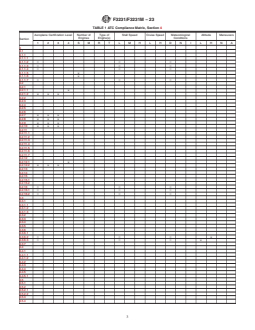
TABLE 1 ATC Compliance Matrix, Section 4
Aeroplane Certification Level Number of Type of Stall Speed Cruise Speed Meteorological Altitude Maneuvers
Engines Engine(s) Conditions
Section
12 34 S M R T L M H L H D N I L H N A
4.1
4.1.1
4.1.1.1
4.1.1.2CC C
4.1.1.3CC C
4.1.1.4CC C
4.1.1.5 ×
4.1.1.6 ×
4.1.1.7CC C
4.2
4.2.1
4.2.1.1 ×
4.2.1.2 ×× ×
4.2.2
4.2.3
4.2.4
4.2.5
4.2.6
4.2.7 ×× ×
4.2.8 ×× ×
4.2.9 ×× ×
4.2.10 ×× ×
4.2.11
4.2.11.1
4.2.11.2
4.2.11.3
4.2.11.4
4.2.11.5
4.2.11.6
4.2.11.7
4.2.12
4.2.12.1 ×
4.2.12.2 ×× ×
4.2.13
4.2.14
4.2.15
4.2.15.1
4.2.15.2
4.2.16CC C
4.2.16.1CC C
4.2.16.2CC C
4.3
4.3.1
4.3.1.1
4.3.1.2
4.3.1.3
4.3.2
4.3.3
4.3.4
4.3.5
4.3.6
4.3.6.1
4.3.6.2CC C ×
4.3.6.3CC C ×
4.3.7
4.4
4.4.1
4.4.1.1
4.4.1.2
4.4.2
4.4.3
4.4.4
4.4.5
4.4.5.1
4.5
4.5.1
4.5.2
4.5.2.1
4.5.2.2
4.5.3
4.5.4
F3231/F3231M−23
TABLE1 Continued
Aeroplane Certification Level Number of Type of Stall Speed Cruise Speed Meteorological Altitude Maneuvers
Engines Engine(s) Conditions
Section
12 34 S M R T L M H L H D N I L H N A
4.5.4.1
4.5.4.2
4.6
4.6.1
4.6.2
4.7
4.7.1
4.7.2
4.7.3
4.7.4
4.7.5 ×
4.7.6
4.7.7 ×
4.7.8 ×
4.8
4.8.1
4.8.2
4.8.3
4.9
4.9.1
4.9.2
4.2.8 Ameansshallbeaccessibleinflighttotheappropriate 4.2.11.7 Eachgenerator/alternatorshallhaveanovervoltage
flight crew members for the individual and collective discon- control designed and installed to prevent damage to the
nection of the electrical power sources from the distribution electrical system, or to equipment supplied by the electrical
system. system that could result if that generator/alternator were to
4.2.9 The distribution system shall be designed so that develop and overvoltage condition.
voltage and frequency, if applicable, at the terminals of all 4.2.12 A means shall exist to indicate to appropriate flight
essential load equipment can be maintained within the limits crew members the electric power system quantities essential
for which the equipment is designed during any probable for safe operation.
operating conditions. 4.2.12.1 For aircraft with direct current systems, an amme-
4.2.10 If any distribution system, particular system, or item ter that can be switched into each generator/alternator feeder
of equipment requires two independent sources of electrical may be used and, if only one generator/alternator exists, the
power,theirelectricalenergysupplyshallbeensuredbymeans ammeter may be in the battery feeder.
suchasduplicateelectricalequipment,throwoverswitching,or 4.2.12.2 The essential electric power system quantities in-
by the use of multichannel or loop circuits separately routed. clude the voltage and current supplied by each generator/
4.2.11 There shall be at least one generator/alternator if the alternator.
electrical system supplies power to load circuits essential for 4.2.13 Electrical equipment shall be designed and installed
safe operation. In addition, the requirements of 4.2.11.1 – so that in the event of a fire in the engine compartment, during
4.2.11.7 shall be met. which the surface of the firewall adjacent to the fire is heated
4.2.11.1 Eachgenerator/alternatorshallbeabletodeliverits to 1095°C [2000°F] for 5 min or to a lesser temperature
continuous rated power, or such power as is limited by its substantiated by the applicant, the equipment essential to
regulation system. continued safe operation and located behind the firewall will
4.2.11.2 Generator/alternator voltage control equipment function satisfactorily and will not create an additional fire
shall be able to dependably regulate the generator/alternator hazard.
output within rated limits. 4.2.14 Ifprovisionsaremadeforconnectingexternalpower
4.2.11.3 Automatic means shall be provided to prevent to the aeroplane, and that external power can be electrically
damage to any generator/alternator due to reverse current into connected to equipment other than that used for engine
the generator/alternator. starting, means shall be provided to ensure that no external
4.2.11.4 Automatic means shall be provided to prevent power supply having a reverse polarity, or a reverse phase
adverse effects on the aircraft electrical system due to reverse sequence, can supply power to the aeroplane electrical system.
current into the generator/alternator. 4.2.15 Ifprovisionsaremadeforconnectingexternalpower
4.2.11.5 A means shall be provided to disconnect each to the aeroplane, and that external power can be electrically
generator/alternator from the battery and other generators/ connected to equipment other than that used for engine
alternators. starting, the external power connection shall meet the require-
4.2.11.6 There shall be a means to give immediate warning ments of 4.2.15.1 through 4.2.15.2.
to the appropriate flight crew members of a failure of any 4.2.15.1 The external power connection shall be located so
generator/alternator. that its use will not result in a hazard to the aeroplane.
F3231/F3231M−23
4.2.15.2 The external power connection shall be located so 4.3.6.2 Atime period of at least 30 min which includes the
that its use will not result in a hazard to ground personnel. time to recognize the loss of generated power and to take
appropriate load-shedding action.
4.2.16 It shall be shown by analysis, tests, or both, that the
4.3.6.3 Atime period of at least 60 min which includes the
aircraft can be operated safely in VFR conditions, for a period
time to recognize the loss of generated power and to take
of not less than 5 min, with the normal electrical power
appropriate load-shedding action.
(electrical power sources excluding the battery and any other
4.3.7 The battery reserve energy requirement of 4.3.6 shall
standby electrical sources) inoperative, with critical type fuel
bedemonstratedbytestoranalysisincludingallloadsessential
(from the standpoint of flameout and restart capability), and
to continued safe flight and landing.
with the aircraft initially at the maximum certificated altitude.
4.2.16.1 In showing compliance with 4.2.16, parts of the
4.4 Circuit Protective Devices:
electrical system may remain on if a single malfunction,
4.4.1 Protective devices, such as fuses or circuit breakers,
including a wire bundle or junction box fire, cannot result in
shall be installed in all electrical circuits.
loss of the part turned off and the part turned on.
4.4.1.1 Theprovisionsof4.4.1donotapplytomaincircuits
4.2.16.2 In showing compliance with 4.2.16, parts of the
of starter motors used during starting only.
electrical system may remain on if the parts turned on are 4.4.1.2 The provisions of 4.4.1 do not apply to circuits in
electricallyandmechanicallyisolatedfromthepartsturnedoff.
which no hazard is presented by their omission.
4.4.2 A protective device for a circuit essential to flight
4.3 Storage Battery Design and Installation:
safety may not be used to protect any other circuit.
4.3.1 Each storage battery design and installation shall
4.4.3 Each resettable circuit protective device (“trip free”
maintain safe cell temperatures and pressures during any
device in which the tripping mechanism cannot be overridden
probable charging and discharging condition.
by the operating control) shall be designed so that a manual
4.3.1.1 No uncontrolled increase in cell temperature shall
operation is required to restore service after tripping.
resultwhenthebatteryisrecharged(afterpreviouscompleteor
4.4.4 Each resettable circuit protective device (“trip free”
most critical discharge) at maximum regulated voltage or
device in which the tripping mechanism cannot be overridden
power.
by the operating control) shall be designed so that if an
4.3.1.2 No uncontrolled increase in cell temperature shall
overload or circuit fault exists, the device will open the circuit
resultwhenthebatteryisrecharged(afterpreviouscompleteor
regardless of the position of the operating control.
most critical discharge) during a flight of maximum duration.
4.4.5 If the ability to reset a circuit protective device or
4.3.1.3 No uncontrolled increase in cell temperature shall
replace a fuse is essential to safety in flight, a means shall be
resultwhenthebatteryisrecharged(afterpreviouscompleteor
provided so that it can be readily reset or replaced in flight;
most critical discharge) under the most adverse cooling con-
refer to Specification F3117/F3117M.
dition likely to occur in service.
4.4.5.1 For fuses identified as replaceable in flight, there
4.3.2 Compliance with 4.3.1 shall be shown by tests unless
shall be onboard one spare of each rating or 50% spare fuses
experience with similar batteries and battery management
of each rating, whichever is greater.
systems or installations has shown that maintaining safe cell
4.5 Master Switch Arrangement:
temperatures and pressures presents no problem.
4.5.1 There shall be a master switch arrangement to allow
4.3.3 Each storage battery shall be designed and installed
ready disconnection of each electric power source from power
such that no explosive or toxic gases emitted by any battery in
distribution systems, except as provided in 4.5.4.
normal operation, or as the result of any probable malfunction
4.5.2 The disconnection required by 4.5.1 shall meet the
in the charging system or battery installation, may accumulate
requirements of either 4.5.2.1 or 4.5.2.2.
in hazardous quantities within the aircraft.
4.5.2.1 The point of disconnection shall be adjacent to the
4.3.4 Each storage battery design and installation shall
electrical power sources controlled by the master switch
prevent damage to surrounding structures or adjacent essential
arrangement.
equipmentfromcorrosionfluidsorgasesthatmayescapefrom
4.5.2.2 Main power cable feeders (for example, generator/
the battery.
alternator cables) from the electrical power source to the point
4.3.5 In addition to the applicable requirements of this
of disconnection shall have fault detection that will automati-
specification, electrical storage battery installations shall com-
callyde-energizethesourcewhenapowercablefeederfaultis
ply with the technology-specific provisions of Specification
detected.
F3235.
4.5.3 If separate switches are incorporated into the master
4.3.6 In the event of a complete loss of the primary
switch arrangement required by 4.5.1, a means shall be
electrical power generating system, the battery reserve energy
provided for the switch arrangement to be operated by a single
shall be capable of providing electrical power to those loads
action; refer to Specification F3117/F3117M.
that are essential to continued safe flight and landing including
4.5.4 Load circuits may be connected so that they remain
noncontinuousessentialloadswithenoughcapacitytomeetthe
energized when the master switch is open if the circuits are
requirementsofeither4.3.6.1,4.3.6.2,or4.3.6.3inaccordance
isolated, or physically shielded, to prevent their igniting
with Table 1.
flammable fluids or vapors that might be liberated by the
4.3.6.1 The time needed to complete the function required leakage or rupture of any flammable fluid system, and the
for continued safe flight and landing. requirements of either 4.5.4.1 or 4.5.4.2 are met.
F3231/F3231M−23
4.5.4.1 The circuits are required for continued operation of 4.7.7 Electricalcablesshallbeinstalledsuchthattheriskof
the engine. mechanical damage or damage caused by fluids, vapors, or
4.5.4.2 The circuits are protected by circuit protective de- sources of heat, or both, is minimized.
vices with a rating of five amperes or less adjacent to the 4.7.8 Where a cable cannot be protected by a circuit
electricpowersource.Twoormorecircuitsshallnotbeusedto protection device or other overload protection, it shall not
supply a load of more than five amperes. cause a fire hazard under fault conditions.
4.6 Switches: 4.8 Electrical System Fire Protection:
4.6.1 Each switch shall be able to carry its rated current. 4.8.1 Eachcomponentoftheelectricalsystemshallmeetthe
4.6.2 Eachswitchshallbeconstructedwithenoughdistance applicable fire protection requirements of Specifications
or insulating material between current carrying parts and the F3061/F3061M and F3066/F3066M.
housing so that vibration in flight will not cause shorting. 4.8.2 Electrical cables, terminals, and equipment in desig-
nated fire zones that are used during emergency procedures
4.7 Electrical Cables and Equipment:
shall be fire-resistant.
4.7.1 Each electric connecting cable shall be of adequate
4.8.3 Insulation on electrical wire and electrical cable shall
capacity.
be self-extinguishing when tested at an angle of 60° in
NOTE 4—Practice F2639 provides information and methodology for
accordance with the applicable portions of DOT/FAA/AR-00/
identification marking, for determining wire and cable capacity, and for
12, or other approved equivalent methods. The average burn
determining acceptable wire types that should be used where applicable.
length shall not exceed 76 mm [3 in.] and the average flame
4.7.2 Any equipment that is associated with any electrical
time after removal of the flame source shall not exceed 30 s.
cableinstallationandthatwouldoverheatintheeventofcircuit
Drippings from the test specimen shall not continue to flame
overload or fault shall be flame resistant.
for more than an average of 3 s after falling.
4.7.3 Any electrical cables or equipment that would over-
4.9 Electronic Equipment:
heat in the event of circuit overload or fault shall not have
4.9.1 Radio and electronic equipment, controls, and wiring
dangerous concentrations of toxic fumes enter personnel com-
shall be installed so that operation of any unit or system of
partments.
units will not adversely affect the simultaneous operation of
4.7.4 Main power cables (including generator/alternator
any other radio or electronic unit, or system of units, required
cables) in the fuselage shall be designed to allow a reasonable
by the rules of the governing CAA.
degree of deformation and stretching without degradation or
4.9.2 If installed communication equipment includes trans-
failure.
mitted “off-on” switching, that switching means shall be
4.7.5 Main power cables (including generator/alternator
designed to return from the “transmit” to the “off” position
cables) in the fuselage shall be separated from flammable fluid
whenitisreleasedandensurethatthetransmitterwillreturnto
lines,orbeshroudedbymeansofelectricallyinsulatedflexible
the off (non-transmitting) state.
conduit(orequivalent)whichisinadditiontothenormalcable
insulation.
5. Keywords
4.7.6 Meansofidentificationshallbeprovidedforelectrical
cables, terminals, and connectors. 5.1 battery; electrical; power
ANNEX
(Mandatory Information)
A1. CORRELATION OF STANDARD – CONTENT AND THE RULES
A1.1 Means of Compliance Correlation Sorted by Stan-
dard Section
F3231/F3231M−23
TABLE A1.1 Means of Compliance Correlation Sorted by Standard Section
Std Rev Section Subpart 14 CFR Part 23 A64
F3231/F3231M 23 4.1 . .
F3231/F3231M 23 4.1.1 F 23.2525
F3231/F3231M 23 4.1.1.1 F 23.2525(a)
F3231/F3231M 23 4.1.1.2 F 23.2525(b)
F3231/F3231M 23 4.1.1.2 F 23.2525(c)
F3231/F3231M 23 4.1.1.3 F 23.2525(b)
F3231/F3231M 23 4.1.1.3 F 23.2525(c)
F3231/F3231M 23 4.1.1.4 F 23.2525(b)
F3231/F3231M 23 4.1.1.4 F 23.2525(c)
F3231/F3231M 23 4.1.1.5 F 23.2525(b)
F3231/F3231M 23 4.1.1.5 F 23.2525(c)
F3231/F3231M 23 4.1.1.6 F 23.2525(b)
F3231/F3231M 23 4.1.1.6 F 23.2525(c)
F3231/F3231M 23 4.1.1.7 F 23.2525(b)
F3231/F3231M 23 4.2.1 F 23.2525
F3231/F3231M 23 4.2.1.1 F 23.2525
F3231/F3231M 23 4.2.1.2 F 23.2525
F3231/F3231M 23 4.2.2 F 23.2500(a)(1)
F3231/F3231M 23 4.2.2 F 23.2500(b)
F3231/F3231M 23 4.2.3 F 23.2500(a)(2)
F3231/F3231M 23 4.2.4 F 23.2500(a)(1)
F3231/F3231M 23 4.2.4 F 23.2500(b)
F3231/F3231M 23 4.2.5 F 23.2525(a)
F3231/F3231M 23 4.2.6 F 23.2525(b)
F3231/F3231M 23 4.2.7 F 23.2525(b)
F3231/F3231M 23 4.2.8 G 23.2600(a)
F3231/F3231M 23 4.2.9 F 23.2525(a)
F3231/F3231M 23 4.2.10 F 23.2525(b)
F3231/F3231M 23 4.2.11 F 23.2525
F3231/F3231M 23 4.2.11.1 F 23.2525(a)
F3231/F3231M 23 4.2.11.2 F 23.2525(a)
F3231/F3231M 23 4.2.11.3 F 23.2525(b)
F3231/F3231M 23 4.2.11.4 F 23.2525(b)
F3231/F3231M 23 4.2.11.5 F 23.2525(b)
F3231/F3231M 23 4.2.11.6 G 23.2605(c)
F3231/F3231M 23 4.2.11.7 F 23.2525(b)
F3231/F3231M 23 4.2.12 G 23.2605(b)
F3231/F3231M 23 4.2.12.1 G 23.2605(b)
F3231/F3231M 23 4.2.12.2 G 23.2605(b)
F3231/F3231M 23 4.2.13 E 23.2440(c)(1)
F3231/F3231M 23 4.2.14 F 23.2500(b)
F3231/F3231M 23 4.2.15 F 23.2500(b)
F3231/F3231M 23 4.2.15.1 F 23.2500(b)
F3231/F3231M 23 4.2.15.2 F 23.2500(b)
F3231/F3231M 23 4.2.16 F 23.2500(a)(2)
F3231/F3231M 23 4.2.16.1 F 23.2500(a)(2)
F3231/F3231M 23 4.2.16.2 F 23.2500(a)(2)
F3231/F3231M 23 4.3.1 F 23.2525(a)
F3231/F3231M 23 4.3.1.1 F 23.2525(a)
F3231/F3231M 23 4.3.1.2 F 23.2525(a)
F3231/F3231M 23 4.3.1.3 F 23.2525(a)
F3231/F3231M 23 4.3.2 F 23.2525(a)
F3231/F3231M 23 4.3.3 F 23.2525(a)
F3231/F3231M 23 4.3.4 F 23.2525(a)
F3231/F3231M 23 4.3.5 F 23.2525(a)
F3231/F3231M 23 4.3.6 F 23.2525(c)
F3231/F3231M 23 4.3.6.1 F 23.2525(c)
F3231/F3231M 23 4.3.6.2 F 23.2525(c)
F3231/F3231M 23 4.3.6.3 F 23.2525(c)
F3231/F3231M 23 4.3.7 F 23.2525(c)
F3231/F3231M 23 4.4.1 F 23.2500(a)(2)
F3231/F3231M 23 4.4.1.1 F 23.2500(a)(2)
F3231/F3231M 23 4.4.1.2 F 23.2500(a)(2)
F3231/F3231M 23 4.4.2 F 23.2500(a)(2)
F3231/F3231M 23 4.4.2 F 23.2525(b)
F3231/F3231M 23 4.4.3 F 23.2500(a)(2)
F3231/F3231M 23 4.4.4 F 23.2500(a)(2)
F3231/F3231M 23 4.4.5 F 23.2500(a)(2)
F3231/F3231M 23 4.4.5 G 23.2600(a)
F3231/F3231M 23 4.4.5.1 F 23.2500(a)(2)
F3231/F3231M 23 4.5.1 G 23.2600(a)
F3231/F3231M 23 4.5.2 F 23.2500(a
...
This document is not an ASTM standard and is intended only to provide the user of an ASTM standard an indication of what changes have been made to the previous version. Because
it may not be technically possible to adequately depict all changes accurately, ASTM recommends that users consult prior editions as appropriate. In all cases only the current version
of the standard as published by ASTM is to be considered the official document.
Designation: F3231/F3231M − 22 F3231/F3231M − 23
Standard Specification for
Electrical Systems for Aircraft with Combustion Engine
Electrical Power Generation
This standard is issued under the fixed designation F3231/F3231M; the number immediately following the designation indicates the year
of original adoption or, in the case of revision, the year of last revision. A number in parentheses indicates the year of last reapproval.
A superscript epsilon (´) indicates an editorial change since the last revision or reapproval.
1. Scope
1.1 This specification covers electrical systems, electrical equipment, and electrical power distribution aspects of airworthiness
and design for aeroplanes with combustion engine generation of electrical power. The material was developed through open
consensus of international experts in general aviation. This information was created by focusing on Normal Category Aeroplanes.
The content may be more broadly applicable; it is the responsibility of the applicant to substantiate broader applicability as a
specific means of compliance.
1.2 An applicant intending to propose this information as Means of Compliance for a design approval shall seek guidance from
their respective oversight authority (for example, published guidance from applicable civil aviation authorities (CAAs)) concerning
the acceptable use and application thereof. For information on which oversight authorities have accepted this specification (in
whole or in part) as an acceptable Means of Compliance to their regulatory requirements (hereinafter “the Rules”), refer to ASTM
Committee F44 web page (www.astm.org/COMMITTEE/F44.htm). Annex A1 maps the Means of Compliance described in this
specification to EASA CS-23, amendment 5, or later, and FAA 14 CFR Part 23, amendment 64, or later.
1.3 Units—This standard may present information in either SI units, English Engineering units, or both; the values stated in each
system are not necessarily exact equivalents; therefore, to ensure conformance with the standard, each system shall be used
independently of the other, and values from the two systems shall not be combined.
1.4 This standard does not purport to address all of the safety concerns, if any, associated with its use. It is the responsibility
of the user of this standard to establish appropriate safety, health, and environmental practices and determine the applicability of
regulatory limitations prior to use.
1.5 This international standard was developed in accordance with internationally recognized principles on standardization
established in the Decision on Principles for the Development of International Standards, Guides and Recommendations issued
by the World Trade Organization Technical Barriers to Trade (TBT) Committee.
2. Referenced Documents
2.1 Following is a list of external standards referenced throughout this specification; the earliest revision acceptable for use is
indicated. In all cases later document revisions are acceptable if shown to be equivalent to the listed revision, or if otherwise
formally accepted by the governing CAA; earlier revisions are not acceptable.
This specification is under the jurisdiction of ASTM Committee F44 on General Aviation Aircraft and is the direct responsibility of Subcommittee F44.50 on Systems
and Equipment.
Current edition approved April 1, 2022Jan. 1, 2023. Published April 2022January 2023. Originally approved in 2017. Last previous edition approved in 20212022 as
F3231/F3231M–21.–22. DOI: 10.1520/F3231_F3231M-22.10.1520/F3231_F3231M-23.
Copyright © ASTM International, 100 Barr Harbor Drive, PO Box C700, West Conshohocken, PA 19428-2959. United States
F3231/F3231M − 23
2.2 ASTM Standards:
F2490 Guide for Aircraft Electrical Load and Power Source Capacity Analysis
F2639 Practice for Design, Alteration, and Certification of Aircraft Electrical Wiring Systems
F3060 Terminology for Aircraft
F3061/F3061M Specification for Systems and Equipment in Aircraft
F3066/F3066M Specification for Aircraft Powerplant Installation Hazard Mitigation
F3117/F3117M Specification for Crew Interface in Aircraft
F3235 Specification for Aircraft Storage Batteries
F3316/F3316M Specification for Electrical Systems for Aircraft with Electric or Hybrid-Electric Propulsion
2.3 FAA Standard:Standards:
14 CFR Part 23 Airworthiness Standards: Normal Category Airplanes
DOT/FAA/AR-00/12 Aircraft Materials Fire Test Handbook
2.4 EASA Standard:
CS-23 Normal, Utility, Aerobatic and Commuter Aeroplanes
3. Terminology
3.1 Terminology specific to this specification is provided below. For general terminology, refer to Terminology F3060.
3.2 Definitions of Terms Specific to This Standard:
3.2.1 aircraft type code, n—an Aircraft Type Code (ATC) is defined by considering both the technical considerations regarding
the design of the aircraft and the airworthiness level established based upon risk-based criteria; the method of defining an ATC
applicable to this specification is defined in Specification F3061/F3061M.
3.2.2 continued safe flight and landing, n—continued safe flight and landing as applicable to this specification is defined in
Specification F3061/F3061M.
3.2.3 distribution system, n—as used in this specification, includes the distribution buses, their associated feeders, each control,
and each protective device.
4. Electrical Systems
NOTE 1—Table 1 provides correlation between various Aircraft Type Codes and the individual requirements contained within this section; refer to 3.2.1.
For each subsection, an indicator can be found under each ATC character field; three indicators are used:
An empty cell ( ) in all applicable ATC character field columns indicates that an aircraft shall meet the requirements of that subsection.
A white circle (○) in multiple columns indicates that the requirements of that subsection are not applicable to an aircraft only if all such ATC character
fields are applicable.
A mark-out (×) in any of the applicable ATC character field columns indicates that the requirements of that subsection are not applicable to an aircraft
if that ATC character field is applicable.
Example—An aircraft with an ATC of 1SRLLDLN is being considered. Since all applicable columns are empty for 4.2.1, that subsection is applicable
to the aircraft. Since both the “L” stall speed column and the “D” meteorological column for 4.1.1 contain white circles, then that subsection is not
applicable; however, for an aircraft with an ATC of 1SRMLDLN, 4.1.1 would be applicable since the “M” stall speed column does not contain a white
circle. 4.2.1.2 would not be applicable to either aircraft, since it contains an × in the “1” airworthiness level column.
NOTE 2—This standard provides specifications for the electrical generation and distribution systems used to power various aircraft systems and equipment.
It intentionally does not address any electrical power systems that may be employed in electrically-powered aircraft propulsion systems; such power
systems are addressed in Specification F3316/F3316M.
4.1 Power Source Capacity and Distribution:
4.1.1 Each installation whose functioning is required for type certification or under operating rules and that requires a power
supply is an “essential load” on the power supply. The power sources and the system shall be able to supply the power loads
specified in 4.1.1.1 – 4.1.1.7 in probable operating combinations and for probable durations. The power loads may be assumed to
For referenced ASTM standards, visit the ASTM website, www.astm.org, or contact ASTM Customer Service at service@astm.org. For Annual Book of ASTM Standards
volume information, refer to the standard’s Document Summary page on the ASTM website.
Available from Federal Aviation Administration (FAA), 800 Independence Ave., SW, Washington, DC 20591, http://www.faa.gov.
Available from European Union Aviation Safety Agency (EASA), Konrad-Adenauer-Ufer 3, D-50668 Cologne, Germany, https://www.easa.europa.eu.
F3231/F3231M − 23
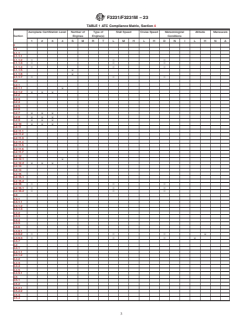
TABLE 1 ATC Compliance Matrix, Section 4
Aeroplane Certification Level Number of Type of Stall Speed Cruise Speed Meteorological Altitude Maneuvers
Engines Engine(s) Conditions
Section
1 2 3 4 S M R T L M H L H D N I L H N A
4.1
4.1.1
4.1.1.1
4.1.1.2 C C C
4.1.1.3 C C C
4.1.1.4 C C C
4.1.1.5 ×
4.1.1.6 ×
4.1.1.7 C C C
4.2
4.2.1
4.2.1.1 ×
4.2.1.2 × × ×
4.2.2
4.2.3
4.2.4
4.2.5
4.2.6
4.2.7 × × ×
4.2.8 × × ×
4.2.9 × × ×
4.2.10 × × ×
4.2.11
4.2.11.1
4.2.11.2
4.2.11.3
4.2.11.4
4.2.11.5
4.2.11.6
4.2.11.7
4.2.12
4.2.12.1 ×
4.2.12.2 × × ×
4.2.13
4.2.14
4.2.15
4.2.15.1
4.2.15.2
4.2.16 C C C
4.2.16.1 C C C
4.2.16.2 C C C
4.3
4.3.1
4.3.1.1
4.3.1.2
4.3.1.3
4.3.2
4.3.3
4.3.4
4.3.5
4.3.6
4.3.6.1
4.3.6.2 C C C ×
4.3.6.3 C C C ×
4.3.7
4.4
4.4.1
4.4.1.1
4.4.1.2
4.4.2
4.4.3
4.4.4
4.4.5
4.4.5.1
4.5
4.5.1
4.5.2
4.5.2.1
4.5.2.2
4.5.3
4.5.4
F3231/F3231M − 23
TABLE 1 Continued
Aeroplane Certification Level Number of Type of Stall Speed Cruise Speed Meteorological Altitude Maneuvers
Engines Engine(s) Conditions
Section
1 2 3 4 S M R T L M H L H D N I L H N A
4.5.4.1
4.5.4.2
4.6
4.6.1
4.6.2
4.7
4.7.1
4.7.2
4.7.3
4.7.4
4.7.5 ×
4.7.6
4.7.7 ×
4.7.8 ×
4.8
4.8.1
4.8.2
4.8.3
4.9
4.9.1
4.9.2
be reduced under a monitoring procedure consistent with safety in the kinds of operation authorized. Loads not required in
controlled flight need not be considered for the two-engine-inoperative condition on aircraft with three or more engines.
4.1.1.1 When required by 4.1.1, the power sources and the electrical distribution system, when functioning normally shall be able
to support all connected loads.
4.1.1.2 When required by 4.1.1, the power sources and the electrical distribution system shall be able to support all essential loads
after the failure of any one generator/alternator.
4.1.1.3 When required by 4.1.1, the power sources and the electrical distribution system shall be able to support all essential loads
after the failure of any one power converter.
4.1.1.4 When required by 4.1.1, the power sources and the electrical distribution system shall be able to support all essential loads
after the failure of any one energy storage device.
4.1.1.5 When required by 4.1.1, the power sources and the electrical distribution system shall be able to support all essential loads
after the failure of any one engine on an aeroplane with two engines.
4.1.1.6 When required by 4.1.1, the power sources and the electrical distribution system shall be able to support all essential loads
after the failure of any two engines on an aeroplane with three or more engines.
4.1.1.7 When required by 4.1.1, the power sources and the electrical distribution system shall be able to support all essential loads
for which an alternate source of power is required, after any failure or malfunction in any one power supply system, any one
distribution system, or any other utilization system.
4.2 Electrical Systems and Equipment:
NOTE 3—Guide F2490 provides information and methodology for an electrical load analysis.
4.2.1 Electric power sources, their transmission cables, and their associated control and protective devices shall be able to furnish
the required power at the proper voltage to each load circuit essential for safe operation.
4.2.1.1 Compliance with 4.2.1 shall be shown by an electrical load analysis or by electrical measurements that account for the
electrical loads applied to the electrical system in probable combinations and for probable durations.
F3231/F3231M − 23
4.2.1.2 Compliance with 4.2.1 shall be shown by an electrical load analysis that accounts for the electrical loads applied to the
electrical system in probable combinations and for probable durations.
4.2.2 Each electrical system, when installed, shall be free from hazards in itself, in its method of operation, and in its effects on
other parts of the aircraft.
4.2.3 Each electrical system, when installed, shall be protected from fuel, oil, water, other detrimental substances, and mechanical
damage.
4.2.4 Each electrical system, when installed, shall be designed so that the risk of electrical shock to crew, passengers, and ground
personnel is reduced to a minimum.
4.2.5 Electric power sources shall function properly when connected in combination or independently.
4.2.6 No failure or malfunction of any electric power source in the distribution system shall impair the ability of any remaining
source to supply load circuits essential for safe operation.
4.2.7 Each distribution system shall be designed so that essential load circuits can be supplied in the event of reasonably probable
faults or open circuits including faults in heavy current carrying cables.
4.2.8 A means shall be accessible in flight to the appropriate flight crew members for the individual and collective disconnection
of the electrical power sources from the distribution system.
4.2.9 The distribution system shall be designed so that voltage and frequency, if applicable, at the terminals of all essential load
equipment can be maintained within the limits for which the equipment is designed during any probable operating conditions.
F3231/F3231M − 23
4.2.10 If any distribution system, particular system, or item of equipment requires two independent sources of electrical power,
their electrical energy supply shall be ensured by means such as duplicate electrical equipment, throwover switching, or by the use
of multichannel or loop circuits separately routed.
4.2.11 There shall be at least one generator/alternator if the electrical system supplies power to load circuits essential for safe
operation. In addition, the requirements of 4.2.11.1 – 4.2.11.7 shall be met.
4.2.11.1 Each generator/alternator shall be able to deliver its continuous rated power, or such power as is limited by its regulation
system.
4.2.11.2 Generator/alternator voltage control equipment shall be able to dependably regulate the generator/alternator output within
rated limits.
4.2.11.3 Automatic means shall be provided to prevent damage to any generator/alternator due to reverse current into the
generator/alternator.
4.2.11.4 Automatic means shall be provided to prevent adverse effects on the aircraft electrical system due to reverse current into
the generator/alternator.
4.2.11.5 A means shall be provided to disconnect each generator/alternator from the battery and other generators/alternators.
4.2.11.6 There shall be a means to give immediate warning to the appropriate flight crew members of a failure of any
generator/alternator.
4.2.11.7 Each generator/alternator shall have an overvoltage control designed and installed to prevent damage to the electrical
system, or to equipment supplied by the electrical system that could result if that generator/alternator were to develop and
overvoltage condition.
4.2.12 A means shall exist to indicate to appropriate flight crew members the electric power system quantities essential for safe
operation.
4.2.12.1 For aircraft with direct current systems, an ammeter that can be switched into each generator/alternator feeder may be
used and, if only one generator/alternator exists, the ammeter may be in the battery feeder.
4.2.12.2 The essential electric power system quantities include the voltage and current supplied by each generator/alternator.
4.2.13 Electrical equipment shall be designed and installed so that in the event of a fire in the engine compartment, during which
the surface of the firewall adjacent to the fire is heated to 1095 °C [2000 °F] for 5 min or to a lesser temperature substantiated by
the applicant, the equipment essential to continued safe operation and located behind the firewall will function satisfactorily and
will not create an additional fire hazard.
4.2.14 If provisions are made for connecting external power to the aeroplane, and that external power can be electrically connected
to equipment other than that used for engine starting, means shall be provided to ensure that no external power supply having a
reverse polarity, or a reverse phase sequence, can supply power to the aeroplane electrical system.
4.2.15 If provisions are made for connecting external power to the aeroplane, and that external power can be electrically connected
to equipment other than that used for engine starting, the external power connection shall meet the requirements of 4.2.15.1 through
4.2.15.2.
4.2.15.1 The external power connection shall be located so that its use will not result in a hazard to the aeroplane.
4.2.15.2 The external power connection shall be located so that its use will not result in a hazard to ground personnel.
4.2.16 It shall be shown by analysis, tests, or both, that the aircraft can be operated safely in VFR conditions, for a period of not
less than 5 min, with the normal electrical power (electrical power sources excluding the battery and any other standby electrical
sources) inoperative, with critical type fuel (from the standpoint of flameout and restart capability), and with the aircraft initially
at the maximum certificated altitude.
F3231/F3231M − 23
4.2.16.1 In showing compliance with 4.2.16, parts of the electrical system may remain on if a single malfunction, including a wire
bundle or junction box fire, cannot result in loss of the part turned off and the part turned on.
4.2.16.2 In showing compliance with 4.2.16, parts of the electrical system may remain on if the parts turned on are electrically
and mechanically isolated from the parts turned off.
4.3 Storage Battery Design and Installation:
4.3.1 Each storage battery design and installation shall maintain safe cell temperatures and pressures during any probable charging
and discharging condition.
4.3.1.1 No uncontrolled increase in cell temperature shall result when the battery is recharged (after previous complete or most
critical discharge) at maximum regulated voltage or power.
4.3.1.2 No uncontrolled increase in cell temperature shall result when the battery is recharged (after previous complete or most
critical discharge) during a flight of maximum duration.
4.3.1.3 No uncontrolled increase in cell temperature shall result when the battery is recharged (after previous complete or most
critical discharge) under the most adverse cooling condition likely to occur in service.
4.3.2 Compliance with 4.3.1 shall be shown by tests unless experience with similar batteries and battery management systems or
installations has shown that maintaining safe cell temperatures and pressures presents no problem.
4.3.3 Each storage battery shall be designed and installed such that no explosive or toxic gases emitted by any battery in normal
operation, or as the result of any probable malfunction in the charging system or battery installation, may accumulate in hazardous
quantities within the aircraft.
4.3.4 Each storage battery design and installation shall prevent damage to surrounding structures or adjacent essential equipment
from corrosion fluids or gases that may escape from the battery.
4.3.5 In addition to the applicable requirements of this specification, electrical storage battery installations shall comply with the
technology-specific provisions of Specification F3235.
4.3.6 In the event of a complete loss of the primary electrical power generating system, the battery reserve energy shall be capable
of providing electrical power to those loads that are essential to continued safe flight and landing including noncontinuous essential
loads with enough capacity to meet the requirements of either 4.3.6.1, 4.3.6.2, or 4.3.6.3 in accordance with Table 1.
4.3.6.1 The time needed to complete the function required for continued safe flight and landing.
4.3.6.2 A time period of at least 30 min which includes the time to recognize the loss of generated power and to take appropriate
load-shedding action.
4.3.6.3 A time period of at least 60 min which includes the time to recognize the loss of generated power and to take appropriate
load-shedding action.
4.3.7 The battery reserve energy requirement of 4.3.6 shall be demonstrated by test or analysis including all loads essential to
continued safe flight and landing.
4.4 Circuit Protective Devices:
4.4.1 Protective devices, such as fuses or circuit breakers, shall be installed in all electrical circuits.
4.4.1.1 The provisions of 4.4.1 do not apply to main circuits of starter motors used during starting only.
4.4.1.2 The provisions of 4.4.1 do not apply to circuits in which no hazard is presented by their omission.
4.4.2 A protective device for a circuit essential to flight safety may not be used to protect any other circuit.
F3231/F3231M − 23
4.4.3 Each resettable circuit protective device (“trip free” device in which the tripping mechanism cannot be overridden by the
operating control) shall be designed so that a manual operation is required to restore service after tripping.
4.4.4 Each resettable circuit protective device (“trip free” device in which the tripping mechanism cannot be overridden by the
operating control) shall be designed so that if an overload or circuit fault exists, the device will open the circuit regardless of the
position of the operating control.
4.4.5 If the ability to reset a circuit protective device or replace a fuse is essential to safety in flight, a means shall be provided
so that it can be readily reset or replaced in flight; refer to Specification F3117/F3117M.
4.4.5.1 For fuses identified as replaceable in flight, there shall be onboard one spare of each rating or 50 % spare fuses of each
rating, whichever is greater.
4.5 Master Switch Arrangement:
4.5.1 There shall be a master switch arrangement to allow ready disconnection of each electric power source from power
distribution systems, except as provided in 4.5.4.
4.5.2 The disconnection required by 4.5.1 shall meet the requirements of either 4.5.2.1 or 4.5.2.2.
4.5.2.1 The point of disconnection shall be adjacent to the electrical power sources controlled by the master switch arrangement.
4.5.2.2 Main power cable feeders (for example, generator/alternator cables) from the electrical power source to the point of
disconnection shall have fault detection that will automatically de-energize the source when a power cable feeder fault is detected.
4.5.3 If separate switches are incorporated into the master switch arrangement required by 4.5.1, a means shall be provided for
the switch arrangement to be operated by a single action; refer to Specification F3117/F3117M.
4.5.4 Load circuits may be connected so that they remain energized when the master switch is open if the circuits are isolated,
or physically shielded, to prevent their igniting flammable fluids or vapors that might be liberated by the leakage or rupture of any
flammable fluid system, and the requirements of either 4.5.4.1 or 4.5.4.2 are met.
4.5.4.1 The circuits are required for continued operation of the engine.
4.5.4.2 The circuits are protected by circuit protective devices with a rating of five amperes or less adjacent to the electric power
source. Two or more circuits shall not be used to supply a load of more than five amperes.
4.6 Switches:
4.6.1 Each switch shall be able to carry its rated current.
4.6.2 Each switch shall be constructed with enough distance or insulating material between current carrying parts and the housing
so that vibration in flight will not cause shorting.
F3231/F3231M − 23
4.7 Electrical Cables and Equipment:
4.7.1 Each electric connecting cable shall be of adequate capacity.
NOTE 4—Practice F2639 provides information and methodology for identification marking, for determining wire and cable capacity, and for determining
acceptable wire types that should be used where applicable.
4.7.2 Any equipment that is associated with any electrical cable installation and that would overheat in the event of circuit
overload or fault shall be flame resistant.
4.7.3 Any electrical cables or equipment that would overheat in the event of circuit overload or fault shall not have dangerous
concentrations of toxic fumes enter personnel compartments.
4.7.4 Main power cables (including generator/alternator cables) in the fuselage shall be designed to allow a reasonable degree of
deformation and stretching without degradation or failure.
4.7.5 Main power cables (including generator/alternator cables) in the fuselage shall be separated from flammable fluid lines, or
be shrouded by means of electrically insulated flexible conduit (or equivalent) which is in addition to the normal cable insulation.
4.7.6 Means of identification shall be provided for electrical cables, terminals, and connectors.
4.7.7 Electrical cables shall be installed such that the risk of mechanical damage or damage caused by fluids, vapors, or sources
of heat, or both, is minimized.
4.7.8 Where a cable cannot be protected by a circuit protection device or other overload protection, it shall not cause a fire hazard
under fault conditions.
4.8 Electrical System Fire Protection:
4.8.1 Each component of the electrical system shall meet the applicable fire protection requirements of Specifications
F3061/F3061M and F3066/F3066M.
4.8.2 Electrical cables, terminals, and equipment in designated fire zones that are used during emergency procedures shall be
fire-resistant.
4.8.3 Insulation on electrical wire and electrical cable shall be self-extinguishing when tested at an angle of 60° in accordance with
the applicable portions of DOT/FAA/AR-00/12, or other approved equivalent methods. The average burn length shall not exceed
76 mm [3 in.] and the average flame time after removal of the flame source shall not exceed 30 s. Drippings from the test specimen
shall not continue to flame for more than an average of 3 s after falling.
4.9 Electronic Equipment:
4.9.1 Radio and electronic equipment, controls, and wiring shall be installed so that operation of any unit or system of units will
not adversely affect the simultaneous operation of any other radio or electronic unit, or system of units, required by the rules of
the governing CAA.
4.9.2 If installed communication equipment includes transmitted “off-on” switching, that switching means shall be designed to
return from the “transmit” to the “off” position when it is released and ensure that the transmitter will return to the off
(non-transmitting) state.
5. Keywords
5.1 battery; electrical; power
F3231/F3231M − 23
ANNEX
(Mandatory Information)
A1. CORRELATION OF STANDARD – CONTENT AND THE RULES
A1.1 Means of Compliance Correlation Sorted by Standard Section
F3231/F3231M − 23
TABLE A1.1 Means of Compliance Correlation Sorted by Standard Section
Std Rev Section Subpart 14 CFR Part 23 A64
F3231/F3231M 23 4.1 . .
F3231/F3231M 23 4.1.1 F 23.2525
F3231/F3231M 23 4.1.1.1 F 23.2525(a)
F3231/F3231M 23 4.1.1.2 F 23.2525(b)
F3231/F3231M 23 4.1.1.2 F 23.2525(c)
F3231/F3231M 23 4.1.1.3 F 23.2525(b)
F3231/F3231M 23 4.1.1.3 F 23.2525(c)
F3231/F3231M 23 4.1.1.4 F 23.2525(b)
F3231/F3231M 23 4.1.1.4 F 23.2525(c)
F3231/F3231M 23 4.1.1.5 F 23.2525(b)
F3231/F3231M 23 4.1.1.5 F 23.2525(c)
F3231/F3231M 23 4.1.1.6 F 23.2525(b)
F3231/F3231M 23 4.1.1.6 F 23.2525(c)
F3231/F3231M 23 4.1.1.7 F 23.2525(b)
F3231/F3231M 23 4.2.1 F 23.2525
F3231/F3231M 23 4.2.1.1 F 23.2525
F3231/F3231M 23 4.2.1.2 F 23.2525
F3231/F3231M 23 4.2.2 F 23.2500(a)(1)
F3231/F3231M 23 4.2.2 F 23.2500(b)
F3231/F3231M 23 4.2.3 F 23.2500(a)(2)
F3231/F3231M 23 4.2.4 F 23.2500(a)(1)
F3231/F3231M 23 4.2.4 F 23.2500(b)
F3231/F3231M 23 4.2.5 F 23.2525(a)
F3231/F3231M 23 4.2.6 F 23.2525(b)
F3231/F3231M 23 4.2.7 F 23.2525(b)
F3231/F3231M 23 4.2.8 G 23.2600(a)
F3231/F3231M 23 4.2.9 F 23.2525(a)
F3231/F3231M 23 4.2.10 F 23.2525(b)
F3231/F3231M 23 4.2.11 F 23.2525
F3231/F3231M 23 4.2.11.1 F 23.2525(a)
F3231/F3231M 23 4.2.11.2 F 23.2525(a)
F3231/F3231M 23 4.2.11.3 F 23.2525(b)
F3231/F3231M 23 4.2.11.4 F 23.2525(b)
F3231/F3231M 23 4.2.11.5 F 23.2525(b)
F3231/F3231M 23 4.2.11.6 G 23.2605(c)
F3231/F3231M 23 4.2.11.7 F 23.2525(b)
F3231/F3231M 23 4.2.12 G 23.2605(b)
F3231/F3231M 23 4.2.12.1 G 23.2605(b)
F3231/F3231M 23 4.2.12.2 G 23.2605(b)
F3231/F3231M 23 4.2.13 E 23.2440(c)(1)
F3231/F3231M 23 4.2.14 F 23.2500(b)
F3231/F3231M 23 4.2.15 F 23.2500(b)
F3231/F3231M 23 4.2.15.1 F 23.2500(b)
F3231/F3231M 23 4.2.15.2 F 23.2500(b)
F3231/F3231M 23 4.2.16 F 23.2500(a)(2)
F3231/F3231M 23 4.2.16.1 F 23.2500(a)(2)
F3231/F3231M 23 4.2.16.2 F 23.2500(a)(2)
F3231/F3231M 23 4.3.1 F 23.2525(a)
F3231/F3231M 23 4.3.1.1 F 23.2525(a)
F3231/F3231M 23 4.3.1.2 F 23.2525(a)
F3231/F3231M 23 4.3.1.3 F 23.2525(a)
F3231/F3231M 23 4.3.2 F 23.2525(a)
F3231/F3231M 23 4.3.3 F 23.2525(a)
F3231/F3231M 23 4.3.4 F 23.2525(a)
F3231/F3231M 23 4.3.5 F 23.2525(a)
F3231/F3231M 23 4.3.6 F 23.2525(c)
F3231/F3231M 23 4.3.6.1 F 23.2525(c)
F3231/F3231M 23 4.3.6.2 F 23.2525(c)
F3231/F3231M 23 4.3.6.3 F 23.2525(c)
F3231/F3231M 23 4.3.7 F 23.2525(c)
F3231/F3231M 23 4.4.1 F 23.2500(a)(2)
F3231/F3231M 23 4.4.1.1 F 23.2500(a)(2)
F3231/F3231M 23 4.4.1.2 F 23.2500(a)(2)
F3231/F3231M 23 4.4.2 F 23.2500(a)(2)
F3231/F3231M 23 4.4.2 F 23.2525(b)
F3231/F3231M 23 4.4.3 F 23.2500(a)(2)
F3231/F3231M 23 4.4.4 F 23.2500(a)(2)
F3231/F3231M 23 4.4.5 F 23.2500(a)(2)
F3231/F3231M 23 4.4.5 G 23.26
...