

ASTM D2519-19a
(Test Method)Standard Test Method for Bond Strength of Electrical Insulating Varnishes by the Helical Coil Test
General Information
- Abstract
SIGNIFICANCE AND USE
5.1 Values obtained by flexural tests can provide information with regard to the bond strength of the particular varnish, in combination with a particular wire, when measured under conditions described in this test method.
SCOPE
1.1 This test method covers determination of the bond strength of an electrical insulating varnish when applied to a helical coil. The helical coil can be made from bare aluminum or copper wire or from film or fiber-insulated magnet wire. Helical coils made from bare aluminum or bare copper wire will yield values of bond strength for the varnish when applied to bare metal conductors. The use of film or fiber-insulated magnet wire will show values for that particular combination of insulation and varnish.
1.2 The values stated in SI units are to be regarded as the standard. The values given in parentheses are for information only.
1.3 This standard does not purport to address all of the safety concerns, if any, associated with its use. It is the responsibility of the user of this standard to establish appropriate safety, health, and environmental practices and determine the applicability of regulatory limitations prior to use. See Section 7.
1.4 This international standard was developed in accordance with internationally recognized principles on standardization established in the Decision on Principles for the Development of International Standards, Guides and Recommendations issued by the World Trade Organization Technical Barriers to Trade (TBT) Committee.
- Status
- Published
- Publication Date
- 31-Oct-2019
- Technical Committee
- D09 - Electrical and Electronic Insulating Materials
- Drafting Committee
- D09.01 - Electrical Insulating Products
Buy Documents

ASTM D2519-19a - Standard Test Method for Bond Strength of Electrical Insulating Varnishes by the Helical Coil Test
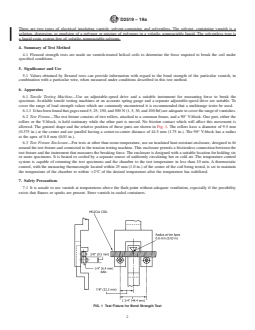
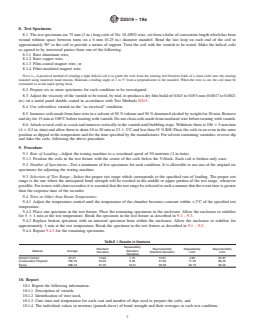

REDLINE ASTM D2519-19a - Standard Test Method for Bond Strength of Electrical Insulating Varnishes by the Helical Coil Test
Overview
ASTM D2519-19a is the standard test method developed by ASTM International for determining the bond strength of electrical insulating varnishes by the helical coil test. This approach is crucial for evaluating how well insulating varnishes adhere to wire surfaces, which is essential in ensuring the durability, safety, and performance of electrical components. The method is applicable to helical coils made from bare aluminum or copper wire, as well as film- or fiber-insulated magnet wires, thus providing flexibility in testing across different wire and insulation types.
This standard serves various industries, such as electrical manufacturing, quality assurance, and research and development, by establishing a reliable protocol for characterizing the adhesive properties of insulating varnishes under standardized conditions.
Key Topics
Bond Strength Measurement: The primary focus of this test is to determine the force required to break the bond between the varnish and the wire substrate in a helical coil configuration. This helps in assessing the suitability of different varnishes for use in electrical insulation.
Test Specimens: Standardized preparation includes winding specified wire types (bare or insulated) into helical coils, treating them with the varnish under investigation, and curing according to manufacturer guidelines.
Testing Protocols:
- Use of tensile testing machines and dedicated test fixtures to apply flexural stress.
- Testing under controlled temperature conditions, with equipment designed to accommodate various environmental settings.
- Flexural strength values are measured in SI units (Newtons), ensuring consistency and comparability of results.
Types of Varnishes:
- Solvent-containing varnishes (polymer solutions, dispersions, or emulsions).
- Solventless varnishes (pure liquid resin systems).
Precision and Reporting: The standard details procedures for statistical evaluation, repeatability, and reporting, ensuring the accuracy and reliability of bond strength measurements.
Applications
ASTM D2519-19a is vital in several practical scenarios:
Quality Control in Manufacturing: Helps manufacturers of electrical components verify the integrity of varnish bonds, thus preventing premature failures in transformers, motors, and coils.
R&D and Material Selection: Assists researchers and engineers in comparing various insulating varnishes or insulation-wire combinations to identify the most reliable and durable options for specific electrical applications.
Compliance and Procurement: Provides a recognized benchmark for specifying varnish bond strength in purchase agreements and technical documentation, supporting compliance with regulatory and industry requirements.
Performance Assessment in Extreme Conditions: Permits testing at varied temperatures, enabling the evaluation of varnish behavior in environments subject to temperature fluctuations.
Related Standards
Organizations using ASTM D2519-19a often reference related ASTM standards to ensure comprehensive assessment of electrical insulating materials:
- ASTM D115: Test Methods for Testing Solvent Containing Varnishes Used for Electrical Insulation.
- ASTM D1711: Terminology Relating to Electrical Insulation.
- ASTM E691: Practice for Conducting an Interlaboratory Study to Determine the Precision of a Test Method.
These standards, in conjunction with ASTM D2519-19a, support robust testing, improved product reliability, and enhanced quality control for electrical insulation applications.
Keywords
bond strength, electrical insulating varnish, helical coil test, ASTM D2519, electrical insulation quality, varnish testing standard
Relations
- Effective Date
- 01-Nov-2019
- Effective Date
- 01-Mar-2024
- Effective Date
- 01-Mar-2024
- Effective Date
- 01-Nov-2017
- Effective Date
- 01-Nov-2015
- Effective Date
- 01-Nov-2014
- Effective Date
- 01-Nov-2014
- Effective Date
- 01-May-2014
- Effective Date
- 01-Nov-2013
- Effective Date
- 01-May-2013
- Effective Date
- 01-Apr-2012
- Effective Date
- 01-Nov-2011
- Effective Date
- 01-Aug-2011
- Effective Date
- 01-Oct-2008
- Effective Date
- 01-May-2008
Buy Documents
ASTM D2519-19a - Standard Test Method for Bond Strength of Electrical Insulating Varnishes by the Helical Coil Test
REDLINE ASTM D2519-19a - Standard Test Method for Bond Strength of Electrical Insulating Varnishes by the Helical Coil Test
Get Certified
Connect with accredited certification bodies for this standard

IMQ S.p.A. (Certification)
Italian electrical product certification.

SLG Prüf- und Zertifizierungs GmbH
German testing and certification body.

UL Solutions
Global safety science company with testing, inspection and certification.
Sponsored listings
Frequently Asked Questions
ASTM D2519-19a is a standard published by ASTM International. Its full title is "Standard Test Method for Bond Strength of Electrical Insulating Varnishes by the Helical Coil Test". This standard covers: SIGNIFICANCE AND USE 5.1 Values obtained by flexural tests can provide information with regard to the bond strength of the particular varnish, in combination with a particular wire, when measured under conditions described in this test method. SCOPE 1.1 This test method covers determination of the bond strength of an electrical insulating varnish when applied to a helical coil. The helical coil can be made from bare aluminum or copper wire or from film or fiber-insulated magnet wire. Helical coils made from bare aluminum or bare copper wire will yield values of bond strength for the varnish when applied to bare metal conductors. The use of film or fiber-insulated magnet wire will show values for that particular combination of insulation and varnish. 1.2 The values stated in SI units are to be regarded as the standard. The values given in parentheses are for information only. 1.3 This standard does not purport to address all of the safety concerns, if any, associated with its use. It is the responsibility of the user of this standard to establish appropriate safety, health, and environmental practices and determine the applicability of regulatory limitations prior to use. See Section 7. 1.4 This international standard was developed in accordance with internationally recognized principles on standardization established in the Decision on Principles for the Development of International Standards, Guides and Recommendations issued by the World Trade Organization Technical Barriers to Trade (TBT) Committee.
SIGNIFICANCE AND USE 5.1 Values obtained by flexural tests can provide information with regard to the bond strength of the particular varnish, in combination with a particular wire, when measured under conditions described in this test method. SCOPE 1.1 This test method covers determination of the bond strength of an electrical insulating varnish when applied to a helical coil. The helical coil can be made from bare aluminum or copper wire or from film or fiber-insulated magnet wire. Helical coils made from bare aluminum or bare copper wire will yield values of bond strength for the varnish when applied to bare metal conductors. The use of film or fiber-insulated magnet wire will show values for that particular combination of insulation and varnish. 1.2 The values stated in SI units are to be regarded as the standard. The values given in parentheses are for information only. 1.3 This standard does not purport to address all of the safety concerns, if any, associated with its use. It is the responsibility of the user of this standard to establish appropriate safety, health, and environmental practices and determine the applicability of regulatory limitations prior to use. See Section 7. 1.4 This international standard was developed in accordance with internationally recognized principles on standardization established in the Decision on Principles for the Development of International Standards, Guides and Recommendations issued by the World Trade Organization Technical Barriers to Trade (TBT) Committee.
ASTM D2519-19a is classified under the following ICS (International Classification for Standards) categories: 29.035.60 - Varnished fabrics. The ICS classification helps identify the subject area and facilitates finding related standards.
ASTM D2519-19a has the following relationships with other standards: It is inter standard links to ASTM D2519-19, ASTM D115-17(2024), ASTM D1711-24, ASTM D115-17, ASTM D1711-15, ASTM D1711-14a, ASTM D115-14, ASTM D1711-14, ASTM D1711-13, ASTM E691-13, ASTM D115-07(2012), ASTM E691-11, ASTM D1711-11a, ASTM E691-08, ASTM D1711-08. Understanding these relationships helps ensure you are using the most current and applicable version of the standard.
ASTM D2519-19a is available in PDF format for immediate download after purchase. The document can be added to your cart and obtained through the secure checkout process. Digital delivery ensures instant access to the complete standard document.
Standards Content (Sample)
This international standard was developed in accordance with internationally recognized principles on standardization established in the Decision on Principles for the
Development of International Standards, Guides and Recommendations issued by the World Trade Organization Technical Barriers to Trade (TBT) Committee.
Designation: D2519 − 19a
Standard Test Method for
Bond Strength of Electrical Insulating Varnishes by the
Helical Coil Test
This standard is issued under the fixed designation D2519; the number immediately following the designation indicates the year of
original adoption or, in the case of revision, the year of last revision. A number in parentheses indicates the year of last reapproval. A
superscript epsilon (´) indicates an editorial change since the last revision or reapproval.
This standard has been approved for use by agencies of the U.S. Department of Defense.
1. Scope* D6054 Practice for Conditioning Electrical Insulating Mate-
rials for Testing (Withdrawn 2012)
1.1 This test method covers determination of the bond
E691 Practice for Conducting an Interlaboratory Study to
strength of an electrical insulating varnish when applied to a
Determine the Precision of a Test Method
helical coil. The helical coil can be made from bare aluminum
or copper wire or from film or fiber-insulated magnet wire.
3. Terminology
Helical coils made from bare aluminum or bare copper wire
3.1 Definitions:
will yield values of bond strength for the varnish when applied
3.1.1 For definitions of terms used in this test method refer
to bare metal conductors. The use of film or fiber-insulated
to Terminology D1711.
magnet wire will show values for that particular combination
3.1.2 bond strength—a measure of the force required to
of insulation and varnish.
separate surfaces which have been bonded together.
1.2 The values stated in SI units are to be regarded as the
3.2 Definitions of Terms Specific to This Standard:
standard. The values given in parentheses are for information
3.2.1 event time—the time between initial application of a
only.
physical or electrical stress and failure of the specimen under
1.3 This standard does not purport to address all of the
test.
safety concerns, if any, associated with its use. It is the
3.2.2 response time—the time required for an indicating or
responsibility of the user of this standard to establish appro-
recording device to react to change in stress on a specimen
priate safety, health, and environmental practices and deter-
under test.
mine the applicability of regulatory limitations prior to use.
See Section 7.
3.2.3 varnish, electrical insulating, n—a liquid resin system
1.4 This international standard was developed in accor-
that is applied to and cured on electrical components providing
dance with internationally recognized principles on standard-
electrical, mechanical, and environmental protection.
ization established in the Decision on Principles for the
3.2.3.1 Discussion—There are two types of electrical insu-
Development of International Standards, Guides and Recom-
lating varnish: solvent-containing and solventless.The solvent-
mendations issued by the World Trade Organization Technical
containing varnish is a solution, dispersion, or emulsion of a
Barriers to Trade (TBT) Committee.
polymer or mixture of polymers in a volatile, nonreactable
liquid. The solventless type is a liquid resin system free of
2. Referenced Documents
volatile, nonreactable solvents.
2.1 ASTM Standards:
D115 Test Methods for Testing Solvent Containing Var-
4. Summary of Test Method
nishes Used for Electrical Insulation
4.1 Flexural strength tests are made on varnish-treated
D1711 Terminology Relating to Electrical Insulation
helical coils to determine the force required to break the coil
under specified conditions.
This test method is under the jurisdiction of ASTM Committee D09 on
Electrical and Electronic Insulating Materials and is the direct responsibility of
5. Significance and Use
Subcommittee D09.01 on Electrical Insulating Products.
Current edition approved Nov. 1, 2019. Published November 2019. Originally
5.1 Values obtained by flexural tests can provide informa-
approved in 1966. Last previous edition approved in 2019 as D2519 – 19. DOI:
tion with regard to the bond strength of the particular varnish,
10.1520/D2519-19A.
For referenced ASTM standards, visit the ASTM website, www.astm.org, or
contact ASTM Customer Service at service@astm.org. For Annual Book of ASTM
Standards volume information, refer to the standard’s Document Summary page on The last approved version of this historical standard is referenced on
the ASTM website. www.astm.org.
*A Summary of Changes section appears at the end of this standard
Copyright © ASTM International, 100 Barr Harbor Drive, PO Box C700, West Conshohocken, PA 19428-2959. United States
D2519 − 19a
in combination with a particular wire, when measured under chamber to within 62°C of the desired temperature after the
conditions described in this test method. temperature has stabilized.
6. Apparatus
7. Safety Precautions
6.1 Tensile Testing Machine—Use an adjustable-speed drive
7.1 It is unsafe to use varnish at temperatures above the
and a suitable instrument for measuring force to break the
flash point without adequate ventilation, especially if the
specimen. Available tensile testing machines or an accurate
possibility exists that flames or sparks are present. Store
springgaugeandaseparateadjustable-speeddrivearesuitable.
varnish in sealed containers.
Tocovertherangeofloadstrengthvalueswhicharecommonly
encountered it is recommended that a multirange tester be
8. Test Specimens
used.
8.1 The test specimens are 75 mm (3 in.) long coils of No.
6.1.1 It has been found that gages rated 5, 25, 150, and
18AWG wire, cut from a helix of convenient length which has
500 N (1, 5, 30, and 100 lbf) are adequate to cover the range of
been wound without space between turns ona6mm (0.25 in.)
varnishes.
diameter mandrel. Bend the last loop on each end of the coil to
6.2 Test Fixture—The test fixture consists of two rollers,
approximately 90° to the coil to provide a means of support.
attached to a common frame, and a 90° V-block. One part,
Treat the coil with the varnish to be tested. Make the helical
either the rollers or the V-block, is held stationary while the
coils as agreed to by interested parties from one of the
other part is moved. No friction contact which will affect this
following:
movement is allowed. The general shape and the relative
8.1.1 Bare aluminum wire,
position of these parts are shown in Fig. 1. The rollers have a
8.1.2 Bare copper wire,
diameter of 9.5 mm (0.375 in.) at the center and are parallel
8.1.3 Film-coated magnet wire, or
having a center-to-center distance of 44.5 mm (1.75 in.). The
8.1.4 Fiber-insulated magnet wire.
90° V-block has a radius at the apex of 0.8 mm (0.03 in.).
NOTE 1—A practical method of winding a tight helical coil is to guide
6.3 Test Fixture Enclosure—For tests at other than room
the wire from the rotating reel between folds of a clean cloth onto the
temperature,useaninsulatedheat-resistantenclosure,designe
...
This document is not an ASTM standard and is intended only to provide the user of an ASTM standard an indication of what changes have been made to the previous version. Because
it may not be technically possible to adequately depict all changes accurately, ASTM recommends that users consult prior editions as appropriate. In all cases only the current version
of the standard as published by ASTM is to be considered the official document.
Designation: D2519 − 19 D2519 − 19a
Standard Test Method for
Bond Strength of Electrical Insulating Varnishes by the
Helical Coil Test
This standard is issued under the fixed designation D2519; the number immediately following the designation indicates the year of
original adoption or, in the case of revision, the year of last revision. A number in parentheses indicates the year of last reapproval. A
superscript epsilon (´) indicates an editorial change since the last revision or reapproval.
This standard has been approved for use by agencies of the U.S. Department of Defense.
1. Scope*
1.1 This test method covers determination of the bond strength of an electrical insulating varnish when applied to a helical coil.
The helical coil can be made from bare aluminum or copper wire or from film or fiber-insulated magnet wire. Helical coils made
from bare aluminum or bare copper wire will yield values of bond strength for the varnish when applied to bare metal conductors.
The use of film or fiber-insulated magnet wire will show values for that particular combination of insulation and varnish.
1.2 The values stated in SI units are to be regarded as the standard. The values given in parentheses are for information only.
1.3 This standard does not purport to address all of the safety concerns, if any, associated with its use. It is the responsibility
of the user of this standard to establish appropriate safety, health, and environmental practices and determine the applicability of
regulatory limitations prior to use. See Section 7.
1.4 This international standard was developed in accordance with internationally recognized principles on standardization
established in the Decision on Principles for the Development of International Standards, Guides and Recommendations issued
by the World Trade Organization Technical Barriers to Trade (TBT) Committee.
2. Referenced Documents
2.1 ASTM Standards:
D115 Test Methods for Testing Solvent Containing Varnishes Used for Electrical Insulation
D1711 Terminology Relating to Electrical Insulation
D6054 Practice for Conditioning Electrical Insulating Materials for Testing (Withdrawn 2012)
E691 Practice for Conducting an Interlaboratory Study to Determine the Precision of a Test Method
3. Terminology
3.1 Definitions:
3.1.1 For definitions of other terms relating to electrical insulation, see terms used in this test method refer to Terminology
D1711.
3.1.2 bond strength—a measure of the force required to separate surfaces which have been bonded together.
3.2 Definitions of Terms Specific to This Standard:
3.2.1 event time—the time between initial application of a physical or electrical stress and failure of the specimen under test.
3.2.2 response time—the time required for an indicating or recording device to react to change in stress on a specimen under
test.
3.2.3 varnish, electrical insulating, n—a liquid resin system that is applied to and cured on electrical components providing
electrical, mechanical, and environmental protection.
3.2.3.1 Discussion—
This test method is under the jurisdiction of ASTM Committee D09 on Electrical and Electronic Insulating Materials and is the direct responsibility of Subcommittee
D09.01 on Electrical Insulating Products.
Current edition approved March 1, 2019Nov. 1, 2019. Published March 2019November 2019. Originally approved in 1966. Last previous edition approved in 20182019
as D2519 – 18.D2519 – 19. DOI: 10.1520/D2519-19.10.1520/D2519-19A.
For referenced ASTM standards, visit the ASTM website, www.astm.org, or contact ASTM Customer Service at service@astm.org. For Annual Book of ASTM Standards
volume information, refer to the standard’s Document Summary page on the ASTM website.
The last approved version of this historical standard is referenced on www.astm.org.
*A Summary of Changes section appears at the end of this standard
Copyright © ASTM International, 100 Barr Harbor Drive, PO Box C700, West Conshohocken, PA 19428-2959. United States
D2519 − 19a
There are two types of electrical insulating varnish: solvent-containing and solventless. The solvent- containing varnish is a
solution, dispersion, or emulsion of a polymer or mixture of polymers in a volatile, nonreactable liquid. The solventless type is
a liquid resin system free of volatile, nonreactable solvents.
4. Summary of Test Method
4.1 Flexural strength tests are made on varnish-treated helical coils to determine the force required to break the coil under
specified conditions.
5. Significance and Use
5.1 Values obtained by flexural tests can provide information with regard to the bond strength of the particular varnish, in
combination with a particular wire, when measured under conditions described in this test method.
6. Apparatus
6.1 Tensile Testing Machine—Use an adjustable-speed drive and a suitable instrument for measuring force to break the
specimen. Available tensile testing machines or an accurate spring gauge and a separate adjustable-speed drive are suitable. To
cover the range of load strength values which are commonly encountered it is recommended that a multirange tester be used.
6.1.1 It has been found that gages rated 5, 25, 150, and 500 N (1, 5, 30, and 100 lbf) are adequate to cover the range of varnishes.
6.2 Test Fixture—The test fixture consists of two rollers, attached to a common frame, and a 90° V-block. One part, either the
rollers or the V-block, is held stationary while the other part is moved. No friction contact which will affect this movement is
allowed. The general shape and the relative position of these parts are shown in Fig. 1. The rollers have a diameter of 9.5 mm
(0.375 in.) at the center and are parallel having a center-to-center distance of 44.5 mm (1.75 in.). The 90° V-block has a radius
at the apex of 0.8 mm (0.03 in.).
6.3 Test Fixture Enclosure—For tests at other than room temperature, use an insulated heat-resistant enclosure, designed to fit
around the test fixture and connected to the tension testing machine. This enclosure permits a frictionless connection between the
test fixture and the instrument that measures the breaking force. The enclosure is designed with a suitable location for holding six
or more specimens. It is heated or cooled by a separate source of uniformly circulating hot or cold air. The temperature control
system is capable of returning the test specimens and the chamber to the test temperature in less than 10 min. A thermostatic
control, with the measuring thermocouple located within 25 mm (1.0 in.) of the center of the coil being tested, is set to maintain
the temperature of the chamber to within 62°C of the desired temperature after the temperature has stabilized.
7. Safety Precautions
7.1 It is unsafe to use varnish at temperatures above the flash point without adequate ventilation, especially if the possibility
exists that flames or sparks are pr
...