

ASTM E1781/E1781M-20
(Practice)Standard Practice for Secondary Calibration of Acoustic Emission Sensors
General Information
- Abstract
SIGNIFICANCE AND USE
4.1 The purpose of this practice is to enable the transfer of calibration from sensors that have been calibrated by primary calibration to other sensors.
SCOPE
1.1 This practice covers requirements for the secondary calibration of acoustic emission (AE) sensors. The secondary calibration yields the frequency response of a sensor to waves of the type normally encountered in acoustic emission work. The source producing the signal used for the calibration is mounted on the same surface of the test block as the sensor under testing (SUT). Rayleigh waves are dominant under these conditions; the calibration results represent primarily the sensor's sensitivity to Rayleigh waves. The sensitivity of the sensor is determined for excitation within the range of 100 kHz to 1 MHz. Sensitivity values are usually determined at frequencies approximately 10 kHz apart. The units of the calibration are volts per unit of mechanical input (displacement, velocity, or acceleration).
1.2 Units—The values stated in either SI units or inch-pound units are to be regarded separately as standard. The values stated in each system are not necessarily exact equivalents; therefore, to ensure conformance with the standard, each system shall be used independently of the other, and values from the two systems shall not be combined.
1.3 This standard does not purport to address all of the safety concerns, if any, associated with its use. It is the responsibility of the user of this standard to establish appropriate safety, health, and environmental practices and determine the applicability of regulatory limitations prior to use.
1.4 This international standard was developed in accordance with internationally recognized principles on standardization established in the Decision on Principles for the Development of International Standards, Guides and Recommendations issued by the World Trade Organization Technical Barriers to Trade (TBT) Committee.
- Status
- Published
- Publication Date
- 31-Mar-2020
- Technical Committee
- E07 - Nondestructive Testing
- Drafting Committee
- E07.04 - Acoustic Emission Method
Buy Documents
ASTM E1781/E1781M-20 - Standard Practice for Secondary Calibration of Acoustic Emission Sensors
REDLINE ASTM E1781/E1781M-20 - Standard Practice for Secondary Calibration of Acoustic Emission Sensors
Overview
ASTM E1781/E1781M-20: Standard Practice for Secondary Calibration of Acoustic Emission Sensors provides a comprehensive guide for the secondary calibration of acoustic emission (AE) sensors. This standard, developed by ASTM International, outlines the procedures and requirements to transfer calibration data from a sensor that has undergone primary calibration to other sensors, ensuring reliable and repeatable frequency response measurements in the context of acoustic emission testing.
Secondary calibration, as described in this practice, allows users to establish the frequency response of AE sensors to Rayleigh waves, a wave type typically encountered in acoustic emission work. The calibration is performed by mounting the sensor on the same surface of a test block as the signal-producing source, reflecting real-world usage conditions.
Key Topics
Scope and Applicability
- Covers secondary calibration requirements for AE sensors within a frequency range of 100 kHz to 1 MHz.
- Calibration results represent sensor sensitivity to Rayleigh waves.
- Sensitivity is measured in volts per unit of mechanical input (displacement, velocity, or acceleration), typically at approximately 10 kHz intervals.
Reference Sensor (RS) and Sensor Under Test (SUT)
- The RS must be previously calibrated by a primary method or laser interferometry.
- Secondary calibration compares the SUT against the RS with both sensors mounted equidistant from the source on a test block.
Test Block Specifications
- Test block material and preparation are critical to ensuring reliable calibration results.
- Steel is the recommended material, and criteria for size, flatness, roughness, and homogeneity are specified.
- Alternative materials may be used, provided equivalent standards and procedures are established.
Calibration Apparatus and Procedure
- Utilizes a transient or continuous wave source capable of consistent generation across the frequency range.
- Detailed requirements for placement, mounting, couplant, and applied force to mimic conditions in field application.
- Data acquisition and processing via synchronized waveform recorders and use of fast Fourier transform (FFT) for spectral analysis.
Uncertainty and Repeatability
- Sources of uncertainty include mechanical coupling, waveform truncation, equipment noise, and digital processing.
- The standard provides formulas and methods for quantifying and expressing uncertainty, targeting a 95% confidence level within the result data.
Applications
Nondestructive Testing (NDT)
- Essential for laboratories, industries, and research institutions employing acoustic emission techniques for evaluating materials, structures, and components without causing damage.
- Supports quality assurance and calibration of AE sensors used in field monitoring of bridges, pressure vessels, pipelines, and critical infrastructure.
Sensor Manufacturing and Commissioning
- Enables manufacturers to validate the performance and sensitivity of AE sensors before deployment.
- Facilitates inter-laboratory comparability and traceability of calibration results.
Regulatory and Compliance
- Assures conformance with international best practice and trade requirements for sensor calibration in safety-critical applications.
Related Standards
- ASTM E1106: Test Method for Primary Calibration of Acoustic Emission Sensors
- ASTM E114: Practice for Ultrasonic Pulse-Echo Straight-Beam Contact Testing
- ASTM E494: Practice for Measuring Ultrasonic Velocity in Materials
- ASTM E1316: Terminology for Nondestructive Examinations
These related standards provide foundational definitions, test methods, and supporting procedures for comprehensive acoustic emission sensor calibration and nondestructive examination.
Practical Value
Adopting ASTM E1781/E1781M-20 ensures accurate and repeatable secondary calibration of AE sensors, supporting reliable detection and monitoring of structural integrity in a wide range of industries. By standardizing calibration practices, users can confidently compare sensor performance and maintain quality throughout the sensor lifecycle, aligning with both industry requirements and international quality standards.
Keywords: secondary calibration, acoustic emission sensor, ASTM E1781, sensor calibration, Rayleigh wave, nondestructive testing, AE sensor sensitivity, frequency response, quality assurance, test block specifications, international standard.
Relations
- Effective Date
- 01-Feb-2024
- Effective Date
- 01-Dec-2019
- Effective Date
- 01-Mar-2019
- Effective Date
- 01-Jan-2018
- Effective Date
- 15-Jun-2017
- Effective Date
- 01-Feb-2017
- Effective Date
- 01-Aug-2016
- Effective Date
- 01-Feb-2016
- Effective Date
- 01-Dec-2015
- Effective Date
- 01-Sep-2015
- Effective Date
- 01-Jun-2014
- Effective Date
- 01-Jun-2014
- Effective Date
- 01-Dec-2013
- Effective Date
- 15-Jun-2013
- Effective Date
- 01-Jun-2013
Buy Documents
ASTM E1781/E1781M-20 - Standard Practice for Secondary Calibration of Acoustic Emission Sensors
REDLINE ASTM E1781/E1781M-20 - Standard Practice for Secondary Calibration of Acoustic Emission Sensors
Get Certified
Connect with accredited certification bodies for this standard

BSMI (Bureau of Standards, Metrology and Inspection)
Taiwan's standards and inspection authority.
Sponsored listings
Frequently Asked Questions
ASTM E1781/E1781M-20 is a standard published by ASTM International. Its full title is "Standard Practice for Secondary Calibration of Acoustic Emission Sensors". This standard covers: SIGNIFICANCE AND USE 4.1 The purpose of this practice is to enable the transfer of calibration from sensors that have been calibrated by primary calibration to other sensors. SCOPE 1.1 This practice covers requirements for the secondary calibration of acoustic emission (AE) sensors. The secondary calibration yields the frequency response of a sensor to waves of the type normally encountered in acoustic emission work. The source producing the signal used for the calibration is mounted on the same surface of the test block as the sensor under testing (SUT). Rayleigh waves are dominant under these conditions; the calibration results represent primarily the sensor's sensitivity to Rayleigh waves. The sensitivity of the sensor is determined for excitation within the range of 100 kHz to 1 MHz. Sensitivity values are usually determined at frequencies approximately 10 kHz apart. The units of the calibration are volts per unit of mechanical input (displacement, velocity, or acceleration). 1.2 Units—The values stated in either SI units or inch-pound units are to be regarded separately as standard. The values stated in each system are not necessarily exact equivalents; therefore, to ensure conformance with the standard, each system shall be used independently of the other, and values from the two systems shall not be combined. 1.3 This standard does not purport to address all of the safety concerns, if any, associated with its use. It is the responsibility of the user of this standard to establish appropriate safety, health, and environmental practices and determine the applicability of regulatory limitations prior to use. 1.4 This international standard was developed in accordance with internationally recognized principles on standardization established in the Decision on Principles for the Development of International Standards, Guides and Recommendations issued by the World Trade Organization Technical Barriers to Trade (TBT) Committee.
SIGNIFICANCE AND USE 4.1 The purpose of this practice is to enable the transfer of calibration from sensors that have been calibrated by primary calibration to other sensors. SCOPE 1.1 This practice covers requirements for the secondary calibration of acoustic emission (AE) sensors. The secondary calibration yields the frequency response of a sensor to waves of the type normally encountered in acoustic emission work. The source producing the signal used for the calibration is mounted on the same surface of the test block as the sensor under testing (SUT). Rayleigh waves are dominant under these conditions; the calibration results represent primarily the sensor's sensitivity to Rayleigh waves. The sensitivity of the sensor is determined for excitation within the range of 100 kHz to 1 MHz. Sensitivity values are usually determined at frequencies approximately 10 kHz apart. The units of the calibration are volts per unit of mechanical input (displacement, velocity, or acceleration). 1.2 Units—The values stated in either SI units or inch-pound units are to be regarded separately as standard. The values stated in each system are not necessarily exact equivalents; therefore, to ensure conformance with the standard, each system shall be used independently of the other, and values from the two systems shall not be combined. 1.3 This standard does not purport to address all of the safety concerns, if any, associated with its use. It is the responsibility of the user of this standard to establish appropriate safety, health, and environmental practices and determine the applicability of regulatory limitations prior to use. 1.4 This international standard was developed in accordance with internationally recognized principles on standardization established in the Decision on Principles for the Development of International Standards, Guides and Recommendations issued by the World Trade Organization Technical Barriers to Trade (TBT) Committee.
ASTM E1781/E1781M-20 is classified under the following ICS (International Classification for Standards) categories: 17.140.01 - Acoustic measurements and noise abatement in general. The ICS classification helps identify the subject area and facilitates finding related standards.
ASTM E1781/E1781M-20 has the following relationships with other standards: It is inter standard links to ASTM E1316-24, ASTM E1316-19b, ASTM E1316-19, ASTM E1316-18, ASTM E1316-17a, ASTM E1316-17, ASTM E1316-16a, ASTM E1316-16, ASTM E1316-15a, ASTM E1316-15, ASTM E1316-14, ASTM E1316-14e1, ASTM E1316-13d, ASTM E1316-13c, ASTM E1316-13b. Understanding these relationships helps ensure you are using the most current and applicable version of the standard.
ASTM E1781/E1781M-20 is available in PDF format for immediate download after purchase. The document can be added to your cart and obtained through the secure checkout process. Digital delivery ensures instant access to the complete standard document.
Standards Content (Sample)
This international standard was developed in accordance with internationally recognized principles on standardization established in the Decision on Principles for the
Development of International Standards, Guides and Recommendations issued by the World Trade Organization Technical Barriers to Trade (TBT) Committee.
Designation: E1781/E1781M − 20
Standard Practice for
Secondary Calibration of Acoustic Emission Sensors
ThisstandardisissuedunderthefixeddesignationE1781/E1781M;thenumberimmediatelyfollowingthedesignationindicatestheyear
of original adoption or, in the case of revision, the year of last revision.Anumber in parentheses indicates the year of last reapproval.
A superscript epsilon (´) indicates an editorial change since the last revision or reapproval.
1. Scope* 2. Referenced Documents
2.1 ASTM Standards:
1.1 This practice covers requirements for the secondary
E114 Practice for Ultrasonic Pulse-Echo Straight-Beam
calibration of acoustic emission (AE) sensors. The secondary
Contact Testing
calibration yields the frequency response of a sensor to waves
E494Practice for Measuring Ultrasonic Velocity in Materi-
of the type normally encountered in acoustic emission work.
als
The source producing the signal used for the calibration is
E1106Test Method for Primary Calibration of Acoustic
mounted on the same surface of the test block as the sensor
Emission Sensors
undertesting(SUT).Rayleighwavesaredominantunderthese
E1316Terminology for Nondestructive Examinations
conditions; the calibration results represent primarily the sen-
sor’s sensitivity to Rayleigh waves. The sensitivity of the
3. Terminology
sensorisdeterminedforexcitationwithintherangeof100kHz
3.1 Definitions—Refer to Terminology E1316, Section B,
to1MHz.Sensitivityvaluesareusuallydeterminedatfrequen-
for terms used in this practice.
cies approximately 10 kHz apart. The units of the calibration
3.2 Definitions of Terms Specific to This Standard:
are volts per unit of mechanical input (displacement, velocity,
3.2.1 reference sensor (RS), n—a sensor that has had its
or acceleration).
response established by primary calibration or by laser inter-
1.2 Units—The values stated in either SI units or inch-
ferometer (also called secondary standard transducer) (seeTest
pound units are to be regarded separately as standard. The
Method E1106).
values stated in each system are not necessarily exact equiva-
3.2.1.1 Discussion—Alternatively, a laser interferometer or
lents; therefore, to ensure conformance with the standard, each
similar device may be used as a reference sensor.
system shall be used independently of the other, and values
3.2.2 secondary calibration, n—a procedure for measuring
from the two systems shall not be combined.
the frequency or transient response of an AE sensor by
1.3 This standard does not purport to address all of the
comparison with an RS.
safety concerns, if any, associated with its use. It is the
3.2.3 test block, n—a block of homogeneous, isotropic,
responsibility of the user of this standard to establish appro-
elastic material on which a source, an RS, and a SUT are
priate safety, health, and environmental practices and deter-
placed for conducting secondary calibration.
mine the applicability of regulatory limitations prior to use.
1.4 This international standard was developed in accor-
4. Significance and Use
dance with internationally recognized principles on standard-
4.1 The purpose of this practice is to enable the transfer of
ization established in the Decision on Principles for the
calibration from sensors that have been calibrated by primary
Development of International Standards, Guides and Recom-
calibration to other sensors.
mendations issued by the World Trade Organization Technical
Barriers to Trade (TBT) Committee.
5. General Requirements
5.1 Units for Calibration—Secondary calibration produces
the same type of information regarding a sensor as does
This practice is under the jurisdiction of ASTM Committee E07 on Nonde-
structive Testing and is the direct responsibility of Subcommittee E07.04 on
Acoustic Emission Method. For referenced ASTM standards, visit the ASTM website, www.astm.org, or
Current edition approved April 1, 2020. Published May 2020. Originally contact ASTM Customer Service at service@astm.org. For Annual Book of ASTM
approved in 1996. Last previous edition approved in 2019 as E1781/E1781M–19. Standards volume information, refer to the standard’s Document Summary page on
DOI: 10.1520/E1781_E1781M-20. the ASTM website.
*A Summary of Changes section appears at the end of this standard
Copyright © ASTM International, 100 Barr Harbor Drive, PO Box C700, West Conshohocken, PA 19428-2959. United States
E1781/E1781M − 20
primary calibration (Test Method E1106). An AE sensor
respondstomotionatitsfrontface.Theactualstressandstrain
atthefrontfaceofamountedsensordependsontheinteraction
between the mechanical impedance of the sensor (load) and
that of the mounting block (driver); neither the stress nor the
strain is amenable to direct measurement at this location.
However,thefreedisplacementthatwouldoccuratthesurface
of the block in the absence of the sensor can be inferred from
measurements made elsewhere on the surface. Since AE
sensors are used to monitor motion at a free surface of a
structure and interactive effects between the sensor and the
structure are generally of no interest, the free motion is the
FIG. 1 Schematic of the Prototype Secondary Calibration Appa-
appropriateinputvariable.Itisthereforerequiredthattheunits
ratus: A = a Capillary-Break Source, B = a 41 by 41 by 19 cm [16
by 16 by 7.5 in.] Steel Block, C = the RS, D = the SUT, and E = the
ofcalibrationshallbevoltsperunitoffreedisplacementorfree
Two-Channel Waveform Recorder System
velocity, that is, volts per unit or volt seconds per unit.
5.2 The calibration results may be expressed, in the fre-
quency domain, as the steady-state magnitude and phase
the RS and SUT are the same. Voltage transients from the two
response of the sensor to steady-state sinusoidal excitation or,
sensors are recorded simultaneously by digital waveform
in the time domain, as the transient response of the sensor to a
recorders (E) and processed by a computer.
delta function of displacement.
6.1.1 Actual dynamic displacements of the surface of the
test block at the locations of the RS and SUT may be different
5.3 Importance of the Test Block Material—The specific
because the RS and SUT may present different load imped-
acoustical impedance (ρc) of the test block is an important
ancestothetestblock.However,consistentwiththedefinitions
parameter that affects calibration results. Calibrations per-
used for primary and secondary calibration, the loading effects
formed on blocks of different materials yield sensor sensitivi-
of both sensors are considered to be characteristics of the
ties that are very different. For example, a sensor that has been
sensors themselves, and calibration results are stated in terms
calibratedonasteelblock,ifcalibratedonaglassoraluminum
of the free displacement of the block surface.
block,mayhaveanaveragesensitivitythatis50%ofthevalue
obtained on steel and, if calibrated on a polymethyl methacry-
6.2 Qualification of The Test Block—The prototype second-
late block, may have an average sensitivity that is 3% of the
arycalibrationapparatuswasdesignedforsensorsintendedfor
value obtained on steel.
use on steel. The test block is therefore made of steel (hot
5.3.1 For a sensor having a circular aperture (mounting
rolledsteelA36material).Forasteelblock,itisrecommended
face) with uniform sensitivity over the face, there are frequen-
thatspecificationtothemetalsupplierrequirethattheblockbe
ciesatwhichnullsinthefrequencyresponseoccur.Thesenulls
stressrelievedat566°C[1050°F]orgreaterandthatthestress
occur at the zeroes of the first order Bessel function, J (ka),
1 relief be conducted subsequent to any flame cutting.
where k =2πf/c, f =frequency, c =the Rayleigh speed in the
6.2.1 For a steel test block, there must be two parallel faces
test block, and a =the radius of the sensor face. Therefore,
withathickness,measuredbetweenthefaces,ofatleast18cm
calibration results depend on the Rayleigh wave speed in the
[7 in.].The volume of the block must contain a cylinder that is
material of the test block.
40 cm [16 in.] in diameter by 18cm [7 in.] long, and the two
5.3.2 Forthereasonsoutlinedin5.3and5.3.1,allsecondary
faces must be flat and parallel to within 0.12 mm [0.005 in.]
calibration results are specific to a particular material; a
overall (60.06 mm [0.0025 in.]).
secondary calibration procedure must specify the material of
6.2.2 For a steel test block, the top surface of the block (the
the block.
working face) must have a RMS roughness value no greater
than1µm[40µin.],asdeterminedbyatleastthreeprofilometer
6. Requirements of the Secondary Calibration Apparatus
traces taken in the central region of the block. The bottom
6.1 Basic Scheme—A prototype apparatus for secondary
surface of the block must have a RMS roughness value no
calibrationisshowninFig.1.Aglass-capillary-breakdeviceor
greater than 4 µm [160 µin.]. The reason for having a
other suitable source device (A) is deployed on the upper face
specification on the bottom surface is to ensure reasonable
of the steel test block (B). The RS (C) and the SUT (D) are
ability to perform time-of-flight measurements of the speed of
placed at equal distances from the source and in opposite
sound in the block.
directions from it. Because of the symmetry of the sensor
6.2.3 For blocks of materials other than steel, minimum
placement, the free surface displacements at the locations of
dimensional requirements, dimensional accuracies, and the
roughness limitation must be scaled in proportion to the
3 longitudinal sound speed in the block material relative to that
Breckenridge, F. R., Proctor, T. M., Hsu, N. N., and Eitzen, D. G., “Some
in steel.
Notions Concerning the Behavior of Transducers,” Progress in Acoustic Emission
III, Japanese Society of Nondestructive Inspection, 1986, pp. 675–684.
6.2.4 The top face of the block shall be the working face on
Although this practice addresses secondary calibrations on test blocks of
which the source, RS, and SUT are located. These locations
differentmaterials,theonlyexistingprimarycalibrationsareperformedonsteeltest
shall be chosen near the center so as to maximize the distances
blocks. To establish a secondary calibration on another material would also require
the establishment of a primary calibration for the same material. of source and receivers to the nearest edge of the face. For a
E1781/E1781M − 20
test block of any material, the distance from the source to the
RS and the distance from the source to the SUT must each be
100 62mm[4 6 0.1 in.] (the same as that specified for
primary calibration).
6.2.5 The block must undergo longitudinal ultrasonic ex-
amination for indications at some frequency between 2 and
5MHz. The guidelines of Practice E114 should be followed.
The block must contain no indications that give a reflection
greater than 12% of the first back wall reflection.
6.2.6 The material of the block must be highly uniform, as
determinedbypulse-echo,time-of-flightmeasurementsofboth
longitudinal and shear waves. These measurements must be
made through the block at a minimum of seven locations
spaced regularly over the surface. The recommended method
of measurement is pulse-echo overlap using precisely con-
trolled delays between sweeps. See Practice E494.Itis
recommended that the pulse-echo sensors have their main
resonances in the range between 2 and 5 MHz. For the seven
NOTE 1—The nulls in the response curves are predicted by the aperture
effectdescribedin5.3.1.Theworstcaseerrorisapproximately3.6dBand
(or more) longitudinal measurements, the maximum difference
occurs at the first aperture null (0.3 MHz). Most of the data agree within
between the individual values of the measurements must be no
1 dB.
morethan0.3%oftheaveragevalue.Theshearmeasurements
FIG. 2 Comparison of Primary and Secondary Calibration Results
must satisfy the same criterion.
for a SUT Having a Nominal Diameter of 12.7 mm [0.5 in.]
6.3 Source—The source used in the prototype secondary
calibration system is a breaking glass capillary. Capillaries are
that has a small aperture and that its frequency response be as
preparedbydrawingdown6mmPyrextubingtoadiameterof
smooth as possible. See 5.3.1 and Figs. 2 and 3 concerning the
0.1 to 0.25 mm. Source events are generated by squeezing the
aperture effect.
capillary tubing against the test block using pressure from the
6.5 Sensor Under Testing—The SUT must be tested under
side of a 4mm diameter glass rod held in the hand. Since the
conditions that are the same as those intended for the SUT
capillary is a line source, its length must be oriented at 90
when in use. The couplant, the electrical load applied to the
degrees to the direction of propagation to the sensosrs.
SUT terminals, and the hold-down force must all be the same
6.3.1 In general, a secondary calibration source may be any
as those that will be applied to the SUT when in use. The
small aperture (less than 3 mm [0.12 in.]) device that can
preferred couplant is low-viscosity machine oil, and the pre-
providesufficientenergytomakethecalibrationmeasurements
ferred hold-down force is 9.8 N [2.2 lbf]. These conditions are
conveniently at all frequencies within the range of 100 kHz to
all the same as for primary calibration.
1 MHz. Depending on the technique of the calibration, the
6.6 Data Recording and Processing Equipment—For meth-
source could be a transient device such as a glass-capillary-
ods using transient sources, the instrumentation would include
break apparatus, a spark apparatus, a pulse-driven transducer
a computer and two synchronized transient recorders, one for
(with pulse rise time less than one (1) micro-second), or a
the RS channel and one for the SUT channel. The transient
continuous wave device such as a National Institute for
recorders must be capable of at least ten-bit accuracy and a
Standards and Technology (NIST) Conical Transducer driven
sampling rate of 20 MHz, or at least twelve-bit accuracy and a
byatoneburstgenerator.IftheRSandSUTaretobetestedon
samplingrateof10MHz.Theymusteachbecapableofstoring
the block sequentially instead of simultaneously, then it must
dataforatimerecordofatleast55µs.Thedataaretransferred
be established that the source is repeatable within 2%.
to the computer for processing and also stored on a permanent
6.4 Reference Sensor—The RS in the prototype secondary
device, for example, compact disc, as a permanent record.
calibration system is an NIST Conical Transducer.
7. Calibration Data Processing
6.4.1 In general, the RS must have a frequency response, as
7.1 Raw Data—In the prototype secondary calibration
determined by primary calibration, that is flat over the fre-
quency range of 100 kHz to 1 MHz within a total overall system, the triggering event is the Rayleigh spike of the
reference channel. By means of pre-triggering, the data se-
variation of 20 dB either as a velocity transducer or a
displacement transducer. For a valid calibration, the RS must quence in both channels is made to b
...
This document is not an ASTM standard and is intended only to provide the user of an ASTM standard an indication of what changes have been made to the previous version. Because
it may not be technically possible to adequately depict all changes accurately, ASTM recommends that users consult prior editions as appropriate. In all cases only the current version
of the standard as published by ASTM is to be considered the official document.
Designation: E1781/E1781M − 19 E1781/E1781M − 20
Standard Practice for
Secondary Calibration of Acoustic Emission Sensors
This standard is issued under the fixed designation E1781/E1781M; the number immediately following the designation indicates the year
of original adoption or, in the case of revision, the year of last revision. A number in parentheses indicates the year of last reapproval.
A superscript epsilon (´) indicates an editorial change since the last revision or reapproval.
1. Scope*
1.1 This practice covers requirements for the secondary calibration of acoustic emission (AE) sensors. The secondary
calibration yields the frequency response of a sensor to waves of the type normally encountered in acoustic emission work. The
source producing the signal used for the calibration is mounted on the same surface of the test block as the sensor under testing
(SUT). Rayleigh waves are dominant under these conditions; the calibration results represent primarily the sensor’s sensitivity to
Rayleigh waves. The sensitivity of the sensor is determined for excitation within the range of 100 kHz to 1 MHz. Sensitivity values
are usually determined at frequencies approximately 10 kHz apart. The units of the calibration are volts per unit of mechanical
input (displacement, velocity, or acceleration).
1.2 Units—The values stated in either SI units or inch-pound units are to be regarded separately as standard. The values stated
in each system are not necessarily exact equivalents; therefore, to ensure conformance with the standard, each system shall be used
independently of the other, and values from the two systems shall not be combined.
1.3 This standard does not purport to address all of the safety concerns, if any, associated with its use. It is the responsibility
of the user of this standard to establish appropriate safety, health, and environmental practices and determine the applicability of
regulatory limitations prior to use.
1.4 This international standard was developed in accordance with internationally recognized principles on standardization
established in the Decision on Principles for the Development of International Standards, Guides and Recommendations issued
by the World Trade Organization Technical Barriers to Trade (TBT) Committee.
2. Referenced Documents
2.1 ASTM Standards:
E114 Practice for Ultrasonic Pulse-Echo Straight-Beam Contact Testing
E494 Practice for Measuring Ultrasonic Velocity in Materials
E1106 Test Method for Primary Calibration of Acoustic Emission Sensors
E1316 Terminology for Nondestructive Examinations
3. Terminology
3.1 Definitions—Refer to Terminology E1316, Section B, for terms used in this practice.
3.2 Definitions of Terms Specific to This Standard:
3.2.1 reference sensor (RS), n—a sensor that has had its response established by primary calibration or by laser interferometer
(also called secondary standard transducer) (see Test Method E1106).
This practice is under the jurisdiction of ASTM Committee E07 on Nondestructive Testing and is the direct responsibility of Subcommittee E07.04 on Acoustic Emission
Method.
Current edition approved July 1, 2019April 1, 2020. Published August 2019May 2020. Originally approved in 1996. Last previous edition approved in 20132019 as
E1781/E1781M – 13.E1781/E1781M – 19. DOI: 10.1520/E1781_E1781M-19.10.1520/E1781_E1781M-20.
For referenced ASTM standards, visit the ASTM website, www.astm.org, or contact ASTM Customer Service at service@astm.org. For Annual Book of ASTM Standards
volume information, refer to the standard’s Document Summary page on the ASTM website.
3.2.1.1 Discussion—
Alternatively, a sensor calibrated by a laser interferometer or similar device may be used as a reference standard.sensor.
3.2.2 secondary calibration, n—a procedure for measuring the frequency or transient response of an AE sensor by comparison
with an RS.
*A Summary of Changes section appears at the end of this standard
Copyright © ASTM International, 100 Barr Harbor Drive, PO Box C700, West Conshohocken, PA 19428-2959. United States
E1781/E1781M − 20
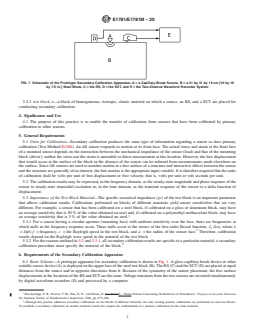
FIG. 1 Schematic of the Prototype Secondary Calibration Apparatus: A = a Capillary-Break Source, B = a 41 by 41 by 19 cm [16 by 16
by 7.5 in.] Steel Block, C = the RS, D = the SUT, and E = the Two-Channel Waveform Recorder System
3.2.3 test block, n—a block of homogeneous, isotropic, elastic material on which a source, an RS, and a SUT are placed for
conducting secondary calibration.
4. Significance and Use
4.1 The purpose of this practice is to enable the transfer of calibration from sensors that have been calibrated by primary
calibration to other sensors.
5. General Requirements
5.1 Units for Calibration—Secondary calibration produces the same type of information regarding a sensor as does primary
calibration (Test Method E1106). An AE sensor responds to motion at its front face. The actual stress and strain at the front face
of a mounted sensor depends on the interaction between the mechanical impedance of the sensor (load) and that of the mounting
block (driver); neither the stress nor the strain is amenable to direct measurement at this location. However, the free displacement
that would occur at the surface of the block in the absence of the sensor can be inferred from measurements made elsewhere on
the surface. Since AE sensors are used to monitor motion at a free surface of a structure and interactive effects between the sensor
and the structure are generally of no interest, the free motion is the appropriate input variable. It is therefore required that the units
of calibration shall be volts per unit of free displacement or free velocity, that is, volts per unit or volt seconds per unit.
5.2 The calibration results may be expressed, in the frequency domain, as the steady-state magnitude and phase response of the
sensor to steady-state sinusoidal excitation or, in the time domain, as the transient response of the sensor to a delta function of
displacement.
5.3 Importance of the Test Block Material—The specific acoustical impedance (ρc) of the test block is an important parameter
that affects calibration results. Calibrations performed on blocks of different materials yield sensor sensitivities that are very
different. For example, a sensor that has been calibrated on a steel block, if calibrated on a glass or aluminum block, may have
an average sensitivity that is 50 % of the value obtained on steel and, if calibrated on a polymethyl methacrylate block, may have
an average sensitivity that is 3 % of the value obtained on steel.
5.3.1 For a sensor having a circular aperture (mounting face) with uniform sensitivity over the face, there are frequencies at
which nulls in the frequency response occur. These nulls occur at the zeroes of the first order Bessel function, J (ka), where k
= 2πf/c,f = frequency, c = the Rayleigh speed in the test block, and a = the radius of the sensor face. Therefore, calibration
results depend on the Rayleigh wave speed in the material of the test block.
5.3.2 For the reasons outlined in 5.3 and 5.3.1, all secondary calibration results are specific to a particular material; a secondary
calibration procedure must specify the material of the block.
6. Requirements of the Secondary Calibration Apparatus
6.1 Basic Scheme—A prototype apparatus for secondary calibration is shown in Fig. 1. A glass-capillary-break device or other
suitable source device (A) is deployed on the upper face of the steel test block (B). The RS (C) and the SUT (D) are placed at equal
distances from the source and in opposite directions from it. Because of the symmetry of the sensor placement, the free surface
displacements at the locations of the RS and SUT are the same. Voltage transients from the two sensors are recorded simultaneously
by digital waveform recorders (E) and processed by a computer.
Breckenridge, F. R., Proctor, T. M., Hsu, N. N., and Eitzen, D. G.,“ SomeG., “Some Notions Concerning the Behavior of Transducers,” Progress in Acoustic Emission
III, Japanese Society of Nondestructive Inspection, 1986, pp. 675–684.
Although this practice addresses secondary calibrations on test blocks of different materials, the only existing primary calibrations are performed on steel test blocks.
To establish a secondary calibration on another material would also require the establishment of a primary calibration for the same material.
E1781/E1781M − 20
6.1.1 Actual dynamic displacements of the surface of the test block at the locations of the RS and SUT may be different because
the RS and SUT may present different load impedances to the test block. However, consistent with the definitions used for primary
and secondary calibration, the loading effects of both sensors are considered to be characteristics of the sensors themselves, and
calibration results are stated in terms of the free displacement of the block surface.
6.2 Qualification of The Test Block—The prototype secondary calibration apparatus was designed for sensors intended for use
on steel. The test block is therefore made of steel (hot rolled steel A36 material). For a steel block, it is recommended that
specification to the metal supplier require that the block be stress relieved at 566 °C [1050 °F] or greater and that the stress relief
be conducted subsequent to any flame cutting.
6.2.1 For a steel test block, there must be two parallel faces with a thickness, measured between the faces, of at least 18 cm
[7 in.]. The volume of the block must contain a cylinder that is 40 cm [16 in.] in diameter by 18 cm [7 in.] long, and the two faces
must be flat and parallel to within 0.12 mm [0.005 in.] overall (60.06 mm [0.0025 in.]).
6.2.2 For a steel test block, the top surface of the block (the working face) must have a RMS roughness value no greater than
1 μm [40 μin.], as determined by at least three profilometer traces taken in the central region of the block. The bottom surface of
the block must have a RMS roughness value no greater than 4 μm [160 μin.]. The reason for having a specification on the bottom
surface is to ensure reasonable ability to perform time-of-flight measurements of the speed of sound in the block.
6.2.3 For blocks of materials other than steel, minimum dimensional requirements, dimensional accuracies, and the roughness
limitation must be scaled in proportion to the longitudinal sound speed in the block material relative to that in steel.
6.2.4 The top face of the block shall be the working face on which the source, RS, and SUT are located. These locations shall
be chosen near the center so as to maximize the distances of source and receivers to the nearest edge of the face. For a test block
of any material, the distance from the source to the RS and the distance from the source to the SUT must each be 100 6 2 mm
[4 6 0.1 in.] (the same as that specified for primary calibration).
6.2.5 The block must undergo longitudinal ultrasonic examination for indications at some frequency between 2 and 5 MHz. The
guidelines of Practice E114 should be followed. The block must contain no indications that give a reflection greater than 12 % of
the first back wall reflection.
6.2.6 The material of the block must be highly uniform, as determined by pulse-echo, time-of-flight measurements of both
longitudinal and shear waves. These measurements must be made through the block at a minimum of seven locations spaced
regularly over the surface. The recommended method of measurement is pulse-echo overlap using precisely controlled delays
between sweeps. See Practice E494. It is recommended that the pulse-echo sensors have their main resonances in the range
between 2 and 5 MHz. For the seven (or more) longitudinal measurements, the maximum difference between the individual values
of the measurements must be no more than 0.3 % of the average value. The shear measurements must satisfy the same criterion.
6.3 Source—The source used in the prototype secondary calibration system is a breaking glass capillary. Capillaries are prepared
by drawing down 6 mm Pyrex tubing to a diameter of 0.1 to 0.25 mm. Source events are generated by squeezing the capillary
tubing against the test block using pressure from the side of a 4 mm diameter glass rod held in the hand. Since the capillary is a
line source, its length must be oriented at 90 degrees to the direction of propagation to the sensosrs.
6.3.1 In general, a secondary calibration source may be any small aperture (less than 3 mm [0.12 in.]) device that can provide
sufficient energy to make the calibration measurements conveniently at all frequencies within the range of 100 kHz to 1 MHz.
Depending on the technique of the calibration, the source could be a transient device such as a glass-capillary-break apparatus, a
spark apparatus, a pulse-driven transducer (with pulse rise time less than one (1) micro-second), or a continuous wave device such
as a National Institute for Standards and Technology (NIST) Conical Transducer driven by a tone burst generator. If the RS and
SUT are to be tested on the block sequentially instead of simultaneously, then it must be established that the source is repeatable
within 2 %.
6.4 Reference Sensor—The RS in the prototype secondary calibration system is an NIST Conical Transducer.
6.4.1 In general, the RS must have a frequency response, as determined by primary calibration, that is flat over the frequency
range of 100 kHz to 1 MHz within a total overall variation of 20 dB either as a velocity transducer or a displacement transducer.
For a valid calibration, the RS must have been calibrated on the same material as the material that the SUT is to be used on. It
is preferred that the RS be of a type that has a small aperture and that its frequency response be as smooth as possible. See 5.3.1
and Figs. 2 and 3 concerning the aperture effect.
6.5 Sensor Under Testing—The SUT must be tested under conditions that are the same as those intended for the SUT when in
use. The couplant, the electrical load applied to the SUT terminals, and the hold-down force must all be the same as those that will
be applied to the SUT when in use. The preferred couplant is low-viscosity machine oil, and the preferred hold-down force is 9.8
N [2.2 lbf]. These conditions are all the same as for primary calibration.
6.6 Data Recording and Processing Equipment—For methods using transient sources, the instrumentation would include a
computer and two synchronized transient recorders, one for the RS channel and one for the SUT channel. The transient recorders
Burks, B.,“Re-examination of NIST Acoustic Emission Sensor Calibration: Part I – Modeling the Loading from Glass Capillary Fracture,” Journal of Acoustic Emission,
Vol 29, pp. 167–174.
E1781/E1781M − 20
NOTE 1—The nulls in the response curves are predicted by the aperture effect described in 5.3.1. The worst case error is approximately 3.6 dB and
occurs at the first aperture null (0.3 MHz). Most of the data agree within 1 dB.
FIG. 2 Comparison of Primary and Secondary Calibration Results for a SUT Having a Nominal Diameter of 12.7 mm [0.5 in.]
FIG. 3 Comparison of Primary and Secondary Calibration Results for Another SUT Having a Nominal Diameter of 12.7 mm [0.5 in.];
Worst
...