


ASTM F431-21
(Specification)Standard Specification for Air Performance Measurement Plenum Chamber for Vacuum Cleaners
Standard Specification for Air Performance Measurement Plenum Chamber for Vacuum Cleaners
ABSTRACT
This specification covers the acceptable design details for the plenum chamber used in specified air performance measurement tests for vacuum cleaners. Plenum chambers conforming to this specification shall be fabricated in accordance with the dimensions, tolerances, and notes indicated for the following components: plenum chamber assembly; orifice plate; orifice plate holder and assembly; manometer connection; and acceptable machined edges for orifice plates.
SCOPE
1.1 This specification covers the acceptable details and tolerances for the plenum chamber used in specified air performance measurement tests for vacuum cleaners.
1.2 The plenum chamber is designed for vacuum measurements only. (Warning—The plenum chamber has been shown to accurately determine maximum air power values at various test points for vacuum cleaners. There is a possibility that the airflow values measured with orifices larger than 2 in. at high flow rates may be erroneous due to the proximity of the top and bottom surfaces to the orifice plate inlet.)
1.3 The values stated in inch-pound units are to be regarded as standard. The values given in parentheses are mathematical conversions to SI units that are provided for information only and are not considered standard.
1.4 This international standard was developed in accordance with internationally recognized principles on standardization established in the Decision on Principles for the Development of International Standards, Guides and Recommendations issued by the World Trade Organization Technical Barriers to Trade (TBT) Committee.
General Information
- Status
- Published
- Publication Date
- 31-Jan-2021
- Technical Committee
- F11 - Vacuum Cleaners
- Drafting Committee
- F11.22 - Air Performance
Relations
- Effective Date
- 01-Sep-2017
- Effective Date
- 01-Sep-2017
- Effective Date
- 01-Sep-2017
- Refers
ASTM F558-17 - Standard Test Method for Measuring Air Performance Characteristics of Vacuum Cleaners - Effective Date
- 01-Mar-2017
- Effective Date
- 01-Oct-2016
- Effective Date
- 01-Oct-2016
- Refers
ASTM F558-13 - Standard Test Method for Measuring Air Performance Characteristics of Vacuum Cleaners - Effective Date
- 01-May-2013
- Effective Date
- 01-Nov-2011
- Refers
ASTM F558-11 - Standard Test Method for Measuring Air Performance Characteristics of Vacuum Cleaners - Effective Date
- 01-Nov-2011
- Effective Date
- 01-Nov-2011
- Effective Date
- 01-Apr-2006
- Refers
ASTM F558-06 - Standard Test Method for Measuring Air Performance Characteristics of Vacuum Cleaners - Effective Date
- 01-Apr-2006
- Effective Date
- 01-Apr-2006
- Effective Date
- 01-Oct-2004
- Refers
ASTM F558-03 - Standard Test Method for Measuring Air Performance Characteristics of Vacuum Cleaners - Effective Date
- 10-Mar-2003
Overview
ASTM F431-21: Standard Specification for Air Performance Measurement Plenum Chamber for Vacuum Cleaners, published by ASTM International, establishes the dimensional and fabrication requirements for plenum chambers used in air performance measurement tests of vacuum cleaners. Plenum chambers designed and constructed per this specification facilitate accurate, standardized measurements for vacuum cleaner air power and airflow, supporting consistent product evaluation and compliance within the appliance manufacturing industry.
This standard covers the necessary details and tolerances for the plenum chamber assembly, orifice plate, orifice plate holder, manometer connection, and machined edges of the orifice plates. The plenum chamber, as described in ASTM F431-21, is intended solely for vacuum measurement applications and is essential for reliable laboratory or production-line test setups.
Key Topics
- Design and Fabrication Requirements: The standard outlines specific dimensions, tolerances, materials, and construction notes for all plenum chamber components, including assemblies, plates, gaskets, and connectors.
- Measurement Accuracy: ASTM F431-21 emphasizes the importance of smooth, clean internal surfaces, airtight joints, and proper sealing to prevent leaks and ensure valid test results.
- Use of Orifice Plates: Details are provided for orifice plates, including dimensional tolerances, acceptable machined edges, material requirements, and installation guidelines to facilitate precise airflow testing.
- Manometer Connection: Specifications include manometer port dimensions and best practices for interfacing with pressure measurement devices to minimize measurement error.
- Safety and Limitations: The standard warns that airflow measurements taken through orifices larger than 2 inches at high flow rates may be compromised due to geometric constraints, highlighting the need for adherence to application-specific guidelines.
Applications
ASTM F431-21 is widely used in:
- Vacuum Cleaner Manufacturing: To design, produce, and verify vacuum cleaners with consistent and accurate air performance characteristics.
- R&D Laboratories: Supporting product development and comparative testing by providing a uniform approach to airflow measurement.
- Quality Control and Compliance Testing: Ensuring that vacuum cleaners meet industry standards, regulatory requirements, and manufacturer claims for air power and airflow.
- Test Method Support: Facilitates the use of related ASTM methods (such as ASTM F558 and ASTM F820) by specifying the necessary test equipment and its configuration.
- Central Vacuum Systems: Ensuring compatibility with central vacuum testing protocols.
By specifying a standard air performance measurement plenum chamber, this specification helps manufacturers and laboratories achieve repeatable and comparable test outcomes, forming a foundation for product certification, design validation, and regulatory compliance in the global vacuum cleaner industry.
Related Standards
- ASTM F558 – Test Method for Measuring Air Performance Characteristics of Vacuum Cleaners
- ASTM F820 – Test Method for Measuring Air Performance Characteristics of Central Vacuum Cleaning Systems
- ISO 5167-2:2003 – Measurement of Fluid Flow by Means of Pressure Differential Devices Inserted in Circular Cross-Section Conduits Running Full - Part 2: Orifice Plates
These documents complement ASTM F431-21 by providing measurement methods, additional technical guidance, and international harmonization for testing air performance in vacuum cleaners and related equipment.
Keywords: plenum chamber, vacuum cleaner, air performance measurement, orifice plate, ASTM F431-21, airflow testing, manometer connection, vacuum test equipment, quality control, laboratory testing.
Buy Documents
ASTM F431-21 - Standard Specification for Air Performance Measurement Plenum Chamber for Vacuum Cleaners
REDLINE ASTM F431-21 - Standard Specification for Air Performance Measurement Plenum Chamber for Vacuum Cleaners
Frequently Asked Questions
ASTM F431-21 is a technical specification published by ASTM International. Its full title is "Standard Specification for Air Performance Measurement Plenum Chamber for Vacuum Cleaners". This standard covers: ABSTRACT This specification covers the acceptable design details for the plenum chamber used in specified air performance measurement tests for vacuum cleaners. Plenum chambers conforming to this specification shall be fabricated in accordance with the dimensions, tolerances, and notes indicated for the following components: plenum chamber assembly; orifice plate; orifice plate holder and assembly; manometer connection; and acceptable machined edges for orifice plates. SCOPE 1.1 This specification covers the acceptable details and tolerances for the plenum chamber used in specified air performance measurement tests for vacuum cleaners. 1.2 The plenum chamber is designed for vacuum measurements only. (Warning—The plenum chamber has been shown to accurately determine maximum air power values at various test points for vacuum cleaners. There is a possibility that the airflow values measured with orifices larger than 2 in. at high flow rates may be erroneous due to the proximity of the top and bottom surfaces to the orifice plate inlet.) 1.3 The values stated in inch-pound units are to be regarded as standard. The values given in parentheses are mathematical conversions to SI units that are provided for information only and are not considered standard. 1.4 This international standard was developed in accordance with internationally recognized principles on standardization established in the Decision on Principles for the Development of International Standards, Guides and Recommendations issued by the World Trade Organization Technical Barriers to Trade (TBT) Committee.
ABSTRACT This specification covers the acceptable design details for the plenum chamber used in specified air performance measurement tests for vacuum cleaners. Plenum chambers conforming to this specification shall be fabricated in accordance with the dimensions, tolerances, and notes indicated for the following components: plenum chamber assembly; orifice plate; orifice plate holder and assembly; manometer connection; and acceptable machined edges for orifice plates. SCOPE 1.1 This specification covers the acceptable details and tolerances for the plenum chamber used in specified air performance measurement tests for vacuum cleaners. 1.2 The plenum chamber is designed for vacuum measurements only. (Warning—The plenum chamber has been shown to accurately determine maximum air power values at various test points for vacuum cleaners. There is a possibility that the airflow values measured with orifices larger than 2 in. at high flow rates may be erroneous due to the proximity of the top and bottom surfaces to the orifice plate inlet.) 1.3 The values stated in inch-pound units are to be regarded as standard. The values given in parentheses are mathematical conversions to SI units that are provided for information only and are not considered standard. 1.4 This international standard was developed in accordance with internationally recognized principles on standardization established in the Decision on Principles for the Development of International Standards, Guides and Recommendations issued by the World Trade Organization Technical Barriers to Trade (TBT) Committee.
ASTM F431-21 is classified under the following ICS (International Classification for Standards) categories: 97.080 - Cleaning appliances. The ICS classification helps identify the subject area and facilitates finding related standards.
ASTM F431-21 has the following relationships with other standards: It is inter standard links to ASTM F820-17, ASTM F558-17a, ASTM F2105-17, ASTM F558-17, ASTM F2105-16, ASTM F820-16, ASTM F558-13, ASTM F2105-11, ASTM F558-11, ASTM F820-11, ASTM F820-06, ASTM F558-06, ASTM F2105-06, ASTM F2105-04, ASTM F558-03. Understanding these relationships helps ensure you are using the most current and applicable version of the standard.
ASTM F431-21 is available in PDF format for immediate download after purchase. The document can be added to your cart and obtained through the secure checkout process. Digital delivery ensures instant access to the complete standard document.
Standards Content (Sample)
This international standard was developed in accordance with internationally recognized principles on standardization established in the Decision on Principles for the
Development of International Standards, Guides and Recommendations issued by the World Trade Organization Technical Barriers to Trade (TBT) Committee.
Designation:F431 −21
Standard Specification for
Air Performance Measurement Plenum Chamber for Vacuum
Cleaners
ThisstandardisissuedunderthefixeddesignationF431;thenumberimmediatelyfollowingthedesignationindicatestheyearoforiginal
adoption or, in the case of revision, the year of last revision.Anumber in parentheses indicates the year of last reapproval.Asuperscript
epsilon (´) indicates an editorial change since the last revision or reapproval.
1. Scope F820 Test Method for Measuring Air Performance Charac-
teristics of Central Vacuum Cleaning Systems
1.1 This specification covers the acceptable details and
F2105 Test Method for MeasuringAir Performance Charac-
tolerances for the plenum chamber used in specified air
teristics of Vacuum Cleaner Motor/Fan Systems
performance measurement tests for vacuum cleaners.
2.2 ASTM Adjunct:
1.2 The plenum chamber is designed for vacuum measure- 3
Orifice Plate Holder Details (F431)
ments only. (Warning—The plenum chamber has been shown
2.3 ISO Standard:
to accurately determine maximum air power values at various
ISO 5167-2:2003 Measurement of fluid flow by means of
test points for vacuum cleaners. There is a possibility that the
pressure differential devices inserted in circular cross-
airflow values measured with orifices larger than 2 in. at high
section conduits running full — Part 2: Orifice plates
flowratesmaybeerroneousduetotheproximityofthetopand
bottom surfaces to the orifice plate inlet.)
3. Details
1.3 The values stated in inch-pound units are to be regarded
3.1 Plenum chambers conforming to this specification shall
as standard. The values given in parentheses are mathematical
be fabricated in accordance with the dimensions, tolerances,
conversions to SI units that are provided for information only
and notes shown in the following figures:
and are not considered standard.
3.1.1 Plenum chamber assembly, see Fig. 1.
3.1.2 Orifice plate detail, see Fig. 2.
1.4 This international standard was developed in accor-
3.1.3 Orifice plate holder and assembly, see Fig. 3.
dance with internationally recognized principles on standard-
ization established in the Decision on Principles for the
3.2 Manometer connection detail, see Fig. 1(f), Note 17.
Development of International Standards, Guides and Recom-
mendations issued by the World Trade Organization Technical
4. Orifice Plates
Barriers to Trade (TBT) Committee.
4.1 Orifice plates conforming to this specification shall be
fabricated in accordance to the dimensions, tolerances, and
2. Referenced Documents
notes shown in the following figure:
2.1 ASTM Standards:
4.1.1 Orifice plate dimensional detail, see Fig. 2(a).
F558 Test Method for Measuring Air Performance Charac-
4.1.2 Acceptable machined edges for orifice plates, see Fig.
teristics of Vacuum Cleaners
2(b).
5. Keywords
This specification is under the jurisdiction of ASTM Committee F11 on
Vacuum Cleaners and is the direct responsibility of Subcommittee F11.22 on Air
5.1 air performance; orifice plate; plenum chamber; vacuum
Performance.
cleaner
Current edition approved Feb. 1, 2021. Published February 2021. Originally
approved in 1975. Last previous edition approved in 2013 as F431 – 04 (2013).
DOI: 10.1520/F0431-21.
2 3
For referenced ASTM standards, visit the ASTM website, www.astm.org, or Available from ASTM International Headquarters. Order Adjunct No.
contact ASTM Customer Service at service@astm.org. For Annual Book of ASTM ADJF4031. Original adjunct produced in 1987.
Standards volume information, refer to the standard’s Document Summary page on Available from American National Standards Institute (ANSI), 25 W. 43rd St.,
the ASTM website. 4th Floor, New York, NY 10036, http://www.ansi.org.
Copyright © ASTM International, 100 Barr Harbor Drive, PO Box C700, West Conshohocken, PA 19428-2959. United States
F431−21
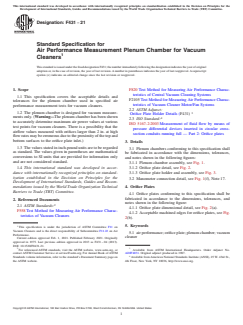
FIG. 1(a) Plenum Chamber (Material: see Note8)
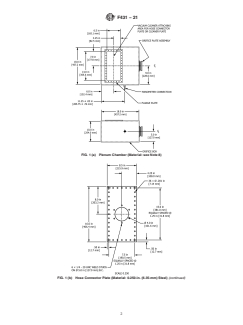
FIG. 1(b) Hose Connector Plate (Material: 0.250-in. (6.35-mm) Steel) (continued)
F431−21
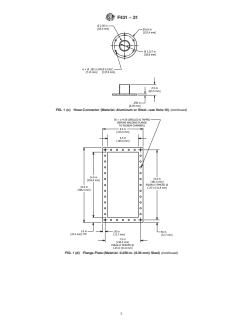
FIG. 1(c) Hose Connector (Material: Aluminum or Steel—see Note16) (continued)
FIG. 1(d) Flange Plate (Material: 0.250-in. (6.35-mm) Steel) (continued)
F431−21
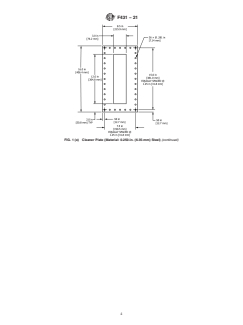
FIG. 1(e) Cleaner Plate (Material: 0.250-in. (6.35-mm) Steel) (continued)
F431−21
NOTE 1—All dimensions are measured from inside surfaces.
NOTE 2—Interior must be clean, smooth, and free of projections or recesses on walls or attachment openings. Internal bracing should not be used to
support plenum chamber walls.
NOTE 3—Attachment port edge to be smooth and well rounded.
NOTE 4—Orifice box must withstand 180 in. of water (336 mm Hg) negative static pressure without significant distortion of walls or joints after
chamber is completely fabricated and attachment made.
NOTE 5—All joints and connections must be airtight.
NOTE 6—Tolerances (unless otherwise specified): one-place decimal 60.031 in. (0.080 mm); two-place decimal 60.01 in. (0.25 mm); three-place
decimal 60.005 in. (0.13 mm).
NOTE 7—Flange plate and manometer connection to be welded to chamber completely around the sides.
NOTE 8—Plenum chamber minimum material specification 0.187 in. (4.75 mm) thick low carbon steel.
NOTE 9—0.060 in. (1.52 mm) thick rubber seal dimensioned similar to flange plate should be used to seal cleaner and hose connector plates.
NOTE 10—Bore 0.375 in. (9.54 mm) through hole in plenum chamber for manometer connection and 3.000-in. (76.20-mm) diameter hole for orifice
plate assembly.
NOTE 11—All mating holes to be concentric to within 0.005 in. (0.13 mm) T.I.R. after assembly.
NOTE 12—A 0.060-in. (1.52-mm) thick rubber seal dimensioned similar to hose connector should be used to seal the hose connector plate to hose
connector.
NOTE 13—Six ⁄4-20 UNC-2B hex nuts or wing nuts should be used to fasten hose connector to hose connector plate.
NOTE 14—Thirty-six ⁄4-20 UNC-2A screws should be used to fasten either the cleaner plate or hose connector flange plate.
NOTE 15—Alternative materials, thicknesses, and construction methods may be used; however, requirements of Notes 2 and 4 and all internal
dimensions must be complied with.
NOTE 16—Hose connector internal diameter and length may be changed to accommodate specific hose construction.
NOTE 17—If a water column manometer or electronic pressure gauge without integration is used, it is recommended that the inner diameter of the
manometer connection
...
This document is not an ASTM standard and is intended only to provide the user of an ASTM standard an indication of what changes have been made to the previous version. Because
it may not be technically possible to adequately depict all changes accurately, ASTM recommends that users consult prior editions as appropriate. In all cases only the current version
of the standard as published by ASTM is to be considered the official document.
Designation: F431 − 04 (Reapproved 2013) F431 − 21 An American National Standard
Standard Specification for
Air Performance Measurement Plenum Chamber for Vacuum
Cleaners
This standard is issued under the fixed designation F431; the number immediately following the designation indicates the year of original
adoption or, in the case of revision, the year of last revision. A number in parentheses indicates the year of last reapproval. A superscript
epsilon (´) indicates an editorial change since the last revision or reapproval.
1. Scope
1.1 This specification covers the acceptable details and tolerances for the plenum chamber used in specified air performance
measurement tests for vacuum cleaners.
1.2 The plenum chamber is designed for vacuum measurements only. (Warning—The plenum chamber has been shown to
accurately determine maximum air power values at various test points for vacuum cleaners. There is a possibility that the airflow
values measured with orifices larger than 2 in. at high flow rates may be erroneous due to the proximity of the top and bottom
surfaces to the orifice plate inlet.)The plenum chamber has been shown to accurately determine maximum air power values at
various test points for vacuum cleaners. There is a possibility that the airflow values measured with orifices larger than 2 in. at high
flow rates may be erroneous due to the proximity of the top and bottom surfaces to the orifice plate inlet.)
1.3 The values stated in inch-pound units are to be regarded as standard. The values given in parentheses are mathematical
conversions to SI units that are provided for information only and are not considered standard.
1.4 This international standard was developed in accordance with internationally recognized principles on standardization
established in the Decision on Principles for the Development of International Standards, Guides and Recommendations issued
by the World Trade Organization Technical Barriers to Trade (TBT) Committee.
2. Referenced Documents
2.1 ASTM Standards:
F558 Test Method for Measuring Air Performance Characteristics of Vacuum Cleaners
F820 Test Method for Measuring Air Performance Characteristics of Central Vacuum Cleaning Systems
F2105
2.2 ASTM Adjunct:
Orifice Plate Holder Details (F431)
2.3 ISO Standard:
ISO 5167-2:2003 Measurement of fluid flow by means of pressure differential devices inserted in circular cross-section conduits
running full — Part 2: Orifice plates
This specification is under the jurisdiction of ASTM Committee F11 on Vacuum Cleaners and is the direct responsibility of Subcommittee F11.22 on Air Performance.
Current edition approved May 1, 2013Feb. 1, 2021. Published July 2013February 2021. Originally approved in 1975. Last previous edition approved in 20082013 as
F431 – 04 (2008).(2013). DOI: 10.1520/F0431-04R13.10.1520/F0431-21.
For referenced ASTM standards, visit the ASTM website, www.astm.org, or contact ASTM Customer Service at service@astm.org. For Annual Book of ASTM Standards
volume information, refer to the standard’s Document Summary page on the ASTM website.
Available from ASTM International Headquarters. Order Adjunct No. ADJF4031. Original adjunct produced in 1987.
Available from American National Standards Institute (ANSI), 25 W. 43rd St., 4th Floor, New York, NY 10036, http://www.ansi.org.
Copyright © ASTM International, 100 Barr Harbor Drive, PO Box C700, West Conshohocken, PA 19428-2959. United States
F431 − 21
3. Details
3.1 Plenum chambers conforming to this specification shall be fabricated in accordance with the dimensions, tolerances, and notes
shown in the following figures:
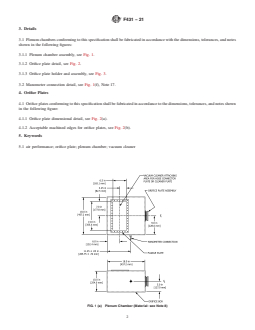
3.1.1 Plenum chamber assembly, see Fig. 1.
3.1.2 Orifice plate detail, see Fig. 2.
3.1.3 Orifice plate holder and assembly, see Fig. 3.
3.2 Manometer connection detail, see Fig. 1(f), Note 17.
4. Orifice Plates
4.1 Orifice plates conforming to this specification shall be fabricated in accordance to the dimensions, tolerances, and notes shown
in the following figure:
4.1.1 Orifice plate dimensional detail, see Fig. 2(a).
4.1.2 Acceptable machined edges for orifice plates, see Fig. 2(b).
5. Keywords
5.1 air performance; orifice plate; plenum chamber; vacuum cleaner
FIG. 1 (a) Plenum Chamber (Material: see Note 8)
F431 − 21
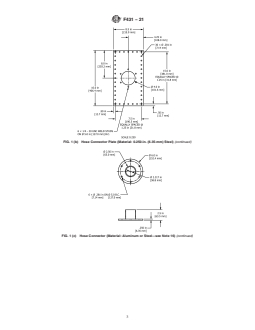
FIG. 1 (b) Hose Connector Plate (Material: 0.250-in. (6.35-mm) Steel) (continued)
FIG. 1 (c) Hose Connector (Material: Aluminum or Steel—see Note 16) (continued)
F431 − 21
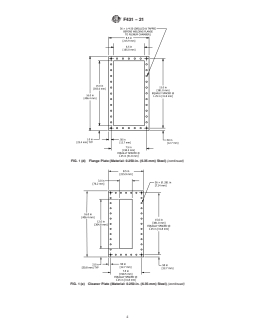
FIG. 1 (d) Flange Plate (Material: 0.250-in. (6.35-mm) Steel) (continued)
FIG. 1 (e) Cleaner Plate (Material: 0.250-in. (6.35-mm) Steel) (continued)
F431 − 21
NOTE 1—All dimensions are measured from inside surfaces.
NOTE 2—Interior must be clean, smooth, and free of projections or recesses on walls or attachment openings. Internal bracing should not be used to
support plenum chamber walls.
NOTE 3—Attachment port edge to be smooth and well rounded.
NOTE 4—Orifice box must withstand 180 in. of water (336 mm Hg) negative static pressure without significant distortion of walls or joints after
chamber is completely fabricated and attachment made.
NOTE 5—All joints and connections must be airtight.
NOTE 6—Tolerances (unless otherwise specified): one-place decimal 60.031 in. (0.080 mm); two-place decimal 60.01 in. (0.25 mm); three-place
decimal 60.005 in. (0.13 mm).
NOTE 7—Flange plate and manometer connection to be welded to chamber completely around the sides.
NOTE 8—Plenum chamber minimum material specification 0.187 in. (4.75 mm) thick low carbon steel.
NOTE 9—0.060 in. (1.52 mm) thick rubber seal dimensioned similar to flange plate should be used to seal cleaner and hose connector plates.
NOTE 10—Bore 0.375 in. (9.54 mm) through hole in plenum chamber for manometer connection and 3.000-in. (76.20-mm) diameter hole for orifice
plate assembly.
NOTE 11—All mating holes to be concentric to within 0.005 in. (0.13 mm) T.I.R. after assembly.
NOTE 12—A 0.060-in. (1.52-mm) thick rubber seal dimensioned similar to hose connector should be used to seal the hose connector plate to hose
connector.
NOTE 13—Six ⁄4-20 UNC-2B hex nuts or wing nuts should be used to fasten hose connector to hose connector plate.
NOTE 14—Thirty-six ⁄4-20 UNC-2A screws should be used to fasten either the cleaner plate or hose connector flange plate.
NOTE 15—Alternative materials, thicknesses, and construction methods may be used; however, requirements of Notes 2 and 4 and all internal
dimensions must be complied with.
NOTE 16—Hose connector internal diameter and length may b
...
Questions, Comments and Discussion
Ask us and Technical Secretary will try to provide an answer. You can facilitate discussion about the standard in here.
Loading comments...