

ASTM E1054-22
(Practice)Standard Practices for Evaluation of Inactivators of Antimicrobial Agents
General Information
- Abstract
SIGNIFICANCE AND USE
5.1 The effectiveness of antimicrobial agents incorporated into disinfectants, sanitizers, and antiseptics is measured by their ability to kill microorganisms within a specified contact time. Hence, accurate determination of antimicrobial effectiveness requires complete and immediate inactivation (neutralization) of the antimicrobial agent. Inefficient or incomplete neutralization will permit killing or inactivation of microorganisms to continue beyond the experimental exposure time, resulting in an overestimation of antimicrobial activity.
5.2 The neutralization methods commonly used in antimicrobial effectiveness evaluations are chemical inactivation, dilution, and filtration. All critical parameters of an antimicrobial effectiveness evaluation—for example, media, equipment, microorganism(s), and temperature of solutions—must be duplicated in the performance of selected neutralization procedure.
5.3 The neutralization evaluation must include at least three replications (five replications in Section 9) so that a statistical analysis of the microbial recovery data can be performed. The number of replicates used in the evaluation depends on the statistical significance required for the expected results, the variability encountered in the data, and the relative effectiveness of the neutralization procedure.
5.4 A limitation of these evaluation procedures is that they use microorganisms that have not been exposed to an antimicrobial agent. Under experimental conditions, cells exposed to neutralization procedures are likely to be damaged to different degrees by the antimicrobial agent. Sublethal injury may be a factor in recovery, and the effect of the neutralization procedure on recovery of injured organisms should be examined. This method is not intended to assess recovery of injured organisms.
Note 3: Ideally, all microorganisms used in the antimicrobial effectiveness evaluation should be tested in the neutralization assay. However, representative organism...
SCOPE
1.1 These test procedures are used to determine the effectiveness of methodologies procedures and materials intended for inactivating (neutralizing, quenching) the microbicidal properties of antimicrobial agents; to ensure that no components of the neutralizing procedures and materials, themselves, exert an inhibitory effect on microorganisms targeted for recovery; and to demonstrate that the antimicrobial chemistry tested is microbicidal.
1.2 Knowledge of microbiological and statistical techniques is required for these procedures.
Note 1: These methods are not suitable when testing the virucidal activity of microbicides (see Test Method E1482).
1.3 The values stated in SI units are to be regarded as standard. No other units of measurement are included in this standard.
1.4 This standard does not purport to address all of the safety concerns, if any, associated with its use. It is the responsibility of the user of this standard to establish appropriate safety, health, and environmental practices and determine the applicability of regulatory limitations prior to use.
1.5 This international standard was developed in accordance with internationally recognized principles on standardization established in the Decision on Principles for the Development of International Standards, Guides and Recommendations issued by the World Trade Organization Technical Barriers to Trade (TBT) Committee.
- Status
- Published
- Publication Date
- 30-Sep-2022
- Technical Committee
- E35 - Pesticides, Antimicrobials, and Alternative Control Agents
- Drafting Committee
- E35.15 - Antimicrobial Agents
Overview
ASTM E1054-22: Standard Practices for Evaluation of Inactivators of Antimicrobial Agents establishes test procedures to determine the effectiveness of methodologies, procedures, and materials intended for inactivating or neutralizing antimicrobial agents. These practices are critical in antimicrobial effectiveness testing for disinfectants, sanitizers, and antiseptics to ensure that results accurately reflect the true microbicidal activity within a defined exposure time. Proper neutralization prevents carryover effects and avoids overestimation of antimicrobial efficacy by halting antimicrobial activity at the conclusion of the intended exposure.
Compliance with ASTM E1054-22 enables laboratories, product developers, and quality assurance professionals to standardize the evaluation of neutralizers used in microbiological assays.
Key Topics
Antimicrobial Neutralization:
The standard covers several methods for inactivating antimicrobial agents:- Chemical neutralization
- Dilution
- Membrane filtration
Significance of Immediate Inactivation:
Accurate measurement of antimicrobial effectiveness requires complete, rapid neutralization to prevent continued action after the exposure time.Replicates and Statistical Analysis:
Neutralizer effectiveness must be evaluated with statistical significance, requiring at least three to five replicates based on the chosen procedure.Assessment of Neutralizer Toxicity:
Procedures ensure that neutralizers do not themselves inhibit or affect the recovery of target microorganisms.Limitations:
Standard tests are not designed to evaluate recovery of injured organisms or to assess virucidal activity (see ASTM E1482 for virucidal testing).Data Interpretation:
Results are analyzed statistically (using t-tests, ANOVA, or Chi-square) to confirm equivalency in microbial recovery between test conditions and controls.
Applications
ASTM E1054-22 is widely used in several scenarios involving antimicrobial agents:
Validation of Disinfectants and Sanitizers:
Ensures that neutralizers used in effectiveness tests do not contribute to biased reductions in microbial counts.Antiseptic Product Testing:
Essential for products requiring demonstration of microbicidal efficacy, such as hand sanitizers and wound cleansers.Environmental and Industrial Hygiene:
Used in quality control for antimicrobial agents in settings such as healthcare, food processing, pharmaceuticals, and water treatment.Product Development and Regulatory Submission:
Supports claims for antimicrobial activity by providing reliable, reproducible, and internationally recognized test methods.Laboratory Quality Control:
Ensures consistency and reliability in testing by standardizing materials, procedures, and result interpretation.
Related Standards
For comprehensive antimicrobial testing, the following ASTM standards should be considered:
- ASTM E645: Practice for the Evaluation of Microbicides Used in Cooling Water Systems
- ASTM E1115: Test Method for Evaluation of Surgical Hand Scrub Formulations
- ASTM E1482: Practice for the Use of Gel Filtration Columns for Cytotoxicity Reduction and Neutralization (also used for virucidal activity testing)
- ASTM E2756: Terminology Relating to Antimicrobial and Antiviral Agents
Practical Value
Implementing ASTM E1054-22 enhances the reliability and international acceptability of antimicrobial agent testing by:
Reducing Experimental Errors:
Prevents overestimation of alive microorganisms due to incomplete neutralization.Supporting Regulatory Compliance:
Contributes to meeting regulatory requirements for product approval and labeling in global markets.Ensuring Accurate Product Claims:
Confirms that measured antimicrobial effects result solely from the tested agent, not residual activity or neutralizer interference.
Keywords: ASTM E1054-22, antimicrobial neutralization, inactivation, efficacy testing, disinfectants, antiseptics, neutralizer toxicity, laboratory quality assurance, statistical analysis of microbiological data, antimicrobial agents
Relations
- Effective Date
- 01-Nov-2019
- Effective Date
- 01-Oct-2018
- Effective Date
- 01-Apr-2018
- Effective Date
- 01-Nov-2017
- Effective Date
- 01-Apr-2013
- Effective Date
- 01-Oct-2012
- Effective Date
- 01-Aug-2011
- Effective Date
- 01-May-2010
- Effective Date
- 01-Apr-2010
- Refers
ASTM E645-07 - Standard Test Method for Efficacy of Microbicides Used in Cooling Water Systems - Effective Date
- 01-Apr-2007
- Effective Date
- 01-Oct-2004
- Effective Date
- 01-Apr-2004
- Effective Date
- 10-Oct-2002
- Effective Date
- 10-Feb-2002
- Effective Date
- 10-Oct-1998
Get Certified
Connect with accredited certification bodies for this standard

BSI Group
BSI (British Standards Institution) is the business standards company that helps organizations make excellence a habit.

TÜV Rheinland
TÜV Rheinland is a leading international provider of technical services.

TÜV SÜD
TÜV SÜD is a trusted partner of choice for safety, security and sustainability solutions.
Sponsored listings
Frequently Asked Questions
ASTM E1054-22 is a standard published by ASTM International. Its full title is "Standard Practices for Evaluation of Inactivators of Antimicrobial Agents". This standard covers: SIGNIFICANCE AND USE 5.1 The effectiveness of antimicrobial agents incorporated into disinfectants, sanitizers, and antiseptics is measured by their ability to kill microorganisms within a specified contact time. Hence, accurate determination of antimicrobial effectiveness requires complete and immediate inactivation (neutralization) of the antimicrobial agent. Inefficient or incomplete neutralization will permit killing or inactivation of microorganisms to continue beyond the experimental exposure time, resulting in an overestimation of antimicrobial activity. 5.2 The neutralization methods commonly used in antimicrobial effectiveness evaluations are chemical inactivation, dilution, and filtration. All critical parameters of an antimicrobial effectiveness evaluation—for example, media, equipment, microorganism(s), and temperature of solutions—must be duplicated in the performance of selected neutralization procedure. 5.3 The neutralization evaluation must include at least three replications (five replications in Section 9) so that a statistical analysis of the microbial recovery data can be performed. The number of replicates used in the evaluation depends on the statistical significance required for the expected results, the variability encountered in the data, and the relative effectiveness of the neutralization procedure. 5.4 A limitation of these evaluation procedures is that they use microorganisms that have not been exposed to an antimicrobial agent. Under experimental conditions, cells exposed to neutralization procedures are likely to be damaged to different degrees by the antimicrobial agent. Sublethal injury may be a factor in recovery, and the effect of the neutralization procedure on recovery of injured organisms should be examined. This method is not intended to assess recovery of injured organisms. Note 3: Ideally, all microorganisms used in the antimicrobial effectiveness evaluation should be tested in the neutralization assay. However, representative organism... SCOPE 1.1 These test procedures are used to determine the effectiveness of methodologies procedures and materials intended for inactivating (neutralizing, quenching) the microbicidal properties of antimicrobial agents; to ensure that no components of the neutralizing procedures and materials, themselves, exert an inhibitory effect on microorganisms targeted for recovery; and to demonstrate that the antimicrobial chemistry tested is microbicidal. 1.2 Knowledge of microbiological and statistical techniques is required for these procedures. Note 1: These methods are not suitable when testing the virucidal activity of microbicides (see Test Method E1482). 1.3 The values stated in SI units are to be regarded as standard. No other units of measurement are included in this standard. 1.4 This standard does not purport to address all of the safety concerns, if any, associated with its use. It is the responsibility of the user of this standard to establish appropriate safety, health, and environmental practices and determine the applicability of regulatory limitations prior to use. 1.5 This international standard was developed in accordance with internationally recognized principles on standardization established in the Decision on Principles for the Development of International Standards, Guides and Recommendations issued by the World Trade Organization Technical Barriers to Trade (TBT) Committee.
SIGNIFICANCE AND USE 5.1 The effectiveness of antimicrobial agents incorporated into disinfectants, sanitizers, and antiseptics is measured by their ability to kill microorganisms within a specified contact time. Hence, accurate determination of antimicrobial effectiveness requires complete and immediate inactivation (neutralization) of the antimicrobial agent. Inefficient or incomplete neutralization will permit killing or inactivation of microorganisms to continue beyond the experimental exposure time, resulting in an overestimation of antimicrobial activity. 5.2 The neutralization methods commonly used in antimicrobial effectiveness evaluations are chemical inactivation, dilution, and filtration. All critical parameters of an antimicrobial effectiveness evaluation—for example, media, equipment, microorganism(s), and temperature of solutions—must be duplicated in the performance of selected neutralization procedure. 5.3 The neutralization evaluation must include at least three replications (five replications in Section 9) so that a statistical analysis of the microbial recovery data can be performed. The number of replicates used in the evaluation depends on the statistical significance required for the expected results, the variability encountered in the data, and the relative effectiveness of the neutralization procedure. 5.4 A limitation of these evaluation procedures is that they use microorganisms that have not been exposed to an antimicrobial agent. Under experimental conditions, cells exposed to neutralization procedures are likely to be damaged to different degrees by the antimicrobial agent. Sublethal injury may be a factor in recovery, and the effect of the neutralization procedure on recovery of injured organisms should be examined. This method is not intended to assess recovery of injured organisms. Note 3: Ideally, all microorganisms used in the antimicrobial effectiveness evaluation should be tested in the neutralization assay. However, representative organism... SCOPE 1.1 These test procedures are used to determine the effectiveness of methodologies procedures and materials intended for inactivating (neutralizing, quenching) the microbicidal properties of antimicrobial agents; to ensure that no components of the neutralizing procedures and materials, themselves, exert an inhibitory effect on microorganisms targeted for recovery; and to demonstrate that the antimicrobial chemistry tested is microbicidal. 1.2 Knowledge of microbiological and statistical techniques is required for these procedures. Note 1: These methods are not suitable when testing the virucidal activity of microbicides (see Test Method E1482). 1.3 The values stated in SI units are to be regarded as standard. No other units of measurement are included in this standard. 1.4 This standard does not purport to address all of the safety concerns, if any, associated with its use. It is the responsibility of the user of this standard to establish appropriate safety, health, and environmental practices and determine the applicability of regulatory limitations prior to use. 1.5 This international standard was developed in accordance with internationally recognized principles on standardization established in the Decision on Principles for the Development of International Standards, Guides and Recommendations issued by the World Trade Organization Technical Barriers to Trade (TBT) Committee.
ASTM E1054-22 is classified under the following ICS (International Classification for Standards) categories: 11.080.20 - Disinfectants and antiseptics; 71.100.35 - Chemicals for industrial and domestic disinfection purposes. The ICS classification helps identify the subject area and facilitates finding related standards.
ASTM E1054-22 has the following relationships with other standards: It is inter standard links to ASTM E2756-19, ASTM E645-18, ASTM E2756-18, ASTM E1115-11(2017), ASTM E645-13, ASTM E1482-12, ASTM E1115-11, ASTM E2756-10, ASTM E1115-10, ASTM E645-07, ASTM E1482-04, ASTM E1482-92(2004), ASTM E645-02a, ASTM E1115-02, ASTM E1482-92(1998). Understanding these relationships helps ensure you are using the most current and applicable version of the standard.
ASTM E1054-22 is available in PDF format for immediate download after purchase. The document can be added to your cart and obtained through the secure checkout process. Digital delivery ensures instant access to the complete standard document.
Standards Content (Sample)
This international standard was developed in accordance with internationally recognized principles on standardization established in the Decision on Principles for the
Development of International Standards, Guides and Recommendations issued by the World Trade Organization Technical Barriers to Trade (TBT) Committee.
Designation: E1054 − 22
Standard Practices for
Evaluation of Inactivators of Antimicrobial Agents
This standard is issued under the fixed designation E1054; the number immediately following the designation indicates the year of
original adoption or, in the case of revision, the year of last revision.Anumber in parentheses indicates the year of last reapproval.A
superscript epsilon (´) indicates an editorial change since the last revision or reapproval.
1. Scope E1482Practice for Use of Gel Filtration Columns for Cyto-
toxicity Reduction and Neutralization
1.1 These test procedures are used to determine the effec-
E2756Terminology Relating toAntimicrobial andAntiviral
tiveness of methodologies procedures and materials intended
Agents
for inactivating (neutralizing, quenching) the microbicidal
properties of antimicrobial agents; to ensure that no compo-
3. Terminology
nentsoftheneutralizingproceduresandmaterials,themselves,
exert an inhibitory effect on microorganisms targeted for
3.1 Definitions:
recovery; and to demonstrate that the antimicrobial chemistry
3.1.1 For definitions of terms used in these practices, refer
tested is microbicidal.
to Terminology E2756.
1.2 Knowledgeofmicrobiologicalandstatisticaltechniques 3.2 Definitions of Terms Specific to This Standard:
is required for these procedures.
3.2.1 antimicrobial effectiveness evaluation, n—a determi-
NOTE 1—These methods are not suitable when testing the virucidal
nation of microbicidal properties of an antimicrobial agent by
activity of microbicides (see Test Method E1482).
methods, such as Practice E645 and Test Method E1115.
1.3 The values stated in SI units are to be regarded as
3.2.2 CFU/mL (abbrev.)—colony-forming units of a micro-
standard. No other units of measurement are included in this
organism per millilitre of fluid.
standard.
3.2.3 neutralizer effectiveness, adj/n—ability of a neutral-
1.4 This standard does not purport to address all of the
ization procedure to inactivate or quench the microbicidal
safety concerns, if any, associated with its use. It is the
properties of an antimicrobial agent.
responsibility of the user of this standard to establish appro-
priate safety, health, and environmental practices and deter-
3.2.4 neutralizer toxicity, adj/n—any inhibitory effects a
mine the applicability of regulatory limitations prior to use.
neutralization procedure may have on the survival of a micro-
1.5 This international standard was developed in accor-
bial population.
dance with internationally recognized principles on standard-
3.2.5 test material control, adj/n—an evaluation of the
ization established in the Decision on Principles for the
activity of a test material in reducing a known population of
Development of International Standards, Guides and Recom-
microorganisms.
mendations issued by the World Trade Organization Technical
Barriers to Trade (TBT) Committee.
3.2.6 test organism viability, adj/n—the population of a
challenge microorganism used in a neutralization assay.
2. Referenced Documents
3.2.7 viability, n—the ability of a challenge microorganism
2.1 ASTM Standards:
to form colonies or grow on a nutrient medium.
E645Practice for Evaluation of Microbicides Used in Cool-
ing Water Systems 3.2.7.1 Discussion—In the context of these test methods,
E1115Test Method for Evaluation of Surgical Hand Scrub “viability” is understood to be synonymous with cultivability.
Formulations
4. Summary of Practices
NOTE 2—The neutralization test procedure selected must be consistent
These practices are under the jurisdiction of ASTM Committee E35 on
Pesticides, Antimicrobials, and Alternative Control Agents and are the direct with the methods of testing used in the antimicrobial effectiveness
responsibility of Subcommittee E35.15 on Antimicrobial Agents. evaluation.
Current edition approved Oct. 1, 2022. Published October 2022. Originally
ɛ1
4.1 Neutralization Assay with Recovery on Semi-solid
approved in 1985. Last previous edition approved in 2021 as E1054–21 . DOI:
10.1520/E1054-22.
Medium—Neutralization assay for antimicrobial effectiveness
For referenced ASTM standards, visit the ASTM website, www.astm.org, or
tests that recover and quantify microbial populations on
contact ASTM Customer Service at service@astm.org. For Annual Book of ASTM
semi-solid (agar) media. This method is appropriate for anti-
Standards volume information, refer to the standard’s Document Summary page on
the ASTM website. microbial agents that are chemically inactivated or diluted to
Copyright © ASTM International, 100 Barr Harbor Drive, PO Box C700, West Conshohocken, PA 19428-2959. United States
E1054 − 22
combinationofagentssuitableforneutralizingtheantimicrobialactivities
sub-inhibitory levels and performed entirely in vitro or includ-
of the multiple formulations must be used for testing.
ingan in vivocomponent,suchastoverifyneutralizationofan
antimicrobial formulation sampled from the skin of a human
6. Apparatus
volunteer.
6.1 Standard bacteriological devices and equipment should
4.2 NeutralizationAssay with Recovery in Liquid Medium—
be used for performance of the neutralization assay.
Neutralization assay for antimicrobial effectiveness tests that
recover surviving microbial populations in liquid media for a
6.2 Colony Counter—Anyofseveraltypesmaybeused;for
growth/no growth determination. This method is appropriate
example, Quebec colony counters and similar devices, or
for antimicrobial agents that are chemically inactivated or
automated, computerized plater/counter systems.
diluted to sub-inhibitory levels.
6.3 Incubator—Any incubator capable of maintaining a
4.3 Neutralization Assay with Recovery by Membrane temperature appropriate for growth of the test microorgan-
Filtration—Neutralizationassayforantimicrobialeffectiveness
ism(s) may be used.
tests that recover and quantify microbial populations by using
6.4 Sterilizer—Any steam sterilizer capable of producing
membrane filtration. This method is appropriate for antimicro-
the conditions of sterilization.
bial agents that cannot be chemically inactivated or diluted to
6.5 Timer (stopwatch)—One that displays hours, minutes,
sub-inhibitory levels, as well as for those that can be.
and seconds.
5. Significance and Use
6.6 Vortex Mixer or equivalent.
5.1 The effectiveness of antimicrobial agents incorporated
6.7 Membrane Filter Units—Any sterilizable unit that per-
into disinfectants, sanitizers, and antiseptics is measured by
mits filtration of microorganisms for enumeration. The mem-
their ability to kill microorganisms within a specified contact
brane filter unit must be chemically compatible with the
time.Hence,accuratedeterminationofantimicrobialeffective-
antimicrobial agent and appropriate to efficient recovery of the
ness requires complete and immediate inactivation (neutraliza-
test microorganisms.
tion) of the antimicrobial agent. Inefficient or incomplete
neutralizationwillpermitkillingorinactivationofmicroorgan-
7. Reagents and Materials
isms to continue beyond the experimental exposure time,
7.1 Phosphate Buffered Saline Dilution Water—PBS (see
resulting in an overestimation of antimicrobial activity.
Practice E645).
5.2 The neutralization methods commonly used in antimi-
7.1.1 Phosphate Buffer Solution, Stock—Dissolve 34 g of
crobial effectiveness evaluations are chemical inactivation,
potassium dihydrogen phosphate (KH PO ) in 500 mL of
2 4
dilution, and filtration.All critical parameters of an antimicro-
water.Adjust pH to 7.2 6 0.2 with 0.1 N NaOH or 0.1 N HCl
bial effectiveness evaluation—for example, media, equipment,
and bring to 1000 mL with deionized water.
microorganism(s), and temperature of solutions—must be
7.1.2 Phosphate Buffer Saline Dilution Water—Add 1.25
duplicated in the performance of selected neutralization pro-
mLof stock phosphate buffer solution and 8.75 g of NaCl to a
cedure.
volumetric flask, fill with deionized water to the 1000 mL
mark, and mix. Final pH should be adjusted to 7.2 6 0.2, if
5.3 The neutralization evaluation must include at least three
necessary. Sterilize by filtration or autoclave.
replications (five replications in Section 9) so that a statistical
analysis of the microbial recovery data can be performed. The
7.2 Becausethetypesofmaterialsandreagentsrequiredfor
number of replicates used in the evaluation depends on the
various antimicrobial effectiveness evaluations are so diverse,
statistical significance required for the expected results, the
it is impractical to list them in this method. The specific
variability encountered in the data, and the relative effective-
materials and reagents to be used in the antimicrobial effec-
ness of the neutralization procedure.
tiveness evaluation, however, must be used in the neutraliza-
tion assay to confirm that the antimicrobial agent is being
5.4 A limitation of these evaluation procedures is that they
neutralized in a particular evaluation.
use microorganisms that have not been exposed to an antimi-
crobial agent. Under experimental conditions, cells exposed to
7.3 Table 1 provides a list of materials employed by
neutralization procedures are likely to be damaged to different
researchers to inactivate the microbicidal properties of various
degrees by the antimicrobial agent. Sublethal injury may be a
antimicrobial agents. This list is provided as a guide for
factorinrecovery,andtheeffectoftheneutralizationprocedure
selecting neutralizers and is not exhaustive. A neutralization
on recovery of injured organisms should be examined. This
assay must be performed to determine a selected neutralizer’s
methodisnotintendedtoassessrecoveryofinjuredorganisms.
effectiveness.
NOTE 3—Ideally, all microorganisms used in the antimicrobial effec-
tiveness evaluation should be tested in the neutralization assay. However,
8. Neutralization Assay with Recovery on Semi-solid
representative organisms may be selected for testing, as judged appropri-
Medium (Fig. 1)
atebytheinvestigator.Theinvestigatoriscautionedthatfailuretoidentify
neutralizer efficacy and toxicity for all microorganisms could result in
8.1 At least three replicates of each test condition are
biased microbial reductions in an antimicrobial effectiveness evaluation.
required for these procedures. The number of additional
Also,forastudytestingmultipleantimicrobialformulations,andinwhich
replicates necessary to the evaluation is dictated by the
samples will contain multiple species of microorganisms (for example,
skin flora) that are exposed to the formulations, a single procedure and/or statistical significance required for the expected results, the
E1054 − 22
A
TABLE 1 Processes Applied for Neutralization of Certain Antimicrobial Agent
Antimicrobial Agent Neutralizers/Inactivators
Alcohols
Isopropanol, Phenoxyethanol Polysorbate 80, dilution to sub-inhibitory levels
Aldehydes
2-Bromo-2-nitropropane-1, 3-diol (Bronopol) Serum, cysteine, thiosulfate, thioglycolate, metabisulfite
Formaldehyde Sodium sulfite, ammonia, histamine
Glutaraldehyde Dilution to sub-inhibitory levels, sodium bisulfite, sodium sulfite, glycine, cystine, cysteine
N-(3-Chloroallyl)hexaminium Chloride (Dowicide Q) Dilution to sub-inhibitory levels
Dimethylol-5, 5-dimethylhydantoin (Glydant) Dilution to sub-inhibitory levels
Biguanides and Bis-biquanides
Chlorhexidine Lecithin/polysorbate 80, sodium oleate
Polyhexamethylene biguanide HCL (Cosmocil CQ) Polysorbate 80/lecithin
Phenolics
Phenylphenol, Chloroxylenol, Cresols, Chlorocresols, Nonionic surfactants, polysorbate 80, and/or dilution to sub-inhibitory levels
Phenol
Bis-Phenols
Triclosan >10 % polysorbate 80/lecithin, and dilution to sub-inhibitory levels
Hexachlorophene >10 % polysorbate 80/lecithin, and dilution to sub-inhibitory levels
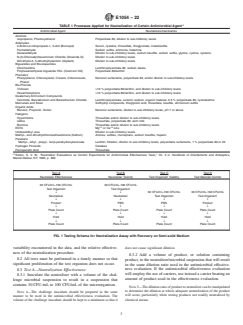
Quaternary Ammonium Compounds
Cetrimide, Benzalkonium and Benzethonium Chloride Lecithin/polysorbate, suramin sodium, organic material, 0.5 % polysorbate 80, cyclodextrins
Mercurials and Silver Sulfhydryl compounds, thioglycolic acid, thiosulfate, bisulfite, ammonium sulfite
Organic Acids
Benzoic, Propionic, Sorbic Nonionic surfactants, dilution to sub-inhibitory levels, pH 7 or above
Halogens
Hypochlorite Thiosulfate and/or dilution to sub-inhibitory levels
Iodine Thiosulfate, polysorbate 80, skim milk
Bromine Thiosulfate and/or dilution to sub-inhibitory levels
+2 +2
EDTA Mg or Ca ions
Imidazolidinyl urea Dilution to sub-inhibitory levels
Methyl-, and dimethylchloroisothiazolinone (Kathon) Amines, sulfites, mercaptans, sodium bisulfite, heparin
Parabens
Methyl-, ethyl-, propyl-, butyl-parahydroxybenzoate Lecithin, filtration, dilution to sub-inhibitory levels, polysorbate surfactants, 1 % polysorbate 80 or 20
Hydrogen Peroxide Catalase
Peroxyacetic Acid Thiosulfate
A
Sutton, S. V. W., “Neutralizer Evaluations as Control Experiments for Antimicrobial Effectiveness Tests,” Ch. 3 in Handbook of Disinfectants and Antiseptics,
Marcel-Dekker, NY, 1996, p. 300.
Test A Test B Test C Test D
Neutralizer Effectiveness Neutralizer Toxicity Test Organism Viability Test Material Control
30 CFU/mL-100 CFU/mL 30 CFU/mL-100 CFU/mL
Test Organism Test Organism
↓↓ 30 CFU/mL-100 CFU/mL 30 CFU/mL-100 CFU/mL
Neutralizer Neutralizer Test Organism Test Organism
↓ ↓↓↓
Product PBS PBS Product
↓ ↓↓↓
Plate Count Plate Count Plate Count Plate Count
↓ ↓↓↓
Hold Hold Hold Hold
↓ ↓↓↓
Plate Count Plate Count Plate Count Plate Count
FIG. 1 Testing Schema for Neutralization Assay with Recovery on Semi-solid Medium
does not cause significant dilution.
variability encountered in the data, and the relative effective-
ness of the neutralization procedure.
8.3.2 Add a volume of product, or solution containing
8.2 All tests must be performed in a timely manner so that
product, to the neutralizer/microbial suspension that will result
significant proliferation of the test organism does not occur.
in the same dilution ratio used in the antimicrobial effective-
ness evaluation. If the antimicrobial effectiveness evaluation
8.3 Test A—Neutralization Effectiveness:
willemploytheuseofcarriers,useinsteadacarrierbearingan
8.3.1 Inoculate the neutralizer with a volume of the chal-
amount of product used in the effectiveness evaluation.
lenge microbial suspension to result in a suspension that
contains 30CFU⁄mL to 100 CFU/mL of the microorganism.
NOTE5—Thedilutionratioofproducttoneutralizercanbemanipulated
to determine the dilution at which adequate neutralization of the product
NOTE 4—The challenge inoculum should be prepared in the same
will occur, particularly when testing products not readily neutralized by
manner to be used in the antimicrobial effectiveness evaluation. The
volume of the challenge inoculum should be kept to a minimum so that it chemical means.
E1054 − 22
8.3.3 Within1minofexecutionof8.3.2,transferaliquotsof suspension such that the resulting suspension contains 30
the product/neutralizer/microbial suspension to pour or spread CFU/mL to 100 CFU/mL of the microorganism (see Note 4).
plates,induplicate,usinganappropriatesemi-solidmedium.If
8.5.2 Within1minofexecutionof8.5.1,transferaliquotsof
neutralizers are incorporated in the plating medium for the the PBS/microbial suspension to pour or spread plates, in
antimicrobial effectiveness evaluation, use this same medium
duplicate, using an appropriate semi-solid medium that does
for plating the suspension. not contain neutralizers and is not a selective or differential
medium.
8.3.4 Allow the product/neutralizer/microbial suspension to
stand for the longest exposure period representative of that 8.5.3 Allow the PBS/microbial suspension to stand for the
used in the antimicrobial effectiveness evaluation. For same exposure period used in Test A (see 8.3.4).
example, if the product/neutralizer/microorganism from the
8.5.4 After the hold-time, transfer aliquots of the PBS/
antimicrobial effectiveness evaluation will be plated within 30
microbial suspension to pour or spread plates, in duplicate,
min, then the longest exposure period for the neutralization using an appropriate semi-solid medium that does not contain
assay is 30 min.
neutralizers and is not a selective or differential medium.
8.3.5 After the hold-time, transfer aliquots of the product/
8.5.5 Repeatthisprocedure(8.5.1–8.5.4)anadditionaltwo
neutralizer/microbial suspension to pour or spread plates, in or more times, for a total of at least three replicates.
duplicate, using an appropriate semi-solid medium. If neutral-
8.5.6 Incubate the plates under the same conditions as those
izers are incorporated in the plating medium for the antimicro- used in the antimicrobial effectiveness evaluation, and follow-
bialeffectivenessevaluation,usethissamemediumforplating
ing incubation, enumerate the colony-forming units.
the suspension.
8.6 Test D—Test Material Control:
NOTE 6—The duration of the hold time must not be such that
NOTE 7—A test of a product’s antimicrobial effectiveness is necessary
proliferation of the test organism introduces a variable.
to demonstrating that the neutralizer actually does neutralize the activity
of an antimicrobial agent. However, performance of the Test Material
8.3.6 Repeatthisprocedure(8.3.1–8.3.5)anadditionaltwo
Control phase is situational and may not be necessary for specific
or more times, for a total of at least three replicates.
formulations with which the researcher has prior experience.
8.3.7 Incubate the plates under the same conditions as those
8.6.1 Inoculate the product with a volume of the challenge
used in the antimicrobial effectiveness evaluation, and follow-
microbial suspension such that the resulting suspension con-
ing incubation, enumerate colony-forming units.
tains 30 CFU/mL to 100 CFU/mL of the microorganism (see
8.4 Test B—Neutralizer Toxicity:
Note 4).
8.4.1 Inoculate the neutralizer with a volume of the chal-
8.6.2 Hold the product/microbial suspension for an expo-
lenge microbial suspension such that the resulting suspension
sure period necessary to allow detection of an antimicrobial
contains 30CFU⁄mL to 100 CFU/mL of the microorganism
effect. The hold time must not be longer in duration than the
(see Note 4).
hold time in Test A (see 8.3.4).
8.4.2 Add a volume of sterile PBS or other appropriate
8.6.3 After the hold time, transfer aliquots of the product/
bufferingagenttotheneutralizer/microbialsuspensionthatwill
microbial suspension to pour or spread plates, in duplicate,
result in the same dilution ratio as that used in Test A (see
using an appropriate semi-solid medium that does not contain
8.3.2).
neutralizers and is not a selective or differential medium.
8.4.3 Within1minofexecutionof8.4.2,transferaliquotsof
8.6.4 Repeat this procedure (8.6.1 and 8.6.2) an additional
the PBS/neutralizer/microbial suspension to pour or spread
two or more times, for a total of at least three replicates.
plates,induplicate,usinganappropriatesemi-solidmedium.If
8.6.5 Incubate the plates under the same conditions as those
neutralizers are incorporated in the plating medium for the
used in the antimicrobial effectiveness evaluation, and follow-
antimicrobial effectiveness evaluation, use this same medium
ing incubation, enumerate the colony-forming units.
for plating the suspension.
8.4.4 Allow the PBS/neutralizer/microbial suspension to
9. Neutralization Assay with Recovery in Liquid Medium
stand for the same period used in Test A (see 8.3.4).
(Fig. 2)
8.4.5 After the hold-time, transfer aliquots of the PBS/
9.1 Atleastfivereplicatesarerequiredfortheseprocedures.
neutralizer/microbial suspension to pour or spread plates, in
Thenumberofreplicatesusedintheevaluationdependsonthe
duplicate, using an appropriate semi-solid medium. If neutral-
statistical significance required for the expected results, the
izers are incorporated in the plating medium for the antimicro-
variability encountered in the data, and the relative effective-
bialeffectivenessevaluation,usethissamemediumforplating
ness of the neutralization procedure. The same nutrient me-
the suspension.
dium should be used in all phases of the assay.
8.4.6 Repeatthisprocedure(8.4.1–8.4.5)anadditionaltwo
or more times, for a total of at least three replicates.
9.2 All tests must be performed in a timely manner so that
8.4.7 Incubate the plates under the same conditions as those significant proliferation of the test organism does not occur.
used in the antimicrobial effectiveness evaluation, and follow-
9.3 Test A—Neutralization Effectiveness:
ing incubation, enumerate the colony-forming units.
9.3.1 Inoculate the neutralizer-nutrient medium with a vol-
8.5 Test C—Test Organism Viability: ume of the challenge microbial suspension such that the
8.5.1 Inoculate a volume of sterile PBS or other appropriate resulting suspension contains 30 CFU/mL to 100 CFU/mL of
buffering agent with a volume of the challenge microbial the microorganism (see Note 4).
E1054 − 22
Test A Test B Test C Test D
Neutralizer Effectiveness Neutralizer Toxicity Test Organism Viability Test Material Control
30 CFU/mL-100 CFU/mL 30 CFU/mL-100 CFU/mL 30 CFU/mL-100 CFU/mL 30 CFU/mL-100 CFU/mL
Test Organism Test Organism Test Organism Test Organism
↓↓ ↓ ↓
Neutralizer/Nutrient Neutralizer/Nutrient Nutrient Nutrient
Medium Medium Medium Medium
↓↓ ↓ ↓
Product PBS PBS Product
↓↓ ↓ ↓
Incubate Incubate Incubate Incubate
↓↓ ↓ ↓
Check for Growth Check for Growth Check for Growth Check for Growth
FIG. 2 Testing Schema for Neutralization Assay with Recovery in Liquid Medium
9.3.2 Add a volume of product, or solution containing 9.5.4 Incubate the PBS/nutrient medium/microbial suspen-
product, to neutralizer-nutrient medium/microbial suspension sion under the same conditions as those used in the antimicro-
that will result in the same dilution ratio used in the antimi- bial effectiveness evaluation.
crobial effectiveness evaluation. If the antimicrobial effective- 9.5.5 Following incubation, check for growth. If growth is
ness evaluation will employ the use of carriers, use instead a present, record as a “1,” and if no growth is present, as a zero.
carrierbearinganamountofproductrepresentativeofthatused Confirm growth of the challenge microorganism by plating the
in the test. suspension.
9.3.3 Repeat this procedure (9.3.1 and 9.3.2) an additional
9.6 Test D—Test Material Cont
...
This document is not an ASTM standard and is intended only to provide the user of an ASTM standard an indication of what changes have been made to the previous version. Because
it may not be technically possible to adequately depict all changes accurately, ASTM recommends that users consult prior editions as appropriate. In all cases only the current version
of the standard as published by ASTM is to be considered the official document.
´1
Designation: E1054 − 21 E1054 − 22
Standard Practices for
Evaluation of Inactivators of Antimicrobial Agents
This standard is issued under the fixed designation E1054; the number immediately following the designation indicates the year of
original adoption or, in the case of revision, the year of last revision. A number in parentheses indicates the year of last reapproval. A
superscript epsilon (´) indicates an editorial change since the last revision or reapproval.
ε NOTE—Editorial changes were made throughout in May 2021.
1. Scope
1.1 These test procedures are used to determine the effectiveness of methodologies procedures and materials intended for
inactivating (neutralizing, quenching) the microbicidal properties of antimicrobial agents; to ensure that no components of the
neutralizing procedures and materials, themselves, exert an inhibitory effect on microorganisms targeted for recovery; and to
demonstrate that the antimicrobial chemistry tested is microbicidal.
1.2 Knowledge of microbiological and statistical techniques is required for these procedures.
NOTE 1—These methods are not suitable when testing the virucidal activity of microbicides (see Test Method E1482).
1.3 The values stated in SI units are to be regarded as standard. No other units of measurement are included in this standard.
1.4 This standard does not purport to address all of the safety concerns, if any, associated with its use. It is the responsibility
of the user of this standard to establish appropriate safety, health, and environmental practices and determine the applicability of
regulatory limitations prior to use.
1.5 This international standard was developed in accordance with internationally recognized principles on standardization
established in the Decision on Principles for the Development of International Standards, Guides and Recommendations issued
by the World Trade Organization Technical Barriers to Trade (TBT) Committee.
2. Referenced Documents
2.1 ASTM Standards:
E645 Practice for Evaluation of Microbicides Used in Cooling Water Systems
E1115 Test Method for Evaluation of Surgical Hand Scrub Formulations
E1482 Practice for Use of Gel Filtration Columns for Cytotoxicity Reduction and Neutralization
E2756 Terminology Relating to Antimicrobial and Antiviral Agents
3. Terminology
3.1 Definition of Terms: For definition of terms not listed below, refer to E2756, Standard Terminology Relating to Antimicrobial
and Antiviral Agents.
These practices are under the jurisdiction of ASTM Committee E35 on Pesticides, Antimicrobials, and Alternative Control Agents and are the direct responsibility of
Subcommittee E35.15 on Antimicrobial Agents.
Current edition approved April 1, 2021Oct. 1, 2022. Published May 2021October 2022. Originally approved in 1985. Last previous edition approved in 20132021 as
ɛ1
E1054 – 13.E1054 – 21 . DOI: 10.1520/E1054-21E01.10.1520/E1054-22.
For referenced ASTM standards, visit the ASTM website, www.astm.org, or contact ASTM Customer Service at service@astm.org. For Annual Book of ASTM Standards
volume information, refer to the standard’s Document Summary page on the ASTM website.
Copyright © ASTM International, 100 Barr Harbor Drive, PO Box C700, West Conshohocken, PA 19428-2959. United States
E1054 − 22
3.1 Definitions:
3.1.1 For definitions of terms used in these practices, refer to Terminology E2756.
3.2 Definitions of Terms Specific to This Standard:
3.2.1 antimicrobial effectiveness evaluation, adj/n—n—a determination of microbicidal properties of an antimicrobial agent by
methods, such as Practice E645 and Test Method E1115.
3.2.2 CFU/mL (abbrev.)—colony-forming units of a microorganism per millilitre of fluid.
3.2.3 neutralizer effectiveness, adj/n—ability of a neutralization procedure to inactivate or quench the microbicidal properties of
an antimicrobial agent.
3.2.4 neutralizer toxicity, adj/n—any inhibitory effects a neutralization procedure may have on the survival of a microbial
population.
3.2.5 test material control, adj/n—an evaluation of the activity of a test material in reducing a known population of
microorganisms.
3.2.6 test organism viability, adj/n—the population of a challenge microorganism used in a neutralization assay.
3.2.7 viability, n—the ability of a challenge microorganism to form colonies or grow on a nutrient medium.
3.2.7.1 Discussion—
In the context of these test methods, “viability” is understood to be synonymous with cultivability.
4. Summary of Practices
NOTE 2—The neutralization test procedure selected must be consistent with the methods of testing used in the antimicrobial effectiveness evaluation.
4.1 Neutralization Assay with Recovery on Semi-solid Medium—Neutralization assay for antimicrobial effectiveness tests that
recover and quantify microbial populations on semi-solid (agar) media. This method is appropriate for antimicrobial agents that
are chemically inactivated or diluted to sub-inhibitory levels and performed entirely in vitro or including an in vivo component,
such as to verify neutralization of an antimicrobial formulation sampled from the skin of a human volunteer.
4.2 Neutralization Assay with Recovery in Liquid Medium—Neutralization assay for antimicrobial effectiveness tests that recover
surviving microbial populations in liquid media for a growth/no growth determination. This method is appropriate for antimicrobial
agents that are chemically inactivated or diluted to sub-inhibitory levels.
4.3 Neutralization Assay with Recovery by Membrane Filtration—Neutralization assay for antimicrobial effectiveness tests that
recover and quantify microbial populations by using membrane filtration. This method is appropriate for antimicrobial agents that
cannot be chemically inactivated or diluted to sub-inhibitory levels, as well as for those that can be.
5. Significance and Use
5.1 The effectiveness of antimicrobial agents incorporated into disinfectants, sanitizers, and antiseptics is measured by their ability
to kill microorganisms within a specified contact time. Hence, accurate determination of antimicrobial effectiveness requires
complete and immediate inactivation (neutralization) of the antimicrobial agent. Inefficient or incomplete neutralization will permit
killing or inactivation of microorganisms to continue beyond the experimental exposure time, resulting in an overestimation of
antimicrobial activity.
5.2 The neutralization methods commonly used in antimicrobial effectiveness evaluations are chemical inactivation, dilution, and
filtration. All critical parameters of an antimicrobial effectiveness evaluation—for example, media, equipment, microorganism(s),
and temperature of solutions—must be duplicated in the performance of selected neutralization procedure.
5.3 The neutralization evaluation must include at least three replications (five replications in Section 9) so that a statistical analysis
E1054 − 22
of the microbial recovery data can be performed. The number of replicates used in the evaluation depends on the statistical
significance required for the expected results, the variability encountered in the data, and the relative effectiveness of the
neutralization procedure.
5.4 A limitation of these evaluation procedures is that they use microorganisms that have not been exposed to an antimicrobial
agent. Under experimental conditions, cells exposed to neutralization procedures are likely to be damaged to different degrees by
the antimicrobial agent. Sublethal injury may be a factor in recovery, and the effect of the neutralization procedure on recovery
of injured organisms should be examined. This method is not intended to assess recovery of injured organisms.
NOTE 3—Ideally, all microorganisms used in the antimicrobial effectiveness evaluation should be tested in the neutralization assay. However,
representative organisms may be selected for testing, as judged appropriate by the investigator. The investigator is cautioned that failure to identify
neutralizer efficacy and toxicity for all microorganisms could result in biased microbial reductions in an antimicrobial effectiveness evaluation. Also, for
a study testing multiple antimicrobial formulations, and in which samples will contain multiple species of microorganisms (for example, skin flora) that
are exposed to the formulations, a single procedure and/or combination of agents suitable for neutralizing the antimicrobial activities of the multiple
formulations must be used for testing.
6. Apparatus
6.1 Standard bacteriological devices and equipment should be used for performance of the neutralization assay.
6.2 Colony Counter—Any of several types may be used; for example, Quebec colony counters and similar devices, or automated,
computerized plater/counter systems.
6.3 Incubator—Any incubator capable of maintaining a temperature appropriate for growth of the test microorganism(s) may be
used.
6.4 Sterilizer—Any steam sterilizer capable of producing the conditions of sterilization.
6.5 Timer (stopwatch)—One that displays hours, minutes, and seconds.
6.6 Vortex Mixer or equivalent.
6.7 Membrane Filter Units—Any sterilizable unit that permits filtration of microorganisms for enumeration. The membrane filter
unit must be chemically compatible with the antimicrobial agent and appropriate to efficient recovery of the test microorganisms.
7. Reagents and Materials
7.1 Phosphate Buffered Saline Dilution Water—PBS (see Practice E645).
7.1.1 Phosphate Buffer Solution, Stock—Dissolve 34 g of potassium dihydrogen phosphate (KH PO ) in 500 mL of water. Adjust
2 4
pH to 7.2 6 0.2 with 0.1 N NaOH or 0.1 N HCl and bring to 1000 mL with deionized water.
7.1.2 Phosphate Buffer Saline Dilution Water—Add 1.25 mL of stock phosphate buffer solution and 8.75 g of NaCl to a volumetric
flask, fill with deionized water to the 1000 mL mark, and mix. Final pH should be adjusted to 7.2 6 0.2, if necessary. Sterilize
by filtration or autoclave.
7.2 Because the types of materials and reagents required for various antimicrobial effectiveness evaluations are so diverse, it is
impractical to list them in this method. The specific materials and reagents to be used in the antimicrobial effectiveness evaluation,
however, must be used in the neutralization assay to confirm that the antimicrobial agent is being neutralized in a particular
evaluation.
7.3 Table 1 provides a list of materials employed by researchers to inactivate the microbicidal properties of various antimicrobial
agents. This list is provided as a guide for selecting neutralizers and is not exhaustive. A neutralization assay must be performed
to determine a selected neutralizer’s effectiveness.
E1054 − 22
A
TABLE 1 Processes Applied for Neutralization of Certain Antimicrobial Agent
Antimicrobial Agent Neutralizers/Inactivators
Alcohols
Isopropanol, Phenoxyethanol Polysorbate 80, dilution to sub-inhibitory levels
Aldehydes
2-Bromo-2-nitropropane-1, 3-diol (Bronopol) Serum, cysteine, thiosulfate, thioglycolate, metabisulfite
Formaldehyde Sodium sulfite, ammonia, histamine
Glutaraldehyde Dilution to sub-inhibitory levels, sodium bisulfite, sodium sulfite, glycine, cystine, cysteine
N-(3-Chloroallyl)hexaminium Chloride (Dowicide Q) Dilution to sub-inhibitory levels
Dimethylol-5, 5-dimethylhydantoin (Glydant) Dilution to sub-inhibitory levels
Biguanides and Bis-biquanides
Chlorhexidine Lecithin/polysorbate 80, sodium oleate
Polyhexamethylene biguanide HCL (Cosmocil CQ) Polysorbate 80/lecithin
Phenolics
Phenylphenol, Chloroxylenol, Cresols, Chlorocresols, Nonionic surfactants, polysorbate 80, and/or dilution to sub-inhibitory levels
Phenol
Bis-Phenols
Triclosan >10 % polysorbate 80/lecithin, and dilution to sub-inhibitory levels
Hexachlorophene >10 % polysorbate 80/lecithin, and dilution to sub-inhibitory levels
Quaternary Ammonium Compounds
Cetrimide, Benzalkonium and Benzethonium Chloride Lecithin/polysorbate, suramin sodium, organic material, 0.5 % polysorbate 80, cyclodextrins
Mercurials and Silver Sulfhydryl compounds, thioglycolic acid, thiosulfate, bisulfite, ammonium sulfite
Organic Acids
Benzoic, Propionic, Sorbic Nonionic surfactants, dilution to sub-inhibitory levels, pH 7 of above
Benzoic, Propionic, Sorbic Nonionic surfactants, dilution to sub-inhibitory levels, pH 7 or above
Halogens
Hypochlorite Thiosulfate and/or dilution to sub-inhibitory levels
Iodine Thiosulfate, polysorbate 80, skim milk
Bromine Thiosulfate and/or dilution to sub-inhibitory levels
+2 +2
EDTA Mg or Ca ions
Imidazolidinyl urea Dilution to sub-inhibitory levels
Methyl-, and dimethylchloroisothiazolinone (Kathon) Amines, sulfites, mercaptans, sodium bisulfite, heparin
Parabens
Methyl-, ethyl-, propyl-, butyl-parahydroxybenzoate Lecithin, filtration, dilution to sub-inhibitory levels, polysorbate surfactants, 1 % polysorbate 80 or 20
Hydrogen Peroxide Catalase
Peroxyacetic Acid Thiosulfate
A
Sutton, S. V. W., “Neutralizer Evaluations as Control Experiments for Antimicrobial Effectiveness Tests,” Ch. 3 in Handbook of Disinfectants and Antiseptics,
Marcel-Dekker, NY, 1996, p. 300.
8. Neutralization Assay with Recovery on Semi-solid Medium (Fig. 1)
8.1 At least three replicates of each test condition are required for these procedures. The number of additional replicates necessary
to the evaluation is dictated by the statistical significance required for the expected results, the variability encountered in the data,
and the relative effectiveness of the neutralization procedure.
8.2 All tests must be performed in a timely manner so that significant proliferation of the test organism does not occur.
8.3 Test A—Neutralization Effectiveness:
Test A Test B Test C Test D
Neutralizer Effectiveness Neutralizer Toxicity Test Organism Viability Test Material Control
30 CFU/mL-100 CFU/mL 30 CFU/mL-100 CFU/mL
Test Organism Test Organism
↓ ↓ 30 CFU/mL-100 CFU/mL 30 CFU/mL-100 CFU/mL
Neutralizer Neutralizer Test Organism Test Organism
↓ ↓ ↓ ↓
Product PBS PBS Product
↓ ↓ ↓ ↓
Plate Count Plate Count Plate Count Plate Count
↓ ↓ ↓ ↓
Hold Hold Hold Hold
↓ ↓ ↓ ↓
Plate Count Plate Count Plate Count Plate Count
FIG. 1 Testing Schema for Neutralization Assay with Recovery on Semi-solid Medium
E1054 − 22
8.3.1 Inoculate the neutralizer with a volume of the challenge microbial suspension to result in a suspension that contains
30 CFU ⁄mL to 100 CFU/mL of the microorganism.
NOTE 4—The challenge inoculum should be prepared in the same manner to be used in the antimicrobial effectiveness evaluation. The volume of the
challenge inoculum should be kept to a minimum so that it does not cause significant dilution.
8.3.2 Add a volume of product, or solution containing product, to the neutralizer/microbial suspension that will result in the same
dilution ratio used in the antimicrobial effectiveness evaluation. If the antimicrobial effectiveness evaluation will employ the use
of carriers, use instead a carrier bearing an amount of product used in the effectiveness evaluation.
NOTE 5—The dilution ratio of product to neutralizer can be manipulated to determine the dilution at which adequate neutralization of the product will
occur, particularly when testing products not readily neutralized by chemical means.
8.3.3 Within 1 min of execution of 8.3.2, transfer aliquots of the product/neutralizer/microbial suspension to pour or spread plates,
in duplicate, using an appropriate semi-solid medium. If neutralizers are incorporated in the plating medium for the antimicrobial
effectiveness evaluation, use this same medium for plating the suspension.
8.3.4 Allow the product/neutralizer/microbial suspension to stand for the longest exposure period representative of that used in
the antimicrobial effectiveness evaluation. For example, if the product/neutralizer/microorganism from the antimicrobial
effectiveness evaluation will be plated within 30 min, then the longest exposure period for the neutralization assay is 30 min.
8.3.5 After the hold-time, transfer aliquots of the product/neutralizer/microbial suspension to pour or spread plates, in duplicate,
using an appropriate semi-solid medium. If neutralizers are incorporated in the plating medium for the antimicrobial effectiveness
evaluation, use this same medium for plating the suspension.
NOTE 6—The duration of the hold time must not be such that proliferation of the test organism introduces a variable.
8.3.6 Repeat this procedure (8.3.1 – 8.3.5) an additional two or more times, for a total of at least three replicates.
8.3.7 Incubate the plates under the same conditions as those used in the antimicrobial effectiveness evaluation, and following
incubation, enumerate colony-forming units.
8.4 Test B—Neutralizer Toxicity:
8.4.1 Inoculate the neutralizer with a volume of the challenge microbial suspension such that the resulting suspension contains
30 CFU ⁄mL to 100 CFU/mL of the microorganism (see Note 4).
8.4.2 Add a volume of sterile PBS or other appropriate buffering agent to the neutralizer/microbial suspension that will result in
the same dilution ratio as that used in Test A (see 8.3.2).
8.4.3 Within 1 min of execution of 8.4.2, transfer aliquots of the PBS/neutralizer/microbial suspension to pour or spread plates,
in duplicate, using an appropriate semi-solid medium. If neutralizers are incorporated in the plating medium for the antimicrobial
effectiveness evaluation, use this same medium for plating the suspension.
8.4.4 Allow the PBS/neutralizer/microbial suspension to stand for the same period used in Test A (see 8.3.4).
8.4.5 After the hold-time, transfer aliquots of the PBS/neutralizer/microbial suspension to pour or spread plates, in duplicate, using
an appropriate semi-solid medium. If neutralizers are incorporated in the plating medium for the antimicrobial effectiveness
evaluation, use this same medium for plating the suspension.
8.4.6 Repeat this procedure (8.4.1 – 8.4.5) an additional two or more times, for a total of at least three replicates.
8.4.7 Incubate the plates under the same conditions as those used in the antimicrobial effectiveness evaluation, and following
incubation, enumerate the colony-forming units.
E1054 − 22
8.5 Test C—Test Organism Viability:
8.5.1 Inoculate a volume of sterile PBS or other appropriate buffering agent with a volume of the challenge microbial suspension
such that the resulting suspension contains 30 CFU/mL to 100 CFU/mL of the microorganism (see Note 4).
8.5.2 Within 1 min of execution of 8.5.1, transfer aliquots of the PBS/microbial suspension to pour or spread plates, in duplicate,
using an appropriate semi-solid medium that does not contain neutralizers and is not a selective or differential medium.
8.5.3 Allow the PBS/microbial suspension to stand for the same exposure period used in Test A (see 8.3.4).
8.5.4 After the hold-time, transfer aliquots of the PBS/microbial suspension to pour or spread plates, in duplicate, using an
appropriate semi-solid medium that does not contain neutralizers and is not a selective or differential medium.
8.5.5 Repeat this procedure (8.5.1 – 8.5.4) an additional two or more times, for a total of at least three replicates.
8.5.6 Incubate the plates under the same conditions as those used in the antimicrobial effectiveness evaluation, and following
incubation, enumerate the colony-forming units.
8.6 Test D—Test Material Control:
NOTE 7—A test of a product’s antimicrobial effectiveness is necessary to demonstrating that the neutralizer actually does neutralize the activity of an
antimicrobial agent. However, performance of the Test Material Control phase is situational and may not be necessary for specific formulations with which
the researcher has prior experience.
8.6.1 Inoculate the product with a volume of the challenge microbial suspension such that the resulting suspension contains 30
CFU/mL to 100 CFU/mL of the microorganism (see Note 4).
8.6.2 Hold the product/microbial suspension for an exposure period necessary to allow detection of an antimicrobial effect. The
hold time must not be longer in duration than the hold time in Test A (see 8.3.4).
8.6.3 After the hold time, transfer aliquots of the product/microbial suspension to pour or spread plates, in duplicate, using an
appropriate semi-solid medium that does not contain neutralizers and is not a selective or differential medium.
8.6.4 Repeat this procedure (8.6.1 and 8.6.2) an additional two or more times, for a total of at least three replicates.
8.6.5 Incubate the plates under the same conditions as those used in the antimicrobial effectiveness evaluation, and following
incubation, enumerate the colony-forming units.
9. Neutralization Assay with Recovery in Liquid Medium (Fig. 2)
9.1 At least five replicates are required for these procedures. The number of replicates used in the evaluation depends on the
Test A Test B Test C Test D
Neutralizer Effectiveness Neutralizer Toxicity Test Organism Viability Test Material Control
30 CFU/mL-100 CFU/mL 30 CFU/mL-100 CFU/mL 30 CFU/mL-100 CFU/mL 30 CFU/mL-100 CFU/mL
Test Organism Test Organism Test Organism Test Organism
↓ ↓ ↓ ↓
Neutralizer/Nutrient Neutralizer/Nutrient Nutrient Nutrient
Medium Medium Medium Medium
↓ ↓ ↓ ↓
Product PBS PBS Product
↓ ↓ ↓ ↓
Incubate Incubate Incubate Incubate
↓ ↓ ↓ ↓
Check for Growth Check for Growth Check for Growth Check for Growth
FIG. 2 Testing Schema for Neutralization Assay with Recovery in Liquid Medium
E1054 − 22
statistical significance required for the expected results, the variability encountered in the data, and the relative effectiveness of the
neutralization procedure. The same nutrient medium should be used in all phases of the assay.
9.2 All tests must be performed in a timely manner so that significant proliferation of the test organism does not occur.
9.3 Test A—Neutralization Effectiveness:
9.3.1 Inoculate the neutralizer-nutrient medium with a volume of the challenge microbial suspension such that the resulting
suspension contains 30 CFU/mL to 100 CFU/mL of the microorganism (see Note 4).
9.3.2 Add a volume of product, or solution containing product, to neutralizer-nutrient medium/microbial suspension that will
result in the same dilution ratio used in the antimicrobial effectiveness evaluation. If the antimicrobial effectiveness evaluation will
employ the use of carriers, use instead a carrier bearing an amount of product representative of that used in the test.
9.3.3 Repeat this procedure (9.3.1 and 9.3.2) an additional four or more times, for a total of at least five replicates.
9.3.4 Incubate the product/neutralizer-nutrient medium/microbial suspension under the same conditions as those used in the
antimicrobial effectiveness evaluation.
9.3.5 Following incubation, check for growth. If growth is present, record as a “1,” and if no growth is present, as a zero. Confirm
growth of the challenge microorganism by plating the suspension.
9.4 Test B—Neutralizer Toxicity:
9.4.1 Inoculate the neutralizer-nutrient medium with a volume of the challenge microbial suspension such that the resulting
suspension contains 30 CFU/mL to 100 CFU/mL of the microorganism (see Note 4).
9.4.2 Add a volume of PBS to the neutralizer-nutrient medium/microbial suspension in the same dilution ratio as that used for
product in Test A (see 9.3.2).
9.4.3 Repeat this p
...