

SIST EN 3913:2009
(Main)Aerospace series - Insert, thin wall, self-locking, short, in heat resisting nickel base alloy NI-PH2601 (Ni-P100HT, Inconel 718), silver plated on internal thread, for salvage of components
- Abstract
This standard specifies the characteristics of short, self-locking, thin wall salvage inserts with silver plated internal thread, in NI-PH2601 (NI-P100HT), for aerospace applications.
Maximum test temperature 550 °C.
- Status
- Published
- Publication Date
- 27-Apr-2009
- Technical Committee
- I13 - Imaginarni 13
- Current Stage
- 6060 - National Implementation/Publication (Adopted Project)
- Start Date
- 16-Apr-2009
- Due Date
- 21-Jun-2009
- Completion Date
- 28-Apr-2009



SIST EN 3913:2009 is the Slovenian adoption of the European standard EN 3913:2007, published by SIST. It specifies short, thin-wall, self-locking salvage inserts in NI-PH2601 (Ni-P100HT, Inconel 718) with a silver-plated internal thread for aerospace components. The standard is meant for engineers, manufacturers, repair organizations, and buyers who need a defined insert for salvaging components, with a maximum test temperature of 550 °C.
What does SIST EN 3913:2009 specify?
SIST EN 3913:2009 specifies the characteristics of a particular aerospace salvage insert: short, thin-wall, self-locking, and made from heat-resisting nickel base alloy NI-PH2601. It also defines how the insert is organized, designated, marked, and linked to related installation and salvage procedures.
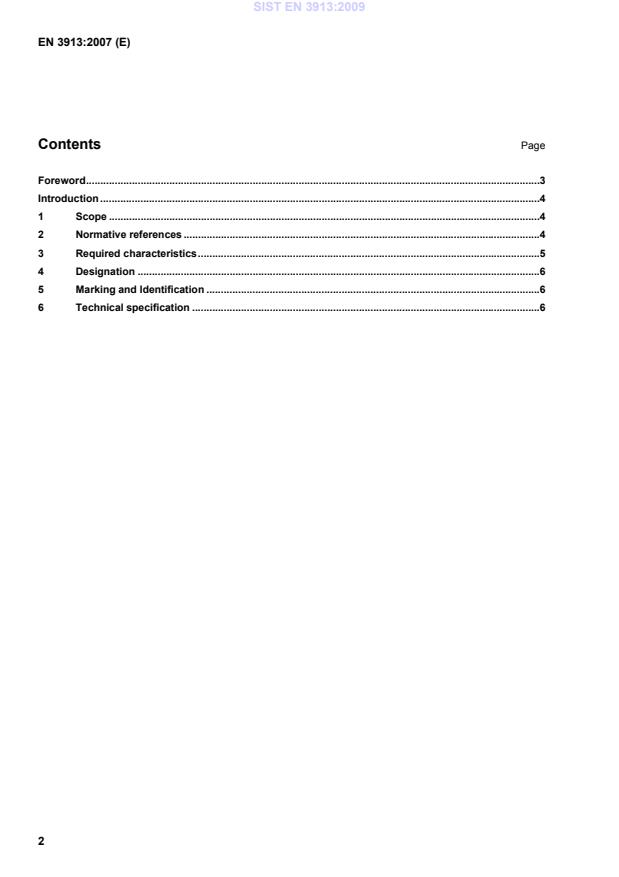
The document is structured into six clauses:
- Scope
- Normative references
- Required characteristics
- Designation
- Marking and Identification
- Technical specification
This structure matters in practice because it separates what the insert is, how it is made, how it is identified, and which supporting documents are needed to use it correctly.
What are the key requirements of SIST EN 3913:2009?
SIST EN 3913:2009 defines the insert geometry, material, surface treatment, thread form, designation, and marking. The main point is that the insert is not just a generic fastener part - it is a controlled salvage component with defined dimensions and traceability.
Configuration, dimensions, and tolerances
Clause 3.1 says the configuration, dimensions, tolerances, and masses are given in Figure 1 and Table 1, and that all dimensions are in millimetres. The dimensions apply after silver plating.
In practice, this means suppliers must check the final plated part against the stated envelope, not an unfinished blank.
Material and product form
Clause 3.2 specifies EN 2404 for the material. The insert is therefore tied to a defined heat-resisting nickel base alloy condition.
For the user, this fixes the base material and helps prevent substitution with another alloy or condition that might behave differently at temperature.
Silver plating
Clause 3.3 requires EN 2786 silver plating on the internal thread and counterbore diameter C. For internal threads MJ6 and larger, the thread flanks must have 5 µm thickness; for MJ5, complete coverage is required without a thickness value.
In practice, the plating is there for the functional thread area, so inspection must focus on coverage and thickness where the standard calls for them.
Thread form and self-locking behavior
Table 1 notes that internal threads conform to ISO 5855-2 and external threads conform to ISO 965-1, except for the stated maximum minor diameter. The text also says that tolerances in the self-locking zone apply before forming out of round.
This matters because the locking function depends on the local thread form, and manufacturers must control the thread geometry before the final self-locking feature is created.
Thread loss and locking zone
Table 2 gives percentage thread loss values for each thread code. The note explains that these values relate to the amount of thread removed to create the internal thread locking feature.
For the reader, this tells you that the locking action is intentional and measured, not incidental, and that different sizes are designed with different locking levels.
Designation and identification
Clause 4 gives the designation format, including the description block, the identity block, and the thread code from Table 1. It also notes that code I9005 may be placed between the description and identity blocks if needed.
Clause 5 requires marking in accordance with EN 2424, style G, and manufacturer identification grooves as V-section grooves with spacing per TR 3198.
In practice, this supports ordering, traceability, and inspection of the installed part.
Technical specification
Clause 6 points to EN 3915 for the technical specification. That links this insert to the detailed product specification used for procurement and acceptance.
What terms does SIST EN 3913:2009 define?
- NI-PH2601 - The heat-resisting nickel base alloy used for the insert body, identified in the title and scope.
- Ni-P100HT - The alternate alloy designation used together with NI-PH2601 in the standard.
- Inconel 718 - The common alloy name given alongside NI-PH2601 and Ni-P100HT.
- MJ threads - The aerospace metric thread form used for the internal thread sizes in Table 1.
- Self-locking zone - The part of the thread where the insert develops its locking action.
- Thread code - The size code such as 050, 060, 070, 080, or 100 used in the designation.
- EN 2424 style G - The marking style required for product identification.
Who uses SIST EN 3913:2009?
SIST EN 3913:2009 is used by aerospace designers who need a salvage insert with a defined thread and material. It is also used by manufacturers making the inserts, by repair and overhaul organizations restoring damaged components, and by quality teams checking dimensions, plating, and marking.
It is relevant wherever threaded aerospace parts need salvage rather than replacement, because it gives a common description of the insert to buy, make, inspect, and install.
What changed in SIST EN 3913:2009 from the previous edition?
SIST EN 3913:2009 is the Slovenian version of EN 3913:2007.
Which standards are used with SIST EN 3913:2009?
| Standard | What it contributes |
|---|---|
| ISO 965-1 | General metric screw thread tolerances for the external thread |
| ISO 5855-2 | MJ thread limits for the internal thread |
| EN 2404 | Material specification for the nickel base alloy condition |
| EN 2424 | Marking and identification of aerospace products |
| EN 2786 | Electrolytic silver plating of fasteners |
| EN 3298 | Installation and removal procedure for thin wall self-locking inserts |
| EN 3915 | Technical specification for this insert type |
| EN 3916 | Salvage procedure for components |
| EN 4376 | Updated material designation reference for NI-PH2601 stock |
| EN 4377 | Updated material designation reference for NI-PH2601 stock |
| TR 3198 | Manufacturer identification monograms and mark spacing |
What does the SIST EN 3913:2009 document contain?
SIST EN 3913:2009 contains one configuration figure, one main dimensional table, and a thread-loss table tied to the locking function. It also includes a designation example that shows how to build the part name and identity block.
The document gives the practical details needed for manufacture and control: thread sizes, tolerances, plating coverage, marking style, and manufacturer identification grooves. It also points users to EN 3298 for installation and removal and to EN 3916 for salvage procedure, so the insert can be used consistently in repair work.
Relations
- Effective Date
- 28-Jan-2026
- Effective Date
- 28-Jan-2026
- Effective Date
- 28-Jan-2026
- Effective Date
- 28-Jan-2026
- Effective Date
- 28-Jan-2026
- Referred By
SIST EN 3916:2008 - Aerospace series - Insert, thin wall - Salvage procedure for components - Effective Date
- 28-Jan-2026
Get Certified
Connect with accredited certification bodies for this standard

BUREAU VERITAS Certification Germany
Bureau Veritas certification in Germany.

Element Materials Technology
Materials testing and product certification.

AQMS Ltd.
AQMS provides ISO certification to SMEs across the UK.
Sponsored listings
Frequently Asked Questions
SIST EN 3913:2009 is a standard published by the Slovenian Institute for Standardization (SIST). Its full title is "Aerospace series - Insert, thin wall, self-locking, short, in heat resisting nickel base alloy NI-PH2601 (Ni-P100HT, Inconel 718), silver plated on internal thread, for salvage of components". This standard covers: This standard specifies the characteristics of short, self-locking, thin wall salvage inserts with silver plated internal thread, in NI-PH2601 (NI-P100HT), for aerospace applications. Maximum test temperature 550 °C.
This standard specifies the characteristics of short, self-locking, thin wall salvage inserts with silver plated internal thread, in NI-PH2601 (NI-P100HT), for aerospace applications. Maximum test temperature 550 °C.
SIST EN 3913:2009 is classified under the following ICS (International Classification for Standards) categories: 49.030.30 - Nuts. The ICS classification helps identify the subject area and facilitates finding related standards.
SIST EN 3913:2009 has the following relationships with other standards: It is inter standard links to SIST EN 3915:2008, SIST EN 3298:2008, SIST EN 840-6:2004+A1:2008, SIST EN 2786:2008, SIST EN 2424:2008, SIST EN 3916:2008. Understanding these relationships helps ensure you are using the most current and applicable version of the standard.
SIST EN 3913:2009 is available in PDF format for immediate download after purchase. The document can be added to your cart and obtained through the secure checkout process. Digital delivery ensures instant access to the complete standard document.
Standards Content (Sample)
2003-01.Slovenski inštitut za standardizacijo. Razmnoževanje celote ali delov tega standarda ni dovoljeno.Aeronavtika - Vložki, tanka stena, samozapiralni, kratki, iz toplotnoodporne zlitine na nikljevi osnovi NI-PH2601 (Ni-P100HT, Inconel 718), posrebreni, posrebren notranji navoj, za popravljanje sestavnih delovLuft- und Raumfahrt - Gewindeeinsätze, dünnwandig, selbstsichernd, kurz, aus hochwarmfester Nickelbasislegierung NI-PH2601 (NI-P100HT, Inconel 718), Innengewinde versilbert, zur Reparatur von BauteilenSérie aérospatiale - Douilles filetées, à paroi mince, à freinage interne, courtes, en alliage résistant à chaud à base de nickel NI-PH2601 (NI-P100HT, Inconel 718), argentées sur filetage intérieur, pour récupérationAerospace series - Insert, thin wall, self-locking, short, in heat resisting nickel base alloy NI-PH2601 (Ni-P100HT, Inconel 718), silver plated on internal thread, for salvage of components49.030.30MaticeNutsICS:Ta slovenski standard je istoveten z:EN 3913:2007SIST EN 3913:2009en,de01-junij-2009SIST EN 3913:2009SLOVENSKI
STANDARD
EUROPEAN STANDARDNORME EUROPÉENNEEUROPÄISCHE NORMEN 3913April 2007ICS 49.030.30 English VersionAerospace series - Insert, thin wall, self-locking, short, in heatresisting nickel base alloy NI-PH2601 (Ni-P100HT, Inconel 718),silver plated on internal thread, for salvage of componentsSérie aérospatiale - Douilles filetées, à paroi mince, àfreinage interne, courtes, en alliage résistant à chaud àbase de nickel NI-PH2601 (NI-P100HT, Inconel 718),argentées sur filetage intérieur, pour récupérationLuft- und Raumfahrt - Gewindeeinsätze, dünnwandig,selbstsichernd, kurz, aus hochwarmfesterNickelbasislegierung NI-PH2601 (NI-P100HT, Inconel 718),Innengewinde versilbert, zur Nacharbeit von BauteilenThis European Standard was approved by CEN on 28 August 2006.CEN members are bound to comply with the CEN/CENELEC Internal Regulations which stipulate the conditions for giving this EuropeanStandard the status of a national standard without any alteration. Up-to-date lists and bibliographical references concerning such nationalstandards may be obtained on application to the CEN Management Centre or to any CEN member.This European Standard exists in three official versions (English, French, German). A version in any other language made by translationunder the responsibility of a CEN member into its own language and notified to the CEN Management Centre has the same status as theofficial versions.CEN members are the national standards bodies of Austria, Belgium, Bulgaria, Cyprus, Czech Republic, Denmark, Estonia, Finland,France, Germany, Greece, Hungary, Iceland, Ireland, Italy, Latvia, Lithuania, Luxembourg, Malta, Netherlands, Norway, Poland, Portugal,Romania, Slovakia, Slovenia, Spain, Sweden, Switzerland and United Kingdom.EUROPEAN COMMITTEE FOR STANDARDIZATIONCOMITÉ EUROPÉEN DE NORMALISATIONEUROPÄISCHES KOMITEE FÜR NORMUNGManagement Centre: rue de Stassart, 36
B-1050 Brussels© 2007 CENAll rights of exploitation in any form and by any means reservedworldwide for CEN national Members.Ref. No. EN 3913:2007: ESIST EN 3913:2009
...