


A Practical Guide to Clothing and Footwear Standards: Safety, Quality, and Sizing for Modern Businesses
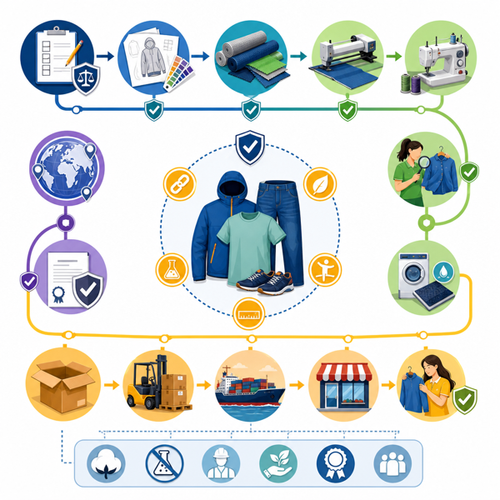
In today’s highly competitive and fast-evolving clothing and footwear industry, adhering to internationally recognized standards is no longer a luxury—it’s a business necessity. Ensuring the quality, safety, and fit of garments and shoes directly impacts customer confidence, workflow efficiency, and regulatory compliance. This guide explores four cornerstone standards: seam strength tests (ISO 13935-2:2026), antimicrobial assessments for footwear (ISO 20681:2026), clothing size designations (ISO 8559-2:2025), and global footwear last measurement systems (ISO/TR 25295:2025). Understanding and implementing these requirements not only safeguards product quality and security for your organization but also unlocks opportunities for productivity gains and scalable, global market reach.
Overview / Introduction
The global clothing sector touches every life, from essential daily apparel to cutting-edge technical textiles and fashionable footwear. What sets successful companies apart is their commitment to robust standardization—ensuring that every shirt fits as expected, every seam holds firm, and every shoe offers both comfort and safety.
With rising consumer expectations, proliferation of international trade, and a focus on responsible production, knowing the rules of the game is crucial. Standards ensure garments are accurately sized, fabrics perform dependably, and product claims—like antimicrobial efficacy—are actually validated. In this article, we break down four major clothing and footwear standards, explaining how they work, what you need to know, and the concrete benefits of compliance.
Whether you run a brand, supply chain, design office, or retail store, or you’re simply curious about what protects consumers, this practical guide will help you:
- Understand essential testing and sizing systems for clothing and shoes
- Learn the requirements for seam safety and footwear hygiene
- Improve communication with partners and customers
- Build a foundation for safe scaling and efficient production
Detailed Standards Coverage
ISO 13935-2:2026 - Ensuring Seam Strength in Textiles
Textiles — Seam tensile properties of fabrics and made-up textile articles — Part 2: Determination of maximum force to seam rupture using the grab method
If a shirt seam splits or a trouser tear appears right after purchase, it undermines brand trust and creates waste. ISO 13935-2:2026 addresses this issue by specifying how to test the maximum force a straight seam can withstand before rupture, using the grab method. This method is crucial for manufacturers of woven textiles—including those using stretch fabrics modified by elastomers or treatments, though it excludes nonwovens or complex composites. The standard ensures that sewn seams in garments, upholstery, or other textiles meet dependable strength thresholds, increasing durability and safety during use.
The method relies on constant-rate-of-extension (CRE) testing machines, with a standardized procedure for preparing, conditioning, and testing fabric samples or sewn articles. The results allow direct comparison of seam strength within and between products, offering actionable benchmarks for quality control departments, sourcing teams, and certification bodies.
Key highlights:
- Applies to woven fabrics, including those with stretch characteristics
- Measures seam strength perpendicular to the seam using the grab test
- Ensures straight seams (not curved) meet safety and durability expectations
- Vital for garment and soft goods manufacturers, QA teams, and sourcing specialists
- Supports product claims, customer confidence, and regulatory compliance
Access the full standard:View ISO 13935-2:2026 on iTeh Standards
ISO 20681:2026 - Antimicrobial Footwear: Protecting Health and Comfort
Footwear and footwear components — Test method to assess antimicrobial activity — Agar diffusion test
Footwear is often exposed to sweat, heat, and dirt, making it a breeding ground for bacteria or fungi. Increasingly, brands market shoes and components as antimicrobial, but customer safety demands that such claims are real. ISO 20681:2026 gives manufacturers a credible, repeatable lab test—the agar diffusion method—to prove antimicrobial efficacy of shoes and their components.
The test evaluates both antibacterial and antifungal treatments, using standardized microbial strains (e.g., Staphylococcus aureus, Klebsiella pneumoniae, and Candida albicans) cultured on agar plates. Specimens are placed on the prepared agar, and the presence (and size) of an inhibition zone around the sample demonstrates antimicrobial success. Strict laboratory safety protocols are required due to the use of microorganisms, but the process is clear and scalable for businesses globally.
This method ensures only genuinely antimicrobial footwear reaches consumers, protecting health and supporting honest marketing. Importers, quality managers, and product designers benefit from having a recognized yardstick for antimicrobial claims, supporting both consumer safety and regulatory filings.
Key highlights:
- Explicitly tests antimicrobial (antibacterial and antifungal) efficacy of footwear and components
- Uses clear, safe laboratory protocols and reference microorganisms
- Supports credible marketing claims on hygiene and product performance
- Essential for brands, QA labs, import/export, and anyone claiming antimicrobial properties
- Supports global market access and regulatory harmonization
Access the full standard:View ISO 20681:2026 on iTeh Standards
ISO 8559-2:2025 - Universal Size Designation for Clothes
Size designation of clothes — Part 2: Primary and secondary dimension indicators
Every shopper knows the frustration: trying on three shirts, all labeled 'Medium', but each fits differently. ISO 8559-2:2025 provides a global, systematic way to indicate clothing sizes using primary and secondary body measurements, resolving confusion for brands, retailers, and consumers.
Instead of guessing, labels reference actual body dimensions—chest girth, waist, bust, height, and more—for men, women, and children, across garment types. This system builds on ISO 8559-1 (anthropometric definitions), standardizing not just which measurements to use, but also how to display them clearly on labels and in e-commerce. The standard describes acceptable pictograms, descriptive text, and unit conventions so sizes are easy to interpret anywhere in the world.
Manufacturers can reduce returns and enhance sustainability by helping customers find the right fit the first time. Retailers gain happier, repeat buyers, and consumers make smarter choices. For global supply chains and multi-brand environments, this standard is a must-have tool.
Key highlights:
- Defines body measurement-based primary and secondary indicators for all major garment categories
- Applies to labels/markings in physical and digital environments; supports e-commerce and store sales
- Reduces consumer confusion, product returns, and sizing-related complaints
- Crucial for brands exporting worldwide or selling across multiple retail platforms
- Enables consistency, transparency, and responsible consumption
Access the full standard:View ISO 8559-2:2025 on iTeh Standards
ISO/TR 25295:2025 - Footwear Last Measurement: Foundation for Comfort and Performance
Footwear — Global last measurement systems
Behind every comfortable, supportive, and well-fitting shoe is a well-designed last—the model over which a shoe is made. ISO/TR 25295:2025 standardizes measurement systems for lasts globally, benefiting casual, sports, rain, and specialty footwear.
This technical report brings clarity to dimensions and grading intervals for last length, ball girth, width, and heel height, plus the core terminology and reference sizes for men, women, and children’s shoes. Manufacturers, molders, and designers use this data to ensure every shoe matches real-world feet and market expectations. Consistency in last sizing improves comfort, fit, and reduces costly returns due to improper sizing.
The standard covers:
- How to measure and grade last dimensions (including whole/half sizes)
- Which reference points and dimensions must remain regular, and where design flexibility is allowed
- Allowances for style and comfort without sacrificing accuracy and repeatability
This harmonization supports reliable mass production, cross-border compliance, and fair global competition.
Key highlights:
- Establishes worldwide benchmarks for last dimensioning across shoe types
- Details dimension grading intervals and allowances
- Covers men, women, and children, including sports and safety shoes
- Ensures consistent, comfortable footwear fitting globally
- Used by designers, manufacturers, and supply chains to maintain product integrity
Access the full standard:View ISO/TR 25295:2025 on iTeh Standards
Industry Impact & Compliance
Adopting key clothing and footwear standards is transformative. For businesses, these requirements go beyond box-checking—they power superior products, reduce operational headaches, and widen access to lucrative international markets.
Benefits of Compliance:
- Reputation and Trust: Consumers trust certified products more, spurring brand loyalty.
- Productivity and Efficiency: Standardized measurements and test methods reduce waste, mis-sizing, and costly product returns.
- Safety Guarantees: Objective seam and antimicrobial tests protect end users, minimizing liability.
- Market Access & Global Scaling: Harmonized documentation is often required for exports, international contracts, and major retail partners.
- Transparency: Clear labelling and digital sizing prevent confusion, streamline e-commerce, and support responsible consumption.
Regulatory Risks of Non-Compliance:
- Failed audits and supply chain disruptions
- Product recalls or market bans
- Civil liability from product failure (e.g., failed seams, false antimicrobial claims)
- Damaged reputation and lost customer trust
For whom are these standards critical?
- Textile and apparel manufacturers
- Footwear producers
- Retailers and brands (physical and e-commerce)
- Test laboratories and certification bodies
- Product designers and supply chain managers
Implementation Guidance
Transitioning to robust standards can be straightforward when you follow proven best practices:
- Gap Analysis: Compare current practices with the requirements of each standard. Identify what’s missing—e.g., testing capabilities, documentation, labeling updates.
- Staff Training: Educate production, QA, and design teams on new protocols. Use sample tests, demonstrations, and e-learning.
- Suppliers and Partners: Communicate new requirements upstream and downstream. Request compliance documentation and, where possible, audit processes.
- Invest in Equipment: Acquire or partner with labs that have calibrated CRE tensile testers (for seam tests) and microbiological apparatus (for antimicrobial tests).
- Labeling and IT Systems: Update garment and shoe labels to reflect proper dimensional data. Align e-commerce size charts.
- Documentation and Record-Keeping: Maintain detailed records of all tests and reports for regulatory and commercial audits.
- Continuous Improvement: Regularly review testing, sizing feedback, and market claims for accuracy and improvement.
Tools and Resources:
- Download official standards from trusted platforms like iTeh Standards
- Use digital tools and templates that match the labelling, test, and documentation requirements
- Participate in industry forums and certification programs for ongoing training
Conclusion / Next Steps
Clothing and footwear business leaders face a dynamic landscape: rapid consumer preference shifts, increasing safety expectations, and globalized supply chains. Implementing ISO 13935-2:2026, ISO 20681:2026, ISO 8559-2:2025, and ISO/TR 25295:2025 sets your organization apart, laying the foundation for reliable, safe, and consumer-friendly products.
By systematically embedding these requirements in your processes, you not only defend against quality and compliance risks—but also position your business for growth and global reach. Ready to futureproof your brand? Start by exploring the full standards linked below and engaging your team in a standards-driven journey to excellence.
https://standards.iteh.ai/catalog/standards/iso/c1b6ae08-0878-4f81-a9e9-bbe9069ba86f/iso-20681-2026
https://standards.iteh.ai/catalog/standards/iso/5b8683b6-eff6-485d-983d-27a6c55b0f5e/iso-8559-2-2025
Categories
- Latest News
- New Arrivals
- Generalities
- Services and Management
- Natural Sciences
- Health Care
- Environment
- Metrology and Measurement
- Testing
- Mechanical Systems
- Fluid Systems
- Manufacturing
- Energy and Heat
- Electrical Engineering
- Electronics
- Telecommunications
- Information Technology
- Image Technology
- Precision Mechanics
- Road Vehicles
- Railway Engineering
- Shipbuilding
- Aircraft and Space
- Materials Handling
- Packaging
- Textile and Leather
- Clothing
- Agriculture
- Food technology
- Chemical Technology
- Mining and Minerals
- Petroleum
- Metallurgy
- Wood technology
- Glass and Ceramics
- Rubber and Plastics
- Paper Technology
- Paint Industries
- Construction
- Civil Engineering
- Military Engineering
- Entertainment