

October 2026: Key Electrical Engineering Standards Released – Part 1
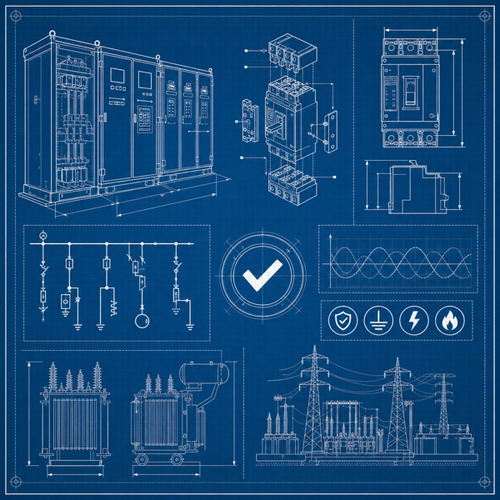
October 2026: Key Electrical Engineering Standards Released – Part 1
Stay ahead in the fast-evolving field of electrical engineering with this comprehensive review of five influential international standards published in October 2026. This first part in our three-part series spotlights essential updates affecting safety, reliability, and innovation – from construction site assemblies and hazardous atmosphere safety devices, to insulation coordination, EV charging, and automotive batteries.
Overview
Electrical engineering serves as the backbone for modern industries—from critical infrastructure and transportation to advanced manufacturing. International standards play a pivotal role in ensuring interoperability, safety, and performance across global markets. This article gives you a strategic overview of five new standards published in October 2026, why they matter, and what professionals need to know for compliance and futureproofing their systems.
Whether you’re an engineer, compliance officer, quality manager, or procurement specialist, understanding these updates is critical for risk management, product development, and regulatory alignment. Read on for detailed insights, compliance advice, and direct access to the full standards.
Detailed Standards Coverage
EN IEC 61439-4:2026 – Switchgear Assemblies for Construction Sites
Low-voltage switchgear and controlgear assemblies – Part 4: Particular requirements for assemblies for construction sites (ACS)
This standard lays out the specific requirements for low-voltage switchgear and controlgear assemblies intended for use on construction and similar sites where environments can be harsh and rapidly changing. The standard covers assemblies (called ACS) rated up to 1,000 V AC or 1,500 V DC, both transportable and mobile, designed exclusively for operational areas not generally accessed by the public.
Key requirements and specifications:
- Applies to switchgear and controlgear assemblies supplying temporary power for construction activities, demolition, civil engineering, and excavation work zones.
- Focuses on portable/semi-fixed enclosures designed to withstand environmental and mechanical stresses on-site.
- Excludes administrative area use (offices, dormitories, etc.) and individual devices, which are covered by separate product standards.
- Aligns with the general rules in IEC 61439-1, but enhances site-specific safety and performance requirements such as impact resistance, ingress protection, and earthing.
Implementation and compliance:
- Intended for construction site contractors, electrical installation companies, equipment manufacturers, and site operators procuring or assembling temporary power.
- Enforcement drives safer, more robust electrical set-ups on construction sites, lowering risk of failures, injuries, and project downtime.
- Integrates with IEC 60364-7-704 for site-specific protective measures.
Key highlights:
- Clear differentiation between ACS and permanent/site office installations
- Enhanced focus on mechanical durability and environmental protection
- Alignment with harmonized testing and verification methods
Access the full standard:View EN IEC 61439-4:2026 on iTeh Standards
FprEN IEC 60079-42:2026 – Electrical Safety Devices for Explosive Atmospheres
Explosive atmospheres – Part 42: Electrical safety devices for the control of potential ignition sources for EX-Equipment, Type of protection "f"
This forward-looking standard addresses the construction, testing, and application of electrical safety devices used to reduce ignition risk in explosive atmospheres. It focuses on devices that actively monitor and control potential sources of ignition in Ex Equipment, complementing established explosion protection techniques.
What’s new and relevant:
- Applies to both electrical and non-electrical Ex Equipment, offering risk reduction strategies when regular protection methods (from the IEC 60079 and ISO 80079 series) aren’t feasible.
- Covers safety devices that operate as part of a safety function (e.g., sensors, logic, final elements—individually or in combination).
- Specifies requirements on functional safety (incl. risk reduction factors), type testing, proof testing, and marking.
- Allows use of multiple functional safety evaluation approaches (e.g., per IEC 61508, IEC 61511).
Who should pay attention:
- Manufacturers and integrators of Ex Equipment for chemical, oil & gas, mining, grain handling, and industrial processing.
- Safety engineers, system designers, and asset managers working in hazardous area installations.
- Certification and compliance bodies overseeing Ex safety.
Key highlights:
- Introduction of risk reduction factor (RRF) as a quantifiable performance metric
- Guidance for standalone assessment of safety devices, not tied to one equipment design
- Emphase on documentation, performance integrity, and maintenance requirements for safety devices
Access the full standard:View FprEN IEC 60079-42:2026 on iTeh Standards
IEC TS 60071-4:2026 – Simulation-Based Insulation Coordination
Instructions for simulation-based insulation coordination and modelling of electrical networks
This technical specification brings a significant update to insulation co-ordination studies, offering comprehensive guidance for simulation-based approaches. It supplements and enhances the methodologies of IEC 60071-1 and IEC 60071-2, providing best practices for computational modeling, both deterministic and probabilistic, for electrical power systems.
Scope and application:
- Detailed methods for modeling electrical systems, including various types of overvoltages (temporary, slow-front, fast-front, very-fast-front).
- Approaches for network representation: transmission lines, transformers, circuit-breakers, arresters, and earthing systems.
- Emphasis on both statistical and deterministic analysis methods—importance for high-voltage transmission, substations, and power infrastructure.
Upgrade information:
- Replaces the previous technical report (IEC TR 60071-4:2004) with a technical specification, reflecting advancements in numerical modeling and simulation tools.
- Offers extensive case studies and model outlines—practical for simulation engineers and consultants.
Key highlights:
- Clear methodology for integrating simulation into insulation design and coordination
- Extensive modeling guidance for complex grid phenomena
- Supplementary to key insulation level selection standards for power equipment
Access the full standard:View IEC TS 60071-4:2026 on iTeh Standards
IEC 63407:2026 – EV Charging: Automated Connection Device Interface
Conductive charging of electric vehicles – Contact interface for automated connection device (ACD)
As electric vehicle (EV) adoption accelerates worldwide, this brand-new standard targets contact interfaces for automated high-power DC charging. It defines the requirements for connections between an automated connection device (ACD) and counterpart, for charging applications up to 1,500 V DC.
Essentials for manufacturers and operators:
- Applies to high-power, isolated conductive DC charging interfaces for EVs—critical for buses, trucks, and future passenger vehicles requiring rapid, autonomous charging.
- Specifies configurations, tolerances, electrical characteristics, signal requirements, environmental resilience, and safety requirements for ACD systems.
- Covers both infrastructure-mounted and vehicle-mounted connection systems, multiple interface geometries, and physical/mechanical specifications.
Impact and implications:
- Speeds up deployment of hands-free, interoperable fast-charging infrastructure
- Ensures safety and performance across a range of charging scenarios (including high robustness for public and fleet applications)
- Supports standardization and compatibility, crucial for OEMs, charging station providers, and transport operators
Key highlights:
- Standardization of coupler/connector configurations and operating parameters
- Robust environmental and safety guidelines for outdoor and transport applications
- Addresses both charging and communication interface design details
Access the full standard:View IEC 63407:2026 on iTeh Standards
IEC 60095-8:2026 – Auxiliary and Backup Lead-Acid Batteries for Vehicles
Lead-acid starter batteries – Part 8: 12V Batteries used in automobiles for auxiliary or backup purposes
This international standard outlines the requirements for 12V lead-acid batteries used as auxiliary or backup energy sources in passenger vehicles, including both internal combustion and electric vehicles (EVs) where cranking is performed by other means. The standard sets out specifications for capacity, performance, durability, and testing suited to auxiliary and backup functions.
Coverage and requirements:
- Defines general requirements, essential characteristics, and relevant test methods for auxiliary automotive batteries, including those for EV and ICE vehicles with non-traditional starting systems.
- Establishes standards for identification, safety, recycling, and performance characteristics such as reserve capacity, charge acceptance, pulse power, and vibration resistance.
- Includes practical test sequences for different battery categories and application types.
Who needs to comply:
- Battery manufacturers, automotive OEMs, system integrators, and test laboratories
- Critical for those developing or specifying in-vehicle backup systems, safety-critical systems, and telematics requiring reliable standby power
Key highlights:
- Precise classification system for auxiliary/backup battery types and usage
- Comprehensive testing protocols for performance and safety
- Coverage for both traditional and advanced vehicle architectures (including EVs)
Access the full standard:View IEC 60095-8:2026 on iTeh Standards
Industry Impact & Compliance
The publication of these five standards signals a clear push towards advanced safety, interoperability, and reliability across the electrical engineering spectrum:
- Safety and reliability: Improved protective standards for sites, installations, vehicles, and hazardous areas reduce risks of failure, injury, and compliance violations.
- Market access and innovation: Standards foster cross-border market access, speed adoption of new technologies (e.g., automated EV charging), and provide recognized benchmarks for innovation.
- Compliance and timelines: Timely adoption is essential for all new projects and products launching in late 2026 or beyond. Organizations should initiate compliance assessments and integration into procurement and design specifications as soon as possible.
- Risks of non-compliance: These include increased liability, lost business opportunities, regulatory penalties, and technical incompatibility with advanced systems and infrastructure.
Technical Insights
Across these new standards, several themes and technical requirements stand out:
- Emphasis on functional and environmental safety—particularly in construction, automotive, and hazardous area applications
- Advanced simulation and digital design methodologies (as seen in insulation coordination)
- Robust interface specification and interoperability (pivotal for EV charging and construction site assemblies)
- Comprehensive, scenario-based testing and test sequences
- Alignment with global best practices and multi-standard frameworks (referencing IEC 61508, IEC 61439-1, IEC 61851-23-1, and others)
Best practices for implementation:
- Engage with standards early in the design process to reduce retrofit risk.
- Train technical teams on new requirements—especially test engineers, safety managers, and compliance staff.
- Partner with accredited test labs for certification and verification.
- Document compliance meticulously for procurement and customer assurance.
Conclusion & Next Steps
October 2026 is shaping up to be a transformative period for electrical engineering standards. These five new documents—spanning everything from site safety assemblies and explosive atmosphere control, to simulation-driven design, automated charging, and automotive battery reliability—will impact organizations across the sector.
Key takeaways:
- Adopting these standards ensures greater safety, international compliance, and competitive advantage.
- Early integration into your processes and product designs will streamline certification and reduce project risk.
Recommendations:
- Review each standard relevant to your operations or products using the direct iTeh Standards links provided above.
- Stay engaged—subscribe to notifications and watch for upcoming parts in this article series for full coverage of all electrical engineering standard updates for October 2026.
- Leverage these benchmarks to drive continuous improvement and innovation in your projects and supply chains.
Continue exploring the latest standards at iTeh Standards and ensure your organization remains at the forefront of safety, compliance, and engineering excellence.
Categories
- Latest News
- New Arrivals
- Generalities
- Services and Management
- Natural Sciences
- Health Care
- Environment
- Metrology and Measurement
- Testing
- Mechanical Systems
- Fluid Systems
- Manufacturing
- Energy and Heat
- Electrical Engineering
- Electronics
- Telecommunications
- Information Technology
- Image Technology
- Precision Mechanics
- Road Vehicles
- Railway Engineering
- Shipbuilding
- Aircraft and Space
- Materials Handling
- Packaging
- Textile and Leather
- Clothing
- Agriculture
- Food technology
- Chemical Technology
- Mining and Minerals
- Petroleum
- Metallurgy
- Wood technology
- Glass and Ceramics
- Rubber and Plastics
- Paper Technology
- Paint Industries
- Construction
- Civil Engineering
- Military Engineering
- Entertainment