


May 2026: New Electrical Engineering Standards Drive Efficiency and Safety
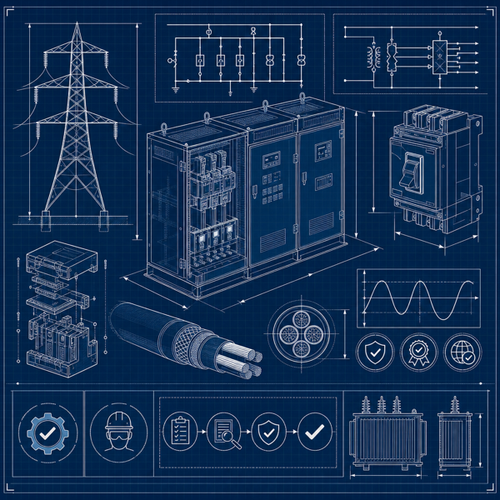
Electrical engineering professionals, compliance managers, and facility operators have new guidance to support safe, reliable, and efficient operations with the publication of five key international standards in May 2026. These latest releases address a broad range of topics essential for the sector—including HVDC converter station efficiency, robust evaluation of insulation systems, advanced switchgear, more structured system referencing, and state-of-the-art partial discharge detection for rotating machines. Each standard introduces vital updates with practical implications for manufacturers, utilities, and engineering teams worldwide.
Overview
Electrical engineering lies at the heart of modern infrastructure, powering everything from energy transmission to complex manufacturing processes. In such a dynamic and high-stakes field, the adoption of internationally recognized standards ensures system safety, operational efficiency, and regulatory alignment. May 2026 witnessed the release of five influential standards that redefine best practices across academia, industry, and commercial sectors.
This article will:
- Outline the scope and requirements of each new standard
- Analyze impacts for organizations and compliance processes
- Deliver actionable technical insights for implementation
Whether you’re managing HVDC installations, specifying switchgear, qualifying insulation systems, or monitoring electrical machines, these updates are vital to achieving operational excellence.
Detailed Standards Coverage
IEC 61803:2026 - Power Loss Determination in HVDC Converter Stations
Determination of power losses in high-voltage direct current (HVDC) converter stations
IEC 61803:2026 delivers updated, standardized procedures for measuring and evaluating the total power losses within all HVDC converter stations—including both line-commutated converters (LCC) and voltage-sourced converters (VSC, MMC-type and more). The standard’s methodologies now reflect significant advances in converter technology and production consistency, especially with the inclusion of VSC-based systems and refined calculation methods for modern thyristors. Loss determination now covers entire station architecture, including no-load and operational conditions, while excluding auxiliary compensation systems like SVCs and STATCOMs (unless directly part of the converter).
Key requirements:
- Standardized calculation and measurement procedures for all equipment losses (valves, transformers, filters, reactors, auxiliaries, etc.)
- Updated equations and definitions, especially for recent advancements in thyristor and VSC technology
- Correction of total station load loss calculation and more accurate assessment using production test records
- Applicability across both typical (12-pulse) and special/novel circuit layouts
Target users include utility companies, HVDC project engineers, network planners, and compliance assessors.
Practical implications:
- Enhanced accuracy and reproducibility in loss measurement, supporting more transparent grid planning and cost estimation
- Optimized system design and efficiency benchmarking
- Facilitates regulatory compliance and certification efforts for new HVDC projects
Key highlights:
- Inclusion of voltage-sourced converter (VSC) technology in scope
- Improved methods for thyristor-based loss calculations
- Corrected and clarified guidelines for station loss evaluations
Access the full standard:View IEC 61803:2026 on iTeh Standards
IEC TS 62332-1:2026 - Thermal Evaluation of Electrical Insulation Systems
Electrical insulation systems (EIS) - Thermal evaluation of combined liquid and solid components - Part 1: General requirements
Electrical insulation systems are foundational to the safety and longevity of electrotechnical devices, particularly those combining solid and liquid elements (e.g., transformers, rotating machines). IEC TS 62332-1:2026 introduces a dual-temperature accelerated ageing test that mirrors real operational stresses. By independently subjecting solid and liquid insulation components to relevant thermal profiles within the same apparatus, this technical specification advances the reliability of insulation system qualification.
Key requirements:
- Dual-temperature test apparatus and procedures for separate aging of solids and liquids
- Comprehensive guidelines for constructing and preparing representative test objects
- Updated temperature profiles and end-point criteria reflecting a broader range of device types and sealing systems
- Diagnostic protocols for solid and liquid insulation, such as ageing temperatures and applicable material tests
Who should comply:
- Manufacturers and testers of power transformers, electric machines, and other electrotechnical products with composite insulation
- OEMs developing new insulation systems for high-reliability or high-temperature applications
- Certification and test laboratories
Practical implications:
- Accelerates and standardizes EIS lifetime prediction and quality validation
- Expands method applicability to a wider class of devices (including those with enamelled wires and diverse sealing)
- Reduces risk of early failure by enabling tailored qualification for specific operating environments
Key highlights:
- Broadened scope to include new sealing systems and enamelled wires
- Improved thermal aging models for liquid-solid systems
- Updated, industry-aligned diagnostic and reporting protocol
Access the full standard:View IEC TS 62332-1:2026 on iTeh Standards
EN IEC 60947-6-1:2026 - Transfer Switching Equipment for Low Voltage Systems
Low-voltage switchgear and controlgear - Part 6-1: Multiple function equipment - Transfer switching equipment
As electrical systems grow more complex and demand for reliable backup and source transfer rises, EN IEC 60947-6-1:2026 delivers the latest specification for transfer switching equipment (TSE) in low-voltage systems up to 1,000 V AC or 1,500 V DC. This fourth edition expands on definitions, testing, product classes, and application-specific annexes, supporting modernization of energy management, safety, and continuity of supply.
Scope and requirements cover:
- Manually, automatically, and remotely operated TSE;
- Stand-alone ATS controllers (newly detailed);
- Fire-pump TSE (Annex F) and closed-transition capability ATSE (Annex D);
- Bypass/isolation transfer switch equipment (Annex C);
- Mandatory marking, product information, and constructional requirements
- Complete type testing and validation (excluding partial/incomplete systems)
Exclusions: Incomplete switch assemblies, auxiliary contact guidance, switches for explosive zones, and hybrid/innovative TSE classes under consideration.
Compliance is particularly important for:
- Panel builders, switchgear OEMs, consulting engineers
- Facilities managers responsible for critical infrastructure (e.g., hospitals, data centers, emergency systems)
- Utility and energy management professionals
Practical implications:
- Better risk management through robust transfer switching solutions
- Compatibility with modern automatic energy management and emergency power protocols
- Facilitates documentation, maintenance, and functional testing
Key highlights:
- Expanded range of TSE types and new annexes for critical applications
- Clearer, updated definitions and test regimes
- Supports integration with fire safety and advanced controller systems
Access the full standard:View EN IEC 60947-6-1:2026 on iTeh Standards
IEC 81346-14:2026 - Structuring and Reference Designations for Manufacturing Systems
Industrial systems, installations and equipment and industrial products — Structuring principles and reference designations — Part 14: Manufacturing and processing systems
IEC 81346-14:2026, developed jointly by IEC and ISO, enhances systematization and clarity in the structuring, labeling, and documentation of manufacturing and processing systems. It harmonizes with the core IEC 81346 family to ensure clear identification and tracking of equipment, technical documents, and system components across various manufacturing environments.
Key requirements:
- Application of generalized structuring principles to manufacturing, transportation, storage, and auxiliary systems
- Use of standardized reference designation systems (RDS-MS) for superior information management and traceability
- Additional industry-relevant classification schemes tailored for light, material, chemical, and heavy industries
- Guidance for labeling, documentation, and the establishment of hierarchy among equipment, processes, and support systems
Designed for broad cross-sector use:
- Process, project, and electrical engineers in manufacturing, chemical, optical, and heavy industry
- Systems integrators and engineering consultants
- Organizations seeking harmonized technical documentation for global projects
Practical implications:
- Streamlined asset management, regulatory reporting, and technical communication
- Enhanced traceability and reduced documentation errors
- Simplified facility and process lifecycle management
Key highlights:
- Detailed principles for structuring manufacturing systems
- Aligned with IEC 81346-1 and -2 for sector-wide consistency
- Broader application for diverse industrial environments (from factories to waste management)
Access the full standard:View IEC 81346-14:2026 on iTeh Standards
IEC TS 60034-27-6:2026 - On-line Partial Discharge Measurements in Converter-Supplied Machines
Rotating electrical machines - Part 27-6: On-line partial discharge measurements of rotating machine windings supplied from a converter
IEC TS 60034-27-6:2026 sets out requirements and best practices for on-line electrical detection and monitoring of partial discharges (PD) in motors and generators with windings powered by converters, covering both type I (PD-free) and type II (PD-resistant) insulation systems for AC windings rated at 300 V and above. The technical specification addresses unique challenges associated with converter supply—such as high-frequency switching noise and fluctuating fundamental frequencies—which complicate PD detection compared to traditional power grids.
Key requirements:
- Protocols for electrical PD sensor selection (capacitive, electromagnetic, HFCT, etc.)
- Recommended measurement ranges (VHF, UHF)
- Interference suppression and sensitivity checks
- Software guidance for distinguishing converter-induced impulses from genuine PD events
- Applicability limitations (excludes slip-ring-fed windings and non-electrical measurement methods)
Target organizations:
- Asset managers, condition monitoring specialists, and OEMs of rotating machines (motors/generators)
- Industrial maintenance professionals engaged in reliability and predictive maintenance
- Testing laboratories and commissioning teams
Practical implications:
- Improved insulation monitoring for converter-driven machinery, supporting predictive maintenance
- Enhanced understanding of insulation aging and real-time risk mitigation
- Adoption of advanced fault detection to prevent unplanned downtime and costly failures
Key highlights:
- Specific methods tackling PD measurement in converter-supplied machines
- Guidance for both insulation system types and a range of sensor technologies
- Foundation for next-generation condition-based monitoring in demanding industrial settings
Access the full standard:View IEC TS 60034-27-6:2026 on iTeh Standards
Industry Impact & Compliance
The newly published standards reshape the expectations and responsibilities of organizations in the electrical engineering realm. By providing clear, rigorous methodologies and protocols, they:
- Elevate safety margins for personnel, equipment, and grids
- Improve operational efficiency, reliability, and predictive maintenance
- Streamline documentation and inter-organizational communication
Compliance considerations:
- Review new standards requirements in project design/specification
- Update procurement documentation and testing protocols
- Plan for staff training and resource allocation
- Anticipate transition timelines stipulated by regulators (often 6–24 months for mandatory adoption)
Benefits of adoption:
- Reduced risk of downtime and legal non-compliance
- Competitive market access, especially for international tenders
- Enhanced asset longevity and lifecycle cost control
Risks of non-compliance:
- Potential regulatory penalties
- Increased exposure to operational failures and safety incidents
- Lost opportunities in critical infrastructure and export contracts
Technical Insights
Common requirements:
- Accurate measurement and diagnostic methodologies are central—whether evaluating insulation system endurance, transfer switching integrity, or machine insulation health
- Detailed and standardized technical documentation (e.g., reference designations) is essential
- Rigorous type and routine testing are emphasized for all new installations and equipment upgrades
Implementation best practices:
- Engage cross-functional teams to interpret new requirements in local context
- Audit existing assets/inventory to benchmark compliance gaps
- Invest in test/monitoring instrumentation that aligns with new standard methods (PD testers, loss measurement rigs, dual-temp EIS apparatus, etc.)
- Digitally update documentation systems to reflect new structuring protocols (IEC 81346-14)
- Collaborate with certified labs for independent verification
Testing and certification:
- Employ updated test sequences (e.g., loss measurements, EIS diagnostics, PD detection) as outlined in the standards
- Maintain traceable records for compliance audits
- Participate in industry seminars and working groups for ongoing interpretation and practical feedback
Conclusion and Next Steps
The May 2026 suite of electrical engineering standards represents a significant step forward for robust, safe, and efficient system design and operations. For organizations across the supply chain—from OEMs to utilities and process manufacturers—adoption of these standards is a proactive move toward next-generation reliability, efficiency, and global marketability.
Key takeaways:
- Proactively adopt these standards to remain at the forefront of technological best practice
- Leverage iTeh Standards to access the full text, ensuring complete and up-to-date requirements for your sector
- Implement comprehensive training and update programs to ensure team readiness
Explore the complete standards library and stay updated at iTeh Standards
Categories
- Latest News
- New Arrivals
- Generalities
- Services and Management
- Natural Sciences
- Health Care
- Environment
- Metrology and Measurement
- Testing
- Mechanical Systems
- Fluid Systems
- Manufacturing
- Energy and Heat
- Electrical Engineering
- Electronics
- Telecommunications
- Information Technology
- Image Technology
- Precision Mechanics
- Road Vehicles
- Railway Engineering
- Shipbuilding
- Aircraft and Space
- Materials Handling
- Packaging
- Textile and Leather
- Clothing
- Agriculture
- Food technology
- Chemical Technology
- Mining and Minerals
- Petroleum
- Metallurgy
- Wood technology
- Glass and Ceramics
- Rubber and Plastics
- Paper Technology
- Paint Industries
- Construction
- Civil Engineering
- Military Engineering
- Entertainment