


August 2026: Key Fluid Systems Standards Released for Vacuum Vessels, Pipe Fittings, and More
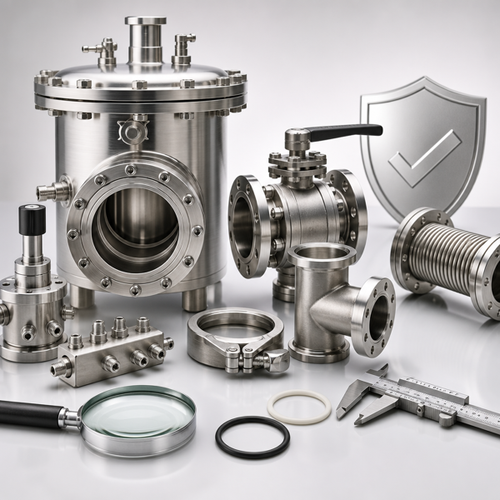
August 2026 marks a significant moment for professionals in the fluid systems and components sector, with five major standards freshly released. These new specifications touch on the design and safety of vacuum-insulated cryogenic vessels, rigorous calibration procedures for vacuum gauges, the evolving safety landscape for electrical appliances like heat pumps and dehumidifiers, standardized requirements for carbon steel pipe fittings, and an updated register of gas cylinder valve outlets.
For companies prioritizing safety, quality, and market access, understanding and applying these international standards is critical. Below, we unpack each standard’s scope, requirements, who should comply, and the broader industry impact.
Overview
The fluid systems and components industry underpins vital sectors—energy, manufacturing, medical, transportation, and beyond. Robust standards are the backbone, ensuring that vessels, gauges, fittings, and appliances operate safely, efficiently, and reliably under challenging conditions.
This article, the first of a two-part series, provides an in-depth look at five August 2026 publications that every industry professional should know. Readers will discover what’s changed, why it matters, and practical insights for implementation and compliance.
Detailed Standards Coverage
prEN ISO 20421-1 – Cryogenic Vessels: Design, Fabrication, Inspection, and Testing
Cryogenic vessels – Large transportable vacuum-insulated vessels – Part 1: Design, fabrication, inspection and testing (ISO/DIS 20421-1:2025)
The prEN ISO 20421-1 standard sets comprehensive requirements for the design, fabrication, inspection, and testing of large transportable vacuum-insulated cryogenic vessels exceeding 450 liters. These vessels—permanently or temporarily attached to means of transport—are crucial for safely handling gases at extremely low temperatures (excluding those for toxic or specialized fuel tank applications).
Key sections address:
- Mechanical load-bearing requirements (including during pressure testing)
- Materials selection and documentation
- Detailed design rules: fatigue, corrosion allowance, pressure relief, valve integration, insulation, and electrical continuity
- Rigorous fabrication methods, welding qualifications, and allowed tolerances
- Stage-wise inspection (non-destructive and destructive), production test plates, and documentation
Target users include manufacturers of cryogenic tanks and equipment, inspection bodies, and organizations transporting cryogenic fluids for industrial, scientific, or medical use. Applying this standard is essential for European and global market access, and for minimizing risk in the transport of cryogenic materials.
Key highlights:
- Applies to tanks >450 l, permanently or temporarily transport-attached
- Extensive mechanical, chemical, and thermal performance criteria
- Stepwise inspection and testing requirements for safe deployment
Access the full standard:View prEN ISO 20421-1 on iTeh Standards
ISO 3567:2026 – Calibration of Vacuum Gauges
Vacuum gauges — Calibration by direct comparison with a reference gauge
Vacuum technology plays a critical role across semiconductor manufacturing, research, and process engineering. ISO 3567:2026 establishes precise physical, technical, and metrological conditions for calibrating vacuum gauges by direct comparison with a reference gauge in laboratory conditions (accredited or not).
The standard covers all types of vacuum gauges—including gauge heads, cables, and control units—and ensures traceability regardless of the instrument’s complexity. For calibrations limited to gauge heads, it emphasizes recording all set-up details for repeatable, accurate measurements.
The document specifies:
- Calibration apparatus design (chamber size, material, gas flow, and stability criteria)
- Plumbing, inlet, and connection requirements
- Calibration gas and atmospheric condition controls
- Reference gauge specifications and uncertainty measurements
- Detailed procedures for both static and stationary equilibrium calibration methods
It is indispensable for calibration labs, quality managers in process industries, gauge manufacturers, and research facilities aiming to maintain or prove vacuum integrity.
Key highlights:
- Applies across -6 Pa to 133 kPa, spanning ultra-high to low vacuum
- Enhanced traceability and uncertainty evaluation
- Revised requirements for tubing, leak testing, and repeated calibrations
Access the full standard:View ISO 3567:2026 on iTeh Standards
IEC 60335-2-40:2024 – Safety of Electrical Heat Pumps, Air-Conditioners, and Dehumidifiers
Household and similar electrical appliances — Safety — Part 2-40: Particular requirements for electrical heat pumps, air-conditioners and dehumidifiers
The eighth edition of IEC 60335-2-40:2024 comes at a crucial time as the global demand for energy-efficient and safe climate control grows. This standard outlines safety requirements for a broad range of electrically operated appliances—including heat pumps, hydronic fan coil units, and air conditioners, whether used in homes, shops, or light industry.
Notable updates in this edition include general requirements expanded to additional appliance classes, reinforced construction (particularly for double-wall heat exchangers and freezing resistance), and revised testing regimes. The standard draws on complementary ISO refrigerant safety standards and covers the management and safe containment of flammable refrigerants (A1-A3 groups as defined by ISO 817).
Key requirements include:
- Marking, instructions, and electrical protection
- Testing for endurance, abnormal operation, resistance to fire and rust
- Mechanical and chemical (refrigerant-related) safety
- Updates for field service, installation, and competence documentation
The standard targets appliance designers, manufacturers, service organizations, and anyone responsible for compliance with electrical safety in HVAC systems.
Key highlights:
- Covers electrical appliances up to 300 V (single phase) / 600 V (DC/multi-phase)
- New requirements for freezing resistance, leak detection system tests, and refrigerant management
- Alignment with ISO refrigerant safety and installation standards
Access the full standard:View IEC 60335-2-40:2024 on iTeh Standards
EN 10253-1:2026 – Butt-Welding Pipe Fittings: Carbon Steel for General Use
Butt-welding pipe fittings - Part 1: Wrought carbon steel for general use and without specific inspection requirements
EN 10253-1:2026 details technical delivery requirements for seamless and welded butt-welding fittings—elbows, reducers, tees, and caps—manufactured from wrought carbon steel. This part covers fittings intended for general use, where no specific inspection regime is imposed.
The standard provides:
- Definitions and classification of steel grades and fitting types
- Chemical composition and mechanical property thresholds
- Dimensional and tolerance tables for all major fitting types
- Marking, packaging, and protection protocols
- Optional user-specified features and order examples
This revision modernizes the technical requirements and aligns terminology, bringing clarity to procurement and production. It is vital for piping system designers, manufacturers, and procurement teams sourcing general-use carbon steel fittings.
Key highlights:
- Applies to general-use, non-pressure vessel fittings (excluding specific inspection)
- New structure aligns with related standards for harmonized application
- Updated definitions, marking, and optional order features
Access the full standard:View EN 10253-1:2026 on iTeh Standards
ISO/TR 7470:2026 – Gas Cylinders: Valve Outlet Provisions
Gas cylinders — List of provisions
Accurate identification and specification of cylinder valve outlets are critical for avoiding dangerous cross connections and for global harmonization of compressed gas logistics. ISO/TR 7470:2026 offers an updated, authoritative listing of gas cylinder valve outlets in use worldwide, including thread types, sizes, and associated gas UN numbers.
While full descriptions are contained in national standards, this technical report consolidates global practice into clear tables—now also available in a downloadable spreadsheet. The document is a key resource for procurement officers, gas suppliers, equipment manufacturers, and regulatory authorities who must ensure the safe, consistent assembly and servicing of gas cylinder systems.
Key highlights:
- Covers valve outlet types, thread forms, dimensions, and gas applications internationally
- Updated tables and digital resources for quick reference
- Essential for global harmonization and compliance
Access the full standard:View ISO/TR 7470:2026 on iTeh Standards
Industry Impact & Compliance
These new and revised standards shape the competitive, regulatory, and safety landscape for fluid systems worldwide:
- Market access and contract eligibility: Compliance is often a prerequisite for public, private, and international projects
- Liability reduction: Clear, harmonized requirements protect manufacturers and users against failure and non-compliance claims
- Enhanced reliability and safety: Adherence supports consistent, high-performance system operation (critical in HVAC, chemical, energy, and transport sectors)
- Continuous improvement: Keeping current with evolving standards ensures access to the latest safety insights and best practices
Organizations should:
- Review updated requirements and cross-reference project specifications
- Engage with suppliers to confirm compliance by specified deadlines
- Evaluate internal testing and certification procedures against new documentation
- Update design, fabrication, and maintenance practices as needed
Technical Insights
Across the new standards, several technical themes emerge:
- Traceability and documentation: Emphasis on quality plans, test records, and calibration certificates underpins reliable operation and future audits
- Design harmonization: Unified terminology and classification in areas like pipe fittings (EN 10253-1) and appliance safety (IEC 60335-2-40) ensure compatibility across different regulatory regions
- Testing rigor: Non-destructive testing (NDT), material analysis, and calibration methods are increasingly specific, with clearly defined uncertainty and performance metrics
- Digital transformation: Resources like ISO/TR 7470's downloadable tables streamline compliance and interoperability in global supply chains
For implementation:
- Ensure staff are trained in new documentation and marking protocols
- Invest in equipment and processes that meet new calibration and testing requirements
- Establish supplier qualification programs referencing latest standard clauses
- Consider third-party certification for critical applications
Conclusion / Next Steps
The August 2026 standards for fluid systems and components bring important improvements to design safety, accuracy, and harmonization. Organizations invested in quality, innovation, and compliance should:
- Review each standard’s detailed requirements relevant to their business
- Update internal procedures and procurement documents accordingly
- Stay engaged with standards updates by subscribing to platforms like iTeh Standards
- Communicate with stakeholders to ensure awareness and readiness
For further details and access to full texts, follow the links provided for each standard. Stay tuned for Part 2, covering additional standards released this month in the fluid systems and components category.
Categories
- Latest News
- New Arrivals
- Generalities
- Services and Management
- Natural Sciences
- Health Care
- Environment
- Metrology and Measurement
- Testing
- Mechanical Systems
- Fluid Systems
- Manufacturing
- Energy and Heat
- Electrical Engineering
- Electronics
- Telecommunications
- Information Technology
- Image Technology
- Precision Mechanics
- Road Vehicles
- Railway Engineering
- Shipbuilding
- Aircraft and Space
- Materials Handling
- Packaging
- Textile and Leather
- Clothing
- Agriculture
- Food technology
- Chemical Technology
- Mining and Minerals
- Petroleum
- Metallurgy
- Wood technology
- Glass and Ceramics
- Rubber and Plastics
- Paper Technology
- Paint Industries
- Construction
- Civil Engineering
- Military Engineering
- Entertainment