


Road Transport Standards: Driving Safer, Smarter, and More Efficient Mobility
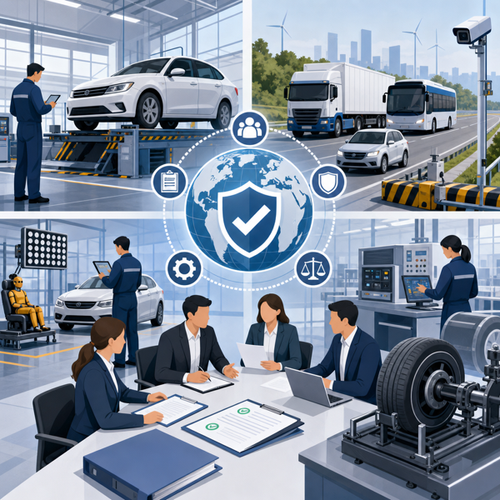
Road transport is undergoing a rapid transformation driven by digitization, automation, and ever-more complex mobility demands. As cities grow and the global movement of people and goods intensifies, the need for secure, efficient, and interoperable transport systems has never been more apparent. The backbone of this evolution lies in international road transport standards—carefully developed frameworks that enable diverse technologies, organizations, and users to share data, interact safely, and scale innovations. In this article, we explore four foundational standards—ISO 13111-1:2017, ISO 14814:2006, ISO 15638-22:2019, and ISO/TS 19091:2019—shaping the modern pathway to smarter, safer mobility for all.
Overview
The world’s road networks are more than simply paving and paint; they are complex ecosystems, merging vehicles, people, sensors, information systems, and critical infrastructure. In this interconnected context, standards play a vital role. They provide common languages, architectures, and best practices, helping ensure:
- Seamless integration of new technologies with legacy systems
- Reliable and secure communication between vehicles and infrastructure
- Enhanced safety and efficiency for all road users—including drivers, passengers, pedestrians, and freight operators
- Streamlined compliance and regulatory harmonization across borders
This comprehensive overview will walk you through four key international standards in road transport generalities. We will clarify what each standard covers, its main requirements, and how it addresses practical challenges such as multimodal navigation, vehicle identification, freight vehicle monitoring, and intelligent intersection communications. Whether you are a business leader, transport professional, or simply curious about smart mobility, this guide illuminates why these standards are essential today and how they help organizations scale and secure their operations.
In this article, you will learn:
- The scope and application of four leading road transport standards
- How embracing these standards can boost productivity, safety, and innovation
- Practical guidance for compliance and industry impact
- Steps to implement these frameworks in your organization
Detailed Standards Coverage
ISO 13111-1:2017 – Intelligent Transport Systems: Personal ITS Station Use Cases
Intelligent transport systems (ITS) — The use of personal ITS station to support ITS service provision for travellers — Part 1: General information and use case definitions
ISO 13111-1:2017 introduces a breakthrough in how individuals interact with multimodal transportation environments. It defines general principles and real-world use cases for personal ITS stations (P-ITS-S): user-centric interfaces—such as smartphones or wearable devices—that connect travelers to integrated ITS services. The standard targets not only drivers, but also pedestrians, cyclists, people with disabilities, and public transport users, setting the foundation for inclusive and informed mobility.
What does this standard cover?
- Scope: Applications based on personal ITS stations to deliver ITS services for various travel modes (car, public transit, walking, cycling, and more).
- Key services:
- Multimodal transportation and navigation
- Real-time traffic and public transport info
- Transfer and internal navigation (e.g., within hubs or parking areas)
- Accessibility services (e.g., wheelchair navigation)
- Community and group-based travel coordination
- Environments: urban and suburban areas, transfer hubs, parking lots, bus and rail stations, and more.
Key requirements and specifications
- Architecture for integrating personal ITS stations with roadside, central, and vehicle ITS stations
- Definitions for data exchange protocols and user-interface scenarios
- Range of use cases including:
- Requesting location, routing, or safety info
- Real-time travel alerts
- Team travel (e.g., convoy guidance)
- Emergency assistance and evacuation guidance
- Cross-platform trip planning and multimodal navigation (cars, bikes, foot)
- Accessibility support for users with special needs
Intended users and industries
- Public transport operators
- Traffic management centers
- City planners and local authorities
- Technology developers of ITS applications
- Mobility-as-a-service (MaaS) providers
- General travelers and special user groups (elderly, disabled)
Practical implications
Implementing ISO 13111-1 ensures all travelers have access to up-to-date, context-aware navigation and transport services. This increases productivity (less time wasted in transit), enhances personal security (real-time alerts), and allows easy scaling of ITS solutions across new user groups or geography. Adopting this standard streamlines how operators provide accessible, multimodal mobility experiences—and helps businesses and municipalities reduce congestion, increase satisfaction, and offer truly smart transport choices.
Key highlights:
- Supports seamless, integrated mobility for all user types
- Enables real-time, multimodal navigation and information
- Drives inclusivity with services for pedestrians, disabled travelers, and community groups
Access the full standard:View ISO 13111-1:2017 on iTeh Standards
ISO 14814:2006 – Automatic Vehicle & Equipment Identification Reference Architecture
Road transport and traffic telematics — Automatic vehicle and equipment identification — Reference architecture and terminology
ISO 14814:2006 lays the groundwork for unambiguous identification in Intelligent Transport Systems (ITS), specifically for Automatic Vehicle Identification (AVI) and Automatic Equipment Identification (AEI). As our roads fill with different operators, vehicles, and sensors, ensuring seamless, secure identification is crucial for traffic management, tolling, access control, and safety systems.
What does this standard cover?
- Scope: Establishes a reference architecture model for identification technologies used in ITS/RTTT (road transport and traffic telematics)
- Coverage:
- Common frameworks for both vehicle and equipment identification
- Interoperability between various commercial solutions (not tied to any one frequency or air interface protocol)
- Numbering and data structure requirements
- Applicability to RFID, smart cards, road charging, parking, and vehicle management
Key requirements and specifications
- Definition of unambiguous data constructs and message identifiers
- Utilization of Abstract Syntax Notation One (ASN.1) for data structure uniformity (per ISO/IEC 8824, 8825)
- Support for both read-only and read/write equipment
- Reference points for integration with broader EDI (electronic data interchange) environments
- Migration path for scaling from simple to complex ID systems
Intended users and industries
- Fleet operators and vehicle management companies
- Road toll agencies and parking providers
- Equipment manufacturers
- ITS service developers and integrators
- City authorities overseeing access and congestion control
Practical implications
Compliance with ISO 14814 empowers organizations to implement identification solutions that interoperate globally and locally, reduce fraud, and simplify management of vehicles and transport assets. It allows future-proof expansion of ID systems as fleets grow or technologies evolve, and secures sensitive identity data—a must for public trust and efficient operations.
Key highlights:
- Maximizes interoperability between identification systems
- Not tied to a specific technology, ensuring long-term viability
- Clarifies data formats, boosting accuracy and security
Access the full standard:View ISO 14814:2006 on iTeh Standards
ISO 15638-22:2019 – Freight Vehicle Stability Monitoring for Safety
Intelligent transport systems — Framework for collaborative telematics applications for regulated commercial freight vehicles (TARV) — Part 22: Freight vehicle stability monitoring
Heavy freight vehicles, especially those carrying uneven, hazardous, or shifting loads, present significant safety challenges. ISO 15638-22:2019 introduces a modern approach to stability monitoring, combining on-board sensors, roadside equipment, and service provider networks to track and advise on safe vehicle operation. This is part of a broader series built to empower effective and secure fleet management—driving reductions in rollovers, cargo losses, and catastrophic accidents.
What does this standard cover?
- Scope: Framework for remote and real-time monitoring of commercial freight vehicle stability, both for regulated and non-regulated applications
- Capabilities:
- Gathering and transmitting vehicle stability data (from internal sensors or roadside systems)
- Communication with service providers to relay alerts or advice
- Issuing safety advisory messages (e.g., recommended speed limits for road or vehicle type)
- Integration: Sits atop the established architecture defined in ISO 15638-21 and related TARV standards
Key requirements and specifications
- Definition of data flows between vehicles, service providers, and road infrastructure
- Operational roles for fleet operators, drivers, and authorities
- Quality of service, data security provisions, and access control
- Support for both enforcement and non-enforcement use cases
- Audit and certification requirements for service and data integrity
Intended users and industries
- Freight operators and logistics companies
- Telematics application service providers
- Fleet managers seeking risk reduction
- Road authorities and regulators concerned with safety compliance
- Insurance and risk management companies
Practical implications
ISO 15638-22 enables fleet managers and operators to proactively manage and reduce rollover and accident risks, leveraging real-time visibility into vehicle dynamics. The standard supports not only regulatory compliance but adds significant value for commercial applications—vastly improving safety, minimizing incidents, and protecting both drivers and cargo. For businesses, this directly translates to increased uptime, reduced insurance costs, and a stronger safety reputation.
Key highlights:
- Provides architecture for real-time and remote vehicle stability monitoring
- Encourages proactivity in freight safety and risk management
- Scalable to both regulatory and voluntary adoption for business value
Access the full standard:View ISO 15638-22:2019 on iTeh Standards
ISO/TS 19091:2019 – V2I/I2V Communication for Signalized Intersections
Intelligent transport systems — Cooperative ITS — Using V2I and I2V communications for applications related to signalized intersections
Urban intersections are among the most complicated and hazardous environments in modern road systems. ISO/TS 19091:2019 addresses this challenge with a robust framework for Cooperative Intelligent Transport Systems (C-ITS), focusing on communication between vehicles and roadside infrastructure—Vehicle-to-Infrastructure (V2I) and Infrastructure-to-Vehicle (I2V)—at signalized intersections. The standard defines the crucial message sets, data structures, and information flows that enable advanced safety, mobility, and environmental applications.
What does this standard cover?
- Scope: Defines messages, protocols, and data to support V2I/I2V applications specifically for improving operations at traffic signals
- Use cases:
- Enhanced safety through real-time signal phase and timing (SPaT) messages
- Prioritization of public transit and emergency vehicles
- Mobility/sustainability services (e.g., eco-driving prompts, adaptive signal timing)
- Vulnerable road user (VRU) protection (e.g., pedestrian crossing status)
- Message sets: Focuses on SPaT, MAP, Signal Status Message (SSM), and Signal Request Message (SRM)
Key requirements and specifications
- Structured data sets supporting specific use cases from safety to sustainability
- Regional flexibility: message adoption can be tailored to local requirements
- Traceability matrices mapping use cases to technical requirements and messages
- Prescribes interface between roadside equipment (RSE) and vehicle systems
- Extension procedures for future-proof integration
Intended users and industries
- Local municipalities and city traffic engineers
- Automotive OEMs developing C-ITS features
- ITS technology integrators and solution providers
- Emergency service fleets and public transit authorities
- Urban planners
Practical implications
ISO/TS 19091 makes intersection environments safer and more efficient by allowing vehicles to receive real-time signals, predict light changes, and interact seamlessly with critical infrastructure. It empowers prioritization for buses, freight, and emergency responders, reducing delays and improving mobility for entire communities. Its detailed structures are essential for any city or solution provider deploying smart intersections or C-ITS pilots.
Key highlights:
- Directly addresses intersection safety, transit prioritization, and eco-driving
- Provides a scalable approach to adopting C-ITS messages
- Flexible for diverse regional and operational contexts
Access the full standard:View ISO/TS 19091:2019 on iTeh Standards
Industry Impact & Compliance
Embracing these road transport standards is not simply a box-ticking exercise—it's a strategic advantage for every organization involved in mobility, logistics, infrastructure, or public transport.
How standards shape business outcomes
- Productivity: Streamlined operations, reduced manual intervention, and faster, more reliable mobility solutions
- Security: Uniform handling of sensitive data reduces risk of breaches; real-time alerts improve traveler safety
- Scaling: Flexible standards ease the addition of new services, adaptation to new regions, and hybrid systems integration
- Compliance: Uniform technical frameworks simplify fulfillment of local, national, and international regulations
Benefits of adopting these standards
- Enhanced service quality for end-users (faster, safer, more accurate navigation and transit experiences)
- Simplified interoperability—no vendor lock-in, greater future expansion options
- Risk mitigation: more robust identification, better safety data, and accountability
- More attractive to partners, investors, and authorities who value compliance
Risks of non-compliance
- Loss of contracts or public-sector partnership opportunities
- Ineffective or unsafe system integration
- Vulnerability to technical obsolescence, or inability to scale
- Increased liability in case of incident or system failure
Implementation Guidance
Transitioning to standards-based systems in road transport can seem daunting, but clear steps and best practices help organizations realize the full value:
Common implementation approaches
- Gap analysis: Review current systems and compare to requirements in each standard
- Staff training: Educate key personnel on scope, terminology, and compliance needs
- Partner engagement: Collaborate with technology providers who support open standards
- Pilot projects: Test new frameworks in a limited environment to confirm effectiveness
- Iterative rollout: Scale systems in stages to manage changes and optimize investment
Best practices for adoption
- Keep documentation up-to-date and accessible for technical staff
- Engage with peers in your sector to share experiences and challenges
- Leverage vendor and open-source tools pre-certified to relevant standards
- Regularly review for updates to standards, as technology and regulations evolve
- Integrate standards compliance into procurement and system upgrade cycles
Resources for organizations
- iTeh Standards Road Transport Category
- Professional societies, e.g., ITS America, ERTICO-ITS Europe
- Training and certification programs from ISO and national standards bodies
- Industry forums and working groups for feedback and support
Conclusion / Next Steps
International road transport standards—from intelligent traveler systems to vehicle identification and smart infrastructure communications—are fundamental to the modern mobility era. They offer tangible benefits: increased efficiency, heightened security, expanded scalability, and safer journeys for all.
For any business or organization involved in road transport, now is the time to:
- Assess current practices against these four essential standards
- Plan compliance and integration to future-proof your services
- Invest in staff development and technology partnerships built on open, internationally recognized frameworks
By adopting and championing these standards, you're not just meeting today's requirements—you're unlocking smarter mobility solutions for tomorrow. Explore each standard on iTeh Standards to stay positioned at the forefront of road transport excellence.
Categories
- Latest News
- New Arrivals
- Generalities
- Services and Management
- Natural Sciences
- Health Care
- Environment
- Metrology and Measurement
- Testing
- Mechanical Systems
- Fluid Systems
- Manufacturing
- Energy and Heat
- Electrical Engineering
- Electronics
- Telecommunications
- Information Technology
- Image Technology
- Precision Mechanics
- Road Vehicles
- Railway Engineering
- Shipbuilding
- Aircraft and Space
- Materials Handling
- Packaging
- Textile and Leather
- Clothing
- Agriculture
- Food technology
- Chemical Technology
- Mining and Minerals
- Petroleum
- Metallurgy
- Wood technology
- Glass and Ceramics
- Rubber and Plastics
- Paper Technology
- Paint Industries
- Construction
- Civil Engineering
- Military Engineering
- Entertainment