


June 2026: Major Advancements in Biotechnology and Nanomanufacturing Standards
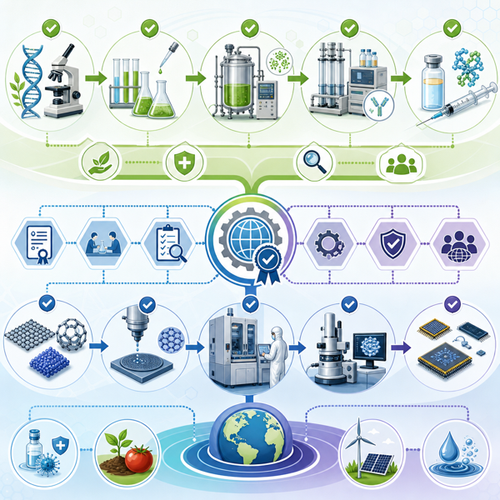
In June 2026, the natural and applied sciences sector experienced a wave of innovation with the publication of five pivotal international standards. These updates emphasize reproducibility, interoperability, and high-performance measurement techniques in biotechnology and nanomanufacturing. For research leaders, manufacturing engineers, quality managers, and compliance specialists, these standards set critical benchmarks for traceability, data integration, and material analysis. Part 1 of our coverage explores each new specification and what it means for professionals striving for compliance and excellence amid rapid technological change.
Overview of the Latest Standards in Natural and Applied Sciences
Natural and applied sciences form the backbone of technological advancement, health innovation, and material development. International standards foster trust and consistency across disciplines, ensuring quality and promoting global collaboration. With the increase in interdisciplinary projects and data-intensive methods, robust standardization has never been more critical. This article breaks down the latest five standards released in June 2026, offering insights into their requirements, benefits, and implications for the sector.
Professionals will find actionable intelligence on how to integrate these standards into operations, manage compliance burdens, and unlock new opportunities for innovation in biotechnology, personalized medicine, nanophotonic device manufacturing, and advanced materials like graphene.
Detailed Standards Coverage
ISO 23494-2:2026 - Common Provenance Model for Biological Material and Data
Biotechnology — Provenance information model for biological material and data — Part 2: Common provenance model
This international standard addresses a fundamental need: the ability to trace the origins, lineage, and quality of biological material and related data throughout their lifecycle. ISO 23494-2:2026 defines a common provenance model (CPM) for consistently generating, managing, and sharing provenance information, critical for reproducibility and scientific trustworthiness.
Key Requirements and Scope:
- Applies to biobanks, laboratories, manufacturers, developers, and service providers in biotechnology and biomedicine
- Provides a framework based on the widely adopted W3C PROV-DM standard for formalizing provenance data
- Specifies requirements for serialization, interoperability, traceability, and archiving of provenance data across diverse activities (from collection and testing to further analysis and digital processing)
- Enables organizations to meet FAIR data principles: findability, accessibility, interoperability, and reusability
Who Should Comply:
- Organizations handling acquisition, processing, storage, and distribution of biological materials (excluding those for clinical diagnosis or therapy)
- Providers of software and devices for provenance management
Practical Implementation:
- Integrates seamlessly with laboratory information management systems (LIMS) and digital research infrastructures
- Enhances audit trails, peer-assessments, and regulatory recognition of competence
- Notable changes include harmonization with the latest PROV-JSON serialization and extended support for meta-components like versioning and security extensions
Key highlights:
- Standardizes traceability for biological materials/data across their full lifecycle
- Improves reproducibility and reliability of life science research
- Enables compliance with FAIR and other global guidelines
Access the full standard:View ISO 23494-2:2026 on iTeh Standards
ISO 9491-1:2026 - Predictive Computational Models in Personalized Medicine
Biotechnology — Predictive computational models in personalized medicine research — Part 1: Constructing, verifying and validating models
ISO 9491-1:2026 marks a major advancement for computational modeling in personalized medicine, clarifying requirements for constructing, verifying, and validating predictive models used in life science research. With the increasing use of big data and artificial intelligence in healthcare, ensuring that models are reliable, robust, and interoperable is vital to patient safety and research outcomes.
Key Requirements and Scope:
- Defines best practices for model design, formatting, verification, validation, and simulation in the research context (not routine clinical use)
- Sets standards for data integration, provenance, annotation, and metadata management, adhering to FAIR and ALCOA (Attributable, Legible, Contemporaneous, Original, Accurate) principles
- Requires transparent documentation, ethical considerations, and quality assurance throughout model development
Who Should Comply:
- Research organizations, clinical trial data scientists, bioinformatics teams, pharmaceutical developers, AI in healthcare developers
Practical Implementation:
- Facilitates reproducibility and regulatory alignment for computational models used in translational research, drug development, and digital health tools
- Helps organizations harmonize modeling practices and data integration across heterogeneous sources
- New edition updates cover expanded references, improved terminology, and alignment with related provenance and biobanking standards
Key highlights:
- Establishes expectations for data quality and model interoperability
- Provides a structured process for model validation and simulation
- Includes guidance on ethical responsible modeling in healthcare research
Access the full standard:View ISO 9491-1:2026 on iTeh Standards
IEC TS 62565-4-3:2026 - Quantum Dot Enabled Light Emitting Diodes Specification
Nanomanufacturing - Product specification - Part 4-3: Nanophotonic products - Blank detail specification: quantum dot enabled light emitting diodes
IEC TS 62565-4-3:2026 creates a comprehensive blank detail specification (BDS) for quantum dot enabled light emitting diodes (QLEDs), central to the future of display technology and printed electronics. This standard provides a format for specifying key control characteristics (KCCs) for colloidal quantum dots (QDs), ensuring consistency in product performance, safety, and reliability.
Key Requirements and Scope:
- Focuses on QLEDs for display and printed LED applications (including TVs, monitors, flexible devices)
- Specifies an extensible template for optical, physical, chemical, and structural properties of QDs (solution, ink, and film forms)
- Recommends test methods for KCCs such as emission wavelength, fluorescence, film uniformity, size distribution, and more
- Leaves numeric values for performance customizable per customer-supplier agreements
Who Should Comply:
- QLED manufacturers, display device developers, quality control labs, nanomaterial suppliers
Practical Implementation:
- Guides procurement and quality assurance negotiations using a standardized format
- Supports rapid product customization while maintaining international compliance
- Highlights integration with established measurement standards for QD materials
Key highlights:
- Brings clarity and consistency to QLED performance specifications
- Enables transparent customer-supplier agreements on product criteria
- Supports innovation in nanophotonic and printed electronics markets
Access the full standard:View IEC TS 62565-4-3:2026 on iTeh Standards
IEC TS 62607-6-36:2026 - UV-Vis Characterization of Graphene and Reduced Graphene Oxide
Nanomanufacturing - Key control characteristics - Part 6-36: Graphene-related products - Reduction status of graphene oxide and reduced graphene oxide: UV-Vis absorption spectroscopy
This Technical Specification sets out a standard method for evaluating the reduction status of graphene oxide (GO) and reduced graphene oxide (rGO) using ultraviolet-visible (UV-Vis) absorption spectroscopy. As graphene and its derivatives become vital materials in energy, electronics, and advanced manufacturing, this method provides reliable quality assurance during production, storage, and commercialization.
Key Requirements and Scope:
- Defines a protocol for measuring and interpreting six UV-Vis spectral parameters
- Peak locations, shoulder peaks, full width at half maximum (FWHM), and spectral shift between GO and rGO
- Applicable to GO/rGO in solution or film forms and to both laboratory and commercial materials
- Useful for quality control and process monitoring during graphene reduction and production lifecycles
- Recommends reporting formats for transparency and reliability in supply chains
Who Should Comply:
- Graphene material producers, research labs, electronics manufacturers, quality control and testing facilities
Practical Implementation:
- Offers a non-destructive, accessible method for routine and advanced material characterization
- Supports compliance with customer and regulatory requirements
- Recommends the use of complementary methods for full chemical analysis as needed
Key highlights:
- Clarifies how to monitor graphene reduction consistently in manufacturing
- Enables better control of final material properties for industrial use
- Ensures traceable material certification for advanced electronics applications
Access the full standard:View IEC TS 62607-6-36:2026 on iTeh Standards
ISO 23494-1:2026 - Design Concepts and General Requirements for Provenance Information
Biotechnology — Provenance information model for biological material and data — Part 1: Design concepts and general requirements
ISO 23494-1:2026 is the foundation for provenance information in biotechnology—a crucial standard dictating how to design, manage, and provide provenance information for biological material and associated data. Clear documentation of the origins, processing, and transfers of such materials is critical to research transparency, regulatory compliance, and supply chain trust.
Key Requirements and Scope:
- Defines the provenance information model’s essential concepts, organizational roles, and mandatory requirements
- Specifies roles for controllers, processors, and providers of provenance information
- Applicable for any organization acquiring, processing, distributing, or providing biological materials/data (outside clinical diagnosis/treatment)
- Includes requirements for finalized provenance components, quality control, findability, accessibility, and versioning
Who Should Comply:
- Biobanking facilities, research labs, life science organizations, software providers, accreditation bodies
Practical Implementation:
- Facilitates robust digital documentation for traceability and quality assurance
- Lays the conceptual groundwork for more detailed, domain-specific provenance standards
- Updated to reflect changes in digital processability, persistent identifiers, and organizational responsibilities
Key highlights:
- Establishes organizational accountability and best practices for provenance management
- Supports automation of quality control and regulatory audits
- Increases research integrity and comparability
Access the full standard:View ISO 23494-1:2026 on iTeh Standards
Industry Impact & Compliance
The introduction of these standards marks a turning point for professionals in natural and applied sciences:
- Traceability and trust: Provenance frameworks (ISO 23494-1 and ISO 23494-2) offer a unified system for tracking every stage of biological material and data usage, enhancing transparency and data reusability.
- Model validation: ISO 9491-1 brings rigor and interoperability into the use of predictive models in medicine, directly impacting regulatory approval paths and research reproducibility.
- Advanced material certification: Harmonized methods for specifying QLEDs and for assessing graphene material (IEC TS 62565-4-3 and IEC TS 62607-6-36) elevate product quality, streamline procurement, and bolster global competitiveness.
Compliance Considerations:
- Organizations must align internal protocols, procurement criteria, and documentation practices with the latest standards.
- Early adoption reduces the risk of regulatory delays and customer disputes, while improving potential for accreditation and partnership.
- Each standard prescribes specific timelines and procedural adaptations, requiring prompt action from quality assurance and compliance teams.
Benefits of Adoption:
- Improved data integrity, auditability, and reproducibility
- Greater competitiveness through compliance with global best practices
- Enhanced ability to participate in demanding research consortia and commercial partnerships
- Elevated product and research differentiation via transparent certification
Risks of Non-Compliance:
- Regulatory penalties, failed audits, and delayed product launches
- Reputational harm and lost opportunities in high-value markets
- Increased difficulty in achieving accreditation or peer recognition
Technical Insights
Across these standards, several technical themes unite the guidance:
- Interoperability: Whether managing biological data or integrating QLED material data sheets, interoperability is emphasized through machine-readable formats, persistent identifiers, and standardized documentation.
- Quality Control & Traceability: The use of finalized provenance components and documented measurement procedures ensures that all parties in the research or production ecosystem can verify quality from source to application.
- Testing and Certification: Each standard details preferred measurement methods—such as UV-Vis absorption for graphene, ultrafast spectroscopy for quantum dots, and data annotation for computational models—enabling consistent, reproducible results that can be certified across borders.
- Best Practices:
- Regularly update digital management systems to reflect new serialization and interoperability requirements
- Train staff on new measurement protocols and documentation obligations
- Integrate quality and risk management with standardized provenance and material testing processes
Conclusion and Next Steps
These June 2026 standards represent significant progress in standardizing the management of biological data, computational medicine, and advanced nanomaterials. Organizations that prioritize rapid understanding and adoption of these standards will secure long-term advantages in compliance, collaboration, and innovation. All stakeholders—from researchers to production engineers to quality managers—should:
- Review the full text of each new standard (links provided above) and assess gaps in current practices.
- Update policies, digital systems, and staff training to align with the new requirements.
- Monitor future updates and related standards to maintain a robust, future-proof compliance framework.
Stay ahead by exploring the full suite of standards at iTeh Standards, and ensure your organization is prepared for the next generation of scientific and industrial challenges.
Categories
- Latest News
- New Arrivals
- Generalities
- Services and Management
- Natural Sciences
- Health Care
- Environment
- Metrology and Measurement
- Testing
- Mechanical Systems
- Fluid Systems
- Manufacturing
- Energy and Heat
- Electrical Engineering
- Electronics
- Telecommunications
- Information Technology
- Image Technology
- Precision Mechanics
- Road Vehicles
- Railway Engineering
- Shipbuilding
- Aircraft and Space
- Materials Handling
- Packaging
- Textile and Leather
- Clothing
- Agriculture
- Food technology
- Chemical Technology
- Mining and Minerals
- Petroleum
- Metallurgy
- Wood technology
- Glass and Ceramics
- Rubber and Plastics
- Paper Technology
- Paint Industries
- Construction
- Civil Engineering
- Military Engineering
- Entertainment