


July 2026: Key Developments in Electrical Engineering Standards
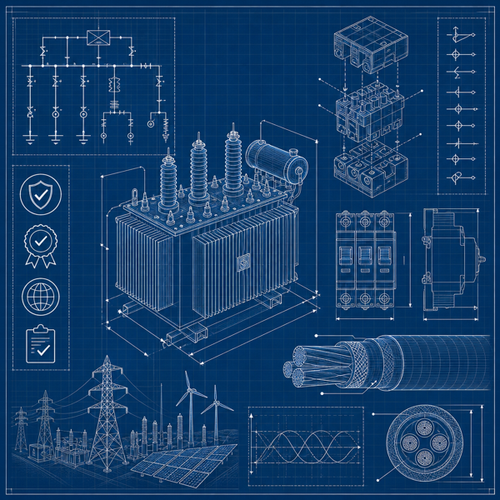
Five new standards shaping the future of electrical engineering were released in July 2026, marking a pivotal moment for professionals across the sector. From expanded digitalization in switchgear to advanced testing for transformers and a refined approach to asset risk management, these standards set the direction for safer, smarter, and more resilient energy infrastructure. This update, the third in a four-part series, spotlights the most significant releases for engineers, compliance officers, asset managers, and anyone engaged in the evolving field of power systems.
Overview
The electrical engineering industry continues to evolve rapidly, driven by trends in digital transformation, grid modernization, and enhanced safety. International standards play a critical role in guiding this evolution, providing consensus-based requirements and methods that ensure interoperability, dependability, and best practice across the globe.
In this article, you'll find essential insights into five newly published standards, each influencing core aspects of power equipment, network asset management, and protection from electrical surges. Whether you're a designer, quality manager, or procurer of electrical components, these updates offer valuable information for compliance, risk mitigation, and technical excellence.
Detailed Standards Coverage
IEC TR 62271-322:2026 - The Use of Digital Technologies in High-Voltage Switchgear
High-voltage switchgear and controlgear – Part 322: The use of digital technologies
This technical report provides state-of-the-art guidance on the application of digital technologies throughout the life cycle of high-voltage switchgear and controlgear. It is intended for designers, asset managers, and stakeholders aiming to leverage digital tools for increased reliability and operational efficiency in contemporary power grids.
Scope and Key Requirements:
- Covers digital trends such as Internet of Things (IoT), cloud/edge computing, digital twins, artificial intelligence, and cybersecurity.
- Details system architectures suitable for modern substations, diagnostic solutions, and methods for integrating digital sensors and control systems.
- Highlights best practices for interoperability, data-driven asset management, retrofit strategies, and cybersecurity.
Who Should Comply:
- Manufacturers, operators, asset managers, utilities, and engineers involved in design and maintenance of high-voltage switchgear.
Notable Changes:
- Updates to reflect new technologies and the evolving IEC strategy.
- Synchronization with latest editions of IEC 62271-1 and IEC 62271-3.
- Expanded focus on cybersecurity and artificial intelligence applications.
Key highlights:
- Detailed guidance on digitalization of legacy and new equipment
- State-of-the-art recommendations for IoT and cybersecurity in substations
- Methods for specification, testing, and qualification of digital technologies
Access the full standard:View IEC TR 62271-322:2026 on iTeh Standards
IEC 60076-4:2026 - Impulse Testing for Power Transformers and Reactors
Power transformers – Part 4: Lightning impulse and switching impulse tests of power transformers and reactors
This updated standard defines the procedures and technical requirements for performing high-voltage lightning and switching impulse tests on power transformers and reactors. The standard is crucial for verifying equipment resilience against transient overvoltages often encountered in energy distribution networks.
Scope and Key Requirements:
- Specifies waveform characteristics, test circuits, grounding practices, failure detection methods, and test procedures.
- Defines methods for both full-wave and chopped-wave lightning impulses, as well as switching impulses, including the verification of impulse voltage measuring systems.
- Provides instructions on interpreting oscillograms and digital recordings for assessing dielectric performance.
Who Should Comply:
- Power transformer and reactor manufacturers
- Testing laboratories
- Electrical utilities and grid operators conducting type and acceptance tests
Notable Changes:
- Enhanced requirements for digital recording and analysis
- Updated connection diagrams and new oscillogram examples
- Strengthened procedures for failure detection and documentation
Key highlights:
- Comprehensive test procedures for both lightning and switching impulses
- Guidance on oscilloscope readings and digital test data interpretation
- Vital for transformer manufacturers and high-voltage testing facilities
Access the full standard:View IEC 60076-4:2026 on iTeh Standards
IEC 63223-2:2026 - Risk-Informed Asset Management in Power Systems
Management of network assets in power systems – Part 2: Risk-informed decision-making process
Addressing the growing complexity of power grid asset management, this standard provides a framework for using risk-informed decision-making (RIDM) in managing existing network assets. The process supports transparency, traceability, and context-driven strategies for organizations involved in power transmission and distribution.
Scope and Key Requirements:
- Aligns with ISO 55000:2024 principles for asset management and integrates risk, stakeholder concerns, and knowledge evaluation.
- Details essential steps from setting the asset management context through to creating defensible investment justifications.
- Covers risk identification, assessment, mitigation strategies, and performance evaluation—regardless of calculation methodologies used.
Who Should Comply:
- Utilities, transmission operators, asset managers, regulators, and service providers involved in grid asset management.
Notable Features:
- Framework for continuous improvement and lessons learned
- Guidance on integrating knowledge uncertainty and risk communication into decision processes
Key highlights:
- Structured RIDM process mapped to global asset management standards
- Emphasis on transparency and traceability in investment decisions
- Scalable from small utilities to large grid operators
Access the full standard:View IEC 63223-2:2026 on iTeh Standards
EN IEC 60947-10:2026 - Semiconductor Circuit-Breakers for Low-Voltage Applications
Low-voltage switchgear and controlgear – Part 10: Semiconductor circuit-breakers
This European and international standard specifies requirements for semiconductor-based circuit-breakers (SCCBs and SCHCBs) rated up to 1,000 V AC or 1,500 V DC. These devices play an essential role in modern distribution boards and industrial installations where rapid and reliable switching is crucial.
Scope and Key Requirements:
- Applies to SCCBs with semiconductor switching elements including hybrid types combining mechanical and electronic functions.
- Defines requirements for operational performance under normal and abnormal circuit conditions (including overload and short-circuit), dielectric and electromagnetic properties, and isolation.
- Specifies test methods, marking, product information, and essential protections for personnel and equipment.
Who Should Comply:
- Manufacturers of low-voltage switchgear
- System integrators, engineers, and facility managers responsible for electrical distribution safety and performance
Notable Changes:
- Expanded categories and classes of circuit-breakers by technology and application
- New test procedures for ensuring reliability under high-stress conditions
Key highlights:
- Comprehensive scope covering both SCCBs and SCHCBs
- Advanced protection features for high-performance industrial applications
- Clear requirements for installation, marking, and operator safety
Access the full standard:View EN IEC 60947-10:2026 on iTeh Standards
EN IEC 61643-361:2026 - Surge Isolation Transformers for Low-Voltage Distribution
Low-voltage surge protective devices – Part 361: Surge isolation transformers (SITs) connected to low-voltage distribution system – Requirements and test methods
Designed for surge mitigation in critical power infrastructure, this standard covers surge isolation transformers (SITs) intended for installation in 50/60 Hz power circuits up to 1,000 V RMS. SITs play a crucial role in protecting sensitive electronics and establishing lightning protection zones.
Scope and Key Requirements:
- Focuses on SITs with enhanced impulse withstand voltage (minimum 30 kV)
- Addresses surge performance, test methods for insulation resistance, power frequency withstand voltage, and impulse voltage
- Defines symbols, essential service conditions, application best practices, and sample preparation for testing
Who Should Comply:
- Manufacturers and installers of surge protection equipment, facility owners, engineers specifying electrical safety systems
Notable Features:
- Enhanced insulation and electrical screening requirements
- Does not cover ordinary transformer tests (reference IEC 61558 series)
- Provides critical guidance for integrating SITs into comprehensive surge protection strategies
Key highlights:
- Surge performance rating and type test requirements for SITs
- Guidance for use in lightning protection and electrical safety applications
- Clear protocols for sample preparation, testing, and marking
Access the full standard:View EN IEC 61643-361:2026 on iTeh Standards
Industry Impact & Compliance
The July 2026 standards release brings significant changes to how companies approach electrical engineering. Adoption ensures enhanced safety, compliance with the latest industry practices, and the ability to harness new technologies (like IoT and digital twins) while minimizing cyber and operational risks.
Key compliance considerations:
- Review update cycles for equipment and procurement specifications to ensure conformance.
- Implement revised testing and documentation protocols for high-voltage equipment and surge protection.
- Align asset management and decision processes—with a focus on transparency and risk for ongoing investments.
Benefits of adoption:
- Mitigated risk of equipment failure and downtime
- Streamlined regulatory and contractual compliance
- Improved safety for personnel and assets
Risks of non-compliance:
- Exposure to electrical faults, reduced system reliability
- Potential penalties or loss of certification
- Competitive disadvantage in bidding and contracts
Technical Insights
Across the set of standards, professionals should note these recurring technical themes:
- Digitalization & Cybersecurity: Integration of IoT, AI, and digital twins demands strong security and interoperability measures—covered robustly in IEC TR 62271-322:2026.
- Testing & Certification: Updated methods for impulse and surge testing (IEC 60076-4:2026, EN IEC 61643-361:2026) stress the importance of verified, documented test results, digital recording, and traceability.
- Risk-Based Asset Management: With IEC 63223-2:2026, organizations are encouraged to incorporate risk analysis and stakeholder input at each asset lifecycle stage, reinforcing performance evaluation and improvement.
- Product Data & Marking: Detailed marking and documentation requirements in low-voltage products (EN IEC 60947-10:2026) ensure installation and operation align with global safety expectations.
- Surge Mitigation Best Practices: EN IEC 61643-361:2026 provides a clear path for integrating SITs with enhanced dielectric performance into surge protective architectures.
Implementation Best Practices:
- Maintain up-to-date documentation and traceability for all assets and tests.
- Train staff on new cybersecurity and safety requirements.
- Engage with standards early in product and infrastructure design phases.
Testing and certification should be handled by accredited laboratories or in-house teams with access to the latest reference materials and test protocols.
Conclusion and Next Steps
The July 2026 standards advance the state of electrical engineering, supporting digital innovation, operational resilience, and safer power systems. To stay ahead, organizations should:
- Assess gaps in current practices against new standards.
- Prioritize staff training and awareness for digital and risk-based requirements.
- Integrate updated compliance measures into equipment procurement and asset management cycles.
For full details, direct access, and ongoing updates, professionals are encouraged to:
- Explore each new standard on iTeh Standards
- Subscribe for news on upcoming releases
- Engage with industry working groups and professional societies
Compliance is not just a requirement—it's a foundation for operational excellence in the modern, digitalized electric power sector.
Categories
- Latest News
- New Arrivals
- Generalities
- Services and Management
- Natural Sciences
- Health Care
- Environment
- Metrology and Measurement
- Testing
- Mechanical Systems
- Fluid Systems
- Manufacturing
- Energy and Heat
- Electrical Engineering
- Electronics
- Telecommunications
- Information Technology
- Image Technology
- Precision Mechanics
- Road Vehicles
- Railway Engineering
- Shipbuilding
- Aircraft and Space
- Materials Handling
- Packaging
- Textile and Leather
- Clothing
- Agriculture
- Food technology
- Chemical Technology
- Mining and Minerals
- Petroleum
- Metallurgy
- Wood technology
- Glass and Ceramics
- Rubber and Plastics
- Paper Technology
- Paint Industries
- Construction
- Civil Engineering
- Military Engineering
- Entertainment