


Image Technology Standards Updated: Key May 2026 Releases (Part 1)
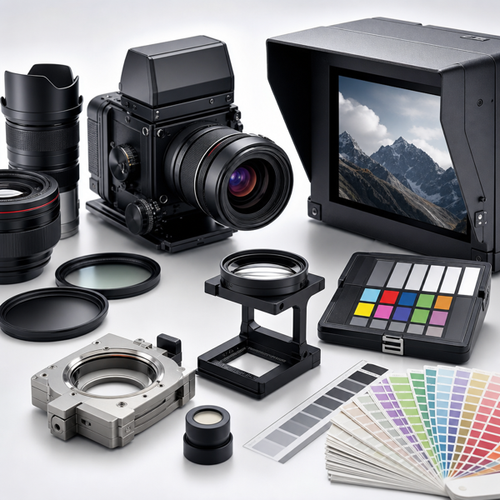
In May 2026, the Image Technology sector saw the release of five pivotal international standards that advance how organizations measure, specify, and manage optical, digital, and printed products. Covering areas from precision optics and 3D reproduction workflows to document preservation and environmental compliance in print finishing, these newly published standards set the direction for quality, consistency, and innovation across the industry. Part 1 of this two-part overview takes a deep dive into each release, highlighting the core changes, requirements, and practical implications for professionals working in optics, photonics, graphic technology, and related fields.
Overview / Introduction
Image Technology is a rapidly evolving field covering optics, digital content management, graphic arts, and a range of interconnected disciplines. Standards are the bedrock for ensuring that products, components, and workflows meet global expectations for performance, compatibility, and sustainability.
This article highlights five newly released ISO standards that address measurement and specification of optical elements, advanced document preservation methods, one-parameter translucency representation for 3D workflows, and new guidelines for environmental disclosure in print finishing. Readers will gain:
- Insight into key specifications and requirements of each standard
- Practical context for implementation in diverse sectors
- Compliance strategies and technical best practices
- Awareness of industry impacts and benefits
Detailed Standards Coverage
ISO 14999-4:2026 - Interpretation and Evaluation of Optical Surface Form and Wavefront Deformation
Optics and photonics — Measurement of optical elements and optical systems — Part 4: Interpretation and evaluation of surface form and wavefront deformation tolerances specified in ISO 10110
ISO 14999-4:2026 provides the definitive framework for interpreting and evaluating surface form deviations and wavefront deformations in optical elements and systems, covering both interferometric and non-interferometric measurement techniques. The standard clarifies definitions, nomenclature, and evaluation methods aligned with ISO 10110, offering a unified approach to data from tactile, coordinate-based, and advanced wavefront measuring instruments, as well as classic interferometry.
Organizations working in optical manufacturing, photonics, and metrology must comply with these requirements when specifying or verifying tolerances for lenses, mirrors, and other precision optics. This edition removes previous limitations around measurement technique, presents new calculation rules, introduces a Zernike residual RMS specification, and details the handling of alignment and curvature deviations.
Key highlights:
- Expanded scope to include non-interferometric measurement data
- Refined definitions for optical functions, Zernike polynomials, and residual RMS evaluation
- Calculation guidelines for peak-to-valley values and curvature deviations
Access the full standard:View ISO 14999-4:2026 on iTeh Standards
ISO 10110-5:2026 - Surface Form Tolerances for Optical Drawings
Optics and photonics — Preparation of drawings for optical elements and systems — Part 5: Surface form tolerances
Building upon previous editions, ISO 10110-5:2026 establishes standardized rules for indicating surface form tolerances on drawings for optical elements and systems. The standard now prioritizes the use of nanometres as the default unit for specifying surface deviations, recognizing the increasing prevalence of non-interferometric testing methods. It applies to a variety of surface types—plano, spherical, aspheric, cylindric, toric, and more—making it broadly relevant for design, manufacturing, and quality assurance departments.
Key updates include refined notation for tolerances, explicit guidance for slope and curvature deviation, as well as Zernike polynomial-based tolerance reporting. The revision also clarifies local slope calculations and enables clearer communication between optical designers and fabricators.
Key highlights:
- Default use of nanometres instead of fringe spacings for deviation units
- Enhanced support for non-interferometric testing workflows
- Improved specification methods for Zernike coefficients, curvature, and slope deviations
Access the full standard:View ISO 10110-5:2026 on iTeh Standards
ISO 20271-2:2026 - Fundamentals of Long-Term Preservation for Textual Documents
Document management — Reference model for long-term preservation of textual documents — Part 2: Fundamentals
In the era of rapid digital format turnover, ISO 20271-2:2026 offers a practical reference model for evaluating and ensuring the long-term preservation of textual documents. The standard defines a five-layer abstraction to analyze and record document elements, property types, and classifications relevant to preservation, without dictating specific technical or process methods. Applicable to archivists, records managers, and digital content curators, this guidance addresses risks posed by obsolescence in file formats such as TXT, DOCX, ODT, PDF, and HTML.
By adopting this model, organizations can systematically assess preservation readiness, structure digital archives for future accessibility, and make consistent, technology-agnostic decisions about document sustainability.
Key highlights:
- Comprehensive multi-layered model for analyzing textual document properties
- Universal applicability to varied document formats and content types
- Practical basis for preservation strategy, risk analysis, and interoperability
Access the full standard:View ISO 20271-2:2026 on iTeh Standards
ISO 19307:2026 - One-Parameter Representation of Translucency for Graphic and 3D Technologies
Graphic technology — Measurement and one-parameter representation of translucency
ISO 19307:2026 introduces the concept of 'translucency alpha'—a new one-dimensional parameter for quantifying the translucency of flat materials that absorb and scatter light. Its primary aim is to support accurate appearance-based reproduction workflows in 3D printing and graphic technology, where traditional additive color models fail to account for real-world translucency. By defining robust measurement procedures and reference conditions, this standard enables practitioners to assign, match, and adjust translucency characteristics in both virtual and printed objects.
Material scientists, 3D content developers, and graphic engineers will find this standard essential for applications ranging from additive manufacturing to digital rendering and visual appearance assessment.
Key highlights:
- Defines and quantifies 'translucency alpha' for reproducibility in 3D and graphic workflows
- Applicable measurement and simulation methods for various materials
- Direct enablement of perceptual consistency in digital and physical additive processes
Access the full standard:View ISO 19307:2026 on iTeh Standards
ISO 22067-2:2026 - Environmental Communication Requirements for Print Finishing
Graphic technology — Requirements for communication of environmental aspects of printed products — Part 2: Print finishing
With environmental accountability now at the forefront of printing supply chains, ISO 22067-2:2026 specifies critical data requirements and communication practices for post-press (finishing) processes. Stretching from surface decoration to binding and packaging, the standard helps organizations collect, verify, and relay reliable information on materials, chemicals, emissions, energy usage, and waste associated with print finishing. Special attention is paid to environmentally hazardous substances and compliance with regulations, including VOC emissions and claims of climate neutrality.
The standard benefits commercial printers, packaging companies, marketing material producers, and firms responding to growing sustainability demands across global and regional markets.
Key highlights:
- Defines principles for environmental statements specific to print finishing
- Establishes required data types (materials, emissions, energy, recyclability, etc.)
- Addresses regulatory disclosure, risk assessment, and comparative claims
Access the full standard:View ISO 22067-2:2026 on iTeh Standards
Industry Impact & Compliance
The May 2026 updates in Image Technology standards have wide-ranging impacts for:
- Optical manufacturers: More precise and harmonized tolerancing and measurement, lowering the risk of miscommunication and improving product quality lifecycle.
- Digital archivists and record managers: Enhanced guidance for structuring and analyzing long-term digital document repositories, making future-proofing actionable.
- Graphic and 3D technology professionals: Reliable assessment of critical material properties (like translucency) translates to superior rendering and 3D print quality.
- Print and packaging businesses: New clarity in environmental disclosure expectations allows for clear communication in tenders, regulatory filings, and to end users.
Compliance with these standards is not only advantageous for market access and customer confidence, but also essential for passing audits, meeting regulatory demands, and maintaining certifications. Most standards take effect upon publication, but organizations should plan a transition period for internal process changes, training, and system updates.
Benefits of adoption:
- Improved product reliability, traceability, and global acceptability
- Structured, future-proofed documentation, both physical and digital
- Clearer environmental communication and regulatory compliance
- Enhanced workflow interoperability from design through manufacturing
Risks of non-compliance:
- Increased likelihood of failed audits or rejected product batches
- Reduced competitiveness in regulated and environmentally sensitive markets
- Loss of intellectual property or knowledge due to improper document preservation
- Inconsistent manufacturing and quality outcomes
Technical Insights
A technical cross-section of these new standards reveals shared best practices and critical requirements:
- Consistent measurement units: Across optical and graphic standards, the shift to SI units like nanometres is now preferred, minimizing ambiguity and errors.
- Layered property representation: Abstraction models (as in ISO 20271-2) offer versatile frameworks for managing complex digital and physical assets.
- Process-oriented data collection: Updated environmental communication standards reinforce comprehensive data verification and record-keeping at every stage.
- Polynomial and spectral analysis: Optical elements now demand detailed reporting, including Zernike coefficient tables and advanced curvature/slope analysis.
- One-parameter material descriptors: Translucency alpha exemplifies industry movement toward simple, yet physically grounded, quality metrics.
Implementation best practices:
- Map legacy processes and drawings to new standard requirements—update templates, measurement routines, and specification forms.
- Validate laboratory instrumentation and software to ensure compatibility with the latest unit and reporting expectations.
- Train design, quality, and compliance staff on new standards, with emphasis on interpretation, evaluation, and environmental disclosure protocols.
- Engage supply chain partners early to coordinate joint compliance and implementation timelines.
- Integrate environmental and preservation standards into procurement and archiving workflows for maximum impact.
Testing and certification considerations:
- Use internationally recognized calibration and verification procedures, as outlined in the standards
- Document control and traceability become more important with structured data collection
- Certification bodies may update assessment protocols as new standards are adopted
Conclusion / Next Steps
The May 2026 releases covered here set a new benchmark for precision, sustainability, and digitally aware workflows in Image Technology. Whether your focus is optics, graphic reproduction, document management, or sustainable printing, implementing these updated standards will future-proof your processes and improve both compliance and product quality.
Recommended actions:
- Review your organization’s current documentation, measurement, and reporting practices against the new requirements
- Identify training or system gaps and create an action plan for standards compliance
- Monitor iTeh Standards for Part 2 of this review, upcoming standards, and further implementation resources
- Proactively update contracts and quality documents to reference the latest ISO editions
Stay ahead—explore the full content of the standards referenced, and leverage iTeh Standards as your trusted resource for ongoing updates and expert insight.
Categories
- Latest News
- New Arrivals
- Generalities
- Services and Management
- Natural Sciences
- Health Care
- Environment
- Metrology and Measurement
- Testing
- Mechanical Systems
- Fluid Systems
- Manufacturing
- Energy and Heat
- Electrical Engineering
- Electronics
- Telecommunications
- Information Technology
- Image Technology
- Precision Mechanics
- Road Vehicles
- Railway Engineering
- Shipbuilding
- Aircraft and Space
- Materials Handling
- Packaging
- Textile and Leather
- Clothing
- Agriculture
- Food technology
- Chemical Technology
- Mining and Minerals
- Petroleum
- Metallurgy
- Wood technology
- Glass and Ceramics
- Rubber and Plastics
- Paper Technology
- Paint Industries
- Construction
- Civil Engineering
- Military Engineering
- Entertainment