

October 2026: New Standards Advance Rubber and Plastics Manufacturing
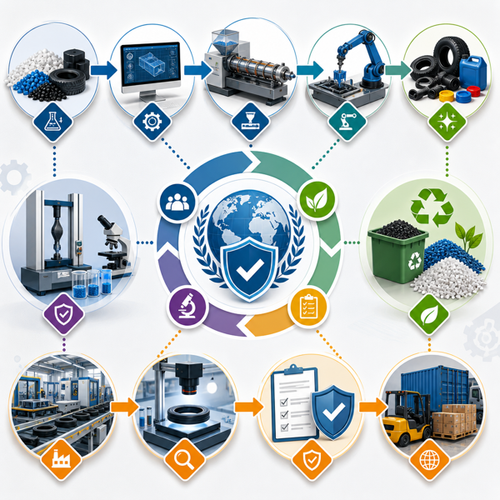
October 2026 Brings Key Standards Updates for the Rubber and Plastics Industries
As innovation and quality standards become ever more critical in manufacturing, the rubber and plastics industries see significant updates this October 2026. Five newly published international standards now provide cutting-edge requirements and test methods for the production, characterization, and testing of key materials including polyurethanes, flexible cellular foams, and polymeric components. Professionals in manufacturing, quality assurance, research, and procurement stand to benefit significantly from these advancements—with improved accuracy, sustainability, and compliance as central themes.
Overview
The rubber and plastics industries are foundational to countless sectors, from automotive and construction to packaging and consumer goods. As performance requirements rise and sustainability pressures mount, robust standards ensure that materials meet demanding safety, reliability, and environmental benchmarks. Regularly updated specifications underpin every aspect of product and process control—from mechanical testing to chemical analysis and rheological characterization.
This article reviews the five most recent standards published in October 2026, highlighting their scope, key technical requirements, and practical implications. Whether you oversee quality control, are involved in technical engineering, or manage procurement and compliance for your organization, understanding these updates is vital for maintaining leadership in the sector.
What you'll learn:
- Scope and significance of each new or revised standard
- Key requirements and methods introduced
- Who needs to comply and when
- How to leverage these documents for improved material performance and regulatory compliance
Detailed Standards Coverage
EN ISO 8067:2026 – Flexible Cellular Polymeric Materials - Determination of Tear Strength
Flexible cellular polymeric materials – Determination of tear strength (ISO 8067:2026)
EN ISO 8067:2026 specifies standardized methods to determine the tear strength of flexible cellular polymeric materials—widely used in foams for automotive, furniture, bedding, packaging, and technical insulation applications. It formalizes two key test procedures—Method A (trouser test piece) and Method B (angle test piece without a nick)—providing a clear, reproducible means to assess key mechanical failure points.
Key requirements and scope:
- Details on specimen preparation for both trouser and angle test pieces
- Calibration and use of tensile testing machines (must meet class 2 accuracy as per ISO 7500-1)
- Fixed test piece conditioning and result reporting for consistency and comparability
- Precise addition of information regarding surfaces with ‘skin’ (i.e., integral outer layers)
Who should comply:
- Foam producers
- Automotive interiors suppliers
- Furniture and mattress manufacturers
- Technical QA/QC laboratories
- Regulatory authorities referencing minimum mechanical performance
Implementation & Notable Changes:
- Clarifies measurement and reporting of surface characteristics (skin): essential for industries where surface integrity relates to durability
- Harmonized with previous editions, but introduces updated requirements reflecting recent material developments
Key highlights:
- Two recognized test methods for differing material configurations
- Improved measurement repeatability
- Reporting now includes location/quantity of surfaces with skin
Access the full standard:View EN ISO 8067:2026 on iTeh Standards
EN ISO 3219-3:2026 – Rheology: Rotational and Oscillatory Rheometry Test Procedures
Rheology – Part 3: Test procedure and examples for the evaluation of results when using rotational and oscillatory rheometry (ISO 3219-3:2026)
EN ISO 3219-3:2026 is a new standard dedicated to best practices in the setup, execution, and interpretation of advanced rheometry for polymers, dispersions, and elastomers. It provides comprehensive guidance for engineers and laboratory technicians who must select the appropriate device, geometry, and control parameters for rotational and oscillatory testing.
Key requirements and scope:
- Step-by-step selection of measuring device (rotational rheometers, viscometers)
- Guidance on geometry selection: cone-plate, parallel-plate, coaxial cylinder, etc.
- Strategies for maintaining temperature control and sample preparation
- Test performance principles, example profiles, and interpretation of typical rheological test data
- Criteria for ensuring test validity and reporting best practices
Who should comply:
- Polymer and elastomer R&D labs
- Quality control professionals in plastics manufacturing
- Suppliers of specialty adhesives, coatings, and elastomeric products
Implementation & Notable Changes:
- Codifies test condition controls to assure consistent results across the industry
- Offers worked examples (Annex A) to support method transfer and benchmark analysis
Key highlights:
- Detailed guidance on choosing correct measurement setup
- Covers both time- and temperature-dependent analyses
- Practical calculation examples included
Access the full standard:View EN ISO 3219-3:2026 on iTeh Standards
ISO 8067:2026 – Flexible Cellular Polymeric Materials — Determination of Tear Strength
Flexible cellular polymeric materials — Determination of tear strength
ISO 8067:2026 aligns closely with EN ISO 8067:2026, representing the global edition published under ISO auspices. It details the technical protocol for tear strength testing, ensuring uniform application in both international trade and global supply chains. This edition replaces ISO 8067:2018, reflecting updated test reporting (notably the location and number of surfaces with skin).
Key requirements and scope:
- Method A: Test with trouser-shaped specimens for ductile tearing
- Method B: Test with angle test pieces without a pre-cut nick for more brittle foams
- Calibration requirements for force measurement equipment
- Instructions for test conditioning, execution, and result calculation
Who should comply:
- International foam manufacturers and converters
- OEMs sourcing flexible foams for technical applications
- Third-party testing and certification labs
Implementation & Notable Changes:
- Section 10 now mandates explicit reporting of ‘skin’ areas, impacting both product design and regulatory declaration
- Reflects technical harmonization with the European standard and global practice
Key highlights:
- Harmonized with EN ISO 8067:2026 for global consistency
- Robust guidance for quality assessment and supplier qualification
- Essential for regulatory compliance and trade
Access the full standard:View ISO 8067:2026 on iTeh Standards
ISO 3219-3:2026 – Rheology — Part 3: Test Procedure and Examples for the Evaluation of Results when Using Rotational and Oscillatory Rheometry
Rheology — Part 3: Test procedure and examples for the evaluation of results when using rotational and oscillatory rheometry
ISO 3219-3:2026 is a foundational document for laboratories and R&D centers engaged in the rheological evaluation of polymers and their compounds. It formalizes procedures for setting up and interpreting both rotational and oscillatory rheometry, ensuring comparability and repeatability of data globally.
Key requirements and scope:
- Selection guidelines for rheometer type and sample geometry based on material properties (e.g., viscosity, elasticity, heterogeneity)
- Best practices for temperature control systems (active, passive, solvent traps)
- Procedural steps for crucial test types: viscosity/flow curves, frequency/amplitude sweeps, time-temperature superposition, creep/recovery testing
- Reporting requirements, including measurement uncertainties and raw data handling
Who should comply:
- Plastics producers employing process or formulation R&D
- Testing labs serving automotive, aerospace, medical device, and consumer goods sectors
- Equipment manufacturers and technical consultants
Implementation & Notable Changes:
- New procedural diagrams and actionable selection tables for geometry and test method
- Calculation examples to assist with practical adoption and training (Annex A)
Key highlights:
- Universalizes rheological testing approach for polymers
- Supports reproducible test conditions for cross-lab comparability
- Broadens guidance to include compliance with both rotational and oscillatory testing regimes
Access the full standard:View ISO 3219-3:2026 on iTeh Standards
ISO 24862:2026 – Polyols for Use in the Production of Polyurethanes — Determination of Degree of Unsaturation for Polyols by Raman Spectrometric Method
Plastics — Polyols for use in the production of polyurethanes — Determination of degree of unsaturation for polyols by Raman spectrometric method
ISO 24862:2026 introduces an environmentally responsible, highly sensitive method for determining the degree of unsaturation in polyether polyols—critical precursors for polyurethane foams and elastomers. This Raman spectroscopic approach replaces mercury-based titration with a more sustainable, accurate, and operator-friendly technology.
Key requirements and scope:
- Applicability: Polyether polyols (excludes compounds conjugated with carbonyl, carboxyl, or nitrile groups)
- Principle: Raman peak intensity measurement of C=C bands (allyl and cis-propenyl), referencing m-dichlorobenzene as an internal standard
- Equipment: Raman spectrometer (532 nm excitation), capillary sample vessels, analytical microbalance
- Formulae and calculation methodology for assessing unsaturation in meq/g, covering both allyl and cis-propenyl types
Who should comply:
- Polyol manufacturers
- Polyurethane foam producers (flexible, rigid, spray)
- R&D labs developing new polyol grades or evaluating alternative feedstocks
- Third-party testing labs specializing in polymer chemistry
Implementation & Notable Changes:
- Phases out the use of hazardous mercury from industrial analytics (as used in ISO 17710)
- Reduces environmental and regulatory burden while increasing analytical specificity
- Offers stepwise test procedure and model compounds for calibration
Key highlights:
- Mercury-free method, major environmental benefit
- Allows precise differentiation between unsaturation types
- Detailed reporting and calculation protocols for transparency and reproducibility
Access the full standard:View ISO 24862:2026 on iTeh Standards
Industry Impact & Compliance
Strategic Importance for Businesses
Adopting the latest standards is not simply about compliance—it is essential for safeguarding product quality, process efficiency, and market reputation. These standards directly address:
- Mechanical reliability and safety (tear strength, EN ISO 8067/ISO 8067)
- Process quality and product consistency (rheometry, EN ISO 3219-3/ISO 3219-3)
- Regulatory and environmental requirements (mercury-free analytics, ISO 24862)
Compliance Considerations and Timelines
- Immediate evaluation: Organizations should review quality management systems and testing protocols to ensure they now meet updated requirements
- Transition planning: Adapt existing test methods to align with new calculation/reporting structures
- Certification and audit readiness: Updated test procedures and reports support regulatory and customer audits
Benefits of Adoption
- Improved measurement accuracy and reproducibility
- Greater acceptance of test reports across international markets
- Reduced environmental impact and safer laboratory environments
- Stronger position in global supply chains
Risks of Non-Compliance
- Rejection of shipments or products in regulated or customer-specific markets
- Penalties for environmental non-conformance (especially mercury use)
- Missed opportunities in providing value-added, sustainable materials
Technical Insights
Common Technical Features
- Test specimen preparation: All standards specify detailed specimen preparation and conditioning procedures to minimize result variability.
- Reporting requirements: Enhanced transparency; comprehensive data reporting ensures traceability and defensibility of test results.
- Harmonization: Both EN and ISO editions are tightly harmonized, promoting global alignment and making cross-border acceptance of test data simpler.
Implementation Best Practices
- Training: Ensure laboratory personnel are trained in both new equipment (e.g., Raman spectroscopy) and revised reporting protocols.
- Validation: Benchmark new methods against legacy procedures—monitor for consistency and note improvements in sensitivity or reproducibility.
- Data management: Update LIMS or quality documentation systems to capture and archive enhanced reporting fields—for compliance and trend analysis.
- Supplier engagement: Communicate updated requirements through supply chains—for both inbound material testing and outgoing product validation.
Testing and Certification Considerations
- Re-accreditation or method validation may be necessary for certified labs
- Internal and supplier audits should reference the updated clause numbers, calculation procedures, and environmental provisions
- Equipment calibration schedules should be updated to reference new method criteria
Conclusion and Next Steps
The October 2026 publication cycle marks a major stride forward for the rubber and plastics industries, with new and revised standards that prioritize accuracy, sustainability, and global harmonization. Engineers, quality professionals, and compliance strategists should take proactive steps to:
- Review and integrate updated test methods into internal SOPs
- Engage with suppliers and customers to ensure consistent understanding and adoption
- Monitor future standards updates—this is the first article in a three-part series covering this month's releases
To maintain compliance, quality, and competitive edge, explore each standard in depth:
- Review the full text on iTeh Standards for implementation guidance
- Consult your accreditation bodies for transition and recertification requirements
- Stay tuned for Parts 2 and 3, where we'll continue our coverage of vital new standards for the rubber and plastics field.
Stay informed. Stay compliant. Position your organization at the forefront of materials excellence.
Categories
- Latest News
- New Arrivals
- Generalities
- Services and Management
- Natural Sciences
- Health Care
- Environment
- Metrology and Measurement
- Testing
- Mechanical Systems
- Fluid Systems
- Manufacturing
- Energy and Heat
- Electrical Engineering
- Electronics
- Telecommunications
- Information Technology
- Image Technology
- Precision Mechanics
- Road Vehicles
- Railway Engineering
- Shipbuilding
- Aircraft and Space
- Materials Handling
- Packaging
- Textile and Leather
- Clothing
- Agriculture
- Food technology
- Chemical Technology
- Mining and Minerals
- Petroleum
- Metallurgy
- Wood technology
- Glass and Ceramics
- Rubber and Plastics
- Paper Technology
- Paint Industries
- Construction
- Civil Engineering
- Military Engineering
- Entertainment