


ASTM F2387-04(2012)
(Specification)Standard Specification for Manufactured Safety Vacuum Release Systems (SVRS) for Swimming Pools, Spas and Hot Tubs
Standard Specification for Manufactured Safety Vacuum Release Systems (SVRS) for Swimming Pools, Spas and Hot Tubs
SCOPE
1.1 This specification covers requirements for safety vacuum release systems (SVRS) for use on swimming pools, spas, hot tubs, and wading pools.
1.2 This specification is intended to reduce the risk of drowning or entrapment by providing a rapid detection and rapid release of vacuum or preventing a dangerous vacuum altogether when a person becomes entrapped at the suction outlet serving a pumping system.
1.3 The values stated in customary English units are to be regarded as the standard. Any values in parentheses are given for information only.
1.4 The following safety hazards caveat pertains only to the test methods section, Section 5, of this specification. This standard does not purport to address all of the safety concerns, if any, associated with its use. It is the responsibility of the user of this standard to establish appropriate safety and health practices and determine the applicability of regulatory limitations prior to use.
General Information
Standards Content (Sample)
NOTICE: This standard has either been superseded and replaced by a new version or withdrawn.
Contact ASTM International (www.astm.org) for the latest information
Designation:F2387 −04 (Reapproved 2012)
Standard Specification for
Manufactured Safety Vacuum Release Systems (SVRS) for
Swimming Pools, Spas and Hot Tubs
This standard is issued under the fixed designation F2387; the number immediately following the designation indicates the year of
original adoption or, in the case of revision, the year of last revision.Anumber in parentheses indicates the year of last reapproval.A
superscript epsilon (´) indicates an editorial change since the last revision or reapproval.
INTRODUCTION
The U.S. Consumer Product Safety Commission is aware of 138 swimming pool and spa drain
suction entrapments between 1985 and 2001. During this time, 35 deaths due to drain suction
entrapment have been confirmed, including 15 deaths due to hair entrapment, 15 deaths due to body
entrapment and five deaths due to entrapment of an unknown type.
With the understanding of the potential hazard and despite the lack of extensive epidemiological
data, the manufacturers, consumers, and users supported by CPSC staff decided on February 6, 2001
toproceedwithdedicatedtime,expense,andefforttowarddevelopmentofavoluntarysafetystandard
to reduce the possibilities of injuries due to swimming pool, spa, and hot tub body and limb
entrapment.
If a cover or grate is unfastened, missing or broken, exposure to the drain suction force could
produce evisceration. Even though it is expected that safety vacuum release devices may help in
reducing cases of evisceration, the devices are not designed for nor intended to do so. More direct
efforts are related to the use of proper drain covers, 12 by 12 in. or larger drain covers, pool covers,
and so forth. “Layered protection” should be used as outlined in CPSC’s “Guidelines forAddressing
Potential Entrapment Hazards Associated with Swimming Pools and Spas.”
This specification is not intended to and does not address hair entrapment.
Field fabricated vent pipes are excluded from this specification and will be addressed in a separate
standard under development.
1. Scope standard does not purport to address all of the safety concerns,
if any, associated with its use. It is the responsibility of the user
1.1 This specification covers requirements for safety
of this standard to establish appropriate safety and health
vacuum release systems (SVRS) for use on swimming pools,
practices and determine the applicability of regulatory limita-
spas, hot tubs, and wading pools.
tions prior to use.
1.2 This specification is intended to reduce the risk of
drowning or entrapment by providing a rapid detection and
2. Referenced Documents
rapid release of vacuum or preventing a dangerous vacuum
2.1 ASTM Standards:
altogether when a person becomes entrapped at the suction
D2466Specification for Poly(Vinyl Chloride) (PVC) Plastic
outlet serving a pumping system.
Pipe Fittings, Schedule 40
1.3 The values stated in customary English units are to be
D2468 Specification for Acrylonitrile-Butadiene-Styrene
regarded as the standard. Any values in parentheses are given
(ABS) Plastic Pipe Fittings, Schedule 40 (Withdrawn
for information only.
2003)
D2855Practice for Making Solvent-Cemented Joints with
1.4 The following safety hazards caveat pertains only to the
Poly(Vinyl Chloride) (PVC) Pipe and Fittings
test methods section, Section 5, of this specification. This
1 2
This specification is under the jurisdiction of ASTM Committee F15 on For referenced ASTM standards, visit the ASTM website, www.astm.org, or
Consumer Products and is the direct responsibility of Subcommittee F15.51 on contact ASTM Customer Service at service@astm.org. For Annual Book of ASTM
Safety Vacuum Release Systems for Swimming Pools, Spas and Hot Tubs. Standards volume information, refer to the standard’s Document Summary page on
Current edition approved Aug. 1, 2012. Published August 2012. Originally the ASTM website.
approved in 2003. Last previous edition approved in 2004 as F2387–04. DOI: The last approved version of this historical standard is referenced on
10.1520/F2387-04R12. www.astm.org.
Copyright © ASTM International, 100 Barr Harbor Drive, PO Box C700, West Conshohocken, PA 19428-2959. United States
F2387−04 (2012)
F402 Practice for Safe Handling of Solvent Cements, 4.1.2 AnSVRSshallnotbemadedysfunctionalwithoutthe
Primers, and Cleaners Used for Joining Thermoplastic use of tools.
Pipe and Fittings
4.1.3 Manufacturers shall evaluate all materials for expo-
2.2 ASME Standard:
sure and environmental conditions (chemicals, etc.) expected
ANSI/ASME B1.20.1Pipe Threads, General Purpose, Inch
to be encountered in the use condition over a period of time to
2.3 Federal Document:
insurelongtermdurabilityandoperation.NSF50andUL1081
CPSC DocumentGuidelines for Addressing Potential En-
may be used as guidelines.
trapment Hazards Associated with Swimming Pools and
4.1.4 Materials exposed to outdoor elements shall be UV
Spas
resistant and capable of withstanding ambient temperatures
2.4 NSF Document:
between -40 and 140°F (in accordance with 4.1.15 and 4.2.2).
NSF 50Circulatory System Components and Related Mate-
4.1.5 Under normal system operating conditions, the SVRS
rials for Swimming Pools, Spas, Hot Tubs
shall not adversely affect pump suction, system pressure,
2.5 UL Standards:
system flow, or other equipment performance.
UL 1081Standard for Safety for Swimming Pool Pumps,
4.1.5.1 An SVRS must provide the means to protect the
Filters and Chlorinators
pump against consequential damage by a pump running dry
UL 746APlastics Testing
due to a loss of prime.
3. Terminology
4.1.6 An SVRS shall latch or lock out in the open or off
(safe)positionfollowingahighvacuumoccurrenceuntilreset.
3.1 Definitions of Terms Specific to This Standard:
Systems such as non-mechanical SVRSs that have no moving
3.1.1 high vacuum occurrence—event where the operating
parts do not require this latch or lock out feature.
vacuum normally present within a pool circulation system
suddenly increases due to a suction outlet blockage. 4.1.7 SVRSs, following a high vacuum occurrence, shall be
manually reset or automatically reset to its original safe
3.1.2 interrupter element (IE)—pad or mat used to simulate
position without requiring special tools.
anentrapmenteventbyblockingthesuctionoutletcompletely.
4.1.8 AnSVRSshallfailintheopenoroff(safe)positionin
3.1.3 non-mechanical SVRS—SVRS with no moving parts.
the event of a spring or loading mechanism failure. Systems
3.1.4 readily affıxed—to be easily retrofitted to existing
such as non-mechanical SVRSs that have no moving parts are
systems where an entrapment hazard is possible using ap-
not required to provide this feature.
proved pipe fittings or approved adapters, or both.
4.1.9 Any air inlet ports for SVRSs shall be designed and
3.1.5 return inlet—appurtenance for conveying water re-
installed in such a manner that the air inlet port(s) cannot be
turned to the pool.
defeated by reasonably anticipated conditions or in any
3.1.6 safety vacuum release system (SVRS)—system or de-
manner, environmental or human, that would prevent the
vice capable of providing vacuum release at a suction outlet
device from functioning as intended. This includes, but is not
caused by a high vacuum occurrence due to a suction outlet
limited to, infestation, debris buildup, or microbiological
blockage. SVRS devices must allow for the vacuum release
contamination.
with or without suction outlet cover(s) in place, and shall
4.1.10 SVRSs that provide for field calibration and adjust-
operateinsuchawayastonotdefeatordisengageotherlayers
ment shall contain clearly defined permanent instructions. The
of protection installed to protect against suction entrapment.
meansforeffectingadjustmentsandcalibrationshallbetamper
3.1.7 suction outlet—appurtenance for conveying water out
resistant, so that non-qualified personnel cannot make adjust-
of a pool, spa, hot tub, whirlpool, therapy unit or similar
ments.Non-mechanicalSVRSsthathavenomovingpartsshall
fixture.
be pre-manufactured assemblies incorporating the appropriate
internal geometry to limit their suction. Adjustment of these
3.1.8 test actuator (TA)—device used to lower the inter-
devices is limited to the elevation of their physical installation
rupter element (IE) in a uniform manner and rate.
relative to the water level involved and field adjustment of
4. Requirements
internal water level coordinating mechanisms installed by the
factory.
4.1 General:
4.1.11 An SVRS shall be designed for on-site servicing and
4.1.1 Exposed surfaces shall be free from rough or sharp
edges. testing.
4.1.12 PVC end connections of the device shall conform to
Specification D2466.ABS end connections of the device shall
Available from American Society of Mechanical Engineers (ASME), ASME
conform to Specification D2468. Solvent weld connections
International Headquarters, Three Park Ave., New York, NY 10016-5990.
Available from U.S. Consumer Product Safety Commission (CPSC), 4330
shall be made in accordance with Practices D2855 and F402.
East-West Hwy., Bethesda, MD 20814.
6 4.1.13 Threaded pipe connections shall conform to ANSI/
Available from NSF International, P.O. Box 130140, 789 N. Dixboro Rd.,Ann
ASME B1.20.1.
Arbor, MI 48113-0140.
Available fromAmerican National Standards Institute (ANSI), 25 W. 43rd St.,
4.1.14 Non-mechanical SVRSs must have built into them
4th Floor, New York, NY 10036.
design specific tamper-proof features that will limit the trans-
Available from Underwriters Laboratories (UL), Corporate Progress, 333
Pfingsten Rd., Northbrook, IL 60062. missionofsuctionatthesuctionoutlettopreventanypotential
F2387−04 (2012)
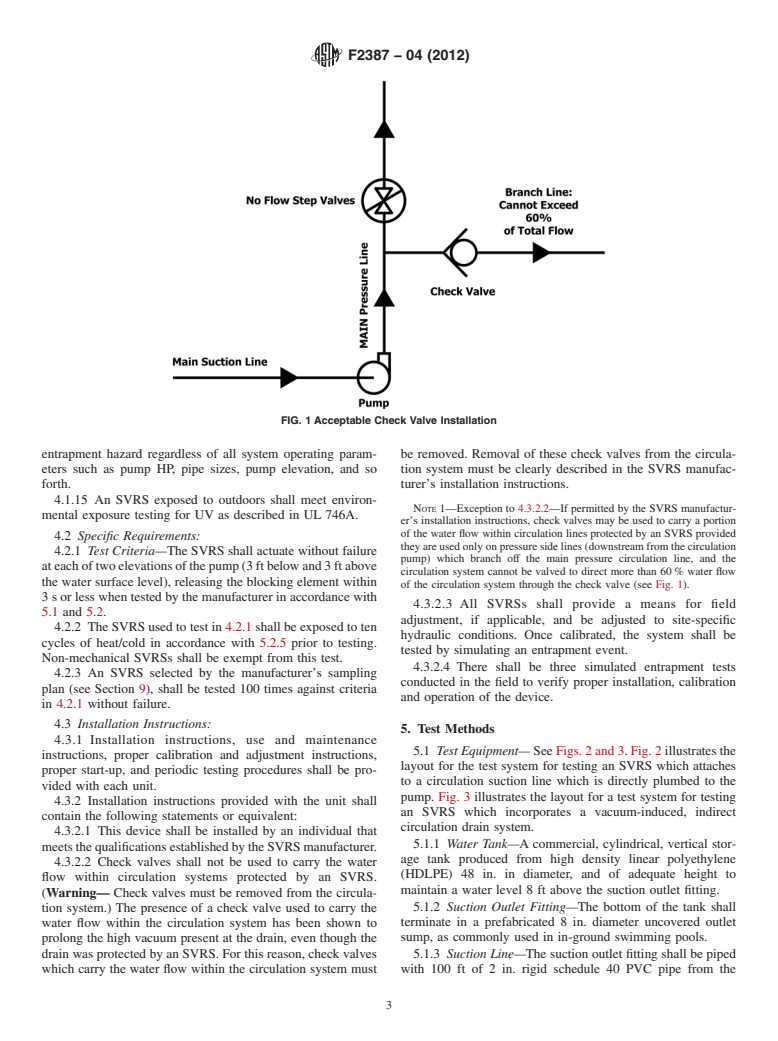
FIG. 1Acceptable Check Valve Installation
entrapment hazard regardless of all system operating param- be removed. Removal of these check valves from the circula-
eters such as pump HP, pipe sizes, pump elevation, and so tion system must be clearly described in the SVRS manufac-
forth. turer’s installation instructions.
4.1.15 An SVRS exposed to outdoors shall meet environ-
NOTE 1—Exception to 4.3.2.2—If permitted by the SVRS manufactur-
mental exposure testing for UV as described in UL 746A.
er’s installation instructions, check valves may be used to carry a portion
of the water flow within circulation lines protected by an SVRS provided
4.2 Specific Requirements:
theyareusedonlyonpressuresidelines(downstreamfromthecirculation
4.2.1 Test Criteria—The SVRS shall actuate without failure
pump) which branch off the main pressure circulation l
...
Questions, Comments and Discussion
Ask us and Technical Secretary will try to provide an answer. You can facilitate discussion about the standard in here.