

ASTM A29/A29M-23
(Specification)Standard Specification for General Requirements for Steel Bars, Carbon and Alloy, Hot-Wrought
General Information
- Abstract
ABSTRACT
This guide covers a group of requirements for carbon and alloy steel bars under each of the following specifications: hot-rolled carbon steel bars, cold-finished carbon steel bars, hot-rolled alloy steel bars, and cold-finished alloy steel bars. Heat and product analysis shall be performed on several grades of carbon steel bars, wherein the material shall conform to the required chemical composition for carbon, manganese, phosphorus, and sulfur. Several grades of alloy steel bars shall also undergo heat and product analysis and shall meet the required chemical composition for carbon, manganese, phosphorus, sulfur, silicon, nickel, chromium, and molybdenum. When compositions other than those indicated in the specified chemical components are required, the composition limits shall be prepared using the specified ranges and limits for carbon steel and alloy steel. The material shall undergo grain size test and shall conform to the specified grain size requirement. Mechanical tests shall also be performed on the steel test specimens.
SCOPE
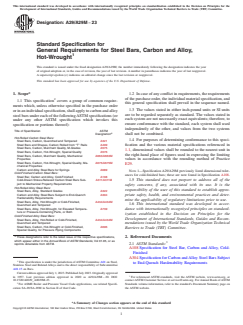
1.1 This specification2 covers a group of common requirements which, unless otherwise specified in the purchase order or in an individual specification, shall apply to carbon and alloy steel bars under each of the following ASTM specifications (or under any other ASTM specification which invokes this specification or portions thereof):
Title of Specification
ASTM
DesignationA
Hot-Rolled Carbon Steel Bars:
Steel Bars, Carbon, Quenched and Tempered
A321
Steel Bars and Shapes, Carbon Rolled from “T'' Rails
A499
Steel Bars, Carbon, Merchant Quality, M-Grades
A575
Steel Bars, Carbon, Hot-Wrought, Special Quality
A576
Steel Bars, Carbon, Merchant Quality, Mechanical Properties
A663/A663M
Steel Bars, Carbon, Hot-Wrought, Special Quality, Mechanical Properties
A675/A675M
Carbon and Alloy Steel Bars for Springs
A689
Cold-Finished Carbon Steel Bars:
Steel Bar, Carbon and Alloy, Cold-Finished
A108
Cold-Drawn Stress-Relieved Carbon Steel Bars Subject to Mechanical Property Requirements
A311/A311M
Hot-Rolled Alloy Steel Bars:
Steel Bars, Alloy, Standard Grades
A322
Carbon and Alloy Steel Bars Subject to End-Quench Hardenability Requirements
A304
Steel Bars, Alloy, Hot-Wrought or Cold-Finished, Quenched and Tempered
A434/A434M
Steel Bars, Alloy, Hot-Wrought, for Elevated Temperature or Pressure-Containing Parts, or Both
A739
Cold-Finished Alloy Steel Bars:
Steel Bars, Alloy, Hot-Rolled or Cold-Finished, Quenched and Tempered
A434/A434M
Steel Bars, Carbon, Hot-Wrought or Cold-Finished, Special Quality, for Pressure Piping Components
A696
A These designations refer to the latest issue of the respective specifications, which appear either in the Annual Book of ASTM Standards, Vol 01.05, or as reprints obtainable from ASTM.
1.2 In case of any conflict in requirements, the requirements of the purchase order, the individual material specification, and this general specification shall prevail in the sequence named.
1.3 The values stated in either inch-pound units or SI units are to be regarded separately as standard. The values stated in each system are not necessarily exact equivalents; therefore, to ensure conformance with the standard, each system shall used independently of the other, and values from the two systems shall not be combined.
1.4 For purposes of determining conformance to this specification and the various material specifications referenced in 1.1, dimensional values shall be rounded to the nearest unit in the right-hand place of figures used in expressing the limiting values in accordance with the rounding method of Practice E29.
Note 1: Specification A29/A29M previously listed dimensional tolerances for cold-finished bars; these are now found in Spe...
- Status
- Published
- Publication Date
- 30-Jun-2023
- Technical Committee
- A01 - Steel, Stainless Steel and Related Alloys
- Drafting Committee
- A01.15 - Bars
Buy Documents
ASTM A29/A29M-23 - Standard Specification for General Requirements for Steel Bars, Carbon and Alloy, Hot-Wrought
REDLINE ASTM A29/A29M-23 - Standard Specification for General Requirements for Steel Bars, Carbon and Alloy, Hot-Wrought
Overview
ASTM A29/A29M-23: Standard Specification for General Requirements for Steel Bars, Carbon and Alloy, Hot-Wrought establishes the general requirements that apply to a wide range of carbon and alloy steel bars. These include hot-rolled and cold-finished carbon steel bars, as well as hot-rolled and cold-finished alloy steel bars. This specification ensures uniformity in steel bar characteristics across multiple ASTM product standards and is widely referenced in procurement, manufacturing, and engineering of steel bar products globally.
Key Topics
Chemical Composition Requirements:
The standard specifies that steel bars must conform to designated chemical compositions for elements such as carbon, manganese, phosphorus, sulfur, and additional alloying elements (including silicon, nickel, chromium, and molybdenum) depending on the grade.Types of Steel Bars Covered:
- Hot-rolled carbon steel bars
- Cold-finished carbon steel bars
- Hot-rolled alloy steel bars
- Cold-finished alloy steel bars
Referenced Specifications:
ASTM A29/A29M-23 serves as the general requirements document for numerous individual ASTM steel bar specifications, ensuring consistent baseline quality and performance.Heat and Product Analysis:
Mandatory heat and product analyses confirm that bulk and finished products meet required chemical limits, ensuring traceability and compliance.Grain Size and Mechanical Testing:
The standard requires grain size testing and outlines procedures for mechanical testing, which underpins the performance and durability of the final steel products.Measurement Units:
Both inch-pound and SI units are covered, with requirements for using each system independently to ensure clarity and avoid errors in specification.Order of Precedence:
In case of conflicting requirements, the purchase order takes precedence, followed by the individual product specification, and then this general specification.
Applications
ASTM A29/A29M-23 is essential in industries that require precise and reliable steel bar products. Practical applications include:
Manufacturing:
Used for producing automotive components, machinery parts, fasteners, and construction materials where consistent steel bar quality is critical.Engineering & Fabrication:
Provides a foundational reference for selecting and verifying steel bar material properties in structural, mechanical, and civil engineering projects.Procurement & Quality Assurance:
Widely used in procurement contracts and in-house quality management systems to ensure supplied steel bars meet international requirements for chemical composition and mechanical properties.Compliance with Regulatory Requirements:
Supports conformance with global trade and safety standards, and is recognized by agencies including the U.S. Department of Defense.
Related Standards
ASTM A29/A29M-23 is regularly referenced by a range of key steel bar specifications, including:
- ASTM A108: Standard Specification for Steel Bar, Carbon and Alloy, Cold-Finished
- ASTM A304: Specification for Carbon and Alloy Steel Bars Subject to End-Quench Hardenability
- ASTM A576: Steel Bars, Carbon, Hot-Wrought, Special Quality
- ASTM A675/A675M: Steel Bars, Carbon, Hot-Wrought, Special Quality, Mechanical Properties
- ASTM A434/A434M: Steel Bars, Alloy, Hot-Wrought or Cold-Finished, Quenched and Tempered
Other related references include the ASME Boiler and Pressure Vessel Code (SA-29/SA-29M), federal and military standards, and additional ASTM test methods and practices for chemical and mechanical testing.
Keywords: ASTM A29, steel bar standards, hot-wrought steel, carbon steel bar, alloy steel, steel bar chemical composition, mechanical testing, engineering materials, procurement standards, metal fabrication standards.
Relations
- Effective Date
- 01-Mar-2024
- Effective Date
- 01-Mar-2024
- Effective Date
- 01-Nov-2023
- Effective Date
- 01-Nov-2023
- Effective Date
- 01-Sep-2020
- Effective Date
- 01-Nov-2019
- Effective Date
- 01-Sep-2019
- Effective Date
- 01-Jul-2019
- Effective Date
- 01-Nov-2018
- Effective Date
- 01-Sep-2018
- Refers
ASTM A575-96(2018) - Standard Specification for Steel Bars, Carbon, Merchant Quality, M-Grades - Effective Date
- 01-Sep-2018
- Effective Date
- 01-Sep-2018
- Effective Date
- 01-Jul-2018
- Refers
ASTM A370-17a - Standard Test Methods and Definitions for Mechanical Testing of Steel Products - Effective Date
- 15-Nov-2017
- Effective Date
- 01-Nov-2017
Buy Documents
ASTM A29/A29M-23 - Standard Specification for General Requirements for Steel Bars, Carbon and Alloy, Hot-Wrought
REDLINE ASTM A29/A29M-23 - Standard Specification for General Requirements for Steel Bars, Carbon and Alloy, Hot-Wrought
Get Certified
Connect with accredited certification bodies for this standard

Element Materials Technology
Materials testing and product certification.

Inštitut za kovinske materiale in tehnologije
Institute of Metals and Technology. Materials testing, metallurgical analysis, NDT.
Sponsored listings
Frequently Asked Questions
ASTM A29/A29M-23 is a technical specification published by ASTM International. Its full title is "Standard Specification for General Requirements for Steel Bars, Carbon and Alloy, Hot-Wrought". This standard covers: ABSTRACT This guide covers a group of requirements for carbon and alloy steel bars under each of the following specifications: hot-rolled carbon steel bars, cold-finished carbon steel bars, hot-rolled alloy steel bars, and cold-finished alloy steel bars. Heat and product analysis shall be performed on several grades of carbon steel bars, wherein the material shall conform to the required chemical composition for carbon, manganese, phosphorus, and sulfur. Several grades of alloy steel bars shall also undergo heat and product analysis and shall meet the required chemical composition for carbon, manganese, phosphorus, sulfur, silicon, nickel, chromium, and molybdenum. When compositions other than those indicated in the specified chemical components are required, the composition limits shall be prepared using the specified ranges and limits for carbon steel and alloy steel. The material shall undergo grain size test and shall conform to the specified grain size requirement. Mechanical tests shall also be performed on the steel test specimens. SCOPE 1.1 This specification2 covers a group of common requirements which, unless otherwise specified in the purchase order or in an individual specification, shall apply to carbon and alloy steel bars under each of the following ASTM specifications (or under any other ASTM specification which invokes this specification or portions thereof): Title of Specification ASTM DesignationA Hot-Rolled Carbon Steel Bars: Steel Bars, Carbon, Quenched and Tempered A321 Steel Bars and Shapes, Carbon Rolled from “T'' Rails A499 Steel Bars, Carbon, Merchant Quality, M-Grades A575 Steel Bars, Carbon, Hot-Wrought, Special Quality A576 Steel Bars, Carbon, Merchant Quality, Mechanical Properties A663/A663M Steel Bars, Carbon, Hot-Wrought, Special Quality, Mechanical Properties A675/A675M Carbon and Alloy Steel Bars for Springs A689 Cold-Finished Carbon Steel Bars: Steel Bar, Carbon and Alloy, Cold-Finished A108 Cold-Drawn Stress-Relieved Carbon Steel Bars Subject to Mechanical Property Requirements A311/A311M Hot-Rolled Alloy Steel Bars: Steel Bars, Alloy, Standard Grades A322 Carbon and Alloy Steel Bars Subject to End-Quench Hardenability Requirements A304 Steel Bars, Alloy, Hot-Wrought or Cold-Finished, Quenched and Tempered A434/A434M Steel Bars, Alloy, Hot-Wrought, for Elevated Temperature or Pressure-Containing Parts, or Both A739 Cold-Finished Alloy Steel Bars: Steel Bars, Alloy, Hot-Rolled or Cold-Finished, Quenched and Tempered A434/A434M Steel Bars, Carbon, Hot-Wrought or Cold-Finished, Special Quality, for Pressure Piping Components A696 A These designations refer to the latest issue of the respective specifications, which appear either in the Annual Book of ASTM Standards, Vol 01.05, or as reprints obtainable from ASTM. 1.2 In case of any conflict in requirements, the requirements of the purchase order, the individual material specification, and this general specification shall prevail in the sequence named. 1.3 The values stated in either inch-pound units or SI units are to be regarded separately as standard. The values stated in each system are not necessarily exact equivalents; therefore, to ensure conformance with the standard, each system shall used independently of the other, and values from the two systems shall not be combined. 1.4 For purposes of determining conformance to this specification and the various material specifications referenced in 1.1, dimensional values shall be rounded to the nearest unit in the right-hand place of figures used in expressing the limiting values in accordance with the rounding method of Practice E29. Note 1: Specification A29/A29M previously listed dimensional tolerances for cold-finished bars; these are now found in Spe...
ABSTRACT This guide covers a group of requirements for carbon and alloy steel bars under each of the following specifications: hot-rolled carbon steel bars, cold-finished carbon steel bars, hot-rolled alloy steel bars, and cold-finished alloy steel bars. Heat and product analysis shall be performed on several grades of carbon steel bars, wherein the material shall conform to the required chemical composition for carbon, manganese, phosphorus, and sulfur. Several grades of alloy steel bars shall also undergo heat and product analysis and shall meet the required chemical composition for carbon, manganese, phosphorus, sulfur, silicon, nickel, chromium, and molybdenum. When compositions other than those indicated in the specified chemical components are required, the composition limits shall be prepared using the specified ranges and limits for carbon steel and alloy steel. The material shall undergo grain size test and shall conform to the specified grain size requirement. Mechanical tests shall also be performed on the steel test specimens. SCOPE 1.1 This specification2 covers a group of common requirements which, unless otherwise specified in the purchase order or in an individual specification, shall apply to carbon and alloy steel bars under each of the following ASTM specifications (or under any other ASTM specification which invokes this specification or portions thereof): Title of Specification ASTM DesignationA Hot-Rolled Carbon Steel Bars: Steel Bars, Carbon, Quenched and Tempered A321 Steel Bars and Shapes, Carbon Rolled from “T'' Rails A499 Steel Bars, Carbon, Merchant Quality, M-Grades A575 Steel Bars, Carbon, Hot-Wrought, Special Quality A576 Steel Bars, Carbon, Merchant Quality, Mechanical Properties A663/A663M Steel Bars, Carbon, Hot-Wrought, Special Quality, Mechanical Properties A675/A675M Carbon and Alloy Steel Bars for Springs A689 Cold-Finished Carbon Steel Bars: Steel Bar, Carbon and Alloy, Cold-Finished A108 Cold-Drawn Stress-Relieved Carbon Steel Bars Subject to Mechanical Property Requirements A311/A311M Hot-Rolled Alloy Steel Bars: Steel Bars, Alloy, Standard Grades A322 Carbon and Alloy Steel Bars Subject to End-Quench Hardenability Requirements A304 Steel Bars, Alloy, Hot-Wrought or Cold-Finished, Quenched and Tempered A434/A434M Steel Bars, Alloy, Hot-Wrought, for Elevated Temperature or Pressure-Containing Parts, or Both A739 Cold-Finished Alloy Steel Bars: Steel Bars, Alloy, Hot-Rolled or Cold-Finished, Quenched and Tempered A434/A434M Steel Bars, Carbon, Hot-Wrought or Cold-Finished, Special Quality, for Pressure Piping Components A696 A These designations refer to the latest issue of the respective specifications, which appear either in the Annual Book of ASTM Standards, Vol 01.05, or as reprints obtainable from ASTM. 1.2 In case of any conflict in requirements, the requirements of the purchase order, the individual material specification, and this general specification shall prevail in the sequence named. 1.3 The values stated in either inch-pound units or SI units are to be regarded separately as standard. The values stated in each system are not necessarily exact equivalents; therefore, to ensure conformance with the standard, each system shall used independently of the other, and values from the two systems shall not be combined. 1.4 For purposes of determining conformance to this specification and the various material specifications referenced in 1.1, dimensional values shall be rounded to the nearest unit in the right-hand place of figures used in expressing the limiting values in accordance with the rounding method of Practice E29. Note 1: Specification A29/A29M previously listed dimensional tolerances for cold-finished bars; these are now found in Spe...
ASTM A29/A29M-23 is classified under the following ICS (International Classification for Standards) categories: 77.140.60 - Steel bars and rods. The ICS classification helps identify the subject area and facilitates finding related standards.
ASTM A29/A29M-23 has the following relationships with other standards: It is inter standard links to ASTM A108-24, ASTM A370-24, ASTM A663/A663M-23, ASTM A576-23, ASTM A499-15(2020), ASTM A700-14(2019), ASTM A675/A675M-14(2019), ASTM A370-19, ASTM A108-18, ASTM A689-97(2018), ASTM A575-96(2018), ASTM A322-13(2018)e1, ASTM A434/A434M-18, ASTM A370-17a, ASTM A663/A663M-17. Understanding these relationships helps ensure you are using the most current and applicable version of the standard.
ASTM A29/A29M-23 is available in PDF format for immediate download after purchase. The document can be added to your cart and obtained through the secure checkout process. Digital delivery ensures instant access to the complete standard document.
Standards Content (Sample)
This international standard was developed in accordance with internationally recognized principles on standardization established in the Decision on Principles for the
Development of International Standards, Guides and Recommendations issued by the World Trade Organization Technical Barriers to Trade (TBT) Committee.
Designation: A29/A29M − 23
Standard Specification for
General Requirements for Steel Bars, Carbon and Alloy,
Hot-Wrought
This standard is issued under the fixed designation A29/A29M; the number immediately following the designation indicates the year
of original adoption or, in the case of revision, the year of last revision. A number in parentheses indicates the year of last reapproval.
A superscript epsilon (´) indicates an editorial change since the last revision or reapproval.
This standard has been approved for use by agencies of the U.S. Department of Defense.
1. Scope* 1.2 In case of any conflict in requirements, the requirements
of the purchase order, the individual material specification, and
1.1 This specification covers a group of common require-
this general specification shall prevail in the sequence named.
ments which, unless otherwise specified in the purchase order
1.3 The values stated in either inch-pound units or SI units
or in an individual specification, shall apply to carbon and alloy
are to be regarded separately as standard. The values stated in
steel bars under each of the following ASTM specifications (or
each system are not necessarily exact equivalents; therefore, to
under any other ASTM specification which invokes this
ensure conformance with the standard, each system shall used
specification or portions thereof):
independently of the other, and values from the two systems
Title of Specification ASTM
A
shall not be combined.
Designation
Hot-Rolled Carbon Steel Bars:
1.4 For purposes of determining conformance to this speci-
Steel Bars, Carbon, Quenched and Tempered A321
Steel Bars and Shapes, Carbon Rolled from “T’’ Rails A499 fication and the various material specifications referenced in
Steel Bars, Carbon, Merchant Quality, M-Grades A575
1.1, dimensional values shall be rounded to the nearest unit in
Steel Bars, Carbon, Hot-Wrought, Special Quality A576
the right-hand place of figures used in expressing the limiting
Steel Bars, Carbon, Merchant Quality, Mechanical A663/A663M
Properties values in accordance with the rounding method of Practice
Steel Bars, Carbon, Hot-Wrought, Special Quality, Me- A675/A675M
E29.
chanical Properties
Carbon and Alloy Steel Bars for Springs A689
NOTE 1—Specification A29/A29M previously listed dimensional toler-
Cold-Finished Carbon Steel Bars:
ances for cold-finished bars; these are now found in Specification A108.
Steel Bar, Carbon and Alloy, Cold-Finished A108
Cold-Drawn Stress-Relieved Carbon Steel Bars Sub- A311/A311M 1.5 This standard does not purport to address all of the
ject to Mechanical Property Requirements
safety concerns, if any, associated with its use. It is the
Hot-Rolled Alloy Steel Bars:
responsibility of the user of this standard to establish appro-
Steel Bars, Alloy, Standard Grades A322
Carbon and Alloy Steel Bars Subject to End-Quench A304 priate safety, health, and environmental practices and deter-
Hardenability Requirements
mine the applicability of regulatory limitations prior to use.
Steel Bars, Alloy, Hot-Wrought or Cold-Finished, A434/A434M
1.6 This international standard was developed in accor-
Quenched and Tempered
Steel Bars, Alloy, Hot-Wrought, for Elevated Tempera- A739
dance with internationally recognized principles on standard-
ture or Pressure-Containing Parts, or Both
ization established in the Decision on Principles for the
Cold-Finished Alloy Steel Bars:
Development of International Standards, Guides and Recom-
Steel Bars, Alloy, Hot-Rolled or Cold-Finished, A434/A434M
Quenched and Tempered
mendations issued by the World Trade Organization Technical
Steel Bars, Carbon, Hot-Wrought or Cold-Finished, A696
Barriers to Trade (TBT) Committee.
Special Quality, for Pressure Piping Components
A
These designations refer to the latest issue of the respective specifications, 2. Referenced Documents
which appear either in the Annual Book of ASTM Standards, Vol 01.05, or as
2.1 ASTM Standards:
reprints obtainable from ASTM.
A108 Specification for Steel Bar, Carbon and Alloy, Cold-
Finished
A304 Specification for Carbon and Alloy Steel Bars Subject
This specification is under the jurisdiction of ASTM Committee A01 on Steel,
to End-Quench Hardenability Requirements
Stainless Steel and Related Alloys and is the direct responsibility of Subcommittee
A01.15 on Bars.
Current edition approved July 1, 2023. Published July 2023. Originally approved
in 1957. Last previous edition approved in 2020 as A29/A29M – 20. DOI: For referenced ASTM standards, visit the ASTM website, www.astm.org, or
10.1520/A0029_A0029M-23. contact ASTM Customer Service at service@astm.org. For Annual Book of ASTM
For ASME Boiler and Pressure Vessel Code applications, see related Specifi- Standards volume information, refer to the standard’s Document Summary page on
cation SA-29/SA-29M in Section II of that Code. the ASTM website.
*A Summary of Changes section appears at the end of this standard
Copyright © ASTM International, 100 Barr Harbor Drive, PO Box C700, West Conshohocken, PA 19428-2959. United States
A29/A29M − 23
A311/A311M Specification for Cold-Drawn, Stress- AIAG B-5 02.00 Primary Metals Tag Application Standard
Relieved Carbon Steel Bars Subject to Mechanical Prop-
erty Requirements
3. Terminology
A321 Specification for Steel Bars, Carbon, Quenched and
3.1 Definitions of Terms Specific to This Standard:
Tempered (Withdrawn 2007)
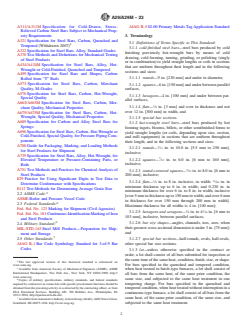
3.1.1 cold-finished steel bars—steel bars produced by cold
A322 Specification for Steel Bars, Alloy, Standard Grades
finishing previously hot-wrought bars by means of cold
A370 Test Methods and Definitions for Mechanical Testing
drawing, cold forming, turning, grinding, or polishing (singly
of Steel Products
or in combination) to yield straight lengths or coils in sections
A434/A434M Specification for Steel Bars, Alloy, Hot-
that are uniform throughout their length and in the following
Wrought or Cold-Finished, Quenched and Tempered
sections and sizes:
A499 Specification for Steel Bars and Shapes, Carbon
3.1.1.1 rounds—9 in. [230 mm] and under in diameter,
Rolled from “T” Rails
A575 Specification for Steel Bars, Carbon, Merchant
3.1.1.2 squares—6 in. [150 mm] and under between parallel
Quality, M-Grades
surfaces,
A576 Specification for Steel Bars, Carbon, Hot-Wrought,
3.1.1.3 hexagons—4 in. [100 mm] and under between par-
Special Quality
allel surfaces,
A663/A663M Specification for Steel Bars, Carbon, Mer-
3.1.1.4 flats— ⁄8 in. [3 mm] and over in thickness and not
chant Quality, Mechanical Properties
over 12 in. [300 mm] in width, and
A675/A675M Specification for Steel Bars, Carbon, Hot-
Wrought, Special Quality, Mechanical Properties
3.1.1.5 special bar sections.
A689 Specification for Carbon and Alloy Steel Bars for
3.1.2 hot-wrought steel bars—steel bars produced by hot
Springs
forming ingots, blooms, billets, or other semifinished forms to
A696 Specification for Steel Bars, Carbon, Hot-Wrought or
yield straight lengths (or coils, depending upon size, section,
Cold-Finished, Special Quality, for Pressure Piping Com-
and mill equipment) in sections that are uniform throughout
ponents
their length, and in the following sections and sizes:
A700 Guide for Packaging, Marking, and Loading Methods
3.1.2.1 rounds— ⁄32 in. to 10.0 in. [5.5 mm to 250 mm],
for Steel Products for Shipment
inclusive;
A739 Specification for Steel Bars, Alloy, Hot-Wrought, for
3.1.2.2 squares— ⁄32 in. to 6.0 in. [6 mm to 160 mm],
Elevated Temperature or Pressure-Containing Parts, or
inclusive;
Both
A751 Test Methods and Practices for Chemical Analysis of
3.1.2.3 round-cornered squares— ⁄32 in. to 8.0 in. [6 mm to
Steel Products
200 mm], inclusive;
E29 Practice for Using Significant Digits in Test Data to
1 13
3.1.2.4 flats— ⁄4 in. to 8 in. inclusive, in width: ⁄64 in. in
Determine Conformance with Specifications
minimum thickness up to 6 in. in width; and 0.230 in. in
E112 Test Methods for Determining Average Grain Size
minimum thickness for over 6 in. to 8 in. in width, inclusive
2.2 ASME Code:
[over 5 mm in thickness up to 150 mm in width; and over 6 mm
ASME Boiler and Pressure Vessel Code
in thickness for over 150 mm through 200 mm in width].
2.3 Federal Standards:
Maximum thickness for all widths is 4 in. [100 mm];
Fed. Std. No. 123 Marking for Shipment (Civil Agencies)
1 1
3.1.2.5 hexagons and octagons— ⁄4 in. to 4 ⁄16 in. [6 mm to
Fed. Std. No. 183 Continuous Identification Marking of Iron
103 mm], inclusive, between parallel surfaces;
and Steel Products
3.1.2.6 bar size shapes—angles, channels, tees, zees, when
2.4 Military Standard:
their greatest cross-sectional dimension is under 3 in. [75 mm];
MIL-STD-163 Steel Mill Products—Preparation for Ship-
and
ment and Storage
2.5 Other Standards: 3.1.2.7 special bar sections—half-rounds, ovals, half-ovals,
AIAG B-1 Bar Code Symbology Standard for 3-of-9 Bar other special bar size sections.
Codes
3.1.3 lot—unless otherwise specified in the contract or
order, a lot shall consist of all bars submitted for inspection at
the same time of the same heat, condition, finish, size, or shape.
The last approved version of this historical standard is referenced on
For bars specified in the quenched and tempered condition,
www.astm.org.
Available from American Society of Mechanical Engineers (ASME), ASME
when heat treated in batch-type furnaces, a lot shall consist of
International Headquarters, Two Park Ave., New York, NY 10016-5990, http://
all bars from the same heat, of the same prior condition, the
www.asme.org.
6 same size, and subjected to the same heat treatment in one
Copies of military specifications, military standards, and federal standards
tempering charge. For bars specified in the quenched and
required by contractors in connection with specific procurement functions should be
obtained from the procuring activity or as directed by the contracting officer, or from
tempered condition, when heat treated without interruption in a
DLA Document Services, Building 4/D, 700 Robbins Ave., Philadelphia, PA
continuous-type furnace, a lot shall consist of all bars from the
19111-5094, http://quicksearch.dla.mil.
same heat, of the same prior condition, of the same size, and
Available from Automotive Industry Action Group (AIAG), 4400 Town Center,
Southfield, MI 48075-1104, http://www.aiag.org. subjected to the same heat treatment.
A29/A29M − 23
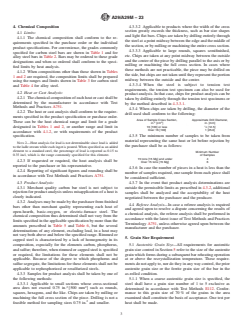
4. Chemical Composition 4.3.3.2 Applicable to products where the width of the cross
section greatly exceeds the thickness, such as bar size shapes
4.1 Limits:
and light flat bars. Chips are taken by drilling entirely through
4.1.1 The chemical composition shall conform to the re-
the steel at a point midway between the edge and the middle of
quirements specified in the purchase order or the individual
the section, or by milling or machining the entire cross section.
product specifications. For convenience, the grades commonly
4.3.3.3 Applicable to large rounds, squares semifinished,
specified for carbon steel bars are shown in Table 1 and for
etc. Chips are taken at any point midway between the outside
alloy steel bars in Table 2. Bars may be ordered to these grade
and the center of the piece by drilling parallel to the axis or by
designations and when so ordered shall conform to the speci-
milling or machining the full cross section. In cases where
fied limits by heat analysis.
these methods are not practicable, the piece may be drilled on
4.1.2 When compositions other than those shown in Tables
the side, but chips are not taken until they represent the portion
1 and 2 are required, the composition limits shall be prepared
midway between the outside and the center.
using the ranges and limits shown in Table 3 for carbon steel
4.3.3.4 When the steel is subject to tension test
and Table 4 for alloy steel.
requirements, the tension test specimen can also be used for
4.2 Heat or Cast Analysis:
product analysis. In that case, chips for product analysis can be
4.2.1 The chemical composition of each heat or cast shall be
taken by drilling entirely through the tension test specimens or
determined by the manufacturer in accordance with Test
by the method described in 4.3.3.1.
Methods and Practices A751.
4.3.4 When chips are taken by drilling, the diameter of the
4.2.2 The heat or cast analysis shall conform to the require-
drill used shall conform to the following:
ments specified in the product specification or purchase order.
Area of Sample Cross Section, Approximate Drill Diameter,
These can be the heat chemical range and limit for a grade 2 2
in. [cm ] in. [mm]
designated in Tables 1 and 2, or another range and limit in 16 [100] or less ⁄2 [12.5]
Over 16 [100] 1 [25.0]
accordance with 4.1.2, or with requirements of the product
specification. 4.3.5 The minimum number of samples to be taken from
material representing the same heat or lot before rejection by
NOTE 2—Heat analysis for lead is not determinable since lead is added
the purchaser shall be as follows:
to the ladle stream while each ingot is poured. When specified as an added
element to a standard steel, the percentage of lead is reported as 0.15 to
Minimum Number
0.35 incl, which is the range commonly specified for this element. of Samples
15 tons [15 Mg] and under 4
4.2.3 If requested or required, the heat analysis shall be
Over 15 tons [15 Mg] 6
reported to the purchaser or his representative.
4.3.6 In case the number of pieces in a heat is less than the
4.2.4 Reporting of significant figures and rounding shall be
number of samples required, one sample from each piece shall
in accordance with Test Methods and Practices A751.
be considered sufficient.
4.3 Product Analysis:
4.3.7 In the event that product analysis determinations are
4.3.1 Merchant quality carbon bar steel is not subject to
outside the permissible limits as prescribed in 4.3.2, additional
rejection for product analysis unless misapplication of a heat is
samples shall be analyzed and the acceptability of the heat
clearly indicated.
negotiated between the purchaser and the producer.
4.3.2 Analyses may be made by the purchaser from finished
4.4 Referee Analysis—In case a referee analysis is required
bars other than merchant quality representing each heat of
and agreed upon to resolve a dispute concerning the results of
open-hearth, basic-oxygen, or electric-furnace steel. The
a chemical analysis, the referee analysis shall be performed in
chemical composition thus determined shall not vary from the
accordance with the latest issue of Test Methods and Practices
limits specified in the applicable specification by more than the
Terminology A751, unless otherwise agreed upon between the
amounts prescribed in Table 5 and Table 6, but the several
manufacturer and the purchaser.
determinations of any element, excluding lead, in a heat may
not vary both above and below the specified range. Rimmed or
5. Grain Size Requirement
capped steel is characterized by a lack of homogeneity in its
composition, especially for the elements carbon, phosphorus, 5.1 Austenitic Grain Size—All requirements for austenitic
and sulfur; therefore, when rimmed or capped steel is specified grain size control in Section 5 refer to the size of the austenite
or required, the limitations for these elements shall not be grain which forms during a subsequent bar reheating operation
applicable. Because of the degree to which phosphorus and at or above the recrystallization temperature. These require-
sulfur segregate, the limitations for these elements shall not be ments do not apply to, nor do they in any way control, the prior
applicable to rephosphorized or resulfurized steels. austenite grain size or the ferrite grain size of the bar in the
as-rolled condition.
4.3.3 Samples for product analysis shall be taken by one of
the following methods:
5.1.1 When a coarse austenitic grain size is specified, the
4.3.3.1 Applicable to small sections whose cross-sectional steel shall have a grain size number of 1 to 5 exclusive as
2 2
area does not exceed 0.75 in. [500 mm ] such as rounds, determined in accordance with Test Methods E112. Confor-
squares, hexagons, and the like. Chips are taken by milling or mance to this grain size of 70 % of the grains in the area
machining the full cross section of the piece. Drilling is not a examined shall constitute the basis of acceptance. One test per
feasible method for sampling sizes 0.75 in. and smaller. heat shall be made.
A29/A29M − 23
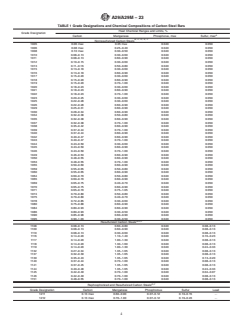
TABLE 1 Grade Designations and Chemical Compositions of Carbon Steel Bars
Heat Chemical Ranges and Limits, %
Grade Designation
A
Carbon Manganese Phosphorus, max Sulfur, max
B, C, D, E, F
Nonresulfurized Carbon Steels
1005 0.06 max 0.35 max 0.040 0.050
1006 0.08 max 0.25–0.40 0.040 0.050
1008 0.10 max 0.30–0.50 0.040 0.050
1010 0.08–0.13 0.30–0.60 0.040 0.050
1011 0.08–0.13 0.60–0.90 0.040 0.050
1012 0.10–0.15 0.30–0.60 0.040 0.050
1013 0.11–0.16 0.50–0.80 0.040 0.050
1015 0.13–0.18 0.30–0.60 0.040 0.050
1016 0.13–0.18 0.60–0.90 0.040 0.050
1017 0.15–0.20 0.30–0.60 0.040 0.050
1018 0.15–0.20 0.60–0.90 0.040 0.050
1019 0.15–0.20 0.70–1.00 0.040 0.050
1020 0.18–0.23 0.30–0.60 0.040 0.050
1021 0.18–0.23 0.60–0.90 0.040 0.050
1022 0.18–0.23 0.70–1.00 0.040 0.050
1023 0.20–0.25 0.30–0.60 0.040 0.050
1025 0.22–0.28 0.30–0.60 0.040 0.050
1026 0.22–0.28 0.60–0.90 0.040 0.050
1029 0.25–0.31 0.60–0.90 0.040 0.050
1030 0.28–0.34 0.60–0.90 0.040 0.050
1034 0.32–0.38 0.50–0.80 0.040 0.050
1035 0.32–0.38 0.60–0.90 0.040 0.050
1037 0.32–0.38 0.70–1.00 0.040 0.050
1038 0.35–0.42 0.60–0.90 0.040 0.050
1039 0.37–0.44 0.70–1.00 0.040 0.050
1040 0.37–0.44 0.60–0.90 0.040 0.050
1042 0.40–0.47 0.60–0.90 0.040 0.050
1043 0.40–0.47 0.70–1.00 0.040 0.050
1044 0.43–0.50 0.30–0.60 0.040 0.050
1045 0.43–0.50 0.60–0.90 0.040 0.050
1046 0.43–0.50 0.70–1.00 0.040 0.050
1049 0.46–0.53 0.60–0.90 0.040 0.050
1050 0.48–0.55 0.60–0.90 0.040 0.050
1053 0.48–0.55 0.70–1.00 0.040 0.050
1055 0.50–0.60 0.60–0.90 0.040 0.050
1059 0.55–0.65 0.50–0.80 0.040 0.050
1060 0.55–0.65 0.60–0.90 0.040 0.050
1064 0.60–0.70 0.50–0.80 0.040 0.050
1065 0.60–0.70 0.60–0.90 0.040 0.050
1069 0.65–0.75 0.40–0.70 0.040 0.050
1070 0.65–0.75 0.60–0.90 0.040 0.050
1071 0.65–0.70 0.75–1.05 0.040 0.050
1074 0.70–0.80 0.50–0.80 0.040 0.050
1075 0.70–0.80 0.40–0.70 0.040 0.050
1078 0.72–0.85 0.30–0.60 0.040 0.050
1080 0.75–0.88 0.60–0.90 0.040 0.050
1084 0.80–0.93 0.60–0.90 0.040 0.050
1086 0.80–0.93 0.30–0.50 0.040 0.050
1090 0.85–0.98 0.60–0.90 0.040 0.050
1095 0.90–1.03 0.30–0.50 0.040 0.050
B,D,F
Resulfurized Carbon Steels
1108 0.08–0.13 0.60–0.80 0.040 0.08–0.13
1109 0.08–0.13 0.60–0.90 0.040 0.08–0.13
1110 0.08–0.13 0.30–0.60 0.040 0.08–0.13
1116 0.14–0.20 1.10–1.40 0.040 0.16–0.23
1117 0.14–0.20 1.00–1.30 0.040 0.08–0.13
1118 0.14–0.20 1.30–1.60 0.040 0.08–0.13
1119 0.14–0.20 1.00–1.30 0.040 0.24–0.33
1132 0.27–0.34 1.35–1.65 0.040 0.08–0.13
1137 0.32–0.39 1.35–1.65 0.040 0.08–0.13
1139 0.35–0.43 1.35–1.65 0.040 0.13–0.20
1140 0.37–0.44 0.70–1.00 0.040 0.08–0.13
1141 0.37–0.45 1.35–1.65 0.040 0.08–0.13
1144 0.40–0.48 1.35–1.65 0.040 0.24–0.33
1145 0.42–0.49 0.70–1.00 0.040 0.04–0.07
1146 0.42–0.49 0.70–1.00 0.040 0.08–0.13
1151 0.48–0.55 0.70–1.00 0.040 0.08–0.13
D,F
Rephosphorized and Resulfurized Carbon Steels
Grade Designation Carbon Manganese Phosphorous Sulfur Lead
1211 0.13 max 0.60–0.90 0.07–0.12 0.10–0.15 .
1212 0.13 max 0.70–1.00 0.07–0.12 0.16–0.23 .
A29/A29M − 23
TABLE 1 Continued
D,F
Rephosphorized and Resulfurized Carbon Steels
Grade Designation Carbon Manganese Phosphorous Sulfur Lead
1213 0.13 max 0.70–1.00 0.07–0.12 0.24–0.33 .
1215 0.09 max 0.75–1.05 0.04–0.09 0.26–0.35 .
12L13 0.13 max 0.70–1.00 0.07–0.12 0.24–0.33 0.15–0.35
12L14 0.15 max 0.85–1.15 0.04–0.09 0.26–0.35 0.15–0.35
12L15 0.09 max 0.75–1.05 0.04–0.09 0.26–0.35 0.15–0.35
B,C,D,E,F
High-Manganese Carbon Steels
Grade Designation Former Designation Carbon Manganese Phosphorous, max Sulfur, max
1513 . 0.10–0.16 1.10–1.40 0.040 0.050
1518 . 0.15–0.21 1.10–1.40 0.040 0.050
1522 . 0.18–0.24 1.10–1.40 0.040 0.050
1524 1024 0.19–0.25 1.35–1.65 0.040 0.050
1525 . 0.23–0.29 0.80–1.10 0.040 0.050
1526 . 0.22–0.29 1.10–1.40 0.040 0.050
1527 1027 0.22–0.29 1.20–1.50 0.040 0.050
1536 1036 0.30–0.37 1.20–1.50 0.040 0.050
1541 1041 0.36–0.44 1.35–1.65 0.040 0.050
1547 . 0.43–0.51 1.35–1.65 0.040 0.050
1548 1048 0.44–0.52 1.10–1.40 0.040 0.050
1551 1051 0.45–0.56 0.85–1.15 0.040 0.050
1552 1052 0.47–0.55 1.20–1.50 0.040 0.050
1561 1061 0.55–0.65 0.75–1.05 0.040 0.050
1566 1066 0.60–0.71 0.85–1.15 0.040 0.050
1572 1072 0.65–0.76 1.00–1.30 0.040 0.050
Heat Chemical Ranges and Limits, percent
Merchant Quality M Series Carbon Steel Bars
G
Grade Designation Carbon Manganese Phosphorous, max Sulfur, max
M 1008 0.10 max 0.25–0.60 0.04 0.05
M 1010 0.07–0.14 0.25–0.60 0.04 0.05
M 1012 0.09–0.16 0.25–0.60 0.04 0.05
M 1015 0.12–0.19 0.25–0.60 0.04 0.05
M 1017 0.14–0.21 0.25–0.60 0.04 0.05
M 1020 0.17–0.24 0.25–0.60 0.04 0.05
M 1023 0.19–0.27 0.25–0.60 0.04 0.05
M 1025 0.20–0.30 0.25–0.60 0.04 0.05
M 1031 0.26–0.36 0.25–0.60 0.04 0.05
M 1044 0.40–0.50 0.25–0.60 0.04 0.05
A
Maximum unless otherwise indicated.
B
When silicon is required, the following ranges and limits are commonly specified: 0.10 %, max, 0.10 % to 0.20 %, 0.15 % to 0.35 %, 0.20 % to 0.40 %, or 0.30 % to
0.60 %.
C
Copper can be specified when required as 0.20 % minimum.
D
When lead is required as an added element to a standard steel, a range of 0.15 % to 0.35 % inclusive is specified. Such a steel is identified by inserting the letter “L”
between the second and third numerals of the grade designation, for example, 10 L 45. A cast or heat analysis is not determinable when lead is added to the ladle stream.
E
When boron treatment for killed steels is specified, the steels can be expected to contain 0.0005 % to 0.003 % boron. If the usual titanium additive is not permitted, the
steels can be expected to contain up to 0.005 % boron.
F
The elements bismuth, calcium, selenium, or tellurium may be added as agreed upon between purchaser and supplier.
G
Unless prohibited by the purchaser, the manganese content may exceed 0.60 % on heat analysis to a maximum of 0.75 %, provided the carbon range on heat analysis
has the minimum and maximum reduced by 0.01 % for each 0.05 % manganese over 0.60 %.
5.1.2 When a fine austenitic grain size is specified, the steel 5.1.2.2 By agreement between purchaser and supplier, co-
shall have a grain size number of 5 or higher as determined in lumbium or vanadium, or both, may be used for grain refining
accordance with Test Methods E112. Conformance to this
instead of or with aluminum. When columbium or vanadium is
grain size of 70 % of the area examined shall constitute the
used as a grain refining element, the fine austenitic grain size
basis of acceptance. One test per heat shall be made unless the
requirement shall be deemed to be fulfilled if, on heat analysis,
provisions of 5.1.2.1 or 5.1.2.2 are exercised.
the columbium or vanadium content is as follows (the content
5.1.2.1 When aluminum is used as the grain refining
of the elements shall be reported with the heat analysis):
element, the fine austenitic grain size requirement shall be
deemed to be fulfilled if, on heat analysis, the aluminum
content is not less than 0.020 % total aluminum or, alternately,
0.015 % acid soluble aluminum. The aluminum content shall
be reported. The grain size test specified in 5.1.2 shall be the 8
Columbium (Cb) and Niobium (Nb) are alternate names for element 41 in the
referee test. Periodic Table of the Elements.
A29/A29M − 23
TABLE 2 Grade Designations and Chemical Compositions of Alloy Steel Bars
NOTE 1—Small quantities of certain elements are present in alloy steels, which are not specified or required. These elements are considered as incidental
and may be present to the following maximum amounts: copper, 0.35 %; nickel, 0.25 %; chromium, 0.20 % and molybdenum, 0.06 %.
NOTE 2—Where minimum and maximum sulfur content is shown it is indicative of resulfurized steel.
NOTE 3—The chemical ranges and limits shown in Table 2 are produced to product analysis tolerances shown in Table 6.
NOTE 4—Standard alloy steels can be produced with a lead range of 0.15 % to 0.35 %. Such steels are identified by inserting the letter “L” between
the second and third numerals of the AISI number, for example, 41 L 40. A cast or heat analysis is not determinable when lead is added to the ladle stream.
Heat Chemical Ranges and Limits, %
Grade
Phosphorus, Sulfur,
A
Designation
Carbon Manganese Silicon Nickel Chromium Molybdenum Vanadium
max max
1330 0.28–0.33 1.60–1.90 0.035 0.040 0.15–0.35 . . . .
1335 0.33–0.38 1.60–1.90 0.035 0.040 0.15–0.35 . . . .
1340 0.38–0.43 1.60–1.90 0.035 0.040 0.15–0.35 . . . .
1345 0.43–0.48 1.60–1.90 0.035 0.040 0.15–0.35 .
4012 0.09–0.14 0.75–1.00 0.035 0.040 0.15–0.35 . . 0.15–0.25 .
4023 0.20–0.25 0.70–0.90 0.035 0.040 0.15–0.35 . . 0.20–0.30 .
4024 0.20–0.25 0.70–0.90 0.035 0.035–0.050 0.15–0.35 . . 0.20–0.30 .
4027 0.25–0.30 0.70–0.90 0.035 0.040 0.15–0.35 . . 0.20–0.30 .
4028 0.25–0.30 0.70–0.90 0.035 0.035–0.050 0.15–0.35 . . 0.20–0.30 .
4032 0.30–0.35 0.70–0.90 0.035 0.040 0.15–0.35 . . 0.20–0.30 .
4037 0.35–0.40 0.70–0.90 0.035 0.040 0.15–0.35 . . 0.20–0.30 .
4042 0.40–0.45 0.70–0.90 0.035 0.040 0.15–0.35 . . 0.20–0.30 .
4047 0.45–0.50 0.70–0.90 0.035 0.040 0.15–0.35 . . 0.20–0.30 .
4118 0.18–0.23 0.70–0.90 0.035 0.040 0.15–0.35 . 0.40–0.60 0.08–0.15 .
4120 0.18–0.23 0.90–1.20 0.035 0.040 0.15–0.35 . 0.40–0.60 0.13–0.20 .
4121 0.18–0.23 0.75–1.00 0.035 0.040 0.15–0.35 . 0.45–0.65 0.20–0.30 .
4130 0.28–0.33 0.40–0.60 0.035 0.040 0.15–0.35 . 0.80–1.10 0.15–0.25 .
4135 0.33–0.38 0.70–0.90 0.035 0.040 0.15–0.35 . 0.80–1.10 0.15–0.25 .
4137 0.35–0.40 0.70–0.90 0.035 0.040 0.15–0.35 . 0.80–1.10 0.15–0.25 .
4140 0.38–0.43 0.75–1.00 0.035 0.040 0.15–0.35 . 0.80–1.10 0.15–0.25 .
4142 0.40–0.45 0.75–1.00 0.035 0.040 0.15–0.35 . 0.80–1.10 0.15–0.25 .
4145 0.43–0.48 0.75–1.00 0.035 0.040 0.15–0.35 . 0.80–1.10 0.15–0.25 .
4147 0.45–0.50 0.75–1.00 0.035 0.040 0.15–0.35 . 0.80–1.10 0.15–0.25 .
4150 0.48–0.53 0.75–1.00 0.035 0.040 0.15–0.35 . 0.80–1.10 0.15–0.25 .
4161 0.56–0.64 0.75–1.00 0.035 0.040 0.15–0.35 . 0.70–0.90 0.25–0.35 .
4320 0.17–0.22 0.45–0.65 0.035 0.040 0.15–0.35 1.65–2.00 0.40–0.60 0.20–0.30 .
4340 0.38–0.43 0.60–0.80 0.035 0.040 0.15–0.35 1.65–2.00 0.70–0.90 0.20–0.30 .
E4340 0.38–0.43 0.65–0.85 0.025 0.025 0.15–0.35 1.65–2.00 0.70–0.90 0.20–0.30 .
4419 0.18–0.23 0.45–0.65 0.035 0.040 0.15–0.35 . . 0.45–0.60 .
4422 0.20–0.25 0.70–0.90 0.035 0.040 0.15–0.35 . . 0.35–0.45 .
4427 0.24–0.29 0.70–0.90 0.035 0.040 0.15–0.35 . . 0.35–0.45 .
4615 0.13–0.18 0.45–0.65 0.035 0.040 0.15–0.35 1.65–2.00 . 0.20–0.30 .
4620 0.17–0.22 0.45–0.65 0.035 0.040 0.15–0.35 1.65–2.00 . 0.20–0.30 .
4621 0.18–0.23 0.70–0.90 0.035 0.040 0.15–0.35 1.65–2.00 . 0.20–0.30 .
4626 0.24–0.29 0.45–0.65 0.035 0.040 0.15–0.35 0.70–1.00 . 0.15–0.25 .
4715 0.13–0.18 0.70–0.90 0.035 0.040 0.15–0.35 0.70–1.00 0.45–0.65 0.45–0.60 .
4718 0.16–0.21 0.70–0.90 0.035 0.040 0.15–0.35 0.90–1.20 0.35–0.55 0.30–0.40 .
4720 0.17–0.22 0.50–0.70 0.035 0.040 0.15–0.35 0.90–1.20 0.35–0.55 0.15–0.25 .
4815 0.13–0.18 0.40–0.60 0.035 0.040 0.15–0.35 3.25–3.75 . 0.20–0.30 .
4817 0.15–0.20 0.40–0.60 0.035 0.040 0.15–0.35 3.25–3.75 . 0.20–0.30 .
4820 0.18–0.23 0.50–0.70 0.035 0.040 0.15–0.35 3.25–3.75 . 0.20–0.30 .
5015 0.12–0.17 0.30–0.50 0.035 0.040 0.15–0.35 . 0.30–0.50 . .
5046 0.43–0.48 0.75–1.00 0.035 0.040 0.15–0.35 . 0.20–0.35 . .
5115 0.13–0.18 0.70–0.90 0.035 0.040 0.15–0.35 . 0.70–0.90 . .
5120 0.17–0.22 0.70–0.90 0.035 0.040 0.15–0.35 . 0.70–0.90 . .
5130 0.28–0.33 0.70–0.90 0.035 0.040 0.15–0.35 . 0.80–1.10 . .
5132 0.30–0.35 0.60–0.80 0.035 0.040 0.15–0.35 . 0.75–1.00 . .
5135 0.33–0.38 0.60–0.80 0.035 0.040 0.15–0.35 . 0.80–1.05 . .
5140 0.38–0.43 0.70–0.90 0.035 0.040 0.15–0.35 . 0.70–0.90 . .
5145 0.43–0.48 0.70–0.90 0.035 0.040 0.15–0.35 . 0.70–0.90 . .
5147 0.46–0.51 0.70–0.95 0.035 0.040 0.15–0.35 . 0.85–1.15 . .
5150 0.48–0.53 0.70–0.90 0.035 0.040 0.15–0.35 . 0.70–0.90 . .
5155 0.51–0.59 0.70–0.90 0.035 0.040 0.15–0.35 . 0.70–0.90 . .
5160 0.56–0.64 0.75–1.00 0.035 0.040 0.15–0.35 . 0.70–0.90 . .
A29/A29M − 23
TABLE 2 Continued
Heat Chemical Ranges and Limits, %
Grade
Phosphorus, Sulfur,
A
Designation
Carbon Manganese Silicon Nickel Chromium Molybdenum Vanadium
max max
E50100 0.98–1.10 0.25–0.45 0.025 0.025 0.15–0.35 . 0.40–0.60 . .
E51100 0.98–1.10 0.25–0.45 0.025 0.025 0.15–0.35 . 0.90–1.15 . .
E52100 0.98–1.10 0.25–0.45 0.025 0.025 0.15–0.35 . 1.30–1.60 . .
B
52100 0.93–1.05 0.25–0.45 0.025 0.015 0.15–0.35 . 1.35–1.60 . .
6118 0.16–0.21 0.50–0.70 0.035 0.040 0.15–0.35 . 0.50–0.70 . 0.10–0.15
6150 0.48–0.53 0.70–0.90 0.035 0.040 0.15–0.35 . 0.80–1.10 . 0.15 min
8115 0.13–0.18 0.70–0.90 0.035 0.040 0.15–0.35 0.20–0.40 0.30–0.50 0.08–0.15 .
8615 0.13–0.18 0.70–0.90 0.035 0.040 0.15–0.35 0.40–0.70 0.40–0.60 0.15–0.25 .
8617 0.15–0.20 0.70–0.90 0.035 0.040 0.15–0.35 0.40–0.70 0.40–0.60 0.15–0.25 .
8620 0.18–0.23 0.70–0.90 0.035 0.040 0.15–0.35 0.40–0.70 0.40–0.60 0.15–0.25 .
8622 0.20–0.25 0.70–0.90 0.035 0.040 0.15–0.35 0.40–0.70 0.40–0.60 0.15–0.25 .
8625 0.23–0.28 0.70–0.90 0.035 0.040 0.15–0.35 0.40–0.70 0.40–0.60 0.15–0.25 .
8627 0.25–0.30 0.70–0.90 0.035 0.040 0.15–0.35 0.40–0.70 0.40–0.60 0.15–0.25 .
8630 0.28–0.33 0.70–0.90 0.035 0.040 0.15–0.35 0.40–0.70 0.40–0.60 0.15–0.25 .
8637 0.35–0.40 0.75–1.00 0.035 0.040 0.15–0.35 0.40–0.70 0.40–0.60 0.15–0.25 .
8640 0.38–0.43 0.75–1.00 0.035 0.040 0.15–0.35 0.40–0.70 0.40–0.60 0.15–0.25 .
8642 0.40–0.45 0.75–1.00 0.035 0.040 0.15–0.35 0.40–0.70 0.40–0.60 0.15–0.25 .
8645 0.43–0.48 0.75–1.00 0.035 0.040 0.15–0.35 0.40–0.70 0.40–0.60 0.15–0.25 .
8650 0.48–0.53 0.75–1.00 0.035 0.040 0.15–0.35 0.40–0.70 0.40–0.60 0.15–0.25 .
8655 0.51–0.59 0.75–1.00 0.035 0.040 0.15–0.35 0.40–0.70 0.40–0.60 0.15–0.25 .
8660 0.56–0.64 0.75–1.00 0.035 0.040 0.15–0.35 0.40–0.70 0.40–0.60 0.15–0.25 .
8720 0.18–0.23 0.70–0.90 0.035 0.040 0.15–0.35 0.40–0.7 0.40–0.60 0.20–0.30 .
8740 0.38–0.43 0.75–1.00 0.035 0.040 0.15–0.35 0.40–0.70 0.40–0.60 0.20–0.30 .
8822 0.20–0.25 0.75–1.00 0.035 0.040 0.15–0.35 0.40–0.70 0.40–0.60 0.30–0.40 .
9254 0.51–0.59 0.60–0.80 0.035 0.040 1.20–1.60 . 0.60–0.80 . .
9255 0.51–0.59 0.70–0.95 0.035 0.040 1.80–2.20 . . . .
9259 0.56–0.64 0.75–1.00 0.035 0.040 0.70–1.10 . . . 0.45–0.65 . .
9260 0.56–0.64 0.75–1.00 0.035 0.040 1.80–2.20 . . . .
E9310 0.08–0.13 0.45–0.65 0.025 0.025 0.15–0.30 3.00–3.50 1.00–1.40 0.08–0.15 .
C
Standard Boron Steels
50B44 0.43–0.48 0.75–1.00 0.035 0.040 0.15–0.35 . . . 0.20–0.60 . . . .
50B46 0.44–0.49 0.75–1.00 0.035 0.040 0.15–0.35 . . . 0.20–0.35 . . . .
50B50 0.48–0.53 0.75–1.00 0.035 0.040 0.15–0.35 . . . 0.40–0.60 . . . .
50B60 0.56–0.64 0.75–1.00 0.035 0.040 0.15–0.35 . . . 0.40–0.60 . . . .
51B60 0.56–0.64 0.75–1.00 0.035 0.040 0.15–0.35 . . . 0.70–0.90 . . . .
81B45 0.43–0.48 0.75–1.00 0.035 0.040 0.15–0.35 0.20–0.40 0.35–0.55 0.08–0.15 .
94B17 0.15–0.20 0.75–1.00 0.035 0.040 0.15–0.35 0.30–0.60 0.30–0.50 0.08–0.15 .
94B30 0.28–0.33 0.75–1.00 0.035 0.040 0.15–0.35 0.30–0.60 0.30–0.50 0.08–0.15 .
A
Silicon may be specified by the purchaser as 0.10 % maximum. The need for 0.10 % maximum generally relates to severe cold-formed parts.
B
The purchaser may also require the following maximums: copper 0.30 %; aluminum 0.050 %; oxygen 0.0015 %.
C
These steels can be expected to contain 0.0005 % to 0.003 % boron. If the usual titanium additive is not permitted, the steels can be expected to contain up to 0.005 %
boron.
purchaser. Unless otherwise specified, fine austenitic grain size
Steels having 0.25 % carbon or less:
Cb 0.025 min
shall be certifie
...
This document is not an ASTM standard and is intended only to provide the user of an ASTM standard an indication of what changes have been made to the previous version. Because
it may not be technically possible to adequately depict all changes accurately, ASTM recommends that users consult prior editions as appropriate. In all cases only the current version
of the standard as published by ASTM is to be considered the official document.
Designation: A29/A29M − 20 A29/A29M − 23
Standard Specification for
General Requirements for Steel Bars, Carbon and Alloy,
Hot-Wrought
This standard is issued under the fixed designation A29/A29M; the number immediately following the designation indicates the year
of original adoption or, in the case of revision, the year of last revision. A number in parentheses indicates the year of last reapproval.
A superscript epsilon (´) indicates an editorial change since the last revision or reapproval.
This standard has been approved for use by agencies of the U.S. Department of Defense.
1. Scope*
1.1 This specification covers a group of common requirements which, unless otherwise specified in the purchase order or in an
individual specification, shall apply to carbon and alloy steel bars under each of the following ASTM specifications (or under any
other ASTM specification which invokes this specification or portions thereof):
Title of Specification ASTM
A
Designation
Hot-Rolled Carbon Steel Bars:
Steel Bars, Carbon, Quenched and Tempered A321
Steel Bars and Shapes, Carbon Rolled from “T’’ Rails A499
Steel Bars, Carbon, Merchant Quality, M-Grades A575
Steel Bars, Carbon, Hot-Wrought, Special Quality A576
Steel Bars, Carbon, Merchant Quality, Mechanical A663/A663M
Properties
Steel Bars, Carbon, Hot-Wrought, Special Quality, Me- A675/A675M
chanical Properties
Steel Bars for Springs, Carbon and Alloy A689
Carbon and Alloy Steel Bars for Springs A689
Cold-Finished Carbon Steel Bars:
Steel Bars, Carbon and Alloy, Cold-Finished A108
Steel Bar, Carbon and Alloy, Cold-Finished A108
Cold-Drawn Stress-Relieved Carbon Steel Bars Sub- A311/A311M
ject to Mechanical Property Requirements
Hot-Rolled Alloy Steel Bars:
Steel Bars, Alloy, Standard Grades A322
Carbon and Alloy Steel Bars Subject to End-Quench A304
Hardenability Requirements
Steel Bars, Alloy, Hot-Wrought or Cold-Finished, A434/A434M
Quenched and Tempered
Steel Bars, Alloy, Hot-Wrought, for Elevated Tempera- A739
ture or Pressure-Containing Parts, or Both
Cold-Finished Alloy Steel Bars:
Steel Bars, Alloy, Hot-Rolled or Cold-Finished, A434/A434M
Quenched and Tempered
Steel Bars, Carbon, Hot-Wrought or Cold-Finished, A696
Special Quality, for Pressure Piping Components
A
These designations refer to the latest issue of the respective specifications, which appear either in the Annual Book of
ASTM Standards, Vol 01.05, or as reprints obtainable from ASTM.
This specification is under the jurisdiction of ASTM Committee A01 on Steel, Stainless Steel and Related Alloys and is the direct responsibility of Subcommittee A01.15
on Bars.
Current edition approved July 1, 2020July 1, 2023. Published July 2020July 2023. Originally approved in 1957. Last previous edition approved in 20162020 as
A29/A29M – 16.A29/A29M – 20. DOI: 10.1520/A0029_A0029M-20.10.1520/A0029_A0029M-23.
For ASME Boiler and Pressure Vessel Code applications, see related Specification SA-29/SA-29M in Section II of that Code.
*A Summary of Changes section appears at the end of this standard
Copyright © ASTM International, 100 Barr Harbor Drive, PO Box C700, West Conshohocken, PA 19428-2959. United States
A29/A29M − 23
1.2 In case of any conflict in requirements, the requirements of the purchase order, the individual material specification, and this
general specification shall prevail in the sequence named.
1.3 The values stated in either inch-pound units or SI units are to be regarded separately as standard. The values stated in each
system are not necessarily exact equivalents; therefore, to ensure conformance with the standard, each system shall used
independently of the other, and values from the two systems shall not be combined.
1.4 For purposes of determining conformance to this specification and the various material specifications referenced in 1.1,
dimensional values shall be rounded to the nearest unit in the right-hand place of figures used in expressing the limiting values
in accordance with the rounding method of Practice E29.
NOTE 1—Specification A29/A29M previously listed dimensional tolerances for cold-finished bars; these are now found in Specification A108.
1.5 This standard does not purport to address all of the safety concerns, if any, associated with its use. It is the responsibility
of the user of this standard to establish appropriate safety, health, and environmental practices and determine the applicability of
regulatory limitations prior to use.
1.6 This international standard was developed in accordance with internationally recognized principles on standardization
established in the Decision on Principles for the Development of International Standards, Guides and Recommendations issued
by the World Trade Organization Technical Barriers to Trade (TBT) Committee.
2. Referenced Documents
2.1 ASTM Standards:
A108 Specification for Steel Bar, Carbon and Alloy, Cold-Finished
A304 Specification for Carbon and Alloy Steel Bars Subject to End-Quench Hardenability Requirements
A311/A311M Specification for Cold-Drawn, Stress-Relieved Carbon Steel Bars Subject to Mechanical Property Requirements
A321 Specification for Steel Bars, Carbon, Quenched and Tempered (Withdrawn 2007)
A322 Specification for Steel Bars, Alloy, Standard Grades
A370 Test Methods and Definitions for Mechanical Testing of Steel Products
A434/A434M Specification for Steel Bars, Alloy, Hot-Wrought or Cold-Finished, Quenched and Tempered
A499 Specification for Steel Bars and Shapes, Carbon Rolled from “T” Rails
A575 Specification for Steel Bars, Carbon, Merchant Quality, M-Grades
A576 Specification for Steel Bars, Carbon, Hot-Wrought, Special Quality
A663/A663M Specification for Steel Bars, Carbon, Merchant Quality, Mechanical Properties
A675/A675M Specification for Steel Bars, Carbon, Hot-Wrought, Special Quality, Mechanical Properties
A689 Specification for Carbon and Alloy Steel Bars for Springs
A696 Specification for Steel Bars, Carbon, Hot-Wrought or Cold-Finished, Special Quality, for Pressure Piping Components
A700 Guide for Packaging, Marking, and Loading Methods for Steel Products for Shipment
A739 Specification for Steel Bars, Alloy, Hot-Wrought, for Elevated Temperature or Pressure-Containing Parts, or Both
A751 Test Methods and Practices for Chemical Analysis of Steel Products
E29 Practice for Using Significant Digits in Test Data to Determine Conformance with Specifications
E112 Test Methods for Determining Average Grain Size
2.2 ASME Code:
ASME Boiler and Pressure Vessel Code
2.3 Federal Standards:
Fed. Std. No. 123 Marking for Shipment (Civil Agencies)
Fed. Std. No. 183 Continuous Identification Marking of Iron and Steel Products
2.4 Military Standard:
MIL-STD-163 Steel Mill Products—Preparation for Shipment and Storage
For referenced ASTM standards, visit the ASTM website, www.astm.org, or contact ASTM Customer Service at service@astm.org. For Annual Book of ASTM Standards
volume information, refer to the standard’s Document Summary page on the ASTM website.
The last approved version of this historical standard is referenced on www.astm.org.
Available from American Society of Mechanical Engineers (ASME), ASME International Headquarters, Two Park Ave., New York, NY 10016-5990, http://
www.asme.org.
Copies of military specifications, military standards, and federal standards required by contractors in connection with specific procurement functions should be obtained
from the procuring activity or as directed by the contracting officer, or from DLA Document Services, Building 4/D, 700 Robbins Ave., Philadelphia, PA 19111-5094,
http://quicksearch.dla.mil.
A29/A29M − 23
2.5 Other Standards:
AIAG B-1 Bar Code Symbology Standard for 3-of-9 Bar Codes
AIAG B-5 02.00 Primary Metals Tag Application Standard
3. Terminology
3.1 Definitions of Terms Specific to This Standard:
3.1.1 cold-finished steel bars—steel bars produced by cold finishing previously hot-wrought bars by means of cold drawing, cold
forming, turning, grinding, or polishing (singly or in combination) to yield straight lengths or coils in sections that are uniform
throughout their length and in the following sections and sizes:
3.1.1.1 rounds—9 in. [230 mm] and under in diameter,
3.1.1.2 squares—6 in. [150 mm] and under between parallel surfaces,
3.1.1.3 hexagons—4 in. [100 mm] and under between parallel surfaces,
3.1.1.4 flats— ⁄8 in. [3 mm] and over in thickness and not over 12 in. [300 mm] in width, and
3.1.1.5 special bar sections.
3.1.2 hot-wrought steel bars—steel bars produced by hot forming ingots, blooms, billets, or other semifinished forms to yield
straight lengths (or coils, depending upon size, section, and mill equipment) in sections that are uniform throughout their length,
and in the following sections and sizes:
3.1.2.1 rounds— ⁄32 in. to 10.0 in. [5.5 mm to 250 mm], inclusive;
3.1.2.2 squares— ⁄32 in. to 6.0 in. [6 mm to 160 mm], inclusive;
3.1.2.3 round-cornered squares— ⁄32 in. to 8.0 in. [6 mm to 200 mm], inclusive;
1 13
3.1.2.4 flats— ⁄4 in. to 8 in. inclusive, in width: ⁄64 in. in minimum thickness up to 6 in. in width; and 0.230 in. in minimum
thickness for over 6 in. to 8 in. in width, inclusive [over 5 mm in thickness up to 150 mm in width; and over 6 mm in thickness
for over 150 mm through 200 mm in width]. Maximum thickness for all widths is 4 in. [100 mm];
1 1
3.1.2.5 hexagons and octagons— ⁄4 in. to 4 ⁄16 in. [6 mm to 103 mm], inclusive, between parallel surfaces;
3.1.2.6 bar size shapes—Angles,angles, channels, tees, zees, when their greatest cross-sectional dimension is under 3 in. [75
mm]; and
3.1.2.7 special bar sections—Half-rounds,half-rounds, ovals, half-ovals, other special bar size sections.
3.1.3 lot—unless otherwise specified in the contract or order, a lot shall consist of all bars submitted for inspection at the same
time of the same heat, condition, finish, size, or shape. For bars specified in the quenched and tempered condition, when heat
treated in batch-type furnaces, a lot shall consist of all bars from the same heat, of the same prior condition, the same size, and
subjected to the same heat treatment in one tempering charge. For bars specified in the quenched and tempered condition, when
heat treated without interruption in a continuous-type furnace, a lot shall consist of all bars from the same heat, of the same prior
condition, of the same size, and subjected to the same heat treatment.
4. Chemical Composition
4.1 Limits:
4.1.1 The chemical composition shall conform to the requirements specified in the purchase order or the individual product
specifications. For convenience, the grades commonly specified for carbon steel bars are shown in Table 1 and for alloy steel bars
in Table 2. Bars may be ordered to these grade designations and when so ordered shall conform to the specified limits by heat
analysis.
4.1.2 When compositions other than those shown in Tables 1 and 2 are required, the composition limits shall be prepared using
the ranges and limits shown in Table 3 for carbon steel and Table 4 for alloy steel.
4.2 Heat or Cast Analysis:
4.2.1 The chemical composition of each heat or cast shall be determined by the manufacturer in accordance with Test Methods,
Practices, and TerminologyMethods and Practices A751.
Available from Automotive Industry Action Group (AIAG), 4400 Town Center, Southfield, MI 48075-1104, http://www.aiag.org.
A29/A29M − 23
TABLE 1 Grade Designations and Chemical Compositions of Carbon Steel Bars
Heat Chemical Ranges and Limits, %
Grade Designation
A
Carbon Manganese Phosphorus, max Sulfur, max
B, C, D, E, F
Nonresulfurized Carbon Steels
1005 0.06 max 0.35 max 0.040 0.050
1006 0.08 max 0.25–0.40 0.040 0.050
1008 0.10 max 0.30–0.50 0.040 0.050
1010 0.08–0.13 0.30–0.60 0.040 0.050
1011 0.08–0.13 0.60–0.90 0.040 0.050
1012 0.10–0.15 0.30–0.60 0.040 0.050
1013 0.11–0.16 0.50–0.80 0.040 0.050
1015 0.13–0.18 0.30–0.60 0.040 0.050
1016 0.13–0.18 0.60–0.90 0.040 0.050
1017 0.15–0.20 0.30–0.60 0.040 0.050
1018 0.15–0.20 0.60–0.90 0.040 0.050
1019 0.15–0.20 0.70–1.00 0.040 0.050
1020 0.18–0.23 0.30–0.60 0.040 0.050
1021 0.18–0.23 0.60–0.90 0.040 0.050
1022 0.18–0.23 0.70–1.00 0.040 0.050
1023 0.20–0.25 0.30–0.60 0.040 0.050
1025 0.22–0.28 0.30–0.60 0.040 0.050
1026 0.22–0.28 0.60–0.90 0.040 0.050
1029 0.25–0.31 0.60–0.90 0.040 0.050
1030 0.28–0.34 0.60–0.90 0.040 0.050
1034 0.32–0.38 0.50–0.80 0.040 0.050
1035 0.32–0.38 0.60–0.90 0.040 0.050
1037 0.32–0.38 0.70–1.00 0.040 0.050
1038 0.35–0.42 0.60–0.90 0.040 0.050
1039 0.37–0.44 0.70–1.00 0.040 0.050
1040 0.37–0.44 0.60–0.90 0.040 0.050
1042 0.40–0.47 0.60–0.90 0.040 0.050
1043 0.40–0.47 0.70–1.00 0.040 0.050
1044 0.43–0.50 0.30–0.60 0.040 0.050
1045 0.43–0.50 0.60–0.90 0.040 0.050
1046 0.43–0.50 0.70–1.00 0.040 0.050
1049 0.46–0.53 0.60–0.90 0.040 0.050
1050 0.48–0.55 0.60–0.90 0.040 0.050
1053 0.48–0.55 0.70–1.00 0.040 0.050
1055 0.50–0.60 0.60–0.90 0.040 0.050
1059 0.55–0.65 0.50–0.80 0.040 0.050
1060 0.55–0.65 0.60–0.90 0.040 0.050
1064 0.60–0.70 0.50–0.80 0.040 0.050
1065 0.60–0.70 0.60–0.90 0.040 0.050
1069 0.65–0.75 0.40–0.70 0.040 0.050
1070 0.65–0.75 0.60–0.90 0.040 0.050
1071 0.65–0.70 0.75–1.05 0.040 0.050
1074 0.70–0.80 0.50–0.80 0.040 0.050
1075 0.70–0.80 0.40–0.70 0.040 0.050
1078 0.72–0.85 0.30–0.60 0.040 0.050
1080 0.75–0.88 0.60–0.90 0.040 0.050
1084 0.80–0.93 0.60–0.90 0.040 0.050
1086 0.80–0.93 0.30–0.50 0.040 0.050
1090 0.85–0.98 0.60–0.90 0.040 0.050
1095 0.90–1.03 0.30–0.50 0.040 0.050
B,D,F
Resulfurized Carbon Steels
1108 0.08–0.13 0.60–0.80 0.040 0.08–0.13
1109 0.08–0.13 0.60–0.90 0.040 0.08–0.13
1110 0.08–0.13 0.30–0.60 0.040 0.08–0.13
1116 0.14–0.20 1.10–1.40 0.040 0.16–0.23
1117 0.14–0.20 1.00–1.30 0.040 0.08–0.13
1118 0.14–0.20 1.30–1.60 0.040 0.08–0.13
1119 0.14–0.20 1.00–1.30 0.040 0.24–0.33
1132 0.27–0.34 1.35–1.65 0.040 0.08–0.13
1137 0.32–0.39 1.35–1.65 0.040 0.08–0.13
1139 0.35–0.43 1.35–1.65 0.040 0.13–0.20
1140 0.37–0.44 0.70–1.00 0.040 0.08–0.13
1141 0.37–0.45 1.35–1.65 0.040 0.08–0.13
1144 0.40–0.48 1.35–1.65 0.040 0.24–0.33
1145 0.42–0.49 0.70–1.00 0.040 0.04–0.07
1146 0.42–0.49 0.70–1.00 0.040 0.08–0.13
1151 0.48–0.55 0.70–1.00 0.040 0.08–0.13
D,F
Rephosphorized and Resulfurized Carbon Steels
Grade Designation Carbon Manganese Phosphorous Sulfur Lead
1211 0.13 max 0.60–0.90 0.07–0.12 0.10–0.15 .
1212 0.13 max 0.70–1.00 0.07–0.12 0.16–0.23 .
A29/A29M − 23
TABLE 1 Continued
D,F
Rephosphorized and Resulfurized Carbon Steels
Grade Designation Carbon Manganese Phosphorous Sulfur Lead
1213 0.13 max 0.70–1.00 0.07–0.12 0.24–0.33 .
1215 0.09 max 0.75–1.05 0.04–0.09 0.26–0.35 .
12L13 0.13 max 0.70–1.00 0.07–0.12 0.24–0.33 0.15–0.35
12L14 0.15 max 0.85–1.15 0.04–0.09 0.26–0.35 0.15–0.35
12L15 0.09 max 0.75–1.05 0.04–0.09 0.26–0.35 0.15–0.35
B,C,D,E,F
High-Manganese Carbon Steels
Grade Designation Former Designation Carbon Manganese Phosphorous, max Sulfur, max
1513 . 0.10–0.16 1.10–1.40 0.040 0.050
1518 . 0.15–0.21 1.10–1.40 0.040 0.050
1522 . 0.18–0.24 1.10–1.40 0.040 0.050
1524 1024 0.19–0.25 1.35–1.65 0.040 0.050
1525 . 0.23–0.29 0.80–1.10 0.040 0.050
1526 . 0.22–0.29 1.10–1.40 0.040 0.050
1527 1027 0.22–0.29 1.20–1.50 0.040 0.050
1536 1036 0.30–0.37 1.20–1.50 0.040 0.050
1541 1041 0.36–0.44 1.35–1.65 0.040 0.050
1547 . 0.43–0.51 1.35–1.65 0.040 0.050
1548 1048 0.44–0.52 1.10–1.40 0.040 0.050
1551 1051 0.45–0.56 0.85–1.15 0.040 0.050
1552 1052 0.47–0.55 1.20–1.50 0.040 0.050
1561 1061 0.55–0.65 0.75–1.05 0.040 0.050
1566 1066 0.60–0.71 0.85–1.15 0.040 0.050
1572 1072 0.65–0.76 1.00–1.30 0.040 0.050
Heat Chemical Ranges and Limits, percent
Merchant Quality M Series Carbon Steel Bars
G
Grade Designation Carbon Manganese Phosphorous, max Sulfur, max
M 1008 0.10 max 0.25–0.60 0.04 0.05
M 1010 0.07–0.14 0.25–0.60 0.04 0.05
M 1012 0.09–0.16 0.25–0.60 0.04 0.05
M 1015 0.12–0.19 0.25–0.60 0.04 0.05
M 1017 0.14–0.21 0.25–0.60 0.04 0.05
M 1020 0.17–0.24 0.25–0.60 0.04 0.05
M 1023 0.19–0.27 0.25–0.60 0.04 0.05
M 1025 0.20–0.30 0.25–0.60 0.04 0.05
M 1031 0.26–0.36 0.25–0.60 0.04 0.05
M 1044 0.40–0.50 0.25–0.60 0.04 0.05
A
Maximum unless otherwise indicated.
B
When silicon is required, the following ranges and limits are commonly specified: 0.10 %, max, 0.10 % to 0.20 %, 0.15 % to 0.35 %, 0.20 % to 0.40 %, or 0.30 % to
0.60 %.
C
Copper can be specified when required as 0.20 % minimum.
D
When lead is required as an added element to a standard steel, a range of 0.150.15 % to 0.35 % inclusive is specified. Such a steel is identified by inserting the letter
“L” between the second and third numerals of the grade designation, for example, 10 L 45. A cast or heat analysis is not determinable when lead is added to the ladle
stream.
E
When boron treatment for killed steels is specified, the steels can be expected to contain 0.00050.0005 % to 0.003 % boron. If the usual titanium additive is not permitted,
the steels can be expected to contain up to 0.005 % boron.
F
The elements bismuth, calcium, selenium, or tellurium may be added as agreed upon between purchaser and supplier.
G
Unless prohibited by the purchaser, the manganese content may exceed 0.60 % on heat analysis to a maximum of 0.75 %, provided the carbon range on heat analysis
has the minimum and maximum reduced by 0.01 % for each 0.05 % manganese over 0.60 %.
4.2.2 The heat or cast analysis shall conform to the requirements specified in the product specification or purchase order. These
can be the heat chemical range and limit for a grade designated in Tables 1 and 2, or another range and limit in accordance with
4.1.2, or with requirements of the product specification.
NOTE 2—Heat analysis for lead is not determinable since lead is added to the ladle stream while each ingot is poured. When specified as an added element
to a standard steel, the percentage of lead is reported as 0.15 to 0.35 incl, which is the range commonly specified for this element.
4.2.3 If requested or required, the heat analysis shall be reported to the purchaser or his representative.
4.2.4 Reporting of significant figures and rounding shall be in accordance with Test Methods, Practices, and TerminologyMethods
and Practices A751.
4.3 Product Analysis:
A29/A29M − 23
TABLE 2 Grade Designations and Chemical Compositions of Alloy Steel Bars
NOTE 1—Small quantities of certain elements are present in alloy steels, which are not specified or required. These elements are considered as incidental
and may be present to the following maximum amounts: copper, 0.35 %; nickel, 0.25 %; chromium, 0.20 % and molybdenum, 0.06 %.
NOTE 2—Where minimum and maximum sulfur content is shown it is indicative of resulfurized steel.
NOTE 3—The chemical ranges and limits shown in Table 2 are produced to product analysis tolerances shown in Table 6.
NOTE 4—Standard alloy steels can be produced with a lead range of 0.150.15 % to 0.35 %. Such steels are identified by inserting the letter “L” between
the second and third numerals of the AISI number, for example, 41 L 40. A cast or heat analysis is not determinable when lead is added to the ladle stream.
Heat Chemical Ranges and Limits, %
Grade
Phosphorus, Sulfur,
A
Designation
Carbon Manganese Silicon Nickel Chromium Molybdenum Vanadium
max max
1330 0.28–0.33 1.60–1.90 0.035 0.040 0.15–0.35 . . . .
1335 0.33–0.38 1.60–1.90 0.035 0.040 0.15–0.35 . . . .
1340 0.38–0.43 1.60–1.90 0.035 0.040 0.15–0.35 . . . .
1345 0.43–0.48 1.60–1.90 0.035 0.040 0.15–0.35 .
4012 0.09–0.14 0.75–1.00 0.035 0.040 0.15–0.35 . . 0.15–0.25 .
4023 0.20–0.25 0.70–0.90 0.035 0.040 0.15–0.35 . . 0.20–0.30 .
4024 0.20–0.25 0.70–0.90 0.035 0.035–0.050 0.15–0.35 . . 0.20–0.30 .
4027 0.25–0.30 0.70–0.90 0.035 0.040 0.15–0.35 . . 0.20–0.30 .
4028 0.25–0.30 0.70–0.90 0.035 0.035–0.050 0.15–0.35 . . 0.20–0.30 .
4032 0.30–0.35 0.70–0.90 0.035 0.040 0.15–0.35 . . 0.20–0.30 .
4037 0.35–0.40 0.70–0.90 0.035 0.040 0.15–0.35 . . 0.20–0.30 .
4042 0.40–0.45 0.70–0.90 0.035 0.040 0.15–0.35 . . 0.20–0.30 .
4047 0.45–0.50 0.70–0.90 0.035 0.040 0.15–0.35 . . 0.20–0.30 .
4118 0.18–0.23 0.70–0.90 0.035 0.040 0.15–0.35 . 0.40–0.60 0.08–0.15 .
4120 0.18–0.23 0.90–1.20 0.035 0.040 0.15–0.35 . 0.40–0.60 0.13–0.20 .
4121 0.18–0.23 0.75–1.00 0.035 0.040 0.15–0.35 . 0.45–0.65 0.20–0.30 .
4130 0.28–0.33 0.40–0.60 0.035 0.040 0.15–0.35 . 0.80–1.10 0.15–0.25 .
4135 0.33–0.38 0.70–0.90 0.035 0.040 0.15–0.35 . 0.80–1.10 0.15–0.25 .
4137 0.35–0.40 0.70–0.90 0.035 0.040 0.15–0.35 . 0.80–1.10 0.15–0.25 .
4140 0.38–0.43 0.75–1.00 0.035 0.040 0.15–0.35 . 0.80–1.10 0.15–0.25 .
4142 0.40–0.45 0.75–1.00 0.035 0.040 0.15–0.35 . 0.80–1.10 0.15–0.25 .
4145 0.43–0.48 0.75–1.00 0.035 0.040 0.15–0.35 . 0.80–1.10 0.15–0.25 .
4147 0.45–0.50 0.75–1.00 0.035 0.040 0.15–0.35 . 0.80–1.10 0.15–0.25 .
4150 0.48–0.53 0.75–1.00 0.035 0.040 0.15–0.35 . 0.80–1.10 0.15–0.25 .
4161 0.56–0.64 0.75–1.00 0.035 0.040 0.15–0.35 . 0.70–0.90 0.25–0.35 .
4320 0.17–0.22 0.45–0.65 0.035 0.040 0.15–0.35 1.65–2.00 0.40–0.60 0.20–0.30 .
4340 0.38–0.43 0.60–0.80 0.035 0.040 0.15–0.35 1.65–2.00 0.70–0.90 0.20–0.30 .
E4340 0.38–0.43 0.65–0.85 0.025 0.025 0.15–0.35 1.65–2.00 0.70–0.90 0.20–0.30 .
4419 0.18–0.23 0.45–0.65 0.035 0.040 0.15–0.35 . . 0.45–0.60 .
4422 0.20–0.25 0.70–0.90 0.035 0.040 0.15–0.35 . . 0.35–0.45 .
4427 0.24–0.29 0.70–0.90 0.035 0.040 0.15–0.35 . . 0.35–0.45 .
4615 0.13–0.18 0.45–0.65 0.035 0.040 0.15–0.35 1.65–2.00 . 0.20–0.30 .
4620 0.17–0.22 0.45–0.65 0.035 0.040 0.15–0.35 1.65–2.00 . 0.20–0.30 .
4621 0.18–0.23 0.70–0.90 0.035 0.040 0.15–0.35 1.65–2.00 . 0.20–0.30 .
4626 0.24–0.29 0.45–0.65 0.035 0.040 0.15–0.35 0.70–1.00 . 0.15–0.25 .
4715 0.13–0.18 0.70–0.90 0.035 0.040 0.15–0.35 0.70–1.00 0.45–0.65 0.45–0.60 .
4718 0.16–0.21 0.70–0.90 0.035 0.040 0.15–0.35 0.90–1.20 0.35–0.55 0.30–0.40 .
4720 0.17–0.22 0.50–0.70 0.035 0.040 0.15–0.35 0.90–1.20 0.35–0.55 0.15–0.25 .
4815 0.13–0.18 0.40–0.60 0.035 0.040 0.15–0.35 3.25–3.75 . 0.20–0.30 .
4817 0.15–0.20 0.40–0.60 0.035 0.040 0.15–0.35 3.25–3.75 . 0.20–0.30 .
4820 0.18–0.23 0.50–0.70 0.035 0.040 0.15–0.35 3.25–3.75 . 0.20–0.30 .
5015 0.12–0.17 0.30–0.50 0.035 0.040 0.15–0.35 . 0.30–0.50 . .
5046 0.43–0.48 0.75–1.00 0.035 0.040 0.15–0.35 . 0.20–0.35 . .
5115 0.13–0.18 0.70–0.90 0.035 0.040 0.15–0.35 . 0.70–0.90 . .
5120 0.17–0.22 0.70–0.90 0.035 0.040 0.15–0.35 . 0.70–0.90 . .
5130 0.28–0.33 0.70–0.90 0.035 0.040 0.15–0.35 . 0.80–1.10 . .
5132 0.30–0.35 0.60–0.80 0.035 0.040 0.15–0.35 . 0.75–1.00 . .
5135 0.33–0.38 0.60–0.80 0.035 0.040 0.15–0.35 . 0.80–1.05 . .
5140 0.38–0.43 0.70–0.90 0.035 0.040 0.15–0.35 . 0.70–0.90 . .
5145 0.43–0.48 0.70–0.90 0.035 0.040 0.15–0.35 . 0.70–0.90 . .
5147 0.46–0.51 0.70–0.95 0.035 0.040 0.15–0.35 . 0.85–1.15 . .
5150 0.48–0.53 0.70–0.90 0.035 0.040 0.15–0.35 . 0.70–0.90 . .
5155 0.51–0.59 0.70–0.90 0.035 0.040 0.15–0.35 . 0.70–0.90 . .
5160 0.56–0.64 0.75–1.00 0.035 0.040 0.15–0.35 . 0.70–0.90 . .
A29/A29M − 23
TABLE 2 Continued
Heat Chemical Ranges and Limits, %
Grade
Phosphorus, Sulfur,
A
Designation
Carbon Manganese Silicon Nickel Chromium Molybdenum Vanadium
max max
E50100 0.98–1.10 0.25–0.45 0.025 0.025 0.15–0.35 . 0.40–0.60 . .
E51100 0.98–1.10 0.25–0.45 0.025 0.025 0.15–0.35 . 0.90–1.15 . .
E52100 0.98–1.10 0.25–0.45 0.025 0.025 0.15–0.35 . 1.30–1.60 . .
B
52100 0.93–1.05 0.25–0.45 0.025 0.015 0.15–0.35 . 1.35–1.60 . .
6118 0.16–0.21 0.50–0.70 0.035 0.040 0.15–0.35 . 0.50–0.70 . 0.10–0.15
6150 0.48–0.53 0.70–0.90 0.035 0.040 0.15–0.35 . 0.80–1.10 . 0.15 min
8115 0.13–0.18 0.70–0.90 0.035 0.040 0.15–0.35 0.20–0.40 0.30–0.50 0.08–0.15 .
8615 0.13–0.18 0.70–0.90 0.035 0.040 0.15–0.35 0.40–0.70 0.40–0.60 0.15–0.25 .
8617 0.15–0.20 0.70–0.90 0.035 0.040 0.15–0.35 0.40–0.70 0.40–0.60 0.15–0.25 .
8620 0.18–0.23 0.70–0.90 0.035 0.040 0.15–0.35 0.40–0.70 0.40–0.60 0.15–0.25 .
8622 0.20–0.25 0.70–0.90 0.035 0.040 0.15–0.35 0.40–0.70 0.40–0.60 0.15–0.25 .
8625 0.23–0.28 0.70–0.90 0.035 0.040 0.15–0.35 0.40–0.70 0.40–0.60 0.15–0.25 .
8627 0.25–0.30 0.70–0.90 0.035 0.040 0.15–0.35 0.40–0.70 0.40–0.60 0.15–0.25 .
8630 0.28–0.33 0.70–0.90 0.035 0.040 0.15–0.35 0.40–0.70 0.40–0.60 0.15–0.25 .
8637 0.35–0.40 0.75–1.00 0.035 0.040 0.15–0.35 0.40–0.70 0.40–0.60 0.15–0.25 .
8640 0.38–0.43 0.75–1.00 0.035 0.040 0.15–0.35 0.40–0.70 0.40–0.60 0.15–0.25 .
8642 0.40–0.45 0.75–1.00 0.035 0.040 0.15–0.35 0.40–0.70 0.40–0.60 0.15–0.25 .
8645 0.43–0.48 0.75–1.00 0.035 0.040 0.15–0.35 0.40–0.70 0.40–0.60 0.15–0.25 .
8650 0.48–0.53 0.75–1.00 0.035 0.040 0.15–0.35 0.40–0.70 0.40–0.60 0.15–0.25 .
8655 0.51–0.59 0.75–1.00 0.035 0.040 0.15–0.35 0.40–0.70 0.40–0.60 0.15–0.25 .
8660 0.56–0.64 0.75–1.00 0.035 0.040 0.15–0.35 0.40–0.70 0.40–0.60 0.15–0.25 .
8720 0.18–0.23 0.70–0.90 0.035 0.040 0.15–0.35 0.40–0.7 0.40–0.60 0.20–0.30 .
8740 0.38–0.43 0.75–1.00 0.035 0.040 0.15–0.35 0.40–0.70 0.40–0.60 0.20–0.30 .
8822 0.20–0.25 0.75–1.00 0.035 0.040 0.15–0.35 0.40–0.70 0.40–0.60 0.30–0.40 .
9254 0.51–0.59 0.60–0.80 0.035 0.040 1.20–1.60 . 0.60–0.80 . .
9255 0.51–0.59 0.70–0.95 0.035 0.040 1.80–2.20 . . . .
9259 0.56–0.64 0.75–1.00 0.035 0.040 0.70–1.10 . . . 0.45–0.65 . .
9260 0.56–0.64 0.75–1.00 0.035 0.040 1.80–2.20 . . . .
E9310 0.08–0.13 0.45–0.65 0.025 0.025 0.15–0.30 3.00–3.50 1.00–1.40 0.08–0.15 .
C
Standard Boron Steels
50B44 0.43–0.48 0.75–1.00 0.035 0.040 0.15–0.35 . . . 0.20–0.60 . . . .
50B46 0.44–0.49 0.75–1.00 0.035 0.040 0.15–0.35 . . . 0.20–0.35 . . . .
50B50 0.48–0.53 0.75–1.00 0.035 0.040 0.15–0.35 . . . 0.40–0.60 . . . .
50B60 0.56–0.64 0.75–1.00 0.035 0.040 0.15–0.35 . . . 0.40–0.60 . . . .
51B60 0.56–0.64 0.75–1.00 0.035 0.040 0.15–0.35 . . . 0.70–0.90 . . . .
81B45 0.43–0.48 0.75–1.00 0.035 0.040 0.15–0.35 0.20–0.40 0.35–0.55 0.08–0.15 .
94B17 0.15–0.20 0.75–1.00 0.035 0.040 0.15–0.35 0.30–0.60 0.30–0.50 0.08–0.15 .
94B30 0.28–0.33 0.75–1.00 0.035 0.040 0.15–0.35 0.30–0.60 0.30–0.50 0.08–0.15 .
A
Silicon may be specified by the purchaser as 0.10 % maximum. The need for 0.10 % maximum generally relates to severe cold-formed parts.
B
The purchaser may also require the following maximums: copper 0.30 %; aluminum 0.050 %; oxygen 0.0015 %.
C
These steels can be expected to contain 0.00050.0005 % to 0.003 % boron. If the usual titanium additive is not permitted, the steels can be expected to contain up to
0.005 % boron.
4.3.1 Merchant quality carbon bar steel is not subject to rejection for product analysis unless misapplication of a heat is clearly
indicated.
4.3.2 Analyses may be made by the purchaser from finished bars other than merchant quality representing each heat of
open-hearth, basic-oxygen, or electric-furnace steel. The chemical composition thus determined shall not vary from the limits
specified in the applicable specification by more than the amounts prescribed in Table 5 and Table 6, but the several determinations
of any element, excluding lead, in a heat may not vary both above and below the specified range. Rimmed or capped steel is
characterized by a lack of homogeneity in its composition, especially for the elements carbon, phosphorus, and sulfur; therefore,
when rimmed or capped steel is specified or required, the limitations for these elements shall not be applicable. Because of the
degree to which phosphorus and sulfur segregate, the limitations for these elements shall not be applicable to rephosphorized or
resulfurized steels.
A29/A29M − 23
TABLE 3 Heat Analysis Chemical Ranges and Limits of Carbon
Steel Bars
Chemical Ranges and Limits, %
Element
When Maximum of Specified Lowest
Range
Elements is: Maximum
A
Carbon . . 0.06
to 0.12, incl . .
over 0.12 to 0.25, incl 0.05 .
over 0.25 to 0.40, incl 0.06 .
over 0.40 to 0.55, incl 0.07 .
over 0.55 to 0.80, incl 0.10 .
over 0.80 0.13 .
Manganese . . 0.35
to 0.40, incl 0.15 .
over 0.40 to 0.50, incl 0.20 .
over 0.50 to 1.65, incl 0.30 .
B
Phosphorus to 0.040, incl . 0.040
over 0.040 to 0.08, incl 0.03 .
over 0.08 to 0.13, incl 0.05 .
B
Sulfur to 0.050, incl . 0.050
over 0.050 to 0.09, incl 0.03 .
over 0.09 to 0.15, incl 0.05 .
over 0.15 to 0.23, incl 0.07 .
over 0.23 to 0.50, incl 0.09 .
C
Silicon . . 0.10
to 0.10, incl . .
over 0.10 to 0.15, incl 0.08 .
over 0.15 to 0.20, incl 0.10 .
over 0.20 to 0.30, incl 0.15 .
over 0.30 to 0.60, incl 0.20 .
Copper When copper is required 0.20
min is generally used
D
Lead When lead is required, a range
of 0.15 to 0.35 is specified
E
Bismuth
E
Calcium
E
Selenium
E
Tellurium
A
The carbon ranges shown in the column headed “Range” apply when the
specified maximum limit for manganese does not exceed 1.10 %. When the
maximum manganese limit exceeds 1.10 %, add 0.01 to the carbon ranges shown
above.
B
For steels produced in merchant quality the phosphorus maximum is 0.04 % and
the sulfur maximum is 0.05 %.
C
It is not common practice to produce a rephosphorized and resulfurized carbon
steel to specified limits for silicon because of its adverse effect on machinability.
D
A cast or heat analysis is not determinable when lead is added to the ladle
stream.
E
Element specification range as agreed upon between purchaser and supplier.
4.3.3 Samples for product analysis shall be taken by one of the following methods:
2 2
4.3.3.1 Applicable to small sections whose cross-sectional area does not exceed 0.75 in. [500 mm ] such as rounds, squares,
hexagons, and the like. Chips are taken by milling or machining the full cross section of the piece. Drilling is not a feasible method
for sampling sizes 0.75 in. and smaller.
4.3.3.2 Applicable to products where the width of the cross section greatly exceeds the thickness, such as bar size shapes and light
flat bars. Chips are taken by drilling entirely through the steel at a point midway between the edge and the middle of the section,
or by milling or machining the entire cross section.
4.3.3.3 Applicable to large rounds, squares semifinished, etc. Chips are taken at any point midway between the outside and the
A29/A29M − 23
TABLE 4 Heat Analysis Chemical Ranges and Limits of Alloy Steel Bars
NOTE 1—Boron steels can be expected to have 0.0005 % minimum boron content.
NOTE 2—Alloy steels can be produced with a lead range of 0.150.15 % to 0.35 %. A cast or heat analysis is not determinable when lead is added to
the ladle stream.
Chemical Ranges and Limits, %
Element
When Maximum of Specified Open-Hearth or Basic-Oxygen
A
Electric Furnace Steel Maximum Limit, %
Element is: Steel
Carbon To 0.55, incl 0.05 0.05
Over 0.55–0.70, incl 0.08 0.07
Over 0.70 to 0.80, incl 0.10 0.09
Over 0.80–0.95, incl 0.12 0.11
Over 0.95–1.35, incl 0.13 0.12
Manganese To 0.60, incl 0.20 0.15
Over 0.60–0.90, incl 0.20 0.20
Over 0.90–1.05, incl 0.25 0.25
Over 1.05–1.90, incl 0.30 0.30
Over 1.90–2.10, incl 0.40 0.35
Phosphorus Basic open-hearth or basic-
oxygen steel 0.035
Acid open-hearth steel 0.050
Basic electric-furnace steel 0.025
Acid electric-furnace steel 0.050
Sulfur To 0.050, incl 0.015 0.015
Over 0.050–0.07, incl 0.02 0.02
Over 0.07–0.10, incl 0.04 0.04
Over 0.10–0.14, incl 0.05 0.05
Basic open-hearth or basic-
oxygen steel 0.040
Acid open-hearth steel 0.050
Basic electric-furnace steel 0.025
Acid electric-furnace steel 0.050
Silicon To 0.20, incl 0.08 0.08
Over 0.20–0.30, incl 0.15 0.15
Over 0.30–0.60, incl 0.20 0.20
Over 0.60–1.00, incl 0.30 0.30
Over 1.00–2.20, incl 0.40 0.35
B
Acid steels
Nickel To 0.50, incl 0.20 0.20
Over 0.50–1.50, incl 0.30 0.30
Over 1.50–2.00, incl 0.35 0.35
Over 2.00–3.00, incl 0.40 0.40
Over 3.00–5.30, incl 0.50 0.50
Over 5.30–10.00, incl 1.00 1.00
Chromium To 0.40, incl 0.15 0.15
Over 0.40–0.90, incl 0.20 0.20
Over 0.90–1.05, incl 0.25 0.25
Over 1.05–1.60, incl 0.30 0.30
C
Over 1.60–1.75, incl 0.35
C
Over 1.75–2.10, incl 0.40
C
Over 2.10–3.99, incl 0.50
Molybdenum To 0.10, incl 0.05 0.05
Over 0.10–0.20, incl 0.07 0.07
Over 0.20–0.50, incl 0.10 0.10
Over 0.50–0.80, incl 0.15 0.15
Over 0.80–1.15, incl 0.20 0.20
Tungsten To 0.50, incl 0.20 0.20
Over 0.50–1.00, incl 0.30 0.30
Over 1.00–2.00, incl 0.50 0.50
Over 2.00–4.00, incl 0.60 0.60
Vanadium To 0.25, incl 0.05 0.05
Over 0.25–0.50, incl 0.10 0.10
...