

ASTM D3950-23
(Specification)Standard Specification for Strapping, Nonmetallic (and Joining Methods)
General Information
- Abstract
ABSTRACT
This specification covers nonmetallic strapping and joining methods for closing, reinforcing, and bundling materials for shipment, unitizing, palletizing, and bracing for car and truck loading. The strappings are classified into five types according to the type of materials used. If necessary, seals and buckles made from steel with zinc, black iron oxide, or any equivalent corrosion protective coatings or plastic buckles may be used. Each sample should be collected and tested using the given procedures and should conform to the required values of breaking strength and elongation, transverse strength, and joint strength, when applicable, for each strapping type.
SCOPE
1.1 This specification covers nonmetallic strapping and joining methods intended for use in closing, reinforcing, and bundling articles for shipment, unitizing, palletizing, and bracing for car loading and truck loading.
1.2 The values stated in inch-pound units are to be regarded as standard. The values given in parentheses are mathematical conversions to SI units that are provided for information only and are not considered standard.
1.3 The following safety hazards caveat pertains only to the test method portion, Section 12, of this specification: This standard does not purport to address all of the safety concerns, if any, associated with its use. It is the responsibility of the user of this standard to establish appropriate safety, health, and environmental practices and determine the applicability of regulatory limitations prior to use.
1.4 This international standard was developed in accordance with internationally recognized principles on standardization established in the Decision on Principles for the Development of International Standards, Guides and Recommendations issued by the World Trade Organization Technical Barriers to Trade (TBT) Committee.
- Status
- Published
- Publication Date
- 30-Jun-2023
- Technical Committee
- D10 - Packaging
- Drafting Committee
- D10.25 - Palletizing and Unitizing of Loads
Buy Documents
ASTM D3950-23 - Standard Specification for Strapping, Nonmetallic (and Joining Methods)
REDLINE ASTM D3950-23 - Standard Specification for Strapping, Nonmetallic (and Joining Methods)
Overview
ASTM D3950-23, published by ASTM International, is the standard specification for nonmetallic strapping and its associated joining methods. This specification establishes requirements for various types of nonmetallic strapping used in closing, reinforcing, and bundling articles for shipment, as well as for unitizing, palletizing, and bracing during transport by car or truck. The standard addresses different types of strapping materials, mechanical properties, performance testing, and methods for joining, ensuring consistency and reliability in packaging applications.
Key Topics
Types of Nonmetallic Strapping
- Type I: Bonded rayon cord strapping (available in grades for light, regular, and heavy-duty use)
- Type IA: Bonded, composite, or woven polyester cord strapping, available in multiple grades for a wide range of applications
- Type II: Polypropylene plastic strapping
- Type III: Nylon plastic strapping
- Type IV: Polyester plastic strapping
Joining Methods
- Seals and Buckles: Can be made from steel (with protective coatings such as zinc or black iron oxide) or plastic
- Compatibility: Joining methods must be suitable for the specific type and grade of strapping
Physical Requirements
Strapping must meet specified values for:
- Breaking Strength
- Elongation
- Transverse Strength
- Joint Strength
Testing is performed according to specified procedures to ensure that each strapping type meets its minimum mechanical property requirements.
Dimensional and Quality Controls
- Coil length and size: Minimum lengths and permissible variations are detailed for each strapping type
- Workmanship: Strapping must be free of defects such as cracks, kinks, or contaminants that may impact performance
Testing and Sampling
- Sampling Procedures: Reference to ANSI/ASQC Z1.4 and Z1.9 for inspection by attributes and variables
- Number of Tests: Average results from three specimens per coil
- Test Methods: Breaking strength, elongation, and joint strength measured using calibrated equipment under standardized conditions
Safety and Compliance
- Users are responsible for ensuring appropriate safety, health, and regulatory practices in the handling and testing of nonmetallic strapping
- The specification adheres to internationally recognized standardization principles
Applications
ASTM D3950-23 is widely used across industries that require secure packaging and load restraint for shipping and transport. Typical applications include:
- Packaging and Shipping: Bundling products for effective handling, storage, and transit
- Reinforcing and Bracing: Providing additional protection and stability to palletized or unitized loads
- Palletizing: Securing and stabilizing loads on pallets for transport, reducing the risk of product damage
- Car and Truck Loading: Ensuring goods remain safely contained during road or rail transport
- Commercial and Industrial Sectors: Used by logistics, warehousing, distribution centers, and manufacturers
Utilizing nonmetallic strapping per this standard enhances load integrity, reduces cargo shift, and helps meet regulatory and carrier requirements for shipments.
Related Standards
ASTM D3950-23 references and complements several important standards:
- ASTM D996: Terminology of Packaging and Distribution Environments
- ASTM D3951: Practice for Commercial Packaging
- ASTM D4332: Practice for Conditioning Containers, Packages, or Packaging Components for Testing
- ANSI/ASQC Z1.4: Sampling Procedures and Tables for Inspection by Attributes
- ANSI/ASQC Z1.9: Sampling Procedures and Tables for Inspection by Variables for Percent Nonconforming
Conclusion
ASTM D3950-23 provides comprehensive specifications for nonmetallic strapping and joining methods, ensuring reliable performance in packaging, shipping, and material handling. Adherence to this standard supports the safe and efficient transport of goods, aiding industries in optimizing their packaging operations and maintaining compliance with international trade and transportation requirements.
Relations
- Effective Date
- 01-Jul-2023
- Effective Date
- 01-Oct-2023
- Effective Date
- 01-May-2018
- Effective Date
- 01-Jul-2023
- Effective Date
- 01-Jul-2023
- Effective Date
- 01-Jul-2023
- Effective Date
- 01-Jul-2023
- Effective Date
- 01-Jul-2023
- Referred By
ASTM D4675-14a(2022) - Standard Guide for Selection and Use of Flat Strapping Materials<sup>1</sup> - Effective Date
- 01-Jul-2023
- Referred By
ASTM B660-21 - Standard Practices for Packaging/Packing of Aluminum and Magnesium Products - Effective Date
- 01-Jul-2023
- Effective Date
- 01-Jul-2023
Buy Documents
ASTM D3950-23 - Standard Specification for Strapping, Nonmetallic (and Joining Methods)
REDLINE ASTM D3950-23 - Standard Specification for Strapping, Nonmetallic (and Joining Methods)
Get Certified
Connect with accredited certification bodies for this standard

BRCGS (Brand Reputation Compliance Global Standards)
Global food safety and quality standards owner.
Sponsored listings
Frequently Asked Questions
ASTM D3950-23 is a technical specification published by ASTM International. Its full title is "Standard Specification for Strapping, Nonmetallic (and Joining Methods)". This standard covers: ABSTRACT This specification covers nonmetallic strapping and joining methods for closing, reinforcing, and bundling materials for shipment, unitizing, palletizing, and bracing for car and truck loading. The strappings are classified into five types according to the type of materials used. If necessary, seals and buckles made from steel with zinc, black iron oxide, or any equivalent corrosion protective coatings or plastic buckles may be used. Each sample should be collected and tested using the given procedures and should conform to the required values of breaking strength and elongation, transverse strength, and joint strength, when applicable, for each strapping type. SCOPE 1.1 This specification covers nonmetallic strapping and joining methods intended for use in closing, reinforcing, and bundling articles for shipment, unitizing, palletizing, and bracing for car loading and truck loading. 1.2 The values stated in inch-pound units are to be regarded as standard. The values given in parentheses are mathematical conversions to SI units that are provided for information only and are not considered standard. 1.3 The following safety hazards caveat pertains only to the test method portion, Section 12, of this specification: This standard does not purport to address all of the safety concerns, if any, associated with its use. It is the responsibility of the user of this standard to establish appropriate safety, health, and environmental practices and determine the applicability of regulatory limitations prior to use. 1.4 This international standard was developed in accordance with internationally recognized principles on standardization established in the Decision on Principles for the Development of International Standards, Guides and Recommendations issued by the World Trade Organization Technical Barriers to Trade (TBT) Committee.
ABSTRACT This specification covers nonmetallic strapping and joining methods for closing, reinforcing, and bundling materials for shipment, unitizing, palletizing, and bracing for car and truck loading. The strappings are classified into five types according to the type of materials used. If necessary, seals and buckles made from steel with zinc, black iron oxide, or any equivalent corrosion protective coatings or plastic buckles may be used. Each sample should be collected and tested using the given procedures and should conform to the required values of breaking strength and elongation, transverse strength, and joint strength, when applicable, for each strapping type. SCOPE 1.1 This specification covers nonmetallic strapping and joining methods intended for use in closing, reinforcing, and bundling articles for shipment, unitizing, palletizing, and bracing for car loading and truck loading. 1.2 The values stated in inch-pound units are to be regarded as standard. The values given in parentheses are mathematical conversions to SI units that are provided for information only and are not considered standard. 1.3 The following safety hazards caveat pertains only to the test method portion, Section 12, of this specification: This standard does not purport to address all of the safety concerns, if any, associated with its use. It is the responsibility of the user of this standard to establish appropriate safety, health, and environmental practices and determine the applicability of regulatory limitations prior to use. 1.4 This international standard was developed in accordance with internationally recognized principles on standardization established in the Decision on Principles for the Development of International Standards, Guides and Recommendations issued by the World Trade Organization Technical Barriers to Trade (TBT) Committee.
ASTM D3950-23 is classified under the following ICS (International Classification for Standards) categories: 55.040 - Packaging materials and accessories. The ICS classification helps identify the subject area and facilitates finding related standards.
ASTM D3950-23 has the following relationships with other standards: It is inter standard links to ASTM D3950-17, ASTM D3951-18(2023), ASTM D3951-18, ASTM D4727/D4727M-22, ASTM D5118/D5118M-22, ASTM D8505/D8505M-23, ASTM A700-14(2019), ASTM D5168-22, ASTM D4675-14a(2022), ASTM B660-21, ASTM D1974/D1974M-22. Understanding these relationships helps ensure you are using the most current and applicable version of the standard.
ASTM D3950-23 is available in PDF format for immediate download after purchase. The document can be added to your cart and obtained through the secure checkout process. Digital delivery ensures instant access to the complete standard document.
Standards Content (Sample)
This international standard was developed in accordance with internationally recognized principles on standardization established in the Decision on Principles for the
Development of International Standards, Guides and Recommendations issued by the World Trade Organization Technical Barriers to Trade (TBT) Committee.
Designation: D3950 − 23
Standard Specification for
Strapping, Nonmetallic (and Joining Methods)
This standard is issued under the fixed designation D3950; the number immediately following the designation indicates the year of
original adoption or, in the case of revision, the year of last revision. A number in parentheses indicates the year of last reapproval. A
superscript epsilon (´) indicates an editorial change since the last revision or reapproval.
This standard has been approved for use by agencies of the U.S. Department of Defense.
1. Scope 2.2 Other Standards:
ANSI/ASQC Z1.4 Sampling Procedures and Tables for
1.1 This specification covers nonmetallic strapping and
Inspection by Attributes
joining methods intended for use in closing, reinforcing, and
ANSI/ASQC Z1.9 Sampling Procedures and Tables for In-
bundling articles for shipment, unitizing, palletizing, and
spection by Variables for Percent Nonconforming
bracing for car loading and truck loading.
3. Terminology
1.2 The values stated in inch-pound units are to be regarded
as standard. The values given in parentheses are mathematical
3.1 breaking strength, n—the maximum load a sample of
conversions to SI units that are provided for information only
strap will bear when tested as described in Section 12, Test
and are not considered standard.
Methods, and by the procedure described in 12.6.1, Breaking
Strength, expressed in units of force.
1.3 The following safety hazards caveat pertains only to the
test method portion, Section 12, of this specification: This 3.2 For general definitions of packaging and distribution
standard does not purport to address all of the safety concerns, environments, see Terminology D996.
if any, associated with its use. It is the responsibility of the user
4. Classification
of this standard to establish appropriate safety, health, and
environmental practices and determine the applicability of
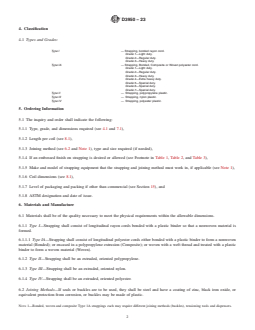
4.1 Types and Grades:
regulatory limitations prior to use.
Type I — Strapping, bonded rayon cord.
1.4 This international standard was developed in accor- Grade 1—Light duty.
Grade 2—Regular duty.
dance with internationally recognized principles on standard-
Grade 3—Heavy duty.
ization established in the Decision on Principles for the
Type IA — Strapping, Bonded, Composite or Woven polyester cord.
Development of International Standards, Guides and Recom- Grade 1—Light duty.
Grade 2—Regular duty.
mendations issued by the World Trade Organization Technical
Grade 3—Heavy duty.
Barriers to Trade (TBT) Committee.
Grade 4—Extra heavy duty.
Grade 5—Special duty.
Grade 6—Special duty.
2. Referenced Documents
Grade 7—Special duty.
2 Type II — Strapping, polypropylene plastic.
2.1 ASTM Standards:
Type III — Strapping, nylon plastic.
D996 Terminology of Packaging and Distribution Environ-
Type IV — Strapping, polyester plastic.
ments
D3951 Practice for Commercial Packaging 5. Ordering Information
D4332 Practice for Conditioning Containers, Packages, or
5.1 The inquiry and order shall indicate the following:
Packaging Components for Testing
5.1.1 Type, grade, and dimensions required (see 4.1 and
7.1),
5.1.2 Length per coil (see 8.1),
5.1.3 Joining method (see 6.2 and Note 1), type and size
This specification is under the jurisdiction of ASTM Committee D10 on
Packaging and is the direct responsibility of Subcommittee D10.25 on Palletizing
required (if needed),
and Unitizing of Loads.
5.1.4 If an embossed finish on strapping is desired or
Current edition approved July 1, 2023. Published October 2023. Originally
allowed (see Footnote in Table 1, Table 2, and Table 3),
approved in 1980. Last previous edition approved in 2017 as D3950 – 17. DOI:
10.1520/D3950-23.
For referenced ASTM standards, visit the ASTM website, www.astm.org, or
contact ASTM Customer Service at service@astm.org. For Annual Book of ASTM
Standards volume information, refer to the standard’s Document Summary page on Available from American National Standards Institute (ANSI), 25 W. 43rd St.,
the ASTM website. 4th Floor, New York, NY 10036, http://www.ansi.org.
Copyright © ASTM International, 100 Barr Harbor Drive, PO Box C700, West Conshohocken, PA 19428-2959. United States
D3950 − 23
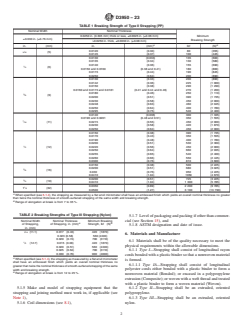
TABLE 1 Breaking Strength of Type II Strapping (PP)
Nominal Width Nominal Thickness
0.0250 in. (0.635 mm) thick or less, ±0.0025 in. (±0.06 mm) Minimum
±0.030 in. (±0.76 mm)
Breaking Strength
>0.0250 in. thick, ±0.0030 in. (±0.08 mm)
A B
in. (mm) in. (mm) lbf (N)
0.0120 (0.30) 80 (355)
⁄16 (5)
0.0145 (0.37) 100 (445)
0.0130 (0.033) 135 (600)
0.0135 (0.34) 130 (580)
0.0140 (0.36) 155 (690)
⁄4 (6)
0.0150 and 0.0160 (0.38 and 0.41) 180 (800)
0.0173 (0.44) 190 (845)
0.0250 (0.64) 200 (890)
0.0130 (0.33) 200 (890)
0.0142 (0.36) 225 (1 000)
0.0150 (0.38) 290 (1 290)
0.0160 and 0.0173 and 0.0181 (0.41 and 0.44 and 0.46) 270 (1 200)
0.0180 (0.46) 250 (1 110)
⁄8 (9)
0.0200 (0.51) 390 (1 735)
0.0230 (0.58) 450 (2 000)
0.0248 (0.63) 460 (2 045)
0.0250 (0.64) 400 (1 780)
0.0295 (0.75) 540 (2 400)
0.0140 (0.036) 300 (1 335)
0.0190 and 0.0201 (0.48 and 0.51) 350 (1 555)
⁄16 (11) 0.0215 (0.55) 450 (2 000)
0.0230 (0.58) 420 (1 870)
0.0250 (0.64) 450 (2 000)
0.0150 (0.38) 390 (1 735)
0.0170 (0.43) 350 (1 555)
0.0190 (0.48) 400 (1 780)
0.0200 (0.51) 530 (2 360)
⁄2 (12) 0.0220 (0.56) 450 (2 000)
0.0250 (0.64) 660 (2 935)
0.0255 (0.65) 540 (2 400)
0.0260 (0.66) 550 (2 445)
0.0300 (0.76) 810 (3 600)
0.0150 (0.38) 500 (2 225)
0.0200 (0.51) 680 (3 025)
⁄8 (16)
0.030 (0.76) 950 (4 225)
0.0410 (1.04) 1050 (4 670)
0.0200 (0.51) 725 (3 225)
⁄4 (19)
0.0410 (1.04) 1 300 (5 785)
0.0350 (0.89) 2 200 (9 785)
1 ⁄4 (32)
0.0500 (1.27) 3 100 (13 790)
A
When specified (see 5.1.4), the strapping as measured by a flat anvil micrometer shall have an embossed finish which yields an overall nominal thickness no greater
than twice the nominal thickness of smooth-surfaced strapping of the same width and breaking strength.
B
Range of elongation at break is from 7 to 35 %.
TABLE 2 Breaking Strengths of Type III Strapping (Nylon)
5.1.7 Level of packaging and packing if other than commer-
Nominal Width Nominal Thickness Minimum Breaking cial (see Section 15), and
A B
of Strapping, of Strapping, in. (mm) Strength, lbf (N)
5.1.8 ASTM designation and date of issue.
in. (mm)
⁄16 (11.1) 0.017 (0.43) 420 (1870)
6. Materials and Manufacture
0.023 (0.58) 560 (2490)
0.029 (0.74) 700 (3110)
6.1 Materials shall be of the quality necessary to meet the
⁄2 (12.7) 0.015 (0.38) 420 (1870)
physical requirements within the allowable dimensions.
0.020 (0.51) 560 (2490)
0.025 (0.64) 700 (3110)
6.1.1 Type I—Strapping shall consist of longitudinal rayon
0.030 (0.76) 900 (4000)
cords bonded with a plastic binder so that a nonwoven material
A
When specified (see 5.1.4), the strapping as measured by a flat anvil micrometer
is formed.
shall have an embossed finish which yields an overall nominal thickness no
6.1.1.1 Type IA—Strapping shall consist of longitudinal
greater than twice the nominal thickness of smooth-surfaced strapping of the same
width and breaking strength. polyester cords either bonded with a plastic binder to form a
B
Range of elongation at break is from 12 to 25 %.
nonwoven material (Bonded); or encased in a polypropylene
extrusion (Composite); or woven with a weft thread and treated
with a plastic binder to form a woven material (Woven).
5.1.5 Make and model of strapping equipment that the 6.1.2 Type II—Strapping shall be an extruded, oriented
strapping and joining method must work in, if applicable (see polypropylene.
Note 1), 6.1.3 Type III—Strapping shall be an extruded, oriented
5.1.6 Coil dimensions (see 8.1), nylon.
D3950 − 23
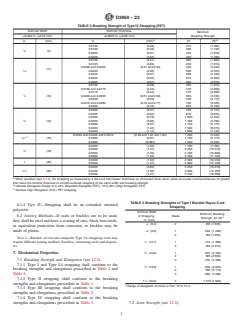
TABLE 3 Breaking Strength of Type IV Strapping (PET)
Nominal Width Nominal Thickness
Minimum
Breaking Strength
±0.030 in. (±0.76 mm) ±0.0025 in. (±0.06 mm)
A B
in. (mm) in. (mm) lbf (N)
0.0150 (0.38) 310 (1 380)
0.0190 (0.48) 390 (1 735)
⁄8 (9)
0.0200 (0.51) 420 (1 870)
0.0205 (0.52) 400 (1 780)
0.0160 (0.41) 360 (1 600)
0.0195 (0.50) 430 (1 910)
0.0200 and 0.0205 (0.51 and 0.52) 460 (2 045)
(11)
⁄16 0.0220 (0.56) 500 (2 225)
0.0240 (0.61) 560 (2 490)
0.0255 (0.65) 575 (2 560)
0.0265 (0.67) 600 (2 670)
0.0150 (0.38) 420 (1 870)
0.0168 and 0.0170 (0.43) 470 (2 090)
0.0175 (0.44) 470 (2 090)
⁄2 (12) 0.0200 and 0.0205 (0.51 and 0.52) 560 (2 490)
0.0250 (0.64) 700 (3 115)
0.0275 and 0.0280 (0.70 and 0.71) 750 (3 435)
0.0300 (0.76) 850 (3 780)
0.0200 (0.51) 700 (3 115)
0.0250 (0.64) 870 (3 870)
0.0300 (0.76) 1 000 (4 450)
⁄8 (16) 0.0350 (0.89) 1 300 (5 780)
0.0360 (0.91) 1 150 (5 115)
0.0400 (1.02) 1 500 (6 670)
0.0450 (1.14) 1 600 (7 120)
0.0350 and 0.0400 and 0.0410 (0.89 and 1.02 and 1.04) 1 200 (5 340)
C
⁄8 (16) 0.0360 (0.91) 1 150 (5 115)
0.0380 (0.097) 1 200 (5 340)
0.0400 (1.02) 1 750 (7 785)
0.0500 (1.27) 2 250 (10 010)
⁄4 (19)
0.0550 (1.40) 2 400 (10 680)
0.0600 (1.52) 2 500 (11 120)
0.0400 (1.02) 2 300 (10 230)
1 (25)
0.0500 (1.27) 2 800 (12 455)
0.0320 (0.82) 2 250 (10 010)
1 ⁄4 (32) 0.0400 (1.02) 2 800 (12 455)
0.0500 (1.27) 3 750 (16 680)
A
When specified (see 5.1.4), the strapping as measured by a flat anvil micrometer shall have an embossed finish which yields an overall nominal thickness no greater
than twice the nominal thickness of smooth-surfaced strapping of the same width and breaking strength.
B
Ultimate Elongation Range: 5 to 20% (Standard Elongation PET), 10 to 25% (High Elongation PET).
C
Denotes High Elongation (H.E.) PET strapping.
TABLE 4 Breaking Strengths of Type I Bonded Rayon Cord
6.1.4 Type IV—Strapping shall be an extruded, oriented
Strapping
polyester.
Nominal Width
Minimum Breaking
of Strapping, Grade
6.2 Joining Methods—If seals or buckles are to be used, A
Strength, lbf (N)
in. (mm)
they shall be steel and have a coating of zinc, black iron oxide,
⁄4 (6.4) 2 235 (1 045)
or equivalent protection from corrosion, or buckles may be
made of plastic. 3
⁄8 (9.0) 1 290 (1 290)
2 350 (1 555)
NOTE 1—Bonded, woven and composite Type 1A strappings each may
require different joining methods (buckles), tensioning tools and dispens-
⁄2 (12.7) 1 410 (1 820)
ers.
2 465 (2 070)
⁄8 (16.0) 1 525 (2 335)
7. Mechanical Properties
2 585 (2 600)
7.1 Breaking Strength and Elongation (see 12.2): 3 765 (3 400)
7.1.1 Type I and Type IA strapping shall conform to the
⁄4 (19.0) 1 640 (2 845)
breaking strengths and elongations prescribed in Table 4 and
2 700 (3 110)
Table 5. 3 900 (4 000)
7.1.2 Type II strapping shall conform to the breaking
1 ⁄4 (32.0) 3 1 575 (7 005)
strengths and elongations prescribed in Table 1.
A
Range of elongation at break is from 10 to 15 %.
7.1.3 Type III strapping shall conform to the breaking
strengths and elongations prescribed in Table 2.
7.1.4 Type IV strapping shall conform to the breaking
strengths and elongations prescribed in Table 3. 7.2 Joint Strength (see 12.3).
D3950 − 23
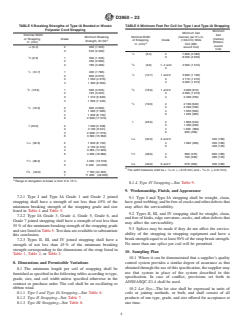
TABLE 5 Breaking Strengths of Type IA Bonded or Woven TABLE 6 Minimum Feet Per Coil for Type I and Type IA Strapping
Polyester Cord Strapping
Minimum
Minimum feet
feet
Nominal Width
Nominal Width (metres) per 5 ⁄2-in.
Minimum Breaking
(metres)
of Strapping, Grade
A
of Strapping, Grade (140-mm) Wide
Strength, lbf (N)
(Ribbon-
in. (mm)
A
in. (mm) Coil (Mill-
wound
⁄4 (6.4) 2 300 (1 335) wound Coil)
Coil)
3 540 (2 400)
⁄4 (6.4) 2 7 800 (2 380)
3 3 8 250 (2 520)
⁄8 (9.0) 1 300 (1 335)
2 450 (2 000)
⁄8 (9.0) 1, 2 and 4 950 (1 510)
3 780 (3 480)
⁄2 (12.7) 1 400 (1 780)
⁄2 (12.7) 1 and 2 3 900 (1 190)
2 600 (2 670)
3 4 170 (1 270)
3 1 050 (4 670)
4 3 300 (1 010)
4 1 360 (6 050)
⁄8 (16.0) 1 and 2 3 000 (910)
⁄8 (16.0) 1 500 (2 225)
3 3 300 (1 010)
2 725 (3 225)
4 2 490 (760)
3 1 310 (5 830)
4 1 650 (7 340)
⁄4 (19.0) 2 2 100 (640)
3 2 490 (760)
⁄4 (19.0) 2 900 (4 000)
4 1 655 (500)
3 1 585 (7 060)
5 1 200 (365)
4 1 830 (8 150)
5 2 600 (11 570)
1 (25.0) 2 1 800 (549)
3 1 400 (400)
1 (25.0) 2 1 200 (5 338)
4 1 200 (366)
3 2 100 (9 341)
5 850 (259)
4 2 600 (11 570)
5 3 500 (15 569)
1 ⁄4 (32.0) 2 and 3 330 (100)
4 1 082 (330) 330 (100)
1 ⁄4 (32.0) 2 1 830 (8 150)
5 450 (145)
3 2 105 (9 370)
4 3 285 (14 620)
1 ⁄2 (38.0) 4 900 (275) 600 (180)
5 4 200 (18 680)
5 750 (230) 480 (145)
1 ⁄2 (38.0) 4 4 400 (19 570)
1 ⁄8 (40.0) 6 and 7 670 (204) 330 (100)
5 5 400 (24 030)
A
1 3
The width tolerance shall be + ⁄32 in. ( + 0.79 mm) and − ⁄32 in. (−2.37 mm).
1 ⁄8 (40.0) 6 7 700 (34 265)
7 11 000 (48 950)
A
Range of elongation at break is from 9 to 15 %.
8.1.4 Type IV Strapping—See Table 9.
9. Workmanship, Finish, and Appearance
7.2.1 Type I and Type IA Grade 1 and Grade 2 joined
9.1 Type I and Type IA strapping shall be straight, clean,
strapping shall have a strength of not less than 45% of the have good webbing, and be free of cracks and other defects that
minimum breaking strength of the strapping grade and size
may affect the serviceability.
listed in Table 4 and Table 5.
9.2 Types II, III, and IV strapping shall be straight, clean,
7.2.2 Type IA Grade 3, Grade 4, Grade 5, Grade 6, and
and free of kinks, edge curvature, cracks, and other defects that
Grade 7 joined strapping shall have a strength of not less than
may affect the serviceability.
55 % of the minimum breaking strength of the strapping grade
9.3 Splices may be made if they do not affect the service-
and size listed in Table 5. Test data are available to substantiate
ability of the strapping in strapping equipment and have a
this conclusion.
break strength equal to at least 50% of the strap break strength.
7.2.3 Types II, III, and IV joined strapping shall have a
No more than one splice per coil will be permitted.
strength of not less than 45 % of the minimum breaking
strength corresponding to the dimensions of the strap listed in
10. Sampling Plan
Table 1, Table 2, or Table 3.
10.1 Where it can be demonstrated that a supplier’s quality
8. Dimensions and Permissible Variations control system provides a similar degree of assurance as that
obtained through the use of this specification, the supplier may
8.1 The minimum length per coil of strapping shall be
use that system in place of the system described in this
furnished as specified in the following tables according to type,
specification. In case of conflict, provisions set forth in
grade, size, and coil width unless specified otherwise in the
ANSI/ASQC Z1.4 shall be used.
contract or purchase order. The coil shall be an oscillating or
ribbon wind. 10.2 Lot Size—The lot size shall be expressed in units of
8.1.1 Type I and Type IA Strapping—See Table 6. coils or joining methods, or both, and shall consist of all
8.1.2 Type II Strapping—See Table 7. products of one type, grade, and size offered for acceptance at
8.1.3 Type III Strapping—See Table 8. one time.
...
This document is not an ASTM standard and is intended only to provide the user of an ASTM standard an indication of what changes have been made to the previous version. Because
it may not be technically possible to adequately depict all changes accurately, ASTM recommends that users consult prior editions as appropriate. In all cases only the current version
of the standard as published by ASTM is to be considered the official document.
Designation: D3950 − 17 D3950 − 23
Standard Specification for
Strapping, Nonmetallic (and Joining Methods)
This standard is issued under the fixed designation D3950; the number immediately following the designation indicates the year of
original adoption or, in the case of revision, the year of last revision. A number in parentheses indicates the year of last reapproval. A
superscript epsilon (´) indicates an editorial change since the last revision or reapproval.
This standard has been approved for use by agencies of the U.S. Department of Defense.
1. Scope
1.1 This specification covers nonmetallic strapping and joining methods intended for use in closing, reinforcing, and bundling
articles for shipment, unitizing, palletizing, and bracing for car loading and truck loading.
1.2 The values stated in inch-pound units are to be regarded as standard. The values given in parentheses are mathematical
conversions to SI units that are provided for information only and are not considered standard.
1.3 The following safety hazards caveat pertains only to the test method portion, Section 12, of this specification: This standard
does not purport to address all of the safety concerns, if any, associated with its use. It is the responsibility of the user of this
standard to establish appropriate safety, health, and environmental practices and determine the applicability of regulatory
limitations prior to use.
1.4 This international standard was developed in accordance with internationally recognized principles on standardization
established in the Decision on Principles for the Development of International Standards, Guides and Recommendations issued
by the World Trade Organization Technical Barriers to Trade (TBT) Committee.
2. Referenced Documents
2.1 ASTM Standards:
D996 Terminology of Packaging and Distribution Environments
D3951 Practice for Commercial Packaging
D4332 Practice for Conditioning Containers, Packages, or Packaging Components for Testing
2.2 Other Standards:
ANSI/ASQC Z1.4 Sampling Procedures and Tables for Inspection by Attributes
ANSI/ASQC Z1.9 Sampling Procedures and Tables for Inspection by Variables for Percent Nonconforming
3. Terminology
3.1 breaking strength, n—the maximum load a sample of strap will bear when tested as described in Section 12, Test Methods,
and by the procedure described in 12.6.1, Breaking Strength, expressed in units of force.
3.2 For general definitions of packaging and distribution environments, see Terminology D996.
This specification is under the jurisdiction of ASTM Committee D10 on Packaging and is the direct responsibility of Subcommittee D10.25 on Palletizing and Unitizing
of Loads.
Current edition approved Sept. 1, 2017July 1, 2023. Published October 2017October 2023. Originally approved in 1980. Last previous edition approved in 20162017 as
D3950 – 16.D3950 – 17. DOI: 10.1520/D3950-17.10.1520/D3950-23.
For referenced ASTM standards, visit the ASTM website, www.astm.org, or contact ASTM Customer Service at service@astm.org. For Annual Book of ASTM Standards
volume information, refer to the standard’s Document Summary page on the ASTM website.
Available from American National Standards Institute (ANSI), 25 W. 43rd St., 4th Floor, New York, NY 10036, http://www.ansi.org.
Copyright © ASTM International, 100 Barr Harbor Drive, PO Box C700, West Conshohocken, PA 19428-2959. United States
D3950 − 23
4. Classification
4.1 Types and Grades:
Type I — Strapping, bonded rayon cord.
Grade 1—Light duty.
Grade 2—Regular duty.
Grade 3—Heavy duty.
Type IA — Strapping, Bonded, Composite or Woven polyester cord.
Grade 1—Light duty.
Grade 2—Regular duty.
Grade 3—Heavy duty.
Grade 4—Extra heavy duty.
Grade 5—Special duty.
Grade 6—Special duty.
Grade 7—Special duty.
Type II — Strapping, polypropylene plastic.
Type III — Strapping, nylon plastic.
Type IV — Strapping, polyester plastic.
5. Ordering Information
5.1 The inquiry and order shall indicate the following:
5.1.1 Type, grade, and dimensions required (see 4.1 and 7.1),
5.1.2 Length per coil (see 8.1),
5.1.3 Joining method (see 6.2 and Note 1), type and size required (if needed),
5.1.4 If an embossed finish on strapping is desired or allowed (see Footnote in Table 1, Table 2, and Table 3),
5.1.5 Make and model of strapping equipment that the strapping and joining method must work in, if applicable (see Note 1),
5.1.6 Coil dimensions (see 8.1),
5.1.7 Level of packaging and packing if other than commercial (see Section 15), and
5.1.8 ASTM designation and date of issue.
6. Materials and Manufacture
6.1 Materials shall be of the quality necessary to meet the physical requirements within the allowable dimensions.
6.1.1 Type I—Strapping shall consist of longitudinal rayon cords bonded with a plastic binder so that a nonwoven material is
formed.
6.1.1.1 Type IA—Strapping shall consist of longitudinal polyester cords either bonded with a plastic binder to form a nonwoven
material (Bonded); or encased in a polypropylene extrusion (Composite); or woven with a weft thread and treated with a plastic
binder to form a woven material (Woven).
6.1.2 Type II—Strapping shall be an extruded, oriented polypropylene.
6.1.3 Type III—Strapping shall be an extruded, oriented nylon.
6.1.4 Type IV—Strapping shall be an extruded, oriented polyester.
6.2 Joining Methods—If seals or buckles are to be used, they shall be steel and have a coating of zinc, black iron oxide, or
equivalent protection from corrosion, or buckles may be made of plastic.
NOTE 1—Bonded, woven and composite Type 1A strappings each may require different joining methods (buckles), tensioning tools and dispensers.
D3950 − 23
TABLE 1 Breaking Strength of Type II Strapping (PP)
Minimum
Nominal Width Nominal Thickness
Breaking Strength
0.0250 in. (0.635 mm) thick or less, ±0.0025 in. (±0.06 mm) Minimum
±0.030 in. (±0.76 mm)
Breaking Strength
>0.0250 in. thick, ±0.0030 in. (±0.08 mm)
A B
in. (mm) in. (mm) lbf (N)
0.0120 (0.30) 80 (355)
⁄16 (5)
0.0145 (0.37) 100 (445)
0.0130 (0.033) 135 (600)
0.0135 (0.34) 130 (580)
0.0140 (0.36) 155 (690)
⁄4 (6)
0.0150 and 0.0160 (0.38 and 0.41) 180 (800)
0.0173 (0.44) 190 (845)
0.0250 (0.64) 200 (890)
0.0130 (0.33) 200 (890)
0.0142 (0.36) 225 (1 000)
0.0150 (0.38) 290 (1 290)
0.0160 and 0.0173 and 0.0181 (0.41 and 0.44 and 0.46) 270 (1 200)
0.0180 (0.46) 250 (1 110)
⁄8 (9)
0.0200 (0.51) 390 (1 735)
0.0230 (0.58) 450 (2 000)
0.0248 (0.63) 460 (2 045)
0.0250 (0.64) 400 (1 780)
0.0295 (0.75) 540 (2 400)
0.0140 (0.036) 300 (1 335)
0.0190 and 0.0201 (0.48 and 0.51) 350 (1 555)
⁄16 (11) 0.0215 (0.55) 450 (2 000)
0.0230 (0.58) 420 (1 870)
0.0250 (0.64) 450 (2 000)
0.0150 (0.38) 390 (1 735)
0.0170 (0.43) 350 (1 555)
0.0190 (0.48) 400 (1 780)
0.0200 (0.51) 530 (2 360)
⁄2 (12) 0.0220 (0.56) 450 (2 000)
0.0250 (0.64) 660 (2 935)
0.0255 (0.65) 540 (2 400)
0.0260 (0.66) 550 (2 445)
0.0300 (0.76) 810 (3 600)
0.0150 (0.38) 500 (2 225)
0.0200 (0.51) 680 (3 025)
⁄8 (16)
0.030 (0.76) 950 (4 225)
0.0410 (1.04) 1050 (4 670)
0.0200 (0.51) 725 (3 225)
⁄4 (19)
0.0410 (1.04) 1 300 (5 785)
0.0350 (0.89) 2 200 (9 785)
1 ⁄4 (32)
0.0500 (1.27) 3 100 (13 790)
A
When specified (see 5.1.4), the strapping as measured by a flat anvil micrometer shall have an embossed finish which yields an overall nominal thickness no greater
than twice the nominal thickness of smooth-surfaced strapping of the same width and breaking strength.
B
Range of elongation at break is from 7 to 35 %.
TABLE 2 Breaking Strengths of Type III Strapping (Nylon)
Nominal Width Nominal Thickness Minimum Breaking
A B
of Strapping, of Strapping, in. (mm) Strength, lbf (N)
in. (mm)
⁄16 (11.1) 0.017 (0.43) 420 (1870)
0.023 (0.58) 560 (2490)
0.029 (0.74) 700 (3110)
⁄2 (12.7) 0.015 (0.38) 420 (1870)
0.020 (0.51) 560 (2490)
0.025 (0.64) 700 (3110)
0.030 (0.76) 900 (4000)
A
When specified (see 5.1.4), the strapping as measured by a flat anvil micrometer
shall have an embossed finish which yields an overall nominal thickness no
greater than twice the nominal thickness of smooth-surfaced strapping of the same
width and breaking strength.
B
Range of elongation at break is from 12 to 25 %.
7. Mechanical Properties
7.1 Breaking Strength and Elongation (see 12.2):
D3950 − 23
TABLE 3 Breaking Strength of Type IV Strapping (PET)
Nominal Width Nominal Thickness
Minimum
Breaking Strength
±0.030 in. (±0.76 mm) ±0.0025 in. (±0.06 mm)
A B
in. (mm) in. (mm) lbf (N)
0.0150 (0.38) 310 (1 380)
0.0190 (0.48) 390 (1 735)
⁄8 (9)
0.0200 (0.51) 420 (1 870)
0.0205 (0.52) 400 (1 780)
0.0160 (0.41) 360 (1 600)
0.0195 (0.50) 430 (1 910)
0.0200 and 0.0205 (0.51 and 0.52) 460 (2 045)
(11)
⁄16 0.0220 (0.56) 500 (2 225)
0.0240 (0.61) 560 (2 490)
0.0255 (0.65) 575 (2 560)
0.0265 (0.67) 600 (2 670)
0.0150 (0.38) 420 (1 870)
0.0168 and 0.0170 (0.43) 470 (2 090)
0.0175 (0.44) 470 (2 090)
⁄2 (12) 0.0200 and 0.0205 (0.51 and 0.52) 560 (2 490)
0.0250 (0.64) 700 (3 115)
0.0275 and 0.0280 (0.70 and 0.71) 750 (3 435)
0.0300 (0.76) 850 (3 780)
0.0200 (0.51) 700 (3 115)
0.0250 (0.64) 870 (3 870)
0.0300 (0.76) 1 000 (4 450)
⁄8 (16) 0.0350 (0.89) 1 300 (5 780)
0.0360 (0.91) 1 150 (5 115)
0.0400 (1.02) 1 500 (6 670)
0.0450 (1.14) 1 600 (7 120)
0.0350 and 0.0400 and 0.0410 (0.89 and 1.02 and 1.04) 1 200 (5 340)
C
⁄8 (16) 0.0360 (0.91) 1 150 (5 115)
0.0380 (0.097) 1 200 (5 340)
0.0400 (1.02) 1 750 (7 785)
0.0500 (1.27) 2 250 (10 010)
⁄4 (19)
0.0550 (1.40) 2 400 (10 680)
0.0600 (1.52) 2 500 (11 120)
0.0400 (1.02) 2 300 (10 230)
1 (25)
0.0500 (1.27) 2 800 (12 455)
0.0320 (0.82) 2 250 (10 010)
1 ⁄4 (32) 0.0400 (1.02) 2 800 (12 455)
0.0500 (1.27) 3 750 (16 680)
A
When specified (see 5.1.4), the strapping as measured by a flat anvil micrometer shall have an embossed finish which yields an overall nominal thickness no greater
than twice the nominal thickness of smooth-surfaced strapping of the same width and breaking strength.
B
Ultimate Elongation Range: 5 to 20% (Standard Elongation PET), 10 to 25% (High Elongation PET).
C
Denotes High Elongation (H.E.) PET strapping.
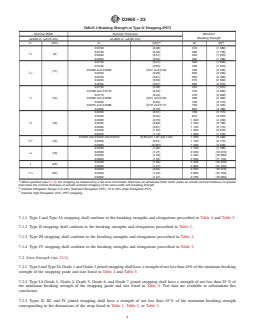
7.1.1 Type I and Type IA strapping shall conform to the breaking strengths and elongations prescribed in Table 4 and Table 5.
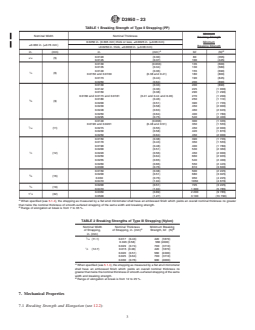
7.1.2 Type II strapping shall conform to the breaking strengths and elongations prescribed in Table 1.
7.1.3 Type III strapping shall conform to the breaking strengths and elongations prescribed in Table 2.
7.1.4 Type IV strapping shall conform to the breaking strengths and elongations prescribed in Table 3.
7.2 Joint Strength (see 12.3).
7.2.1 Type I and Type IA Grade 1 and Grade 2 joined strapping shall have a strength of not less than 45% of the minimum breaking
strength of the strapping grade and size listed in Table 4 and Table 5.
7.2.2 Type IA Grade 3, Grade 4, Grade 5, Grade 6, and Grade 7 joined strapping shall have a strength of not less than 55 % of
the minimum breaking strength of the strapping grade and size listed in Table 5. Test data are available to substantiate this
conclusion.
7.2.3 Types II, III, and IV joined strapping shall have a strength of not less than 45 % of the minimum breaking strength
corresponding to the dimensions of the strap listed in Table 1, Table 2, or Table 3.
D3950 − 23
TABLE 4 Breaking Strengths of Type I Bonded Rayon Cord
Strapping
Nominal Width
Minimum Breaking
of Strapping, Grade
A
Strength, lbf (N)
in. (mm)
⁄4 (6.4) 2 235 (1 045)
⁄8 (9.0) 1 290 (1 290)
2 350 (1 555)
⁄2 (12.7) 1 410 (1 820)
2 465 (2 070)
⁄8 (16.0) 1 525 (2 335)
2 585 (2 600)
3 765 (3 400)
⁄4 (19.0) 1 640 (2 845)
2 700 (3 110)
3 900 (4 000)
1 ⁄4 (32.0) 3 1 575 (7 005)
A
Range of elongation at break is from 10 to 15 %.
TABLE 5 Breaking Strengths of Type IA Bonded or Woven
Polyester Cord Strapping
Nominal Width
Minimum Breaking
of Strapping, Grade
A
Strength, lbf (N)
in. (mm)
⁄4 (6.4) 2 300 (1 335)
3 540 (2 400)
⁄8 (9.0) 1 300 (1 335)
2 450 (2 000)
3 780 (3 480)
⁄2 (12.7) 1 400 (1 780)
2 600 (2 670)
3 1 050 (4 670)
4 1 360 (6 050)
⁄8 (16.0) 1 500 (2 225)
2 725 (3 225)
3 1 310 (5 830)
4 1 650 (7 340)
⁄4 (19.0) 2 900 (4 000)
3 1 585 (7 060)
4 1 830 (8 150)
5 2 600 (11 570)
1 (25.0) 2 1 200 (5 338)
3 2 100 (9 341)
4 2 600 (11 570)
5 3 500 (15 569)
1 ⁄4 (32.0) 2 1 830 (8 150)
3 2 105 (9 370)
4 3 285 (14 620)
5 4 200 (18 680)
1 ⁄2 (38.0) 4 4 400 (19 570)
5 5 400 (24 030)
1 ⁄8 (40.0) 6 7 700 (34 265)
7 11 000 (48 950)
A
Range of elongation at break is from 9 to 15 %.
D3950 − 23
8. Dimensions and Permissible Variations
8.1 The minimum length per coil of strapping shall be furnished as specified in the following tables according to type, grade, size,
and coil width unless specified otherwise in the contract or purchase order. The coil shall be an oscillating or ribbon wind.
8.1.1 Type I and Type IA Strapping—See Table 6.
8.1.2 Type II Strapping—See Table 7.
8.1.3 Type III Strapping—See Table 8.
8.1.4 Type IV Strapping—See Table 9.
9. Workmanship, Finish, and Appearance
9.1 Type I and Type IA strapping shall be straight, clean, have good webbing, and be free of cracks and other defects that may
affect the serviceability.
9.2 Types II, III, and IV strapping shall be straight, clean, and free of kinks, edge curvature, cracks, and other defects that may
affect the serviceability.
9.3 Splices may be made if they do not affect the serviceability of the strapping in strapping equipment and have a break strength
equal to at least 50% of the strap break strength. No more than one splice per coil will be permitted.
TABLE 6 Minimum Feet Per Coil for Type I and Type IA Strapping
Minimum
Minimum feet
feet
Nominal Width (metres) per 5 ⁄2-in.
(metres)
of Strapping, Grade (140-mm) Wide
(Ribbon-
A
in. (mm) Coil (Mill-
wound
wound Coil)
Coil)
⁄4 (6.4) 2 7 800 (2 380)
3 8 250 (2 520)
⁄8 (9.0) 1, 2 and 4 950 (1 510)
⁄2 (12.7) 1 and 2 3 900 (1 190)
3 4 170 (1 270)
4 3 300 (1 010)
⁄8 (16.0) 1 and 2 3 000 (910)
3 3 300 (1 010)
4 2 490 (760)
⁄4 (19.0) 2 2 100 (640)
3 2 490 (760)
4 1 655 (500)
5 1 200 (365)
1 (25.0) 2 1 800 (549)
3 1 400 (400)
4 1 200 (366)
5 850 (259)
1 ⁄4 (32.0) 2 and 3 330 (100)
4 1 082 (330) 330 (100)
5 450 (145)
1 ⁄2 (38.0) 4 900 (275) 600 (180)
5 750 (230) 480 (145)
1 ⁄8 (40.0) 6 and 7 670 (204) 330 (100)
A
1 3
The width tolerance shall be + ⁄32 in. ( + 0.79 mm) and − ⁄32 in. (−2.37 mm).
D3950 − 23
TABLE 7 Minimum Feet (Metres) Per Coil; Type II Strapping (PP)
Nominal Nominal
ft (m), min
A B
Width Thickness
± 0.030 in. 0.0250 in. (0.635 mm) thick or less,
(±0.76mm) ±0.0025 in. (±0.06 mm)
3 1
>0.0250 in. thick, Per 3-in. Per 5 ⁄4-in. Per 6-in. Per 7 ⁄2-in
C C C C
±0.0030 in. (±0.08 mm) Wide Coil Wide Coil Wide Coil Wide Coil
in. (mm) in. (mm) ft (m) ft (m) ft (m
...