

ASTM C874-20
(Test Method)Standard Test Method for Rotary Slag Testing of Refractory Materials
General Information
- Abstract
SIGNIFICANCE AND USE
2.1 This test method outlines a procedure which, when appropriate evaluation methods are added, can be useful in the development of new products or in the selection of products to be used in contact with a particular slag composition.
2.2 A gradient exists through the test specimens that is controlled by the thermal conductivity of the specimens and backup material. The slag is constantly renewed so that a high rate of corrosion is maintained. The flow of the slag can cause mechanical erosion of materials. The tilt and rotational speed of the furnace will affect the amount of mechanical erosion.
2.3 Use caution in interpreting results when materials of vastly different types are included in a single run. Care must be taken to prevent oxidation of carbon-containing materials during heat up; failure to do so can result in highly erratic results. A reference refractory specimen, or specimens, should be used for comparison.
SCOPE
1.1 This test method describes a procedure for comparing the behavior of refractories to the action of molten slag in a rotating test furnace. A reference material should be included in each test and run for comparison. No numeric results are obtained from this test method. Numeric evaluation of test results is the responsibility of the test operator. The test and equipment are patterned after a method developed by Valley Dolomite Corporation.2
1.2 The values stated in inch-pound units are to be regarded as standard. The values given in parentheses are mathematical conversions to SI units that are provided for information only and are not considered standard.
1.3 This standard does not purport to address all of the safety concerns, if any, associated with its use. It is the responsibility of the user of this standard to establish appropriate safety, health, and environmental practices and determine the applicability of regulatory limitations prior to use.
1.4 This international standard was developed in accordance with internationally recognized principles on standardization established in the Decision on Principles for the Development of International Standards, Guides and Recommendations issued by the World Trade Organization Technical Barriers to Trade (TBT) Committee.
- Status
- Published
- Publication Date
- 31-May-2020
- Technical Committee
- C08 - Refractories
- Drafting Committee
- C08.04 - Chemical Behaviors


Overview
ASTM C874-20 is the ASTM International standard test method applicable to the rotary slag testing of refractory materials. This standard provides a comparative procedure for evaluating how different refractory products withstand attack by molten slag under dynamic conditions within a rotating test furnace. The method facilitates the development and selection of refractory materials in applications where exposure to aggressive slags is a critical concern, such as in metallurgical, cement, and glass production industries. Numeric results are not directly provided; instead, comparative observations and operator assessments are emphasized.
Key Topics
- Rotary Slag Testing: The standard describes a rotating furnace method to simulate realistic slag-refractory interactions, assessing both corrosion and mechanical erosion of refractories.
- Comparative Evaluation: Test results allow side-by-side comparison of different materials' resistance to corrosion and penetration by slag, aiding material selection.
- Gradient Effects: The method recognizes that temperature and material gradients in the test specimens can influence results, requiring careful control of test conditions for meaningful comparisons.
- Test Atmosphere: Both oxidizing and reducing atmospheres may be used, with monitoring and control of the atmosphere being essential, especially when carbon-containing refractories are tested.
- Result Interpretation: Results are reported descriptively with observations such as depth of slag cut, penetration, and any observed cracking, with computed values left to the test operator’s discretion.
Applications
The rotary slag test method outlined in ASTM C874-20 is widely used for:
- Research and Development: Assisting in the formulation and improvement of new refractory products by identifying superior slag resistance characteristics.
- Material Qualification: Supporting the selection of refractories appropriate for specific industrial processes involving high-temperature contact with molten slags.
- Performance Benchmarking: Establishing baseline data for comparing new or alternate refractory materials against established reference materials in controlled testing environments.
- Failure Analysis: Aiding engineers in understanding the mechanisms of slag-induced deterioration in service conditions, leading to improved processes and material choices.
- Quality Control: As part of a comprehensive quality assurance protocol for refractory producers, ensuring supplied materials meet customer requirements for slag resistance.
Practical Value
Utilizing ASTM C874-20 delivers several benefits for industries reliant on high-performance refractories:
- Enhanced Durability: Better identification of materials that offer superior resistance to slag corrosion and erosion, extending equipment life.
- Process Optimization: Supports optimal selection of linings based on actual comparative behavior in simulated operational environments.
- Risk Reduction: Minimizes unplanned downtime and repair costs due to premature refractory failure from slag attack.
- Compliance and Standardization: Provides confidence to manufacturers and end-users that evaluations are conducted using internationally recognized methods.
Related Standards
Professionals working with ASTM C874-20 may also refer to related ASTM standards and methodologies, including:
- ASTM C201 - Test Method for Thermal Conductivity of Refractories
- ASTM C704 - Test Method for Abrasion Resistance of Refractory Materials
- ASTM C113 - Test Method for Refractoriness (Firing Test)
- ASTM C865 - Practice for Firing Refractory Test Specimens
These complementary standards further support the comprehensive evaluation of refractory quality, durability, and suitability for service in demanding environments.
Keywords: ASTM C874-20, rotary slag test, refractory materials, slag corrosion, mechanical erosion, test method, molten slag, refractories testing, corrosion resistance, material selection, industrial refractories.
Relations
- Effective Date
- 01-Jun-2020
- Referred By
ASTM C607-88(2016) - Standard Practice for Coking Large Shapes of Carbon-Bearing Materials - Effective Date
- 01-Jun-2020
Frequently Asked Questions
ASTM C874-20 is a standard published by ASTM International. Its full title is "Standard Test Method for Rotary Slag Testing of Refractory Materials". This standard covers: SIGNIFICANCE AND USE 2.1 This test method outlines a procedure which, when appropriate evaluation methods are added, can be useful in the development of new products or in the selection of products to be used in contact with a particular slag composition. 2.2 A gradient exists through the test specimens that is controlled by the thermal conductivity of the specimens and backup material. The slag is constantly renewed so that a high rate of corrosion is maintained. The flow of the slag can cause mechanical erosion of materials. The tilt and rotational speed of the furnace will affect the amount of mechanical erosion. 2.3 Use caution in interpreting results when materials of vastly different types are included in a single run. Care must be taken to prevent oxidation of carbon-containing materials during heat up; failure to do so can result in highly erratic results. A reference refractory specimen, or specimens, should be used for comparison. SCOPE 1.1 This test method describes a procedure for comparing the behavior of refractories to the action of molten slag in a rotating test furnace. A reference material should be included in each test and run for comparison. No numeric results are obtained from this test method. Numeric evaluation of test results is the responsibility of the test operator. The test and equipment are patterned after a method developed by Valley Dolomite Corporation.2 1.2 The values stated in inch-pound units are to be regarded as standard. The values given in parentheses are mathematical conversions to SI units that are provided for information only and are not considered standard. 1.3 This standard does not purport to address all of the safety concerns, if any, associated with its use. It is the responsibility of the user of this standard to establish appropriate safety, health, and environmental practices and determine the applicability of regulatory limitations prior to use. 1.4 This international standard was developed in accordance with internationally recognized principles on standardization established in the Decision on Principles for the Development of International Standards, Guides and Recommendations issued by the World Trade Organization Technical Barriers to Trade (TBT) Committee.
SIGNIFICANCE AND USE 2.1 This test method outlines a procedure which, when appropriate evaluation methods are added, can be useful in the development of new products or in the selection of products to be used in contact with a particular slag composition. 2.2 A gradient exists through the test specimens that is controlled by the thermal conductivity of the specimens and backup material. The slag is constantly renewed so that a high rate of corrosion is maintained. The flow of the slag can cause mechanical erosion of materials. The tilt and rotational speed of the furnace will affect the amount of mechanical erosion. 2.3 Use caution in interpreting results when materials of vastly different types are included in a single run. Care must be taken to prevent oxidation of carbon-containing materials during heat up; failure to do so can result in highly erratic results. A reference refractory specimen, or specimens, should be used for comparison. SCOPE 1.1 This test method describes a procedure for comparing the behavior of refractories to the action of molten slag in a rotating test furnace. A reference material should be included in each test and run for comparison. No numeric results are obtained from this test method. Numeric evaluation of test results is the responsibility of the test operator. The test and equipment are patterned after a method developed by Valley Dolomite Corporation.2 1.2 The values stated in inch-pound units are to be regarded as standard. The values given in parentheses are mathematical conversions to SI units that are provided for information only and are not considered standard. 1.3 This standard does not purport to address all of the safety concerns, if any, associated with its use. It is the responsibility of the user of this standard to establish appropriate safety, health, and environmental practices and determine the applicability of regulatory limitations prior to use. 1.4 This international standard was developed in accordance with internationally recognized principles on standardization established in the Decision on Principles for the Development of International Standards, Guides and Recommendations issued by the World Trade Organization Technical Barriers to Trade (TBT) Committee.
ASTM C874-20 is classified under the following ICS (International Classification for Standards) categories: 81.080 - Refractories. The ICS classification helps identify the subject area and facilitates finding related standards.
ASTM C874-20 has the following relationships with other standards: It is inter standard links to ASTM C874-11a, ASTM C607-88(2016). Understanding these relationships helps ensure you are using the most current and applicable version of the standard.
ASTM C874-20 is available in PDF format for immediate download after purchase. The document can be added to your cart and obtained through the secure checkout process. Digital delivery ensures instant access to the complete standard document.
Standards Content (Sample)
This international standard was developed in accordance with internationally recognized principles on standardization established in the Decision on Principles for the
Development of International Standards, Guides and Recommendations issued by the World Trade Organization Technical Barriers to Trade (TBT) Committee.
Designation: C874 − 20
Standard Test Method for
Rotary Slag Testing of Refractory Materials
This standard is issued under the fixed designation C874; the number immediately following the designation indicates the year of
original adoption or, in the case of revision, the year of last revision. A number in parentheses indicates the year of last reapproval. A
superscript epsilon (´) indicates an editorial change since the last revision or reapproval.
1. Scope mechanical erosion of materials. The tilt and rotational speed
of the furnace will affect the amount of mechanical erosion.
1.1 This test method describes a procedure for comparing
the behavior of refractories to the action of molten slag in a 2.3 Use caution in interpreting results when materials of
rotatingtestfurnace.Areferencematerialshouldbeincludedin vastly different types are included in a single run. Care must be
each test and run for comparison. No numeric results are taken to prevent oxidation of carbon-containing materials
obtained from this test method. Numeric evaluation of test during heat up; failure to do so can result in highly erratic
results is the responsibility of the test operator. The test and results. A reference refractory specimen, or specimens, should
equipment are patterned after a method developed by Valley be used for comparison.
Dolomite Corporation.
3. Apparatus
1.2 The values stated in inch-pound units are to be regarded
3.1 Furnace, consisting of a cylindrical shell, typically
as standard. The values given in parentheses are mathematical
18 in. (456 mm) long and with a 10 in. (254 mm) inside
conversions to SI units that are provided for information only
diameter, mounted on rollers and motor driven. Both the
and are not considered standard.
rotation and tilt of the furnace along its long axis should allow
1.3 This standard does not purport to address all of the
for adjustment.
safety concerns, if any, associated with its use. It is the
3.2 Burner—A gas-oxygen torch capable of heating the
responsibility of the user of this standard to establish appro-
furnace to 3200 °F (1760 °C). The burner should be equipped
priate safety, health, and environmental practices and deter-
with flow meters to monitor gas and oxygen flows.
mine the applicability of regulatory limitations prior to use.
1.4 This international standard was developed in accor-
3.3 Optical Pyrometer.
dance with internationally recognized principles on standard-
3.4 Tools, for (1) a means of feeding slag pellets into
ization established in the Decision on Principles for the
furnace, and (2) to assemble and dismantle the furnace.
Development of International Standards, Guides and Recom-
mendations issued by the World Trade Organization Technical 3.5 Gas Atmosphere Analyzer and Sampling Equipment.
Barriers to Trade (TBT) Committee.
3.6 Mold, to form plastic, castable, and rammed samples.
3.7 Molds, to form slag pellets.
2. Significance and Use
3.8 Abrasive Saws, to cut brick samples.
2.1 This test method outlines a procedure which, when
appropriate evaluation methods are added, can be useful in the 3.9 Supply of Granular Refractory Backup Material.
development of new products or in the selection of products to
3.10 Safety Equipment.
be used in contact with a particular slag composition.
4. Test Specimens
2.2 A gradient exists through the test specimens that is
controlled by the thermal conductivity of the specimens and
4.1 Test specimens should be 9 in. (228 mm) long and have
backup material. The slag is constantly renewed so that a high
a cross section as shown in Fig. 1.The 1.75 in. by 9 in. (44 mm
rate of corrosion is maintained. The flow of the slag can cause
by 228 mm) face should be an original surface.
4.2 One or more reference samples should be included in
each test run.
This test method is under the jurisdiction of ASTM Committee C08 on
Refractories and is the direct responsibility of Subcommittee C08.04 on Chemical
5. Assembly
Behaviors.
Current edition approved June 1, 2020. Published June 2020. Originally
5.1 Six test specimens, as described in Section 4, shall
approved in 1977. Last previous edition approved in 2011 as C874 – 11a which was
constitute a test lining. This lining can be assembled around a
withdrawn January 2020 and reinstated in June 2020. DOI: 10.1520/C0874-20.
hexagonal-shaped mandrel with 1.75 in. (44 mm) faces and
Cash, P., “Measuring Refractory Resistance to Hot Slags,” CeramicAge, 1966,
pp. 20–29. taped or steel-banded for subsequent handling. The lining
Copyright © ASTM International, 100 Barr Harbor Drive, PO Box C700, West Conshohocken, PA 19428-2959. United States
C874 − 20
SI Equivalents
in. (mm)
1.75 (44)
2.5 (64)
3.0 (76)
4.5 (114)
NOTE 1—Dimensions are in inches.
NOTE 2—Six cuts are needed for complete lining.
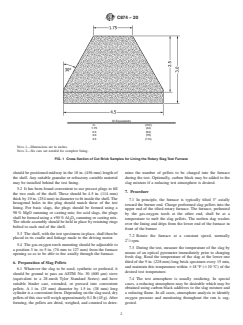
FIG. 1 Cross Section of Cut Brick Samples for Lining the Rotary Slag Test Furnace
should be positioned midway in the 18 in. (456 mm) length of mine the number of pellets to be charged into the furnace
the shell. Any suitable granular or refractory castable material
during the test. Optionally, carbon black may be added to the
may be installed behind the test lining. slag mixture if a reducing test atmosphere is desired.
5.2 It has been found convenient to use precast plugs to fill
7. Procedure
the two ends of the shell. These should be 4.5 in. (114 mm)
thick by 10 in. (254 mm) in diameter to fit inside the shell. The
7.1 In principle, the furnace is typically tilted 3° axially
hexag
...