

ASTM F3343-20e1
(Specification)Standard Consumer Safety Specification for Infant Bathers
General Information
- Abstract
SCOPE
1.1 This consumer safety specification establishes performance requirements, test methods, and labeling requirements to promote the safe use of infant bathers.
1.2 This consumer safety specification is intended to reduce the risk of death and minimize injury to infants resulting from use and reasonably foreseeable misuse or abuse of infant bathers.
1.3 No infant bather produced after the approval date of this consumer safety specification shall, either by label or other means, indicate compliance with this specification unless it conforms to all requirements contained herein.
1.4 The values stated in inch-pound units are to be regarded as standard. The values given in parentheses are mathematical conversions to SI units that are provided for information only and are not considered standard.
1.5 The following precautionary caveat pertains only to the test method portion, Section 7, of this specification: This standard does not purport to address all of the safety concerns, if any, associated with its use. It is the responsibility of the user of this standard to establish appropriate safety, health, and environmental practices and determine the applicability of regulatory limitations prior to use.
1.6 This international standard was developed in accordance with internationally recognized principles on standardization established in the Decision on Principles for the Development of International Standards, Guides and Recommendations issued by the World Trade Organization Technical Barriers to Trade (TBT) Committee.
- Status
- Published
- Publication Date
- 14-Jun-2020
- Technical Committee
- F15 - Consumer Products
- Drafting Committee
- F15.20 - Bath Seats
Overview
ASTM F3343-20e1 – Standard Consumer Safety Specification for Infant Bathers sets forth essential safety, performance, testing, and labeling requirements to ensure the safe use of infant bathers. Developed under ASTM International's recognized standardization procedures, this standard specifically aims to reduce the risk of death and minimize injuries to infants during bathing, including reasonably foreseeable misuse or abuse. This specification responds to incident data, particularly addressing drowning and injuries from product collapse, and aligns with international best practices for safety and consumer protection.
Key Topics
- Performance Requirements: Clearly defines structural, mechanical, and restraint system expectations to promote safe infant bather use.
- Testing Methods: Prescribes comprehensive tests for durability, collapse resistance, stability, and suffocation hazards, ensuring product reliability in various scenarios.
- Labeling and Warnings: Details mandatory label content, permanence, and conspicuousness, promoting clear hazard communication and user guidance.
- Instructional Literature: Sets requirements for instructional materials included with infant bathers, ensuring caregivers receive accurate, understandable safety and usage information.
- Material Compliance: Addresses hazardous substances such as lead in paints and components, referencing applicable U.S. federal regulations.
- Compatibility and Foreseeable Use: Encompasses normal and foreseeable misuse situations, such as lifting the bather with an infant inside, to maximize risk mitigation.
Applications
ASTM F3343-20e1 is crucial throughout the production, testing, import, and retail process for infant bathing products. Stakeholders who benefit from compliance include:
- Manufacturers: Integrate rigorous safety checks and compliant labeling into design and production processes to meet regulatory and marketplace requirements.
- Product Designers and Engineers: Apply test methods and structural guidelines to develop safer, more reliable infant bathers.
- Importers and Distributors: Ensure only compliant products enter markets, reducing liability and supporting consumer trust.
- Regulatory Parties and Safety Inspectors: Use the standard to assess product conformity and enforce consumer protection laws.
- Retailers and E-commerce Platforms: Specify and verify compliance in procurement requirements to ensure safe products for consumers.
Typical applications of this standard include integrating product warnings, performing regular structural integrity tests, and verifying the durability and safety of restraint systems and protective components. The standard also supports market recalls and corrective actions by providing a benchmark for compliance.
Related Standards
ASTM F3343-20e1 references and aligns with several key safety and testing standards, supporting a holistic approach to product safety for infant and children’s products:
- ASTM F963: Consumer Safety Specification for Toy Safety
- ASTM F2670: Consumer Safety Specification for Infant Bath Tubs
- ASTM F2088 & F2167: Safety specifications for infant swings and bouncer seats
- ANSI Z535 series: Guidelines for safety colors, product safety signs, and instructions
- U.S. Federal Regulations: 16 CFR 1303, 1500 (sharp point/edge, hazardous substances), and 1501 (small parts for children under 3 years)
These related standards and regulations reinforce ASTM F3343-20e1’s requirements, ensuring broad compatibility with existing safety frameworks and supporting comprehensive infant product safety protocols.
Keywords: infant bather safety, ASTM F3343-20e1, consumer safety specification, product testing, infant bath seat, child product labeling, drowning prevention, ASTM infant bather standard, safety compliance.
Relations
- Effective Date
- 01-Feb-2024
- Effective Date
- 01-Aug-2023
- Effective Date
- 15-Nov-2019
- Effective Date
- 01-Jun-2017
- Effective Date
- 01-Mar-2017
- Effective Date
- 01-Mar-2017
- Effective Date
- 01-Jan-2017
- Effective Date
- 01-Nov-2016
- Effective Date
- 01-Sep-2016
- Effective Date
- 01-Aug-2016
- Effective Date
- 01-May-2016
- Effective Date
- 01-Apr-2016
- Effective Date
- 01-Oct-2015
- Effective Date
- 01-May-2015
- Effective Date
- 01-Sep-2014
Frequently Asked Questions
ASTM F3343-20e1 is a technical specification published by ASTM International. Its full title is "Standard Consumer Safety Specification for Infant Bathers". This standard covers: SCOPE 1.1 This consumer safety specification establishes performance requirements, test methods, and labeling requirements to promote the safe use of infant bathers. 1.2 This consumer safety specification is intended to reduce the risk of death and minimize injury to infants resulting from use and reasonably foreseeable misuse or abuse of infant bathers. 1.3 No infant bather produced after the approval date of this consumer safety specification shall, either by label or other means, indicate compliance with this specification unless it conforms to all requirements contained herein. 1.4 The values stated in inch-pound units are to be regarded as standard. The values given in parentheses are mathematical conversions to SI units that are provided for information only and are not considered standard. 1.5 The following precautionary caveat pertains only to the test method portion, Section 7, of this specification: This standard does not purport to address all of the safety concerns, if any, associated with its use. It is the responsibility of the user of this standard to establish appropriate safety, health, and environmental practices and determine the applicability of regulatory limitations prior to use. 1.6 This international standard was developed in accordance with internationally recognized principles on standardization established in the Decision on Principles for the Development of International Standards, Guides and Recommendations issued by the World Trade Organization Technical Barriers to Trade (TBT) Committee.
SCOPE 1.1 This consumer safety specification establishes performance requirements, test methods, and labeling requirements to promote the safe use of infant bathers. 1.2 This consumer safety specification is intended to reduce the risk of death and minimize injury to infants resulting from use and reasonably foreseeable misuse or abuse of infant bathers. 1.3 No infant bather produced after the approval date of this consumer safety specification shall, either by label or other means, indicate compliance with this specification unless it conforms to all requirements contained herein. 1.4 The values stated in inch-pound units are to be regarded as standard. The values given in parentheses are mathematical conversions to SI units that are provided for information only and are not considered standard. 1.5 The following precautionary caveat pertains only to the test method portion, Section 7, of this specification: This standard does not purport to address all of the safety concerns, if any, associated with its use. It is the responsibility of the user of this standard to establish appropriate safety, health, and environmental practices and determine the applicability of regulatory limitations prior to use. 1.6 This international standard was developed in accordance with internationally recognized principles on standardization established in the Decision on Principles for the Development of International Standards, Guides and Recommendations issued by the World Trade Organization Technical Barriers to Trade (TBT) Committee.
ASTM F3343-20e1 is classified under the following ICS (International Classification for Standards) categories: 97.190 - Equipment for children. The ICS classification helps identify the subject area and facilitates finding related standards.
ASTM F3343-20e1 has the following relationships with other standards: It is inter standard links to ASTM F2088-24, ASTM F963-23, ASTM F2088-19, ASTM F2167-17, ASTM D1683/D1683M-17e1, ASTM D1683/D1683M-17, ASTM F2670-17, ASTM D1683/D1683M-16, ASTM F2670-16a, ASTM F963-16, ASTM F2167-16, ASTM F2670-16, ASTM F2088-15, ASTM F2167-15, ASTM F2167-14a. Understanding these relationships helps ensure you are using the most current and applicable version of the standard.
ASTM F3343-20e1 is available in PDF format for immediate download after purchase. The document can be added to your cart and obtained through the secure checkout process. Digital delivery ensures instant access to the complete standard document.
Standards Content (Sample)
This international standard was developed in accordance with internationally recognized principles on standardization established in the Decision on Principles for the
Development of International Standards, Guides and Recommendations issued by the World Trade Organization Technical Barriers to Trade (TBT) Committee.
´1
Designation:F3343 −20
Standard Consumer Safety Specification for
Infant Bathers
This standard is issued under the fixed designation F3343; the number immediately following the designation indicates the year of
original adoption or, in the case of revision, the year of last revision. A number in parentheses indicates the year of last reapproval. A
superscript epsilon (´) indicates an editorial change since the last revision or reapproval.
ε NOTE—Subsection 9.1.3 was corrected editorially in September 2022.
INTRODUCTION
This consumer safety specification addresses incidents associated with infant bathers by the U.S.
Consumer Product Safety Commission (CPSC).
In response to incident data compiled by the CPSC, this specification attempts to minimize the
following hazards: drowning incidents which generally involved infant bathers being used in adult
tubs containing water and left unattended by their caregiver, and collapsing of the infant bather which
generally happened when the caregiver attempted to transport the occupant while in the infant bather.
This specification is intended to cover normal use and reasonably foreseeable misuse or abuse of
the product(s).
This specification is written within the current state-of-the-art of product technology and will be
updatedwheneversubstantiveinformationbecomesavailablethatnecessitatesadditionalrequirements
or justifies the revision of existing requirements.
1. Scope standard does not purport to address all of the safety concerns,
if any, associated with its use. It is the responsibility of the user
1.1 This consumer safety specification establishes perfor-
of this standard to establish appropriate safety, health, and
mance requirements, test methods, and labeling requirements
environmental practices and determine the applicability of
to promote the safe use of infant bathers.
regulatory limitations prior to use.
1.2 This consumer safety specification is intended to reduce
1.6 This international standard was developed in accor-
the risk of death and minimize injury to infants resulting from
dance with internationally recognized principles on standard-
use and reasonably foreseeable misuse or abuse of infant
ization established in the Decision on Principles for the
bathers.
Development of International Standards, Guides and Recom-
mendations issued by the World Trade Organization Technical
1.3 No infant bather produced after the approval date of this
consumer safety specification shall, either by label or other Barriers to Trade (TBT) Committee.
means, indicate compliance with this specification unless it
2. Referenced Documents
conforms to all requirements contained herein.
2.1 ASTM Standards:
1.4 The values stated in inch-pound units are to be regarded
D1683/D1683M Test Method for Failure in Sewn Seams of
as standard. The values given in parentheses are mathematical
Woven Fabrics
conversions to SI units that are provided for information only
D3359 Test Methods for Rating Adhesion by Tape Test
and are not considered standard.
F963 Consumer Safety Specification for Toy Safety
1.5 The following precautionary caveat pertains only to the
F2088 Consumer Safety Specification for Infant and Cradle
test method portion, Section 7, of this specification: This
Swings
F2167 Consumer Safety Specification for Infant Bouncer
Seats
This consumer safety specification is under the jurisdiction ofASTM Commit-
tee F15 on Consumer Products and is the direct responsibility of Subcommittee
F15.20 on Bath Seats. For referenced ASTM standards, visit the ASTM website, www.astm.org, or
Current edition approved June 15, 2020. Published June 2020. Originally contact ASTM Customer Service at service@astm.org. For Annual Book of ASTM
approved in 2019. Last previous edition approved in 2019 as F3343 – 19a. DOI: Standards volume information, refer to the standard’s Document Summary page on
10.1520/F3343-20E01. the ASTM website.
Copyright © ASTM International, 100 Barr Harbor Drive, PO Box C700, West Conshohocken, PA 19428-2959. United States
´1
F3343−20
F2670 Consumer Safety Specification for Infant Bath Tubs 3.1.6 non-paper label, n—any label material, such as plastic
2.2 Federal Regulations: or metal, that either will not tear without the aid of tools or
tears leaving a sharply defined edge or labels made of fabric.
16 CFR 1303 Ban of Lead-Containing Paint and Certain
Consumer Products Bearing Lead Containing Paint
3.1.7 occupant, n—that individual who is in an infant bather
16 CFR 1500 Federal Hazardous Substances Act Regula-
in one of the manufacturer’s recommended use positions.
tions
3.1.8 paper label, n—any label material that tears without
16 CFR 1500.48 Technical Requirements for Determining a
the aid of tools and leaves a fibrous edge.
Sharp Point in Toys and Other Articles Intended for Use
3.1.9 principal display panel, n—that part of the product’s
by Children Under 8 Years of Age
package that is most likely to be displayed, presented, shown,
16 CFR 1500.49 Technical Requirements for Determining a
or examined under normal or customary conditions of display
Sharp Metal or Glass Edge in Toys and Other Articles
for retail sale.
Intended for Use by Children Under 8 Years of Age
16 CFR 1501 Method for Identifying Toys and Other Ar- 3.1.10 protective component, n—any component used for
ticles Intended for Use by Children Under 3 Years ofAge protectionfromsharpedges,points,orentrapmentoffingersor
Which Present Choking, Aspiration, or Ingestion Hazards toes.
Because of Small Parts 3.1.10.1 Discussion—Examples of protective components
include caps, sleeves, and plugs.
2.3 ANSI Standards:
ANSI Z535.1 Safety Colors
3.1.11 rigid frame, n—a structure or support of stiff mate-
ANSI Z535.4 Product Safety Signs and Labels
rials such as wood, plastic, or metal.
ANSI Z535.6 Product Safety Information in Product
3.1.12 smooth test surface, n—any rigid plastic, metal, or
Manuals, Instructions, and Other Collateral Materials
porcelain surface to which the suction cups can adhere, and
that is at least 2 in. (51 mm) larger in all directions than the
3. Terminology
largest dimensions of the suction cup attachment device on the
3.1 Definitions of Terms Specific to This Standard:
infant bather.
3.1.1 conspicuous, adj—visible, when the occupant is in the
3.1.13 static load, n—vertically downward load applied by
productandtheproductisinanymanufacturer’srecommended
weights or other means.
use position(s), to a person positioned near the product at any
one position around the product, but not necessarily visible
4. Calibration and Standardization
from all positions.
4.1 Unless otherwise noted, the infant bather shall be
3.1.2 double-action release system, n—a mechanism requir-
completely assembled in accordance with the manufacturer’s
ing either two consecutive actions, the first of which must be
instructions.
maintained while the second is carried out, or two separate and
independent simultaneous actions to fully release.
4.2 The product to be tested shall be in a room with an
ambient temperature of 73 °F 6 9 °F (23 °C 6 5 °C) for at
3.1.3 grasping point, n—two-inch wide section of the frame
least 1 h prior to testing.Testing then shall be conducted within
centered at the mid-point of the opposite sides or ends of the
this temperature range.
product normally associated with lifting.
3.1.3.1 Discussion—This could be at the headrest/backrest
4.3 All testing required by this specification shall be con-
and footrest or on the left and right sides of the product.
ducted on the same product sample.
3.1.4 infant bather, n—a stand-alone product, with or with-
out a rigid frame, intended to provide support for an occupant 5. General Requirements
who cannot sit upright unassisted (approximately 0 to 6
5.1 Hazardous Sharp Edges or Points—There shall be no
months) in a reclining position during bathing by a caregiver
hazardous sharp points or edges as defined in 16 CFR 1500.48
but not intended to retain water.
and16CFR1500.49beforeoraftertheproducthasbeentested
3.1.4.1 Discussion—Generally, an infant bather is used in,
to this consumer safety specification.
next to, or supported by an adult tub or a sink.
5.2 Small Parts—There shall be no small parts as defined in
3.1.5 manufacturer’s recommended use position(s), n—any
16 CFR 1501 before testing or liberated as a result of testing to
position that is presented as a normal, allowable, or acceptable
this consumer safety specification.
configuration for the use of the product by the manufacturer in
5.3 Lead in Paints—All paint and surface coatings on the
any descriptive or instructional literature.
product shall comply with the requirements of 16 CFR 1303.
3.1.5.1 Discussion—This specifically excludes positions
which the manufacturer shows in a like manner in its literature
5.4 Resistance to Collapse:
to be unacceptable, unsafe, or not recommended.
5.4.1 When the product is placed in any manufacturer’s
recommended use position(s), latching and locking mecha-
3 nisms designed to prevent the unintentional collapse of the
Available from U.S. Government Printing Office, Superintendent of
product with the infant in it shall comply with either 5.4.1.1 or
Documents, 732 N. Capitol St., NW, Washington, DC 20401-0001, http://
www.access.gpo.gov.
5.4.1.2.
Available from American National Standards Institute (ANSI), 25 W. 43rd St.,
4th Floor, New York, NY 10036, http://www.ansi.org. NOTE 1—An attachment (such as a hook) where the weight of the child
´1
F3343−20
maintains the engagement is not considered a latching and locking
if there is at least a 0.04 in. (1.0 mm) gap between the
mechanism.
componentanditsadjacentparentcomponent,suchcomponent
5.4.1.1 Product shall be designed with a single-action shall not be removed when tested in accordance with 7.2. All
mechanism that shall not release when tested in accordance protective components that are accessible to a child in the
with 7.1. product shall be evaluated.
5.4.1.2 Product shall be designed with a double-action
5.8 Labeling:
release system. There are no force requirements for a double-
5.8.1 Warning labels, whether paper or non-paper, shall be
action release system.
permanent when tested in accordance with 7.3.1 – 7.3.4.
5.4.2 Duringanduponcompletionofthetestsinaccordance
5.8.2 Warning statements applied directly onto the surface
with 7.4.1 and 7.4.2, the product shall remain in the manufac-
of the product by hot stamping, heat transfer, printing, wood
turer’s recommended use position(s), and the latching and
burning, etc. shall be permanent when tested in accordance
lockingmechanism(s)shallremainengagedandoperativeafter
with 7.3.1 and 7.3.5.
testing.
5.8.3 Non-paper labels shall not liberate small parts when
5.5 Scissoring, Shearing, and Pinching—The product, when
tested in accordance with 7.3.6.
in the manufacturer’s recommended use position(s), shall be
5.9 Ifaninfantbathercanbeconvertedtoorhasamodethat
designed and constructed to prevent injury to the occupant
can be used on or in an infant bathtub, the product in that mode
from any scissoring, shearing, or pinching when members or
shall comply with the requirements of Consumer Safety
components rotate about a common axis or fastening point,
Specification for Infant Bath Tubs F2670.
slide, pivot, fold, or otherwise move relative to one another.
Scissoring, shearing, or pinching that may cause injury exists 5.10 Toys—Toy accessories attached to, removable from, or
soldwithaninfantbather,aswellastheirmeansofattachment,
when the edges of the rigid parts admit a probe greater than
0.210 in. (5.33 mm) and less than 0.375 in. (9.53 mm) in shall comply with the applicable requirements of Consumer
Safety Specification for Toy Safety F963.
diameter at any accessible point throughout the range of
motion of such parts.
6. Performance Requirements
5.6 Openings—Holes or slots that extend entirely through a
wall section of any rigid material less than 0.375 in. (9.53 mm)
6.1 Restraint System—Infant bathers may have a permanent
thick and admit a 0.210-in. (5.33-mm) diameter rod shall also or removable passive crotch restraint as part of their design.
admit a 0.375-in. (9.53-mm) diameter rod. Holes or slots that
They shall not have any additional restraint system(s) which
are between 0.210 in. (5.33 mm) and 0.375 in. (9.53 mm) and requires action on the part of the caregiver to secure or release
have a wall thickness less than 0.375 in. (9.53 mm) but are
the restraint.
limited in depth to 0.375 in. (9.53 mm) maximum by another
6.2 Structural Integrity—There shall be no failure of seams,
rigidsurfaceshallbepermissible(seeFig.1forexamples).The
breakage of materials, or changes of adjustments that could
product shall be evaluated in all manufacturer’s recommended
cause the product not to fully support the occupant or create a
use positions.
hazardous condition as defined in Section 5 when the product
5.7 Protective Components—If the child can grasp protec-
is tested in accordance with 7.4.1 for static load and 7.4.2 for
tive components between the thumb and forefinger, or teeth, or
dynamic load.
6.3 Specific Requirements for Suction Cups—Infant bathers
that utilize individual suction cups as a method of attachment
to a surface shall comply with the following requirements:
6.3.1 Each suction cup shall remain attached to the product
and shall not become damaged or broken after testing in
accordance with 7.5.1.
6.3.2 The product shall remain attached to the smooth test
surface and shall not become damaged or broken after testing
in accordance with 7.5.2.
6.4 Disassembly/Collapse While Lifting—The infant bather
shall not disassemble or collapse when tested in accordance
with 7.6.
6.5 Stability—The product shall not tip over when tested in
accordance with 7.7. Products without a rigid frame and which
rely on the adult tub or sink for support are exempt from this
requirement.
6.6 Fabric/Mesh Integrity—Products with fabric/mesh shall
meet the requirements of 6.6.1 and 6.6.2. At the conclusion of
testing required by 6.6.1 and 6.6.2, there shall be no failure of
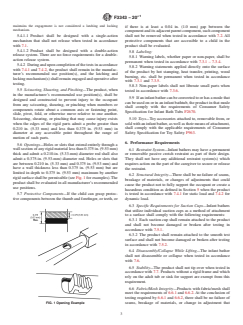
FIG. 1Opening Example seams, breakage of materials, or change in adjustment that
´1
F3343−20
could cause the product not to fully support the occupant or to
create a hazardous condition as defined in Section 5.
6.6.1 Seam Strength—All seams supporting the weight of
the occupant, when tested in accordance with Test Method
D1683/D1683M, shall have a breaking strength of 30 lbf
(134 N) or greater.
6.6.2 Mesh/Fabric Attachment Strength—When tested in
accordance with 7.8, all locations on the product where a mesh
orfabricassemblyismechanicallyfastenedtoarigidstructural
element (for example, fastening of the assembly to a wire
frame) shall not disengage or detach.
7. Test Methods
7.1 Single-action Release Mechanism:
7.1.1 Set up the product in the manufacturer’s recom-
mended use position(s).
7.1.2 If the mechanism requires a pull or push action,
gradually apply a force of 10 lbf (45 N) to the latching and
locking mechanism in the direction tending to release it.Apply
the force within 5 s and maintain for an additional 10 s.
7.1.3 If the mechanism requires a twist or turn action,
gradually apply a torque of 4 lbf-in. (0.5 N-m) to the latching
and locking mechanism in the direction tending to release it. FIG. 2Tension Test Adapter/Clamp
Applythetorquewithin5sandmaintainforanadditional10 s.
7.2 Removal of Protective Components Test:
7.2.1 Prior to conducting the torque and tension tests, first 7.2.5.3 Gradually apply a force of 15 lbf (67 N) over a
period of5sinthe direction that would normally be associated
completely submerge the testable components for 20 min in
with the removal of the protective component. Hold for an
clear water that is at an initial temperature of 100 °F to 105 °F
additional 10 s.
(37.8 °Cto40.6 °C).Conductthefollowingtestswithin10min
after removal from the water.
7.3 Permanence of Labels and Warnings:
7.2.2 Any protective component shall be tested in accor-
7.3.1 To determine the permanence of a label or printing
dance with each of the following methods in the sequence
applied to the surface of the product, first completely submerge
listed. the label or printed area for 20 min in clear water that is at an
initial temperature of 100 °F to 105 °F (37.8 °C to 40.6 °C).
7.2.3 Secure the product so that the product cannot move
Drain of the excess water and let the label or printed area air
during the performance of the following tests:
dryfor24hat73 °F 69 °F(23 °C 65 °C),20 %to70 %RH,
7.2.4 Torque Test—Gradually apply a torque of 4 lbf-in.
prior to conducting any permanency tests.
(0.4 N-m) over a period of5sina clockwise direction until a
7.3.2 A paper label (excluding labels attached by a seam)
rotation of 180° from the original position has been attained or
shall be considered permanent if, during an attempt to remove
4 lbf-in. has been exceeded. The torque or maximum rotation
it without the aid of tools or solvents, it cannot be removed, it
shallbemaintainedforanadditional10s.Thetorqueshallthen
tears into pieces upon removal or such action damages the
be removed and the test components permitted to return to a
surface to which it is attached.
relaxed condition. This procedure shall then be repeated in the
7.3.3 A non-paper label (excluding labels attached by a
counte
...