

ASTM D5096-24
(Test Method)Standard Test Method for Determining the Performance of a Cup Anemometer or Propeller Anemometer
General Information
- Abstract
SIGNIFICANCE AND USE
5.1 This test method provides a standard for comparison of rotating type anemometers, specifically cup anemometers and propeller anemometers, of different types. Specifications by regulatory agencies (4-7) and industrial societies have specified performance values. This standard provides an unambiguous method for measuring starting threshold, distance constant, transfer function, and off-axis response.
SCOPE
1.1 This test method covers the determination of the starting threshold, distance constant, transfer function, and off-axis response of a cup anemometer or propeller anemometer from direct measurement in a wind tunnel.
1.2 This test method provides for a measurement of cup anemometer or propeller anemometer performance in the environment of wind tunnel airflow. Transference of values determined by these methods to atmospheric flow must be done with an understanding that there is a difference between the two flow systems.
1.3 The values stated in SI units are to be regarded as standard. The values given in parentheses after SI units are provided for information only and are not considered standard.
1.4 This standard does not purport to address all of the safety concerns, if any, associated with its use. It is the responsibility of the user of this standard to establish appropriate safety, health, and environmental practices and determine the applicability of regulatory limitations prior to use.
1.5 This international standard was developed in accordance with internationally recognized principles on standardization established in the Decision on Principles for the Development of International Standards, Guides and Recommendations issued by the World Trade Organization Technical Barriers to Trade (TBT) Committee.
- Status
- Published
- Publication Date
- 29-Feb-2024
- Technical Committee
- D22 - Air Quality
- Drafting Committee
- D22.11 - Meteorology
Buy Documents
ASTM D5096-24 - Standard Test Method for Determining the Performance of a Cup Anemometer or Propeller Anemometer
REDLINE ASTM D5096-24 - Standard Test Method for Determining the Performance of a Cup Anemometer or Propeller Anemometer
Overview
ASTM D5096-24: Standard Test Method for Determining the Performance of a Cup Anemometer or Propeller Anemometer provides a reliable means for assessing the operational characteristics of rotating-type anemometers. This standard covers both cup anemometers and propeller anemometers-critical instruments for measuring wind speed in meteorological, environmental, and industrial applications. The test method establishes objective procedures for determining key performance parameters such as starting threshold, distance constant, transfer function, and off-axis response, primarily using wind tunnel measurements.
ASTM D5096-24 supports accurate calibration and comparison of different anemometer types, ensuring consistency according to regulatory and industry requirements. This facilitates improved quality control, regulatory compliance, and data confidence in air quality and meteorological monitoring.
Key Topics
Starting Threshold:
The minimum wind speed at which the anemometer begins and continues to operate, producing measurable output.Distance Constant:
The measure of an anemometer's responsiveness-how quickly it adapts to changes in wind speed, calculated as the distance the wind travels during the instrument’s adjustment to a new speed.Transfer Function:
The linear relationship between wind speed and the device’s rotation rate, determined through wind tunnel tests across operating ranges. The calibration constants derived (zero offset and wind passage) are essential for precise wind speed calculation.Off-Axis Response:
The performance of an anemometer when not perfectly aligned with airflow. This helps understand measurement accuracy under real-world, variable wind directions.Measurement Precision:
The standard requires defined measurement resolutions and repeatability to ensure accuracy, reproducibility, and comparability across facilities and equipment types.
Applications
ASTM D5096-24 is vital for organizations that require precise wind speed measurement and verification, including:
Environmental Monitoring:
Ensures reliable wind data for air quality networks, industrial emissions monitoring, and regulatory compliance.Meteorological Stations:
Facilitates calibration and validation of weather station anemometers, supporting accurate weather forecasting and research.Wind Energy Assessments:
Used in wind resource studies for site selection, turbine placement, and ongoing performance monitoring.Industrial Safety:
Assists in compliance for process industries, nuclear facility siting, and atmospheric dispersion analysis.
By following this standard, users can benchmark different anemometers, develop consistent quality assurance protocols, and document instrument performance in alignment with governmental and industry requirements.
Related Standards
- ASTM D1356 – Terminology Relating to Sampling and Analysis of Atmospheres
- ASTM D3631 – Test Methods for Measuring Surface Atmospheric Pressure
- ANSI/ANS-3.11 – Determining Meteorological Information at Nuclear Power Facilities
- International guidelines and regulatory references for meteorological monitoring and atmospheric measurement
Keywords: cup anemometer, propeller anemometer, wind speed, distance constant, off-axis response, starting threshold, transfer function, wind tunnel calibration, ASTM D5096-24, air quality monitoring, meteorological instrumentation, anemometer performance standard
Adhering to ASTM D5096-24 ensures high-performance standards in wind speed instrumentation, enhancing the reliability and comparability of measurements across diverse wind measurement applications.
Relations
- Effective Date
- 01-Mar-2024
- Effective Date
- 01-Mar-2024
- Effective Date
- 01-Mar-2024
Buy Documents
ASTM D5096-24 - Standard Test Method for Determining the Performance of a Cup Anemometer or Propeller Anemometer
REDLINE ASTM D5096-24 - Standard Test Method for Determining the Performance of a Cup Anemometer or Propeller Anemometer
Frequently Asked Questions
ASTM D5096-24 is a standard published by ASTM International. Its full title is "Standard Test Method for Determining the Performance of a Cup Anemometer or Propeller Anemometer". This standard covers: SIGNIFICANCE AND USE 5.1 This test method provides a standard for comparison of rotating type anemometers, specifically cup anemometers and propeller anemometers, of different types. Specifications by regulatory agencies (4-7) and industrial societies have specified performance values. This standard provides an unambiguous method for measuring starting threshold, distance constant, transfer function, and off-axis response. SCOPE 1.1 This test method covers the determination of the starting threshold, distance constant, transfer function, and off-axis response of a cup anemometer or propeller anemometer from direct measurement in a wind tunnel. 1.2 This test method provides for a measurement of cup anemometer or propeller anemometer performance in the environment of wind tunnel airflow. Transference of values determined by these methods to atmospheric flow must be done with an understanding that there is a difference between the two flow systems. 1.3 The values stated in SI units are to be regarded as standard. The values given in parentheses after SI units are provided for information only and are not considered standard. 1.4 This standard does not purport to address all of the safety concerns, if any, associated with its use. It is the responsibility of the user of this standard to establish appropriate safety, health, and environmental practices and determine the applicability of regulatory limitations prior to use. 1.5 This international standard was developed in accordance with internationally recognized principles on standardization established in the Decision on Principles for the Development of International Standards, Guides and Recommendations issued by the World Trade Organization Technical Barriers to Trade (TBT) Committee.
SIGNIFICANCE AND USE 5.1 This test method provides a standard for comparison of rotating type anemometers, specifically cup anemometers and propeller anemometers, of different types. Specifications by regulatory agencies (4-7) and industrial societies have specified performance values. This standard provides an unambiguous method for measuring starting threshold, distance constant, transfer function, and off-axis response. SCOPE 1.1 This test method covers the determination of the starting threshold, distance constant, transfer function, and off-axis response of a cup anemometer or propeller anemometer from direct measurement in a wind tunnel. 1.2 This test method provides for a measurement of cup anemometer or propeller anemometer performance in the environment of wind tunnel airflow. Transference of values determined by these methods to atmospheric flow must be done with an understanding that there is a difference between the two flow systems. 1.3 The values stated in SI units are to be regarded as standard. The values given in parentheses after SI units are provided for information only and are not considered standard. 1.4 This standard does not purport to address all of the safety concerns, if any, associated with its use. It is the responsibility of the user of this standard to establish appropriate safety, health, and environmental practices and determine the applicability of regulatory limitations prior to use. 1.5 This international standard was developed in accordance with internationally recognized principles on standardization established in the Decision on Principles for the Development of International Standards, Guides and Recommendations issued by the World Trade Organization Technical Barriers to Trade (TBT) Committee.
ASTM D5096-24 is classified under the following ICS (International Classification for Standards) categories: 07.060 - Geology. Meteorology. Hydrology. The ICS classification helps identify the subject area and facilitates finding related standards.
ASTM D5096-24 has the following relationships with other standards: It is inter standard links to ASTM D5096-23, ASTM D5741-96(2023), ASTM D1356-20a. Understanding these relationships helps ensure you are using the most current and applicable version of the standard.
ASTM D5096-24 is available in PDF format for immediate download after purchase. The document can be added to your cart and obtained through the secure checkout process. Digital delivery ensures instant access to the complete standard document.
Standards Content (Sample)
This international standard was developed in accordance with internationally recognized principles on standardization established in the Decision on Principles for the
Development of International Standards, Guides and Recommendations issued by the World Trade Organization Technical Barriers to Trade (TBT) Committee.
Designation: D5096 − 24
Standard Test Method for
Determining the Performance of a Cup Anemometer or
Propeller Anemometer
This standard is issued under the fixed designation D5096; the number immediately following the designation indicates the year of
original adoption or, in the case of revision, the year of last revision. A number in parentheses indicates the year of last reapproval. A
superscript epsilon (´) indicates an editorial change since the last revision or reapproval.
1. Scope 3. Terminology
1.1 This test method covers the determination of the starting 3.1 For definitions of terms used in this standard, refer to
threshold, distance constant, transfer function, and off-axis Terminology D1356.
response of a cup anemometer or propeller anemometer from
3.2 Definitions of Terms Specific to This Standard:
direct measurement in a wind tunnel.
3.2.1 starting threshold (U , m/s), n—the lowest wind speed
o
1.2 This test method provides for a measurement of cup at which a rotating anemometer starts and continues to turn and
anemometer or propeller anemometer performance in the produce a measurable signal when mounted in its normal
environment of wind tunnel airflow. Transference of values position; the normal position for cup anemometers is with the
determined by these methods to atmospheric flow must be done axis of rotation vertical, and the normal position for propeller
with an understanding that there is a difference between the anemometers is with the axis of rotation aligned with the
two flow systems. direction of flow; note that if the anemometer axis is not
aligned with the direction of flow, the calculated wind speed
1.3 The values stated in SI units are to be regarded as
component parallel to the anemometer axis is used to deter-
standard. The values given in parentheses after SI units are
mine starting threshold.
provided for information only and are not considered standard.
3.2.2 distance constant (L, m), n—the distance the air flows
1.4 This standard does not purport to address all of the
past a rotating anemometer during the time it takes the cup
safety concerns, if any, associated with its use. It is the
wheel or propeller to reach (1 − 1 ⁄e) or 63 % of the equilibrium
responsibility of the user of this standard to establish appro-
speed after a step change in wind speed (1). The response of
priate safety, health, and environmental practices and deter-
a rotating anemometer to a step change in which wind speed
mine the applicability of regulatory limitations prior to use.
increases instantaneously from U = 0 to U = U is (2):
f
1.5 This international standard was developed in accor-
2t/τ
~ !
dance with internationally recognized principles on standard- U 5 U 1 2 e (1)
~ !
t f
ization established in the Decision on Principles for the
where:
Development of International Standards, Guides and Recom-
U = is the instantaneous indicated wind speed at time t in
t
mendations issued by the World Trade Organization Technical
m/s,
Barriers to Trade (TBT) Committee.
U = is the final indicated wind speed, or wind tunnel speed,
f
in m/s,
2. Referenced Documents
t = is the elapsed time in seconds after the step change
2.1 ASTM Standards:
occurs, and
D1356 Terminology Relating to Sampling and Analysis of
τ = is the time constant of the instrument.
Atmospheres
Distance Constant is:L 5 U τ (2)
f
D3631 Test Methods for Measuring Surface Atmospheric
3.2.3 transfer function (Û = a + bR, m/s), n—the linear
f
Pressure
relationship between wind speed and the rate of rotation of the
anemometer throughout the specified working range. Û is the
f
predicted wind speed in m/s, a is a constant, commonly called
This test method is under the jurisdiction of ASTM Committee D22 on Air
zero offset, in m/s, b is a constant representing the wind
Quality and is the direct responsibility of Subcommittee D22.11 on Meteorology.
Current edition approved March 1, 2024. Published March 2024. Originally
passage in m/r for each revolution of the anemometer cup
approved in 1990. Last previous edition approved in 2023 as D5096 – 23. DOI:
wheel or propeller, and R is the rate of rotation in r/s.
10.1520/D5096-24.
For referenced ASTM standards, visit the ASTM website, www.astm.org, or
contact ASTM Customer Service at service@astm.org. For Annual Book of ASTM
Standards volume information, refer to the standard’s Document Summary page on The boldface numbers in parentheses refer to the list of references at the end of
the ASTM website. this standard.
Copyright © ASTM International, 100 Barr Harbor Drive, PO Box C700, West Conshohocken, PA 19428-2959. United States
D5096 − 24
3.2.3.1 Discussion—Note, the zero offset is not the same as
starting threshold. In some very sensitive anemometers the
constant a, zero offset, may not be significantly greater than
zero. The constants a and b must be determined by wind tunnel
measurement for each type of anemometer (3).
3.2.4 off-axis response (U/(U cos θ)), n—the ratio of the
f
indicated wind speed (U ) at various angles of attack (θ) to the
indicated wind speed at zero angle of attack (U ) multiplied by
f
the cosine of the angle of attack; this ratio compares the actual
off-axis response to a cosine response.
3.3 Symbols:
a (m/s) = zero offset constant
b (m/r) = wind passage (apparent pitch) constant or
calibration constant
L (m) = distance constant
r (none) = a shaft revolution
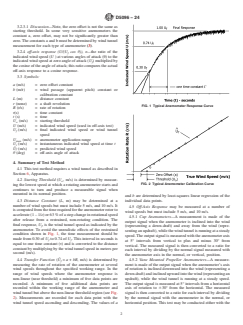
FIG. 1 Typical Anemometer Response Curve
R (r/s) = rate of rotation
τ(s) = time constant
t (s) = time
U (m/s) = starting threshold
o
U (m/s) = indicated wind speed (used in off-axis test)
U (m/s) = final indicated wind speed or wind tunnel
f
speed
U (m/s) = anemometer application range
max
U (m/s) = instantaneous indicated wind speed at time t
t
Û (m/s) = predicted wind speed
f
θ (deg) = off-axis angle of attack
4. Summary of Test Method
4.1 This test method requires a wind tunnel as described in
Section 6, Apparatus.
4.2 Starting Threshold (U , m/s) is determined by measur-
o
FIG. 2 Typical Anemometer Calibration Curve
ing the lowest speed at which a rotating anemometer starts and
continues to turn and produce a measurable signal when
mounted in its normal position.
and b are determined by least-squares linear regression of the
4.3 Distance Constant (L, m) may be determined at a individual data points.
number of wind speeds but must include 5 m/s, and 10 m/s. It
4.5 Off-Axis Response may be measured at a number of
is computed from the time required for the anemometer rotor to
wind speeds but must include 5 m/s, and 10 m/s.
accelerate (1 – 1/e) or 63 % of a step change in rotational speed
4.5.1 Cup Anemometers—A measurement is made of the
after release from a restrained, non-rotating condition. The
output signal when the anemometer is inclined into the wind
final response, U , is the wind tunnel speed as indicated by the
f
(representing a down-draft) and away from the wind (repre-
anemometer. To avoid the unrealistic effects of the restrained
senting an updraft), while the wind tunnel is running at a steady
condition shown in Fig. 1, the time measurement should be
speed. The output signal is measured with the anemometer axis
made from 0.30 of U to 0.74 of U . This interval in seconds is
f f
at 5° intervals from vertical to plus and minus 30° from
equal to one time constant (τ) and is converted to the distance
vertical. The measured signal is then converted to a ratio for
constant by multiplying by the wind tunnel speed in meters per
each interval by dividing by the normal signal measured with
second (m/s).
the anemometer axis in the normal, or vertical, position.
4.4 Transfer Function (Û = a + bR, m/s) is determined by 4.5.2 Vane Mounted Propeller Anemometers—A measure-
f
measuring the rate of rotation of the anemometer at several ment is made of the output signal when the anemometer’s axis
wind speeds throughout the specified working range. In the of rotation is inclined downward into the wind (representing a
range of wind speeds where the anemometer response is down-draft) and inclined upward into the wind (representing an
non-linear (near threshold) a minimum of five data points are updraft), while the wind tunnel is running at a steady speed.
recorded. A minimum of five additional data points are The output signal is measured at 5° intervals from a horizontal
recorded within the working range of the anemometer and axis of rotation to 630° from the horizontal. The measured
wind tunnel but above the non-linear threshold region (see Fig. signal is then converted to a ratio for each interval by dividing
2). Measurements are recorded for each data point with the by the normal signal with the anemometer in the normal, or
wind tunnel speed ascending and descending. The values of a horizontal position. This test may be conducted either with the
D5096 − 24
vane in place or with the vane removed and the axis of rotation enough gain so that the signal produced by the anemometer
fixed in the down-tunnel direction. when the wind tunnel is running at 2 m/s is sufficient to provide
4.5.3 Fixed Axis Propeller Anemometer—A measurement is full scale pen deflection on the recorder. The recorder chart
made of the output signal when the anemometer is rotated in drive must have a fast speed of 50 mm/s or more.
the air stream throughout the complete 360° angle of attack.
6.3 Wind Tunnel (8):
The signal is measured at several angles but must include 10°
6.3.1 Size—The wind tunnel must be large enough such that
intervals with additional measurements at 85°, 95°, 265°, and
the projection of the cup wheel or propeller, sensor, and
275°. The measured signal for each angle of attack is then
support apparatus, is less than 5 % of the cross sectional area
converted to a ratio by dividing by the signal measured at 0°
of the tunnel test section.
angle of attack (axial flow). Additionally, the stall angle of the
6.3.2 Speed Range—The wind tunnel must have a speed
propeller is measured by orienting the anemometer at 90° and
control which will allow the flow rate to be varied from 0 % to
slowly rotating into and away from the air flow until the
a minimum of 50 % of the application range of the anemometer
propeller starts rotating continuously. Stall angle is the total
under test. The speed control should maintain the flow rate
contained angle within which the propeller does not continu-
within 60.2 m/s.
ously rotate. The procedure is repeated at 270°.
6.3.3 Calibration—The mean flow rate must be verified at
the mandatory speeds by use of transfer standards which have
5. Significance and Use
been calibrated at the National Institute of Standards and
5.1 This test method provides a standard for comparison of Technology (NIST), an internationally recognized standards
rotating type anemometers, specifically cup anemometers and
organization, or by a fundamental physical method. Speeds
propeller anemometers, of different types. Specifications by below 2 m/s for the threshold determination must be verified by
regulatory agencies (4-7) and industrial societies have specified
a sensitive anemometer or by some fundamental time and
performance values. This standard provides an unambiguous distance technique, such as measuring the transition time of
method for measuring starting threshold, distance constant,
smoke puffs, soap bubbles, or heat puffs between two points
transfer function, and off-axis response. separated by a known distance. A table of wind tunnel blower
rpm or some other index relating method of control to flow rate
6. Apparatus
should be established by this technique for speeds of 2 m/s and
below.
6.1 Measuring System:
6.3.4 The wind tunnel must have a relatively constant
6.1.1 Rotation—The relationship between the rate of rota-
profile (known to within 1 %) and a turbulence level of less
tion of an anemometer shaft and the transducer output must be
than 1 % throughout the test section.
determined. The resolution of the anemometer transducer
6.3.5 Environment (9-11)—Differences of greater than 3 %
limits the measurement. The resolution of the measuring or
in the density of the air within the test environment may result
recording system must represent the indicated wind speed with
in poor inter-comparability of independent measurements of
a resolution of 0.02 m/s.
starting threshold (U ) and distance constant (L) since these
o
6.1.2 Time—Time resolution must be consistent with the
values are density dependent. The temperature and pressure of
distance accuracy required. Hence, the time resolution may be
the environment within the wind tunnel test section, and the
changed as the wind tunnel speed is changed. If one wants a
ambient air pressure (Test Methods D3631) shall be reported
distance constant measurement to 0.1 m resolution, one must
for each independent measurement.
have a time resolution of 0.05 s at 2 m/s and 0.01 s at 10 m/s.
If timing accuracy is based o
...
This document is not an ASTM standard and is intended only to provide the user of an ASTM standard an indication of what changes have been made to the previous version. Because
it may not be technically possible to adequately depict all changes accurately, ASTM recommends that users consult prior editions as appropriate. In all cases only the current version
of the standard as published by ASTM is to be considered the official document.
Designation: D5096 − 23 D5096 − 24
Standard Test Method for
Determining the Performance of a Cup Anemometer or
Propeller Anemometer
This standard is issued under the fixed designation D5096; the number immediately following the designation indicates the year of
original adoption or, in the case of revision, the year of last revision. A number in parentheses indicates the year of last reapproval. A
superscript epsilon (´) indicates an editorial change since the last revision or reapproval.
1. Scope
1.1 This test method covers the determination of the starting threshold,distance constant,transfer function, and off-axis response
of a cup anemometer or propeller anemometer from direct measurement in a wind tunnel.
1.2 This test method provides for a measurement of cup anemometer or propeller anemometer performance in the environment
of wind tunnel air flow. airflow. Transference of values determined by these methods to atmospheric flow must be done with an
understanding that there is a difference between the two flow systems.
1.3 The values stated in SI units are to be regarded as standard. The values given in parentheses after SI units are provided for
information only and are not considered standard.
1.4 This standard does not purport to address all of the safety concerns, if any, associated with its use. It is the responsibility
of the user of this standard to establish appropriate safety, health, and environmental practices and determine the applicability of
regulatory limitations prior to use.
1.5 This international standard was developed in accordance with internationally recognized principles on standardization
established in the Decision on Principles for the Development of International Standards, Guides and Recommendations issued
by the World Trade Organization Technical Barriers to Trade (TBT) Committee.
2. Referenced Documents
2.1 ASTM Standards:
D1356 Terminology Relating to Sampling and Analysis of Atmospheres
D3631 Test Methods for Measuring Surface Atmospheric Pressure
3. Terminology
3.1 For definitions of terms used in this standard, refer to Terminology D1356.
3.2 Definitions of Terms Specific to This Standard:
3.2.1 starting threshold (U , m/s), n—the lowest wind speed at which a rotating anemometer starts and continues to turn and
o
produce a measurable signal when mounted in its normal position; the normal position for cup anemometers is with the axis of
rotation vertical, and the normal position for propeller anemometers is with the axis of rotation aligned with the direction of flow;
This test method is under the jurisdiction of ASTM Committee D22 on Air Quality and is the direct responsibility of Subcommittee D22.11 on Meteorology.
Current edition approved Sept. 1, 2023March 1, 2024. Published September 2023March 2024. Originally approved in 1990. Last previous edition approved in 20172023
as D5096 – 02 (2017).D5096 – 23. DOI: 10.1520/D5096-23.10.1520/D5096-24.
For referenced ASTM standards, visit the ASTM website, www.astm.org, or contact ASTM Customer Service at service@astm.org. For Annual Book of ASTM Standards
volume information, refer to the standard’s Document Summary page on the ASTM website.
Copyright © ASTM International, 100 Barr Harbor Drive, PO Box C700, West Conshohocken, PA 19428-2959. United States
D5096 − 24
note that if the anemometer axis is not aligned with the direction of flow, the calculated wind speed component parallel to the
anemometer axis is used to determine starting threshold.
3.2.2 distance constant (L, m), n—the distance the air flows past a rotating anemometer during the time it takes the cup wheel or
propeller to reach (1 − 1 ⁄e) or 63 % of the equilibrium speed after a step change in wind speed (1). The response of a rotating
anemometer to a step change in which wind speed increases instantaneously from U = 0 to U = U is (2):
f
~2t/τ!
U 5 U 12 e (1)
~ !
t f
where:
U = is the instantaneous indicated wind speed at time t in m/s,
t
U = is the final indicated wind speed, or wind tunnel speed, in m/s,
f
t = is the elapsed time in seconds after the step change occurs, and
τ = is the time constant of the instrument.
Distance Constant is:L 5 U τ (2)
f
3.2.3 transfer function (Û = a + bR, m/s), n—the linear relationship between wind speed and the rate of rotation of the
f
anemometer throughout the specified working range. Û is the predicted wind speed in m/s, a is a constant, commonly called zero
f
offset, in m/s, b is a constant representing the wind passage in m/r for each revolution of the anemometer cup wheel or propeller,
and R is the rate of rotation in r/s.
3.2.3.1 Discussion—
Note, the zero offset is not the same as starting threshold. In some very sensitive anemometers the constant a, zero offset, may not
be significantly greater than zero. The constants a and b must be determined by wind tunnel measurement for each type of
anemometer (3).
3.2.4 off-axis response (U/(U cos θ)), n—the ratio of the indicated wind speed (U ) at various angles of attack (θ) to the indicated
f
wind speed at zero angle of attack (U ) multiplied by the cosine of the angle of attack; this ratio compares the actual off-axis
f
response to a cosine response.
3.3 Symbols:
a (m/s) = zero offset constant
b (m/r) = wind passage (apparent pitch) constant or calibration constant
L (m) = distance constant
r (none) = a shaft revolution
R (r/s) = rate of rotation
τ(s) = time constant
t (s) = time
U (m/s) = starting threshold
o
U (m/s) = indicated wind speed (used in off-axis test)
U (m/s) = final indicated wind speed or wind tunnel speed
f
U (m/s) = anemometer application range
max
U (m/s) = instantaneous indicated wind speed at time t
t
Û (m/s) = predicted wind speed
f
θ (deg) = off-axis angle of attack
4. Summary of Test Method
4.1 This test method requires a wind tunnel as described in Section 6, Apparatus.
4.2 Starting Threshold (U , m/s) is determined by measuring the lowest speed at which a rotating anemometer starts and continues
o
to turn and produce a measurable signal when mounted in its normal position.
4.3 Distance Constant (L, m) may be determined at a number of wind speeds but must include 5 m/s, and 10 m/s. It is computed
from the time required for the anemometer rotor to accelerate (1 – 1/e) or 63 % of a step change in rotational speed after release
The boldface numbers in parentheses refer to the list of references at the end of this standard.
D5096 − 24
from a restrained, non-rotating condition. The final response, U , is the wind tunnel speed as indicated by the anemometer. To avoid
f
the unrealistic effects of the restrained condition shown in Fig. 1, the time measurement should be made from 0.30 of U to 0.74
f
of U . This interval in seconds is equal to one time constant (τ) and is converted to the distance constant by multiplying by the
f
wind tunnel speed in meters per second (m/s).
4.4 Transfer Function (Û = a + bR, m/s) is determined by measuring the rate of rotation of the anemometer at several wind speeds
f
throughout the specified working range. In the range of wind speeds where the anemometer response is non-linear (near threshold)
a minimum of five data points are recorded. A minimum of five additional data points are recorded within the working range of
the anemometer and wind tunnel but above the non-linear threshold region (see Fig. 2). Measurements are recorded for each data
point with the wind tunnel speed ascending and descending. The values of a and b are determined by least-squares linear regression
of the individual data points.
4.5 Off-Axis Response may be measured at a number of wind speeds but must include 5 m/s, and 10 m/s.
4.5.1 Cup Anemometers—A measurement is made of the output signal when the anemometer is inclined into the wind
(representing a down-draft) and away from the wind (representing an updraft), while the wind tunnel is running at a steady speed.
The output signal is measured with the anemometer axis at 5° intervals from vertical to plus and minus 30° from vertical. The
measured signal is then converted to a ratio for each interval by dividing by the normal signal measured with the anemometer axis
in the normal, or vertical, position.
4.5.2 Vane Mounted Propeller Anemometers—A measurement is made of the output signal when the anemometer’s axis of rotation
is inclined downward into the wind (representing a down-draft) and inclined upward into the wind (representing an updraft), while
the wind tunnel is running at a steady speed. The output signal is measured at 5° intervals from a horizontal axis of rotation to
630° from the horizontal. The measured signal is then converted to a ratio for each interval by dividing by the normal signal with
the anemometer in the normal, or horizontal position. This test may be conducted either with the vane in place or with the vane
removed and the axis of rotation fixed in the down-tunnel direction.
4.5.3 Fixed Axis Propeller Anemometer—A measurement is made of the output signal when the anemometer is rotated in the air
stream throughout the complete 360° angle of attack. The signal is measured at several angles but must include 10° intervals with
additional measurements at 85°, 95°, 265°, and 275°. The measured signal for each angle of attack is then converted to a ratio by
dividing by the signal measured at 0° angle of attack (axial flow). Additionally, the stall angle of the propeller is measured by
orienting the anemometer at 90° and slowly rotating into and away from the air flow until the propeller starts rotating continuously.
Stall angle is the total contained angle within which the propeller does not continuously rotate. The procedure is repeated at 270°.
5. Significance and Use
5.1 This test method provides a standard for comparison of rotating type anemometers, specifically cup anemometers and propeller
FIG. 1 Typical Anemometer Response Curve
D5096 − 24
FIG. 2 Typical Anemometer Calibration Curve
anemometers, of different types. Specifications by regulatory agencies (4-7) and industrial societies have specified performance
values. This standard provides an unambiguous method for measuring starting threshold,distance constant,transfer function, and
off-axis response.
6. Apparatus
6.1 Measuring System:
6.1.1 Rotation—The relationship between the rate of rotation of an anemometer shaft and the transducer output must be
determined. The resolution of the anemometer transducer limits the measurement. The resolution of the measuring or recording
system must represent the indicated wind speed with a resolution of 0.02 m/s.
6.1.2 Time—Time resolution must be consistent with the distance accuracy required. Hence, the time resolution may be changed
as the wind tunnel speed is changed. If one wants a distance constant measurement to 0.1 m resolution, one must have a time
resolution of 0.05 s at 2 m/s and 0.01 s at 10 m/s. If timing accuracy is based on 50 Hz or 60 Hz power frequency, it will require
at least an order of magnitude better resolution than stated above.
6.1.3 Angle of Attack—The resolution of the angle of attack (θ) must be within 0.5°. An ordinary protractor of adequate size with
0.5° markings will permit measurements with sufficient resolution. A fixture should be constructed to permit alignment of the
anemometer to the off-axis angles while the wind tunnel is running at a steady speed.
6.2 Recording Techniques:
6.2.1 Digital recording systems and appropriate reduction programs will be satisfactory if the sampling rate is at least
100 samples ⁄s. Exercise care to avoid electronic circuits with time constants which limit the proper recording of anemometer
performance. Oscilloscopes with memory and hard copy capability may also be used. Another simple technique is to use a
fast-response strip chart recorder (flat to 10 Hz or better) with enough gain so that the signal produced by the anemometer when
the wind tunnel is running at 2 m/s is sufficient to provide full scale pen deflection on the recorder. The recorder chart drive must
have a fast speed of 50 mm/s or more.
6.3 Wind Tunnel (8):
6.3.1 Size—The wind tunnel must be large enough such that the projection of the cup wheel or propeller, sensor, and support
apparatus, is less than 5 % of the cross sectional area of the tunnel test section.
6.3.2 Speed Range—The wind tunnel must have a speed control which will allow the flow rate to be varied from 0 % to a minimum
of 50 % of the application range of the anemometer under test. The speed control should maintain the flow rate within 60.2 m/s.
6.3.3 Calibration—The mean flow rate must be verified at the mandatory speeds by use of transfer standards which have been
calibrated at the National Institute of Standards and Technology (NIST), an internationally recognized standards organization, or
by a fundamental physical method. Speeds below 2 m/s for the threshold determination must be verified by a sensitive anemometer
D5096 − 24
or by some fundamental time and distance technique, such as measuring the tr
...