

ASTM D8314-20
(Guide)Standard Guide for Performance Testing of Applied Stretch Films and Stretch Wrapping
General Information
- Abstract
SIGNIFICANCE AND USE
5.1 This guide is for testing the performance applied stretch wrapping film and stretch wrapping equipment during and after the film has been applied to a unit load or structure. These tests are not written with the intention for them to be applied to agricultural stretch wrapping films and its application.
SCOPE
1.1 This guide covers testing of mechanical properties of stretch wrapping films as they have been applied by a stretch wrapper to a unit load or test structure. This guide may be applied to hand-wrapping or to machine-wrapping applications. These tests may be applied to real-world or “field” testing or may be applied to theoretical or “laboratory” testing. This testing does not cover the testing of mechanical properties independent of application by stretch wrapper.
1.2 No statement is made about either precision or bias of any of these test methods since results merely state whether this is in conformation to the criteria for success specified by the user of the test method.
1.2.1 The user is encouraged to establish the precision and bias for their own application.
1.3 The units used in this standard are SI units (metric) with their English equivalents included following them in parentheses.
1.4 These tests are not intended to be applied to agricultural stretch wrapping films and its application.
1.5 This standard does not purport to address all of the safety concerns, if any, associated with its use. It is the responsibility of the user of this standard to establish appropriate safety, health, and environmental practices and determine the applicability of regulatory limitations prior to use.
1.6 This international standard was developed in accordance with internationally recognized principles on standardization established in the Decision on Principles for the Development of International Standards, Guides and Recommendations issued by the World Trade Organization Technical Barriers to Trade (TBT) Committee.
- Status
- Published
- Publication Date
- 30-Sep-2020
- Technical Committee
- D10 - Packaging
- Drafting Committee
- D10.25 - Palletizing and Unitizing of Loads
Overview
ASTM D8314-20 is a comprehensive standard guide developed by ASTM International for the performance testing of applied stretch films and stretch wrapping. This standard specifically addresses the mechanical properties of stretch wrapping films after they have been applied to a unit load or test structure, providing methodologies for both machine- and hand-wrapped applications. ASTM D8314-20 is focused on evaluating real-world performance in both field and laboratory scenarios, with an emphasis on ensuring unit load stability and optimizing packaging processes. Notably, this standard is not intended for agricultural stretch films or their application.
Key Topics
- Testing Applied Stretch Films: The guide outlines procedures for measuring the performance of stretch films once applied to loads, ensuring evaluation reflects actual use conditions.
- Types of Testing: Tests include both non-destructive (e.g., marking wheel stretch test, observed cling test) and destructive methods (e.g., cut and weigh test, observed tear test), as well as tests with procedure-dependent destruction, such as pull plate and pull-bar evaluations.
- Evaluated Parameters:
- Percent stretch of applied film
- Number of revolutions in a wrap pattern
- Film thickness and weight applied
- Containment and compression forces
- Film stiffness
- Observed tear resistance, cling, and cost
- Testing Utility: Results are intended to compare original and alternative films, optimize wrap patterns, measure consistency between wrapping machines and films, and determine load containment efficiency.
- Safety and Regulation: The standard reminds users to follow all safety, health, and environmental guidelines, as well as to establish precision and bias for their specific application.
Applications
ASTM D8314-20 is widely applicable throughout commercial and industrial packaging sectors, especially where securing unitized loads during shipping and storage is critical. Principal applications include:
- Quality Assurance in Packaging Lines: Enables packaging engineers and quality teams to assess the performance and correctness of stretch wrap application, confirming load stability during transport.
- Procurement and Product Comparison: Assists buyers and specifiers in evaluating alternative stretch films or equipment by directly comparing applied film properties.
- Operational Optimization: Supports ongoing process improvements by quantifying wrapping efficiency (e.g., wrap time, containment force at specific locations on a load).
- Equipment Calibration and Maintenance: Provides test frameworks to verify consistency and reliability of stretch wrapping machines, supporting regular maintenance and troubleshooting.
- Field and Laboratory Testing: Suitable for both in-situ “field” evaluations and controlled “laboratory” experiments, accommodating varied industry needs.
By following ASTM D8314-20, companies can minimize product damage, optimize material costs, and uphold shipping safety and compliance through standardized testing methodologies for stretch film performance.
Related Standards
- ASTM D996: Terminology of Packaging and Distribution Environments
- ASTM D4649: Guide for Use of Stretch Films and Wrapping Application
- ASTM E177: Practice for Use of the Terms Precision and Bias in ASTM Test Methods
- ASTM E456: Terminology Relating to Quality and Statistics
- ASTM E691: Practice for Conducting an Interlaboratory Study to Determine the Precision of a Test Method
- ASTM E1488: Guide for Statistical Procedures to Use in Developing and Applying Test Methods
- ASTM E2586: Practice for Calculating and Using Basic Statistics
These referenced standards complement ASTM D8314-20 by providing terminology, statistical methods, and additional testing guidelines for robust, comparable, and reliable packaging performance assessments.
Keywords: ASTM D8314-20, stretch film testing, applied stretch film, stretch film performance, unit load stability, packaging standards, stretch wrapping evaluation, containment force testing, packaging quality assurance, ASTM packaging standards.
Relations
- Effective Date
- 01-Nov-2023
- Effective Date
- 01-Apr-2022
- Effective Date
- 01-Apr-2019
- Effective Date
- 01-Oct-2017
- Effective Date
- 01-Oct-2017
- Effective Date
- 01-Jun-2014
- Effective Date
- 01-May-2014
- Effective Date
- 15-Nov-2013
- Effective Date
- 15-Nov-2013
- Effective Date
- 15-Nov-2013
- Effective Date
- 15-Nov-2013
- Effective Date
- 01-Oct-2013
- Effective Date
- 15-Aug-2013
- Effective Date
- 01-May-2013
- Effective Date
- 01-May-2013
Get Certified
Connect with accredited certification bodies for this standard

BRCGS (Brand Reputation Compliance Global Standards)
Global food safety and quality standards owner.
Sponsored listings
Frequently Asked Questions
ASTM D8314-20 is a guide published by ASTM International. Its full title is "Standard Guide for Performance Testing of Applied Stretch Films and Stretch Wrapping". This standard covers: SIGNIFICANCE AND USE 5.1 This guide is for testing the performance applied stretch wrapping film and stretch wrapping equipment during and after the film has been applied to a unit load or structure. These tests are not written with the intention for them to be applied to agricultural stretch wrapping films and its application. SCOPE 1.1 This guide covers testing of mechanical properties of stretch wrapping films as they have been applied by a stretch wrapper to a unit load or test structure. This guide may be applied to hand-wrapping or to machine-wrapping applications. These tests may be applied to real-world or “field” testing or may be applied to theoretical or “laboratory” testing. This testing does not cover the testing of mechanical properties independent of application by stretch wrapper. 1.2 No statement is made about either precision or bias of any of these test methods since results merely state whether this is in conformation to the criteria for success specified by the user of the test method. 1.2.1 The user is encouraged to establish the precision and bias for their own application. 1.3 The units used in this standard are SI units (metric) with their English equivalents included following them in parentheses. 1.4 These tests are not intended to be applied to agricultural stretch wrapping films and its application. 1.5 This standard does not purport to address all of the safety concerns, if any, associated with its use. It is the responsibility of the user of this standard to establish appropriate safety, health, and environmental practices and determine the applicability of regulatory limitations prior to use. 1.6 This international standard was developed in accordance with internationally recognized principles on standardization established in the Decision on Principles for the Development of International Standards, Guides and Recommendations issued by the World Trade Organization Technical Barriers to Trade (TBT) Committee.
SIGNIFICANCE AND USE 5.1 This guide is for testing the performance applied stretch wrapping film and stretch wrapping equipment during and after the film has been applied to a unit load or structure. These tests are not written with the intention for them to be applied to agricultural stretch wrapping films and its application. SCOPE 1.1 This guide covers testing of mechanical properties of stretch wrapping films as they have been applied by a stretch wrapper to a unit load or test structure. This guide may be applied to hand-wrapping or to machine-wrapping applications. These tests may be applied to real-world or “field” testing or may be applied to theoretical or “laboratory” testing. This testing does not cover the testing of mechanical properties independent of application by stretch wrapper. 1.2 No statement is made about either precision or bias of any of these test methods since results merely state whether this is in conformation to the criteria for success specified by the user of the test method. 1.2.1 The user is encouraged to establish the precision and bias for their own application. 1.3 The units used in this standard are SI units (metric) with their English equivalents included following them in parentheses. 1.4 These tests are not intended to be applied to agricultural stretch wrapping films and its application. 1.5 This standard does not purport to address all of the safety concerns, if any, associated with its use. It is the responsibility of the user of this standard to establish appropriate safety, health, and environmental practices and determine the applicability of regulatory limitations prior to use. 1.6 This international standard was developed in accordance with internationally recognized principles on standardization established in the Decision on Principles for the Development of International Standards, Guides and Recommendations issued by the World Trade Organization Technical Barriers to Trade (TBT) Committee.
ASTM D8314-20 is classified under the following ICS (International Classification for Standards) categories: 55.040 - Packaging materials and accessories. The ICS classification helps identify the subject area and facilitates finding related standards.
ASTM D8314-20 has the following relationships with other standards: It is inter standard links to ASTM E1488-23, ASTM E456-13a(2022)e1, ASTM E2586-19e1, ASTM E456-13A(2017)e3, ASTM E456-13A(2017)e1, ASTM E2586-14, ASTM E177-14, ASTM E456-13a, ASTM E456-13ae2, ASTM E456-13ae1, ASTM E456-13ae3, ASTM E2586-13, ASTM E456-13, ASTM E177-13, ASTM E691-13. Understanding these relationships helps ensure you are using the most current and applicable version of the standard.
ASTM D8314-20 is available in PDF format for immediate download after purchase. The document can be added to your cart and obtained through the secure checkout process. Digital delivery ensures instant access to the complete standard document.
Standards Content (Sample)
This international standard was developed in accordance with internationally recognized principles on standardization established in the Decision on Principles for the
Development of International Standards, Guides and Recommendations issued by the World Trade Organization Technical Barriers to Trade (TBT) Committee.
Designation: D8314 − 20
Standard Guide for
Performance Testing of Applied Stretch Films and Stretch
Wrapping
This standard is issued under the fixed designation D8314; the number immediately following the designation indicates the year of
original adoption or, in the case of revision, the year of last revision. A number in parentheses indicates the year of last reapproval. A
superscript epsilon (´) indicates an editorial change since the last revision or reapproval.
1. Scope 2. Referenced Documents
2.1 ASTM Standards:
1.1 This guide covers testing of mechanical properties of
stretch wrapping films as they have been applied by a stretch D996 Terminology of Packaging and Distribution Environ-
ments
wrapper to a unit load or test structure. This guide may be
applied to hand-wrapping or to machine-wrapping applica- D4649 Guide for Use of Stretch Films and Wrapping
Application
tions. These tests may be applied to real-world or “field”
testing or may be applied to theoretical or “laboratory” testing. E177 Practice for Use of the Terms Precision and Bias in
ASTM Test Methods
Thistestingdoesnotcoverthetestingofmechanicalproperties
independent of application by stretch wrapper. E456 Terminology Relating to Quality and Statistics
E691 Practice for Conducting an Interlaboratory Study to
1.2 No statement is made about either precision or bias of
Determine the Precision of a Test Method
any of these test methods since results merely state whether
E1488 GuideforStatisticalProcedurestoUseinDeveloping
this is in conformation to the criteria for success specified by
and Applying Test Methods
the user of the test method.
E2586 Practice for Calculating and Using Basic Statistics
1.2.1 The user is encouraged to establish the precision and
bias for their own application.
3. Terminology
1.3 The units used in this standard are SI units (metric) with
3.1 Definitions—Terminology found in Terminology D996
their English equivalents included following them in parenthe-
shall apply.
ses.
4. Summary of Practice
1.4 These tests are not intended to be applied to agricultural
4.1 The purpose of stretch wrapping is to unitize a group of
stretch wrapping films and its application.
products in order to make handling and transport more effi-
1.5 This standard does not purport to address all of the
cient.
safety concerns, if any, associated with its use. It is the
4.2 There are many comparisons that a user of stretch film
responsibility of the user of this standard to establish appro-
or a packaging engineer may want to calculate when compar-
priate safety, health, and environmental practices and deter-
ing an original film to an alternative. They include:
mine the applicability of regulatory limitations prior to use.
4.2.1 Percent stretch of applied film,
1.6 This international standard was developed in accor-
4.2.2 Number of revolutions in a wrap pattern,
dance with internationally recognized principles on standard-
4.2.3 Time required to wrap a load,
ization established in the Decision on Principles for the
4.2.4 Film thickness,
Development of International Standards, Guides and Recom-
4.2.5 Film weight applied to load,
mendations issued by the World Trade Organization Technical
4.2.6 Containment force on load,
Barriers to Trade (TBT) Committee.
4.2.7 Compression force on load,
4.2.8 Film stiffness applied to load,
ThisguideisunderthejurisdictionofASTMCommitteeD10onPackagingand
is the direct responsibility of Subcommittee D10.25 on Palletizing and Unitizing of For referenced ASTM standards, visit the ASTM website, www.astm.org, or
Loads. contact ASTM Customer Service at service@astm.org. For Annual Book of ASTM
Current edition approved Oct. 1, 2020. Published December 2020. DOI: Standards volume information, refer to the standard’s Document Summary page on
10.1520/D8314-20. the ASTM website.
Copyright © ASTM International, 100 Barr Harbor Drive, PO Box C700, West Conshohocken, PA 19428-2959. United States
D8314 − 20
4.2.9 Observed tear resistance on load, 9. Precision and Bias
4.2.10 Cling applied to load, and
9.1 Definitions and Additional Information:
4.2.11 Film cost of applied film to load.
9.1.1 For precise definitions of statistical terms, refer to
Terminology E456.
5. Significance and Use
9.1.2 For more information on calculation methods relating
5.1 This guide is for testing the performance applied stretch to the use of statistical procedures, refer to Practices E177 and
wrappingfilmandstretchwrappingequipmentduringandafter
E691.
the film has been applied to a unit load or structure.These tests
9.2 Statement of Precision and Bias:
are not written with the intention for them to be applied to
9.2.1 This document makes no statement as to the precision
agricultural stretch wrapping films and its application.
and bias of the test methods herein.
6. Statistical Significance and Redundancy
TEST METHODS
6.1 This guide does not make any statements as to the
10. Scope for General Evaluations and Calculations for
statistical significance and redundancy of the tests contained
Applied Stretch Wrapping Films
within it except in those statements contained within the
individual tests.
10.1 These test methods are intended to be used as a means
of comparing the performance of applied stretch wrapping
6.2 Reference standards regarding statistics and redun-
films.
dancy:
6.2.1 Practice E177.
10.2 Atypical pallet load frame used to conduct these test is
6.2.2 Terminology E456.
1219 mm (48 in.) in length by 1016 mm (40 in.) wide by 1270
6.2.3 Guide E1488.
mm (50 in.) tall.
6.2.4 Practice E2586.
10.3 Changing load sizes may affect test results and should
be considered when making comparisons.
7. Hazards
10.4 In most cases, upon wrapping initiation, the load
7.1 Physical Exertion—When performing tests which re-
should be centered on or in the wrapping area.
quire the operator to apply a force, use caution that you do not
over exert yourself or cause self-injury. 10.5 It is important to conduct the film tests using the same
time interval after the load is wrapped and at the same
7.2 Body Awareness—Take note of the hazards around you
temperature, to obtain the most reproducible results.
and your steadiness in relation to any forces you are exerting,
so that you do not lose balance striking or being struck by your
11. Methods for Determining Stretch of Applied Film
surroundings.
11.1 Scope:
7.3 Sharp Cutting Tools—Use proper care and protective
11.1.1 The following section contains three methods of
equipment when handling and using sharp cutting tools.
evaluating percent stretch of applied film.
7.4 Safe Equipment Operation—Follow all manufacturers
11.1.2 Stretch testing is conducted because there is often a
and government safety guidelines when operating equipment.
difference between machine settings and actual applied film
7.5 Wear appropriate personal protective equipment while
stretch.
performing all tests.
11.1.3 Each test method may yield different results and it
may be beneficial to test by multiple methods to determine a
8. Procedure
range of performance or average results.
8.1 Conducting tests in logical order:
11.2 Methods:
8.1.1 Typically non-destructive tests are conducted prior to
11.2.1 Marking Wheel Method (interval marking, star
destructive tests to ensure package integrity and data accuracy.
wheel)—The marking wheel tool places marks of a known
8.1.2 Non-destructive tests are:
interval on the unstretched film (see Fig. 1). The film is then
8.1.2.1 Marking Wheel Stretch Test
appliedtotheloadandthedistancebetweenthemarkschanges
8.1.2.2 Tapeless Measure Stretch Test
asthefilmisstretchedandapplied.Thisdistanceisusedtospot
8.1.2.3 Observed Cling Test
check the percent stretch of the applied film. The change in
8.1.3 Destructive tests:
distance obtained from this procedure corresponds to one
8.1.3.1 Wrap-In Evaluation
specific location on the load, not the average applied film
8.1.3.2 Observed Tear Test
stretch of the load.
8.1.3.3 Cut and Weigh Test
11.2.1.1 Significance and Use:
8.1.3.4 Stretch Wrapper Consistency Test
(1) This method can be used to measure stretch during
8.1.4 Tests with procedure-dependent destructivity:
different parts of the wrap cycle. These readings can be
8.1.4.1 Pull Plate Evaluation averaged or considered alone.
8.1.4.2 Pull-Bar Evaluation
(2) This method is not typically used to measure average
8.1.4.3 Double (Two) Finger Evaluation stretch throughout the entire wrap cycle.
D8314 − 20
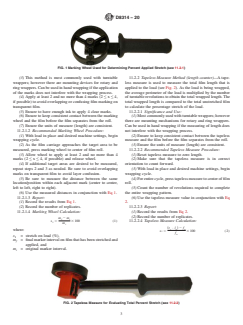
FIG. 1 Marking Wheel Used for Determining Percent Applied Stretch (see 11.2.1)
(3) This method is most commonly used with turntable 11.2.2 Tapeless Measure Method (length counter)—A tape-
wrappers; however there are mounting devices for rotary and less measure is used to measure the total film length that is
ring wrappers. Can be used in hand wrapping if the application applied to the load (see Fig. 2). As the load is being wrapped,
of the marks does not interfere with the wrapping process. the average perimeter of the load is multiplied by the number
(4) Apply at least 2 and no more than 4 marks (2 ≤ x ≤ 4, of turntable revolutions to obtain the total wrapped length.The
if possible) to avoid overlapping or confusing film marking on total wrapped length is compared to the total unstretched film
transparent film. to calculate the percentage stretch of the load.
(5) Ensure to have enough ink to apply 4 clear marks. 11.2.2.1 Significance and Use:
(6) Ensure to keep consistent contact between the marking (1) Mostcommonlyusedwithturntablewrappers;however
wheel and the film before the film separates from the roll. there are mounting mechanisms for rotary and ring wrappers.
(7) Ensure the units of measure (length) are consistent. Can be used in hand wrapping if the measuring of length does
11.2.1.2 Recommended Marking Wheel Procedure: not interfere with the wrapping process.
(1) With load in place and desired machine settings, begin (2) Ensure to keep consistent contact between the tapeless
wrapping cycle. measure and the film before the film separates from the roll.
(2) As the film carriage approaches the target area to be (3) Ensure the units of measure (length) are consistent.
measured, press marking wheel to center of film roll. 11.2.2.2 Recommended Tapeless Measure Procedure:
(3) Allow wheel to apply at least 2 and no more than 4 (1) Reset tapeless measure to zero length.
marks (2 ≤ x ≤ 4, if possible) and release wheel. (2) Make sure that the tapeless measure is in correct
(4) If additional target areas are desired to be measured, orientation to count forward.
repeat steps 2 and 3 as needed. Be sure to avoid overlapping (3) With load in place and desired machine settings, begin
marks on transparent film to avoid layer confusion. wrapping cycle.
(5) Be sure to measure the distance between the same (4) Forentirecycle,presstapelessmeasuretocenteroffilm
location/position within each adjacent mark (center to center, roll.
left to left, right to right). (5) Count the number of revolutions required to complete
(6) Use the measured distances in conjunction with Eq 1. the entire wrapping pattern.
11.2.1.3 Report: (6) Use the tapeless measure value in conjunction with Eq
(1) Record the results from Eq 1. 2.
(2) Record the number of replicates. 11.2.2.3 Report:
11.2.1.4 Marking Wheel Calculation: (1) Record the results from Eq 2.
(2) Record the number of replicates.
m 2 m
f i
s 5 3100 (1)
11.2.2.4 Tapeless Measure Calculation:
m
i
~t · l ! 2 f
r p u
where:
s 5 3100 (2)
f
u
s = stretch on load (%),
m = finalmarkerintervalonfilmthathasbeenstretchedand
f
applied, and
m = original marker interval.
i
FIG. 2 Tapeless Measure for Evaluating Total Percent Stretch (see 11.2.2)
D8314 − 20
where: 12. Stretch Wrapper Consistency Test
s = stretch on load (%),
12.1 Scope—This test can be used to judge the consistency
t = number of turntable revolutions (number),
r
with which a stretch wrapper and a film perform together.
l = average length of perimeter, and
p
Results from testing of different machines or films can be used
f = length of unstretched film (tapeless measure reading).
u
to determine their relative performance.
11.2.3 Cut and Weigh Method—The cut and weigh proce-
12.2 Procedure—Wraptheloadframewiththedesiredwrap
dure requires the film to be removed from the load after the
pattern, keeping film attachment and cut off points consistent.
wrap cycle has finished, at which point the film is weighed and
After wrap cycle has completed cut all film from the frame and
recorded. The cut film weight is compared to the theoretical
weigh. Repeat process at least five times and record results.
weight of the film if it were not stretched in order to obtain the
12.2.1 Thegreaterthenumberofcyclerepetitionstestedthe
percentagefilmstretchoftheload.Thisprocesscanbeusedon
more statistically significant the results.
loads wrapped with any style wrapper because all of the data is
collected and calculations are done after wrapping is com- 12.3 Report—Report the total repetitions, the average, and
pleted.
standard deviation of the results as well as any film breaks or
other problems which occur.
11.2.3.1 Significance and Use:
12.3.1 High standard deviation may indicate a stretch wrap-
(1) When comparing multiple films on a manual or semi-
automatic machine ensure that any excess from the film tail is ping machine or a stretch film which performs inconsistently,
or both.
cut short and is consistent in length.
(2) Ensure the units of measure are consistent between
12.3.2 Film breaks can be the result of either machine or
weight, length, thickness and density.
film problems.
11.2.3.2 Recommended Cut and Weight Procedure:
13. Observed Cling on Load Test
(1) With load in place and desired machine settings, begin
wrapping cycle.
13.1 Scope—This test provides a method to determine the
(2) Count the number of revolutions required to complete
approximate cling level of a film as it has been wrapped to a
the entire wrapping pattern.
load.
(3) Cut film from load after wrapping sequence has fin-
13.1.1 The correct amount of cling required is the amount
ished.
thatpreventstheunwrappingoftheloadinthenormalshipping
(4) Roll film into a tight ball.
environment and allows the wound film layers to act together
(5) Tare (zero out) scale.
as a package.
(6) Weigh the ball of applied stretch film.
13.1.2 The amount of cling observed is affected by the film
11.2.3.3 Report:
properties and the amount of tension and prestretch of the
(1) Record the results from Eq 4.
applied film.
(2) Record number of replicates.
13.1.3 Wrinkles and high tension left in the tail negatively
11.2.3.4 Cut and Weigh Calculations:
affect cling.
(1) First, calculate the theoretical weight of the unstretched
film applied to the load shown in Eq 3 (theoretical unstretched 13.2 Procedure:
weight of applied stretch film without stretch equation).
13.2.1 Preparation—Note that for single sided cling film,
ensure that the cling side of the film is wrapped inward. If the
UW 5 ~N · P!·W·t·~ρ! (3)
cling side is not known, fold the film over on itself in each
where:
direction and determine which side has more cling.
UW = theoretical unstretched weight of film (g or lb),
13.2.2 Passive Evaluation for Cling—Wrap load in normal
N = number of turntable revolutions,
mannerensuringconsistentfilm-tailapplicationmethodandlet
P = average length of perimeter (cm or in.),
set 5 min. Observe the film behavior:
W = unstretched film width (cm or in.),
13.2.2.1 GOOD:The film does not separate from the load at
t = unstretched film thickness (cm (cm = micron/10 000)
any point.
or in. (in. = gauge/100 000)), and
3 3
ρ = density of film (0.92 g/cm or 0.0332 lbs/in for 13.2.2.2 FAIR: The film tail may partially separate but not
average LLDPE). reach the first corner of the load.
(2) Second, use the UW value to calculate the percent
13.2.2.3 POOR:Thefilmpeelsofftheloadtothefirstcorner
stretch shown in Eq 4 (cut and weigh equation).
and stops.
13.2.2.4 VERY POOR: The film peels off the load past the
UW 2 SW
~ ! ~ !
s 5 3100 (4)
first corner.
SW
13.2.3 Active Evaluation for Cling—If further testing of
where:
clinglevelsisdesiredthefilmtailmaybepulledawayfromthe
s = stretch on load (%),
load surface manually so that the cling characteristics may be
UW = theoretical unstretched weight of film, and
observed. Notable differences in cling may be force to peel and
SW = stretched weight of applied film.
uniformity of peel.
D8314 − 20
14. Observed Tear Test (Zippering) 15.2.2.3 Load handling and transportation stresses.
15.2.3 The test methods are calibrated differently and the
14.1 Scope—This test provides a method to determine the
values obtained from each test will vary. Values can be
resistance to tear propagation a film exhibits.
compared within their own test method’s results but cannot be
14.2 Procedure:
directly compared with other test methods’ results.
14.2.1 After the load has been wrapped, make a 127 mm
(5.0 in.) slit in the film vertical to the load using a sharp razor
15.3 Methods:
or knife to ensure a clean cut through all layers of film.
15.3.1 Pull-Plate Evaluation Method:
14.2.1.1 Locations could include near corners, center line of
15.3.1.1 Background:
faces, center of top or bottom wraps, or user specified; ensure
(1) The pull plate is a non-yielding metal disc. It is shown
that locations are repeatable and consistent across all tests
in Fig. 3 and recommended features include:
being compared.
(a) 152 mm (6.0 in.) diameter.
14.2.2 Allow the slit to propagate for 10 min.
(b) Acentral eyelet or hook to allow a force measurement
14.2.3 Measure the resultant vertical distance of the slit,
gauge to be attached to the plate and pulled from the load.
convert to a percentage using Eq 5.
(c) Two slots located near the center of the plate, 51 mm
14.3 Report:
(2.0 in.) in length and 12 mm (0.50 in.) in width, to allow for
14.3.1 Record the results of Eq 5.
a tape measure to be placed through the pull plate and to allow
14.3.1.1 If the slit propagates through to either edge of the
airflow.
load report it as a zipper failure.
(d) Edges that will not damage the film during the test.
14.3.2 Record the number of replicates.
(e) A surface covered in a polymer (ex. box tape) that
14.4 Observed Tear Test Calculation: prevents stretch film from slipping off the plate during the
evaluation.
C 2 C
f i
P 5 3100 (5)
15.3.1.2 Pull-Plate Evaluation:
C
i
(1) Scope—The objective of this test is to measure the
where:
containment force of applied stretch film at a given location on
P = film tear propagation percentage,
the load.
C = final length of cut (mm or in.), and
f
(a) Containmentforceisameasurementthat’saffectedby
C = initial length of cut in film (127 mm or 5 in.).
i
multiple film characteristics, most notably compressive force
and film stiffness (tensile forces). AnnexA1 contains a method
15. Containment Force Testing
which allows the compressive and tensile forces to be sepa-
15.1 Scope—The following section contains four methods
rated and reported through calculation.
to evaluate the containment force of stretch film as applied to
(2) Recommended Procedure for Pull-Plate Evaluation:
the load.These tests do not need to be used exclusively of each
(a) Wrap the load with the desired film and machine
other.
settings.
15.2 Significance and Use: (b) Choose a consistent time interval to let the wrapped
load stand undisturbed between the end of the wrap cycle and
15.2.1 Containment force is the primary measurement to
determine load containment. starting the test. 5 min is recommended.
(c) On the longer side of the load, insert the pull plate
15.2.2 The containment force required to stabilize a unit
load is influenced by load and handling characteristics. Some between the film and the product and position it at a measured
location 254 mm (10.0 in.) from the top of the product and 457
common variables affecting load containment requirements:
15.2.2.1 Load weight, mm (18.0 in.) from the vertical edge of the left side of the
15.2.2.2 Inherent load stability, and product.
NOTE 1—Holes for ruler access and airflow prevent vacuum behind film during evaluation (see 15.3.1.1).
NOTE 2—Other features and designs may be used and are acceptable.
FIG. 3 Pull Plate Used for Pull Evaluation
D8314 − 20
(i) Take care that the plate is placed behind all layers of (b) To obtain a more complete evaluation of containment
film and does not catch on any other packaging. forces testing may be conducted at the top, middle, and bottom
(ii) If this testing position is not ideal another location
of the wrapped load. Containment forces can vary due to wrap
may be specified so long as the chosen position is kept
pattern settings and the amount of film wrapped onto each
consistent across all samples.
portion of the load.
(d) Cut a 25 mm (1.0 in.) wide horizontal slit in film to
(c) On loads that have non-uniform or non-linear faces,
allow eyelet to protrude through the film.
take care that the film is pulled 102 mm (4.0 in.) out from its
(e) Cut a second horizontal slit at the tape measure
tangent line (or resting line) to ensure accurate and comparable
insertion slot equal to its width. Insert end of tape measure
results.
through slot so that it rests against the product surface.
(d) Accuracy of results is highly dependent on the dis-
(f) Cut third horizontal slit in the remaining air flow slot
tance the film is pulled from its resting position.Avariation of
equal to the slot width.
evenafewmillimetersmaycreateasignificantdeviationinthe
(g) Attach the film scale hook through the eyelet of the
resulting values.
pull plate.
15.3.2 Pull-Bar Evaluation:
(h) Usingthescale,pulltheattachedpullplateawayfrom
the
...