

ASTM F2285-22
(Specification)Standard Consumer Safety Performance Specification for Diaper Changing Tables for Commercial Use
General Information
- Abstract
SCOPE
1.1 This consumer safety specification establishes safety performance requirements, test methods, and labeling requirements to minimize the hazards to children presented by diaper changing tables as identified in the introduction.
1.2 This specification is intended to apply to diaper changing tables for commercial use. It is intended for use with children up to 3.5 years of age and weighing less than 50 lbs.
1.3 No diaper changing table produced after the approval date of this consumer safety performance specification shall, either by label or other means, indicate compliance with this specification unless it conforms to all requirements herein.
1.4 The values stated in inch-pound units are to be regarded as standard. The values given in parentheses are mathematical conversions to SI units that are provided for information only and are not considered standard.
1.5 The following precautionary caveat pertains only to the test method portion, Section 7, of this consumer safety specification: This standard does not purport to address all of the safety concerns, if any, associated with its use. It is the responsibility of the user of this standard to establish appropriate safety, health, and environmental practices and determine the applicability of regulatory limitations prior to use.
1.6 This international standard was developed in accordance with internationally recognized principles on standardization established in the Decision on Principles for the Development of International Standards, Guides and Recommendations issued by the World Trade Organization Technical Barriers to Trade (TBT) Committee.
- Status
- Published
- Publication Date
- 14-Oct-2022
- Technical Committee
- F15 - Consumer Products
- Drafting Committee
- F15.50 - Baby Changing Tables - Commercial
Buy Documents
ASTM F2285-22 - Standard Consumer Safety Performance Specification for Diaper Changing Tables for Commercial Use
REDLINE ASTM F2285-22 - Standard Consumer Safety Performance Specification for Diaper Changing Tables for Commercial Use
Overview
ASTM F2285-22: Standard Consumer Safety Performance Specification for Diaper Changing Tables for Commercial Use sets forth comprehensive safety and performance requirements for diaper changing tables designed for commercial settings. Developed by ASTM International, this standard is specifically targeted at reducing hazards associated with diaper changing tables for children up to 3.5 years old and weighing less than 50 lbs. The document establishes key testing procedures, labeling requirements, and guidance to minimize risks including falls, injury from restraint systems, entrapment, and stability issues.
Compliance with this standard helps manufacturers, distributors, facility managers, and child care providers ensure products meet strict safety benchmarks, supporting safer environments for young children in commercial facilities such as airports, restaurants, hospitals, and daycare centers.
Key Topics
- Scope: Applies exclusively to diaper changing tables for commercial use intended for children up to 3.5 years and under 50 lbs.
- Safety Performance Requirements:
- Mandatory restraint systems including waist restraint
- Static load support to withstand at least 100 lbs (45.5 kg)
- Design safeguards to prevent scissoring, pinching, crushing, and shearing injuries
- Structural integrity to prevent tip-over, collapse, or creation of sharp edges or small parts
- Test Methods:
- Rigorous testing for latching mechanisms to prevent unintentional folding
- Retention of occupant using CAMI test dummies
- Testing for the permanence of warning labels and protective components
- Labeling & Marking:
- Permanent, conspicuous warning labels following ANSI standards
- Clear identification of manufacturer, model, and date of manufacture
- Use of contrasting colors and minimum font sizes for all safety warnings
Applications
The ASTM F2285-22 standard is critical for the following practical applications:
- Commercial Childcare Facilities: Ensures diaper changing tables in settings such as daycare centers, nurseries, and preschools are safe for daily use.
- Public Restrooms: Applies to changing tables installed in airports, malls, restaurants, hotels, and hospitals, providing guidelines for equipment used by the general public.
- Product Design and Manufacturing: Guides manufacturers in designing, testing, and labeling changing tables to comply with North American safety regulations.
- Procurement and Facility Management: Assists facility managers and purchasers in selecting compliant changing tables, offering assurance regarding product safety and regulatory adherence.
- Safety Inspections: Serves as the reference point for safety audits, compliance checks, and consumer protection evaluations regarding the use and maintenance of diaper changing tables in commercial venues.
Related Standards
For optimal safety and compliance, refer to additional related standards and regulatory requirements:
- ASTM D3359: Test Methods for Rating Adhesion by Tape Test
- ANSI Z535.4: American National Standard for Safety Signs and Labels
- 16 CFR 1303: Ban of Lead-Containing Paint and Certain Consumer Products Bearing Lead-Containing Paint
- 16 CFR 1500: Hazardous Substances Act Regulations (Sharp Points, Sharp Edges, Small Parts)
- 16 CFR 1501: Identification Method for Products Posing Choking Hazards to Children Under Three Years of Age
By following ASTM F2285-22 and the referenced standards, organizations demonstrate their commitment to consumer safety and regulatory compliance for all commercial diaper changing tables. Incorporating these standards into procurement, design, and safety management practices is essential to mitigate risks and promote child safety in any public or institutional environment.
Relations
- Effective Date
- 01-Jun-2009
- Effective Date
- 01-Nov-2007
- Effective Date
- 10-Aug-2002
Buy Documents
ASTM F2285-22 - Standard Consumer Safety Performance Specification for Diaper Changing Tables for Commercial Use
REDLINE ASTM F2285-22 - Standard Consumer Safety Performance Specification for Diaper Changing Tables for Commercial Use
Frequently Asked Questions
ASTM F2285-22 is a technical specification published by ASTM International. Its full title is "Standard Consumer Safety Performance Specification for Diaper Changing Tables for Commercial Use". This standard covers: SCOPE 1.1 This consumer safety specification establishes safety performance requirements, test methods, and labeling requirements to minimize the hazards to children presented by diaper changing tables as identified in the introduction. 1.2 This specification is intended to apply to diaper changing tables for commercial use. It is intended for use with children up to 3.5 years of age and weighing less than 50 lbs. 1.3 No diaper changing table produced after the approval date of this consumer safety performance specification shall, either by label or other means, indicate compliance with this specification unless it conforms to all requirements herein. 1.4 The values stated in inch-pound units are to be regarded as standard. The values given in parentheses are mathematical conversions to SI units that are provided for information only and are not considered standard. 1.5 The following precautionary caveat pertains only to the test method portion, Section 7, of this consumer safety specification: This standard does not purport to address all of the safety concerns, if any, associated with its use. It is the responsibility of the user of this standard to establish appropriate safety, health, and environmental practices and determine the applicability of regulatory limitations prior to use. 1.6 This international standard was developed in accordance with internationally recognized principles on standardization established in the Decision on Principles for the Development of International Standards, Guides and Recommendations issued by the World Trade Organization Technical Barriers to Trade (TBT) Committee.
SCOPE 1.1 This consumer safety specification establishes safety performance requirements, test methods, and labeling requirements to minimize the hazards to children presented by diaper changing tables as identified in the introduction. 1.2 This specification is intended to apply to diaper changing tables for commercial use. It is intended for use with children up to 3.5 years of age and weighing less than 50 lbs. 1.3 No diaper changing table produced after the approval date of this consumer safety performance specification shall, either by label or other means, indicate compliance with this specification unless it conforms to all requirements herein. 1.4 The values stated in inch-pound units are to be regarded as standard. The values given in parentheses are mathematical conversions to SI units that are provided for information only and are not considered standard. 1.5 The following precautionary caveat pertains only to the test method portion, Section 7, of this consumer safety specification: This standard does not purport to address all of the safety concerns, if any, associated with its use. It is the responsibility of the user of this standard to establish appropriate safety, health, and environmental practices and determine the applicability of regulatory limitations prior to use. 1.6 This international standard was developed in accordance with internationally recognized principles on standardization established in the Decision on Principles for the Development of International Standards, Guides and Recommendations issued by the World Trade Organization Technical Barriers to Trade (TBT) Committee.
ASTM F2285-22 is classified under the following ICS (International Classification for Standards) categories: 97.190 - Equipment for children. The ICS classification helps identify the subject area and facilitates finding related standards.
ASTM F2285-22 has the following relationships with other standards: It is inter standard links to ASTM D3359-09e1, ASTM D3359-07, ASTM D3359-02. Understanding these relationships helps ensure you are using the most current and applicable version of the standard.
ASTM F2285-22 is available in PDF format for immediate download after purchase. The document can be added to your cart and obtained through the secure checkout process. Digital delivery ensures instant access to the complete standard document.
Standards Content (Sample)
This international standard was developed in accordance with internationally recognized principles on standardization established in the Decision on Principles for the
Development of International Standards, Guides and Recommendations issued by the World Trade Organization Technical Barriers to Trade (TBT) Committee.
Designation: F2285 −22
Standard Consumer Safety Performance Specification for
Diaper Changing Tables for Commercial Use
This standard is issued under the fixed designation F2285; the number immediately following the designation indicates the year of
original adoption or, in the case of revision, the year of last revision. A number in parentheses indicates the year of last reapproval. A
superscript epsilon (´) indicates an editorial change since the last revision or reapproval.
INTRODUCTION
This safety performance specification addresses diaper changing tables for use in commercial
environments.
The CPSC identified the following injuries to children associated with the use of diaper changing
tables in the residential environment: falls, stability, restraint systems, latches and folding
mechanisms, structural integrity, and deaths due to entrapment in openings. In response to the
incidents data developed by the CPSC, this safety performance specification attempts to minimize the
previously listed problems. This specification does not cover tables that are blatantly misused,
although warnings and safety instructions are required to be prominently displayed on or with each
table.
This consumer safety performance specification is not intended to address incidents and injuries
resulting from the interaction of other persons with children on tables or incidents resulting from
unforeseeable abuse or misuse.
This consumer safety performance specification is written within the current state of the art of
diaper changing table technology. It is intended that this specification will be updated whenever
substantive information becomes available which necessitates additional requirements or justifies the
revision of existing requirements.
1. Scope fication: This standard does not purport to address all of the
safety concerns, if any, associated with its use. It is the
1.1 This consumer safety specification establishes safety
responsibility of the user of this standard to establish appro-
performance requirements, test methods, and labeling require-
priate safety, health, and environmental practices and deter-
ments to minimize the hazards to children presented by diaper
mine the applicability of regulatory limitations prior to use.
changing tables as identified in the introduction.
1.6 This international standard was developed in accor-
1.2 This specification is intended to apply to diaper chang-
dance with internationally recognized principles on standard-
ing tables for commercial use. It is intended for use with
ization established in the Decision on Principles for the
children up to 3.5 years of age and weighing less than 50 lbs.
Development of International Standards, Guides and Recom-
1.3 No diaper changing table produced after the approval
mendations issued by the World Trade Organization Technical
date of this consumer safety performance specification shall,
Barriers to Trade (TBT) Committee.
either by label or other means, indicate compliance with this
2. Referenced Documents
specification unless it conforms to all requirements herein.
2.1 ASTM Standards:
1.4 The values stated in inch-pound units are to be regarded
D3359 Test Methods for Rating Adhesion by Tape Test
as standard. The values given in parentheses are mathematical
2.2 Federal Standards:
conversions to SI units that are provided for information only
16 CFR-1303 Ban of Lead-Containing Paint and Certain
and are not considered standard.
Consumer Products Bearing Lead-Containing Paint
1.5 The following precautionary caveat pertains only to the
test method portion, Section 7, of this consumer safety speci-
For referenced ASTM standards, visit the ASTM website, www.astm.org, or
This specification is under the jurisdiction of ASTM Committee F15 on contact ASTM Customer Service at service@astm.org. For Annual Book of ASTM
Consumer Products and is the direct responsibility of Subcommittee F15.50 on Standards volume information, refer to the standard’s Document Summary page on
Baby Changing Tables - Commercial. the ASTM website.
Current edition approved Oct. 15, 2022. Published November 2022. Originally AvailablefromU.S.GovernmentPrintingOfficeSuperintendentofDocuments,
ɛ1
approved in 2004. Last previous edition approved in 2016 as F2285 – 04 (2016) . 732 N. Capitol St., NW, Mail Stop: SDE, Washington, DC 20401, http://
DOI: 10.1520/F2285-22. www.access.gpo.gov.
Copyright © ASTM International, 100 Barr Harbor Drive, PO Box C700, West Conshohocken, PA 19428-2959. United States
F2285 − 22
16 CFR-1500 Hazardous Substances Act Regulations in- excludes positions that the manufacturer shows in a like
cluding sections: manner in its literature to be unacceptable, unsafe, or not
16 CFR 1500.48 Technical Requirements for Determining a recommended.
Sharp Point in Toys or OtherArticles Intended for Use by
3.1.3 static load, n—a vertically downward load applied by
Children Under Eight Years of Age
a dead weight or other means.
16 CFR 1500.49 Technical Requirements for Determining a
Sharp Metal or Glass Edge in Toys or Other Articles
4. General Testing Requirements
Intended for Use by Children Under Eight Years of Age
4.1 All testing shall be conducted on a concrete floor that
16 CFR 1500.50-52 Tests Methods for Simulating Use and
may be covered with ⁄8-in. (3-mm) thick vinyl floor covering,
Abuse of Toys and Other Articles Intended for Use by
unless test instructs differently.
Children
16 CFR 1501 Method for Identifying Toys and Other Ar- 4.2 The unit shall be completely assembled, unless other-
ticles Intended for Use by Children Under Three Years of wise noted, in accordance with the manufacturer’s instructions.
Age Which Present Choking, Aspiration, or Ingestion
4.3 No testing shall be conducted within 48 h of manufac-
Hazards Because of Small Parts
turing.
2.3 ANSI Standard:
4.4 The product to be tested shall be in a room with an
ANSI Z535.4 American National Standard for Safety Signs
4 ambient temperature of 73 6 9°F (23 6 5°C) for at least 1 h
and Labels
prior to testing. Testing shall then be conducted within this
2.4 Other Documents:
5 temperature range.
CAMI Infant Dummy, Mark II (see Fig. 1)
4.5 All testing required by this specification shall be con-
3. Terminology
ducted on the same unit.
3.1 Definitions of Terms Specific to This Standard:
5. General Requirements
3.1.1 conspicuous, n—alabelwhichisvisible,whentheunit
is in a manufacturer’s recommended use position, to a person
5.1 The unit shall conform to the federal regulations speci-
standing near the unit at any one position around the unit, but
fied in section 2.2 of this specification both before and after all
not necessarily visible from all positions.
testing.
3.1.2 manufacturer’s recommended use position, n—any
5.2 Before and after testing, any exposed parts shall be
position, which is presented as a normal, allowable, or accept-
smooth and free of splinters.
ableconfigurationforuseoftheproductbythemanufacturerin
5.3 Latching Mechanisms—Any unit that folds, and will not
any descriptive or instructional literature. This specifically
remain in the open position without force being applied to it,
shall have a latching device or other provision in the design
Available from American National Standards Institute (ANSI), 25 W. 43rd St., that will prevent the unit from unintentional folding when
4th Floor, New York, NY 10036, http://www.ansi.org.
properly placed in the manufacturer’s recommended use posi-
Available from Department of Transportation Memorandum ReportAAC-119-
tion. Products with latching devices for prevention of uninten-
74-14, Revision II, Drawing No. SA-1001 by Richard Chandler, July 2, 1974.
tional folding shall be tested in accordance with 7.1. During
Federal Aviation Administration, Civil Aeromedical Institute, Protection and Sur-
vival Laboratory, Aeromedical Center, Oklahoma City, OK 73125.
and upon completion of this test, the unit shall remain latched
in its manufacturer’s recommended use position.
5.4 Openings—Any shaped holes, slots, or cracks that exist
in or around the table that is in its manufacturer’s recom-
mended use position and that are accessible to the toes or
fingers of the occupant, through or recessed, or both, into the
surface of any rigid material that admit a 0.210-in. (5.33-mm)
diameter rod, also shall admit a 0.375-in. (9.53-mm) diameter
rod. Openings that have a minimum dimension between
0.210 in. and 0.375 in. shall be permissible, providing the
depth is no greater than the minimum dimension of the
opening.
5.5 Scissoring, Shearing, Pinching, Crushing—The table,
when in the manufacturer’s recommended use position, and
parts that are accessible to the toes or fingers of the occupant
in the table, shall be designed and constructed to prevent injury
from any scissoring, shearing, or pinching when members or
components rotate about a common axis or fastening point,
slide, pivot, fold, or otherwise move relative to one another.
Scissoring, shearing, or pinching exists when the edges of the
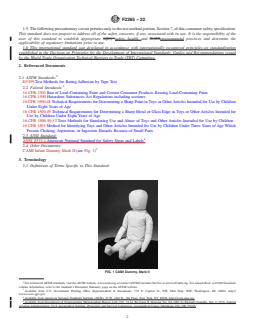
FIG. 1 CAMI Dummy, Mark II rigid parts admit a probe greater than 0.210-in. (5.33-mm)
F2285 − 22
diameter and less than 0.375-in. (9.53-mm) diameter at any normally associated with folding the product in accordance
accessible point throughout the range of motion of such parts. with the manufacturer’s instructions. Gradually apply the force
within 5 s and maintain for an additional 10 s.
5.6 Labeling—Decorative labels, warning labels, or warn-
ings applied directly onto the surface of the product by hot
NOTE 2—Do not apply this force on latching or unlatching means itself.
stamping,heattransfer,printing,orwoodburning,etc.,shallbe
7.1.4 Repeat 7.1.3 for a total of five times within 2 min.
permanent when tested in accordance with 7.4.
7.1.5 Fold the unit in accordance with the manufacturer’s
5.7 The forces that are to be applied to the sample in the test
instructions and repeat 7.1.1 – 7.1.3 one additional time.
methods of this specification are applied readily by means of a
7.2 Static Load Test Method:
calibrated force gage, or in the case of static load and dynamic
7.2.1 Place the product in the manufacturer’s recommended
load test methods, by calibrated weights.
use position.
7.2.2 Place the specified weight from 6.1upona6by 6-in.
6. Performance Requirements
(150 by 150-mm) wood block ⁄4 in. (19 mm) thick in the unit
6.1 Static Load:
at the location called for in 6.1. Gradually apply the weight
6.1.1 A table shall support a static load of 100 lb (45.5 kg)
within 5 s and maintain for an additional 60 s.
when placed in the approximate center of the area intended to
7.3 Restraining System Integrity and Occupant Retention
support the infant occupant.
Test Methods:
6.1.2 Test methods shall be performed i
...
This document is not an ASTM standard and is intended only to provide the user of an ASTM standard an indication of what changes have been made to the previous version. Because
it may not be technically possible to adequately depict all changes accurately, ASTM recommends that users consult prior editions as appropriate. In all cases only the current version
of the standard as published by ASTM is to be considered the official document.
´1
Designation: F2285 − 04 (Reapproved 2016) F2285 − 22
Standard Consumer Safety Performance Specification for
Diaper Changing Tables for Commercial Use
This standard is issued under the fixed designation F2285; the number immediately following the designation indicates the year of
original adoption or, in the case of revision, the year of last revision. A number in parentheses indicates the year of last reapproval. A
superscript epsilon (´) indicates an editorial change since the last revision or reapproval.
ε NOTE—Editorial changes made throughout in August 2016.
INTRODUCTION
This safety performance specification addresses diaper changing tables for use in commercial
environments.
The CPSC identified the following injuries to children associated with the use of diaper changing
tables in the residential environment: falls, stability, restraint systems, latches and folding
mechanisms, structural integrity, and deaths due to entrapment in openings. In response to the
incidents data developed by the CPSC, this safety performance specification attempts to minimize the
previously listed problems. This specification does not cover tables that are blatantly misused,
although warnings and safety instructions are required to be prominently displayed on or with each
table.
This consumer safety performance specification is not intended to address incidents and injuries
resulting from the interaction of other persons with children on tables or incidents resulting from
unforeseeable abuse or misuse.
This consumer safety performance specification is written within the current state of the art of
diaper changing table technology. It is intended that this specification will be updated whenever
substantive information becomes available which necessitates additional requirements or justifies the
revision of existing requirements.
1. Scope
1.1 This consumer safety specification establishes safety performance requirements, test methods, and labeling requirements to
minimize the hazards to children presented by diaper changing tables as identified in the introduction.
1.2 This specification is intended to apply to diaper changing tables for commercial use. It is intended for use with children up
to 3.5 years of age and weighing less than 50 lbs.
1.3 No diaper changing table produced after the approval date of this consumer safety performance specification shall, either by
label or other means, indicate compliance with this specification unless it conforms to all requirements herein.
1.4 The values stated in inch-pound units are to be regarded as standard. The values given in parentheses are mathematical
conversions to SI units that are provided for information only and are not considered standard.
This specification is under the jurisdiction of ASTM Committee F15 on Consumer Products and is the direct responsibility of Subcommittee F15.50 on Baby Changing
Tables - Commercial.
Current edition approved Aug. 1, 2016Oct. 15, 2022. Published August 2016November 2022. Originally approved in 2004. Last previous edition approved in 20102016
ɛ1
as F2285 – 04 (2010).(2016) . DOI: 10.1520/F2285-04R16E01.10.1520/F2285-22.
Copyright © ASTM International, 100 Barr Harbor Drive, PO Box C700, West Conshohocken, PA 19428-2959. United States
F2285 − 22
1.5 The following precautionary caveat pertains only to the test method portion, Section 7, of this consumer safety specification:
This standard does not purport to address all of the safety concerns, if any, associated with its use. It is the responsibility of the
user of this standard to establish appropriate safety safety, health, and healthenvironmental practices and determine the
applicability of regulatory limitations prior to use.
1.6 This international standard was developed in accordance with internationally recognized principles on standardization
established in the Decision on Principles for the Development of International Standards, Guides and Recommendations issued
by the World Trade Organization Technical Barriers to Trade (TBT) Committee.
2. Referenced Documents
2.1 ASTM Standards:
D3359 Test Methods for Rating Adhesion by Tape Test
2.2 Federal Standards:
16 CFR-1303 Ban of Lead-Containing Paint and Certain Consumer Products Bearing Lead-Containing Paint
16 CFR-1500 Hazardous Substances Act Regulations including sections:
16 CFR 1500.48 Technical Requirements for Determining a Sharp Point in Toys or Other Articles Intended for Use by Children
Under Eight Years of Age
16 CFR 1500.49 Technical Requirements for Determining a Sharp Metal or Glass Edge in Toys or Other Articles Intended for
Use by Children Under Eight Years of Age
16 CFR 1500.50-52 Tests Methods for Simulating Use and Abuse of Toys and Other Articles Intended for Use by Children
16 CFR 1501 Method for Identifying Toys and Other Articles Intended for Use by Children Under Three Years of Age Which
Present Choking, Aspiration, or Ingestion Hazards Because of Small Parts
2.3 ANSI Standard:
ANSI Z535.4 American National Standard for Safety Signs and Labels
2.4 Other Documents:
CAMI Infant Dummy, Mark II (see Fig. 1)
3. Terminology
3.1 Definitions of Terms Specific to This Standard:
FIG. 1 CAMI Dummy, Mark II
For referenced ASTM standards, visit the ASTM website, www.astm.org, or contact ASTM Customer Service at service@astm.org. For Annual Book of ASTM Standards
volume information, refer to the standard’s Document Summary page on the ASTM website.
Available from U.S. Government Printing Office Superintendent of Documents, 732 N. Capitol St., NW, Mail Stop: SDE, Washington, DC 20401, http://
www.access.gpo.gov.
Available from American National Standards Institute (ANSI), 25 W. 43rd St., 4th Floor, New York, NY 10036, http://www.ansi.org.
Available from Department of Transportation Memorandum Report AAC-119- 74-14, Revision II, Drawing No. SA-1001 by Richard Chandler, July 2, 1974. Federal
Aviation Administration, Civil Aeromedical Institute, Protection and Survival Laboratory, Aeromedical Center, Oklahoma City, OK 73125.
F2285 − 22
3.1.1 conspicuous, n—a label which is visible, when the unit is in a manufacturer’s recommended use position, to a person
standing near the unit at any one position around the unit, but not necessarily visible from all positions.
3.1.2 manufacturer’s recommended use position, n—any position, which is presented as a normal, allowable, or acceptable
configuration for use of the product by the manufacturer in any descriptive or instructional literature. This specifically excludes
positions that the manufacturer shows in a like manner in its literature to be unacceptable, unsafe, or not recommended.
3.1.3 static load, n—a vertically downward load applied by a dead weight or other means.
4. General Testing Requirements
4.1 All testing shall be conducted on a concrete floor that may be covered with ⁄8-in. (3-mm) thick vinyl floor covering, unless
test instructs differently.
4.2 The unit shall be completely assembled, unless otherwise noted, in accordance with the manufacturer’s instructions.
4.3 No testing shall be conducted within 48 h of manufacturing.
4.4 The product to be tested shall be in a room with an ambient temperature of 73 6 9°F (23 6 5°C) for at least 1 h prior to testing.
Testing shall then be conducted within this temperature range.
4.5 All testing required by this specification shall be conducted on the same unit.
5. General Requirements
5.1 The unit shall conform to the federal regulations specified in section 2.2 of this specification both before and after all testing.
5.2 Before and after testing, any exposed parts shall be smooth and free of splinters.
5.3 Latching Mechanisms—Any unit that folds, and will not remain in the open position without force being applied to it, shall
have a latching device or other provision in the design that will prevent the unit from unintentional folding when properly placed
in the manufacturer’s recommended use position. Products with latching devices for prevention of unintentional folding shall be
tested in accordance with 7.1. During and upon completion of this test, the unit shall remain latched in its manufacturer’s
recommended use position.
5.4 Openings—Any shaped holes, slots, or cracks that exist in or around the table that is in its manufacturer’s recommended use
position and that are accessible to the toes or fingers of the occupant, through or recessed, or both, into the surface of any rigid
material that admit a 0.210-in. (5.33-mm) diameter rod, also shall admit a 0.375-in. (9.53-mm) diameter rod. Openings that have
a minimum dimension between 0.210 in. 0.210 in. and 0.375 in. shall be permissible, providing the depth is no greater than the
minimum dimension of the opening.
5.5 Scissoring, Shearing, Pinching, Crushing—The table, when in the manufacturer’s recommended use position, and parts that
are accessible to the toes or fingers of the occupant in the table, shall be designed and constructed to prevent injury from any
scissoring, shearing, or pinching when members or components rotate about a common axis or fastening point, slide, pivot, fold,
or otherwise move relative to one another. Scissoring, shearing, or pinching exists when the edges of the rigid parts admit a probe
greater than 0.210-in. (5.33-mm) diameter and less than 0.375-in. (9.53-mm) diameter at any accessible point throughout the range
of motion of such parts.
5.6 Labeling—Decorative labels, warning labels, or warnings applied directly onto the surface of the product by hot stamping, heat
transfer, printing, or wood burning, etc., shall be permanent when tested in accordance with 7.4.
5.7 The forces that are to be applied to the sample in the test methods of this specification are applied readily by means of a
calibrated force gage, or in the case of static load and dynamic load test methods, by calibrated weights.
F2285 − 22
6. Performance Requirements
6.1 Static Load:
6.1.1 A table shall support a static load of 100 lb (45.5 kg) when placed in the approximate center of the area intended to support
the infant occupant.
6.1.2 Test methods shall be performed in accordance with 7.2. At the conclusion of the test method, there shall be no unacceptable
conditions as identified within this specification (see Note 1).
NOTE 1—For the purpose of this specification, the unacceptable conditions that might be identified by the static load test methods shall be tip over, collapse
of the product or a component of the product, sharp edges or points, and small parts.
6.2 Restraining System—All products covered by this specification must have a child restraint system. The manufacturer shall
attach the restraint system in such a manner that it will not become detached through normal usage. The restraint system shall
include a waist restraint.
6.2.1 Restraining System—Test methods for all restraining systems shall be in accordanc
...