

ASTM E1820-23b
(Test Method)Standard Test Method for Measurement of Fracture Toughness
General Information
- Abstract
SIGNIFICANCE AND USE
5.1 Assuming the presence of a preexisting, sharp, fatigue crack, the material fracture toughness values identified by this test method characterize its resistance to: (1) fracture of a stationary crack, (2) fracture after some stable tearing, (3) stable tearing onset, and (4) sustained stable tearing. This test method is particularly useful when the material response cannot be anticipated before the test. Application of procedures in Test Method E1921 is recommended for testing ferritic steels that undergo cleavage fracture in the ductile-to-brittle transition.
5.1.1 These fracture toughness values may serve as a basis for material comparison, selection, and quality assurance. Fracture toughness can be used to rank materials within a similar yield strength range.
5.1.2 These fracture toughness values may serve as a basis for structural flaw tolerance assessment. Awareness of differences that may exist between laboratory test and field conditions is required to make proper flaw tolerance assessment.
5.2 The following cautionary statements are based on some observations.
5.2.1 Particular care must be exercised in applying to structural flaw tolerance assessment the fracture toughness value associated with fracture after some stable tearing has occurred. This response is characteristic of ferritic steel in the transition regime. This response is especially sensitive to material inhomogeneity and to constraint variations that may be induced by planar geometry, thickness differences, mode of loading, and structural details.
5.2.2 The J-R curve from bend-type specimens recommended by this test method (SE(B), C(T), and DC(T)) has been observed to be conservative with respect to results from tensile loading configurations.
5.2.3 The values of δc, δu, Jc, and Ju may be affected by specimen dimensions.
SCOPE
1.1 This test method covers procedures and guidelines for the determination of fracture toughness of metallic materials using the following parameters: K, J, and CTOD (δ). Toughness can be measured in the R-curve format or as a point value. The fracture toughness determined in accordance with this test method is for the opening mode (Mode I) of loading.
Note 1: Until this version, KIc could be evaluated using this test method as well as by using Test Method E399. To avoid duplication, the evaluation of KIc has been removed from this test method and the user is referred to Test Method E399.
1.2 The recommended specimens are single-edge bend, [SE(B)], compact, [C(T)], and disk-shaped compact, [DC(T)]. All specimens contain notches that are sharpened with fatigue cracks.
1.2.1 Specimen dimensional (size) requirements vary according to the fracture toughness analysis applied. The guidelines are established through consideration of material toughness, material flow strength, and the individual qualification requirements of the toughness value per values sought.
Note 2: Other standard methods for the determination of fracture toughness using the parameters K, J, and CTOD are contained in Test Methods E399, E1290, and E1921. This test method was developed to provide a common method for determining all applicable toughness parameters from a single test.
1.3 The values stated in SI units are to be regarded as standard. The values given in parentheses after SI units are provided for information only and are not considered standard.
1.4 This standard does not purport to address all of the safety concerns, if any, associated with its use. It is the responsibility of the user of this standard to establish appropriate safety, health, and environmental practices and determine the applicability of regulatory limitations prior to use.
1.5 This international standard was developed in accordance with internationally recognized principles on standardization established in the Decision on Principles for the Development of International Standards, Guides and Recommendations iss...
- Status
- Published
- Publication Date
- 31-May-2023
- Technical Committee
- E08 - Fatigue and Fracture
- Drafting Committee
- E08.07 - Fracture Mechanics
Overview
ASTM E1820-23b: Standard Test Method for Measurement of Fracture Toughness is a critical standard developed by ASTM International. This standard provides comprehensive procedures and criteria for determining the fracture toughness of metallic materials, a fundamental property that describes a material’s ability to resist crack growth when subjected to stress. Fracture toughness measurements are essential for assessing the structural integrity of components and selecting appropriate materials for safety-critical applications.
ASTM E1820-23b focuses on the measurement of fracture toughness under Mode I (opening mode) loading using several established parameters: stress intensity factor (K, J-integral, and Crack Tip Opening Displacement [CTOD or δ]). The standard covers specimen configuration, test apparatus, measurement techniques, and data interpretation, offering flexibility for different materials and application needs. This test method is especially valuable when the anticipated fracture response of a material is unknown, making it widely applicable across materials engineering and quality assurance programs.
Key Topics
- Parameters Measured: The standard specifies procedures for obtaining fracture toughness values using K, J, and CTOD (δ) approaches, allowing for both single-point values and complete resistance (R-curve) representations.
- Specimen Types: Recommended specimen geometries include single-edge bend [SE(B)], compact [C(T)], and disk-shaped compact [DC(T)] specimens, all incorporating pre-existing fatigue cracks to simulate real-world flaws.
- Crack Initiation and Growth: The method addresses the characterization of resistance to crack initiation, stable tearing, and unstable fracture, providing critical information on material behavior under stress.
- Data Utilization: Results are applied to material comparison, selection, and flaw tolerance assessment-a key aspect of structural evaluation and safety assurance.
- Guidelines and Cautions: The standard highlights important limitations, such as specimen size effects and material-specific behaviors (notably for ferritic steels in the ductile-to-brittle transition).
- Testing Equipment: Details on force and displacement measurement systems, calibration, and specimen preparation ensure repeatable and validated results.
Applications
The fracture toughness data generated according to ASTM E1820-23b is vital across a wide variety of industries and engineering tasks:
- Structural Integrity Assessment: Used to evaluate the flaw tolerance of pressure vessels, pipelines, bridges, automotive, and aerospace components, ensuring public safety and preventing catastrophic failures.
- Material Selection: Supports engineers in ranking and selecting materials, especially where resistance to crack propagation is a key consideration-such as in infrastructure, transportation, and defense sectors.
- Quality Assurance: Provides a standardized, reproducible metric for verifying that materials and welded joints meet specified safety and performance criteria.
- Research and Development: Facilitates new alloy development by enabling precise comparison of fracture resistance among candidate materials.
- Failure Analysis: Supplies forensic engineers with data to interpret structural failures and recommend improvements.
Related Standards
Understanding and implementing ASTM E1820-23b often requires context from related standards:
- ASTM E399: Standard Test Method for Linear-Elastic Plane-Strain Fracture Toughness of Metallic Materials-focuses exclusively on the K_Ic parameter for linear-elastic fracture mechanics.
- ASTM E1290: Test Method for Crack-Tip Opening Displacement (CTOD) Fracture Toughness Measurement (withdrawn)-previous guideline for δ (CTOD) measurements.
- ASTM E1921: Test Method for Determination of Reference Temperature in Ferritic Steels-recommended for materials with specific transition behaviors.
- ASTM E8/E8M: Test Methods for Tension Testing of Metallic Materials-provides foundational properties referenced in toughness evaluation.
- ASTM E4: Practices for Force Calibration and Verification of Testing Machines-ensures accurate and reliable testing machines.
By adhering to ASTM E1820-23b, engineers and materials scientists can reliably characterize and compare the fracture toughness of metals for design, safety, and quality assurance. This standard plays an indispensable role in modern materials engineering, supporting the development and maintenance of safe, resilient structures.
Relations
- Effective Date
- 01-Apr-2024
- Effective Date
- 15-Feb-2024
- Effective Date
- 01-Feb-2024
- Effective Date
- 01-Jan-2024
- Effective Date
- 15-Dec-2023
- Effective Date
- 01-Nov-2023
- Effective Date
- 01-Jun-2023
- Effective Date
- 01-Feb-2020
- Effective Date
- 15-Jul-2019
- Effective Date
- 15-Jul-2019
- Effective Date
- 01-May-2019
- Effective Date
- 01-Feb-2019
- Effective Date
- 01-Jun-2018
- Effective Date
- 01-Jun-2018
- Effective Date
- 15-Jan-2018
Get Certified
Connect with accredited certification bodies for this standard

Element Materials Technology
Materials testing and product certification.

Inštitut za kovinske materiale in tehnologije
Institute of Metals and Technology. Materials testing, metallurgical analysis, NDT.
Sponsored listings
Frequently Asked Questions
ASTM E1820-23b is a standard published by ASTM International. Its full title is "Standard Test Method for Measurement of Fracture Toughness". This standard covers: SIGNIFICANCE AND USE 5.1 Assuming the presence of a preexisting, sharp, fatigue crack, the material fracture toughness values identified by this test method characterize its resistance to: (1) fracture of a stationary crack, (2) fracture after some stable tearing, (3) stable tearing onset, and (4) sustained stable tearing. This test method is particularly useful when the material response cannot be anticipated before the test. Application of procedures in Test Method E1921 is recommended for testing ferritic steels that undergo cleavage fracture in the ductile-to-brittle transition. 5.1.1 These fracture toughness values may serve as a basis for material comparison, selection, and quality assurance. Fracture toughness can be used to rank materials within a similar yield strength range. 5.1.2 These fracture toughness values may serve as a basis for structural flaw tolerance assessment. Awareness of differences that may exist between laboratory test and field conditions is required to make proper flaw tolerance assessment. 5.2 The following cautionary statements are based on some observations. 5.2.1 Particular care must be exercised in applying to structural flaw tolerance assessment the fracture toughness value associated with fracture after some stable tearing has occurred. This response is characteristic of ferritic steel in the transition regime. This response is especially sensitive to material inhomogeneity and to constraint variations that may be induced by planar geometry, thickness differences, mode of loading, and structural details. 5.2.2 The J-R curve from bend-type specimens recommended by this test method (SE(B), C(T), and DC(T)) has been observed to be conservative with respect to results from tensile loading configurations. 5.2.3 The values of δc, δu, Jc, and Ju may be affected by specimen dimensions. SCOPE 1.1 This test method covers procedures and guidelines for the determination of fracture toughness of metallic materials using the following parameters: K, J, and CTOD (δ). Toughness can be measured in the R-curve format or as a point value. The fracture toughness determined in accordance with this test method is for the opening mode (Mode I) of loading. Note 1: Until this version, KIc could be evaluated using this test method as well as by using Test Method E399. To avoid duplication, the evaluation of KIc has been removed from this test method and the user is referred to Test Method E399. 1.2 The recommended specimens are single-edge bend, [SE(B)], compact, [C(T)], and disk-shaped compact, [DC(T)]. All specimens contain notches that are sharpened with fatigue cracks. 1.2.1 Specimen dimensional (size) requirements vary according to the fracture toughness analysis applied. The guidelines are established through consideration of material toughness, material flow strength, and the individual qualification requirements of the toughness value per values sought. Note 2: Other standard methods for the determination of fracture toughness using the parameters K, J, and CTOD are contained in Test Methods E399, E1290, and E1921. This test method was developed to provide a common method for determining all applicable toughness parameters from a single test. 1.3 The values stated in SI units are to be regarded as standard. The values given in parentheses after SI units are provided for information only and are not considered standard. 1.4 This standard does not purport to address all of the safety concerns, if any, associated with its use. It is the responsibility of the user of this standard to establish appropriate safety, health, and environmental practices and determine the applicability of regulatory limitations prior to use. 1.5 This international standard was developed in accordance with internationally recognized principles on standardization established in the Decision on Principles for the Development of International Standards, Guides and Recommendations iss...
SIGNIFICANCE AND USE 5.1 Assuming the presence of a preexisting, sharp, fatigue crack, the material fracture toughness values identified by this test method characterize its resistance to: (1) fracture of a stationary crack, (2) fracture after some stable tearing, (3) stable tearing onset, and (4) sustained stable tearing. This test method is particularly useful when the material response cannot be anticipated before the test. Application of procedures in Test Method E1921 is recommended for testing ferritic steels that undergo cleavage fracture in the ductile-to-brittle transition. 5.1.1 These fracture toughness values may serve as a basis for material comparison, selection, and quality assurance. Fracture toughness can be used to rank materials within a similar yield strength range. 5.1.2 These fracture toughness values may serve as a basis for structural flaw tolerance assessment. Awareness of differences that may exist between laboratory test and field conditions is required to make proper flaw tolerance assessment. 5.2 The following cautionary statements are based on some observations. 5.2.1 Particular care must be exercised in applying to structural flaw tolerance assessment the fracture toughness value associated with fracture after some stable tearing has occurred. This response is characteristic of ferritic steel in the transition regime. This response is especially sensitive to material inhomogeneity and to constraint variations that may be induced by planar geometry, thickness differences, mode of loading, and structural details. 5.2.2 The J-R curve from bend-type specimens recommended by this test method (SE(B), C(T), and DC(T)) has been observed to be conservative with respect to results from tensile loading configurations. 5.2.3 The values of δc, δu, Jc, and Ju may be affected by specimen dimensions. SCOPE 1.1 This test method covers procedures and guidelines for the determination of fracture toughness of metallic materials using the following parameters: K, J, and CTOD (δ). Toughness can be measured in the R-curve format or as a point value. The fracture toughness determined in accordance with this test method is for the opening mode (Mode I) of loading. Note 1: Until this version, KIc could be evaluated using this test method as well as by using Test Method E399. To avoid duplication, the evaluation of KIc has been removed from this test method and the user is referred to Test Method E399. 1.2 The recommended specimens are single-edge bend, [SE(B)], compact, [C(T)], and disk-shaped compact, [DC(T)]. All specimens contain notches that are sharpened with fatigue cracks. 1.2.1 Specimen dimensional (size) requirements vary according to the fracture toughness analysis applied. The guidelines are established through consideration of material toughness, material flow strength, and the individual qualification requirements of the toughness value per values sought. Note 2: Other standard methods for the determination of fracture toughness using the parameters K, J, and CTOD are contained in Test Methods E399, E1290, and E1921. This test method was developed to provide a common method for determining all applicable toughness parameters from a single test. 1.3 The values stated in SI units are to be regarded as standard. The values given in parentheses after SI units are provided for information only and are not considered standard. 1.4 This standard does not purport to address all of the safety concerns, if any, associated with its use. It is the responsibility of the user of this standard to establish appropriate safety, health, and environmental practices and determine the applicability of regulatory limitations prior to use. 1.5 This international standard was developed in accordance with internationally recognized principles on standardization established in the Decision on Principles for the Development of International Standards, Guides and Recommendations iss...
ASTM E1820-23b is classified under the following ICS (International Classification for Standards) categories: 77.040.10 - Mechanical testing of metals. The ICS classification helps identify the subject area and facilitates finding related standards.
ASTM E1820-23b has the following relationships with other standards: It is inter standard links to ASTM E23-24, ASTM E1823-24a, ASTM E1823-24, ASTM E8/E8M-24, ASTM E1921-23b, ASTM E1921-23a, ASTM E1921-23, ASTM E1823-20, ASTM E1921-19be1, ASTM E1921-19b, ASTM E1921-19a, ASTM E1921-19, ASTM E1921-18a, ASTM E1942-98(2018)e1, ASTM E1921-18. Understanding these relationships helps ensure you are using the most current and applicable version of the standard.
ASTM E1820-23b is available in PDF format for immediate download after purchase. The document can be added to your cart and obtained through the secure checkout process. Digital delivery ensures instant access to the complete standard document.
Standards Content (Sample)
This international standard was developed in accordance with internationally recognized principles on standardization established in the Decision on Principles for the
Development of International Standards, Guides and Recommendations issued by the World Trade Organization Technical Barriers to Trade (TBT) Committee.
Designation: E1820 − 23b
Standard Test Method for
Measurement of Fracture Toughness
This standard is issued under the fixed designation E1820; the number immediately following the designation indicates the year of
original adoption or, in the case of revision, the year of last revision. A number in parentheses indicates the year of last reapproval. A
superscript epsilon (´) indicates an editorial change since the last revision or reapproval.
1. Scope* mendations issued by the World Trade Organization Technical
Barriers to Trade (TBT) Committee.
1.1 This test method covers procedures and guidelines for
the determination of fracture toughness of metallic materials
2. Referenced Documents
using the following parameters: K, J, and CTOD (δ). Tough-
2.1 ASTM Standards:
ness can be measured in the R-curve format or as a point value.
E4 Practices for Force Calibration and Verification of Test-
The fracture toughness determined in accordance with this test
ing Machines
method is for the opening mode (Mode I) of loading.
E8/E8M Test Methods for Tension Testing of Metallic Ma-
NOTE 1—Until this version, K could be evaluated using this test
Ic
terials
method as well as by using Test Method E399. To avoid duplication, the
E21 Test Methods for Elevated Temperature Tension Tests of
evaluation of K has been removed from this test method and the user is
Ic
Metallic Materials
referred to Test Method E399.
E23 Test Methods for Notched Bar Impact Testing of Me-
1.2 The recommended specimens are single-edge bend,
tallic Materials
[SE(B)], compact, [C(T)], and disk-shaped compact, [DC(T)].
E399 Test Method for Linear-Elastic Plane-Strain Fracture
All specimens contain notches that are sharpened with fatigue
Toughness of Metallic Materials
cracks.
E1290 Test Method for Crack-Tip Opening Displacement
1.2.1 Specimen dimensional (size) requirements vary ac-
(CTOD) Fracture Toughness Measurement (Withdrawn
cording to the fracture toughness analysis applied. The guide-
2013)
lines are established through consideration of material
E1823 Terminology Relating to Fatigue and Fracture Testing
toughness, material flow strength, and the individual qualifi-
E1921 Test Method for Determination of Reference
cation requirements of the toughness value per values sought.
Temperature, T , for Ferritic Steels in the Transition
NOTE 2—Other standard methods for the determination of fracture
Range
toughness using the parameters K, J, and CTOD are contained in Test
E1942 Guide for Evaluating Data Acquisition Systems Used
Methods E399, E1290, and E1921. This test method was developed to
in Cyclic Fatigue and Fracture Mechanics Testing
provide a common method for determining all applicable toughness
E2298 Test Method for Instrumented Impact Testing of
parameters from a single test.
Metallic Materials
1.3 The values stated in SI units are to be regarded as
2.2 ASTM Data Sets:
standard. The values given in parentheses after SI units are
E1820/1–DS1(2016) Standard data set 1 to evaluate com-
provided for information only and are not considered standard.
puter algorithms for evaluation of J using Annex 9 of
Ic
1.4 This standard does not purport to address all of the
E1820
safety concerns, if any, associated with its use. It is the
E1820/2–DS2(2020) Standard data set 2 to evaluate com-
responsibility of the user of this standard to establish appro-
puter algorithms for evaluation of J using Annex 9 of
Ic
priate safety, health, and environmental practices and deter-
E1820
mine the applicability of regulatory limitations prior to use.
E1820/3–DS3(2020) Standard data set 3 to evaluate com-
1.5 This international standard was developed in accor-
puter algorithms for evaluation of J using Annex 9 of
Ic
dance with internationally recognized principles on standard-
E1820
ization established in the Decision on Principles for the
Development of International Standards, Guides and Recom-
For referenced ASTM standards, visit the ASTM website, www.astm.org, or
contact ASTM Customer Service at service@astm.org. For Annual Book of ASTM
This test method is under the jurisdiction of ASTM Committee E08 on Fatigue Standards volume information, refer to the standard’s Document Summary page on
and Fracture and is the direct responsibility of Subcommittee E08.07 on Fracture the ASTM website.
Mechanics. The last approved version of this historical standard is referenced on
Current edition approved June 1, 2023. Published July 2023. Originally approved www.astm.org.
in 1996. Last previous edition approved in 2023 as E1820 – 23a. DOI: 10.1520/ These data sets are available for download from ASTM at
E1820-23B https://www.astm.org/get-involved/technical-committees/adhoc-e08.html
*A Summary of Changes section appears at the end of this standard
Copyright © ASTM International, 100 Barr Harbor Drive, PO Box C700, West Conshohocken, PA 19428-2959. United States
E1820 − 23b
E1820/4–DS4(2020) Standard data set 4 to evaluate com- available at the front of an ideal crack in an elastic solid during
puter algorithms for evaluation of J using Annex 9 of a virtual increment of forward crack extension.
Ic
E1820
3.2.5 crack-tip opening displacement (CTOD), δ [L],
E1820/5–DS5(2020) Standard data set 5 to evaluate com-
n—crack displacement resulting from the total deformation
puter algorithms for evaluation of J using Annex 9 of
Ic
(elastic plus plastic) at variously defined locations near the
E1820
original (prior to force application) crack tip.
E1820/6–DS6(2020) Standard data set 6 to evaluate com-
3.2.5.1 Discussion—In this test method, CTOD is the dis-
puter algorithms for evaluation of J using Annex 9 of
Ic
placement of the crack surfaces normal to the original (un-
E1820
loaded) crack plane at the tip of the fatigue precrack, a . In this
o
E1820/7–DS7(2020) Standard data set 7 to evaluate com-
test method, CTOD is calculated at the original crack size, a ,
o
puter algorithms for evaluation of J using Annex 9 of
Ic
from measurements made from the force versus displacement
E1820
record.
E1820/8–DS8(2020) Standard data set 8 to evaluate com-
3.2.5.2 Discussion—In CTOD testing, δ [L] is a value of
Ic
puter algorithms for evaluation of J using Annex 9 of
Ic
CTOD near the onset of slow stable crack extension, here
E1820
defined as occurring at ∆a = 0.2 mm (0.008 in.) + 0.7δ .
E1820/9–DS9(2020) Standard data set 9 to evaluate com- p Ic
3.2.5.3 Discussion—In CTOD testing, δ [L] is the value of
puter algorithms for evaluation of J using Annex 9 of
c
Ic
CTOD at the onset of unstable crack extension (see 3.2.36) or
E1820
pop-in (see 3.2.22) when ∆a < 0.2 mm (0.008 in.) + 0.7δ . δ
p c c
3. Terminology
corresponds to the force P and clip-gage displacement v (see
c c
Fig. 1). It may be size-dependent and a function of test
3.1 Terminology E1823 is applicable to this test method.
specimen geometry.
Only items that are exclusive to Test Method E1820, or that
have specific discussion items associated, are listed in this 3.2.5.4 Discussion—In CTOD testing, δ [L] is the value of
u
CTOD at the onset of unstable crack extension (see 3.2.36) or
section.
pop-in (see 3.2.22) when the event is preceded by ∆a >0.2 mm
p
3.2 Definitions of Terms Specific to This Standard:
−1 (0.008 in.) + 0.7δ . The δ corresponds to the force P and the
u u u
3.2.1 compliance [LF ], n—the ratio of displacement in-
clip gage displacement v (see Fig. 1). It may be size-
u
crement to force increment.
dependent and a function of test specimen geometry. It can be
3.2.2 crack opening displacement (COD) [L], n—force-
useful to define limits on ductile fracture behavior.
induced separation vector between two points at a specific gage
*
3.2.5.5 Discussion—In CTOD testing, δ [L] characterizes
c
length. The direction of the vector is normal to the crack plane.
the CTOD fracture toughness of materials at fracture instability
3.2.2.1 Discussion—In this practice, displacement, v, is the
prior to the onset of significant stable tearing crack extension.
total displacement measured by clip gages or other devices
*
The value of δ determined by this test method represents a
c
spanning the crack faces.
measure of fracture toughness at instability without significant
3.2.3 crack extension, Δa [L], n—an increase in crack size.
stable crack extension that is independent of in-plane dimen-
−1 −2
3.2.4 crack-extension force, G [FL or FLL ], n—the sions. However, there may be a dependence of toughness on
elastic energy per unit of new separation area that is made thickness (length of crack front).
NOTE 1—Construction lines drawn parallel to the elastic loading slope to give v , the plastic component of total displacement, v .
p g
NOTE 2—In curves b and d, the behavior after pop-in is a function of machine/specimen compliance, instrument response, and so forth.
FIG. 1 Types of Force versus Clip gage Displacement Records
E1820 − 23b
3.2.6 dial energy, KV [FL]—absorbed energy as indicated J-integral is equal to the value obtained from two identical
by the impact machine encoder or dial indicator, as applicable. bodies with infinitesimally differing crack areas each subject to
stress. The parameter J is the difference in work per unit
3.2.7 dynamic stress intensity factor, K —The dynamic
Jd
difference in crack area at a fixed value of displacement or,
equivalent of the stress intensity factor K , calculated from J
J
where appropriate, at a fixed value of force (1) .
using the equation specified in this test method.
3.2.11.5 Discussion—The dynamic equivalent of J is
c
3.2.8 effective thickness, B [L] , n—for side-grooved speci-
e
J , with X = order of magnitude of J-integral rate.
2 cd,X
mens B = B − (B − B ) /B. This is used for the elastic
e N
−1
3.2.12 J [FL ] —The property J determined by this test
c c
unloading compliance measurement of crack size.
method characterizes the fracture toughness of materials at
−2
3.2.9 effective yield strength, σ [FL ], n—an assumed
Y
fracture instability prior to the onset of significant stable
value of uniaxial yield strength that represents the influence of
tearing crack extension. The value of J determined by this test
c
plastic yielding upon fracture test parameters.
method represents a measure of fracture toughness at instabil-
3.2.9.1 Discussion—It is calculated as the average of the
ity without significant stable crack extension that is indepen-
0.2 % offset yield strength σ , and the ultimate tensile
YS
dent of in-plane dimensions; however, there may be a depen-
strength, σ as follows:
TS
dence of toughness on thickness (length of crack front).
σ 1σ −1
YS TS
3.2.13 J [FL ]—The quantity J determined by this test
σ 5 (1) u u
Y
method measures fracture instability after the onset of signifi-
3.2.9.2 Discussion—In estimating σ , influences of testing
Y
cant stable tearing crack extension. It may be size-dependent
conditions, such as loading rate and temperature, should be
and a function of test specimen geometry. It can be useful to
considered.
define limits on ductile fracture behavior.
3.2.9.3 Discussion—The dynamic effective yield strength,
3.2.13.1 Discussion—The dynamic equivalent of J is J ,
u ud,X
σ , is the dynamic equivalent of the effective yield strength.
Yd
with X = order of magnitude of J-integral rate.
3.2.10 general yield force, P [F]—in an instrumented
gy ˙ 21 21
3.2.14 J-integral rate, J @FL T #—derivative of J with
impact test, applied force corresponding to general yielding of
respect to time.
the specimen ligament. It corresponds to F , as used in Test
gy
3.2.15 machine capacity, MC [FL]—maximum available
Method E2298.
energy of the impact testing machine.
−1
3.2.11 J-integral, J [FL ], n—a mathematical expression, a
3.2.16 maximum force, P [F]—in an instrumented im-
max
line or surface integral that encloses the crack front from one
pact test, maximum value of applied force. It corresponds to
crack surface to the other, used to characterize the local
F , as used in Test Method E2298.
m
stress-strain field around the crack front.
3.2.11.1 Discussion—The J-integral expression for a two- 3.2.17 net thickness, B [L], n—distance between the roots
N
dimensional crack, in the x-z plane with the crack front parallel of the side grooves in side-grooved specimens.
to the z-axis, is the line integral as follows:
3.2.18 original crack size, a [L] , n—the physical crack size
o
] u¯ at the start of testing.
¯
J 5 Wdy 2 T· ds (2)
* S D
3.2.18.1 Discussion—In this test method, a is used to
Γ ] x
oq
denote original crack size estimated from compliance.
where:
3.2.19 original remaining ligament, b [L], n—distance
o
W = loading work per unit volume or, for elastic bodies,
from the original crack front to the back edge of the specimen,
strain energy density,
that is (b = W − a ).
o o
Γ = path of the integral, that encloses (that is, contains)
3.2.20 physical crack size, a [L] , n—the distance from a
the crack tip,
p
reference plane to the observed crack front. This distance may
ds = increment of the contour path,
¯
represent an average of several measurements along the crack
T = outward traction vector on ds,
u¯ = displacement vector at ds,
front. The reference plane depends on the specimen form, and
x, y, z = rectangular coordinates, and
it is normally taken to be either the boundary, or a plane
]u¯
= rate of work input from the stress field into the area
¯ containing either the load-line or the centerline of a specimen
T· ds
]x
enclosed by Γ.
or plate. The reference plane is defined prior to specimen
deformation.
3.2.11.2 Discussion—The value of J obtained from this
−1
3.2.21 plane-strain fracture toughness, J [FL ], K
equation is taken to be path-independent in test specimens Ic JIc
−3/2
[FL ] , n—the crack-extension resistance under conditions
commonly used, but in service components (and perhaps in test
of crack-tip plane-strain.
specimens) caution is needed to adequately consider loading
3.2.21.1 Discussion—For example, in Mode I for slow rates
interior to Γ such as from rapid motion of the crack or the
of loading and substantial plastic deformation, plane-strain
service component, and from residual or thermal stress.
fracture toughness is the value of the J-integral designated J
3.2.11.3 Discussion—In elastic (linear or nonlinear) solids,
Ic
−1
[FL ] as measured using the operational procedure (and
the J-integral equals the crack-extension force, G. (See crack
extension force.)
3.2.11.4 Discussion—In elastic (linear and nonlinear) solids
The boldface numbers in parentheses refer to the list of references at the end of
for which the mathematical expression is path independent, the this standard.
E1820 − 23b
lim 1/2
satisfying all of the qualification requirements) specified in this K 5 τ 2πr (5)
@ ~ ! #
3 r→0 yz
test method, that provides for the measurement of crack-
where r = distance directly forward from the crack tip
extension resistance near the onset of stable crack extension.
to a location where the significant stress is calculated.
3.2.21.2 Discussion—For example, in Mode I for slow rates
3.2.32.2 Discussion—In this test method, Mode 1 or Mode
of loading, plane-strain fracture toughness is the value of the
I is assumed. See Terminology E1823 for definition of mode.
stress intensity designated K calculated from J using the
JIc Ic
-3/2 -1
˙
3.2.33 stress-intensity factor rate, K [FL T ]—derivative
equation (and satisfying all of the qualification requirements)
of K with respect to time.
specified in this test method, that provides for the measurement
3.2.34 stretch-zone width, SZW [L], n—the length of crack
of crack-extension resistance near the onset of stable crack
extension that occurs during crack-tip blunting, for example,
extension under dominant elastic conditions (2).
prior to the onset of unstable brittle crack extension, pop-in, or
3.2.21.3 Discussion—The dynamic equivalent of J is J
Ic Icd,X
slow stable crack extension. The SZW is in the same plane as
, with X = order of magnitude of J-integral rate.
the original (unloaded) fatigue precrack and refers to an
3.2.22 pop-in, n—a discontinuity in the force versus clip
extension beyond the original crack size.
gage displacement record. The record of a pop-in shows a
3.2.35 time to fracture, t [T]—time corresponding to speci-
f
sudden increase in displacement and, generally a decrease in
men fracture.
force. Subsequently, the displacement and force increase to
above their respective values at pop-in. 3.2.36 unstable crack extension [L], n—an abrupt crack
extension that occurs with or without prior stable crack
3.2.23 R-curve or J-R curve, n—a plot of crack extension
extension in a standard test specimen under crosshead or clip
resistance as a function of stable crack extension, ∆a or ∆a .
p e
gage displacement control.
3.2.23.1 Discussion—In this test method, the J-R curve is a
plot of the far-field J-integral versus the physical crack 3.3 Symbols:
3.3.1 t [T]—time corresponding to the onset of crack
extension, ∆a . It is recognized that the far-field value of J may
i
p
not represent the stress-strain field local to a growing crack. propagation.
-1
3.3.2 v [LT ]—in an instrumented impact test, striker
3.2.24 remaining ligament, b [L], n—distance from the 0
velocity at impact.
physical crack front to the back edge of the specimen, that is
(b = W − a ).
3.3.3 W [FL]—in an instrumented impact test, absorbed
p
m
energy at maximum force.
3.2.25 specimen center of pin hole distance, H* [L], n—the
distance between the center of the pin holes on a pin-loaded
3.3.4 W [FL]—in an instrumented impact test, total ab-
t
specimen. sorbed energy calculated from the complete force/displacement
test record.
3.2.26 specimen gage length, d [L], n—the distance be-
3.3.5 W [FL]—in an instrumented impact test, available
tween the points of displacement measure (for example, clip
gage, gage length). impact energy.
3.2.27 specimen span, S [L], n—the distance between speci-
4. Summary of Test Method
men supports.
4.1 The objective of this test method is to load a fatigue
3.2.28 specimen thickness, B [L], n—the side-to-side di-
precracked test specimen to induce either or both of the
mension of the specimen being tested.
following responses (1) unstable crack extension, including
3.2.29 specimen width, W [L], n—a physical dimension on
significant pop-in, referred to as “fracture instability” in this
a test specimen measured from a reference position such as the
test method; (2) stable crack extension, referred to as “stable
front edge in a bend specimen or the load-line in the compact
tearing” in this test method. Fracture instability results in a
specimen to the back edge of the specimen.
single point-value of fracture toughness determined at the point
of instability. Stable tearing results in a continuous fracture
3.2.30 stable crack extension [L], n—a displacement-
toughness versus crack-extension relationship (R-curve) from
controlled crack extension beyond the stretch-zone width (see
which significant point-values may be determined. Stable
3.2.34). The extension stops when the applied displacement is
tearing interrupted by fracture instability results in an R-curve
held constant.
up to the point of instability.
3.2.31 strain rate, ε˙—derivative of strain ε with respect to
4.2 This test method requires continuous measurement of
time.
force versus load-line displacement or crack mouth opening
3.2.32 stress-intensity factor, K, K , K , K , K , K , K
1 2 3 I II III
displacement, or both. If any stable tearing response occurs,
−3/2
[FL ], n—the magnitude of the ideal-crack-tip stress field
then an R-curve is developed and the amount of slow-stable
(stress-field singularity) for a particular mode in a
crack extension shall be measured.
homogeneous, linear-elastic body.
4.3 Two alternative procedures for measuring crack exten-
3.2.32.1 Discussion—Values of K for the Modes 1, 2, and 3
sion are presented, the basic procedure and the resistance curve
are given by the following equations:
procedure. The basic procedure involves physical marking of
lim 1/2
K 5 σ 2πr (3)
@ ~ ! #
1 r→0 yy
the crack advance and multiple specimens used to develop a
lim 1/2
K 5 τ ~2πr! (4)
@ #
2 r→0 xy plot from which a single point initiation toughness value can be
E1820 − 23b
evaluated. The resistance curve procedure is an elastic- 5.2.3 The values of δ , δ , J , and J may be affected by
c u c u
compliance method where multiple points are determined from specimen dimensions.
a single specimen. In the latter case, high precision of signal
6. Apparatus
resolution is required. These data can also be used to develop
an R-curve. Other procedures for measuring crack extension
6.1 Apparatus is required for measurement of applied force,
are allowed.
load-line displacement, and crack-mouth opening displace-
ment. Force versus load-line displacement and force versus
4.4 The commonality of instrumentation and recommended
crack-mouth opening displacement may be recorded digitally
testing procedure contained herein permits the application of
for processing by computer or autographically with an x-y
data to more than one method of evaluating fracture toughness.
plotter. Test fixtures for each specimen type are described in the
Annex A4 and Annex A6 – Annex A11 define the various data
applicable Annex.
treatment options that are available, and these should be
reviewed to optimize data transferability. 6.2 Displacement Gages:
6.2.1 Displacement measurements are needed for the fol-
4.5 Data that are generated following the procedures and
lowing purposes: to evaluate J from the area under the force
guidelines contained in this test method are labeled qualified
versus load-line displacement record, CTOD from the force
data. Data that meet the size criteria in Annex A4 and Annex
versus crack-mouth opening displacement record and, for the
A6 – Annex A11 are insensitive to in-plane dimensions.
elastic compliance method, to infer crack extension, ∆a , from
p
4.6 Supplementary information about the background of
elastic compliance calculations.
this test method and rationale for many of the technical
6.2.2 The recommended displacement gage has a working
requirements of this test method are contained in (3). The
range of not more than twice the displacement expected during
formulas presented in this test method are applicable over the
the test. When the expected displacement is less than 3.75 mm
range of crack size and specimen sizes within the scope of this
(0.15 in.), the gage recommended in Fig. 2 may be used. When
test method.
a greater working range is needed, an enlarged gage such as the
one shown in Fig. 3 is recommended. Accuracy shall be within
5. Significance and Use 61 % of the full working range. In calibration, the maximum
deviation of the individual data points from a fit (linear or
5.1 Assuming the presence of a preexisting, sharp, fatigue
curve) to the data shall be less than 60.2 % of the working
crack, the material fracture toughness values identified by this
range of the gage when using the elastic compliance method
test method characterize its resistance to: (1) fracture of a
and 61 % otherwise. Knife edges are required for seating the
stationary crack, (2) fracture after some stable tearing, (3)
gage. Parallel alignment of the knife edges shall be maintained
stable tearing onset, and (4) sustained stable tearing. This test
to within 1°. Direct methods for measuring load-line displace-
method is particularly useful when the material response
ment are described in Refs (3-6).
cannot be anticipated before the test. Application of procedures
6.2.2.1 Gage Attachment Methods—The specimen shall be
in Test Method E1921 is recommended for testing ferritic
provided with a pair of accurately machined knife edges that
steels that undergo cleavage fracture in the ductile-to-brittle
support the gage arms and serve as the displacement reference
transition.
points. These knife edges can be machined integral with the
5.1.1 These fracture toughness values may serve as a basis
specimen or they may be attached separately. Experience has
for material comparison, selection, and quality assurance.
shown that razor blades serve as effective attachable knife
Fracture toughness can be used to rank materials within a
edges. The knife edges shall be positively attached to the
similar yield strength range.
specimen to prevent shifting of the knife edges during the test
5.1.2 These fracture toughness values may serve as a basis
method. Experience has shown that machine screws or spot
for structural flaw tolerance assessment. Awareness of differ-
welds are satisfactory attachment methods.
ences that may exist between laboratory test and field condi-
6.2.3 For the elastic compliance method, the recommended
tions is required to make proper flaw tolerance assessment.
signal resolution for displacement should be at least 1 part in
32 000 of the transducer signal range, and signal stability
5.2 The following cautionary statements are based on some
should be 64 parts in 32 000 of the transducer signal range
observations.
measured over a 10-min period. Signal noise should be less
5.2.1 Particular care must be exercised in applying to
than 62 parts in 32 000 of the transducer signal range.
structural flaw tolerance assessment the fracture toughness
6.2.4 Gages other than those recommended in 6.2.2 are
value associated with fracture after some stable tearing has
permissible if the required accuracy and precision can be met
occurred. This response is characteristic of ferritic steel in the
or exceeded.
transition regime. This response is especially sensitive to
material inhomogeneity and to constraint variations that may
6.3 Force Transducers:
be induced by planar geometry, thickness differences, mode of
6.3.1 Testing is performed in a testing machine conforming
loading, and structural details.
to the requirements of Practices E4. Applied force may be
5.2.2 The J-R curve from bend-type specimens recom- measured by any force transducer capable of being recorded
mended by this test method (SE(B), C(T), and DC(T)) has been continuously. Accuracy of force measurements shall be within
observed to be conservative with respect to results from tensile 61 % of the working range. In calibration, the maximum
loading configurations. deviation of individual data points from a fit to the data shall be
E1820 − 23b
FIG. 2 Double-Cantilever Clip-In Displacement gage Mounted by Means of Integral Knife Edges
less than 60.2 % of the calibrated range of the transducer when
using elastic compliance, and 61 % otherwise.
6.3.2 For the elastic compliance method, the signal resolu-
tion on force should be at least 1 part in 4000 of the transducer
signal range and signal stability should be 64 parts in 4000 of
the transducer signal range measured over a 10-min period.
Recommended maximum signal noise should be less than 62
parts in 4000 of the transducer signal range.
6.4 System Verification—It is recommended that the perfor-
mance of the force and displacement measuring systems be
verified before beginning a series of continuous tests. Calibra-
tion accuracy of displacement transducers shall be verified with
due consideration for the temperature and environment of the
test. Force calibrations shall be conducted periodically and
documented in accordance with the latest revision of Practices
E4.
6.5 Fixtures:
6.5.1 Bend-Test Fixture—The general principles of the
bend-test fixture are illustrated in Fig. 4. This fixture is
designed to minimize frictional effects by allowing the support
rollers to rotate and move apart slightly as the specimen is
loaded, thus permitting rolling contact. Thus, the support
rollers are allowed limited motion along plane surfaces parallel
to the notched side of the specimen, but are initially positively
positioned against stops that set the span length and are held in
place by low-tension springs (such as rubber bands). Fixtures
and rolls shall be made of high hardness (greater than 40 HRC)
NOTE 1—All dimensions are in millimeters.
steels.
FIG. 3 Clip Gage Design for 8.0 mm (0.3 in.)
6.5.2 Tension Testing Clevis:
and More Working Range
6.5.2.1 A loading clevis suitable for testing compact speci-
mens is shown in Fig. 5. Both ends of the specimen are held in
such a clevis and loaded through pins, in order to allow rotation
E1820 − 23b
satisfactory fracture toughness test result. The most effective
artifice for this purpose is a narrow notch from which extends
a comparatively short fatigue crack, called the precrack. (A
fatigue precrack is produced by cyclically loading the notched
specimen for a number of cycles usually between about 10
and 10 depending on specimen size, notch preparation, and
stress intensity level.) The dimensions of the notch and the
precrack, and the sharpness of the precrack shall meet certain
conditions that can be readily met with most engineering
materials since the fatigue cracking process can be closely
controlled when careful attention is given to the known
contributory factors. However, there are some materials that
are too brittle to be fatigue-cracked since they fracture as soon
as the fatigue crack initiates; these are outside the scope of the
present test method.
7.4.1 Fatigue Crack Starter Notch—Three forms of fatigue
crack starter notches are shown in Fig. 6. To facilitate fatigue
FIG. 4 Bend Test Fixture Design
cracking at low stress intensity factor levels, the root radius for
a straight-through slot terminating in a V-notch should be 0.08
of the specimen during testing. In order to provide rolling
mm (0.003 in.) or less. If a chevron form of notch is used, the
contact between the loading pins and the clevis holes, these
root radius may be 0.25 mm (0.010 in.) or less. In the case of
holes are provided with small flats on the loading surfaces.
a slot tipped with a hole it will be necessary to provide a sharp
Other clevis designs may be used if it can be demonstrated that
stress raiser at the end of the hole. The combination of starter
they will accomplish the same result as the design shown.
notch and fatigue precrack shall conform to the requirements of
Clevises and pins should be fabricated from steels of sufficient
Fig. 7.
strength (greater than 40 HRC) to elastically resist indentation
7.4.2 Fatigue Crack Size—The crack size (total average
of the clevises or pins.
length of the crack starter configuration plus the fatigue crack)
6.5.2.2 The critical tolerances and suggested proportions of
shall be between 0.45 W and 0.70 W for J and δ determination.
the clevis and pins are given in Fig. 5. These proportions are
7.4.3 Equipment—The equipment for fatigue cracking
based on specimens having W/B = 2 for B > 12.7 mm (0.5 in.)
should be such that the stress distribution is uniform through
and W/B = 4 for B ≤ 12.7 mm. If a 1930-MPa (280 000-psi)
the specimen thickness; otherwise the crack will not grow
yield strength maraging steel is used for the clevis and pins,
uniformly. The stress distribution should also be symmetrical
adequate strength will be obtained. If lower-strength grip
about the plane of the prospective crack; otherwise the crack
material is used, or if substantially larger specimens are
may deviate from that plane and the test result can be
required at a given σ /E ratio, then heavier grips will be
YS
significantly affected. The K calibration for the specimen, if it
required. As indicated in Fig. 5 the clevis corners may be cut
is different from the one given in this test method, shall be
off sufficiently to accommodate seating of the clip gage in
known with an uncertainty of less than 5 %. Fixtures used for
specimens less than 9.5 mm (0.375 in.) thick.
precracking should be machined with the same tolerances as
6.5.2.3 Careful attention should be given to achieving good
those used for testing.
alignment through careful machining of all auxiliary gripping
fixtures. 7.4.4 Fatigue Loading Requirements—Allowable fatigue
force values are limited to keep the maximum stress intensity
7. Specimen Size, Configuration, and Preparation
applied during precracking, K , well below the material
MAX
fracture toughness measured during the subsequent test. The
7.1 Specimen Configurations—The configurations of the
fatigue precracking shall be conducted with the specimen fully
standard specimens are shown in Annex A1 – Annex A3.
heat-treated to the condition in which it is to be tested. No
7.2 Crack Plane Orientation—The crack plane orientation
intermediate treatments between precracking and testing are
shall be considered in preparing the test specimen. This is
allowed. There are several ways of promoting early crack
discussed in Terminology E1823.
initiation: (1) by providing a very sharp notch tip, (2) by using
7.3 Alternative Specimens—In certain cases, it may be
a chevron notch (Fig. 6), (3) by statically preloading the
desirable to use specimens having W/B ratios other than two.
specimen in such a way that the notch tip is compressed in a
Suggested alternative proportions for the single-edge bend
direction normal to the intended crack plane (to a force not to
specimen are 1 ≤ W/B ≤ 4 and for the compact (and disk shaped
exceed P as defined in Annex A1 – Annex A3), and (4) by
m
compact) specimen are 2 ≤ W/B ≤ 4. However, any thickness
using a negative fatigue force ratio; for a given maximum
can be used as long as the qualification requirements are met.
fatigue force, the more negative the force ratio, the earlier
crack initiation is likely to occur. The peak compressive force
7.4 Specimen Precracking—All specimens shall be pre-
shall not exceed P as defined in Annex A1 – Annex A3.
cracked in fatigue. Experience has shown that it is impractical m
to obtain a reproducibly sharp, narrow machined notch that 7.4.5 Fatigue Precracking Procedure—Fatigue precracking
will simulate a natural crack well enough to provide a can be conducted under either force control or displacement
E1820 − 23b
NOTE 1—Corners may be removed as necessary to accommodate the clip gage.
FIG. 5 Tension Testing Clevis Design
displacement cycle is maintained constant, the reverse will
happen. The initial value of the maximum fatigue force should
be less than P . The specimen shall be accurately located in the
m
loading fixture. Fatigue cycling is then begun, usually with a
sinusoidal waveform and near to the highest practical fre-
quency. There is no known marked frequency effect on fatigue
precrack formation up to at least 100 Hz in the absence of
adverse environments. The specimen should be carefully
monitored until crack initiation is observed on one side. If
crack initiation is not observed on the other side before
appreciable growth is observed on the first, then fatigue cycling
should be stopped to try to determine the cause and find a
remedy for the unsymmetrical behavior. Sometimes, simply
turning the specimen around in relation to the fixture will solve
the problem.
7.4.5.1 The fatigue precrack extension from the machined
FIG. 6 Fatigue Crack Starter Notch Configurations
notch at the nine measurement points along the crack front (see
8.5.3) shall not be less than 0.5h where h is the notch height,
control. If the force cycle is maintained constant, the maximum or 0.25 mm, whichever is larger, and the combination of
K and the K range will increase with crack size; if the precrack size and sharpened notch length shall not be less than
E1820 − 23b
NOTE 1—The crack-starter notch shall be centered between the top and bottom specimen edges within 0.005 W.
FIG. 7 Envelope of Fatigue Crack and Crack Starter Notches
2.0h. Precracking shall be accomplished in at least two steps. 7.4.5.3 To transition between steps, intermediate levels of
For the first step the maximum stress intensity factor applied to force shedding can be used if desired.
the specimen shall be limited by:
7.5 Side Grooves—Side grooves are highly recommended
f
σ when the compliance method of crack size prediction is used.
YS
f
~ = !
K 5 0.063σ MPa m (6)
S D
MAX T YS
σ The specimen may also need side grooves to ensure a straight
YS
crack front as specified in Annex A4 – Annex A11. The total
or
thickness reduction shall not exceed 0.25B. A total reduction of
0.20B has been found to work well for many materials. Any
f
σ
YS
f
K 5 ~0.4σ ksi=in.! included angle of side groove less than 90° is allowed. Root
S D
MAX T YS
σ
YS
radius shall be 0.5 mm 6 0.2 mm (0.02 in. 6 0.01 in.). In order
where:
to produce nearly straight fatigue precrack fronts, the precrack-
f T
ing should be performed prior to the side-grooving operation.
σ and σ = the material yield stresses at the fatigue
YS YS
B is the minimum thickness measured at the roots of the side
precrack and test temperatures respectively.
N
grooves. The root of the side groove should be located along
7.4.5.2 It is generally most effective to use R = P /P
MIN MAX
the specimen centerline.
= 0.1. The accuracy of the maximum force values shall be
known within 65 %. Precracking should be conducted at as
8. Procedure
low a K as practical. For some aluminum alloys and high
MAX
8.1 Objective and Overview:
strength steels the above K relationship can give very high
MAX
8.1.1 The overall objective of the test method is to develop
precracking forces. This is especially true if precracking and
a force-displacement record that can be used to evaluate K, J,
testing are conducted at the same temperature. It is suggested
or CTOD. Two procedures can be used: (1) a basic procedure
that the user start with approximately 0.7 K given by the
MAX
directed toward evaluation of a single K, J, or CTOD value
above relationship, and if the precrack does not grow after 10
without the use of crack extension measurement equipment, or
cycles the loading can be incrementally increased until the
(2) a procedure directed toward evaluation of a complete
crack begins to extend. For the second precracking step, which
fracture toughness resistance curve using crack extension
shall include at least the final 50 % of the fatigue precrack, the
measurement equipment. This also includes the evaluation of
maximum stress intensity factor that may be applied to the
single-point toughness values.
specimen shall be given by:
8.1.2 The basic procedure utilizes a force versus displace-
f
σ
YS
ment plot and is directed toward obtaining a single fracture
K 5 0.6 K (7)
T
MAX F
σ
YS
toughness value such as J , K , or δ . Optical crack measure-
c JIc c
where: ments are utilized to obtain both the initial and final physical
crack sizes in this procedure. Multiple specimens can be used
K = K , K or K depending on the result of the test,
F JQ JQc JQu
to evaluate J at the initiation of ductile cracking, J or δ .
and K is calculated from the corresponding J using Ic Ic
F F
8.1.3 The resistance curve procedure utilizes an elastic
the relationship that:
unloading procedure or equivalent procedure to obtain a J- or
EJ
CTOD-based resistance curve from a single specimen. Crack
F
K 5 (8)
Œ
F 2
1 2 ν size is measured from compliance in this procedure and
~ !
E1820 − 23b
verified by post-test optical crack size measurements. An specimen with respect to the clevis opening within 0.76 mm
alternative procedure using the normalization method is pre- (0.03 in.). Seat the displacement gage in the knife edges firmly
sented in Annex A15: Normalization Data Reduction Tech-
by wiggling the gage lightly.
nique.
8.4 Basic Procedure—Load all specimens under displace-
8.1.4 Three or more determinations of the fracture tough-
ment gage or machine crosshead or actuator displacement
ness parameter are suggested to ascertain the effects of material
control. If a loading rate that exceeds that specified here is
and test system variability. If fracture occurs by cleavage of
desired, please refer to Annex A14 (“Special Requirements for
ferritic steel, the testing and analysis procedures of Test
Rapid-Load J-Integral Fracture Toughness Testing”).
Method E1921 are recommended.
8.4.1 The basic procedure involves loading a specimen to a
8.2 System and Specimen Preparation:
selected displacement level and determining the amount of
8.2.1 Specimen Measurement—Measure the dimensions,
crack extension that occurred during loading.
B , B, W, H*, and d to the nearest 0.050 mm (0.002 in.) or
N
8.4.2 Load specimens at a constant rate such that the time
0.5 %, whichever is larger.
taken to reach the force P , as defined in Annex A1 – Annex
m
8.2.2 Specimen Temperature:
A3, lies between 0.1 and 3 min.
8.2.2.1 The temperature of the specimen shall be stable and
8.4.3 If the test ends by fracture instability, measure the
uniform during the test. Hold the specimen at test temperature
initial crack size and any ductile crack extension by the
63 °C for ⁄2 h/25 mm of specimen thickness.
procedure in 9. Ductile crack extension may be difficult to
8.2.2.2 Measure the temperature of the specimen during the
distinguish but should be defined on one side by the fatigue
test to an accuracy of 63 °C, where the temperature is
precrack and on the other by the brittle region. Proceed to
measured on the specimen surface within W/4 from the crack
Section 9 to evaluate fracture toughness in terms of K, J, or
tip. (See Test Methods E21 for suggestions on temperature
CTOD.
measurement.)
8.2.2.3 For the duration of the test, the difference between
8.4.4 If stable tearing occurs, test additional specimens to
the indicated temperature and the nominal test temperature
evaluate an initiation value of the toughness. Use the procedure
shall not exceed 63 °C.
in 8.5 to evaluate the amount of stable tearing that has occurred
8.2.2.4 The term “indicated temperature” means the tem-
and thus determine the displacement levels needed in the
perature that is indicated by the temperature measuring device
additional tests. Five or more points favorably positioned are
using good-quality pyrometric practice.
required to generate an R curve for evaluating an initiation
point. See Annex A9 and Annex A11 to see how points shall be
NOTE 3—It is recognized that specimen temperature may vary more
positioned for evaluating an initiation toughness value.
than the indicated temperature. The permissible indicated temperature
variations in 8.2.2.3 are not to be construed as minimizing the importance
8.5 Optical Crack Size Measurement:
of good pyrometric practice and precise temperature control. All labora-
tories should keep both indicated and specimen temperature variations as
8.5.1 After unloading the specimen, mark the crack accord-
small as practicable. It is well recognized, in view of the dependency of
ing to one of the following methods. For steels and titanium
fracture toughness of materials on temperature, that close temperature
alloys, heat tinting at about 300 °C (570 °F) for 30 min works
control is necessary. The limits prescribed represent ranges that are
well. For other materials, fatigue cycling can be used. The use
common practice.
of liquid penetrants is not recommended. For both recom-
8.3 Alignment:
mended methods, the beginning of stable crack extension is
8.3.1 Bend Testing—Set up the bend test fixture so that the
marked by the end of the flat fatigue precracked area. The end
line of action of the applied force passes midway between the
of crack extension is marked by the end of heat tint or the
support roll centers within 61 % of the distance between the
beginning of the second flat fatigue area.
centers. Measure the span to within 60.5 % of the nominal
8.5.2 Break the specimen to expose the crack, with care
length. Locate the specimen so that the crack tip is midway
taken to minimize additional deformation. Cooling ferritic steel
between the rolls to within 1 % of the span and square to roll
specimens to ensure brittle behavior may be helpful. Cooling
axes within 62°.
nonferritic materials may help to minimize deformation during
8.3.1.1 When the load-line displacement is referenced from
final fracture.
the loading jig, there is potential for introduction of error from
8.5.3 Along the front of the fatigue crack and the front of the
two sources. They are the elastic compression of the fixture as
marked region of stable crack extension, measure the size of
the force increases and indentation of the specimen at the
the original crack and the final physical crack size at nine
loading points. Direct methods for load-l
...
This document is not an ASTM standard and is intended only to provide the user of an ASTM standard an indication of what changes have been made to the previous version. Because
it may not be technically possible to adequately depict all changes accurately, ASTM recommends that users consult prior editions as appropriate. In all cases only the current version
of the standard as published by ASTM is to be considered the official document.
Designation: E1820 − 23a E1820 − 23b
Standard Test Method for
Measurement of Fracture Toughness
This standard is issued under the fixed designation E1820; the number immediately following the designation indicates the year of
original adoption or, in the case of revision, the year of last revision. A number in parentheses indicates the year of last reapproval. A
superscript epsilon (´) indicates an editorial change since the last revision or reapproval.
1. Scope*
1.1 This test method covers procedures and guidelines for the determination of fracture toughness of metallic materials using the
following parameters: K, J, and CTOD (δ). Toughness can be measured in the R-curve format or as a point value. The fracture
toughness determined in accordance with this test method is for the opening mode (Mode I) of loading.
NOTE 1—Until this version, K could be evaluated using this test method as well as by using Test Method E399. To avoid duplication, the evaluation
Ic
of K has been removed from this test method and the user is referred to Test Method E399.
Ic
1.2 The recommended specimens are single-edge bend, [SE(B)], compact, [C(T)], and disk-shaped compact, [DC(T)]. All
specimens contain notches that are sharpened with fatigue cracks.
1.2.1 Specimen dimensional (size) requirements vary according to the fracture toughness analysis applied. The guidelines are
established through consideration of material toughness, material flow strength, and the individual qualification requirements of
the toughness value per values sought.
NOTE 2—Other standard methods for the determination of fracture toughness using the parameters K, J, and CTOD are contained in Test Methods E399,
E1290, and E1921. This test method was developed to provide a common method for determining all applicable toughness parameters from a single test.
1.3 The values stated in SI units are to be regarded as standard. The values given in parentheses after SI units are provided for
information only and are not considered standard.
1.4 This standard does not purport to address all of the safety concerns, if any, associated with its use. It is the responsibility
of the user of this standard to establish appropriate safety, health, and environmental practices and determine the applicability of
regulatory limitations prior to use.
1.5 This international standard was developed in accordance with internationally recognized principles on standardization
established in the Decision on Principles for the Development of International Standards, Guides and Recommendations issued
by the World Trade Organization Technical Barriers to Trade (TBT) Committee.
2. Referenced Documents
2.1 ASTM Standards:
E4 Practices for Force Calibration and Verification of Testing Machines
E8/E8M Test Methods for Tension Testing of Metallic Materials
This test method is under the jurisdiction of ASTM Committee E08 on Fatigue and Fracture and is the direct responsibility of Subcommittee E08.07 on Fracture
Mechanics.
Current edition approved May 1, 2023June 1, 2023. Published May 2023July 2023. Originally approved in 1996. Last previous edition approved in 2023 as
E1820 – 23.E1820 – 23a. DOI: 10.1520/E1820-23A10.1520/E1820-23B
For referenced ASTM standards, visit the ASTM website, www.astm.org, or contact ASTM Customer Service at service@astm.org. For Annual Book of ASTM Standards
volume information, refer to the standard’s Document Summary page on the ASTM website.
*A Summary of Changes section appears at the end of this standard
Copyright © ASTM International, 100 Barr Harbor Drive, PO Box C700, West Conshohocken, PA 19428-2959. United States
E1820 − 23b
E21 Test Methods for Elevated Temperature Tension Tests of Metallic Materials
E23 Test Methods for Notched Bar Impact Testing of Metallic Materials
E399 Test Method for Linear-Elastic Plane-Strain Fracture Toughness of Metallic Materials
E1290 Test Method for Crack-Tip Opening Displacement (CTOD) Fracture Toughness Measurement (Withdrawn 2013)
E1823 Terminology Relating to Fatigue and Fracture Testing
E1921 Test Method for Determination of Reference Temperature, T , for Ferritic Steels in the Transition Range
E1942 Guide for Evaluating Data Acquisition Systems Used in Cyclic Fatigue and Fracture Mechanics Testing
E2298 Test Method for Instrumented Impact Testing of Metallic Materials
2.2 ASTM Data Sets:
E1820/1–DS1(2016) Standard data set 1 to evaluate computer algorithms for evaluation of J using Annex 9 of E1820
Ic
E1820/2–DS2(2020) Standard data set 2 to evaluate computer algorithms for evaluation of J using Annex 9 of E1820
Ic
E1820/3–DS3(2020) Standard data set 3 to evaluate computer algorithms for evaluation of J using Annex 9 of E1820
Ic
E1820/4–DS4(2020) Standard data set 4 to evaluate computer algorithms for evaluation of J using Annex 9 of E1820
Ic
E1820/5–DS5(2020) Standard data set 5 to evaluate computer algorithms for evaluation of J using Annex 9 of E1820
Ic
E1820/6–DS6(2020) Standard data set 6 to evaluate computer algorithms for evaluation of J using Annex 9 of E1820
Ic
E1820/7–DS7(2020) Standard data set 7 to evaluate computer algorithms for evaluation of J using Annex 9 of E1820
Ic
E1820/8–DS8(2020) Standard data set 8 to evaluate computer algorithms for evaluation of J using Annex 9 of E1820
Ic
E1820/9–DS9(2020) Standard data set 9 to evaluate computer algorithms for evaluation of J using Annex 9 of E1820
Ic
3. Terminology
3.1 Terminology E1823 is applicable to this test method. Only items that are exclusive to Test Method E1820, or that have specific
discussion items associated, are listed in this section.
3.2 Definitions of Terms Specific to This Standard:
−1
3.2.1 compliance [LF ], n—the ratio of displacement increment to force increment.
3.2.2 crack opening displacement (COD) [L], n—force-induced separation vector between two points at a specific gage length.
The direction of the vector is normal to the crack plane.
3.2.2.1 Discussion—
In this practice, displacement, v, is the total displacement measured by clip gages or other devices spanning the crack faces.
3.2.3 crack extension, Δa [L], n—an increase in crack size.
−1 −2
3.2.4 crack-extension force, G [FL or FLL ], n—the elastic energy per unit of new separation area that is made available at
the front of an ideal crack in an elastic solid during a virtual increment of forward crack extension.
3.2.5 crack-tip opening displacement (CTOD), δ [L], n—crack displacement resulting from the total deformation (elastic plus
plastic) at variously defined locations near the original (prior to force application) crack tip.
3.2.5.1 Discussion—
In this test method, CTOD is the displacement of the crack surfaces normal to the original (unloaded) crack plane at the tip of the
fatigue precrack, a . In this test method, CTOD is calculated at the original crack size, a , from measurements made from the force
o o
versus displacement record.
3.2.5.2 Discussion—
In CTOD testing, δ [L] is a value of CTOD near the onset of slow stable crack extension, here defined as occurring at ∆a = 0.2
Ic p
mm (0.008 in.) + 0.7δ .
Ic
3.2.5.3 Discussion—
In CTOD testing, δ [L] is the value of CTOD at the onset of unstable crack extension (see 3.2.36) or pop-in (see 3.2.22) when
c
∆a < 0.2 mm (0.008 in.) + 0.7δ . δ corresponds to the force P and clip-gage displacement v (see Fig. 1). It may be
p c c c c
size-dependent and a function of test specimen geometry.
3.2.5.4 Discussion—
In CTOD testing, δ [L] is the value of CTOD at the onset of unstable crack extension (see 3.2.36) or pop-in (see 3.2.22) when
u
The last approved version of this historical standard is referenced on www.astm.org.
These data sets are available for download from ASTM at
https://www.astm.org/get-involved/technical-committees/adhoc-e08.html
E1820 − 23b
NOTE 1—Construction lines drawn parallel to the elastic loading slope to give v , the plastic component of total displacement, v .
p g
NOTE 2—In curves b and d, the behavior after pop-in is a function of machine/specimen compliance, instrument response, and so forth.
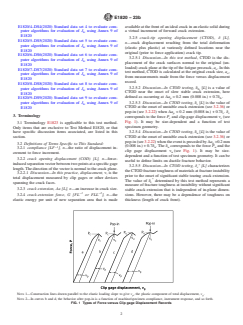
FIG. 1 Types of Force versus Clip gage Displacement Records
the event is preceded by ∆a >0.2 mm (0.008 in.) + 0.7δ . The δ corresponds to the force P and the clip gage displacement v (see
p u u u u
Fig. 1). It may be size-dependent and a function of test specimen geometry. It can be useful to define limits on ductile fracture
behavior.
3.2.5.5 Discussion—
*
In CTOD testing, δ [L] characterizes the CTOD fracture toughness of materials at fracture instability prior to the onset of
c
*
significant stable tearing crack extension. The value of δ determined by this test method represents a measure of fracture
c
toughness at instability without significant stable crack extension that is independent of in-plane dimensions. However, there may
be a dependence of toughness on thickness (length of crack front).
3.2.6 dial energy, KV [FL]—absorbed energy as indicated by the impact machine encoder or dial indicator, as applicable.
3.2.7 dynamic stress intensity factor, K —The dynamic equivalent of the stress intensity factor K , calculated from J using the
Jd J
equation specified in this test method.
3.2.8 effective thickness, B [L] , n—for side-grooved specimens B = B − (B − B ) /B. This is used for the elastic unloading
e e N
compliance measurement of crack size.
−2
3.2.9 effective yield strength, σ [FL ],n—an assumed value of uniaxial yield strength that represents the influence of plastic
Y
yielding upon fracture test parameters.
3.2.9.1 Discussion—
It is calculated as the average of the 0.2 % offset yield strength σ , and the ultimate tensile strength, σ as follows:
YS TS
σ 1σ
YS TS
σ 5 (1)
Y
3.2.9.2 Discussion—
In estimating σ , influences of testing conditions, such as loading rate and temperature, should be considered.
Y
3.2.9.3 Discussion—
The dynamic effective yield strength, σ , is the dynamic equivalent of the effective yield strength.
Yd
3.2.10 general yield force, P [F]—in an instrumented impact test, applied force corresponding to general yielding of the
gy
specimen ligament. It corresponds to F , as used in Test Method E2298.
gy
−1
3.2.11 J-integral, J [FL ], n—a mathematical expression, a line or surface integral that encloses the crack front from one crack
surface to the other, used to characterize the local stress-strain field around the crack front.
3.2.11.1 Discussion—
The J-integral expression for a two-dimensional crack, in the x-z plane with the crack front parallel to the z-axis, is the line integral
as follows:
E1820 − 23b
]u¯
¯
J 5 Wdy 2 T· ds (2)
* S D
Γ
]x
where:
W = loading work per unit volume or, for elastic bodies, strain energy density,
Γ = path of the integral, that encloses (that is, contains) the crack tip,
ds = increment of the contour path,
T¯ = outward traction vector on ds,
u¯ = displacement vector at ds,
x, y, z = rectangular coordinates, and
]u¯
= rate of work input from the stress field into the area enclosed by Γ.
¯
T· ds
]x
3.2.11.2 Discussion—
The value of J obtained from this equation is taken to be path-independent in test specimens commonly used, but in service
components (and perhaps in test specimens) caution is needed to adequately consider loading interior to Γ such as from rapid
motion of the crack or the service component, and from residual or thermal stress.
3.2.11.3 Discussion—
In elastic (linear or nonlinear) solids, the J-integral equals the crack-extension force, G. (See crack extension force.)
3.2.11.4 Discussion—
In elastic (linear and nonlinear) solids for which the mathematical expression is path independent, the J-integral is equal to the
value obtained from two identical bodies with infinitesimally differing crack areas each subject to stress. The parameter J is the
difference in work per unit difference in crack area at a fixed value of displacement or, where appropriate, at a fixed value of force
(1) .
3.2.11.5 Discussion—
The dynamic equivalent of J is
c
J , with X = order of magnitude of J-integral rate.
cd,X
−1
3.2.12 J [FL ] —The property J determined by this test method characterizes the fracture toughness of materials at fracture
c c
instability prior to the onset of significant stable tearing crack extension. The value of J determined by this test method represents
c
a measure of fracture toughness at instability without significant stable crack extension that is independent of in-plane dimensions;
however, there may be a dependence of toughness on thickness (length of crack front).
−1
3.2.13 J [FL ]—The quantity J determined by this test method measures fracture instability after the onset of significant stable
u u
tearing crack extension. It may be size-dependent and a function of test specimen geometry. It can be useful to define limits on
ductile fracture behavior.
3.2.13.1 Discussion—
The dynamic equivalent of J is J , with X = order of magnitude of J-integral rate.
u ud,X
˙ 21 21
3.2.14 J-integral rate, J FL T —derivative of J with respect to time.
@ #
3.2.15 machine capacity, MC [FL]—maximum available energy of the impact testing machine.
3.2.16 maximum force, P [F]—in an instrumented impact test, maximum value of applied force. It corresponds to F , as used
max m
in Test Method E2298.
3.2.17 net thickness, B [L],n—distance between the roots of the side grooves in side-grooved specimens.
N
3.2.18 original crack size, a [L] , n—the physical crack size at the start of testing.
o
3.2.18.1 Discussion—
In this test method, a is used to denote original crack size estimated from compliance.
oq
3.2.19 original remaining ligament, b [L],n—distance from the original crack front to the back edge of the specimen, that is
o
(b = W − a ).
o o
The boldface numbers in parentheses refer to the list of references at the end of this standard.
E1820 − 23b
3.2.20 physical crack size, a [L] , n—the distance from a reference plane to the observed crack front. This distance may represent
p
an average of several measurements along the crack front. The reference plane depends on the specimen form, and it is normally
taken to be either the boundary, or a plane containing either the load-line or the centerline of a specimen or plate. The reference
plane is defined prior to specimen deformation.
−1 −3/2
3.2.21 plane-strain fracture toughness, J [FL ], K [FL ] , n—the crack-extension resistance under conditions of crack-tip
Ic JIc
plane-strain.
3.2.21.1 Discussion—
For example, in Mode I for slow rates of loading and substantial plastic deformation, plane-strain fracture toughness is the value
−1
of the J-integral designated J [FL ] as measured using the operational procedure (and satisfying all of the qualification
Ic
requirements) specified in this test method, that provides for the measurement of crack-extension resistance near the onset of stable
crack extension.
3.2.21.2 Discussion—
For example, in Mode I for slow rates of loading, plane-strain fracture toughness is the value of the stress intensity designated K
JIc
calculated from J using the equation (and satisfying all of the qualification requirements) specified in this test method, that
Ic
provides for the measurement of crack-extension resistance near the onset of stable crack extension under dominant elastic
conditions (2).
3.2.21.3 Discussion—
The dynamic equivalent of J is J , with X = order of magnitude of J-integral rate.
Ic Icd,X
3.2.22 pop-in, n—a discontinuity in the force versus clip gage displacement record. The record of a pop-in shows a sudden increase
in displacement and, generally a decrease in force. Subsequently, the displacement and force increase to above their respective
values at pop-in.
3.2.23 R-curve or J-R curve, n—a plot of crack extension resistance as a function of stable crack extension, ∆a or ∆a .
p e
3.2.23.1 Discussion—
In this test method, the J-R curve is a plot of the far-field J-integral versus the physical crack extension, ∆a . It is recognized that
p
the far-field value of J may not represent the stress-strain field local to a growing crack.
3.2.24 remaining ligament, b [L], n—distance from the physical crack front to the back edge of the specimen, that is (b = W − a ).
p
3.2.25 specimen center of pin hole distance, H* [L], n—the distance between the center of the pin holes on a pin-loaded specimen.
3.2.26 specimen gage length, d [L], n—the distance between the points of displacement measure (for example, clip gage, gage
length).
3.2.27 specimen span, S [L], n—the distance between specimen supports.
3.2.28 specimen thickness, B [L], n—the side-to-side dimension of the specimen being tested.
3.2.29 specimen width, W [L], n—a physical dimension on a test specimen measured from a reference position such as the front
edge in a bend specimen or the load-line in the compact specimen to the back edge of the specimen.
3.2.30 stable crack extension [L], n—a displacement-controlled crack extension beyond the stretch-zone width (see 3.2.34). The
extension stops when the applied displacement is held constant.
3.2.31 strain rate, ε—derivative of strain ε with respect to time.
˙
−3/2
3.2.32 stress-intensity factor, K, K , K , K , K , K , K [FL ],n—the magnitude of the ideal-crack-tip stress field (stress-field
1 2 3 I II III
singularity) for a particular mode in a homogeneous, linear-elastic body.
3.2.32.1 Discussion—
Values of K for the Modes 1, 2, and 3 are given by the following equations:
lim 1/2
K 5 σ 2πr (3)
@ ~ ! #
1 r→0 yy
E1820 − 23b
lim 1/2
K 5 τ 2πr (4)
@ ~ ! #
2 r→0 xy
lim 1/2
K 5 τ 2πr (5)
@ ~ ! #
3 r→0 yz
where r = distance directly forward from the crack tip to a location where the significant stress is calculated.
3.2.32.2 Discussion—
In this test method, Mode 1 or Mode I is assumed. See Terminology E1823 for definition of mode.
-3/2 -1
3.2.33 stress-intensity factor rate, K˙ [FL T ]—derivative of K with respect to time.
3.2.34 stretch-zone width, SZW [L], n—the length of crack extension that occurs during crack-tip blunting, for example, prior to
the onset of unstable brittle crack extension, pop-in, or slow stable crack extension. The SZW is in the same plane as the original
(unloaded) fatigue precrack and refers to an extension beyond the original crack size.
3.2.35 time to fracture, t [T]—time corresponding to specimen fracture.
f
3.2.36 unstable crack extension [L], n—an abrupt crack extension that occurs with or without prior stable crack extension in a
standard test specimen under crosshead or clip gage displacement control.
3.3 Symbols:
3.3.1 t [T]—time corresponding to the onset of crack propagation.
i
-1
3.3.2 v [LT ]—in an instrumented impact test, striker velocity at impact.
3.3.3 W [FL]—in an instrumented impact test, absorbed energy at maximum force.
m
3.3.4 W [FL]—in an instrumented impact test, total absorbed energy calculated from the complete force/displacement test record.
t
3.3.5 W [FL]—in an instrumented impact test, available impact energy.
4. Summary of Test Method
4.1 The objective of this test method is to load a fatigue precracked test specimen to induce either or both of the following
responses (1) unstable crack extension, including significant pop-in, referred to as “fracture instability” in this test method; (2)
stable crack extension, referred to as “stable tearing” in this test method. Fracture instability results in a single point-value of
fracture toughness determined at the point of instability. Stable tearing results in a continuous fracture toughness versus
crack-extension relationship (R-curve) from which significant point-values may be determined. Stable tearing interrupted by
fracture instability results in an R-curve up to the point of instability.
4.2 This test method requires continuous measurement of force versus load-line displacement or crack mouth opening
displacement, or both. If any stable tearing response occurs, then an R-curve is developed and the amount of slow-stable crack
extension shall be measured.
4.3 Two alternative procedures for measuring crack extension are presented, the basic procedure and the resistance curve
procedure. The basic procedure involves physical marking of the crack advance and multiple specimens used to develop a plot
from which a single point initiation toughness value can be evaluated. The resistance curve procedure is an elastic-compliance
method where multiple points are determined from a single specimen. In the latter case, high precision of signal resolution is
required. These data can also be used to develop an R-curve. Other procedures for measuring crack extension are allowed.
4.4 The commonality of instrumentation and recommended testing procedure contained herein permits the application of data to
more than one method of evaluating fracture toughness. Annex A4 and Annex A6 – Annex A11 define the various data treatment
options that are available, and these should be reviewed to optimize data transferability.
4.5 Data that are generated following the procedures and guidelines contained in this test method are labeled qualified data. Data
that meet the size criteria in Annex A4 and Annex A6 – Annex A11 are insensitive to in-plane dimensions.
E1820 − 23b
4.6 Supplementary information about the background of this test method and rationale for many of the technical requirements of
this test method are contained in (3). The formulas presented in this test method are applicable over the range of crack size and
specimen sizes within the scope of this test method.
5. Significance and Use
5.1 Assuming the presence of a preexisting, sharp, fatigue crack, the material fracture toughness values identified by this test
method characterize its resistance to: (1) fracture of a stationary crack, (2) fracture after some stable tearing, (3) stable tearing
onset, and (4) sustained stable tearing. This test method is particularly useful when the material response cannot be anticipated
before the test. Application of procedures in Test Method E1921 is recommended for testing ferritic steels that undergo cleavage
fracture in the ductile-to-brittle transition.
5.1.1 These fracture toughness values may serve as a basis for material comparison, selection, and quality assurance. Fracture
toughness can be used to rank materials within a similar yield strength range.
5.1.2 These fracture toughness values may serve as a basis for structural flaw tolerance assessment. Awareness of differences that
may exist between laboratory test and field conditions is required to make proper flaw tolerance assessment.
5.2 The following cautionary statements are based on some observations.
5.2.1 Particular care must be exercised in applying to structural flaw tolerance assessment the fracture toughness value associated
with fracture after some stable tearing has occurred. This response is characteristic of ferritic steel in the transition regime. This
response is especially sensitive to material inhomogeneity and to constraint variations that may be induced by planar geometry,
thickness differences, mode of loading, and structural details.
5.2.2 The J-R curve from bend-type specimens recommended by this test method (SE(B), C(T), and DC(T)) has been observed
to be conservative with respect to results from tensile loading configurations.
5.2.3 The values of δ , δ , J , and J may be affected by specimen dimensions.
c u c u
6. Apparatus
6.1 Apparatus is required for measurement of applied force, load-line displacement, and crack-mouth opening displacement. Force
versus load-line displacement and force versus crack-mouth opening displacement may be recorded digitally for processing by
computer or autographically with an x-y plotter. Test fixtures for each specimen type are described in the applicable Annex.
6.2 Displacement Gages:
6.2.1 Displacement measurements are needed for the following purposes: to evaluate J from the area under the force versus
load-line displacement record, CTOD from the force versus crack-mouth opening displacement record and, for the elastic
compliance method, to infer crack extension, ∆a , from elastic compliance calculations.
p
6.2.2 The recommended displacement gage has a working range of not more than twice the displacement expected during the test.
When the expected displacement is less than 3.75 mm (0.15 in.), the gage recommended in Fig. 2 may be used. When a greater
working range is needed, an enlarged gage such as the one shown in Fig. 3 is recommended. Accuracy shall be within 61 % of
the full working range. In calibration, the maximum deviation of the individual data points from a fit (linear or curve) to the data
shall be less than 60.2 % of the working range of the gage when using the elastic compliance method and 61 % otherwise. Knife
edges are required for seating the gage. Parallel alignment of the knife edges shall be maintained to within 1°. Direct methods for
measuring load-line displacement are described in Refs (3-6).
6.2.2.1 Gage Attachment Methods—The specimen shall be provided with a pair of accurately machined knife edges that support
the gage arms and serve as the displacement reference points. These knife edges can be machined integral with the specimen or
they may be attached separately. Experience has shown that razor blades serve as effective attachable knife edges. The knife edges
shall be positively attached to the specimen to prevent shifting of the knife edges during the test method. Experience has shown
that machine screws or spot welds are satisfactory attachment methods.
6.2.3 For the elastic compliance method, the recommended signal resolution for displacement should be at least 1 part in 32 000
E1820 − 23b
FIG. 2 Double-Cantilever Clip-In Displacement gage Mounted by Means of Integral Knife Edges
NOTE 1—All dimensions are in millimeters.
FIG. 3 Clip Gage Design for 8.0 mm (0.3 in.)
and More Working Range
E1820 − 23b
of the transducer signal range, and signal stability should be 64 parts in 32 000 of the transducer signal range measured over a
10-min period. Signal noise should be less than 62 parts in 32 000 of the transducer signal range.
6.2.4 Gages other than those recommended in 6.2.2 are permissible if the required accuracy and precision can be met or exceeded.
6.3 Force Transducers:
6.3.1 Testing is performed in a testing machine conforming to the requirements of Practices E4. Applied force may be measured
by any force transducer capable of being recorded continuously. Accuracy of force measurements shall be within 61 % of the
working range. In calibration, the maximum deviation of individual data points from a fit to the data shall be less than 60.2 %
of the calibrated range of the transducer when using elastic compliance, and 61 % otherwise.
6.3.2 For the elastic compliance method, the signal resolution on force should be at least 1 part in 4000 of the transducer signal
range and signal stability should be 64 parts in 4000 of the transducer signal range measured over a 10-min period. Recommended
maximum signal noise should be less than 62 parts in 4000 of the transducer signal range.
6.4 System Verification—It is recommended that the performance of the force and displacement measuring systems be verified
before beginning a series of continuous tests. Calibration accuracy of displacement transducers shall be verified with due
consideration for the temperature and environment of the test. Force calibrations shall be conducted periodically and documented
in accordance with the latest revision of Practices E4.
6.5 Fixtures:
6.5.1 Bend-Test Fixture—The general principles of the bend-test fixture are illustrated in Fig. 4. This fixture is designed to
minimize frictional effects by allowing the support rollers to rotate and move apart slightly as the specimen is loaded, thus
permitting rolling contact. Thus, the support rollers are allowed limited motion along plane surfaces parallel to the notched side
of the specimen, but are initially positively positioned against stops that set the span length and are held in place by low-tension
springs (such as rubber bands). Fixtures and rolls shall be made of high hardness (greater than 40 HRC) steels.
6.5.2 Tension Testing Clevis:
6.5.2.1 A loading clevis suitable for testing compact specimens is shown in Fig. 5. Both ends of the specimen are held in such
a clevis and loaded through pins, in order to allow rotation of the specimen during testing. In order to provide rolling contact
between the loading pins and the clevis holes, these holes are provided with small flats on the loading surfaces. Other clevis designs
may be used if it can be demonstrated that they will accomplish the same result as the design shown. Clevises and pins should
be fabricated from steels of sufficient strength (greater than 40 HRC) to elastically resist indentation of the clevises or pins.
6.5.2.2 The critical tolerances and suggested proportions of the clevis and pins are given in Fig. 5. These proportions are based
on specimens having W/B = 2 for B > 12.7 mm (0.5 in.) and W/B = 4 for B ≤ 12.7 mm. If a 1930-MPa (280 000-psi) yield strength
FIG. 4 Bend Test Fixture Design
E1820 − 23b
NOTE 1—Corners may be removed as necessary to accommodate the clip gage.
FIG. 5 Tension Testing Clevis Design
maraging steel is used for the clevis and pins, adequate strength will be obtained. If lower-strength grip material is used, or if
substantially larger specimens are required at a given σ /E ratio, then heavier grips will be required. As indicated in Fig. 5 the
YS
clevis corners may be cut off sufficiently to accommodate seating of the clip gage in specimens less than 9.5 mm (0.375 in.) thick.
6.5.2.3 Careful attention should be given to achieving good alignment through careful machining of all auxiliary gripping fixtures.
7. Specimen Size, Configuration, and Preparation
7.1 Specimen Configurations—The configurations of the standard specimens are shown in Annex A1 – Annex A3.
7.2 Crack Plane Orientation—The crack plane orientation shall be considered in preparing the test specimen. This is discussed
in Terminology E1823.
7.3 Alternative Specimens—In certain cases, it may be desirable to use specimens having W/B ratios other than two. Suggested
alternative proportions for the single-edge bend specimen are 1 ≤ W/B ≤ 4 and for the compact (and disk shaped compact) specimen
are 2 ≤ W/B ≤ 4. However, any thickness can be used as long as the qualification requirements are met.
7.4 Specimen Precracking—All specimens shall be precracked in fatigue. Experience has shown that it is impractical to obtain a
reproducibly sharp, narrow machined notch that will simulate a natural crack well enough to provide a satisfactory fracture
toughness test result. The most effective artifice for this purpose is a narrow notch from which extends a comparatively short
fatigue crack, called the precrack. (A fatigue precrack is produced by cyclically loading the notched specimen for a number of
4 6
cycles usually between about 10 and 10 depending on specimen size, notch preparation, and stress intensity level.) The
dimensions of the notch and the precrack, and the sharpness of the precrack shall meet certain conditions that can be readily met
with most engineering materials since the fatigue cracking process can be closely controlled when careful attention is given to the
E1820 − 23b
known contributory factors. However, there are some materials that are too brittle to be fatigue-cracked since they fracture as soon
as the fatigue crack initiates; these are outside the scope of the present test method.
7.4.1 Fatigue Crack Starter Notch—Three forms of fatigue crack starter notches are shown in Fig. 6. To facilitate fatigue cracking
at low stress intensity factor levels, the root radius for a straight-through slot terminating in a V-notch should be 0.08 mm (0.003
in.) or less. If a chevron form of notch is used, the root radius may be 0.25 mm (0.010 in.) or less. In the case of a slot tipped with
a hole it will be necessary to provide a sharp stress raiser at the end of the hole. The combination of starter notch and fatigue
precrack shall conform to the requirements of Fig. 7.
7.4.2 Fatigue Crack Size—The crack size (total average length of the crack starter configuration plus the fatigue crack) shall be
between 0.45 W and 0.70 W for J and δ determination.
7.4.3 Equipment—The equipment for fatigue cracking should be such that the stress distribution is uniform through the specimen
thickness; otherwise the crack will not grow uniformly. The stress distribution should also be symmetrical about the plane of the
prospective crack; otherwise the crack may deviate from that plane and the test result can be significantly affected. The K
calibration for the specimen, if it is different from the one given in this test method, shall be known with an uncertainty of less
than 5 %. Fixtures used for precracking should be machined with the same tolerances as those used for testing.
7.4.4 Fatigue Loading Requirements—Allowable fatigue force values are limited to keep the maximum stress intensity applied
during precracking, K , well below the material fracture toughness measured during the subsequent test. The fatigue precracking
MAX
shall be conducted with the specimen fully heat-treated to the condition in which it is to be tested. No intermediate treatments
between precracking and testing are allowed. There are several ways of promoting early crack initiation: (1) by providing a very
sharp notch tip, (2) by using a chevron notch (Fig. 6), (3) by statically preloading the specimen in such a way that the notch tip
is compressed in a direction normal to the intended crack plane (to a force not to exceed P as defined in Annex A1 – Annex A3),
m
and (4) by using a negative fatigue force ratio; for a given maximum fatigue force, the more negative the force ratio, the earlier
crack initiation is likely to occur. The peak compressive force shall not exceed P as defined in Annex A1 – Annex A3.
m
7.4.5 Fatigue Precracking Procedure—Fatigue precracking can be conducted under either force control or displacement control.
If the force cycle is maintained constant, the maximum K and the K range will increase with crack size; if the displacement cycle
is maintained constant, the reverse will happen. The initial value of the maximum fatigue force should be less than P . The
m
specimen shall be accurately located in the loading fixture. Fatigue cycling is then begun, usually with a sinusoidal waveform and
near to the highest practical frequency. There is no known marked frequency effect on fatigue precrack formation up to at least
100 Hz in the absence of adverse environments. The specimen should be carefully monitored until crack initiation is observed on
one side. If crack initiation is not observed on the other side before appreciable growth is observed on the first, then fatigue cycling
should be stopped to try to determine the cause and find a remedy for the unsymmetrical behavior. Sometimes, simply turning the
specimen around in relation to the fixture will solve the problem.
7.4.5.1 The fatigue precrack extension from the machined notch at the nine measurement points along the crack front (see 8.5.3)
shall not be less than 0.5h where h is the notch height, or 0.25 mm, whichever is larger, and the combination of precrack size and
FIG. 6 Fatigue Crack Starter Notch Configurations
E1820 − 23b
NOTE 1—The crack-starter notch shall be centered between the top and bottom specimen edges within 0.005 W.
FIG. 7 Envelope of Fatigue Crack and Crack Starter Notches
sharpened notch length shall not be less than 2.0h. Precracking shall be accomplished in at least two steps. For the first step the
maximum stress intensity factor applied to the specimen shall be limited by:
f
σ
YS
f
K 5 ~0.063σ MPa=m! (6)
S D
MAX T YS
σ
YS
or
f
σ
YS
f
K 5 ~0.4σ ksi=in.!
S D
MAX T YS
σ
YS
where:
f T
σ and σ = the material yield stresses at the fatigue precrack and test temperatures respectively.
YS YS
7.4.5.2 It is generally most effective to use R = P /P = 0.1. The accuracy of the maximum force values shall be known within
MIN MAX
65 %. Precracking should be conducted at as low a K as practical. For some aluminum alloys and high strength steels the
MAX
above K relationship can give very high precracking forces. This is especially true if precracking and testing are conducted
MAX
at the same temperature. It is suggested that the user start with approximately 0.7 K given by the above relationship, and if
MAX
the precrack does not grow after 10 cycles the loading can be incrementally increased until the crack begins to extend. For the
second precracking step, which shall include at least the final 50 % of the fatigue precrack, the maximum stress intensity factor
that may be applied to the specimen shall be given by:
f
σ
YS
K 5 0.6 K (7)
MAX T F
σ
YS
where:
K = K ,K or K depending on the result of the test, and K is calculated from the corresponding J using the relationship
F JQ JQc JQu F F
that:
EJ
F
K 5 (8)
Œ
F
12ν
~ !
7.4.5.3 To transition between steps, intermediate levels of force shedding can be used if desired.
7.5 Side Grooves—Side grooves are highly recommended when the compliance method of crack size prediction is used. The
specimen may also need side grooves to ensure a straight crack front as specified in Annex A4 – Annex A11. The total thickness
reduction shall not exceed 0.25B. A total reduction of 0.20B has been found to work well for many materials. Any included angle
of side groove less than 90° is allowed. Root radius shall be 0.5 mm 6 0.2 mm (0.02 in. 6 0.01 in.). In order to produce nearly
E1820 − 23b
straight fatigue precrack fronts, the precracking should be performed prior to the side-grooving operation. B is the minimum
N
thickness measured at the roots of the side grooves. The root of the side groove should be located along the specimen centerline.
8. Procedure
8.1 Objective and Overview:
8.1.1 The overall objective of the test method is to develop a force-displacement record that can be used to evaluate K, J, or
CTOD. Two procedures can be used: (1) a basic procedure directed toward evaluation of a single K, J, or CTOD value without
the use of crack extension measurement equipment, or (2) a procedure directed toward evaluation of a complete fracture toughness
resistance curve using crack extension measurement equipment. This also includes the evaluation of single-point toughness values.
8.1.2 The basic procedure utilizes a force versus displacement plot and is directed toward obtaining a single fracture toughness
value such as J , K , or δ . Optical crack measurements are utilized to obtain both the initial and final physical crack sizes in this
c JIc c
procedure. Multiple specimens can be used to evaluate J at the initiation of ductile cracking, J or δ .
Ic Ic
8.1.3 The resistance curve procedure utilizes an elastic unloading procedure or equivalent procedure to obtain a J- or CTOD-based
resistance curve from a single specimen. Crack size is measured from compliance in this procedure and verified by post-test optical
crack size measurements. An alternative procedure using the normalization method is presented in Annex A15: Normalization Data
Reduction Technique.
8.1.4 Three or more determinations of the fracture toughness parameter are suggested to ascertain the effects of material and test
system variability. If fracture occurs by cleavage of ferritic steel, the testing and analysis procedures of Test Method E1921 are
recommended.
8.2 System and Specimen Preparation:
8.2.1 Specimen Measurement—Measure the dimensions, B , B, W, H*, and d to the nearest 0.050 mm (0.002 in.) or 0.5 %,
N
whichever is larger.
8.2.2 Specimen Temperature:
8.2.2.1 The temperature of the specimen shall be stable and uniform during the test. Hold the specimen at test temperature 63 °C
for ⁄2 h/25 mm of specimen thickness.
8.2.2.2 Measure the temperature of the specimen during the test to an accuracy of 63 °C, where the temperature is measured on
the specimen surface within W/4 from the crack tip. (See Test Methods E21 for suggestions on temperature measurement.)
8.2.2.3 For the duration of the test, the difference between the indicated temperature and the nominal test temperature shall not
exceed 63 °C.
8.2.2.4 The term “indicated temperature” means the temperature that is indicated by the temperature measuring device using
good-quality pyrometric practice.
NOTE 3—It is recognized that specimen temperature may vary more than the indicated temperature. The permissible indicated temperature variations in
8.2.2.3 are not to be construed as minimizing the importance of good pyrometric practice and precise temperature control. All laboratories should keep
both indicated and specimen temperature variations as small as practicable. It is well recognized, in view of the dependency of fracture toughness of
materials on temperature, that close temperature control is necessary. The limits prescribed represent ranges that are common practice.
8.3 Alignment:
8.3.1 Bend Testing—Set up the bend test fixture so that the line of action of the applied force passes midway between the support
roll centers within 61 % of the distance between the centers. Measure the span to within 60.5 % of the nominal length. Locate
the specimen so that the crack tip is midway between the rolls to within 1 % of the span and square to roll axes within 62°.
8.3.1.1 When the load-line displacement is referenced from the loading jig, there is potential for introduction of error from two
sources. They are the elastic compression of the fixture as the force increases and indentation of the specimen at the loading points.
E1820 − 23b
Direct methods for load-line displacement measurement are described in Refs (4-7). If a remote transducer is used for load-line
displacement measurement, take care to exclude the elastic displacement of the load-train measurement and brinelling
displacements at the load points (8).
8.3.2 Compact Testing—Loading pin friction and eccentricity of loading can lead to errors in fracture toughness determination.
The centerline of the upper and lower loading rods should be coincident within 0.25 mm (0.01 in.). Center the specimen with
respect to the clevis opening within 0.76 mm (0.03 in.). Seat the displacement gage in the knife edges firmly by wiggling the gage
lightly.
8.4 Basic Procedure—Load all specimens under displacement gage or machine crosshead or actuator displacement control. If a
loading rate that exceeds that specified here is desired, please refer to Annex A14 (“Special Requirements for Rapid-Load
J-Integral Fracture Toughness Testing”).
8.4.1 The basic procedure involves loading a specimen to a selected displacement level and determining the amount of crack
extension that occurred during loading.
8.4.2 Load specimens at a constant rate such that the time taken to reach the force P , as defined in Annex A1 – Annex A3, lies
m
between 0.1 and 3 min.
8.4.3 If the test ends by fracture instability, measure the initial crack size and any ductile crack extension by the procedure in 9.
Ductile crack extension may be difficult to distinguish but should be defined on one side by the fatigue precrack and on the other
by the brittle region. Proceed to Section 9 to evaluate fracture toughness in terms of K, J, or CTOD.
8.4.4 If stable tearing occurs, test additional specimens to evaluate an initiation value of the toughness. Use the procedure in 8.5
to evaluate the amount of stable tearing that has occurred and thus determine the displacement levels needed in the additional tests.
Five or more points favorably positioned are required to generate an R curve for evaluating an initiation point. See Annex A9 and
Annex A11 to see how points shall be positioned for evaluating an initiation toughness value.
8.5 Optical Crack Size Measurement:
8.5.1 After unloading the specimen, mark the crack according to one of the following methods. For steels and t
...