

ASTM A268/A268M-24
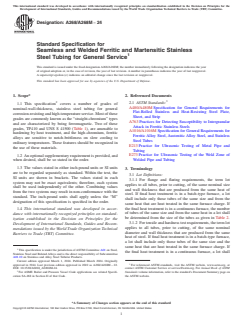
(Specification)Standard Specification for Seamless and Welded Ferritic and Martensitic Stainless Steel Tubing for General Service
General Information
- Abstract
ABSTRACT
This guide covers standard specification for a number of grades of nominal-wall-thickness, welded ferritic and martensitic stainless steel tubing for general corrosion-resisting and high-temperature service. The steel shall conform to the required chemical composition for carbon, manganese, phosphorus, sulfur, silicon, nickel, chromium, molybdenum, aluminum, copper, nitrogen, titanium, and columbium. The number of tubes in a lot heat treated by the continuous process shall be determined from the size of the tubes. The steel shall conform to the following tensile properties: tensile strength, yield strength, and elongation. The tubes shall have a hardness number that will not exceed the prescribed Brinell and Rockwell hardness values. Several mechanical tests shall be conducted, namely: tension test; flaring test (for seamless tubes); flange test (for welded tubes); hardness test; reverse flattening test; intergranular corrosion test; and hydrostatic or nondestructive electric test.
SCOPE
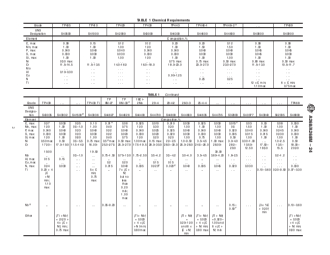
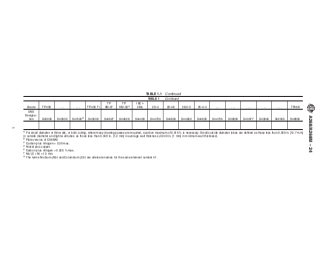
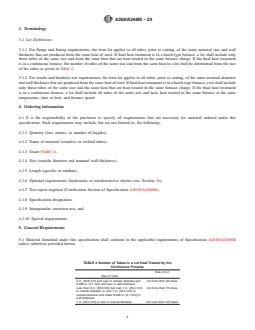
1.1 This specification2 covers a number of grades of nominal-wall-thickness, stainless steel tubing for general corrosion-resisting and high-temperature service. Most of these grades are commonly known as the “straight-chromium” types and are characterized by being ferromagnetic. Two of these grades, TP410 and UNS S 41500 (Table 1), are amenable to hardening by heat treatment, and the high-chromium, ferritic alloys are sensitive to notch-brittleness on slow cooling to ordinary temperatures. These features should be recognized in the use of these materials.
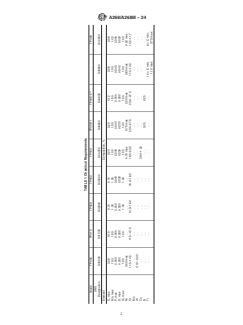
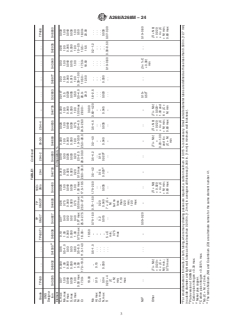
TABLE 1 Continued
Grade
TP439
. . .
. . .
TP430 Ti
TP
XM-27
TP
XM-33A
18Cr-2Mo
29-4
29-4-2
26-3-3
25-4-4
...
. . .
. . .
. . .
. . .
TP468
UNS
Designation
S43035
S43932
S41500B
S43036
S44627
S44626
S44400
S44700
S44800
S44660
S44635
S44735
S32803
S40977
S43940
S42035
S46800
Element
Composition, %
C, max
0.07
0.030
0.05
0.10
0.01A
0.06
0.025
0.010
0.010
0.030
0.025
0.030
0.015C
0.03
0.03
0.08
0.030
Mn, max
1.00
1.00
0.5–1.0
1.00
0.40
0.75
1.00
0.30
0.30
1.00
1.00
1.00
0.5
1.50
1.00
1.00
1.00
P, max
0.040
0.040
0.03
0.040
0.02
0.040
0.040
0.025
0.025
0.040
0.040
0.040
0.020
0.040
0.040
0.045
0.040
S, max
0.030
0.030
0.03
0.030
0.02
0.020
0.030
0.020
0.020
0.030
0.030
0.030
0.005
0.015
0.015
0.030
0.030
Si, max
1.00
1.00
0.60
1.00
0.40
0.75
1.00
0.20
0.20
1.00
0.75
1.00
0.50
1.00
1.00
1.00
1.00
Ni
0.50 max
0.50
3.5–5.5
0.75 max
0.5D max
0.50 max
1.00 max
0.15 max
2.0–2.5
1.0–3.50
3.5–4.5
1.00 max
3.0–4.0
0.30–1.00
. . .
1.0–2.5
0.50
Cr
17.00–
17.0–19.0
11.5–14.0
16.00–
25.0–27.5
25.0–27.0
17.5–19.5
28.0–30.0
28.0–30.0
25.0–28.0
24.5–26.0
28.00–
28.0–
29.0
10.50–
12.50
17.50–
18.50
13.5–
15.5
18.00–
20.00
19.00
19.50
30.00
Mo
...
...
0.5–1.0
...
0.75–1.50
0.75–1.50
1.75–2.50
3.5–4.2
3.5–4.2
3.0–4.0
3.5–4.5
3.60–4.20
1.8–2.5
. . .
. . .
0.2–1.2
. . .
Al, max
0.15
0.15
. . .
...
...
...
...
...
...
...
...
...
. . .
. . .
. . .
. . .
. . .
Cu, max
...
...
. . .
...
0.2
0.20
...
0.15
0.15
...
...
...
. . .
. . .
. . .
. . .
. . .
N, max
0.04
0.030
. . .
...
0.015
0.040
0.035
0.020E
0.020E
0.040
0.035
0.045
0.020
0.030
. . . ...
- Status
- Published
- Publication Date
- 29-Feb-2024
- Technical Committee
- A01 - Steel, Stainless Steel and Related Alloys
- Drafting Committee
- A01.10 - Stainless and Alloy Steel Tubular Products
Buy Documents
ASTM A268/A268M-24 - Standard Specification for Seamless and Welded Ferritic and Martensitic Stainless Steel Tubing for General Service
REDLINE ASTM A268/A268M-24 - Standard Specification for Seamless and Welded Ferritic and Martensitic Stainless Steel Tubing for General Service
Overview
ASTM A268/A268M-24 is the internationally recognized standard specification for seamless and welded ferritic and martensitic stainless steel tubing intended for general service applications, especially where corrosion resistance and elevated temperature capability are required. Issued by ASTM International, this standard covers a range of grades, commonly referred to as “straight-chromium” types, which are primarily ferromagnetic and, in specific cases, amenable to hardening by heat treatment.
The specification details chemical composition, mechanical properties, permissible dimensional variations, and required mechanical and corrosion tests for both seamless and welded stainless steel tubes. These tubes are widely used in applications demanding a robust combination of corrosion resistance and strength, from general industrial processes to high-temperature environments.
Key Topics
Material Grades: Includes multiple ferritic and martensitic stainless steel grades, such as TP405, TP410, TP429, TP430, TP446, and others, each with defined chemical composition limits for elements like carbon, manganese, chromium, nickel, molybdenum, and titanium.
Manufacture and Processing: Tubing is manufactured using seamless or welded processes, without the addition of filler metal. Final heat treatment is specified to ensure required mechanical properties based on grade.
Mechanical Properties:
- Tensile Strength & Yield Strength: Minimum values are set for each grade.
- Elongation: Requirements ensure ductility.
- Hardness: Maximum Brinell and Rockwell hardness values are prescribed.
Dimensional Tolerances: Detailed permissible variations for outside diameter, wall thickness, and length are provided based on tube size and specification order.
Testing and Inspection:
- Tension, Hardness, and Elongation Testing: Necessary for quality verification.
- Flaring and Flange Tests: Assess formability for seamless and welded tubes, respectively.
- Reverse Flattening Test: Applies to welded tubes to check weld integrity.
- Intergranular Corrosion Test: Optional per order.
- Hydrostatic or Nondestructive Electric Test: Mandatory for every tube to verify pressure containment or identify flaws.
Supplementary Requirements: Additional provisions, such as pneumatic tests and enhanced ultrasonic inspections for welded joints, can be specified for certain critical applications.
Applications
The stainless steel tubing defined under ASTM A268/A268M-24 is designed for a wide range of general services where corrosion and heat resistance are critical. Typical applications include:
- Chemical and petrochemical processing systems
- Heat exchangers and condensers
- Power generation, including superheaters and boilers
- Automotive exhaust systems
- General engineering and structural uses where stainless steel's mechanical and corrosion properties provide clear benefits
The flexibility to specify optional supplementary requirements makes this standard suitable for both routine and specialized industrial environments.
Related Standards
For the effective application of ASTM A268/A268M-24, familiarity with related ASTM standards is recommended, including:
- ASTM A480/A480M: General requirements for flat-rolled stainless and heat-resisting steel plate, sheet, and strip
- ASTM A1016/A1016M: General requirements for ferritic alloy steel, austenitic alloy steel, and stainless steel tubes
- ASTM A763: Practices for detecting susceptibility to intergranular attack in ferritic stainless steels
- ASTM E213: Practice for ultrasonic testing of metal pipe and tubing
- ASTM E273: Practice for ultrasonic testing of the weld zone of welded pipe and tubing
These referenced documents provide critical testing and quality assurance methods that underpin the reliability and safety of stainless steel tubes in demanding service conditions.
Keywords: ASTM A268, ferritic stainless steel tubing, martensitic stainless steel tube, seamless steel tube, welded steel tube, corrosion resistance, high-temperature tubing, industrial stainless steel standards
Relations
- Effective Date
- 01-Mar-2024
- Effective Date
- 01-Mar-2024
- Effective Date
- 01-Mar-2024
- Effective Date
- 01-Mar-2024
- Effective Date
- 01-Mar-2024
- Effective Date
- 01-Mar-2024
- Effective Date
- 01-Mar-2024
Buy Documents
ASTM A268/A268M-24 - Standard Specification for Seamless and Welded Ferritic and Martensitic Stainless Steel Tubing for General Service
REDLINE ASTM A268/A268M-24 - Standard Specification for Seamless and Welded Ferritic and Martensitic Stainless Steel Tubing for General Service
Get Certified
Connect with accredited certification bodies for this standard

Institut za varilstvo d.o.o. (Welding Institute)
Slovenia's leading welding institute since 1952. ISO 3834, EN 1090, pressure equipment certification, NDT personnel, welder qualification. Only IIW Au
Sponsored listings
Frequently Asked Questions
ASTM A268/A268M-24 is a technical specification published by ASTM International. Its full title is "Standard Specification for Seamless and Welded Ferritic and Martensitic Stainless Steel Tubing for General Service". This standard covers: ABSTRACT This guide covers standard specification for a number of grades of nominal-wall-thickness, welded ferritic and martensitic stainless steel tubing for general corrosion-resisting and high-temperature service. The steel shall conform to the required chemical composition for carbon, manganese, phosphorus, sulfur, silicon, nickel, chromium, molybdenum, aluminum, copper, nitrogen, titanium, and columbium. The number of tubes in a lot heat treated by the continuous process shall be determined from the size of the tubes. The steel shall conform to the following tensile properties: tensile strength, yield strength, and elongation. The tubes shall have a hardness number that will not exceed the prescribed Brinell and Rockwell hardness values. Several mechanical tests shall be conducted, namely: tension test; flaring test (for seamless tubes); flange test (for welded tubes); hardness test; reverse flattening test; intergranular corrosion test; and hydrostatic or nondestructive electric test. SCOPE 1.1 This specification2 covers a number of grades of nominal-wall-thickness, stainless steel tubing for general corrosion-resisting and high-temperature service. Most of these grades are commonly known as the “straight-chromium” types and are characterized by being ferromagnetic. Two of these grades, TP410 and UNS S 41500 (Table 1), are amenable to hardening by heat treatment, and the high-chromium, ferritic alloys are sensitive to notch-brittleness on slow cooling to ordinary temperatures. These features should be recognized in the use of these materials. TABLE 1 Continued Grade TP439 . . . . . . TP430 Ti TP XM-27 TP XM-33A 18Cr-2Mo 29-4 29-4-2 26-3-3 25-4-4 ... . . . . . . . . . . . . TP468 UNS Designation S43035 S43932 S41500B S43036 S44627 S44626 S44400 S44700 S44800 S44660 S44635 S44735 S32803 S40977 S43940 S42035 S46800 Element Composition, % C, max 0.07 0.030 0.05 0.10 0.01A 0.06 0.025 0.010 0.010 0.030 0.025 0.030 0.015C 0.03 0.03 0.08 0.030 Mn, max 1.00 1.00 0.5–1.0 1.00 0.40 0.75 1.00 0.30 0.30 1.00 1.00 1.00 0.5 1.50 1.00 1.00 1.00 P, max 0.040 0.040 0.03 0.040 0.02 0.040 0.040 0.025 0.025 0.040 0.040 0.040 0.020 0.040 0.040 0.045 0.040 S, max 0.030 0.030 0.03 0.030 0.02 0.020 0.030 0.020 0.020 0.030 0.030 0.030 0.005 0.015 0.015 0.030 0.030 Si, max 1.00 1.00 0.60 1.00 0.40 0.75 1.00 0.20 0.20 1.00 0.75 1.00 0.50 1.00 1.00 1.00 1.00 Ni 0.50 max 0.50 3.5–5.5 0.75 max 0.5D max 0.50 max 1.00 max 0.15 max 2.0–2.5 1.0–3.50 3.5–4.5 1.00 max 3.0–4.0 0.30–1.00 . . . 1.0–2.5 0.50 Cr 17.00– 17.0–19.0 11.5–14.0 16.00– 25.0–27.5 25.0–27.0 17.5–19.5 28.0–30.0 28.0–30.0 25.0–28.0 24.5–26.0 28.00– 28.0– 29.0 10.50– 12.50 17.50– 18.50 13.5– 15.5 18.00– 20.00 19.00 19.50 30.00 Mo ... ... 0.5–1.0 ... 0.75–1.50 0.75–1.50 1.75–2.50 3.5–4.2 3.5–4.2 3.0–4.0 3.5–4.5 3.60–4.20 1.8–2.5 . . . . . . 0.2–1.2 . . . Al, max 0.15 0.15 . . . ... ... ... ... ... ... ... ... ... . . . . . . . . . . . . . . . Cu, max ... ... . . . ... 0.2 0.20 ... 0.15 0.15 ... ... ... . . . . . . . . . . . . . . . N, max 0.04 0.030 . . . ... 0.015 0.040 0.035 0.020E 0.020E 0.040 0.035 0.045 0.020 0.030 . . . ...
ABSTRACT This guide covers standard specification for a number of grades of nominal-wall-thickness, welded ferritic and martensitic stainless steel tubing for general corrosion-resisting and high-temperature service. The steel shall conform to the required chemical composition for carbon, manganese, phosphorus, sulfur, silicon, nickel, chromium, molybdenum, aluminum, copper, nitrogen, titanium, and columbium. The number of tubes in a lot heat treated by the continuous process shall be determined from the size of the tubes. The steel shall conform to the following tensile properties: tensile strength, yield strength, and elongation. The tubes shall have a hardness number that will not exceed the prescribed Brinell and Rockwell hardness values. Several mechanical tests shall be conducted, namely: tension test; flaring test (for seamless tubes); flange test (for welded tubes); hardness test; reverse flattening test; intergranular corrosion test; and hydrostatic or nondestructive electric test. SCOPE 1.1 This specification2 covers a number of grades of nominal-wall-thickness, stainless steel tubing for general corrosion-resisting and high-temperature service. Most of these grades are commonly known as the “straight-chromium” types and are characterized by being ferromagnetic. Two of these grades, TP410 and UNS S 41500 (Table 1), are amenable to hardening by heat treatment, and the high-chromium, ferritic alloys are sensitive to notch-brittleness on slow cooling to ordinary temperatures. These features should be recognized in the use of these materials. TABLE 1 Continued Grade TP439 . . . . . . TP430 Ti TP XM-27 TP XM-33A 18Cr-2Mo 29-4 29-4-2 26-3-3 25-4-4 ... . . . . . . . . . . . . TP468 UNS Designation S43035 S43932 S41500B S43036 S44627 S44626 S44400 S44700 S44800 S44660 S44635 S44735 S32803 S40977 S43940 S42035 S46800 Element Composition, % C, max 0.07 0.030 0.05 0.10 0.01A 0.06 0.025 0.010 0.010 0.030 0.025 0.030 0.015C 0.03 0.03 0.08 0.030 Mn, max 1.00 1.00 0.5–1.0 1.00 0.40 0.75 1.00 0.30 0.30 1.00 1.00 1.00 0.5 1.50 1.00 1.00 1.00 P, max 0.040 0.040 0.03 0.040 0.02 0.040 0.040 0.025 0.025 0.040 0.040 0.040 0.020 0.040 0.040 0.045 0.040 S, max 0.030 0.030 0.03 0.030 0.02 0.020 0.030 0.020 0.020 0.030 0.030 0.030 0.005 0.015 0.015 0.030 0.030 Si, max 1.00 1.00 0.60 1.00 0.40 0.75 1.00 0.20 0.20 1.00 0.75 1.00 0.50 1.00 1.00 1.00 1.00 Ni 0.50 max 0.50 3.5–5.5 0.75 max 0.5D max 0.50 max 1.00 max 0.15 max 2.0–2.5 1.0–3.50 3.5–4.5 1.00 max 3.0–4.0 0.30–1.00 . . . 1.0–2.5 0.50 Cr 17.00– 17.0–19.0 11.5–14.0 16.00– 25.0–27.5 25.0–27.0 17.5–19.5 28.0–30.0 28.0–30.0 25.0–28.0 24.5–26.0 28.00– 28.0– 29.0 10.50– 12.50 17.50– 18.50 13.5– 15.5 18.00– 20.00 19.00 19.50 30.00 Mo ... ... 0.5–1.0 ... 0.75–1.50 0.75–1.50 1.75–2.50 3.5–4.2 3.5–4.2 3.0–4.0 3.5–4.5 3.60–4.20 1.8–2.5 . . . . . . 0.2–1.2 . . . Al, max 0.15 0.15 . . . ... ... ... ... ... ... ... ... ... . . . . . . . . . . . . . . . Cu, max ... ... . . . ... 0.2 0.20 ... 0.15 0.15 ... ... ... . . . . . . . . . . . . . . . N, max 0.04 0.030 . . . ... 0.015 0.040 0.035 0.020E 0.020E 0.040 0.035 0.045 0.020 0.030 . . . ...
ASTM A268/A268M-24 is classified under the following ICS (International Classification for Standards) categories: 23.040.10 - Iron and steel pipes. The ICS classification helps identify the subject area and facilitates finding related standards.
ASTM A268/A268M-24 has the following relationships with other standards: It is inter standard links to ASTM A268/A268M-22, ASTM A1119/A1119M-23a, ASTM A1098/A1098M-18(2022), ASTM A1012-10(2021), ASTM F1047-17(2023), ASTM A1016/A1016M-23, ASTM F1217-17(2023). Understanding these relationships helps ensure you are using the most current and applicable version of the standard.
ASTM A268/A268M-24 is available in PDF format for immediate download after purchase. The document can be added to your cart and obtained through the secure checkout process. Digital delivery ensures instant access to the complete standard document.
Standards Content (Sample)
This international standard was developed in accordance with internationally recognized principles on standardization established in the Decision on Principles for the
Development of International Standards, Guides and Recommendations issued by the World Trade Organization Technical Barriers to Trade (TBT) Committee.
Designation: A268/A268M − 24
Standard Specification for
Seamless and Welded Ferritic and Martensitic Stainless
Steel Tubing for General Service
This standard is issued under the fixed designation A268/A268M; the number immediately following the designation indicates the year
of original adoption or, in the case of revision, the year of last revision. A number in parentheses indicates the year of last reapproval.
A superscript epsilon (´) indicates an editorial change since the last revision or reapproval.
This standard has been approved for use by agencies of the U.S. Department of Defense.
1. Scope* 2. Referenced Documents
2.1 ASTM Standards:
1.1 This specification covers a number of grades of
A480/A480M Specification for General Requirements for
nominal-wall-thickness, stainless steel tubing for general
Flat-Rolled Stainless and Heat-Resisting Steel Plate,
corrosion-resisting and high-temperature service. Most of these
Sheet, and Strip
grades are commonly known as the “straight-chromium” types
A763 Practices for Detecting Susceptibility to Intergranular
and are characterized by being ferromagnetic. Two of these
Attack in Ferritic Stainless Steels
grades, TP410 and UNS S 41500 (Table 1), are amenable to
A1016/A1016M Specification for General Requirements for
hardening by heat treatment, and the high-chromium, ferritic
Ferritic Alloy Steel, Austenitic Alloy Steel, and Stainless
alloys are sensitive to notch-brittleness on slow cooling to
Steel Tubes
ordinary temperatures. These features should be recognized in
E213 Practice for Ultrasonic Testing of Metal Pipe and
the use of these materials.
Tubing
1.2 An optional supplementary requirement is provided, and E273 Practice for Ultrasonic Testing of the Weld Zone of
Welded Pipe and Tubing
when desired, shall be so stated in the order.
1.3 The values stated in either inch-pound units or SI units
3. Terminology
are to be regarded separately as standard. Within the text, the
3.1 Lot Definitions:
SI units are shown in brackets. The values stated in each
3.1.1 For flange and flaring requirements, the term lot
system may not be exact equivalents; therefore, each system
applies to all tubes, prior to cutting, of the same nominal size
shall be used independently of the other. Combining values
and wall thickness that are produced from the same heat of
from the two systems may result in non-conformance with the
steel. If final heat treatment is in a batch-type furnace, a lot
standard. The inch-pound units shall apply unless the “M”
shall include only those tubes of the same size and from the
designation of this specification is specified in the order.
same heat that are heat treated in the same furnace charge. If
the final heat treatment is in a continuous furnace, the number
1.4 This international standard was developed in accor-
of tubes of the same size and from the same heat in a lot shall
dance with internationally recognized principles on standard-
be determined from the size of the tubes as given in Table 2.
ization established in the Decision on Principles for the
3.1.2 For tensile and hardness test requirements, the term lot
Development of International Standards, Guides and Recom-
applies to all tubes, prior to cutting, of the same nominal
mendations issued by the World Trade Organization Technical
diameter and wall thickness that are produced from the same
Barriers to Trade (TBT) Committee.
heat of steel. If final heat treatment is in a batch-type furnace,
a lot shall include only those tubes of the same size and the
same heat that are heat treated in the same furnace charge. If
This specification is under the jurisdiction of ASTM Committee A01 on Steel,
the final heat treatment is in a continuous furnace, a lot shall
Stainless Steel and Related Alloys and is the direct responsibility of Subcommittee
A01.10 on Stainless and Alloy Steel Tubular Products.
Current edition approved March 1, 2024. Published March 2024. Originally
approved in 1944. Last previous edition approved in 2022 as A268/A268M – 22. For referenced ASTM standards, visit the ASTM website, www.astm.org, or
DOI: 10.1520/A0268_A0268M-24. contact ASTM Customer Service at service@astm.org. For Annual Book of ASTM
For ASME Boiler and Pressure Vessel Code applications see related Specifi- Standards volume information, refer to the standard’s Document Summary page on
cation SA-268 in Section II of that Code. the ASTM website.
*A Summary of Changes section appears at the end of this standard
Copyright © ASTM International, 100 Barr Harbor Drive, PO Box C700, West Conshohocken, PA 19428-2959. United States
A268/A268M − 24
TABLE 1 Chemical Requirements
A
Grade TP405 TP410 TP429 TP430 TP443 TP446–1 TP446–2 . . . TP409
UNS
Designation S40500 S41000 S42900 S43000 S44300 S44600 S44600 S40800 S40900
Element Composition, %
C, max 0.08 0.15 0.12 0.12 0.20 0.20 0.12 0.08 0.08
Mn, max 1.00 1.00 1.00 1.00 1.00 1.50 1.50 1.00 1.00
P, max 0.040 0.040 0.040 0.040 0.040 0.040 0.040 0.045 0.045
S, max 0.030 0.030 0.030 0.030 0.030 0.030 0.030 0.045 0.030
Si, max 1.00 1.00 1.00 1.00 1.00 1.00 1.00 1.00 1.00
Ni 0.50 max . . . . . . . . . 0.75 max 0.75 max 0.50 max 0.80 max 0.50 max
Cr 11.5–14.5 11.5–13.5 14.0–16.0 16.0–18.0 18.0–23.0 23.0–27.0 23.0–27.0 11.5–13.0 10.5–11.7
Mo . . . . . . . . . . . . . . . . . . . . . . . . . . .
Al 0.10–0.30 . . . . . . . . . . . . . . . . . . . . . . . .
Cu . . . . . . . . . . . . 0.90–1.25 . . . . . . . . . . . .
N . . . . . . . . . . . . . . . 0.25 0.25 . . . . . .
Ti . . . . . . . . . . . . . . . . . . . . . 12 × C min; 6 × C min;
1.10 max 0.75 max
A268/A268M − 24
TABLE 1 Continued
TP TP 18Cr-
A
Grade TP439 . . . . . . TP430 Ti XM-27 XM-33 2Mo 29-4 29-4-2 26-3-3 25-4-4 . . . . . . . . . . . . . TP468
UNS
Designa-
B
tion S43035 S43932 S41500 S43036 S44627 S44626 S44400 S44700 S44800 S44660 S44635 S44735 S32803 S40977 S43940 S42035 S46800
Element Composition, %
A C
C, max 0.07 0.030 0.05 0.10 0.01 0.06 0.025 0.010 0.010 0.030 0.025 0.030 0.015 0.03 0.03 0.08 0.030
Mn, max 1.00 1.00 0.5–1.0 1.00 0.40 0.75 1.00 0.30 0.30 1.00 1.00 1.00 0.5 1.50 1.00 1.00 1.00
P, max 0.040 0.040 0.03 0.040 0.02 0.040 0.040 0.025 0.025 0.040 0.040 0.040 0.020 0.040 0.040 0.045 0.040
S, max 0.030 0.030 0.03 0.030 0.02 0.020 0.030 0.020 0.020 0.030 0.030 0.030 0.005 0.015 0.015 0.030 0.030
Si, max 1.00 1.00 0.60 1.00 0.40 0.75 1.00 0.20 0.20 1.00 0.75 1.00 0.50 1.00 1.00 1.00 1.00
D
Ni 0.50 max 0.50 3.5–5.5 0.75 max 0.5 max 0.50 max 1.00 max 0.15 max 2.0–2.5 1.0–3.50 3.5–4.5 1.00 max 3.0–4.0 0.30–1.00 . . . 1.0–2.5 0.50
Cr 17.00– 17.0–19.0 11.5–14.0 16.00– 25.0–27.5 25.0–27.0 17.5–19.5 28.0–30.0 28.0–30.0 25.0–28.0 24.5–26.0 28.00– 28.0– 10.50– 17.50– 13.5– 18.00–
29.0 12.50 18.50 15.5 20.00
19.00 19.50 30.00
Mo . . 0.5–1.0 . 0.75–1.50 0.75–1.50 1.75–2.50 3.5–4.2 3.5–4.2 3.0–4.0 3.5–4.5 3.60–4.20 1.8–2.5 . . . . . . 0.2–1.2 . . .
Al, max 0.15 0.15 . . . . . . . . . . . . . . . . . . . . . . . . . . .
Cu, max . . . . . . 0.2 0.20 . 0.15 0.15 . . . . . . . . . . . . . . . . . .
E E
N, max 0.04 0.030 . . . . 0.015 0.040 0.035 0.020 0.020 0.040 0.035 0.045 0.020 0.030 . . . . . . 0.030
Ti 0.20 + 4 . . . 5 × C . 7 × (C + . . . . . . . . . . . . 0.10–0.60 0.30–0.50 0.07–0.30
(C min; N)
+ N) 0.75 but no
min; max less
1.10 than
max 0.20
min;
1.00
max
G
Nb . . . . . 0.05–0.20 . . . . . . . 0.15– . . . (3 × %C . . . 0.10–0.60
F
0.50 + 0.30)
min
Other (Ti + Nb) (Ti + Nb) (Ti + Nb) (Ti + Nb) (Ti + Nb) (Ti + Nb)
= {0.20 + = 0.020 = = 0.020 = 0.020– = 0.020
4 × (C + + 4 × (C 0.20–1.00 + 4 × (C 1.00 and + 4 × (C
N)} min.; + N) min; and 6 × + N) min; 6 × (C + + N) min;
0.75 max 0.80 max (C + N) 0.80 max N) min 0.80 max
min
A
For small diameter or thin walls, or both, tubing, where many drawing passes are required, a carbon maximum of 0.015 % is necessary. Small outside diameter tubes are defined as those less than 0.500 in. [12.7 mm]
in outside diameter and light wall tubes as those less than 0.049 in. [1.2 mm] in average wall thickness (0.040 in. [1 mm] in minimum wall thickness).
B
Plate version of CA6NM.
C
Carbon plus nitrogen = 0.30 max.
D
Nickel plus copper.
E
Carbon plus nitrogen = 0.025 % max.
F
Nb ⁄(C + N) = 12 min.
G
The terms Niobium (Nb) and Columbium (Cb) are alternate names for the same element number 41.
A268/A268M − 24
TABLE 2 Number of Tubes in a Lot Heat Treated by the
9. Product Analysis
Continuous Process
9.1 An analysis of either one billet or one length of flatrolled
Size of Lot
stock or one tube shall be made from each heat. The chemical
Size of Tube
composition thus determined shall conform to the requirements
2 in. [50.8 mm] and over in outside diameter and not more than 50 tubes
0.200 in. [5.1 mm] and over in wall thickness
specified.
Less than 2 in. [50.8 mm] but over 1 in. [25.4 mm] not more than 75 tubes
in outside diameter or over 1 in. [25.4 mm] in 9.2 The product analysis tolerance of the Chemical Require-
outside diameter and under 0.200 in. [5.1 mm] in
ments Table of A480/A480M shall apply. The product analysis
wall thickness
tolerance is not applicable to the carbon content for material
1 in. [25.4 mm] or less in outside diameter not more than 125 tubes
with a specified maximum carbon of 0.04 % or less.
9.3 If the original test for product analysis fails, retests of
two additional billets, lengths of flat-rolled stock or tubes shall
be made. Both retests for the elements in question shall meet
include all tubes of the same size and heat, heat treated in the
the requirements of the specification; otherwise all remaining
same furnace at the same temperature, time at heat, and furnace
material in the heat or lot shall be rejected or, at the option of
speed.
the producer, each billet or tube may be individually tested for
acceptance. Billets, lengths of flat-rolled stock or tubes which
4. Ordering Information
do not meet the requirements of the specification shall be
rejected.
4.1 It is the responsibility of the purchaser to specify all
requirements that are necessary for material ordered under this
10. Tensile Requirements
specification. Such requirements may include, but are not
limited to, the following:
10.1 The material shall conform to the tensile properties
4.1.1 Quantity (feet, metres, or number of lengths),
prescribed in Tables 3 and 4.
4.1.2 Name of material (seamless or welded tubes),
4.1.3 Grade (Table 1),
11. Hardness Requirements
4.1.4 Size (outside diameter and nominal wall thickness),
11.1 The tubes shall have a hardness number not to exceed
4.1.5 Length (specific or random),
those prescribed in Table 5.
4.1.6 Optional requirements (hydrostatic or nondestructive
electric test, Section 16),
12. Permissible Variations in Dimensions
4.1.7 Test report required (Certification Section of Specifi-
12.1 Variations in outside diameter, wall thickness, and
cation A1016/A1016M),
length from those specified shall not exceed the amounts
4.1.8 Specification designation,
prescribed in Table 6.
4.1.9 Intergranular corrosion test, and
4.1.10 Special requirements.
12.2 The permissible variations in outside diameter given in
Table 6 are not sufficient to provide for ovality in thin-walled
5. General Requirements
tubes, as defined in the Table. In such tubes, the maximum and
minimum diameters at any cross section shall deviate from the
5.1 Material furnished under this specification shall con-
nominal diameter by no more than twice the permissible
form to the applicable requirements of Specification A1016/
variation in outside diameter given in Table 6; however, the
A1016M unless otherwise provided herein.
mean diameter at that cross section must still be within the
given permissible variation.
6. Manufacture
12.3 When the specified w
...
This document is not an ASTM standard and is intended only to provide the user of an ASTM standard an indication of what changes have been made to the previous version. Because
it may not be technically possible to adequately depict all changes accurately, ASTM recommends that users consult prior editions as appropriate. In all cases only the current version
of the standard as published by ASTM is to be considered the official document.
Designation: A268/A268M − 22 A268/A268M − 24
Standard Specification for
Seamless and Welded Ferritic and Martensitic Stainless
Steel Tubing for General Service
This standard is issued under the fixed designation A268/A268M; the number immediately following the designation indicates the year
of original adoption or, in the case of revision, the year of last revision. A number in parentheses indicates the year of last reapproval.
A superscript epsilon (´) indicates an editorial change since the last revision or reapproval.
This standard has been approved for use by agencies of the U.S. Department of Defense.
1. Scope*
1.1 This specification covers a number of grades of nominal-wall-thickness, stainless steel tubing for general corrosion-resisting
and high-temperature service. Most of these grades are commonly known as the “straight-chromium” types and are characterized
by being ferromagnetic. Two of these grades, TP410 and UNS S 41500 (Table 1), are amenable to hardening by heat treatment,
and the high-chromium, ferritic alloys are sensitive to notch-brittleness on slow cooling to ordinary temperatures. These features
should be recognized in the use of these materials.
1.2 An optional supplementary requirement is provided, and when desired, shall be so stated in the order.
1.3 The values stated in either inch-pound units or SI units are to be regarded separately as standard. Within the text, the SI units
are shown in brackets. The values stated in each system may not be exact equivalents; therefore, each system shall be used
independently of the other. Combining values from the two systems may result in non-conformance with the standard. The
inch-pound units shall apply unless the “M” designation of this specification is specified in the order.
1.4 This international standard was developed in accordance with internationally recognized principles on standardization
established in the Decision on Principles for the Development of International Standards, Guides and Recommendations issued
by the World Trade Organization Technical Barriers to Trade (TBT) Committee.
2. Referenced Documents
2.1 ASTM Standards:
A480/A480M Specification for General Requirements for Flat-Rolled Stainless and Heat-Resisting Steel Plate, Sheet, and Strip
A763 Practices for Detecting Susceptibility to Intergranular Attack in Ferritic Stainless Steels
A1016/A1016M Specification for General Requirements for Ferritic Alloy Steel, Austenitic Alloy Steel, and Stainless Steel
Tubes
E213 Practice for Ultrasonic Testing of Metal Pipe and Tubing
E273 Practice for Ultrasonic Testing of the Weld Zone of Welded Pipe and Tubing
This specification is under the jurisdiction of ASTM Committee A01 on Steel, Stainless Steel and Related Alloys and is the direct responsibility of Subcommittee A01.10
on Stainless and Alloy Steel Tubular Products.
Current edition approved May 1, 2022March 1, 2024. Published June 2022March 2024. Originally approved in 1944. Last previous edition approved in 20202022 as
A268/A268M – 20.A268/A268M – 22. DOI: 10.1520/A0268_A0268M-22.10.1520/A0268_A0268M-24.
For ASME Boiler and Pressure Vessel Code applications see related Specification SA-268 in Section II of that Code.
For referenced ASTM standards, visit the ASTM website, www.astm.org, or contact ASTM Customer Service at service@astm.org. For Annual Book of ASTM Standards
volume information, refer to the standard’s Document Summary page on the ASTM website.
*A Summary of Changes section appears at the end of this standard
Copyright © ASTM International, 100 Barr Harbor Drive, PO Box C700, West Conshohocken, PA 19428-2959. United States
A268/A268M − 24
TABLE 1 Chemical Requirements
A
Grade TP405 TP410 TP429 TP430 TP443 TP446–1 TP446–2 . . . TP409
UNS
Designation S40500 S41000 S42900 S43000 S44300 S44600 S44600 S40800 S40900
Element Composition, %
C, max 0.08 0.15 0.12 0.12 0.20 0.20 0.12 0.08 0.08
Mn, max 1.00 1.00 1.00 1.00 1.00 1.50 1.50 1.00 1.00
P, max 0.040 0.040 0.040 0.040 0.040 0.040 0.040 0.045 0.045
S, max 0.030 0.030 0.030 0.030 0.030 0.030 0.030 0.045 0.030
Si, max 1.00 1.00 1.00 1.00 1.00 1.00 1.00 1.00 1.00
Ni 0.50 max . . . . . . . . . 0.75 max 0.75 max 0.50 max 0.80 max 0.50 max
Cr 11.5–14.5 11.5–13.5 14.0–16.0 16.0–18.0 18.0–23.0 23.0–27.0 23.0–27.0 11.5–13.0 10.5–11.7
Mo . . . . . . . . . . . . . . . . . . . . . . . . . . .
Al 0.10–0.30 . . . . . . . . . . . . . . . . . . . . . . . .
Cu . . . . . . . . . . . . 0.90–1.25 . . . . . . . . . . . .
N . . . . . . . . . . . . . . . 0.25 0.25 . . . . . .
Ti . . . . . . . . . . . . . . . . . . . . . 12 × C min; 6 × C min;
1.10 max 0.75 max
TABLE 1 Continued
TP TP 18Cr-
A
Grade TP439 . . . . . . TP430 Ti XM-27 XM-33 2Mo 29-4 29-4-2 26-3-3 25-4-4 . . . . . . . . . . . . . TP468
UNS
Designa-
B
tion S43035 S43932 S41500 S43036 S44627 S44626 S44400 S44700 S44800 S44660 S44635 S44735 S32803 S40977 S43940 S42035 S46800
Element Composition, %
A C
C, max 0.07 0.030 0.05 0.10 0.01 0.06 0.025 0.010 0.010 0.030 0.025 0.030 0.015 0.03 0.03 0.08 0.030
Mn, max 1.00 1.00 0.5–1.0 1.00 0.40 0.75 1.00 0.30 0.30 1.00 1.00 1.00 0.5 1.50 1.00 1.00 1.00
P, max 0.040 0.040 0.03 0.040 0.02 0.040 0.040 0.025 0.025 0.040 0.040 0.040 0.020 0.040 0.040 0.045 0.040
S, max 0.030 0.030 0.03 0.030 0.02 0.020 0.030 0.020 0.020 0.030 0.030 0.030 0.005 0.015 0.015 0.030 0.030
Si, max 1.00 1.00 0.60 1.00 0.40 0.75 1.00 0.20 0.20 1.00 0.75 1.00 0.50 1.00 1.00 1.00 1.00
D
Ni 0.50 max 0.50 3.5–5.5 0.75 max 0.5 max 0.50 max 1.00 max 0.15 max 2.0–2.5 1.0–3.50 3.5–4.5 1.00 max 3.0–4.0 0.30–1.00 . . . 1.0–2.5 0.50
Cr 17.00– 17.0–19.0 11.5–14.0 16.00– 25.0–27.5 25.0–27.0 17.5–19.5 28.0–30.0 28.0–30.0 25.0–28.0 24.5–26.0 28.00– 28.0– 10.50– 17.50– 13.5– 18.00–
29.0 12.50 18.50 15.5 20.00
19.00 19.50 30.00
Mo . . 0.5–1.0 . 0.75–1.50 0.75–1.50 1.75–2.50 3.5–4.2 3.5–4.2 3.0–4.0 3.5–4.5 3.60–4.20 1.8–2.5 . . . . . . 0.2–1.2 . . .
Al, max 0.15 0.15 . . . . . . . . . . . . . . . . . . . . . . . . . . .
Cu, max . . . . . . 0.2 0.20 . 0.15 0.15 . . . . . . . . . . . . . . . . . .
E E
N, max 0.04 0.030 . . . . 0.015 0.040 0.035 0.020 0.020 0.040 0.035 0.045 0.020 0.030 . . . . . . 0.030
Ti 0.20 + 4 . . . 5 × C . 7 × (C + . . . . . . . . . . . . 0.10–0.60 0.30–0.50 0.07–0.30
(C min; N)
+ N) 0.75 but no
min; max less
1.10 than
max 0.20
min;
1.00
max
G
Nb . . . . . 0.05–0.20 . . . . . . . 0.15– . . . (3 × %C . . . 0.10–0.60
F
0.50 + 0.30)
min
Other (Ti + Nb) (Ti + Nb) (Ti + Nb) (Ti + Nb) (Ti + Nb) (Ti + Nb)
= {0.20 + = 0.020 = = 0.020 = 0.020– = 0.020
4 × (C + + 4 × (C 0.20–1.00 + 4 × (C 1.00 and + 4 × (C
N)} min.; + N) min; and 6 × + N) min; 6 × (C + + N) min;
0.75 max 0.80 max (C + N) 0.80 max N) min 0.80 max
min
A268/A268M − 24
TABLE 1.1 Continued
TABLE 1 Continued
TP TP 18Cr-
A
Grade TP439 . . . . . . TP430 Ti XM-27 XM-33 2Mo 29-4 29-4-2 26-3-3 25-4-4 . . . . . . . . . . . . . TP468
UNS
Designa-
B
tion S43035 S43932 S41500 S43036 S44627 S44626 S44400 S44700 S44800 S44660 S44635 S44735 S32803 S40977 S43940 S42035 S46800
A
For small diameter or thin walls, or both, tubing, where many drawing passes are required, a carbon maximum of 0.015 % is necessary. Small outside diameter tubes are defined as those less than 0.500 in. [12.7 mm]
in outside diameter and light wall tubes as those less than 0.049 in. [1.2 mm] in average wall thickness (0.040 in. [1 mm] in minimum wall thickness).
B
Plate version of CA6NM.
C
Carbon plus nitrogen = 0.30 max.
D
Nickel plus copper.
E
Carbon plus nitrogen = 0.025 % max.
F
Nb ⁄(C + N) = 12 min.
G
The terms Niobium (Nb) and Columbium (Cb) are alternate names for the same element number 41.
A268/A268M − 24
3. Terminology
3.1 Lot Definitions:
3.1.1 For flange and flaring requirements, the term lot applies to all tubes, prior to cutting, of the same nominal size and wall
thickness that are produced from the same heat of steel. If final heat treatment is in a batch-type furnace, a lot shall include only
those tubes of the same size and from the same heat that are heat treated in the same furnace charge. If the final heat treatment
is in a continuous furnace, the number of tubes of the same size and from the same heat in a lot shall be determined from the size
of the tubes as given in Table 2.
3.1.2 For tensile and hardness test requirements, the term lot applies to all tubes, prior to cutting, of the same nominal diameter
and wall thickness that are produced from the same heat of steel. If final heat treatment is in a batch-type furnace, a lot shall include
only those tubes of the same size and the same heat that are heat treated in the same furnace charge. If the final heat treatment
is in a continuous furnace, a lot shall include all tubes of the same size and heat, heat treated in the same furnace at the same
temperature, time at heat, and furnace speed.
4. Ordering Information
4.1 It is the responsibility of the purchaser to specify all requirements that are necessary for material ordered under this
specification. Such requirements may include, but are not limited to, the following:
4.1.1 Quantity (feet, metres, or number of lengths),
4.1.2 Name of material (seamless or welded tubes),
4.1.3 Grade (Table 1),
4.1.4 Size (outside diameter and nominal wall thickness),
4.1.5 Length (specific or random),
4.1.6 Optional requirements (hydrostatic or nondestructive electric test, Section 16),
4.1.7 Test report required (Certification Section of Specification A1016/A1016M),
4.1.8 Specification designation,
4.1.9 Intergranular corrosion test, and
4.1.10 Special requirements.
5. General Requirements
5.1 Material furnished under this specification shall conform to the applicable requirements of Specification A1016/A1016M
unless otherwise provided herein.
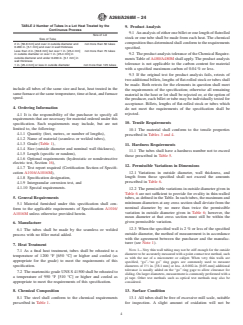
TABLE 2 Number of Tubes in a Lot Heat Treated by the
Continuous Process
Size of Lot
Size of Tube
2 in. [50.8 mm] and over in outside diameter and not more than 50 tubes
0.200 in. [5.1 mm] and over in wall thickness
Less than 2 in. [50.8 mm] but over 1 in. [25.4 mm] not more than 75 tubes
in outside diameter or over 1 in. [25.4 mm] in
outside diameter and under 0.200 in. [5.1 mm] in
wall thickness
1 in. [25.4 mm] or less in outside diameter not more than 125 tubes
A268/A268M − 24
6. Manufacture
6.1 The tubes shall be made by the seamless or welded process with no filler metal added.
7. Heat Treatment
7.1 As a final heat treatment, tubes shall be reheated to a temperature of 1200 °F [650 °C] or higher and cooled (as appropriate
for the grade) to meet the requirements of this specification.
7.2 The martensitic grade UNS S 41500 shall be reheated to a temperature of 950 °F [510 °C] or higher and cooled as appropriate
to meet the requirements of this specification.
8. Chemical Composition
8.1 The steel shall conform to the chemical requirements prescribed in Table 1.
9. Product Analysis
9.1 An analysis of either one billet or one length of flatrolled stock or one tube shall be made from each heat. The chemical
composition thus determined shall conform to the requirements specified.
9.2 The product analysis tolerance of the Chemical Requirements Table of A480/A480M shall apply. The product analysis
tolerance is not applicable to the carbon content for material with a specified maximum carbon of 0.04 % or less.
9.3 If the original test for product analysis fails, retests of two additional billets, lengths of flat-rolled stock or tubes shall be made.
Both retests for the elements in question shall meet the requirements of the specification; otherwise all remaining material in the
heat or lot shall be rejected or, at the option of the producer, each billet or tube may be individually tested for acceptance. Billets,
lengths of flat-rolled stock or tubes which do not meet the requirements of the specification shall be rejected.
10. Tensile Requirements
10.1 The material shall conform to the tensile properties prescribed in Tables 3 and 4.
11. Hardness Requirements
11.1 The tubes shall have a hardness number not to exceed those prescribed in Table 5.
12.
...