

ASTM E2870-19
(Practice)Standard Practice for Evaluating Relative Effectiveness of Antimicrobial Handwashing Formulations using the Palmar Surface and Mechanical Hand Sampling
General Information
- Abstract
SIGNIFICANCE AND USE
5.1 Hand hygiene is important for preventing the spread of many types of infections.
5.2 During routine activities, it is primarily the palmar surface, comprising palms, fingers, and finger pads, of the hands that may become contaminated with transient microorganisms. The contamination could then be transferred to articles touched or handled or to other parts of the body. Palmar contamination is used in Test Method E2784.
5.3 In Test Method E1174, incomplete drying of the experimentally contaminated hands dilutes the applied test product, thus compromising its activity. Application of a smaller volume of the microbial test suspension keeps the soil load to a reasonable level while allowing the hands to become visibly dry prior to application of the test material and reference formulation. These modifications are aimed at producing a better approximation of in-use conditions and a more realistic assessment of the test substance, thus providing a more reliable indication of product performance.
5.4 Unlike Test Methods E1174, E2755, and E2784, this practice enables a direct comparison between two formulations on the same subject. The practice also uses a mechanical scrubbing machine in conjunction with the glove juice technique for more efficient recovery of viable test bacteria from the palms. The mechanical sampling results in greater recovery of bacteria from the palms than conventional recovery methods, such as massaging.
SCOPE
1.1 This practice covers and is designed to determine the relative effectiveness of antimicrobial handwashing agents in reducing transient microorganisms using a controlled handwash.
1.2 Knowledge of microbiological techniques is required for these procedures.
1.3 This practice is used to evaluate topical antimicrobial handwashing formulations.
1.4 Performance of this procedure requires the knowledge of regulations pertaining to the protection of human subjects (21 CFR Parts 50 and 56).
1.5 The values stated in SI units are to be regarded as standard. No other units of measurement are included in this standard.
1.6 This standard does not purport to address all of the safety concerns, if any, associated with its use. It is the responsibility of the user of this standard to establish appropriate safety, health, and environmental practices and determine the applicability of regulatory limitations prior to use. For more specific precautionary statements, see 8.1.
1.7 This international standard was developed in accordance with internationally recognized principles on standardization established in the Decision on Principles for the Development of International Standards, Guides and Recommendations issued by the World Trade Organization Technical Barriers to Trade (TBT) Committee.
- Status
- Published
- Publication Date
- 31-Mar-2019
- Technical Committee
- E35 - Pesticides, Antimicrobials, and Alternative Control Agents
- Drafting Committee
- E35.15 - Antimicrobial Agents
Buy Documents
ASTM E2870-19 - Standard Practice for Evaluating Relative Effectiveness of Antimicrobial Handwashing Formulations using the Palmar Surface and Mechanical Hand Sampling
REDLINE ASTM E2870-19 - Standard Practice for Evaluating Relative Effectiveness of Antimicrobial Handwashing Formulations using the Palmar Surface and Mechanical Hand Sampling
Overview
ASTM E2870-19: Standard Practice for Evaluating Relative Effectiveness of Antimicrobial Handwashing Formulations using the Palmar Surface and Mechanical Hand Sampling is an international standard developed by ASTM International. This practice is designed to assess the relative effectiveness of topical antimicrobial handwashing products in reducing transient microorganisms on the palmar surfaces of adult human hands. It provides a scientifically controlled methodology for comparing two handwash formulations under consistent conditions using mechanical sampling techniques.
Effective hand hygiene remains a critical element in infection prevention and control. ASTM E2870-19 is particularly significant because it allows for direct comparison of two handwashing products on the same subjects, ensuring reliable and reproducible results. The use of a mechanical scrubbing device in conjunction with the glove juice sampling method improves recovery of viable bacteria from the palm, leading to more accurate assessments of antimicrobial efficacy.
Key Topics
Relative Effectiveness Measurement: The standard enables direct, side-by-side comparison of test and reference antimicrobial handwashing formulations on the same individual, reducing inter-subject variability.
Palmar Surface Focus: The method targets the palms, fingers, and finger pads-the areas most prone to contamination during daily activities and most likely to spread infection.
Mechanical Hand Sampling: Utilizes a mechanical scrubber with glove juice technique for efficient and standardized recovery of viable bacteria from the skin surface, resulting in enhanced bacteria collection compared to traditional methods.
Controlled Contamination and Testing: Subjects’ hands are artificially contaminated with a known quantity of Escherichia coli, the performance of the wash formulation is gauged by quantifying remaining bacteria after a single wash.
Human Subject Protection: The practice requires adherence to ethical guidelines, including informed consent and Institutional Review Board (IRB) oversight, per 21 CFR Parts 50 and 56.
Practical Sampling Conditions: Modifications such as applying a smaller inoculum volume ensure the hands are dry before product application, better simulating real-world use scenarios.
Applications
ASTM E2870-19 provides practical value for a range of stakeholders in health, hygiene, and product development sectors:
Product Development and Quality Assurance: Manufacturers of antimicrobial handwash products, soaps, and sanitizers use this standard to compare the bactericidal effectiveness of new formulations versus established benchmarks or competitive products.
Regulatory Compliance: The methodology aligns with international standards for microbial testing and is relevant for meeting regulatory and safety requirements for topical antimicrobial products.
Healthcare Settings: Infection control programs in hospitals and clinics may reference E2870-19 to evaluate or select hand hygiene products, ensuring optimal reduction of transient handborne microorganisms.
Research and Academia: Microbiological laboratories and researchers in hand hygiene and infection prevention can utilize this standard practice for comparative studies and efficacy claims.
Consumer Safety: Ensures that the public has access to handwashing products that have been evaluated for effectiveness in reducing the risk of infection transmission.
Related Standards
For broader context and complementary methodologies, ASTM E2870-19 references and is related to several other standards and regulations:
- ASTM E1174: Test Method for Evaluation of the Effectiveness of Health Care Personnel Handwash Formulations
- ASTM E2784: Test Method for the Paper Towel (Palmar) Method of Hand Contamination
- ASTM E2755: Test Method for Bacteria-Eliminating Effectiveness of Healthcare Personnel Hand Rub Formulations
- ASTM E1054: Test Methods for Evaluation of Inactivators of Antimicrobial Agents
- ASTM E2756: Terminology Relating to Antimicrobial and Antiviral Agents
- AATCC Test Method 147: Antibacterial Assessment of Textile Materials
- 21 CFR Parts 50 and 56: US regulations regarding Protection of Human Subjects and Institutional Review Boards
Keywords: antimicrobial handwash, hand hygiene, palmar contamination, mechanical hand sampling, glove juice technique, infection control, efficacy testing, ASTM E2870-19, topical antimicrobial products, product comparison, Escherichia coli, transient microorganisms.
Relations
- Effective Date
- 01-Apr-2019
- Effective Date
- 01-Nov-2019
- Effective Date
- 01-Apr-2018
- Effective Date
- 01-Oct-2015
- Effective Date
- 01-Oct-2010
- Effective Date
- 01-Jun-2010
- Effective Date
- 01-May-2010
- Effective Date
- 01-Apr-2008
- Effective Date
- 01-Mar-2006
- Effective Date
- 10-May-2002
- Effective Date
- 10-Aug-2000
Buy Documents
ASTM E2870-19 - Standard Practice for Evaluating Relative Effectiveness of Antimicrobial Handwashing Formulations using the Palmar Surface and Mechanical Hand Sampling
REDLINE ASTM E2870-19 - Standard Practice for Evaluating Relative Effectiveness of Antimicrobial Handwashing Formulations using the Palmar Surface and Mechanical Hand Sampling
Get Certified
Connect with accredited certification bodies for this standard

ECOCERT
Organic and sustainability certification.

Eurofins Food Testing Global
Global leader in food, environment, and pharmaceutical product testing.

Intertek Bangladesh
Intertek certification and testing services in Bangladesh.
Sponsored listings
Frequently Asked Questions
ASTM E2870-19 is a standard published by ASTM International. Its full title is "Standard Practice for Evaluating Relative Effectiveness of Antimicrobial Handwashing Formulations using the Palmar Surface and Mechanical Hand Sampling". This standard covers: SIGNIFICANCE AND USE 5.1 Hand hygiene is important for preventing the spread of many types of infections. 5.2 During routine activities, it is primarily the palmar surface, comprising palms, fingers, and finger pads, of the hands that may become contaminated with transient microorganisms. The contamination could then be transferred to articles touched or handled or to other parts of the body. Palmar contamination is used in Test Method E2784. 5.3 In Test Method E1174, incomplete drying of the experimentally contaminated hands dilutes the applied test product, thus compromising its activity. Application of a smaller volume of the microbial test suspension keeps the soil load to a reasonable level while allowing the hands to become visibly dry prior to application of the test material and reference formulation. These modifications are aimed at producing a better approximation of in-use conditions and a more realistic assessment of the test substance, thus providing a more reliable indication of product performance. 5.4 Unlike Test Methods E1174, E2755, and E2784, this practice enables a direct comparison between two formulations on the same subject. The practice also uses a mechanical scrubbing machine in conjunction with the glove juice technique for more efficient recovery of viable test bacteria from the palms. The mechanical sampling results in greater recovery of bacteria from the palms than conventional recovery methods, such as massaging. SCOPE 1.1 This practice covers and is designed to determine the relative effectiveness of antimicrobial handwashing agents in reducing transient microorganisms using a controlled handwash. 1.2 Knowledge of microbiological techniques is required for these procedures. 1.3 This practice is used to evaluate topical antimicrobial handwashing formulations. 1.4 Performance of this procedure requires the knowledge of regulations pertaining to the protection of human subjects (21 CFR Parts 50 and 56). 1.5 The values stated in SI units are to be regarded as standard. No other units of measurement are included in this standard. 1.6 This standard does not purport to address all of the safety concerns, if any, associated with its use. It is the responsibility of the user of this standard to establish appropriate safety, health, and environmental practices and determine the applicability of regulatory limitations prior to use. For more specific precautionary statements, see 8.1. 1.7 This international standard was developed in accordance with internationally recognized principles on standardization established in the Decision on Principles for the Development of International Standards, Guides and Recommendations issued by the World Trade Organization Technical Barriers to Trade (TBT) Committee.
SIGNIFICANCE AND USE 5.1 Hand hygiene is important for preventing the spread of many types of infections. 5.2 During routine activities, it is primarily the palmar surface, comprising palms, fingers, and finger pads, of the hands that may become contaminated with transient microorganisms. The contamination could then be transferred to articles touched or handled or to other parts of the body. Palmar contamination is used in Test Method E2784. 5.3 In Test Method E1174, incomplete drying of the experimentally contaminated hands dilutes the applied test product, thus compromising its activity. Application of a smaller volume of the microbial test suspension keeps the soil load to a reasonable level while allowing the hands to become visibly dry prior to application of the test material and reference formulation. These modifications are aimed at producing a better approximation of in-use conditions and a more realistic assessment of the test substance, thus providing a more reliable indication of product performance. 5.4 Unlike Test Methods E1174, E2755, and E2784, this practice enables a direct comparison between two formulations on the same subject. The practice also uses a mechanical scrubbing machine in conjunction with the glove juice technique for more efficient recovery of viable test bacteria from the palms. The mechanical sampling results in greater recovery of bacteria from the palms than conventional recovery methods, such as massaging. SCOPE 1.1 This practice covers and is designed to determine the relative effectiveness of antimicrobial handwashing agents in reducing transient microorganisms using a controlled handwash. 1.2 Knowledge of microbiological techniques is required for these procedures. 1.3 This practice is used to evaluate topical antimicrobial handwashing formulations. 1.4 Performance of this procedure requires the knowledge of regulations pertaining to the protection of human subjects (21 CFR Parts 50 and 56). 1.5 The values stated in SI units are to be regarded as standard. No other units of measurement are included in this standard. 1.6 This standard does not purport to address all of the safety concerns, if any, associated with its use. It is the responsibility of the user of this standard to establish appropriate safety, health, and environmental practices and determine the applicability of regulatory limitations prior to use. For more specific precautionary statements, see 8.1. 1.7 This international standard was developed in accordance with internationally recognized principles on standardization established in the Decision on Principles for the Development of International Standards, Guides and Recommendations issued by the World Trade Organization Technical Barriers to Trade (TBT) Committee.
ASTM E2870-19 is classified under the following ICS (International Classification for Standards) categories: 71.100.70 - Cosmetics. Toiletries. The ICS classification helps identify the subject area and facilitates finding related standards.
ASTM E2870-19 has the following relationships with other standards: It is inter standard links to ASTM E2870-13, ASTM E2756-19, ASTM E2756-18, ASTM E2784-10(2015), ASTM E2784-10, ASTM E2755-10, ASTM E2756-10, ASTM E1054-08, ASTM E1174-06, ASTM E1054-02, ASTM E1174-00. Understanding these relationships helps ensure you are using the most current and applicable version of the standard.
ASTM E2870-19 is available in PDF format for immediate download after purchase. The document can be added to your cart and obtained through the secure checkout process. Digital delivery ensures instant access to the complete standard document.
Standards Content (Sample)
This international standard was developed in accordance with internationally recognized principles on standardization established in the Decision on Principles for the
Development of International Standards, Guides and Recommendations issued by the World Trade Organization Technical Barriers to Trade (TBT) Committee.
Designation: E2870 − 19
Standard Practice for
Evaluating Relative Effectiveness of Antimicrobial
Handwashing Formulations using the Palmar Surface and
Mechanical Hand Sampling
This standard is issued under the fixed designation E2870; the number immediately following the designation indicates the year of
original adoption or, in the case of revision, the year of last revision.Anumber in parentheses indicates the year of last reapproval.A
superscript epsilon (´) indicates an editorial change since the last revision or reapproval.
1. Scope E1054Test Methods for Evaluation of Inactivators of Anti-
microbial Agents
1.1 This practice covers and is designed to determine the
E1174Test Method for Evaluation of the Effectiveness of
relative effectiveness of antimicrobial handwashing agents in
Health Care Personnel Handwash Formulations
reducing transient microorganisms using a controlled hand-
E2755 Test Method for Determining the Bacteria-
wash.
Eliminating Effectiveness of Healthcare Personnel Hand
1.2 Knowledge of microbiological techniques is required
Rub Formulations Using Hands of Adults
for these procedures.
E2756Terminology Relating toAntimicrobial andAntiviral
1.3 This practice is used to evaluate topical antimicrobial Agents
E2784Test Method for Evaluation of the Effectiveness of
handwashing formulations.
Handwash Formulations Using the Paper Towel (Palmar)
1.4 Performance of this procedure requires the knowledge
Method of Hand Contamination
of regulations pertaining to the protection of human subjects
2.2 Other Standards:
(21 CFR Parts 50 and 56).
AATCC Test Method 147Antibacterial Assessment of Tex-
1.5 The values stated in SI units are to be regarded as
tile Materials: Parallel Streak Method
standard. No other units of measurement are included in this
21 CFR Part 50 Protection of Human Subjects
standard.
21 CFR Part 56Institutional Review Boards
1.6 This standard does not purport to address all of the
3. Terminology
safety concerns, if any, associated with its use. It is the
responsibility of the user of this standard to establish appro-
3.1 Definitions—For definitions of terms used in this
priate safety, health, and environmental practices and deter-
document, see Terminology E2756.
mine the applicability of regulatory limitations prior to use.
3.2 Definitions of Terms Specific to This Standard:
For more specific precautionary statements, see 8.1.
3.2.1 active ingredient, n—a substance added to a formula-
1.7 This international standard was developed in accor-
tion specifically for the inhibition or inactivation of microor-
dance with internationally recognized principles on standard-
ganisms.
ization established in the Decision on Principles for the
3.2.2 reference formulation, n—formulation against which
Development of International Standards, Guides and Recom-
the activity of the test formulation is compared, for example, a
mendations issued by the World Trade Organization Technical
handwash without an active ingredient or a handwash with a
Barriers to Trade (TBT) Committee.
different active ingredient than the test formulation. This
2. Referenced Documents formulation is not considered a standard.
3.2.3 test material, n—a product or formulation which
2.1 ASTM Standards:
incorporates antimicrobial ingredients(s).
3.2.4 test organism, n—anappliedinoculumofanorganism
This practice is under the jurisdiction ofASTM Committee E35 on Pesticides,
Antimicrobials, and Alternative Control Agents and is the direct responsibility of that has characteristics which allow it to be readily identified.
Subcommittee E35.15 on Antimicrobial Agents.
Current edition approved April 1, 2019. Published May 2019. Originally
approved 2013. Last previous edition approved 2013 as E2870–13. DOI: 10.1520/ Available from American Association of Textile Chemists and Colorists
E2870-19. (AATCC), P.O. Box 12215, Research Triangle Park, NC 27709, http://
For referenced ASTM standards, visit the ASTM website, www.astm.org, or www.aatcc.org.
contact ASTM Customer Service at service@astm.org. For Annual Book of ASTM AvailablefromU.S.GovernmentPrintingOfficeSuperintendentofDocuments,
Standards volume information, refer to the standard’s Document Summary page on 732 N. Capitol St., NW, Mail Stop: SDE, Washington, DC 20401, http://
the ASTM website. www.access.gpo.gov.
Copyright © ASTM International, 100 Barr Harbor Drive, PO Box C700, West Conshohocken, PA 19428-2959. United States
E2870 − 19
The test organism is used to simulate a transient topical ganisms. The contamination could then be transferred to
microbial contaminant. It may also be referred to as a marker articlestouchedorhandledortootherpartsofthebody.Palmar
organism, bacterial simulant, or bacterial contaminant. contamination is used in Test Method E2784.
5.3 InTest Method E1174, incomplete drying of the experi-
4. Summary of Practice
mentally contaminated hands dilutes the applied test product,
4.1 This practice uses adult subjects who have provided a
thus compromising its activity. Application of a smaller vol-
written informed consent and whose hands have been deter-
ume of the microbial test suspension keeps the soil load to a
mined to be free from any apparent damage at the time of
reasonable level while allowing the hands to become visibly
participation in the study. Subjects are to refrain from use of
dry prior to application of the test material and reference
any antimicrobials for at least one week prior to the initiation
formulation. These modifications are aimed at producing a
of the test procedure (see 9.3).
better approximation of in-use conditions and a more realistic
assessmentofthetestsubstance,thusprovidingamorereliable
4.2 The test compares the activity of the two handwash
indication of product performance.
formulations simultaneously on the same subject under stan-
dardized and controlled conditions. Hands of the subjects are
5.4 Unlike Test Methods E1174, E2755, and E2784, this
artificially contaminated with Escherichia coli. One hand of
practiceenablesadirectcomparisonbetweentwoformulations
the subject is washed with the reference formulation and the
on the same subject. The practice also uses a mechanical
other with the test formulation. The E. coli cells remaining on
scrubbing machine in conjunction with the glove juice tech-
thehandsarerecoveredbytheglovejuicemethodofsampling
nique for more efficient recovery of viable test bacteria from
using a mechanical scrubber. In other methods, comparisons
thepalms.Themechanicalsamplingresultsingreaterrecovery
between two products are made by testing two equivalent
of bacteria from the palms than conventional recovery
groups of subjects. The objective of this practice is to deter-
methods, such as massaging.
minetherelativedifferencebetweentwoproductstestedonthe
same subjects and not to determine absolute reductions in 6. Apparatus
organism levels. By testing both products at the same time on
6.1 Colony Counter—Anyofseveraltypesmaybeused,for
thesamesubjectswiththesamebacterialinoculum,variability
example, Quebec Colony Counter.
is reduced.
6.2 Incubator—Any incubator capable of maintaining the
4.3 Effectiveness of the test material is determined after a
following temperature: 35 6 2°C.
singlewashbycomparingthenumbersofviabletestorganisms
6.3 Shaker Incubator—Any incubator capable of maintain-
recovered after treatment with it and with the reference
ing the following temperature: 35 6 2°C and capable of
formulation. As an example, a cleanser with an active ingre-
shaking the culture medium at 120 to 140 r/min.
dient (test formulation) can be compared to the cleanser
without an active ingredient (reference formulation) to deter- 6.4 Sterilizer—Any suitable steam sterilizer capable of pro-
mine the effect the active ingredient has on product perfor-
ducing the conditions of sterilization.
mance.
6.5 Timer (Stop-Clock)—Type that can be read for minutes
4.4 No baseline sampling of the hands is performed in this
and seconds.
practice. The inoculum volume to the palms is very small. A
6.6 Handwashing Sink—A sink of sufficient size to permit
volume of 100 µL is applied to each palm and the palms and
subjects to wash without touching hands to sink surface or
fingersarerubbedtogether.Spillageandlossdonotoccur,and
other subjects.
organisms are evenly distributed across the palmar surface
6.6.1 Water Faucet(s)—To be located above the sink at a
after rubbing.As the objective of this practice is to determine
height which permits the hands to be higher than the elbow
the relative difference between products and not absolute
during the washing procedure. Faucet should maintain a flow
reductions, baseline sampling is not performed.
rate of 3 L/min as determined in 10.4.
6.6.2 Water Temperature Regulator and Temperature
NOTE 1—If an investigator wanted to compare the effect of washing
with a product to not washing, this test could be conducted with one hand
Monitor—To set and maintain the water temperature at
serving as a baseline sample and the second hand treated with the test
40 62°C.
product.
6.7 Vortex Mixer—Any suitable vortex mixer capable of
4.5 The investigator should be aware that there may be
mixing sample and diluent.
health risks associated with the use of the test organism and
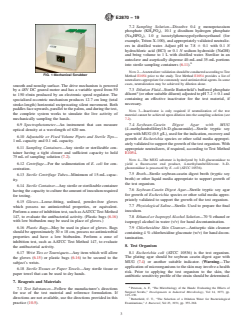
6.8 Mechanical Scrubber —To mechanically sample the
precautions similar to those referenced in 8.1 should be
palms for test bacteria (see Fig. 1). The machine contains two
undertaken.
artificial metallic paddles covered with an artificial turf for a
5. Significance and Use
5.1 Hand hygiene is important for preventing the spread of
Thesolesourceofsupplyoftheapparatusknowntothecommitteeatthistime
many types of infections.
isTrishulEquipment,ShivaIndustrialEstate,UnitNo.107,FirstFloor,LakeRoad,
Bhandup West, Mumbai-400078, India. If you are aware of alternative suppliers,
5.2 During routine activities, it is primarily the palmar
please provide this information to ASTM International Headquarters. Your com-
surface, comprising palms, fingers, and finger pads, of the
ments will receive careful consideration at a meeting of the responsible technical
hands that may become contaminated with transient microor- committee, which you may attend.
E2870 − 19
7.2 Sampling Solution—Dissolve 0.4 g monopotassium
phosphate (KH PO ), 10.1 g disodium hydrogen phosphate
2 4
(Na HPO ), 1.0 g isooctylphenoxypolyethoxyethanol (for
2 4
example, Triton X-100), and appropriately validated neutraliz-
ers in distilled water. Adjust pH to 7.8 6 0.1 with 0.1 N
hydrochloric acid (HCl) or 0.1 N sodium hydroxide (NaOH)
and bring volume to 1 L with distilled water. Sterilize in an
autoclave and aseptically dispense 40-mL and 35-mL portions
into sterile sampling containers (6.11).
NOTE2—AneutralizervalidationshouldbeconductedaccordingtoTest
FIG. 1 Mechanical Scrubber
Method E1054 prior to the study. Test Method E1054 provides a list of
neutralizersappropriateforcommonlyusedantimicrobialagents.Insome
cases, neutralization may be achieved by dilution alone.
smooth and nonslip surface. The drive mechanism is powered
7.3 Dilution Fluid—Sterile Butterfield’s buffered phosphate
by a 48V DC geared motor and has a variable speed from 50
diluent (orothersuitablediluent)adjustedtopH7.2 60.1and
to 150 r/min produced by an electronic speed regulator. The
containing an effective inactivator for the test material, if
specialized eccentric mechanism produces 12.7 cm long (total
necessary.
stroke-length) horizontal reciprocating silent movement. Both
paddlesfaceupwards,paralleltothepalms,andduringthetest,
NOTE 3—Inactivator is only required if neutralization of the test
the complete system works to simulate the live activity of
material cannot be achieved upon dilution into the sampling solution (see
7.2).
mechanically sampling the hands.
7.4 Soybean-Casein Digest Agar with MUG
6.9 Spectrophotometer—An instrument that can measure
(4–methylumbelliferyl-b-D-glucuronide)—Sterile tryptic soy
optical density at a wavelength of 620 nm.
agarwithMUG(0.5g/L),usedfortheindication,recoveryand
6.10 Adjustable or Fixed Volume Pipets and Sterile Tips—
growth of Escherichia species or other solid media appropri-
1mL capacity and 0.1 mL capacity.
atelyvalidatedtosupportthegrowthofthetestorganism.With
6.11 Sampling Containers—Any sterile or sterilizable con-
appropriate neutralizers, if required, according to Test Method
tainer having a tight closure and sufficient capacity to hold
E1054.
75mL of sampling solution (7.2).
NOTE 4—The MUG substrate is hydrolyzed by b-D-glucuronidase to
6.12 Centrifuge—For the sedimentation of E. coli for con-
yield a fluorescent end product, 4-methylumbelliferone. b-D-
glucuronidase is possessed by E. coli (ATCC 10536).
centration.
7.5 Broth—Sterile soybean-casein digest broth (tryptic soy
6.13 Sterile Centrifuge Tubes—Minimum of 15-mL capac-
broth) or other liquid media appropriate to support growth of
ity.
the test organism.
6.14 Sterile Container—Any sterile or sterilizable container
7.6 Soybean-Casein Digest Agar—Sterile tryptic soy agar
havingthecapacitytoculturetheamountofinoculumrequired
for growth of Escherichia species or other solid media appro-
for testing.
priately validated to support the growth of the test organism.
6.15 Gloves—Loose-fitting, unlined, powder-free gloves
7.7 Physiological Saline—Sterile. Used to prepare the final
which possess no antimicrobial properties, or equivalent.
inoculum.
Performazoneofinhibitiontest,suchasAATCCTestMethod
147, to evaluate the antibacterial activity. (Plastic bags (6.16)
7.8 Ethanol or Isopropyl Alcohol Solution—70%ethanolor
with low bioburden may be used in place of gloves.)
isopropyl alcohol in water (v/v) for hand decontamination.
6.16 Plastic Bags—May be used in place of gloves. Bags
7.9 Chlorhexidine Skin Cleanser—Antiseptic skin cleanser
should be approximately 30 × 18 cm, possess no antimicrobial
containing 4 % chlorhexidine gluconate (w/v) for hand decon-
properties and have a low bioburden. Perform a zone of
tamination.
inhibition test, such as AATCC Test Method 147, to evaluate
8. Test Organism
the antibacterial activity.
8.1 Escherichia coli (ATCC 10536) is the test organism.
6.17 Wrist Ties or Tourniquets—Any item which will allow
The plating agar should be soybean casein digest agar with
the gloves (6.15) or plastic bags (6.16) to be secured to the
MUG (7.4) or another suitable indicator. (Warning—The
subject’s wrists.
applicationofmicroorganismstotheskinmayinvolveahealth
6.18 Sterile Tissues or Paper Towels—Any sterile tissue or
risk. Prior to applying the test organism to the skin, the
paper to
...
This document is not an ASTM standard and is intended only to provide the user of an ASTM standard an indication of what changes have been made to the previous version. Because
it may not be technically possible to adequately depict all changes accurately, ASTM recommends that users consult prior editions as appropriate. In all cases only the current version
of the standard as published by ASTM is to be considered the official document.
Designation: E2870 − 13 E2870 − 19
Standard Test Method Practice for
Evaluating Relative Effectiveness of Antimicrobial
Handwashing Formulations using the Palmar Surface and
Mechanical Hand Sampling
This standard is issued under the fixed designation E2870; the number immediately following the designation indicates the year of
original adoption or, in the case of revision, the year of last revision. A number in parentheses indicates the year of last reapproval. A
superscript epsilon (´) indicates an editorial change since the last revision or reapproval.
1. Scope
1.1 This test method covers and is designed to determine the relative effectiveness of antimicrobial handwashing agents in
reducing transient microorganisms using a controlled handwash.
1.2 Knowledge of microbiological techniques is required for these procedures.
1.3 This test method is used to evaluate topical antimicrobial handwashing formulations.
1.4 Performance of this procedure requires the knowledge of regulations pertaining to the protection of human subjects (21 CFR
Parts 50 and 56).
1.5 The values stated in SI units are to be regarded as standard. No other units of measurement are included in this standard.
1.6 This standard does not purport to address all of the safety concerns, if any, associated with its use. It is the responsibility
of the user of this standard to establish appropriate safety and health practices and determine the applicability of regulatory
limitations prior to use. For more specific precautionary statements, see 8.1.
2. Referenced Documents
2.1 ASTM Standards:
E1054 Test Methods for Evaluation of Inactivators of Antimicrobial Agents
E1174 Test Method for Evaluation of the Effectiveness of Health Care Personnel Handwash Formulations
E2755 Test Method for Determining the Bacteria-Eliminating Effectiveness of Healthcare Personnel Hand Rub Formulations
Using Hands of Adults
E2756 Terminology Relating to Antimicrobial and Antiviral Agents
E2784 Test Method for Evaluation of the Effectiveness of Handwash Formulations Using the Paper Towel (Palmar) Method of
Hand Contamination
2.2 Other Standards:
AATCC Test Method 147 Antibacterial Assessment of Textile Materials: Parallel Streak Method
21 CFR Part 50 Protection of Human Subjects
21 CFR Part 56 Institutional Review Boards
3. Terminology
3.1 Definitions—For definitions of terms used in this document, see Terminology E2756.
3.2 Definitions of Terms Specific to This Standard:
3.2.1 active ingredient, n—a substance added to a formulation specifically for the inhibition or inactivation of microorganisms.
This test method practice is under the jurisdiction of ASTM Committee E35 on Pesticides, Antimicrobials, and Alternative Control Agents and is the direct responsibility
of Subcommittee E35.15 on Antimicrobial Agents.
Current edition approved April 1, 2013April 1, 2019. Published May 2013May 2019. Originally approved 2013. Last previous edition approved 2013 as E2870–13. DOI:
10.1520/E2870-13.10.1520/E2870-19.
For referenced ASTM standards, visit the ASTM website, www.astm.org, or contact ASTM Customer Service at service@astm.org. For Annual Book of ASTM Standards
volume information, refer to the standard’s Document Summary page on the ASTM website.
Available from American Association of Textile Chemists and Colorists (AATCC), P.O. Box 12215, Research Triangle Park, NC 27709, http://www.aatcc.org.
Available from U.S. Government Printing Office Superintendent of Documents, 732 N. Capitol St., NW, Mail Stop: SDE, Washington, DC 20401, http://
www.access.gpo.gov.
Copyright © ASTM International, 100 Barr Harbor Drive, PO Box C700, West Conshohocken, PA 19428-2959. United States
E2870 − 19
3.2.2 reference formulation, n—formulation against which the activity of the test formulation is compared, for example, a
handwash without an active ingredient or a handwash with a different active ingredient than the test formulation. This formulation
is not considered a standard.
3.2.3 test material, n—a product or formulation which incorporates antimicrobial ingredients(s).
3.2.4 test organism, n—an applied inoculum of an organism that has characteristics which allow it to be readily identified. The
test organism is used to simulate a transient topical microbial contaminant. It may also be referred to as a marker organism,
bacterial simulant, or bacterial contaminant.
4. Summary of Test Method
4.1 This test method uses adult subjects who have provided a written informed consent and whose hands have been determined
to be free from any apparent damage at the time of participation in the study. Subjects are to refrain from use of any antimicrobials
for at least one week prior to the initiation of the test procedure (see 9.3).
4.2 The test compares the activity of the two handwash formulations simultaneously on the same subject under standardized and
controlled conditions. Hands of the subjects are artificially contaminated with Escherichia coli. One hand of the subject is washed
with the reference formulation and the other with the test formulation. The E. coli cells remaining on the hands are recovered by
the glove juice method of sampling using a mechanical scrubber. In other methods, comparisons between two products are made
by testing two equivalent groups of subjects. The objective of this test method is to determine the relative difference between two
products tested on the same subjects and not to determine absolute reductions in organism levels. By testing both products at the
same time on the same subjects with the same bacterial inoculum, variability is reduced.
4.3 Effectiveness of the test material is determined after a single wash by comparing the numbers of viable test organisms
recovered after treatment with it and with the reference formulation. As an example, a cleanser with an active ingredient (test
formulation) can be compared to the cleanser without an active ingredient (reference formulation) to determine the effect the active
ingredient has on product performance.
4.4 No baseline sampling of the hands is performed in this test method. The inoculum volume to the palms is very small. A
volume of 100 μL is applied to each palm and the palms and fingers are rubbed together. Spillage and loss do not occur, and
organisms are evenly distributed across the palmar surface after rubbing. As the objective of this test method is to determine the
relative difference between products and not absolute reductions, baseline sampling is not performed.
NOTE 1—If an investigator wanted to compare the effect of washing with a product to not washing, this test could be conducted with one hand serving
as a baseline sample and the second hand treated with the test product.
4.5 The investigator should be aware that there may be health risks associated with the use of the test organism and precautions
similar to those referenced in 8.1 should be undertaken.
5. Significance and Use
5.1 Hand hygiene is important for preventing the spread of many types of infections.
5.2 During routine activities, it is primarily the palmar surface, comprising palms, fingers, and finger pads, of the hands that may
become contaminated with transient microorganisms. The contamination could then be transferred to articles touched or handled
or to other parts of the body. Palmar contamination is used in Test Method E2784.
5.3 In Test Method E1174, incomplete drying of the experimentally contaminated hands dilutes the applied test product, thus
compromising its activity. Application of a smaller volume of the microbial test suspension keeps the soil load to a reasonable level
while allowing the hands to become visibly dry prior to application of the test material and reference formulation. These
modifications are aimed at producing a better approximation of in-use conditions and a more realistic assessment of the test
substance, thus providing a more reliable indication of product performance.
5.4 Unlike Test Methods E1174, E2755, and E2784, this test method enables a direct comparison between two formulations on
the same subject. The test method also uses a mechanical scrubbing machine in conjunction with the glove juice technique for more
efficient recovery of viable test bacteria from the palms. The mechanical sampling results in greater recovery of bacteria from the
palms than conventional recovery methods, such as massaging.
6. Apparatus
6.1 Colony Counter—Any of several types may be used, for example, Quebec Colony Counter.
6.2 Incubator—Any incubator capable of maintaining the following temperature: 35 6 2°C.
6.3 Shaker Incubator—Any incubator capable of maintaining the following temperature: 35 6 2°C and capable of shaking the
culture medium at 120 to 140 r/min.
6.4 Sterilizer—Any suitable steam sterilizer capable of producing the conditions of sterilization.
6.5 Timer (Stop-Clock)—Type that can be read for minutes and seconds.
E2870 − 19
6.6 Handwashing Sink—A sink of sufficient size to permit subjects to wash without touching hands to sink surface or other
subjects.
6.6.1 Water Faucet(s)—To be located above the sink at a height which permits the hands to be higher than the elbow during
the washing procedure. Faucet should maintain a flow rate of 3 L/min as determined in 10.4.
6.6.2 Water Temperature Regulator and Temperature Monitor—To set and maintain the water temperature at 40 6 2°C.
6.7 Vortex Mixer—Any suitable vortex mixer capable of mixing sample and diluent.
6.8 Mechanical Scrubber —To mechanically sample the palms for test bacteria (see Fig. 1). The machine contains two artificial
metallic paddles covered with an artificial turf for a smooth and nonslip surface. The drive mechanism is powered by a 48V DC
geared motor and has a variable speed from 50 to 150 r/min produced by an electronic speed regulator. The specialized eccentric
mechanism produces 12.7 cm long (total stroke-length) horizontal reciprocating silent movement. Both paddles face upwards,
parallel to the palms, and during the test, the complete system works to simulate the live activity of mechanically sampling the
hands.
6.9 Spectrophotometer—An instrument that can measure optical density at a wavelength of 620 nm.
6.10 Adjustable or Fixed Volume Pipets and Sterile Tips—1 mL capacity and 0.1 mL capacity.
6.11 Sampling Containers—Any sterile or sterilizable container having a tight closure and sufficient capacity to hold 75 mL of
sampling solution (7.2).
6.12 Centrifuge—For the sedimentation of E. coli for concentration.
6.13 Sterile Centrifuge Tubes—Minimum of 15-mL capacity.
6.14 Sterile Container—Any sterile or sterilizable container having the capacity to culture the amount of inoculum required for
testing.
6.15 Gloves—Loose-fitting, unlined, powder-free gloves which possess no antimicrobial properties, or equivalent. Perform a
zone of inhibition test, such as AATCC Test Method 147, to evaluate the antibacterial activity. (Plastic bags (6.16) with low
bioburden may be used in place of gloves.)
6.16 Plastic Bags—May be used in place of gloves. Bags should be approximately 30 × 18 cm, possess no antimicrobial
properties and have a low bioburden. Perform a zone of inhibition test, such as AATCC Test Method 147, to evaluate the
antibacterial activity.
6.17 Wrist Ties or Tourniquets—Any item which will allow the gloves (6.15) or plastic bags (6.16) to be secured to the subject’s
wrists.
6.18 Sterile Tissues or Paper Towels—Any sterile tissue or paper towel that can be used to dry hands.
7. Reagents and Materials
7.1 Test Substances—Follow the manufacturer’s directions for use of the test material and reference formulation. If directions
are not available, use the directions provided in this test method (10.5).
7.2 Sampling Solution—Dissolve 0.4 g monopotassium phosphate (KH PO ), 10.1 g disodium hydrogen phosphate (Na HPO ),
2 4 2 4
1.0 g isooctylphenoxypolyethoxyethanol (for example, Triton X-100), and appropriately validated neutralizers in distilled water.
FIG. 1 Mechanical Scrubber
The sole source of supply of the apparatus known to the committee at this time is Trishul Equipment, Shiva Industrial Estate, Unit No. 107, First Floor, Lake Road,
Bhandup West, Mumbai-400078, India. If you are aware of alternative suppliers, please provide this information to ASTM International Headquarters. Your comments will
receive careful consideration at a meeting of the responsible technical committee, which you may attend.
E2870 − 19
Adjust pH to 7.8 6 0.1 with 0.1 N hydrochloric acid (HCl) or 0.1 N sodium hydroxide (NaOH) and bring volume to 1 L with
distilled water. Sterilize in an autoclave and aseptically dispense 40-mL and 35-mL portions into sterile sampling containers
(6.11).
NOTE 2—A neutralizer validation should be conducted according to Test Method E1054 prior to the study. Test Method E1054 provides a list of
neutralizers appropriate for commonly used antimicrobial agents. In some cases, neutralization may be achieved by dilution alone.
7.3 Dilution Fluid—Sterile Butterfield’s buffered phosphate diluent (or other suitable diluent) adjusted to pH 7.2 6 0.1 and
containing an effective inactivator for the test material, if necessary.
NOTE 3—Inactivator is only required if neutralization of the test material cannot be achieved upon dilution into the sampling solution (see 7.2).
7.4 Soybean-Casein Digest Agar with MUG (4–methylumbelliferyl-b-D-glucuronide)—Sterile tryptic soy agar with MUG (0.5
g/L), used for the indication, recovery and growth of Escherichia species or other solid media appropriately validated to support
the growth of the test organism. With appropriate neutralizers, if required, according to Test Method E1054.
NOTE 4—The MUG substrate is hydrolyzed by b-D-glucuronidase to yield a fluorescent end product, 4-methylumbelliferone. b-D-glucuronidase is
possessed by E. coli (ATCC 10536).
7.5 Broth—Sterile soybean-casein digest broth (tryptic soy broth) or other liquid media appropriate to support growth of the test
organism.
7.6 Soybean-Casein Digest Agar—Sterile tryptic soy agar for growth of Escherichia species or other solid media appropriately
validated to support the growth of the test organism.
7.7 Physiological Saline—Sterile. Used to prepare the final inoculum.
7.8 Ethanol or Isopropyl Alcohol Solution—70 % ethanol or isopropyl alcohol in water (v/v) for hand decontamination.
7.9 Chlorhexidine Skin Cleanser—Antiseptic skin cleanser containing 4 % chlorhexidine gluconate (w/v) for hand decontami-
nation.
8. Test Organism
8.1 Escherichia coli (ATCC 10536) is the test organism. The plating agar should be soybean casein digest agar with MUG (7.4)
or another suitable indicator. (Warning—The application of microorganisms to the skin may involve a health risk. Prior to
applying the test organism to the skin, the antibiotic sensitivity profile of the strain should be determined. If an infection occurs,
the antibiotic sensitivity profile should be made available to the attending clinician. Following the subject’s contamination and
wash with the formulation, a decontamination procedure should be performed (Section 11)).
8.2 Preparation of Test Organism Suspension:
8.2.1 A homogeneous culture of E. coli (ATCC 10536) is used to inoculate the hands. The stock culture should be at least two
24-h soybean-casein digest broth or agar slant transfers from the original ATCC culture, but should be no more than four transfers
removed from the ATCC culture.
8.2.2 The stock culture, maintained on soybean-casein digest agar slants, should not be more than one month old. From the
slant, inoculate a loopful of the culture into 50 mL of soybean-casein digest broth.
8.2.3 Incubate the broth culture for 16 to 18 h at 35 6 2°C on a shaker incubator set to 120 to 140 r/min.
8.2.4 After incubation, add 1 mL of this overnight culture to fresh 40-mL soybean-casein digest broth.
8.2.5 Incubate the 40-mL soybean-casein digest broth culture for 4 h at 35 6 2°C on a shaker incubator set to 120 to 140 r/min.
This culture is used for the test.
8.2.6 The culture is centrifuged at 5000 r/min (corresponding g value is 3214) and washed twice with physiological saline (7.7).
8.2.7 The pellet is suspended in physiological saline and the optical density (OD) at 620 nm is adjusted in order to obtain an
7 8
inoculum of 8 × 10 to 1 × 10 CFU/mL of the E. coli culture. If a lower inoculum is desired, dilute the inoculum with physiological
saline.
8.2.8 Prepare the inoculum not more than 1 h prior to start of test.
8.2.9 Using standard microbiological techniques, enumerate the suspension for number of organisms at the beginning and end
of the use period. Do not use a suspension for more than 8 h. The suspension may not vary more than 60.5 log CFU/mL over
an 8-h period.
8.2.10 Swirl or shake the suspension before the withdrawal of each aliquot. Each subject will require 0.2 mL of suspension.
9. Subjects
9.1 Recruit a sufficient number of healthy adult human volunteers who have no clinical evidence of dermatoses, open wounds,
cuts, burns, hangnails, or other skin disorders. The total number of subjects used will depend on the number of test substances,
the purpose of the study, and the regulatory requirements governing the study.
Peterson, A. F., “The Microbiology of the Hands: Evaluating the Effects of Surgical Scrubs,” Developments in Industrial Microbiology, Vol 14, 1973, pp. 125–130.
Butterfield, C. T., “The Selection of a Dilution Water for Bacteriological Examinations,” J. Bacteriol, Vol 23, 1931, pp. 355–368.
E2870 − 19
9.2 It is the responsibility of the user of this test method to obtain the necessary approval from an Institutional Review Board
(IRB) or Independent Ethics Commission (IEC) for the use of humans for testing and to obtain informed and written consent from
those selected for the study before starting the test.
9.3 Instruct subjects to avoid contact with antimicrobial products for the duration of the test and for at least one week (7 days)
prior to the test. This restriction includes antimicrobial-containing antiperspirants, deodorants, shampoos, lotions, and soaps.
Bathing in biocide-treated pools, hot tubs, or spas should be avoided. Harsh chemicals such as acids, bases, and solvents also
should be avoided. Subjects may not use topical or systemic antimicrobials, antibiotics, or steroids other than for contraception or
post-menopausal indications, and must agree to abstain from these materials until the completion of the study. Provide subjects
with a kit of non-antimicrobial personal care products for exclusive use during the test and include rubber gloves to be worn when
contact with antimicrobial or harsh chemicals cannot be avoided.
10. Procedure
10.1 Admission to Testing—Instruct each subject to return to the laboratory for testing after they having refrained from using
antimicrobials for at least 7 days. Question the subject to confirm adherence to the study requirements (see 9.3). Inspect the
subject’s hands and forearms to confirm the absence of clinical signs of skin disorders as described in 9.1. Subjects’ hands must
be free from visible soil and contamination. Admit the subject into the test if all of the above criteria are met. Instruct the subjects
to remove all jewelry from their hands and arms and to clip their fingernails to a uniform length (free edge ≤1 mm).
10.2 After subjects have refrained from using antimicrobial formulations for at least 7 days, they perform two washes with 70
% alcohol. 10 6 1 mL of the alcohol is poured into the subjects’ palms, and the subjects rub their palms and the back of the hands
for 15 s. The alcohol is allowed to air dry, and the step is repeated one more time. Subjects who accidentally spill the majority
of alcohol down the sink may be provided with an additional 10 6 1 mL of the alcohol to ensure adequate decontamination of
the hands. Traces of alcohol are removed by having the subjects wash their hands thoroughly with sterile water for 25 6 5 s, and
the hands are dabbed dry with sterile tissues. Instruct the subjects to exercise caution by avoiding contact with the sink and fixtures,
eliminating the chance of recontamination from the sink surfaces. Also instruct subjects to avoid rubbing hands and forearms
during the rinsing process.
7 8
10.3 Hand Contamination—100 μL of the E. coli suspension containing between 8 × 10 and 1.0 × 10 CFU/mL is applied onto
each palm of the subject. Subjects should be instructed to spread the suspension across the palms and the fingertips uniformly by
rubbing the palms and fingertips against each other for 15 6 1 s. Only the palmar surfaces are contaminated and the subjects should
not spread the inoculum on the back of their hands. The hands are allowed to air-dry for 30 6 5 s.
10.4 For washes and rinses, the water temperature is adjusted to 40 6 2°C and the water flow rate is 3 L/min. To adjust the
flow rate, place a 1500-mL glass beaker or flask under each water faucet and allow the water to flow into the beaker. Adjust the
flow rate at each faucet accordingly so that the beaker or flask fills within 30 s.
10.5 Product Application (Wash and Rinse Procedures)—Conduct the test in accordance with the use directions for the test
substances. If directions are not available, the wash and rinse procedure should be as follows:
10.5.1 Solid Cleansing Formulations:
10.5.1.1 Instruct subject to sparingly wet a contaminated hand by rapidly passing one hand once through tap water. This process
should be performed in less than 1 s.
10.5.1.2 The investigator will wet the product by passing it under running tap water once.
10.5.1.3 The investigator, wearing a low bioburden glove, will rub the product on one of the subject’s hands back and forth from
the palm to the fingertips (not the back of the hand) five (5) times. One rub will be comprised of one back and forth motion. The
subject’s palm must remain flat and outstretched during the washing procedure.
10.5.1.4 The investigator will place 10 6 1 mL water in the subject’s palms and will lather the palmar surface of the subject’s
hand by rubbing back and forth across the entire palm and fingers for 15 6 1 s.
10.5.1.5 Instruct the subject to rinse off the washed hand for 20 6 2 s under a gentle stream of water having a flow rate of 3
L/min.
10.5.1.6 The procedure is repeated with the other palmar surface. One hand is washed with a reference formulation while the
other hand is washed with the test formulation. The two formulations must be randomized between left and right hand, and the
order of handwashing (left and right palmar surfaces) must be balanced between the two formulations.
10.5.1.7 After washing, the hands are not to be dried, but held upright until procedures in 10.6 are performed. Caution should
be exercised to have the subject avoid contact with the sink and fixtures to eliminate recontamination from the sink surfaces.
10.5.2 Liquid Cleansing Formulations:
10.5.2.1 Instruct subject to sparingly wet a contaminated hand by rapidly passing one hand once through tap water. This process
should be performed in less than 1 s.
10.5.2.2 Dispense 0.75 g of the test material into the palm of one hand of the subject.
10.5.2.3 The investigator, wearing a low bioburden wetted glove, will place 10 6 1 mL water in the subject’s palms and will
lather the palmar surface of the subject’s hand by rubbing back and forth across the entire palm and fingers for 15 6 1 s. The
subject’s palm must remain flat and outstretched during the washing procedure.
E2870 − 19
10.5.2.4 Instruct the subject to rinse off the washed hand for 20 6 2 s under a gentle stream of water having a flow rate of 3
L/min.
10.5.2.5 The procedure is repeated with the other palmar surface. One hand is washed with a reference formulation while the
other hand is washed with the test formulation. The two formulations must be randomized between left and right hand, and the
order of handwashing (left and right palmar surfaces) must be balanced between the two formulations.
10.5.2.6 After washing, the hands are not to be dried, but held upright until procedures in 10.6 are performed. Caution should
be exercised to have the subject avoid contact with the sink and fixtures to eliminate recontamination from the sink surfaces.
10.5.3 Other Cleansing Product Forms:
10.5.3.1 Use standardized amount (for example, weight or volume) of test material in accordance with use directions. In case
manufacturer’s directions are not available, 0.75 g may be used. The two formulations must be randomized between left and right
hand, and the order of handwashing (left and right palmar surfaces) must be balanced between the two formulations.
10.5.3.2 After washing with water, the hands are not to be dried, but held upright until procedures in 10.6 are performed.
Caution should be exercised to have the subject avoid contact with the sink and fixtures to eliminate recontamination from the sink
surfaces.
10.6 Bacterial Recovery:
10.6.1 Within 1 min after the specified washes, the subject’s hands are placed in low bioburden plastic bags containing 40 mL
of sampling solution. Situate the bags on the hands so that the fingers are approximately 1 to 1.5 cms from the bottom of the bag.
10.6.2 Secure the plastic bags containing the sampling solution above the wrist using wrist ties or tourniquets.
10.6.3 Instruct the subject to rest his/her arms across the top of the mechanical scrubber so that the palms are placed with slight
pressure across the paddles (see Fig. 2). The hands must remain flat and in contact with the paddles, and the sampling solutions
should not be allowed to pool in the corners of the plastic bags. Operate the instrument at 150 6 10 r/min for 1 min 6 5 s to ensure
uniform recovery of bacteria.
10.6.4 The entire sampling solution from each bag should be transferred to separate sterile sample containers.
10.6.5 The recovery process is repeated with a 35-mL aliquot of the sampling solution (10.6.3).
10.6.6 The samples from the same hand are pooled in the same container. The plating of the recovered sampling solution should
be completed within 30 min after sampling.
11. Hand Decontamination
11.1 Upon completion of testing, rinse the hands and forearms of subject with 70 % ethanol or isopropyl alcohol (7.8) for at
least 30 s and allow to air dry.
11.2 Instruct subject to perform a 1-min wash with a 4 % chlorhexidine gluconate skin cleanser (7.9).
11.3 Prior to leaving, a follow up visit to the test site should be scheduled for each subject. All test subjects should be instructed
to examine their hands daily until the final scheduled visit for any delayed adverse events, such as the presence of pimples, blisters,
or raised, red itching bumps surrounded by erythema and/or edema that may be indicative of a skin infection. Subjects, who notice
such lesions, should be instructed to call the test site immediately.
12. Enumeration of Bacteria in Sampling Solution
12.1 Enumerate the E. coli in the sampling solution using standard microbiological techniques, such as pour or spread plating
or membrane filtration.
12.2 Prepare dilutions of the recovered sampling solution in dilution fluid.
FIG. 2 Placement of Hands on Mechanical Scrubber Panels
E2870 − 19
12.3 Use soybean-casein digest agar with MUG and a suitable neutralizer, if necessary, as recovery medium.
12.4 Incubate prepared plates for 18 to 24 h at 35 6 2°C. Standard plate counting procedures are used to count only the E. coli
colonies.
13. Determination of Difference between Test and Reference Formulations
13.1 Convert plate counts (CFU/hand) to log for each hand.
13.2 Determine the mean number of E. coli bacteria on the palms for the two products and test for significance using an
appropriate statistical method. The difference in activity between the two formulations can be determined using the following
formula:
log Recovery of Test Material2 (1)
log Recovery of Reference Formulation
14. Precision and Bias
14.1 A precision and bias statement cannot be made for this test method at this time.
15. Keywords
15.1 antimicrobial; antisepsis; contaminants; efficacy; Escherichia coli; handwash; infection control; mechanical scrubbers;
palmar contamination
ASTM International takes no position respecting the validity of any patent rights asserted in connection with any item mentioned
in this standard. Users of this standard are expressly advised that determination of the validity of any such patent rights,
...