

ASTM D4802-16
(Specification)Standard Specification for Poly(Methyl Methacrylate) Acrylic Plastic Sheet
General Information
- Abstract
ABSTRACT
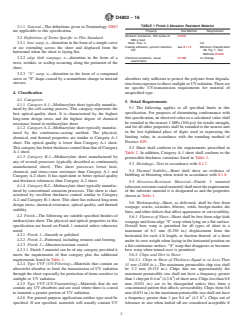
This specification covers monolithic methacrylate sheets produced by various processes. For this specification, methacrylate sheet shall be composed of polymerized acrylic monomers of which at least 80% shall be methyl methacrylate. Materials shall be classified under categories and finishes: Category A-1; Category A-2; Category B-1; and Category B-2.Finish 1; Finish 2; Finish 3; Type UVF; and Type UVT. Tests shall be performed to determine the properties of the material in accordance with following test methods: test conditions; index of refraction; specific gravity; luminous transmittance; haze; water-absorption; shrinkage; thermal stability; deflection temperature under flexural load; tensile strength and elongation at break; impact strength; spectral transmittance of Type UVF and UVT sheet; abrasion resistance; coating adhesion; and chemical resistance.
SCOPE
1.1 This specification covers monolithic methacrylate sheets produced by various processes. For this specification, methacrylate sheet shall be composed of polymerized acrylic monomers of which at least 80 % shall be methyl methacrylate.
Note 1: This specification is intended to consolidate the requirements of the Cast Methacrylate Plastic Sheets portion of discontinued Fed. Spec. L-P-391D, discontinued Specification D702. Cast Methacrylate Plastic Sheets, Rods, Tubes and Shapes, and discontinued Specification D1547, Extruded Acrylic Plastic Sheet.
1.2 This specification is intended to cover acrylic sheet for general-purpose applications. For specialty applications consult the appropriate use standards.
1.3 The following safety hazards caveat pertains only to the test methods portion, Section 8, of this specification: This standard does not purport to address all of the safety concerns, if any, associated with its use. It is the responsibility of the user of this standard to establish appropriate safety and health practices and determine the applicability of regulatory limitations prior to use.
1.4 Acrylic sheet is used frequently in applications in which extreme clarity, lack of optical distortion and absence of any foreign particulate matter are of primary significance. Reground material is suitable for use as long as careful control is used to eliminate adverse effects on these properties. The use of recycled material in type B-1 and B-2 sheet, is not suitable for use when these properties are adversely affected. The use of recycled or reground material is not possible for type A-1 and A-2 materials since the sheet is produced directly from monomer
Note 2: This standard and ISO 7823-1 address the same subject matter, but differ in technical content.
- Status
- Published
- Publication Date
- 30-Apr-2016
- Technical Committee
- D20 - Plastics
- Drafting Committee
- D20.15 - Thermoplastic Materials
Buy Documents
ASTM D4802-16 - Standard Specification for Poly(Methyl Methacrylate) Acrylic Plastic Sheet
REDLINE ASTM D4802-16 - Standard Specification for Poly(Methyl Methacrylate) Acrylic Plastic Sheet
Overview
ASTM D4802-16 is the globally recognized standard specification for poly(methyl methacrylate) (PMMA) acrylic plastic sheet. Developed by ASTM International, this standard outlines the requirements for monolithic methacrylate sheets, produced via various manufacturing processes, where at least 80% of the composition is methyl methacrylate. ASTM D4802-16 applies to both general-purpose and select specialty applications, consolidating requirements from several discontinued standards to provide industry-wide guidance for acrylic sheet quality, performance, and classification.
Acrylic sheets compliant with ASTM D4802-16 are renowned for their high clarity, minimal optical distortion, and absence of foreign particulates. The standard addresses different sheet categories, finishes, and types, catering to a diverse range of commercial, industrial, and architectural uses.
Key Topics
- Material Composition: Requires sheets to be made from at least 80% methyl methacrylate.
- Categories & Finishes: Defines four main categories (A-1, A-2, B-1, B-2) based on manufacturing process and sheet performance, with finishes including smooth/polished, patterned, and abrasion-resistant coatings.
- Types: Covers UV-filtering (UVF) and UV-transmitting (UVT) materials for specialized light transmittance needs.
- Property Testing: Mandates tests for:
- Index of refraction
- Specific gravity
- Luminous transmittance and haze
- Water absorption
- Shrinkage and thermal stability
- Deflection temperature under load
- Tensile strength, elongation at break, and impact strength
- Spectral transmittance (UVF and UVT types)
- Abrasion resistance, coating adhesion, and chemical resistance
- Quality Requirements: Details limits for defects, warpage, chips, dirt, and dimensional tolerances to maintain sheet integrity and appearance.
- Recycled Content: Provides guidance on when reground or recycled material is permitted to avoid impact on optical or surface qualities.
Applications
Sheets manufactured to ASTM D4802-16 are versatile and widely used due to their transparency, durability, and customizable properties. Practical applications include:
- Architectural Glazing: Windows, skylights, partitions, and decorative panels, where optical quality and safety are critical.
- Retail Displays & Signage: Showcases, illuminated signs, and point-of-purchase displays benefit from high light transmittance and scratch resistance.
- Protective Barriers: Used in environments requiring physical separation and clear visibility, such as offices, laboratories, and customer service counters.
- Transportation: Used for instrument panels, windscreens, and lighting covers where clarity and impact resistance matter.
- Specialty Lighting: UVF and UVT sheets enable control over ultraviolet transmission for applications like museums and horticultural facilities.
- General Industrial Use: Enclosures, guards, and machine covers, leveraging the material’s strength and resistance to chemicals.
Related Standards
Several standards complement ASTM D4802-16 for acrylic plastic sheet manufacturing, testing, and application:
- ISO 7823-1: Plastics-Poly(methyl methacrylate) sheets-Types, dimensions, and characteristics (covers similar subject but with technical differences).
- ASTM D256: Test Methods for Izod Impact Resistance of Plastics.
- ASTM D542: Method for Index of Refraction of Transparent Organic Plastics.
- ASTM D1003: Test Method for Haze and Luminous Transmittance of Transparent Plastics.
- ASTM D648: Test Method for Deflection Temperature of Plastics Under Flexural Load.
- ASTM D3359: Methods for Measuring Adhesion by Tape Test.
- ASTM D1044: Test Method for Surface Abrasion of Transparent Plastics.
- ASTM D1308: Test Method for Chemical Resistance of Clear and Pigmented Organic Finishes.
Summary: Adhering to ASTM D4802-16 assures buyers and users of PMMA acrylic plastic sheets that the materials conform to stringent international quality benchmarks for optical, dimensional, and mechanical performance, adding reliability and value to countless products and projects.
Relations
- Effective Date
- 01-May-2016
- Effective Date
- 01-Feb-2024
- Effective Date
- 01-Nov-2023
- Effective Date
- 01-Jan-2020
- Effective Date
- 01-Sep-2019
- Effective Date
- 01-Aug-2019
- Effective Date
- 15-Apr-2019
- Effective Date
- 01-Feb-2019
- Effective Date
- 01-Dec-2018
- Effective Date
- 01-Nov-2018
- Effective Date
- 01-Apr-2018
- Effective Date
- 15-Aug-2017
- Effective Date
- 01-Sep-2015
- Effective Date
- 01-Sep-2013
- Refers
ASTM D1044-13 - Standard Test Method for Resistance of Transparent Plastics to Surface Abrasion - Effective Date
- 01-Sep-2013
Buy Documents
ASTM D4802-16 - Standard Specification for Poly(Methyl Methacrylate) Acrylic Plastic Sheet
REDLINE ASTM D4802-16 - Standard Specification for Poly(Methyl Methacrylate) Acrylic Plastic Sheet
Get Certified
Connect with accredited certification bodies for this standard

DIN CERTCO
DIN Group product certification.

Smithers Quality Assessments
US management systems and product certification.
Sponsored listings
Frequently Asked Questions
ASTM D4802-16 is a technical specification published by ASTM International. Its full title is "Standard Specification for Poly(Methyl Methacrylate) Acrylic Plastic Sheet". This standard covers: ABSTRACT This specification covers monolithic methacrylate sheets produced by various processes. For this specification, methacrylate sheet shall be composed of polymerized acrylic monomers of which at least 80% shall be methyl methacrylate. Materials shall be classified under categories and finishes: Category A-1; Category A-2; Category B-1; and Category B-2.Finish 1; Finish 2; Finish 3; Type UVF; and Type UVT. Tests shall be performed to determine the properties of the material in accordance with following test methods: test conditions; index of refraction; specific gravity; luminous transmittance; haze; water-absorption; shrinkage; thermal stability; deflection temperature under flexural load; tensile strength and elongation at break; impact strength; spectral transmittance of Type UVF and UVT sheet; abrasion resistance; coating adhesion; and chemical resistance. SCOPE 1.1 This specification covers monolithic methacrylate sheets produced by various processes. For this specification, methacrylate sheet shall be composed of polymerized acrylic monomers of which at least 80 % shall be methyl methacrylate. Note 1: This specification is intended to consolidate the requirements of the Cast Methacrylate Plastic Sheets portion of discontinued Fed. Spec. L-P-391D, discontinued Specification D702. Cast Methacrylate Plastic Sheets, Rods, Tubes and Shapes, and discontinued Specification D1547, Extruded Acrylic Plastic Sheet. 1.2 This specification is intended to cover acrylic sheet for general-purpose applications. For specialty applications consult the appropriate use standards. 1.3 The following safety hazards caveat pertains only to the test methods portion, Section 8, of this specification: This standard does not purport to address all of the safety concerns, if any, associated with its use. It is the responsibility of the user of this standard to establish appropriate safety and health practices and determine the applicability of regulatory limitations prior to use. 1.4 Acrylic sheet is used frequently in applications in which extreme clarity, lack of optical distortion and absence of any foreign particulate matter are of primary significance. Reground material is suitable for use as long as careful control is used to eliminate adverse effects on these properties. The use of recycled material in type B-1 and B-2 sheet, is not suitable for use when these properties are adversely affected. The use of recycled or reground material is not possible for type A-1 and A-2 materials since the sheet is produced directly from monomer Note 2: This standard and ISO 7823-1 address the same subject matter, but differ in technical content.
ABSTRACT This specification covers monolithic methacrylate sheets produced by various processes. For this specification, methacrylate sheet shall be composed of polymerized acrylic monomers of which at least 80% shall be methyl methacrylate. Materials shall be classified under categories and finishes: Category A-1; Category A-2; Category B-1; and Category B-2.Finish 1; Finish 2; Finish 3; Type UVF; and Type UVT. Tests shall be performed to determine the properties of the material in accordance with following test methods: test conditions; index of refraction; specific gravity; luminous transmittance; haze; water-absorption; shrinkage; thermal stability; deflection temperature under flexural load; tensile strength and elongation at break; impact strength; spectral transmittance of Type UVF and UVT sheet; abrasion resistance; coating adhesion; and chemical resistance. SCOPE 1.1 This specification covers monolithic methacrylate sheets produced by various processes. For this specification, methacrylate sheet shall be composed of polymerized acrylic monomers of which at least 80 % shall be methyl methacrylate. Note 1: This specification is intended to consolidate the requirements of the Cast Methacrylate Plastic Sheets portion of discontinued Fed. Spec. L-P-391D, discontinued Specification D702. Cast Methacrylate Plastic Sheets, Rods, Tubes and Shapes, and discontinued Specification D1547, Extruded Acrylic Plastic Sheet. 1.2 This specification is intended to cover acrylic sheet for general-purpose applications. For specialty applications consult the appropriate use standards. 1.3 The following safety hazards caveat pertains only to the test methods portion, Section 8, of this specification: This standard does not purport to address all of the safety concerns, if any, associated with its use. It is the responsibility of the user of this standard to establish appropriate safety and health practices and determine the applicability of regulatory limitations prior to use. 1.4 Acrylic sheet is used frequently in applications in which extreme clarity, lack of optical distortion and absence of any foreign particulate matter are of primary significance. Reground material is suitable for use as long as careful control is used to eliminate adverse effects on these properties. The use of recycled material in type B-1 and B-2 sheet, is not suitable for use when these properties are adversely affected. The use of recycled or reground material is not possible for type A-1 and A-2 materials since the sheet is produced directly from monomer Note 2: This standard and ISO 7823-1 address the same subject matter, but differ in technical content.
ASTM D4802-16 is classified under the following ICS (International Classification for Standards) categories: 83.140.10 - Films and sheets. The ICS classification helps identify the subject area and facilitates finding related standards.
ASTM D4802-16 has the following relationships with other standards: It is inter standard links to ASTM D4802-15, ASTM D883-24, ASTM D883-23, ASTM D883-20, ASTM D1044-19, ASTM D883-19c, ASTM D883-19a, ASTM D883-19, ASTM D883-18a, ASTM D883-18, ASTM D648-18, ASTM D883-17, ASTM D3892-15, ASTM D542-13, ASTM D1044-13. Understanding these relationships helps ensure you are using the most current and applicable version of the standard.
ASTM D4802-16 is available in PDF format for immediate download after purchase. The document can be added to your cart and obtained through the secure checkout process. Digital delivery ensures instant access to the complete standard document.
Standards Content (Sample)
This international standard was developed in accordance with internationally recognized principles on standardization established in the Decision on Principles for the
Development of International Standards, Guides and Recommendations issued by the World Trade Organization Technical Barriers to Trade (TBT) Committee.
Designation:D4802 −16
Standard Specification for
Poly(Methyl Methacrylate) Acrylic Plastic Sheet
This standard is issued under the fixed designation D4802; the number immediately following the designation indicates the year of
original adoption or, in the case of revision, the year of last revision. A number in parentheses indicates the year of last reapproval. A
superscript epsilon (´) indicates an editorial change since the last revision or reapproval.
This standard has been approved for use by agencies of the U.S. Department of Defense.
1. Scope* 2. Referenced Documents
2.1 ASTM Standards:
1.1 Thisspecificationcoversmonolithicmethacrylatesheets
D256 Test Methods for Determining the Izod Pendulum
produced by various processes. For this specification, meth-
Impact Resistance of Plastics
acrylate sheet shall be composed of polymerized acrylic
D542 Test Method for Index of Refraction of Transparent
monomersofwhichatleast80 %shallbemethylmethacrylate.
Organic Plastics
NOTE 1—This specification is intended to consolidate the requirements
D570 Test Method for Water Absorption of Plastics
of the Cast Methacrylate Plastic Sheets portion of discontinued Fed. Spec.
D618 Practice for Conditioning Plastics for Testing
L-P-391D, discontinued Specification D702. Cast Methacrylate Plastic
Sheets, Rods, Tubes and Shapes, and discontinued Specification D1547, D638 Test Method for Tensile Properties of Plastics
Extruded Acrylic Plastic Sheet.
D648 Test Method for Deflection Temperature of Plastics
Under Flexural Load in the Edgewise Position
1.2 This specification is intended to cover acrylic sheet for
D792 Test Methods for Density and Specific Gravity (Rela-
general-purpose applications. For specialty applications con-
tive Density) of Plastics by Displacement
sult the appropriate use standards.
D883 Terminology Relating to Plastics
1.3 The following safety hazards caveat pertains only to the
D1003 Test Method for Haze and Luminous Transmittance
test methods portion, Section 8, of this specification: This
of Transparent Plastics
standard does not purport to address all of the safety concerns,
D1044 Test Method for Resistance ofTransparent Plastics to
if any, associated with its use. It is the responsibility of the user
Surface Abrasion
of this standard to establish appropriate safety and health
D1308 Test Method for Effect of Household Chemicals on
practices and determine the applicability of regulatory limita-
Clear and Pigmented Organic Finishes
tions prior to use.
D3002 Guide for Evaluation of CoatingsApplied to Plastics
1.4 Acrylic sheet is used frequently in applications in which
(Withdrawn 2016)
extreme clarity, lack of optical distortion and absence of any
D3359 Test Methods for Measuring Adhesion by Tape Test
foreign particulate matter are of primary significance. Re-
D3892 Practice for Packaging/Packing of Plastics
ground material is suitable for use as long as careful control is
E29 Practice for Using Significant Digits in Test Data to
usedtoeliminateadverseeffectsontheseproperties.Theuseof
Determine Conformance with Specifications
recycled material in type B-1 and B-2 sheet, is not suitable for
2.2 ISO Standard:
use when these properties are adversely affected. The use of
ISO 7823-1 (E) Plastics—Poly(Methyl Methacrylate)
recycled or reground material is not possible for type A-1 and
Sheets—Types, Dimensions, and Characteristics
A-2 materials since the sheet is produced directly from
monomer
3. Terminology
NOTE 2—This standard and ISO 7823-1 address the same subject
3.1 Definitions:
matter, but differ in technical content.
For referenced ASTM standards, visit the ASTM website, www.astm.org, or
contact ASTM Customer Service at service@astm.org. For Annual Book of ASTM
This specification is under the jurisdiction of ASTM Committee D20 on Standards volume information, refer to the standard’s Document Summary page on
Plastics and is the direct responsibility of Subcommittee D20.15 on Thermoplastic the ASTM website.
Materials. The last approved version of this historical standard is referenced on
Current edition approved May 1, 2016. Published May 2016. Originally www.astm.org.
approved in 1988. Last previous edition approved in 2015 as D4802 – 15. Available from American National Standards Institute (ANSI), 25 W. 43rd St.,
DOI:10.1520/D4802-16. 4th Floor, New York, NY 10036, http://www.ansi.org.
*A Summary of Changes section appears at the end of this standard
Copyright © ASTM International, 100 Barr Harbor Drive, PO Box C700, West Conshohocken, PA 19428-2959. United States
D4802−16
TABLE 1 Finish 3 Abrasion Resistant Material
3.1.1 General—The definitions given in Terminology D883
are applicable to this specification. Property Test Method Requirement
Abrasion resistance, 100 cycles at D1044
3.2 Definitions of Terms Specific to This Standard:
500 g load
3.2.1 bow warp, n—distortion in the form of a simple curve
Haze, max, % 4.0
Coating adhesion, percent retention, see 8.1.14 Minimum Classification
or arc extending across the sheet and displaced from the
min 4B, Fig. 1, Test
horizontal when the sheet is laying flat.
Methods D3359
Chemical resistance, visual D1308 no change
3.2.2 edge kink warpage, n—distortion in the form of a
examination
twist, wrinkle, or scallop occurring along the perimeter of the
sheet.
3.2.3 “S” warp, n—distortion in the form of a compound
curve or “S” shape caused by a nonuniform change in internal
absorbers only sufficient to protect the polymer from degrada-
stresses. tionfromexposuretodirectsunlightorUVradiation.Thereare
no specific UV-transmission requirements for material of
4. Classification unspecified type.
4.1 Categories:
5. Detail Requirements
4.1.1 Category A-1—Methacrylate sheet typically manufac-
5.1 The following applies to all specified limits in this
tured by the cell-casting process. This category represents the
specification. For purposes of determining conformance with
best optical-quality sheet. It is characterized by the highest
this specification, an observed value or a calculated value shall
long-term design stress and the highest degree of chemical
be rounded to the nearest 1 MPa (100 psi) for tensile strength,
resistance found in methacrylate sheet.
and for all other properties shall be rounded to the nearest unit
4.1.2 Category A-2—Methacrylate sheet typically manufac-
in the last righthand place of digits used in expressing the
tured by the continuous-casting method. The physical,
limiting value, in accordance with the rounding method of
chemical, and thermal properties are similar to Category A-1
Practice E29.
sheet. The optical quality is lower than Category A-1 sheet.
ThiscategoryhasbetterthicknesscontrolthanthatofCategory
5.2 Sheet shall conform to the requirements prescribed in
A-1 sheet.
Table 2. In addition, Category A-1 sheet shall conform to the
4.1.3 Category B-1—Methacrylate sheet manufactured by
permissible-thickness variations listed in Table 3.
any of several processes (typically described as continuously
5.3 Shrinkage—Test in accordance with 8.1.7.
manufactured sheet). This sheet possesses lower heat,
5.4 Thermal Stability—Sheet shall show no evidence of
chemical, and stress-craze resistance than Category A-1 and
bubbling or blistering when tested in accordance with 8.1.8.
Category A-2 sheet. It has equivalent or better optical quality
and thickness tolerances than Category A-2 sheet.
5.5 Abrasion-Resistant Material—Finish 3 material
4.1.4 Category B-2—Methacrylate sheet typically manufac-
(abrasion-resistantcoatedmaterial)shallmeettherequirements
tured by conventional extrusion processes. This sheet is char-
of the substrate material it is designated as and the properties
acterized by excellent thickness control similar to Category
shown in Table 1.
A-2 and Category B-1 sheet. This sheet has reduced long-term
5.6 Workmanship—Sheet, as delivered, shall be free from
design stress, chemical resistance, optical quality, and thermal
warpage, cracks, scratches, blisters, voids, foreign matter, die
stability.
lines, and other defects that affect appearance or serviceability.
4.2 Finish—The following are suitable specified finishes of
5.6.1 Flatness of Sheet—Sheet shall be free from edge kink
methacrylate sheet. The physical and optical properties in this
warpage and from edge “S” warp when lying on a flat surface.
specification are based on Finish 1 material unless otherwise
Overall bow warp is permitted for all types of sheet to a
noted.
maximum of 6.3 mm (0.250 in.) displacement from the
4.2.1 Finish 1—Smooth or polished.
horizontal for each 4-ft length, or fraction thereof, of a sheet
4.2.2 Finish 2—Patterned, including textures and frosting.
under its own weight when laying in the horizontal position on
4.2.3 Finish 3—Abrasion-resistant coated. a flat continuous surface. “S” warp that disappears or becomes
4.2.3.1 Finish 3 material can be of any category provided it
bow warp when turned over is permitted.
meets the requirements of that category plus the additional 5.6.2 Chips and Dirt in Sheet:
requirements listed in Table 1.
5.6.2.1 Chips in Sheet of Thickness Equal to or Less Than
4.2.4 Type UVF (UV-Filtering)—Materials that contain an 51 mm (2.008 in.)—The maximum permissible chip size shall
ultraviolet absorber to limit the transmission of UV radiation
be 3.2 mm (0.125 in.). Chips that are approximately the
through the sheet especially for protection of items sensitive to maximum permissible size shall not have a frequency greater
2 2
sunlight or UV radiation.
than1chipper0.4m (4.3ft )ofsheetarea.Chipslessthan0.8
4.2.5 Type UVT (UV-Transmitting)—Materials that do not mm (0.031 in.) are to be disregarded unless they form a
contain any UV absorbers and are used where there is a need
concentrated pattern that affects serviceability. Chips from 0.8
to transmit a greater portion of UV radiation. mm (0.031 in.) to the maximum permissible size shall not have
2 2
4.2.6 For general-purpose applications neither type need be a frequency greater than 1 per 0.4 m (4.3 ft ). Chips out of
specified. If not specified, materials will usually contain UV tolerance in size when knifed off are considered acceptable if
D4802−16
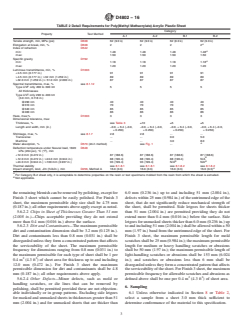
TABLE 2 Detail Requirements for Poly(Methyl Methacrylate) Acrylic Plastic Sheet
Category
Property Test Method
A-1 A-2 B-1 B-2
Tensile strength, min, MPa (psi) D638 62 (9.0 k) 62 (9.0 k) 62 (9.0 k) 62 (9.0 k)
A
Elongation at break, min, % D638 222 2
Index of refraction D542
A
min: 1.48 1.48 1.48 1.48
max: 1.50 1.50 1.50 1.50
Specific gravity D792
A
min: 1.18 1.18 1.18 1.18
max: 1.20 1.20 1.20 1.20
Luminous transmittance, min, % D1003
<4.5 mm (0.177 in.) 91 91 91 91
>4.5 mm (0.177 in.)#32 mm (1.259 in.) 89 89 89 89
>32.0 mm (1.259 in.)# 51.0 mm (2.000 in.) 87 87 87 87
Spectral transmittance, max, % see 8.1.12
Type UVF only 200 to 390 nm 5 5 5 5
All thicknesses
Type UVT only 290 to 400 nm
(3.0 mm, 0.118 in.)
@290 nm 40 40 40 40
@310 nm 70 70 70 70
@340 nm 85 85 85 85
@400 nm 86 86 86 86
Haze, max,% D1003 333 3
Dimensional tolerance, max:
Thickness, % see Table 3 ±10 ±5 ±5
Length and width, mm (in.) −0.0, + 6.4 (−0.0, −0.0, + 6.4 (−0.0, −0.0, + 6.4 (−0.0, −0.0, + 6.4 (−0.0,
+ 0.250) + 0.250) + 0.250) + 0.250)
Shrinkage, max, % see 8.1.7 2.8 2.8 . .
Transverse: . . 0.0 5.0
Machine: . . 3.0 8.0
A
Water absorption, % D570 (24-h method) see Fig. 1 .
Deflection temperature under flexural load, 1820 D648
kPa (264 psi), °C (°F), min
<12.0 mm (0.472 in.) 87 (188.6) 87 (188.6) 87 (188.6) 87 (188.6)
B
>12.0 mm (0.472 in.)#24.0 mm (0.944 in.) 88 (190.4) 88 (190.4) 88 (190.4) N/A
B B
>24.0 mm (0.944 in.)#100 mm (3.937 in.) 93 (199.4) 93 (199.4) N/A N/A
Thermal stability see 8.1.8.1 see 8.1.8.1 see 8.1.8.2 see 8.1.8.2
A
Impact strength, Izod, J/m (ft-lb/in.), min D256, Method A 16.0 (0.3) 16.0 (0.3) 16.0 (0.3) 16.0 (0.3)
A
For Category B-2 sheet only, it is acceptable to determine properties on the resin or test specimens molded from the resin from which the sheet is extruded.
B
Not applicable.
the remaining blemish can be removed by polishing, except for 6.0 mm (0.236 in.) up to and including 51 mm (2.004 in.),
Finish 3 sheet which cannot be easily polished. For Finish 3 defects within 25 mm (0.984 in.) of the untrimmed edge of the
sheet, the maximum permissible chip size shall be 4.75 mm sheet, that do not significantly reduce mechanical strength of
(0.187 in.); all other requirements above apply except as noted. the sheet, shall be permitted. Side letgoes for sheets thicker
5.6.2.2 Chips in Sheet of Thicknesses Greater Than 51 mm than 51 mm (2.004 in.) are permitted providing they do not
(2.008 in.)—Chips acceptable providing they do not extend extend more than 0.4 mm (0.016 in.) below the surface. Side
more than 0.4 mm (0.016 in.) above the surface. letgoes for unmasked sheets thicker than 6.0 mm (0.236 in.) up
5.6.2.3 Dirt and Contaminants—The maximum permissible toandincluding51mm(2.004in.)shallbeallowedwithina50
dirt and contamination dimension shall be 3.2 mm (0.125 in.). mm (1.97 in.) band from the untrimmed edge of the sheet. For
Dirt and contaminants less than 0.8 mm (0.031 in.) shall be Finish 3 sheet, the maximum permissible length for mold
disregarded unless they form a concentrated pattern that affects scratchesshallbe25mm(0.984in.);themaximumpermissible
the serviceability of the sheet. The maximum permissible length for medium or heavy handling scratches or abrasions
frequency for dimensions ranging from 0.8 mm (0.031 in.) to shall be 50 mm (1.97 in.); the maximum permissible length of
the maximum permissible for each type of sheet shall be 1 per light-handling scratches or abrasions shall be 153 mm (6.024
2 2
0.4 m (4.3 ft ) of sheet area for thickness up to and including in.); and scratches or abrasions less than 6 mm shall be
12.0 mm (0.472 in.). For Finish 3 sheet the maximum disregarded unless they form a concentrated pattern that affects
permissible dimension for dirt and contaminants shall be 4.8 theserviceabilityofthesheet.ForFinish3sheet,themaximum
mm (0.187 in.); all other requirements above apply. permissible frequency for allowable scratches and abrasions as
2 2
5.6.2.4 Other Defects—Minor defects, such as mold or defined above shall be one per 0.4 m (4.3 ft ) of sheet area.
handling scratches, or die lines that can be removed by
6. Sampling
polishing, shall be permitted provided these are not objection-
able individually or in group patterns. Excluding side letgoes 6.1 Unless otherwise indicated in Section 8 or Table 2,
for masked and unmasked sheets in thicknesses greater than 51 select a sample from a sheet 3.0 mm thick sufficient to
mm (2.004 in.) and for unmasked sheets that are thicker than determine conformance of the material to this specification.
D4802−16
TABLE3 Continued
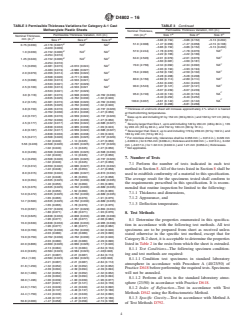
TABLE 3 Permissible Thickness Variations for Category A-1 Cast
Methacrylate Plastic Sheets Permissible Thickness Variation, mm (in.)
Nominal Thickness,
A
B C D
mm (in.)
Permissible Thickness Variation, mm (in.) Size 1 Size 2 Size 3
Nominal Thickness,
A
B C D
mm (in.)
Size 1 Size 2 Size 3
−3.86 (0.152) −3.86 (0.152) −5.13 (0.202)
E F F 5
...
This document is not an ASTM standard and is intended only to provide the user of an ASTM standard an indication of what changes have been made to the previous version. Because
it may not be technically possible to adequately depict all changes accurately, ASTM recommends that users consult prior editions as appropriate. In all cases only the current version
of the standard as published by ASTM is to be considered the official document.
Designation: D4802 − 15 D4802 − 16
Standard Specification for
Poly(Methyl Methacrylate) Acrylic Plastic Sheet
This standard is issued under the fixed designation D4802; the number immediately following the designation indicates the year of
original adoption or, in the case of revision, the year of last revision. A number in parentheses indicates the year of last reapproval. A
superscript epsilon (´) indicates an editorial change since the last revision or reapproval.
This standard has been approved for use by agencies of the U.S. Department of Defense.
1. Scope*
1.1 This specification covers monolithic methacrylate sheets produced by various processes. For this specification, methacrylate
sheet shall be composed of polymerized acrylic monomers of which at least 80 % shall be methyl methacrylate.
NOTE 1—This specification is intended to consolidate the requirements of the Cast Methacrylate Plastic Sheets portion of discontinued Fed. Spec.
L-P-391D, discontinued Specification D702. Cast Methacrylate Plastic Sheets, Rods, Tubes and Shapes, and discontinued Specification D1547, Extruded
Acrylic Plastic Sheet.
1.2 This specification is intended to cover acrylic sheet for general-purpose applications. For specialty applications consult the
appropriate use standards.
1.3 The following safety hazards caveat pertains only to the test methods portion, Section 8, of this specification:This standard
does not purport to address all of the safety concerns, if any, associated with its use. It is the responsibility of the user of this
standard to establish appropriate safety and health practices and determine the applicability of regulatory limitations prior to use.
1.4 Acrylic sheet is used frequently in applications in which extreme clarity, lack of optical distortion and absence of any foreign
particulate matter are of primary significance. Reground material is suitable for use as long as careful control is used to eliminate
adverse effects on these properties. The use of recycled material in type B-1 and B-2 sheet, is not suitable for use when these
properties are adversely affected. The use of recycled or reground material is not possible for type A-1 and A-2 materials since the
sheet is produced directly from monomer
NOTE 2—This standard and ISO 7823-1 address the same subject matter, but differ in technical content.
2. Referenced Documents
2.1 ASTM Standards:
D256 Test Methods for Determining the Izod Pendulum Impact Resistance of Plastics
D542 Test Method for Index of Refraction of Transparent Organic Plastics
D570 Test Method for Water Absorption of Plastics
D618 Practice for Conditioning Plastics for Testing
D638 Test Method for Tensile Properties of Plastics
D648 Test Method for Deflection Temperature of Plastics Under Flexural Load in the Edgewise Position
D792 Test Methods for Density and Specific Gravity (Relative Density) of Plastics by Displacement
D883 Terminology Relating to Plastics
D1003 Test Method for Haze and Luminous Transmittance of Transparent Plastics
D1044 Test Method for Resistance of Transparent Plastics to Surface Abrasion
D1308 Test Method for Effect of Household Chemicals on Clear and Pigmented Organic Finishes
D3002 Guide for Evaluation of Coatings Applied to Plastics (Withdrawn 2016)
D3359 Test Methods for Measuring Adhesion by Tape Test
D3892 Practice for Packaging/Packing of Plastics
E29 Practice for Using Significant Digits in Test Data to Determine Conformance with Specifications
This specification is under the jurisdiction of ASTM Committee D20 on Plastics and is the direct responsibility of Subcommittee D20.15 on Thermoplastic Materials.
Current edition approved Dec. 15, 2015May 1, 2016. Published January 2016May 2016. Originally approved in 1988. Last previous edition approved in 20102015 as
D4802 – 10.D4802 – 15. DOI:10.1520/D4802-15.DOI:10.1520/D4802-16.
For referenced ASTM standards, visit the ASTM website, www.astm.org, or contact ASTM Customer Service at service@astm.org. For Annual Book of ASTM Standards
volume information, refer to the standard’s Document Summary page on the ASTM website.
The last approved version of this historical standard is referenced on www.astm.org.
*A Summary of Changes section appears at the end of this standard
Copyright © ASTM International, 100 Barr Harbor Drive, PO Box C700, West Conshohocken, PA 19428-2959. United States
D4802 − 16
2.2 ISO Standard:
ISO 7823-1 (E) Plastics—Poly(Methyl Methacrylate) Sheets—Types, Dimensions, and Characteristics
3. Terminology
3.1 Definitions:
3.1.1 General—The definitions given in Terminology D883 are applicable to this specification.
3.2 Definitions of Terms Specific to This Standard:
3.2.1 bow warp, n—distortion in the form of a simple curve or arc extending across the sheet and displaced from the horizontal
when the sheet is laying flat.
3.2.2 edge kink warpage, n—distortion in the form of a twist, wrinkle, or scallop occurring along the perimeter of the sheet.
3.2.3 “S” warp, n—distortion in the form of a compound curve or “S” shape caused by a nonuniform change in internal stresses.
4. Classification
4.1 Categories:
4.1.1 Category A-1—Methacrylate sheet typically manufactured by the cell-casting process. This category represents the best
optical-quality sheet. It is characterized by the highest long-term design stress and the highest degree of chemical resistance found
in methacrylate sheet.
4.1.2 Category A-2—Methacrylate sheet typically manufactured by the continuous-casting method. The physical, chemical, and
thermal properties are similar to Category A-1 sheet. The optical quality is lower than Category A-1 sheet. This category has better
thickness control than that of Category A-1 sheet.
4.1.3 Category B-1—Methacrylate sheet manufactured by any of several processes (typically described as continuously
manufactured sheet). This sheet possesses lower heat, chemical, and stress-craze resistance than Category A-1 and Category A-2
sheet. It has equivalent or better optical quality and thickness tolerances than Category A-2 sheet.
4.1.4 Category B-2—Methacrylate sheet typically manufactured by conventional extrusion processes. This sheet is character-
ized by excellent thickness control similar to Category A-2 and Category B-1 sheet. This sheet has reduced long-term design stress,
chemical resistance, optical quality, and thermal stability.
4.2 Finish—The following are suitable specified finishes of methacrylate sheet. The physical and optical properties in this
specification are based on Finish 1 material unless otherwise noted.
4.2.1 Finish 1—Smooth or polished.
4.2.2 Finish 2—Patterned, including textures and frosting.
4.2.3 Finish 3—Abrasion-resistant coated.
4.2.3.1 Finish 3 material can be of any category provided it meets the requirements of that category plus the additional
requirements listed in Table 1.
4.2.4 Type UVF (UV-Filtering)—Materials that contain an ultraviolet absorber to limit the transmission of UV radiation through
the sheet especially for protection of items sensitive to sunlight or UV radiation.
4.2.5 Type UVT (UV-Transmitting)—Materials that do not contain any UV absorbers and are used where there is a need to
transmit a greater portion of UV radiation.
4.2.6 For general-purpose applications neither type need be specified. If not specified, materials will usually contain UV
absorbers only sufficient to protect the polymer from degradation from exposure to direct sunlight or UV radiation. There are no
specific UV-transmission requirements for material of unspecified type.
5. Detail Requirements
5.1 The following applies to all specified limits in this specification. For purposes of determining conformance with this
specification, an observed value or a calculated value shall be rounded to the nearest 1 MPa (100 psi) for tensile strength, and for
Available from American National Standards Institute (ANSI), 25 W. 43rd St., 4th Floor, New York, NY 10036, http://www.ansi.org.
TABLE 1 Finish 3 Abrasion Resistant Material
Property Test Method Requirement
Abrasion resistance, 100 cycles at D1044
500 g load
Haze, max, % 4.0
Coating adhesion, percent retention, see 8.1.14 Minimum Classification
min 4B, Fig. 1, Test
Methods D3359
Chemical resistance, visual D1308 no change
examination
D4802 − 16
all other properties shall be rounded to the nearest unit in the last righthand place of digits used in expressing the limiting value,
in accordance with the rounding method of Practice E29.
5.2 Sheet shall conform to the requirements prescribed in Table 2. In addition, Category A-1 sheet shall conform to the
permissible-thickness variations listed in Table 3.
5.3 Shrinkage—Test in accordance with 8.1.7.
5.4 Thermal Stability—Sheet shall show no evidence of bubbling or blistering when tested in accordance with 8.1.8.
5.5 Abrasion-Resistant Material—Finish 3 material (abrasion-resistant coated material) shall meet the requirements of the
substrate material it is designated as and the properties shown in Table 1.
5.6 Workmanship—Sheet, as delivered, shall be free from warpage, cracks, scratches, blisters, voids, foreign matter, die lines,
and other defects that affect appearance or serviceability.
5.6.1 Flatness of Sheet—Sheet shall be free from edge kink warpage and from edge “S” warp when lying on a flat surface.
Overall bow warp is permitted for all types of sheet to a maximum of 6.3 mm (0.250 in.) displacement from the horizontal for
each 4-ft length, or fraction thereof, of a sheet under its own weight when laying in the horizontal position on a flat continuous
surface. “S” warp that disappears or becomes bow warp when turned over is permitted.
5.6.2 Chips and Dirt in Sheet:
5.6.2.1 Chips in Sheet of Thickness Equal to or Less Than 51 mm (2.008 in.)—The maximum permissible chip size shall be 3.2
mm (0.125 in.). Chips that are approximately the maximum permissible size shall not have a frequency greater than 1 chip per 0.4
2 2
m (4.3 ft ) of sheet area. Chips less than 0.8 mm (0.031 in.) are to be disregarded unless they form a concentrated pattern that
affects serviceability. Chips from 0.8 mm (0.031 in.) to the maximum permissible size shall not have a frequency greater than 1
2 2
per 0.4 m (4.3 ft ). Chips out of tolerance in size when knifed off are considered acceptable if the remaining blemish can be
removed by polishing, except for Finish 3 sheet which cannot be easily polished. For Finish 3 sheet, the maximum permissible
chip size shall be 4.75 mm (0.187 in.); all other requirements above apply except as noted.
TABLE 2 Detail Requirements for Poly(Methyl Methacrylate) Acrylic Plastic Sheet
Category
Property Test Method
A-1 A-2 B-1 B-2
Tensile strength, min, MPa (psi) D638 62 (9.0 k) 62 (9.0 k) 62 (9.0 k) 62 (9.0 k)
A
Elongation at break, min, % D638 2 2 2 2
Index of refraction D542
A
min: 1.48 1.48 1.48 1.48
max: 1.50 1.50 1.50 1.50
Specific gravity D792
A
min: 1.18 1.18 1.18 1.18
max: 1.20 1.20 1.20 1.20
Luminous transmittance, min, % D1003
<4.5 mm (0.177 in.) 91 91 91 91
>4.5 mm (0.177 in.) #32 mm (1.259 in.) 89 89 89 89
>32.0 mm (1.259 in.)# 51.0 mm (2.000 in.) 87 87 87 87
Spectral transmittance, max, % see 8.1.12
Type UVF only 200 to 390 nm 5 5 5 5
All thicknesses
Type UVT only 290 to 400 nm
(3.0 mm, 0.118 in.)
@290 nm 40 40 40 40
@310 nm 70 70 70 70
@340 nm 85 85 85 85
@400 nm 86 86 86 86
Haze, max,% D1003 3 3 3 3
Dimensional tolerance, max:
Thickness, % see Table 3 ±10 ±5 ±5
Length and width, mm (in.) −0.0, + 6.4 (−0.0, −0.0, + 6.4 (−0.0, −0.0, + 6.4 (−0.0, −0.0, + 6.4 (−0.0,
+ 0.250) + 0.250) + 0.250) + 0.250)
Shrinkage, max, % see 8.1.7 2.8 2.8 . .
Transverse: . . 0.0 5.0
Machine: . . 3.0 8.0
A
Water absorption, % D570 (24-h method) see Fig. 1 .
Deflection temperature under flexural load, 1820 D648
kPa (264 psi), °C (°F), min
<12.0 mm (0.472 in.) 87 (188.6) 87 (188.6) 87 (188.6) 87 (188.6)
B
>12.0 mm (0.472 in.) #24.0 mm (0.944 in.) 88 (190.4) 88 (190.4) 88 (190.4) N/A
B B
>24.0 mm (0.944 in.) #100 mm (3.937 in.) 93 (199.4) 93 (199.4) N/A N/A
Thermal stability see 8.1.8.1 see 8.1.8.1 see 8.1.8.2 see 8.1.8.2
A
Impact strength, Izod, J/m (ft-lb/in.), min D256, Method A 16.0 (0.3) 16.0 (0.3) 16.0 (0.3) 16.0 (0.3)
A
For Category B-2 sheet only, it is acceptable to determine properties on the resin or test specimens molded from the resin from which the sheet is extruded.
B
Not applicable.
D4802 − 16
5.6.2.2 Chips in Sheet of Thicknesses Greater Than 51 mm (2.008 in.)—Chips acceptable providing they do not extend more
than 0.4 mm (0.016 in.) above the surface.
5.6.2.3 Dirt and Contaminants—The maximum permissible dirt and contamination dimension shall be 3.2 mm (0.125 in.). Dirt
and contaminants less than 0.8 mm (0.031 in.) shall be disregarded unless they form a concentrated pattern that affects the
serviceability of the sheet. The maximum permissible frequency for dimensions ranging from 0.8 mm (0.031 in.) to the maximum
2 2
permissible for each type of sheet shall be 1 per 0.4 m (4.3 ft ) of sheet area for thickness up to and including 12.0 mm (0.472
in.). For Finish 3 sheet the maximum permissible dimension for dirt and contaminants shall be 4.8 mm (0.187 in.); all other
requirements above apply.
5.6.2.4 Other Defects—Minor defects, such as mold or handling scratches, or die lines that can be removed by polishing, shall
be permitted provided these are not objectionable individually or in group patterns. Excluding side letgoes for masked and
unmasked sheets in thicknesses greater than 51 mm (2.004 in.) and for unmasked sheets that are thicker than 6.0 mm (0.236 in.)
up to and including 51 mm (2.004 in.), defects within 25 mm (0.984 in.) of the untrimmed edge of the sheet, that do not
significantly reduce mechanical strength of the sheet, shall be permitted. Side letgoes for sheets thicker than 51 mm (2.004 in.)
are permitted providing they do not extend more than 0.4 mm (0.016 in.) below the surface. Side letgoes for unmasked sheets
thicker than 6.0 mm (0.236 in.) up to and including 51 mm (2.004 in.) shall be allowed within a 50 mm (1.97 in.) band from the
untrimmed edge of the sheet. For Finish 3 sheet, the maximum permissible length for mold scratches shall be 25 mm (0.984 in.);
the maximum permissible length for medium or heavy handling scratches or abrasions shall be 50 mm (1.97 in.); the maximum
permissible length of light-handling scratches or abrasions shall be 153 mm (6.024 in.); and scratches or abrasions less than 6 mm
shall be disregarded unless they form a concentrated pattern that affects the serviceability of the sheet. For Finish 3 sheet, the
2 2
maximum permissible frequency for allowable scratches and abrasions as defined above shall be one per 0.4 m (4.3 ft ) of sheet
area.
6. Sampling
6.1 Unless otherwise indicated in Section 8 or Table 2, select a sample from a sheet 3.0 mm thick sufficient to determine
conformance of the material to this specification.
TABLE 3 Permissible Thickness Variations for Category A-1 Cast Methacrylate Plastic Sheets
Permissible Thickness Variation, mm (in.)
Nominal Thickness,
A
B C D
mm (in.)
Size 1 Size 2 Size 3
E F F
0.75 (0.030) +0.178 (0.007) NA NA
−0.229 (0.009)
E F F
1.0 (0.039) +0.152 (0.006) NA NA
−0.254 (0.010)
E F F
1.25 (0.049) +0.152 (0.006) NA NA
−0.254 (0.010)
F
1.5 (0.059) +0.381 (0.015) +0.610 (0.024) NA
−0.483 (0.019) −0.686 (0.027)
F
2.0 (0.079) +0.356 (0.014) +
...