

ASTM D5961/D5961M-23
(Test Method)Standard Test Method for Bearing Response of Polymer Matrix Composite Laminates
General Information
- Abstract
SIGNIFICANCE AND USE
5.1 Refer to Guide D8509.
SCOPE
1.1 This test method covers the bearing response of pinned or fastened joints using multi-directional polymer matrix composite laminates reinforced by high-modulus fibers by double-shear tensile loading (Procedure A), single-shear tensile or compressive loading of a two-piece specimen (Procedure B), single-shear tensile loading of a one-piece specimen (Procedure C), or double-shear compressive loading (Procedure D). Standard specimen configurations using fixed values of test parameters are described for each procedure. However, when fully documented in the test report, a number of test parameters may be optionally varied. The composite material forms are limited to continuous-fiber or discontinuous-fiber (tape or fabric, or both) reinforced composites for which the laminate is balanced and symmetric with respect to the test direction. The range of acceptable test laminates and thicknesses are described in 8.2.1.
1.2 This test method is consistent with the recommendations of MIL-HDBK-17, which describes the desirable attributes of a bearing response test method.
1.3 The multi-fastener test configurations described in this test method are similar to those used by industry to investigate the bypass portion of the bearing bypass interaction response for bolted joints, where the specimen may produce either a bearing failure mode or a bypass failure mode. Note that the scope of this test method is limited to bearing and fastener failure modes. Use Test Method D7248/D7248M for by-pass testing.
1.4 The values stated in either SI units or inch-pound units are to be regarded separately as standard. The values stated in each system may not be exact equivalents; therefore, each system shall be used independently of the other. Combining values from the two systems may result in non-conformance with the standard.
1.4.1 Within the text the inch-pound units are shown in brackets.
1.5 This standard does not purport to address all of the safety concerns, if any, associated with its use. It is the responsibility of the user of this standard to establish appropriate safety, health, and environmental practices and determine the applicability of regulatory limitations prior to use.
1.6 This international standard was developed in accordance with internationally recognized principles on standardization established in the Decision on Principles for the Development of International Standards, Guides and Recommendations issued by the World Trade Organization Technical Barriers to Trade (TBT) Committee.
- Status
- Published
- Publication Date
- 31-Aug-2023
- Technical Committee
- D30 - Composite Materials
- Drafting Committee
- D30.05 - Structural Test Methods
Buy Documents
ASTM D5961/D5961M-23 - Standard Test Method for Bearing Response of Polymer Matrix Composite Laminates
REDLINE ASTM D5961/D5961M-23 - Standard Test Method for Bearing Response of Polymer Matrix Composite Laminates
Overview
ASTM D5961/D5961M-23 is the internationally recognized standard test method for evaluating the bearing response of polymer matrix composite laminates. Developed by ASTM Committee D30 on Composite Materials, this test method is essential for assessing the performance and structural integrity of fastened or pinned composite joints subjected to various loading conditions. The standard applies to continuous or discontinuous fiber-reinforced laminates-using tape or fabric-that are balanced and symmetric with respect to the test direction. The procedures align with MIL-HDBK-17 recommendations and are vital for applications in aerospace, automotive, marine, and industrial composite structures.
Key Topics
- Bearing Response Evaluation: Covers procedures for measuring how polymer matrix composite laminates respond to forces transmitted through bolts, pins, or other fasteners.
- Loading Conditions: Outlines four distinct procedures:
- Double-shear tensile loading
- Single-shear tensile or compressive loading (two-piece specimen)
- Single-shear tensile loading (one-piece specimen)
- Double-shear compressive loading
- Specimen Configuration: Uses standard rectangular laminate specimens with specified hole sizes, edge distances, and thickness ratios. Parameter variations are allowed if fully documented.
- Applicable Material Types: Limited to continuous-fiber or discontinuous-fiber composites, including both tape and fabric forms, with requirements for laminate balance and symmetry.
- Failure Modes: Focuses solely on bearing and fastener failure modes (does not address wider joint bypass failure modes-see ASTM D7248/D7248M for that).
- Units: Permits both SI and inch-pound units, to be used independently without conversion between systems.
- Test Variables and Reporting: Identifies factors influencing test results such as fastener torque, hole size and preparation, laminate layup, and environmental conditions. Emphasizes thorough documentation for valid comparison and traceability.
- Safety and Compliance: Notes the need for appropriate laboratory safety, health, and environmental practices, and compliance with regulatory standards.
Applications
ASTM D5961/D5961M-23 is widely used to generate reliable, comparative data on the bearing strength and stiffness of polymer matrix composites with fastened joints, supporting:
- Material Specifications and Selection: Allows manufacturers and engineers to compare different composite systems for best performance in bolted or pinned joints.
- Research and Development: Provides a standardized method for exploring design improvements, evaluating new materials, and understanding joint behavior under mechanical loads.
- Structural Design and Analysis: Facilitates the development of design allowables and supports engineering analysis for safety-critical structures, especially in aerospace and transportation sectors.
- Quality Assurance: Assists in verifying the ongoing mechanical integrity of materials and assemblies intended for high-performance applications.
- Joint Configuration Optimization: Enables detailed investigation of how joint geometry, fastener type, and assembly methods affect overall composite structure performance.
Related Standards
For comprehensive and consistent testing of composite materials, the following ASTM standards are commonly referenced alongside ASTM D5961/D5961M-23:
- ASTM D792: Density and Specific Gravity of Plastics
- ASTM D953: Pin-Bearing Strength of Plastics
- ASTM D3171: Constituent Content of Composite Materials
- ASTM D3410/D3410M: Compressive Properties of Polymer Matrix Composite Materials
- ASTM D3878: Terminology for Composite Materials
- ASTM D7248/D7248M: High Bearing - Low Bypass Interaction Response of Polymer Matrix Composite Laminates
- ASTM D8509: Guide for Test Method Selection and Specimen Design for Bolted Joint Properties
- MIL-HDBK-17: Polymer Matrix Composites Handbook (U.S. Department of Defense)
By adhering to ASTM D5961/D5961M-23, organizations ensure accurate, reproducible bearing strength testing for polymer matrix composite laminates, supporting reliable material qualification and joint design in advanced structural applications.
Relations
- Effective Date
- 01-Feb-2024
- Effective Date
- 01-Nov-2023
- Effective Date
- 01-Oct-2023
- Effective Date
- 01-Sep-2023
- Effective Date
- 01-Apr-2022
- Effective Date
- 15-May-2021
- Effective Date
- 01-Mar-2020
- Effective Date
- 01-Jan-2020
- Effective Date
- 01-Nov-2019
- Effective Date
- 15-Oct-2019
- Effective Date
- 01-Aug-2019
- Effective Date
- 15-Apr-2019
- Effective Date
- 15-Apr-2019
- Effective Date
- 01-Feb-2019
- Effective Date
- 01-Dec-2018
Buy Documents
ASTM D5961/D5961M-23 - Standard Test Method for Bearing Response of Polymer Matrix Composite Laminates
REDLINE ASTM D5961/D5961M-23 - Standard Test Method for Bearing Response of Polymer Matrix Composite Laminates
Get Certified
Connect with accredited certification bodies for this standard

DIN CERTCO
DIN Group product certification.

Smithers Quality Assessments
US management systems and product certification.
Sponsored listings
Frequently Asked Questions
ASTM D5961/D5961M-23 is a standard published by ASTM International. Its full title is "Standard Test Method for Bearing Response of Polymer Matrix Composite Laminates". This standard covers: SIGNIFICANCE AND USE 5.1 Refer to Guide D8509. SCOPE 1.1 This test method covers the bearing response of pinned or fastened joints using multi-directional polymer matrix composite laminates reinforced by high-modulus fibers by double-shear tensile loading (Procedure A), single-shear tensile or compressive loading of a two-piece specimen (Procedure B), single-shear tensile loading of a one-piece specimen (Procedure C), or double-shear compressive loading (Procedure D). Standard specimen configurations using fixed values of test parameters are described for each procedure. However, when fully documented in the test report, a number of test parameters may be optionally varied. The composite material forms are limited to continuous-fiber or discontinuous-fiber (tape or fabric, or both) reinforced composites for which the laminate is balanced and symmetric with respect to the test direction. The range of acceptable test laminates and thicknesses are described in 8.2.1. 1.2 This test method is consistent with the recommendations of MIL-HDBK-17, which describes the desirable attributes of a bearing response test method. 1.3 The multi-fastener test configurations described in this test method are similar to those used by industry to investigate the bypass portion of the bearing bypass interaction response for bolted joints, where the specimen may produce either a bearing failure mode or a bypass failure mode. Note that the scope of this test method is limited to bearing and fastener failure modes. Use Test Method D7248/D7248M for by-pass testing. 1.4 The values stated in either SI units or inch-pound units are to be regarded separately as standard. The values stated in each system may not be exact equivalents; therefore, each system shall be used independently of the other. Combining values from the two systems may result in non-conformance with the standard. 1.4.1 Within the text the inch-pound units are shown in brackets. 1.5 This standard does not purport to address all of the safety concerns, if any, associated with its use. It is the responsibility of the user of this standard to establish appropriate safety, health, and environmental practices and determine the applicability of regulatory limitations prior to use. 1.6 This international standard was developed in accordance with internationally recognized principles on standardization established in the Decision on Principles for the Development of International Standards, Guides and Recommendations issued by the World Trade Organization Technical Barriers to Trade (TBT) Committee.
SIGNIFICANCE AND USE 5.1 Refer to Guide D8509. SCOPE 1.1 This test method covers the bearing response of pinned or fastened joints using multi-directional polymer matrix composite laminates reinforced by high-modulus fibers by double-shear tensile loading (Procedure A), single-shear tensile or compressive loading of a two-piece specimen (Procedure B), single-shear tensile loading of a one-piece specimen (Procedure C), or double-shear compressive loading (Procedure D). Standard specimen configurations using fixed values of test parameters are described for each procedure. However, when fully documented in the test report, a number of test parameters may be optionally varied. The composite material forms are limited to continuous-fiber or discontinuous-fiber (tape or fabric, or both) reinforced composites for which the laminate is balanced and symmetric with respect to the test direction. The range of acceptable test laminates and thicknesses are described in 8.2.1. 1.2 This test method is consistent with the recommendations of MIL-HDBK-17, which describes the desirable attributes of a bearing response test method. 1.3 The multi-fastener test configurations described in this test method are similar to those used by industry to investigate the bypass portion of the bearing bypass interaction response for bolted joints, where the specimen may produce either a bearing failure mode or a bypass failure mode. Note that the scope of this test method is limited to bearing and fastener failure modes. Use Test Method D7248/D7248M for by-pass testing. 1.4 The values stated in either SI units or inch-pound units are to be regarded separately as standard. The values stated in each system may not be exact equivalents; therefore, each system shall be used independently of the other. Combining values from the two systems may result in non-conformance with the standard. 1.4.1 Within the text the inch-pound units are shown in brackets. 1.5 This standard does not purport to address all of the safety concerns, if any, associated with its use. It is the responsibility of the user of this standard to establish appropriate safety, health, and environmental practices and determine the applicability of regulatory limitations prior to use. 1.6 This international standard was developed in accordance with internationally recognized principles on standardization established in the Decision on Principles for the Development of International Standards, Guides and Recommendations issued by the World Trade Organization Technical Barriers to Trade (TBT) Committee.
ASTM D5961/D5961M-23 is classified under the following ICS (International Classification for Standards) categories: 83.120 - Reinforced plastics. The ICS classification helps identify the subject area and facilitates finding related standards.
ASTM D5961/D5961M-23 has the following relationships with other standards: It is inter standard links to ASTM D883-24, ASTM D883-23, ASTM D2734-23, ASTM D7248/D7248M-23, ASTM E456-13a(2022)e1, ASTM D7248/D7248M-21, ASTM D5229/D5229M-20, ASTM D883-20, ASTM D953-19, ASTM D3878-19a, ASTM D883-19c, ASTM D3878-19, ASTM D883-19a, ASTM D883-19, ASTM D883-18a. Understanding these relationships helps ensure you are using the most current and applicable version of the standard.
ASTM D5961/D5961M-23 is available in PDF format for immediate download after purchase. The document can be added to your cart and obtained through the secure checkout process. Digital delivery ensures instant access to the complete standard document.
Standards Content (Sample)
This international standard was developed in accordance with internationally recognized principles on standardization established in the Decision on Principles for the
Development of International Standards, Guides and Recommendations issued by the World Trade Organization Technical Barriers to Trade (TBT) Committee.
Designation: D5961/D5961M − 23
Standard Test Method for
Bearing Response of Polymer Matrix Composite Laminates
This standard is issued under the fixed designation D5961/D5961M; the number immediately following the designation indicates the
year of original adoption or, in the case of revision, the year of last revision. A number in parentheses indicates the year of last
reapproval. A superscript epsilon (´) indicates an editorial change since the last revision or reapproval.
1. Scope 1.5 This standard does not purport to address all of the
safety concerns, if any, associated with its use. It is the
1.1 This test method covers the bearing response of pinned
responsibility of the user of this standard to establish appro-
or fastened joints using multi-directional polymer matrix
priate safety, health, and environmental practices and deter-
composite laminates reinforced by high-modulus fibers by
mine the applicability of regulatory limitations prior to use.
double-shear tensile loading (Procedure A), single-shear tensile
1.6 This international standard was developed in accor-
or compressive loading of a two-piece specimen (Procedure
dance with internationally recognized principles on standard-
B), single-shear tensile loading of a one-piece specimen
ization established in the Decision on Principles for the
(Procedure C), or double-shear compressive loading (Proce-
Development of International Standards, Guides and Recom-
dure D). Standard specimen configurations using fixed values
mendations issued by the World Trade Organization Technical
of test parameters are described for each procedure. However,
Barriers to Trade (TBT) Committee.
when fully documented in the test report, a number of test
parameters may be optionally varied. The composite material
2. Referenced Documents
forms are limited to continuous-fiber or discontinuous-fiber
2.1 ASTM Standards:
(tape or fabric, or both) reinforced composites for which the
D792 Test Methods for Density and Specific Gravity (Rela-
laminate is balanced and symmetric with respect to the test
tive Density) of Plastics by Displacement
direction. The range of acceptable test laminates and thick-
D883 Terminology Relating to Plastics
nesses are described in 8.2.1.
D953 Test Method for Pin-Bearing Strength of Plastics
1.2 This test method is consistent with the recommendations
D2584 Test Method for Ignition Loss of Cured Reinforced
of MIL-HDBK-17, which describes the desirable attributes of
Resins
a bearing response test method.
D2734 Test Methods for Void Content of Reinforced Plastics
D3171 Test Methods for Constituent Content of Composite
1.3 The multi-fastener test configurations described in this
Materials
test method are similar to those used by industry to investigate
D3410/D3410M Test Method for Compressive Properties of
the bypass portion of the bearing bypass interaction response
Polymer Matrix Composite Materials with Unsupported
for bolted joints, where the specimen may produce either a
Gage Section by Shear Loading
bearing failure mode or a bypass failure mode. Note that the
D3878 Terminology for Composite Materials
scope of this test method is limited to bearing and fastener
D5229/D5229M Test Method for Moisture Absorption Prop-
failure modes. Use Test Method D7248/D7248M for by-pass
erties and Equilibrium Conditioning of Polymer Matrix
testing.
Composite Materials
1.4 The values stated in either SI units or inch-pound units
D5687/D5687M Guide for Preparation of Flat Composite
are to be regarded separately as standard. The values stated in
Panels with Processing Guidelines for Specimen Prepara-
each system may not be exact equivalents; therefore, each
tion
system shall be used independently of the other. Combining
D7248/D7248M Test Method for High Bearing - Low By-
values from the two systems may result in non-conformance
pass Interaction Response of Polymer Matrix Composite
with the standard.
Laminates Using 2-Fastener Specimens
1.4.1 Within the text the inch-pound units are shown in
D8509 Guide for Test Method Selection and Test Specimen
brackets.
Design for Bolted Joint Related Properties
E4 Practices for Force Calibration and Verification of Test-
ing Machines
This test method is under the jurisdiction of ASTM Committee D30 on
Composite Materials and is the direct responsibility of Subcommittee D30.05 on
Structural Test Methods. For referenced ASTM standards, visit the ASTM website, www.astm.org, or
Current edition approved Sept. 1, 2023. Published September 2023. Originally contact ASTM Customer Service at service@astm.org. For Annual Book of ASTM
approved in 1996. Last previous edition approved in 2017 as D5961/D5961M – 17. Standards volume information, refer to the standard’s Document Summary page on
DOI: 10.1520/D5961_D5961M-23. the ASTM website.
Copyright © ASTM International, 100 Barr Harbor Drive, PO Box C700, West Conshohocken, PA 19428-2959. United States
D5961/D5961M − 23
E6 Terminology Relating to Methods of Mechanical Testing g = distance, perpendicular to force, from hole edge to
E83 Practice for Verification and Classification of Exten- shortest edge of specimen
someter Systems h = specimen thickness
E122 Practice for Calculating Sample Size to Estimate, With k = calculation factor used in bearing equations to distin-
Specified Precision, the Average for a Characteristic of a guish single-fastener tests from double-fastener tests
Lot or Process K = calculation factor used in bearing equations to distin-
E177 Practice for Use of the Terms Precision and Bias in guish hole deformation in one member of the assembly from
ASTM Test Methods hole deformation shared between two members of the assem-
E238 Test Method for Pin-Type Bearing Test of Metallic bly in a strain equation
Materials L = extensometer gage length
g
E456 Terminology Relating to Quality and Statistics n = number of specimens per sample population
E691 Practice for Conducting an Interlaboratory Study to P = force carried by test specimen
f
Determine the Precision of a Test Method P = force carried by test specimen at failure
max
P = maximum force carried by test specimen prior to
2.2 Other Document:
failure
MIL-HDBK-17, Polymer Matrix Composites, Vol 1, Sec-
s = standard deviation statistic of a sample population for
tion 7 n-1
a given property
w = specimen width
3. Terminology
x = test result for an individual specimen from the sample
i
3.1 Definitions—Terminology D3878 defines terms relating
population for a given property
to high-modulus fibers and their composites. Terminology
x¯ = mean or average (estimate of mean) of a sample popu-
D883 defines terms relating to plastics. Terminology E6 defines
lation for a given property
terms relating to mechanical testing. Terminology E456 and
δ = extensional displacement
Practice E177 define terms relating to statistics. In the event of
ε = general symbol for strain, whether normal strain or shear
a conflict between terms, Terminology D3878 shall have
strain
precedence over the other documents.
br
ε = bearing strain
br
NOTE 1—If the term represents a physical quantity, its analytical
σ = bearing stress
dimensions are stated immediately following the term (or letter symbol) in
fundamental dimension form, using the following ASTM standard sym-
4. Summary of Test Method
bology for fundamental dimensions, shown within square brackets: [M]
for mass, [L] for length, [T] for time, [1] for thermodynamic temperature,
4.1 Procedure A, Double Shear, Tension:
and [nd] for nondimensional quantities. Use of these symbols is restricted
4.1.1 A flat, constant rectangular cross-section test specimen
to analytical dimensions when used with square brackets, as the symbols
with a centerline hole located near the end of the specimen, as
may have other definitions when used without the brackets.
shown in the test specimen drawings of Figs. 1 and 2, is loaded
3.2 Definitions of Terms Specific to This Standard—Refer to
at the hole in bearing. The bearing force is normally applied
Guide D8509.
through a close-tolerance, lightly torqued fastener (or pin) that
3.3 Symbols:
is reacted in double shear by a fixture similar to that shown in
A = minimum cross-sectional area of a specimen
Fig. 3 and Fig. A1.1. The bearing force is created by loading
CV = coefficient of variation statistic of a sample population
the assembly in tension in a testing machine.
for a given property (in percent)
4.1.2 Refer to Guide D8509 for additional test details and
d = fastener or pin diameter
for the standard test configuration.
D = specimen hole diameter
4.2 Procedure B, Single Shear, Two-Piece Specimen:
d = countersink depth
csk
4.2.1 The flat, constant rectangular cross-section test speci-
d = countersink flushness (depth or protrusion of the fas-
fl
men is composed of two like halves fastened together through
tener in a countersunk hole)
one or two centerline holes located near one end of each half,
e = distance, parallel to force, from hole center to end of
as shown in the test specimen drawings of Figs. 4-7. The
specimen; the edge distance
eccentricity in applied force that would otherwise result is
br
E = bearing chord stiffness in the test direction specified
x
minimized by a doubler bonded to, or frictionally retained
by the subscript (for determination of offset bearing strength)
against each grip end of the specimen, resulting in a force
f = distance, parallel to force, from hole edge to end of
line-of-action along the interface between the specimen halves,
specimen
through the centerline of the hole(s).
bru
F = ultimate bearing strength in the test direction speci-
x
4.2.1.1 Unstabilized Configuration (No Support Fixture)—
fied by the subscript
The ends of the test specimen are gripped in the jaws of a test
bro
F (e %) = offset bearing strength (at e % bearing strain
x
machine and loaded in tension.
offset) in the test direction specified by the subscript
4.2.1.2 Stabilized Configuration (Using Support Fixture)—
The test specimen is face-supported in a multi-piece bolted
support fixture, similar to that shown in Fig. 8. The test
Available from Standardization Documents Order Desk, DODSSP, Bldg. 4,
specimen/fixture assembly is clamped in hydraulic wedge grips
Section D, 700 Robbins Ave., Philadelphia, PA 19111-5098, http://
dodssp.daps.dla.mil. and the force is sheared into the support fixture and then
D5961/D5961M − 23
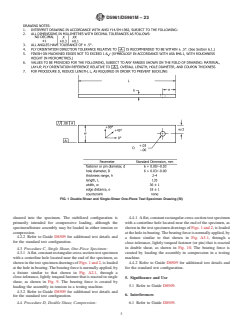
FIG. 1 Double-Shear and Single-Shear One-Piece Test Specimen Drawing (SI)
sheared into the specimen. The stabilized configuration is 4.4.1 A flat, constant rectangular cross-section test specimen
primarily intended for compressive loading, although the with a centerline hole located near the end of the specimen, as
specimen/fixture assembly may be loaded in either tension or
shown in the test specimen drawings of Figs. 1 and 2, is loaded
compression.
at the hole in bearing. The bearing force is normally applied, by
4.2.2 Refer to Guide D8509 for additional test details and
a fixture similar to that shown in Fig. A3.1, through a
for the standard test configuration.
close-tolerance, lightly torqued fastener (or pin) that is reacted
in double shear, as shown in Fig. 10. The bearing force is
4.3 Procedure C, Single Shear, One-Piece Specimen:
created by loading the assembly in compression in a testing
4.3.1 A flat, constant rectangular cross-section test specimen
machine.
with a centerline hole located near the end of the specimen, as
shown in the test specimen drawings of Figs. 1 and 2, is loaded
4.4.2 Refer to Guide D8509 for additional test details and
at the hole in bearing. The bearing force is normally applied, by
for the standard test configuration.
a fixture similar to that shown in Fig. A2.1, through a
close-tolerance, lightly torqued fastener that is reacted in single
5. Significance and Use
shear, as shown in Fig. 9. The bearing force is created by
5.1 Refer to Guide D8509.
loading the assembly in tension in a testing machine.
4.3.2 Refer to Guide D8509 for additional test details and
6. Interferences
for the standard test configuration.
4.4 Procedure D, Double Shear, Compression: 6.1 Refer to Guide D8509.
D5961/D5961M − 23
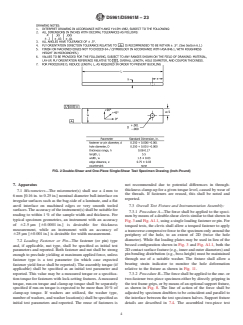
FIG. 2 Double-Shear and One-Piece Single-Shear Test Specimen Drawing (Inch-Pound)
7. Apparatus not recommended due to potential differences in through-
thickness clamp-up for a given torque level, caused by wear of
7.1 Micrometers—The micrometer(s) shall use a 4 mm to
the threads. If fasteners are reused, this shall be noted and
6 mm [0.16 in. to 0.25 in.] nominal diameter ball-interface on
reported.
irregular surfaces such as the bag-side of a laminate, and a flat
anvil interface on machined edges or very smooth tooled
7.3 Overall Test Fixture and Instrumentation Assembly:
surfaces. The accuracy of the instrument(s) shall be suitable for
7.3.1 Procedure A—The force shall be applied to the speci-
reading to within 1 % of the sample width and thickness. For
men by means of a double-shear clevis similar to that shown in
typical specimen geometries, an instrument with an accuracy
Fig. 3 and Fig. A1.1, using a single loading fastener or pin. For
of 62.5 μm [60.0001 in.] is desirable for thickness
torqued tests, the clevis shall allow a torqued fastener to apply
measurement, while an instrument with an accuracy of
a transverse compressive force to the specimen only around the
625 μm [60.001 in.] is desirable for width measurement.
periphery of the hole, to an extent of 2D (twice the hole
diameter). While flat loading plates may be used in lieu of the
7.2 Loading Fastener or Pin—The fastener (or pin) type
bossed configuration shown in Fig. 3 and Fig. A1.1, both the
and, if applicable, nut type, shall be specified as initial test
2D contact surface feature (e.g., inner and outer diameters) and
parameters and reported. Both fastener and nut shall be strong
pin bending distirbution (e.g., boss height) must be maintained
enough to preclude yielding at maximum applied force, unless
through use of a suitable washer. The fixture shall allow a
fastener type is a test parameter (in which case expected
bearing strain indicator to monitor the hole deformation
fastener yield force shall be reported). The assembly torque (if
relative to the fixture as shown in Fig. 11.
applicable) shall be specified as an initial test parameter and
reported. This value may be a measured torque or a specifica- 7.3.2 Procedure B—The force shall be applied to the one- or
tion torque for fasteners with lock-setting features. A measured two-fastener two-piece specimen either by directly gripping in
torque, run-on torque and clamp-up torque shall be separately the test frame grips, or by means of an optional support fixture,
specified if run-on torque is expected to be more than 10 % of as shown in Fig. 8. The line of action of the force shall be
clamp-up torque. If washers are utilized, the washer type, adjusted by specimen doublers to be coincident and parallel to
number of washers, and washer location(s) shall be specified as the interface between the test specimen halves. Support fixture
initial test parameters and reported. The reuse of fasteners is details are described in 7.4. The assembled two-piece test
D5961/D5961M − 23
in Fig. 8. The fixture consists of two short-grip/long-grip
assemblies, two support plates, and stainless steel shims as
required to maintain a nominally zero (0.00 mm to 0.12 mm
[0.000 in. to 0.005 in.] tolerance) gap between the support
plates and the long grips. If this gap does not meet the
minimum requirement, shim the contact area between the
support plate and the short grip with brass, aluminum, or
stainless steel shim stock. If the gap is too large, shim between
the support plate and the long grip, holding the shim stock on
the support plate with tape. Fig. 12 shows shim requirements.
The fixture should be checked for conformity to engineering
drawings. Each short-grip/long-grip assembly is line-drilled as
shown in Fig. A4.1 and Fig. A5.1 and must be used as a
matched set. The threading of the support plate is optional.
Standard test specimens for single- and multiple-fastener
configurations are 36 mm by 340 mm [1.5 in. by 13.5 in.] to
allow testing of both configurations in the same support fixture.
The fixture is hydraulically gripped on each end and the force
is sheared by means of friction through the fixture and into the
test specimen. A cutout exists on both faces of the fixture for a
thermocouple, fastener(s) and surface-mounted extensometer,
and the width of the long grip face is less than that of the test
specimen to accommodate edge-mounted extensometry. The
long and short fixtures have an undercut along the corner of the
specimen grip area so that specimens are not required to be
chamfered and to avoid damage caused by the radius. The
fixtures also allow a slight clearance between the fixture and
the gage section of the specimen, in order to minimize grip
failures and friction effects.
7.4.1 Procedure B Support Fixture Details—The detailed
drawings for manufacturing the support fixture are contained in
Fig. A4.2, Fig. A5.2, Fig. A4.3, Fig. A5.3, Fig. A4.4, Fig. A5.4,
Fig. A4.5, and Fig. A5.5. An optional threaded support plate is
shown in Fig. A4.6 and Fig. A5.6, to be used instead of the
FIG. 3 Fixture Assembly for Procedure A
support plate shown in Fig. A4.5 and Fig. A5.5 and the nuts
called out in Fig. 8. Other fixtures that meet the requirements
of this section may be used. The following general notes apply
to these figures:
specimen and support fixture (if used) will allow a bearing
strain indicator to measure the required hole deformation
7.4.1.1 Machine surfaces to a 3.2 [125] finish unless other-
between specimen halves, as shown in Fig. 11.
wise specified.
7.3.3 Procedure C—The force shall be applied to the speci-
7.4.1.2 Break all edges.
men by means of a single-shear fixture similar to that shown in
7.4.1.3 Specimen-gripping area shall be thermal sprayed
Fig. 9 and Fig. A2.1, using a single loading fastener. The fixture
with tungsten-carbide particles using high-velocity oxygen
shall allow a bearing strain indicator to monitor the hole
fueled (HVOF), electrospark deposition (ESD), or equivalent
deformation, as shown in Fig. 11.
process.
7.3.4 Procedure D—The force shall be applied to the
7.4.1.4 The test fixture may be made of low-carbon steel for
specimen by means of a double-shear clevis similar to that
ambient temperature testing. For non-ambient environmental
shown in Fig. 10 and Fig. A3.1, using a single loading fastener
conditions, the recommended fixture material is a nonheat-
or pin. For torqued tests, the clevis shall allow a torqued
treated ferritic or precipitation-hardened stainless steel (heat
fastener to apply a transverse compressive force to the speci-
treatment for improved durability is acceptable but not re-
men around the periphery of the hole. The fixture shall provide
quired).
adequate column buckling stability such that essentially no
loading eccentricity occurs. The fixture shall allow a bearing
NOTE 2—Experience has shown that all of the fixtures described in 7.3
strain indicator to monitor the hole deformation, as shown in
and 7.4 may be damaged in use, thus periodic re-inspection of the fixture
dimensions and tolerances is important.
Fig. 11.
7.4 Procedure B Support Fixture—If compressive forces are 7.5 Testing Machine—The testing machine shall be in con-
applied, a support fixture shall be used to stabilize the formance with Practices E4, and shall satisfy the following
specimen. The fixture is a face-supported test fixture as shown requirements:
D5961/D5961M − 23
FIG. 4 Single-Shear, Two-Piece Single-Fastener Test Specimen Drawing (SI)
7.5.1 Testing Machine Configuration—The testing machine 7.5.2 Drive Mechanism—The testing machine drive mecha-
shall have both an essentially stationary head and a movable nism shall be capable of imparting to the movable head a
head. A short loading train and rigidly mounted hydraulic grips controlled velocity with respect to the stationary head. The
shall be used for Procedure B using the support fixture, velocity of the movable head shall be capable of being
Procedure C, and Procedure D. regulated as specified in 11.4.
D5961/D5961M − 23
FIG. 5 Single-Shear Two-Piece Test Specimen Drawing (Inch-Pound)
7.5.3 Force Indicator—The testing machine force-sensing measuring longitudinal hole deformation, as shown in Fig. 11.
device shall be capable of indicating the total force being Note that face-mounted extensometry is not possible for
carried by the test specimen. This device shall be essentially Procedure B when the optional support fixture is used. Attach-
free from inertia-lag at the specified rate of testing and shall
ment of the bearing strain indicator(s) to the specimen shall not
indicate the force with an accuracy over the force range(s) of
cause damage to the specimen surface. Transducers shall
interest of within 61 % of the indicated value.
satisfy, at a minimum, Practice E83, Class B-2 requirements
7.5.4 Grips—Each head of the testing machine shall be
for the bearing strain/displacement range of interest, and shall
capable of holding one end of the test assembly so that the
be calibrated over that range in accordance with Practice E83.
direction of force applied to the specimen is coincident with the
The transducers shall be essentially free of inertia lag at the
longitudinal axis of the specimen. Wedge grips shall apply
specified speed of testing.
sufficient lateral pressure to prevent slippage between the grip
NOTE 3—While not shown in Fig. 11, a matched set of extensometers
face and the test specimen or support fixture.
mounted on opposite faces would be required to quantify and correct for
7.6 Bearing Strain Indicator—Bearing strain data shall be
out-of-plane joint rotation in an unstabilized single-shear loading configu-
determined by one or two bearing strain indicators capable of ration.
D5961/D5961M − 23
FIG. 6 Single-Shear, Two-Piece Double-Fastener Test Specimen Drawing (SI)
the material cannot be properly measured by weighing the specimen itself
7.6.1 Torque Wrench—If using a torqued fastener, a torque
(such as a tabbed mechanical specimen), then use a traveler specimen of
wrench used to tighten a joint fastener shall be capable of
the same nominal thickness and appropriate size (but without tabs) to
determining the applied torque to within 610 % of the desired
determine when equilibrium has been reached for the specimens being
value.
conditioned.
7.7 Environmental Test Chamber—An environmental test
8.2 Test Specimen Geometry:
chamber is required for test environments other than ambient
8.2.1 Stacking Sequence—The standard laminate shall have
testing laboratory conditions. This chamber shall be capable of
multidirectional fiber orientations (fibers shall be oriented in a
maintaining the gage section of the test specimen at the
minimum of two directions), and balanced and symmetric
required test environment during the mechanical test.
stacking sequences. Nominal thickness shall be as close as
possible to 4 mm [0.16 in.], with a permissible range from
8. Sampling and Test Specimens
2 mm to 4 mm [0.08 in. to 0.17 in.], inclusive, for a 6 mm
8.1 Sampling—Test at least five specimens per test condi- [0.250 in.] diameter pin or fastener. Fabric laminates contain-
tion unless valid results can be gained through the use of fewer
ing satin-type weaves shall have symmetric warp surfaces,
specimens, as in the case of a designed experiment. For unless otherwise specified and noted in the report.
statistically significant data the procedures outlined in Practice
NOTE 5—Typically, a [45 /0 /-45 /90 ] tape or [45 /0 ] fabric lami-
i j i k ms i j ms
E122 should be consulted. The method of sampling shall be
nate should be selected such that a minimum of 5 % of the fibers lay in
reported.
each of the four principal orientations. This laminate design has been
found to yield the highest likelihood of acceptable failure modes.
NOTE 4—If specimens are to undergo environmental conditioning to
equilibrium, and are of such type or geometry that the weight change of 8.2.2 Configuration:
D5961/D5961M − 23
FIG. 7 Single-Shear, Two-Piece Double Fastener Test Specimen Drawing (Inch-Pound)
8.2.2.1 Procedures A, C, and D—The geometry of the countersink should be located on each side of the specimen, as
specimen for Procedures A, C, and D is shown in Figs. 1 and shown. Note that if the support fixture is used for either the
2. For Procedure D, it is acceptable to reduce the overall
single- or double-fastener specimen configuration, the length
specimen length as required to prevent buckling of the unsup- of each specimen half and doubler must be adjusted as shown
ported segment between the bearing fixture and the specimen
in Figs. 4-7 to accommodate loading with the fixture.
grip. Maximum unsupported length may be estimated using
NOTE 6—When the double-fastener specimen is using countersunk
Table 3 in Test Method D3410/D3410M, or similar buckling
fasteners, the countersink as shown is located on opposing faces of the
analysis methods.
specimen in order to provide an exact 50:50 force split between the two
8.2.2.2 Procedure B—The geometry of the specimen for
fasteners. This configuration has the potential to produce a net section
Procedure B is shown in Figs. 4 and 5 for a single-fastener joint
failure mode at the first fastener (nearest the grips) rather than a pure
bearing failure mode. As the scope of this test method is limited to bearing
and Figs. 6 and 7 for a double-fastener joint. Note that the
response, a net section failure mode at the first fastener location shall be
countersink(s) shown in the drawings is optional. For a
clearly noted in the report and is cause for declaring the bearing test value
double-fastener configuration, extend the length of each speci-
invalid. If an alternate configuration, such as locating the countersink for
men half by the required distance and place a second bearing
both fasteners on the same face of the specimen, is desired to better
hole in line with the first, as shown in Figs. 6 and 7. If the
represent an actual structural joint, the deviation shall be clearly noted in
double-fastener specimen is using countersunk fasteners, one the test report.
D5961/D5961M − 23
FIG. 8 Support Fixture Assembly for Procedure B
FIG. 9 One-Piece Single-Shear Test Set-Up (Procedure C)
8.2.3 Doubler Material—The use of doublers made from doublers are the same thickness as the laminate being tested,
the same laminate as the specimen being tested is recom- which is critical for proper loading of the single-shear test
mended for all single-shear tests, as this ensures that the configuration.
D5961/D5961M − 23
FIG. 10 Double-Shear Compression Test Set-Up (Procedure D)
8.2.4 Adhesive—Any high-elongation (tough) adhesive sys- as noted in Figs. 1 and 2, and Figs. 4-7. Record and report the
tem that meets the environmental requirements may be used
specimen cutting and hole preparation methods.
when bonding doublers to the material under test. A uniform
8.3.3 Labeling—Label the specimens so that they will be
bondline of minimum thickness is desirable to reduce undesir-
distinct from each other and traceable back to the raw material,
able stresses in the assembly.
and in a manner that will both be unaffected by the test and not
8.3 Specimen Preparation—Guide D5687/D5687M pro- influence the test.
vides recommended specimen preparation practices and should
be followed where practical.
9. Calibration
8.3.1 Panel Fabrication—Control of fiber alignment is criti-
9.1 The accuracy of all measuring equipment shall have
cal. Improper fiber alignment will reduce the measured prop-
certified calibrations that are current at the time of use of the
erties. The panel(s) must be flat and of uniform thickness to
equipment.
ensure even loading. Erratic fiber alignment will also increase
the coefficient of variation. Report the panel fabrication
10. Conditioning
method.
8.3.2 Machining Methods—Preparation is extremely impor-
10.1 The recommended pre-test specimen condition is ef-
tant for this specimen. Take precautions when cutting speci-
fective moisture equilibrium at a specific relative humidity as
mens from plates in order to avoid creating notches, undercuts,
established by Test Method D5229/D5229M; however, if the
rough or uneven surfaces, or delaminations due to inappropri-
test requester does not explicitly specify a pre-test conditioning
ate machining methods. Obtain final dimensions by water-
environment, no conditioning is required and the test speci-
lubricated precision sawing, milling, or grinding. The use of
mens may be tested as prepared.
diamond tooling has been found to be extremely effective for
many material systems. Edges should be flat and parallel
10.2 The pre-test specimen conditioning process, to include
within the specified tolerances. Holes should be drilled under-
specified environmental exposure levels and resulting moisture
sized and reamed to final dimensions. Special care shall be
content, shall be reported with the data.
taken to ensure that creation of the specimen hole does not
NOTE 7—The term moisture, as used in Test Method D5229/D5229M,
delaminate or otherwise damage the material surrounding the
includes not only the vapor of a liquid and its condensate, but the liquid
hole. Machining tolerances and surface finish requirements are itself in large quantities, as for immersion.
D5961/D5961M − 23
FIG. 11 Transducer Gage Length and Location
10.3 If no explicit conditioning process is performed the 11.1.1 The specimen sampling method, specimen type and
specimen conditioning process shall be reported as “uncondi- geometry, fastener type and material, countersink angle and
tioned” and the moisture content as “unknown.”
depth (if appropriate), fastener clamp-up torque (if
appropriate), use of washers (if appropriate), support fixture (if
11. Procedure
appropriate), loading mode (tensile or compressive), cleaning
11.1 Parameters to Be Specified Prior to Test: process, and conditioning travelers (if required).
D5961/D5961M − 23
FIG. 12 Support Fixture-Shim Requirements
11.1.2 The bearing properties, offset bearing strain value 11.2.3 Condition the specimens as required. Take appropri-
and data reporting format desired. ate measures to prevent specimen moisture loss or gain during
the transition from the conditioning environment to the test
NOTE 8—Unless otherwise specified, an offset bearing strain of 2 %
environment.
shall be used.
11.2.4 Following final specimen machining and any
NOTE 9—Determine specific material property, accuracy, and data
reporting requirements prior to test for proper selection of instrumentation
conditioning, but before bearing
...
This document is not an ASTM standard and is intended only to provide the user of an ASTM standard an indication of what changes have been made to the previous version. Because
it may not be technically possible to adequately depict all changes accurately, ASTM recommends that users consult prior editions as appropriate. In all cases only the current version
of the standard as published by ASTM is to be considered the official document.
Designation: D5961/D5961M − 17 D5961/D5961M − 23
Standard Test Method for
Bearing Response of Polymer Matrix Composite Laminates
This standard is issued under the fixed designation D5961/D5961M; the number immediately following the designation indicates the
year of original adoption or, in the case of revision, the year of last revision. A number in parentheses indicates the year of last
reapproval. A superscript epsilon (´) indicates an editorial change since the last revision or reapproval.
1. Scope
1.1 This test method covers the bearing response of pinned or fastened joints using multi-directional polymer matrix composite
laminates reinforced by high-modulus fibers by double-shear tensile loading (Procedure A), single-shear tensile or compressive
loading of a two-piece specimen (Procedure B), single-shear tensile loading of a one-piece specimen (Procedure C), or
double-shear compressive loading (Procedure D). Standard specimen configurations using fixed values of test parameters are
described for each procedure. However, when fully documented in the test report, a number of test parameters may be optionally
varied. The composite material forms are limited to continuous-fiber or discontinuous-fiber (tape or fabric, or both) reinforced
composites for which the laminate is balanced and symmetric with respect to the test direction. The range of acceptable test
laminates and thicknesses are described in 8.2.1.
1.2 This test method is consistent with the recommendations of MIL-HDBK-17, which describes the desirable attributes of a
bearing response test method.
1.3 The multi-fastener test configurations described in this test method are similar to those used by industry to investigate the
bypass portion of the bearing bypass interaction response for bolted joints, where the specimen may produce either a bearing failure
mode or a bypass failure mode. Note that the scope of this test method is limited to bearing and fastener failure modes. Use Test
Method D7248/D7248M for by-pass testing.
1.4 The values stated in either SI units or inch-pound units are to be regarded separately as standard. The values stated in each
system may not be exact equivalents; therefore, each system shall be used independently of the other. Combining values from the
two systems may result in non-conformance with the standard.
1.4.1 Within the text the inch-pound units are shown in brackets.
1.5 This standard does not purport to address all of the safety concerns, if any, associated with its use. It is the responsibility
of the user of this standard to establish appropriate safety and healthsafety, health, and environmental practices and determine
the applicability of regulatory limitations prior to use.
1.6 This international standard was developed in accordance with internationally recognized principles on standardization
established in the Decision on Principles for the Development of International Standards, Guides and Recommendations issued
by the World Trade Organization Technical Barriers to Trade (TBT) Committee.
This test method is under the jurisdiction of ASTM Committee D30 on Composite Materials and is the direct responsibility of Subcommittee D30.05 on Structural Test
Methods.
Current edition approved Aug. 1, 2017Sept. 1, 2023. Published September 2017September 2023. Originally approved in 1996. Last previous edition approved in 20132017
as D5961/D5961M – 13.D5961/D5961M – 17. DOI: 10.1520/D5961_D5961M-17.10.1520/D5961_D5961M-23.
Copyright © ASTM International, 100 Barr Harbor Drive, PO Box C700, West Conshohocken, PA 19428-2959. United States
D5961/D5961M − 23
2. Referenced Documents
2.1 ASTM Standards:
D792 Test Methods for Density and Specific Gravity (Relative Density) of Plastics by Displacement
D883 Terminology Relating to Plastics
D953 Test Method for Pin-Bearing Strength of Plastics
D2584 Test Method for Ignition Loss of Cured Reinforced Resins
D2734 Test Methods for Void Content of Reinforced Plastics
D3171 Test Methods for Constituent Content of Composite Materials
D3410/D3410M Test Method for Compressive Properties of Polymer Matrix Composite Materials with Unsupported Gage
Section by Shear Loading
D3878 Terminology for Composite Materials
D5229/D5229M Test Method for Moisture Absorption Properties and Equilibrium Conditioning of Polymer Matrix Composite
Materials
D5687/D5687M Guide for Preparation of Flat Composite Panels with Processing Guidelines for Specimen Preparation
D7248/D7248M Test Method for High Bearing - Low Bypass Interaction Response of Polymer Matrix Composite Laminates
Using 2-Fastener Specimens
D8509 Guide for Test Method Selection and Test Specimen Design for Bolted Joint Related Properties
E4 Practices for Force Calibration and Verification of Testing Machines
E6 Terminology Relating to Methods of Mechanical Testing
E83 Practice for Verification and Classification of Extensometer Systems
E122 Practice for Calculating Sample Size to Estimate, With Specified Precision, the Average for a Characteristic of a Lot or
Process
E177 Practice for Use of the Terms Precision and Bias in ASTM Test Methods
E238 Test Method for Pin-Type Bearing Test of Metallic Materials
E456 Terminology Relating to Quality and Statistics
E691 Practice for Conducting an Interlaboratory Study to Determine the Precision of a Test Method
E1309 Guide for Identification of Fiber-Reinforced Polymer-Matrix Composite Materials in Databases (Withdrawn 2015)
E1434 Guide for Recording Mechanical Test Data of Fiber-Reinforced Composite Materials in Databases (Withdrawn 2015)
E1471 Guide for Identification of Fibers, Fillers, and Core Materials in Computerized Material Property Databases (Withdrawn
2015)
2.2 Other Document:
MIL-HDBK-17, Polymer Matrix Composites, Vol 1, Section 7
3. Terminology
3.1 Definitions—Terminology D3878 defines terms relating to high-modulus fibers and their composites. Terminology D883
defines terms relating to plastics. Terminology E6 defines terms relating to mechanical testing. Terminology E456 and Practice
E177 define terms relating to statistics. In the event of a conflict between terms, Terminology D3878 shall have precedence over
the other documents.
NOTE 1—If the term represents a physical quantity, its analytical dimensions are stated immediately following the term (or letter symbol) in fundamental
dimension form, using the following ASTM standard symbology for fundamental dimensions, shown within square brackets: [M] for mass, [L] for length,
[T] for time, [1] for thermodynamic temperature, and [nd] for nondimensional quantities. Use of these symbols is restricted to analytical dimensions when
used with square brackets, as the symbols may have other definitions when used without the brackets.
3.2 Definitions of Terms Specific to This Standard:
3.2.1 bearing area, [L ], n—the area of that portion of a bearing specimen used to normalize applied loading into an effective
bearing stress; equal to the diameter of the loaded hole multiplied by the thickness of the specimen.
br -1 -2
3.2.2 bearing chord stiffness, E [ML T ] , n—the chord stiffness between two specific bearing stress or bearing strain points in
the linear portion of the bearing stress/bearing strain curve.
3.2.3 bearing force, P [MLT ], n—the total force carried by a bearing specimen.
For referenced ASTM standards, visit the ASTM website, www.astm.org, or contact ASTM Customer Service at service@astm.org. For Annual Book of ASTM Standards
volume information, refer to the standard’s Document Summary page on the ASTM website.
Available from Standardization Documents Order Desk, DODSSP, Bldg. 4, Section D, 700 Robbins Ave., Philadelphia, PA 19111-5098, http://dodssp.daps.dla.mil.
D5961/D5961M − 23
br
3.2.4 bearing strain, ε, [nd], n—the normalized hole deformation in a bearing specimen, equal to the deformation of the bearing
hole in the direction of the bearing force, divided by the diameter of the hole.
br -1 -2
3.2.5 bearing strength, F [ML T ], n—the value of bearing stress occurring at a significant event on the bearing stress/bearing
x
strain curve.
3.2.5.1 Discussion—
Two types of bearing strengths are commonly identified, and noted by an additional superscript: offset strength and ultimate
strength.
br -1 -2
3.2.6 bearing stress, F [ML T ] , n—the bearing force divided by the bearing area.
3.2.7 countersink depth to thickness ratio, d /h[nd],—the ratio of the countersunk depth of a hole to the specimen thickness.
csk
3.2.7.1 Discussion—
The countersink depth to thickness ratio is typically a nominal value determined from nominal hole-drilling dimensions and
tolerances.
3.2.8 diameter to thickness ratio, D/h [nd], n—in a bearing specimen, the ratio of the hole diameter to the specimen thickness.
3.2.8.1 Discussion—
The diameter to thickness ratio may be either a nominal value determined from nominal dimensions or an actual value determined
from measured dimensions.
3.2.9 edge distance ratio, e/D [nd], n—in a bearing specimen, the ratio of the distance between the center of the hole and the
specimen end to the hole diameter.
3.2.9.1 Discussion—
The edge distance ratio may be either a nominal value determined from nominal dimensions or an actual value determined from
measured dimensions.
3.2.10 nominal value, n—a value, existing in name only, assigned to a measurable quantity for the purpose of convenient
designation. Tolerances may be applied to a nominal value to define an acceptable range for the quantity.
bro -1 -2
3.2.11 offset bearing strength, F [ML T ], n—the value of bearing stress, in the direction specified by the subscript, at the
x
point where a bearing chord stiffness line, offset along the bearing strain axis by a specified bearing strain value, intersects the
bearing stress/bearing strain curve.
3.2.11.1 Discussion—
Unless otherwise specified, an offset bearing strain of 2 % is to be used in this test method.
3.2.12 width to diameter ratio, w/D [nd], n—in a bearing specimen, the ratio of specimen width to hole diameter.
3.2.12.1 Discussion—
The width to diameter ratio may be either a nominal value determined from nominal dimensions or an actual value, determined
as the ratio of the actual specimen width to the actual hole diameter.
bru -1 -2
3.2.13 ultimate bearing strength, F [ML T ], n—the value of bearing stress, in the direction specified by the subscript, at the
x
maximum force capability of a bearing specimen.
3.2 Definitions of Terms Specific to This Standard—Refer to Guide D8509.
3.3 Symbols:
A = minimum cross-sectional area of a specimen
CV = coefficient of variation statistic of a sample population for a given property (in percent)
d = fastener or pin diameter
D = specimen hole diameter
d = countersink depth
csk
d = countersink flushness (depth or protrusion of the fastener in a countersunk hole)
fl
e = distance, parallel to force, from hole center to end of specimen; the edge distance
D5961/D5961M − 23
br
E = bearing chord stiffness in the test direction specified by the subscript (for determination of offset bearing strength)
x
f = distance, parallel to force, from hole edge to end of specimen
bru
F = ultimate bearing strength in the test direction specified by the subscript
x
bro
F (e %) = offset bearing strength (at e % bearing strain offset) in the test direction specified by the subscript
x
g = distance, perpendicular to force, from hole edge to shortest edge of specimen
h = specimen thickness
k = calculation factor used in bearing equations to distinguish single-fastener tests from double-fastener tests
K = calculation factor used in bearing equations to distinguish hole deformation in one member of the assembly from hole
deformation shared between two members of the assembly in a strain equation
L = extensometer gage length
g
n = number of specimens per sample population
P = force carried by test specimen
f
P = force carried by test specimen at failure
max
P = maximum force carried by test specimen prior to failure
s = standard deviation statistic of a sample population for a given property
n-1
w = specimen width
x = test result for an individual specimen from the sample population for a given property
i
x¯ = mean or average (estimate of mean) of a sample population for a given property
δ = extensional displacement
ε = general symbol for strain, whether normal strain or shear strain
br
ε = bearing strain
br
σ = bearing stress
4. Summary of Test Method
4.1 Procedure A, Double Shear, Tension:
4.1.1 A flat, constant rectangular cross-section test specimen with a centerline hole located near the end of the specimen, as shown
in the test specimen drawings of Figs. 1 and 2, is loaded at the hole in bearing. The bearing force is normally applied through a
close-tolerance, lightly torqued fastener (or pin) that is reacted in double shear by a fixture similar to that shown in Figs. 3 and
4Fig. 3 and Fig. A1.1. The bearing force is created by loading the assembly in tension in a testing machine.
4.1.2 Both the applied force and the associated deformation of the hole are monitored. The hole deformation is normalized by the
hole diameter to create anRefer to Guide D8509 effective bearing strain. Likewise, the applied force is normalized by the projected
hole area to create an effective bearing stress. The specimen is loaded until a maximum force has clearly been reached, whereupon
the test is terminated so as to prevent masking of the true failure mode by large-scale hole distortion, in order to provide a more
representative failure mode assessment. Bearing stress versus bearing strain for the entire loading regime is plotted, and failure
mode noted. The ultimate bearing strength of the material is determined from the maximum force carried prior to test
termination.for additional test details and for the standard test configuration.
4.1.3 The standard test configuration for this procedure does not allow any variation of the major test parameters. However, the
following variations in specimen and test fixture configuration are allowed, but can be considered as being in accordance with this
test method only as long as the values of all variant test parameters are prominently documented with the results:
Parameter Standard Variation
Loading condition: double-shear none
Mating material: steel fixture none
Number of holes: 1 none
Countersink: none none
Fit: tight any, if documented
Fastener torque: 2.2-3.4 N·m [20-30 lbf-in.] any, if documented
Laminate: quasi-isotropic any, if documented
Fastener diameter: 6 mm [0.250 in.] any, if documented
Edge distance ratio: 3 any, if documented
w/D ratio: 6 any, if documented
D/h ratio: 1.5–3 any, if documented
4.2 Procedure B, Single Shear, Two-Piece Specimen:
4.2.1 The flat, constant rectangular cross-section test specimen is composed of two like halves fastened together through one or
D5961/D5961M − 23
FIG. 1 Double-Shear and Single-Shear One-Piece Test Specimen Drawing (SI)
two centerline holes located near one end of each half, as shown in the test specimen drawings of Figs. 5-4-87. The eccentricity
in applied force that would otherwise result is minimized by a doubler bonded to, or frictionally retained against each grip end of
the specimen, resulting in a force line-of-action along the interface between the specimen halves, through the centerline of the
hole(s).
4.2.1.1 Unstabilized Configuration (No Support Fixture)—The ends of the test specimen are gripped in the jaws of a test machine
and loaded in tension.
4.2.1.2 Stabilized Configuration (Using Support Fixture)—The test specimen is face-supported in a multi-piece bolted support
fixture, similar to that shown in Fig. 98. The test specimen/fixture assembly is clamped in hydraulic wedge grips and the force is
sheared into the support fixture and then sheared into the specimen. The stabilized configuration is primarily intended for
compressive loading, although the specimen/fixture assembly may be loaded in either tension or compression.
4.2.2 Both the applied force and the associated deformation of the hole(s) are monitored. The deformation of the hole(s) is
normalized by the hole diameter (a factor of two used to adjustRefer to Guide D8509 for hole deformation occurring in the two
halves) to result in an effective bearing strain. Likewise, the applied force is normalized by the projected hole area to yield an
effective bearing stress. The specimen is loaded until a maximum force has clearly been reached, whereupon the test is terminated
so as to prevent masking of the true failure mode by large-scale hole distortion, in order to provide a more representative failure
mode assessment. Bearing stress versus bearing strain for the entire loading regime is plotted, and failure mode noted. The ultimate
bearing strength of the material is determined from the maximum force carried prior to test termination.additional test details and
for the standard test configuration.
D5961/D5961M − 23
FIG. 2 Double-Shear and One-Piece Single-Shear Test Specimen Drawing (Inch-Pound)
4.2.3 The standard test configuration for this procedure does not allow any variation of the major test parameters. However, the
following variations in specimen and test fixture configuration are allowed, but can be considered as being in accordance with this
test method only as long as the values of all variant test parameters are prominently documented with the results:
Parameter Standard Variation
Loading condition: single-shear none
Support fixture: no yes, if documented
Number of holes: 1 1 or 2
Countersunk holes: no yes, if documented
Grommets: no yes, if documented
Mating material: same laminate any, if documented
Fit: tight any, if documented
Fastener torque: 2.2-3.4 N·m [20-30 lbf-in.] any, if documented
Laminate: quasi-isotropic any, if documented
Fastener diameter: 6 mm [0.250 in.] any, if documented
Edge distance ratio: 3 any, if documented
w/D ratio: 6 any, if documented
D/h ratio: 1.5–3 any, if documented
4.3 Procedure C, Single Shear, One-Piece Specimen:
4.3.1 A flat, constant rectangular cross-section test specimen with a centerline hole located near the end of the specimen, as shown
in the test specimen drawings of Figs. 1 and 2, is loaded at the hole in bearing. The bearing force is normally applied, by a fixture
similar to that shown in Fig. 10A2.1, through a close-tolerance, lightly torqued fastener that is reacted in single shear, as shown
in Fig. 119. The bearing force is created by loading the assembly in tension in a testing machine.
4.3.2 Both the applied force and the associated deformation of the hole are monitored. The hole deformation is normalized by the
D5961/D5961M − 23
FIG. 43 Fixture Assembly for Procedure A
hole diameter to create anRefer to Guide D8509 effective bearing strain. Likewise, the applied force is normalized by the projected
hole area to create an effective bearing stress. The specimen is loaded until a maximum force has clearly been reached, whereupon
the test is terminated so as to prevent masking of the true failure mode by large-scale hole distortion, in order to provide a more
representative failure mode assessment. Bearing stress versus bearing strain for the entire loading regime is plotted, and failure
mode noted. The ultimate bearing strength of the material is determined from the maximum force carried prior to test
termination.for additional test details and for the standard test configuration.
4.3.3 The standard test configuration for this procedure does not allow any variation of the major test parameters. However, the
following variations in specimen and test fixture configuration are allowed, but can be considered as being in accordance with this
test method only as long as the values of all variant test parameters are prominently documented with the results:
Parameter Standard Variation
Loading condition: single-shear none
Mating material: steel fixture none
Number of holes: 1 none
Countersink: yes no, if documented
Fit: tight any, if documented
Fastener torque: 2.2-3.4 N·m [20-30 lbf-in.] any, if documented
Laminate: quasi-isotropic any, if documented
Fastener diameter: 6 mm [0.250 in.] any, if documented
Edge distance ratio: 3 any, if documented
w/D ratio: 6 any, if documented
D/h ratio: 1.5–3 any, if documented
D5961/D5961M − 23
FIG. 54 Single-Shear, Two-Piece Single-Fastener Test Specimen Drawing (SI)
4.4 Procedure D, Double Shear, Compression:
4.4.1 A flat, constant rectangular cross-section test specimen with a centerline hole located near the end of the specimen, as shown
in the test specimen drawings of Figs. 1 and 2, is loaded at the hole in bearing. The bearing force is normally applied, by a fixture
D5961/D5961M − 23
FIG. 65 Single-Shear Two-Piece Test Specimen Drawing (Inch-Pound)
similar to that shown in Fig. 12A3.1, through a close-tolerance, lightly torqued fastener (or pin) that is reacted in double shear,
as shown in Fig. 1310. The bearing force is created by loading the assembly in compression in a testing machine.
4.4.2 Both the applied force and the associated deformation of the hole are monitored. The hole deformation is normalized by the
hole diameter to create anRefer to Guide D8509 effective bearing strain. Likewise, the applied force is normalized by the projected
hole area to create an effective bearing stress. The specimen is loaded until a maximum force has clearly been reached, whereupon
the test is terminated so as to prevent masking of the true failure mode by large-scale hole distortion, in order to provide a more
representative failure mode assessment. Bearing stress versus bearing strain for the entire loading regime is plotted, and failure
mode noted. The ultimate bearing strength of the material is determined from the maximum force carried prior to test
termination.for additional test details and for the standard test configuration.
4.4.3 The standard test configuration for this procedure does not allow any variation of the major test parameters, other than
overall specimen length (in order to preclude specimen buckling). However, the following variations in specimen and test fixture
configuration are allowed, but can be considered as being in accordance with this test method only as long as the values of all
variant test parameters are prominently documented with the results:
D5961/D5961M − 23
FIG. 76 Single-Shear, Two-Piece Double-Fastener Test Specimen Drawing (SI)
Parameter Standard Variation
Loading condition: double-shear none
Mating material: steel fixture none
Number of holes: 1 none
Countersink: none none
Fit: tight any, if documented
Fastener torque: 2.2-3.4 N·m [20-30 lbf-in.] any, if documented
Laminate: quasi-isotropic any, if documented
Fastener diameter: 6 mm [0.250 in.] any, if documented
Edge distance ratio: 3 any, if documented
w/D ratio: 6 any, if documented
D/h ratio: 1.5–3 any, if documented
5. Significance and Use
5.1 This test method is designed to produceRefer to Guide D8509bearing response data for material specifications, research and
development, quality assurance, and structural design and analysis. The standard configuration for each procedure is very specific
and is intended primarily for development of quantitative double- and single-shear bearing response data for material comparison
and structural design. Procedures A and D, the double-shear configurations, with a single fastener loaded in shear and reacted by
laminate tension or compression, are particularly recommended for basic material evaluation and comparison. Procedures B and
C, the single-shear, single- or double-fastener configurations are more useful in evaluation of specific joint configurations,
including fastener failure modes. The Procedure B specimen may be tested in either an unstabilized (no support fixture) or
D5961/D5961M − 23
FIG. 87 Single-Shear, Two-Piece Double Fastener Test Specimen Drawing (Inch-Pound)
stabilized configuration. The unstabilized configuration is intended for tensile loading and the stabilized configuration is intended
for compressive loading (although tensile loading is permitted). The Procedure C specimen is particularly well-suited for
development of countersunk-fastener bearing strength data where a near-double-shear fastener rotational stiffness is desired. These
Procedure B and C configurations have been extensively used in the development of design allowables data.
5.2 It is important to note that these four procedures, using the standard test configurations, will generally result in bearing strength
mean values that are not of the same statistical population, and thus not in any way a “basic material property.”
NOTE 2—Typically, Procedure D will yield slightly higher strengths than Procedure A (due to the finite edge distance, e, in Procedure A); while Procedure
C will yield significantly higher strengths than Procedure B (due to the larger fastener rotation and higher peak bearing stress in Procedure B). For
protruding head fasteners, Procedure D will typically yield somewhat higher results than Procedure C (due to both stress peaking and finite edge distance
in Procedure C), and Procedures A and C yield roughly equivalent results.
5.3 It is also important to note that the parameter variations of the four procedures (tabulated in Section 4) provide flexibility in
the conduct of the test, allowing adaptation of the test setup to a specific application. However, the flexibility of test parameters
allowed by these variations makes meaningful comparison between datasets difficult if the datasets were not tested using the same
procedure and identical test parameters.
D5961/D5961M − 23
FIG. 98 Support Fixture Assembly for Procedure B
FIG. 119 One-Piece Single-Shear Test Set-Up (Procedure C)
5.4 General factors that influence the mechanical response of composite laminates and should therefore be reported include the
D5961/D5961M − 23
FIG. 1310 Double-Shear Compression Test Set-Up (Procedure D)
following: material, methods of material preparation and lay-up, specimen stacking sequence, specimen preparation, specimen
conditioning, environment of testing, specimen alignment and gripping, speed of testing, time at temperature, void content, and
volume percent reinforcement.
5.5 Specific factors that influence the bearing response of composite laminates and should therefore be reported include not only
the loading method (either Procedure A, B, or C) but the following: (for all procedures) edge distance ratio, width to diameter ratio,
diameter to thickness ratio, fastener type, fastener shear strength, fastener torque, fastener or pin material, fastener or pin clearance,
tensile or compressive loading, countersink angle and depth of countersink, type of grommet (if used), type of mating material,
number of fasteners, and type of support fixture (if used). Properties, in the test direction, which may be obtained from this test
method include the following:
bru
5.5.1 Ultimate bearing strength, F , of the composite laminate or laminate-fastener joint, or both;
bro
5.5.2 Offset bearing strength, F , of the composite laminate or laminate-fastener joint, or both; and
5.5.3 Bearing stress/bearing strain curve.
6. Interferences
6.1 Type of Loading—Results from Procedures A–D should not generally be expected to yield comparable bearing strength or
failure mode results. Also, Procedure B results will likely vary depending on whether a one- or two-fastener specimen is used, and
whether the loading direction is tension or compression; due to differences in load path, localized damage modes, and support
fixture friction.
6.1 Material and Specimen Preparation—Bearing response is sensitive to poor material fabrication practices (including lack of
control of fiber alignment), damage induced by improper specimen machining (hole preparation is especially critical), and torqued
fastener installation. Fiber alignment relative to the specimen coordinate axis should be maintained as carefully as possible,
D5961/D5961M − 23
although there is currently no standard procedure to ensure or determine this alignment. A practice that has been found satisfactory
for many materials is the addition of small amounts of tracer yarn to the prepreg parallel to the 0° direction, added either as part
of the prepreg production or as part of panel fabrication. See Refer to Guide D5687/D5687MD8509 for further information on
recommended specimen preparation practices.
6.3 Restraining Surfaces—The degree to which out-of-plane hole deformation is possible, due to lack of restraint by the fixture
or the fastener, has been shown to affect test results.
6.4 Cleanliness—The degree of cleanliness of the mating surfaces has been found to produce significant variations in test results.
6.5 Eccentricity (Procedure B only)—A loading eccentricity is created in single-shear tests by the offset, in one plane, of the line
of action of force between each half of the test specimen. This eccentricity creates a moment that, particularly in clearance-hole
tests, rotates the fastener, resulting in an uneven contact stress distribution through the thickness of the specimen. The effect of this
eccentricity upon test results is strongly dependent upon the degree of clearance in the hole, fastener diameter-to-specimen-
thickness ratio, fastener torque, the size of the fastener head, the mating area, the coefficient of friction between the specimen and
the mating material, the thickness and stiffness of the specimen, the thickness and stiffness of the mating material, and the
configuration of the support fixture. Consequently, results obtained from this procedure where the support fixture is used may not
accurately replicate behavior in other structural configurations.
6.6 Eccentricity (Procedure C only)—Loading eccentricity is less of a factor in Procedure C, due to the test fixture rigidity.
However, this combination of loading eccentricity and fixture rigidity creates a combined bending moment and shear on the
fastener that can lead to fastener yielding prior to composite material bearing failure.
6.7 Hole Preparation—Due to the dominating presence of the filled hole(s), results from this test method are relatively insensitive
to parameters that would be of concern in an unnotched tensile or compressive property test. However, since the filled hole(s)
dominates the strength, consistent preparation of the hole(s) without damage to the laminate is important to meaningful results.
Damage due to hole preparation will affect strength results and can reduce the calculated strength.
6.8 Fastener-Hole Clearance—Results are affected by the clearance arising from the difference between hole and fastener
diameters. Clearance can change the observed specimen behavior by delaying the onset of bearing damage. Damage due to
insufficient clearance during fastener installation will affect strength results. Countersink flushness (depth or protrusion of the
fastener head in a countersunk hole) will affect strength results and may affect the observed failure mode. For these reasons, both
the hole and fastener diameters must be accurately measured and recorded. A typical aerospace tolerance on fastener-hole clearance
is +75/-0 μm [+0.003/-0.000 in.] for structural fastener holes.
6.9 Fastener Torque/Pre-load—Results are affected by the installed fastener pre-load (clamping pressure). Laminates can exhibit
significant differences in both maximum force at failure and failure mode due to changes in fastener pre-load under bearing
loading. The critical pre-load condition (that is, either high or low clamping pressure) can vary depending upon the type of loading,
the laminate stacking sequence and the desired failure mode. The nominal test configuration uses a relatively low level of fastener
installation torque to give conservative bearing stress results. For specimens that produce bearing failure modes, bearing strengths
for specimens with high clamping pressure fasteners are almost always higher than the corresponding low clamping pressure
bearing strengths. Valid bearing strength results should only be reported when appropriate failure modes are observed, in
accordance with 11.5.
6.10 Fastener Strength/Modulus—Results are affected by any permanent deformation of fasteners. Fastener yield failure is not an
acceptable failure mode. Fastener manufacturers typically report static shear ultimate specification-minimum strengths for their
products. Thus, knowledge of mean-to-minimum ultimate strength ratio, fastener alloy, and shear ultimate-to-yield ratio are
generally required to accurately predict fastener shear yield strength. Furthermore, single-shear bearing test configurations
(Procedures B and C) impart significant bending stress to the fasteners, which is influenced by fastener modulus and h/d ratio and
also must be taken into account in predicting the maximum applied force below which no bending- or shear-induced fastener
yielding will occur. Valid bearing strength results should only be reported when appropriate failure modes are observed, in
accordance with 11.5.
6.11 Specimen Geometry—Results are affected by the ratio of specimen width to hole diameter; this ratio should be maintained
at 6, unless the experiment is investigating the influence of this ratio, or invalid (bypass) failure modes may occur. Results may
D5961/D5961M − 23
also be affected by the ratio of hole diameter to thickness; the preferred ratio is the range from 1.5-3.0 unless the experiment is
investigating the influence of this ratio. Results may also be affected by the ratio of countersunk (flush) head depth to thickness
(d /h); the preferred ratio is the range from 0.0-0.7 unless the experiment is investigating the influence of this ratio. Results may
csk
also be affected by the ratio of ungripped specimen length to specimen width; this ratio should be maintained as shown, unless
the experiment is investigating the influence of this ratio.
6.12 Material Orthotropy—The degree of laminate orthotropy strongly affects the failure mode and measured bearing strengths.
Bearing strength results should only be reported when appropriate and valid failure modes are observed, in accordance with 11.5.
6.13 Thickness Scaling—Thick composite structures do not necessarily fail at the same strengths as thin structures with the same
laminate orientation and geometric ratios (w/D, e/D, D/h, etc.). Thus, data gathered using these procedures may not translate
directly into equivalent thick-structure properties.
6.14 Buckling (Procedure D only)—Procedure D results may be affected by buckling of the unsupported specimen segment if this
length is not minimized as directed in 8.2 and the Fig. 13 notes.
6.15 Environment—Results are affected by the environmental conditions under which the tests are conducted. Laminates tested
in various environments can exhibit significant differences in both bearing strength and failure mode. Experience has demonstrated
that elevated temperature and humid environments are generally critical for bearing failure modes. However, critical environments
must be assessed independently for each material system, stacking sequence, and torque condition tested.
6.16 Other—Test Methods E238 and D953 contain further discussions of other variables affecting bearing-type testing.
7. Apparatus
7.1 Micrometers—The micrometer(s) shall use a 4 to 6-mm [0.16 to 0.25-in.]4 mm to 6 mm [0.16 in. to 0.25 in.] nominal diameter
ball-interface on irregular surfaces such as the bag-side of a laminate, and a flat anvil interface on machined edges or very smooth
tooled surfaces. The accuracy of the instrument(s) shall be suitable for reading to within 1 % of the sample width and thickness.
For typical specimen geometries, an instrument with an accuracy of 62.5 μm [60.0001 in.] 62.5 μm [60.0001 in.] is desirable
for thickness measurement, while an instrument with an accuracy of 625 μm [60.001 in.] 625 μm [60.001 in.] is desirable for
width measurement.
7.2 Loading Fastener or Pin—The fastener (or pin) type and, if applicable, nut type, shall be specified as initial test parameters
and reported. Both fastener and nut shall be strong enough to preclude yielding at maximum applied force, unless fastener type
is a test parameter (in which case expected fastener yield force shall be reported). The assembly torque (if applicable) shall be
specified as an initial test parameter and reported. This value may be a measured torque or a specification torque for fasteners with
lock-setting features. A measured torque, run-on torque and clamp-up torque shall be separately specified if run-on torque is
expected to be more than 10 % of clamp-up torque. If washers are utilized, the washer type, number of washers, and washer
location(s) shall be specified as initial test parameters and reported. The reuse of fasteners is not recommended due to potential
differences in through-thickness clamp-up for a given torque level, caused by wear of the threads. If fasteners are reused, this shall
be noted and reported.
7.3 Overall Test Fixture and Instrumentation Assembly:
7.3.1 Procedure A—The force shall be applied to the specimen by means of a double-shear clevis similar to that shown in Figs.
3 and 4Fig. 3 and Fig. A1.1, using a single loading fastener or pin. For torqued tests, the clevis shall allow a torqued fastener to
apply a transverse compressive force to the specimen only around the periphery of the hole, to an extent of 2D (twice the hole
diameter). While flat loading plates may be used in lieu of the bossed configuration shown in Figs. 3 and 4Fig. 3 and Fig. A1.1,
both the 2D contact surface feature (e.g., inner and outer diameters) and pin bending distirbution (e.g., boss height) must be
maintained through use of a suitable washer. The fixture shall allow a bearing strain indicator to monitor the hole deformation
relative to the fixture as shown in Fig. 1411.
7.3.2 Procedure B—The force shall be applied to the one- or two-fastener two-piece specimen either by directly gripping in the
test frame grips, or by means of an optional support fixture, as shown in Fig. 98. The line of action of the force shall be adjusted
by specimen doublers to be coincident and parallel to the interface between the test specimen halves. Support fixture details are
D5961/D5961M − 23
FIG. 1411 Transducer Gage Length and Location
described in 7.4. The assembled two-piece test specimen and support fixture (if used) will allow a bearing strain indicator to
measure the required hole deformation between specimen halves, as shown in Fig. 1411.
7.3.3 Procedure C—The force shall be applied to the specimen by means of a single-shear fixture similar to that shown in Figs.
10 and 11Fig. 9 and Fig. A2.1, using a single loading fastener. The fixture shall allow a bearing strain indicator to monitor the hole
deformation, as shown in Fig. 1411.
D5961/D5961M − 23
7.3.4 Procedure D—The force shall be applied to the specimen by means of a double-shear clevis similar to that shown in Figs.
12 and 13Fig. 10 and Fig. A3.1, using a single loading fastener or pin. For torqued tests, the clevis shall allow a torqued fastener
to apply a transverse compressive force to the specimen around the periphery of the hole. The fixture shall provide adequate
column buckling stability such that essentially no loading eccentricity occurs. The fixture shall allow a bearing strain indicator to
monitor the hole deformation, as shown in Fig. 1411.
7.4 Procedure B Support Fixture—If compressive forces are applied, a support fixture shall be used to stabilize the specimen. The
fixture is a face-supported test fixture as shown in Fig. 98. The fixture consists of two short-grip/long-grip assemblies, two support
plates, and stainless steel shims as required to maintain a nominally zero (0.00 to 0.12-mm [0.000 to 0.005-in](0.00 mm to 0.12 mm
[0.000 in. to 0.005 in.] tolerance) gap between the support plates and the long grips. If this gap does not meet the minimum
requirement, shim the contact area between the support plate and the short grip with brass, aluminum, or stainless steel shim stock.
If the gap is too large, shim between the support plate and the long grip, holding the shim stock on the support plate with tape.
Fig. 1512 shows shim requirements. The fixture should be checked for conformity to engineering drawings. Each short-grip/long-
grip assembly is line-drilled as shown in Figs. 16 and 17Fig. A4.1 and Fig. A5.1 and must be used as a matched set. The threading
of the support plate is optional. Standard test specimens for single- and multiple-fastener configurations are 36 by 340 mm [1.5
by 13.5 in.] 36 mm by 340 mm [1.5 in. by 13.5 in.] to allow testing of both configurations in the same support fixture. The fixture
is hydraulically gripped on each end and the force is sheared by means of friction through the fixture and into the test specimen.
A cutout exists on both faces of the fixture for a thermocouple, fastener(s) and surface-mounted extensometer, and the width of
the long grip face is less than that of the test specimen to accommodate edge-mounted extensometry. The long and short fixtures
have an undercut along the corner of the specimen grip area so that specimens are not required to be chamfered and to avoid
damage caused by the radius. The fixtures also allow a slight clearance between the fixture and the gage section of the specimen,
in order to minimize grip failures and friction effects.
7.4.1 Procedure B Support Fixture Details—The detailed drawings for manufacturing the support fixture are contained in Figs.
18-25Fig. A4.2, Fig. A5.2, Fig. A4.3, Fig. A5.3, Fig. A4.4, Fig. A5.4, Fig. A4.5, and Fig. A5.5. An optional threaded support plate
is shown in Figs. 26 and 27Fig. A4.6 and Fig. A5.6, to be used instead of the support plate shown in Figs. 24 and 25Fig. A4.5 and
Fig. A5.5 and the nuts called out in Fig. 98. Other fixtures that meet the requirements of this section may be used. The following
general notes apply to these figures:
FIG. 1512 Support Fixture-Shim Requirements
D5961/D5961M − 23
7.4.1.1 Machine surfaces to a 3.2 [125] finish unless otherwise specified.
7.4.1.2 Break all edges.
7.4.1.3 Specimen-gripping area shall be thermal sprayed with tungsten-carbide particles using high-velocity oxygen fueled
(HVOF), electrospark deposition (ESD), or equivalent process.
7.4.1.4 The test fixture may be made of low-carbon steel for ambient temperature testing. For non-ambient environmental
conditions, the recommended fixture material is a nonheat-treated ferritic or precipitation-hardened stainless steel (heat treatment
for improved durability is acceptable but not required).
NOTE 2—Experience has shown that all of the fixtures described in 7.3 and 7.4 may be damaged in use, thus periodic re-inspection of the fixture
dimensions and tolerances is important.
7.5 Testing Machine—The testing machine shall be in conformance with Practices E4, and shall satisfy the following
requirements:
7.5.1 Testing Machine Configuration—The testing machine shall have both an essentially stationary head and a movable head. A
short loading train and rigidly mounted hydraulic grips shall be used for Procedure B using the support fixture, Procedure C, and
Procedure D.
7.5.2 Drive Mechanism—The testing machine drive mechanism shall be capable of imparting to the movable head a controlled
velocity with respect to the stationary head. The velocity of the movable head shall be capable of being regulated as specified in
11.4.
7.5.3 Force Indicator—The testing machine force-sensing device shall be capable of indicating the total force being carried by the
test specimen. This device shall be essentially free from inertia-lag at the specified rate of testing and shall indicate the f
...