

ASTM F3123-22
(Specification)Standard Specification for Metric Outside Diameter Polyethylene (PE) Plastic Pipe (DR-PN)
General Information
- Abstract
ABSTRACT
This specification covers metric outside diameter polyethylene (PE) pipe made from polyethylene compound that qualifies for minimum required strength (MRS), hydrostatic design base (HDB), and hydrostatic design stress (HDS) ratings as well as for PE100 and PE4710 designations. PE pipes governed by this specification are intended for pressure or non-pressure conveyance of liquid or gaseous media and must be compatible with nominal diameters and nominal pressures in accordance with ISO 161-1 and wall thickness in accordance with ISO 4065.
The requirements cover: PE100/PE4710 PE compound, workmanship, diameter and wall thickness dimensions and tolerances, elevated temperature sustained pressure, short-term stress and ductility, long-term stress, marking, quality assurance and verification of joining.
SCOPE
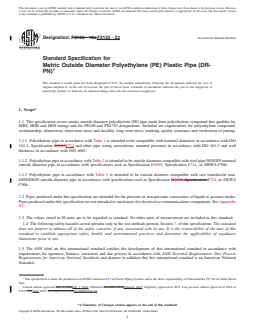
1.1 This specification covers metric outside diameter polyethylene (PE) pipe made from polyethylene compound that qualifies for MRS, HDB and HDS ratings and for PE100 and PE4710 designations. Included are requirements for polyethylene compound, workmanship, dimensions, short-term stress and ductility, long-term stress, marking, quality assurance and verification of joining.
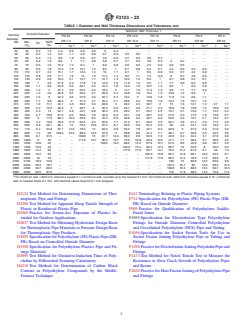
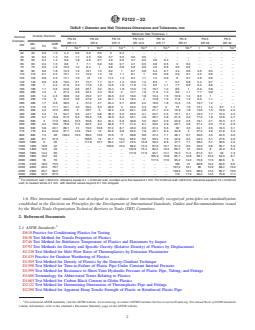
1.1.1 Polyethylene pipe in accordance with Table 1 is intended to be compatible with nominal diameters in accordance with ISO 161-1, Specification F714 and other pipe sizing conventions, nominal pressures in accordance with ISO 161-1 and wall thickness in accordance with ISO 4065.
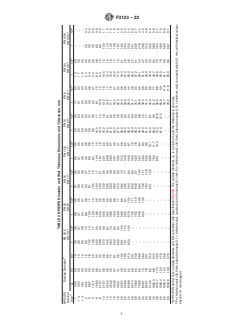
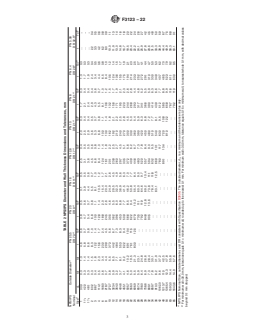
1.1.2 Polyethylene pipe in accordance with Table 2 is intended to be outside diameter compatible with steel pipe NPS/IPS nominal outside diameter pipe in accordance with specifications such as Specification D3035, Specification F714, or AWWA C906.
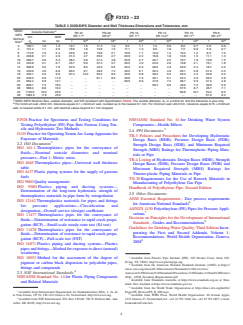
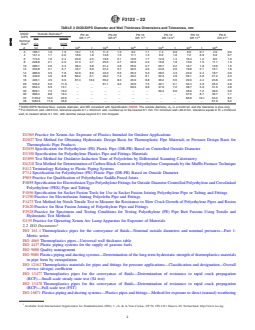
1.1.3 Polyethylene pipe in accordance with Table 3 is intended to be outside diameter compatible with cast iron/ductile iron, DIPS/DIOD outside diameter pipe in accordance with specifications such as Specification F714, or AWWA C906.
1.2 Pipes produced under this specification are intended for the pressure or non-pressure conveyance of liquid or gaseous media. Pipes produced under this specification are not intended as enclosures for electrical or communications components. See Appendix X1.
1.3 The values stated in SI units are to be regarded as standard. No other units of measurement are included in this standard.
1.4 The following safety hazards caveat pertains only to the test methods portion, Section 7, of this specification: This standard does not purport to address all of the safety concerns, if any, associated with its use. It is the responsibility of the user of this standard to establish appropriate safety, health, and environmental practices and determine the applicability of regulatory limitations prior to use.
1.5 The ANS label on this international standard certifies the development of this international standard in accordance with requirements for openness, balance, consensus and due process in accordance with ANSI Essential Requirements: Due Process Requirements for American National Standards and denotes in addition that this international standard is an American National Standard.
1.6 This international standard was developed in accordance with internationally recognized principles on standardization established in the Decision on Principles for the Development of International Standards, Guides and Recommendations issued by the World Trade Organization Technical Barriers to Trade (TBT) Committee.
- Status
- Published
- Publication Date
- 31-Jan-2022
- Technical Committee
- F17 - Plastic Piping Systems
- Drafting Committee
- F17.26 - Olefin Based Pipe
Buy Documents
ASTM F3123-22 - Standard Specification for Metric Outside Diameter Polyethylene (PE) Plastic Pipe (DR-PN)
REDLINE ASTM F3123-22 - Standard Specification for Metric Outside Diameter Polyethylene (PE) Plastic Pipe (DR-PN)
Overview
ASTM F3123-22: Standard Specification for Metric Outside Diameter Polyethylene (PE) Plastic Pipe (DR-PN) outlines requirements for polyethylene (PE) pipes with metric outside diameters designed for both pressure and non-pressure conveyance of liquids or gases. Developed by ASTM International, this specification covers PE pipe made from PE100 and PE4710 compounds, ensuring compatibility with international dimensions and pressure ratings according to ISO 161-1 and ISO 4065.
This standard promotes interchangeability, reliability, and global market acceptance by aligning PE pipe dimensions, tolerances, mechanical properties, and quality measures with widely recognized international standards. It is especially relevant in water, gas, and industrial service sectors.
Key Topics
- Polyethylene Pipe Types: Addresses pipes produced from PE100/PE4710 compounds, which qualify for minimum required strength (MRS), hydrostatic design base (HDB), and hydrostatic design stress (HDS) ratings.
- Dimensional Standards: Ensures compatibility with nominal diameters, nominal pressures, and wall thickness according to ISO 161-1 (metric series), ISO 4065 (wall thickness table), and other sizing conventions, including NPS/IPS steel and DIOD/DIPS cast iron pipe dimensions.
- Mechanical and Physical Requirements:
- Workmanship, wall thickness, and tolerances
- Short-term and long-term stress resistance, ductility, and elevated temperature sustained pressure
- Marking, traceability, and verification of pipe joining
- Material Properties:
- Carbon black content, density, and antioxidant stability
- Requirements for resistance to UV exposure and environmental factors
- Use of rework material in manufacturing when blended with new PE compound
- Quality Assurance: Manufacturers must implement documented quality control procedures covering inspection, sampling, and compliance documentation.
- Test Methods: References standardized ASTM and ISO testing for verifying dimensional, mechanical, and long-term pipe performance.
Applications
ASTM F3123-22 applies to a broad range of infrastructure and construction projects requiring PE plastic pipe with metric outside diameters, including:
- Water Supply and Distribution: Suitable for potable water transmission in municipal systems, complying with health and environmental regulations.
- Gas Distribution: Used for transporting gaseous fuels with optional assessment for resistance to rapid crack propagation (RCP) for added safety.
- Industrial Fluids: Supports a variety of pressurized and non-pressurized liquid and gas conveyance in industrial settings.
- Infrastructure Upgrades: Enables compatibility with existing metric, steel (NPS/IPS), and cast iron (DIPS/DIOD) piping systems, streamlining retrofits and repairs.
- Global Projects: International compatibility and recognition facilitate cross-border engineering, procurement, and construction activities.
Note: Pipes covered by this standard are not designed for use as electrical or communications ducting.
Related Standards
- ASTM D3035 & F714: Specifications for Polyethylene Pipe based on controlled outside diameter
- AWWA C906: PE Pressure Pipe and Fittings for Waterworks
- NSF/ANSI 14 & 61: Standards for plastic piping components and drinking water system health effects
- ISO 161-1, ISO 4065: Thermoplastics pipes for the conveyance of fluids - Dimensions and wall thickness
- ISO 9080, ISO 12162: Determination of long-term hydrostatic strength, classification of thermoplastic pipe materials
- PPI TR-3 & TR-4: Guidelines for qualification and listing of PE pipe material strength characteristics
By adhering to ASTM F3123-22, manufacturers and users can ensure product compatibility, safety, durability, and regulatory compliance for metric outside diameter PE pipe in a range of critical infrastructure applications.
Relations
- Effective Date
- 01-Apr-2024
- Effective Date
- 01-Feb-2024
- Refers
ASTM D1238-23a - Standard Test Method for Melt Flow Rates of Thermoplastics by Extrusion Plastometer - Effective Date
- 15-Nov-2023
- Effective Date
- 01-Oct-2023
- Effective Date
- 01-Apr-2020
- Effective Date
- 01-Feb-2020
- Effective Date
- 01-Feb-2020
- Effective Date
- 01-Aug-2019
- Effective Date
- 01-Jan-2019
- Effective Date
- 01-Jan-2019
- Effective Date
- 01-Jan-2019
- Effective Date
- 01-Sep-2018
- Refers
ASTM D1600-18 - Standard Terminology for Abbreviated Terms Relating to Plastics (Withdrawn 2024) - Effective Date
- 01-Jan-2018
- Effective Date
- 01-Aug-2017
- Effective Date
- 01-Feb-2017
Buy Documents
ASTM F3123-22 - Standard Specification for Metric Outside Diameter Polyethylene (PE) Plastic Pipe (DR-PN)
REDLINE ASTM F3123-22 - Standard Specification for Metric Outside Diameter Polyethylene (PE) Plastic Pipe (DR-PN)
Get Certified
Connect with accredited certification bodies for this standard

Institut za varilstvo d.o.o. (Welding Institute)
Slovenia's leading welding institute since 1952. ISO 3834, EN 1090, pressure equipment certification, NDT personnel, welder qualification. Only IIW Au
Sponsored listings
Frequently Asked Questions
ASTM F3123-22 is a technical specification published by ASTM International. Its full title is "Standard Specification for Metric Outside Diameter Polyethylene (PE) Plastic Pipe (DR-PN)". This standard covers: ABSTRACT This specification covers metric outside diameter polyethylene (PE) pipe made from polyethylene compound that qualifies for minimum required strength (MRS), hydrostatic design base (HDB), and hydrostatic design stress (HDS) ratings as well as for PE100 and PE4710 designations. PE pipes governed by this specification are intended for pressure or non-pressure conveyance of liquid or gaseous media and must be compatible with nominal diameters and nominal pressures in accordance with ISO 161-1 and wall thickness in accordance with ISO 4065. The requirements cover: PE100/PE4710 PE compound, workmanship, diameter and wall thickness dimensions and tolerances, elevated temperature sustained pressure, short-term stress and ductility, long-term stress, marking, quality assurance and verification of joining. SCOPE 1.1 This specification covers metric outside diameter polyethylene (PE) pipe made from polyethylene compound that qualifies for MRS, HDB and HDS ratings and for PE100 and PE4710 designations. Included are requirements for polyethylene compound, workmanship, dimensions, short-term stress and ductility, long-term stress, marking, quality assurance and verification of joining. 1.1.1 Polyethylene pipe in accordance with Table 1 is intended to be compatible with nominal diameters in accordance with ISO 161-1, Specification F714 and other pipe sizing conventions, nominal pressures in accordance with ISO 161-1 and wall thickness in accordance with ISO 4065. 1.1.2 Polyethylene pipe in accordance with Table 2 is intended to be outside diameter compatible with steel pipe NPS/IPS nominal outside diameter pipe in accordance with specifications such as Specification D3035, Specification F714, or AWWA C906. 1.1.3 Polyethylene pipe in accordance with Table 3 is intended to be outside diameter compatible with cast iron/ductile iron, DIPS/DIOD outside diameter pipe in accordance with specifications such as Specification F714, or AWWA C906. 1.2 Pipes produced under this specification are intended for the pressure or non-pressure conveyance of liquid or gaseous media. Pipes produced under this specification are not intended as enclosures for electrical or communications components. See Appendix X1. 1.3 The values stated in SI units are to be regarded as standard. No other units of measurement are included in this standard. 1.4 The following safety hazards caveat pertains only to the test methods portion, Section 7, of this specification: This standard does not purport to address all of the safety concerns, if any, associated with its use. It is the responsibility of the user of this standard to establish appropriate safety, health, and environmental practices and determine the applicability of regulatory limitations prior to use. 1.5 The ANS label on this international standard certifies the development of this international standard in accordance with requirements for openness, balance, consensus and due process in accordance with ANSI Essential Requirements: Due Process Requirements for American National Standards and denotes in addition that this international standard is an American National Standard. 1.6 This international standard was developed in accordance with internationally recognized principles on standardization established in the Decision on Principles for the Development of International Standards, Guides and Recommendations issued by the World Trade Organization Technical Barriers to Trade (TBT) Committee.
ABSTRACT This specification covers metric outside diameter polyethylene (PE) pipe made from polyethylene compound that qualifies for minimum required strength (MRS), hydrostatic design base (HDB), and hydrostatic design stress (HDS) ratings as well as for PE100 and PE4710 designations. PE pipes governed by this specification are intended for pressure or non-pressure conveyance of liquid or gaseous media and must be compatible with nominal diameters and nominal pressures in accordance with ISO 161-1 and wall thickness in accordance with ISO 4065. The requirements cover: PE100/PE4710 PE compound, workmanship, diameter and wall thickness dimensions and tolerances, elevated temperature sustained pressure, short-term stress and ductility, long-term stress, marking, quality assurance and verification of joining. SCOPE 1.1 This specification covers metric outside diameter polyethylene (PE) pipe made from polyethylene compound that qualifies for MRS, HDB and HDS ratings and for PE100 and PE4710 designations. Included are requirements for polyethylene compound, workmanship, dimensions, short-term stress and ductility, long-term stress, marking, quality assurance and verification of joining. 1.1.1 Polyethylene pipe in accordance with Table 1 is intended to be compatible with nominal diameters in accordance with ISO 161-1, Specification F714 and other pipe sizing conventions, nominal pressures in accordance with ISO 161-1 and wall thickness in accordance with ISO 4065. 1.1.2 Polyethylene pipe in accordance with Table 2 is intended to be outside diameter compatible with steel pipe NPS/IPS nominal outside diameter pipe in accordance with specifications such as Specification D3035, Specification F714, or AWWA C906. 1.1.3 Polyethylene pipe in accordance with Table 3 is intended to be outside diameter compatible with cast iron/ductile iron, DIPS/DIOD outside diameter pipe in accordance with specifications such as Specification F714, or AWWA C906. 1.2 Pipes produced under this specification are intended for the pressure or non-pressure conveyance of liquid or gaseous media. Pipes produced under this specification are not intended as enclosures for electrical or communications components. See Appendix X1. 1.3 The values stated in SI units are to be regarded as standard. No other units of measurement are included in this standard. 1.4 The following safety hazards caveat pertains only to the test methods portion, Section 7, of this specification: This standard does not purport to address all of the safety concerns, if any, associated with its use. It is the responsibility of the user of this standard to establish appropriate safety, health, and environmental practices and determine the applicability of regulatory limitations prior to use. 1.5 The ANS label on this international standard certifies the development of this international standard in accordance with requirements for openness, balance, consensus and due process in accordance with ANSI Essential Requirements: Due Process Requirements for American National Standards and denotes in addition that this international standard is an American National Standard. 1.6 This international standard was developed in accordance with internationally recognized principles on standardization established in the Decision on Principles for the Development of International Standards, Guides and Recommendations issued by the World Trade Organization Technical Barriers to Trade (TBT) Committee.
ASTM F3123-22 is classified under the following ICS (International Classification for Standards) categories: 23.040.20 - Plastics pipes. The ICS classification helps identify the subject area and facilitates finding related standards.
ASTM F3123-22 has the following relationships with other standards: It is inter standard links to ASTM F1473-24, ASTM F714-24, ASTM D1238-23a, ASTM D2565-23, ASTM F412-20, ASTM D1603-20, ASTM D4218-20, ASTM D2290-19a, ASTM F1290-19, ASTM F412-19, ASTM D2290-19, ASTM D1599-18, ASTM D1600-18, ASTM F412-17a, ASTM F412-17. Understanding these relationships helps ensure you are using the most current and applicable version of the standard.
ASTM F3123-22 is available in PDF format for immediate download after purchase. The document can be added to your cart and obtained through the secure checkout process. Digital delivery ensures instant access to the complete standard document.
Standards Content (Sample)
This international standard was developed in accordance with internationally recognized principles on standardization established in the Decision on Principles for the
Development of International Standards, Guides and Recommendations issued by the World Trade Organization Technical Barriers to Trade (TBT) Committee.
Designation: F3123 −22 An American National Standard
Standard Specification for
Metric Outside Diameter Polyethylene (PE) Plastic Pipe (DR-
PN)
This standard is issued under the fixed designation F3123; the number immediately following the designation indicates the year of
original adoption or, in the case of revision, the year of last revision. A number in parentheses indicates the year of last reapproval. A
superscript epsilon (´) indicates an editorial change since the last revision or reapproval.
1. Scope* of this standard to establish appropriate safety, health, and
environmental practices and determine the applicability of
1.1 This specification covers metric outside diameter poly-
regulatory limitations prior to use.
ethylene (PE) pipe made from polyethylene compound that
1.5 The ANS label on this international standard certifies the
qualifies for MRS, HDB and HDS ratings and for PE100 and
development of this international standard in accordance with
PE4710 designations. Included are requirements for polyeth-
requirements for openness, balance, consensus and due process
ylene compound, workmanship, dimensions, short-term stress
in accordance with ANSI Essential Requirements: Due Process
and ductility, long-term stress, marking, quality assurance and
Requirements for American National Standards and denotes in
verification of joining.
addition that this international standard is an American Na-
1.1.1 Polyethylene pipe in accordance with Table 1 is
tional Standard.
intended to be compatible with nominal diameters in accor-
1.6 This international standard was developed in accor-
dance with ISO 161-1, Specification F714 and other pipe sizing
dance with internationally recognized principles on standard-
conventions, nominal pressures in accordance with ISO 161-1
ization established in the Decision on Principles for the
and wall thickness in accordance with ISO 4065.
Development of International Standards, Guides and Recom-
1.1.2 Polyethylene pipe in accordance with Table 2 is
mendations issued by the World Trade Organization Technical
intended to be outside diameter compatible with steel pipe
Barriers to Trade (TBT) Committee.
NPS/IPS nominal outside diameter pipe in accordance with
specifications such as Specification D3035, Specification F714,
2. Referenced Documents
or AWWA C906.
2.1 ASTM Standards:
1.1.3 Polyethylene pipe in accordance with Table 3 is
intended to be outside diameter compatible with cast iron/ D618 Practice for Conditioning Plastics for Testing
D638 Test Method for Tensile Properties of Plastics
ductile iron, DIPS/DIOD outside diameter pipe in accordance
D746 Test Method for Brittleness Temperature of Plastics
with specifications such as Specification F714,or AWWA
C906. and Elastomers by Impact
D792 Test Methods for Density and Specific Gravity (Rela-
1.2 Pipes produced under this specification are intended for
tive Density) of Plastics by Displacement
the pressure or non-pressure conveyance of liquid or gaseous
D1238 Test Method for Melt Flow Rates of Thermoplastics
media. Pipes produced under this specification are not intended
by Extrusion Plastometer
as enclosures for electrical or communications components.
D1435 Practice for Outdoor Weathering of Plastics
See Appendix X1.
D1505 Test Method for Density of Plastics by the Density-
1.3 The values stated in SI units are to be regarded as
Gradient Technique
standard. No other units of measurement are included in this
D1598 Test Method for Time-to-Failure of Plastic Pipe
standard.
Under Constant Internal Pressure
1.4 The following safety hazards caveat pertains only to the D1599 Test Method for Resistance to Short-Time Hydraulic
test methods portion, Section 7, of this specification: This Pressure of Plastic Pipe, Tubing, and Fittings
standard does not purport to address all of the safety concerns, D1600 Terminology for Abbreviated Terms Relating to Plas-
if any, associated with its use. It is the responsibility of the user tics
D1603 Test Method for Carbon Black Content in Olefin
Plastics
This specification is under the jurisdiction of ASTM Committee F17 on Plastic
Piping Systems and is the direct responsibility of Subcommittee F17.26 on Olefin
Based Pipe. For referenced ASTM standards, visit the ASTM website, www.astm.org, or
Current edition approved Feb. 1, 2022. Published February 2022. Originally contact ASTM Customer Service at service@astm.org. For Annual Book of ASTM
approved in 2015. Last previous edition approved in 2018 as F3123–18a. DOI: Standards volume information, refer to the standard’s Document Summary page on
10.1520/F3123–22 the ASTM website.
*A Summary of Changes section appears at the end of this standard
Copyright © ASTM International, 100 Barr Harbor Drive, PO Box C700, West Conshohocken, PA 19428-2959. United States
F3123 − 22
TABLE 1 Diameter and Wall Thickness Dimensions and Tolerances, mm
Minimum Wall Thickness, t
Outside Diameter
Nominal
PN 25 PN 20 PN 16 PN 12.5 PN 10 PN 8 PN 6 PN 5
Diameter,
DR 7.4 DR 9 DR 11 DR 13.6 DR 17 DR 21 DR 26 DR 33
Min. OOR
DN
Tol.
A A A A A A A A
(d ) Tol.
n tTol. tTol. tTol. tTol. tTol. tTol. tTol. tTol.
32 32 0.3 1.3 4.4 0.6 3.6 0.5 3 0.4 . . . . . . . . . .
40 40 0.4 1.4 5.5 1.7 4.5 0.6 3.7 0.5 3.0 0.5 . . . . . . . .
50 50 0.4 1.4 6.9 1.8 5.6 0.7 4.6 0.6 3.7 0.5 3.0 0.4 . . . . . .
63 63 0.4 1.5 8.6 1 7.1 0.9 5.8 0.7 4.7 0.5 3.8 0.5 3 0.4 . . . .
75 75 0.5 1.6 10.3 1.2 8.4 1 6.8 0.8 5.6 0.6 4.5 0.6 3.6 0.5 . . . .
90 90 0.6 1.8 12.3 1.5 10.1 1.2 8.2 1 6.7 0.8 5.4 0.7 4.3 0.6 3.5 0.5 . .
110 110 0.7 2.2 15.1 1.7 12.3 1.4 10 1.1 8.1 1 6.6 0.8 5.3 0.7 4.2 0.6 . .
125 125 0.8 2.5 17.1 1.9 14 1.6 11.4 1.3 9.2 1.1 7.4 0.9 6 0.7 4.8 0.6 . .
140 140 0.9 2.8 19.2 2.1 15.7 1.7 12.7 1.4 10.3 1.2 8.3 1 6.7 0.8 5.4 0.7 . .
160 160 1 3.2 21.9 2.3 17.9 1.9 14.6 1.6 11.8 1.3 9.5 1.1 7.7 0.9 6.2 0.8 . .
180 180 1.1 3.6 24.6 2.6 20.1 2.2 16.4 1.8 13.3 1.5 10.7 1.2 8.6 1 6.9 0.8 . .
200 200 1.2 4 27.4 2.9 22.4 2.4 18.2 2 14.7 1.5 11.9 1.3 9.6 1.1 7.7 0.9 . .
225 225 1.4 4.5 30.8 3.2 25.2 2.7 20.5 2.2 16.6 1.8 13.4 1.5 10.8 1.2 8.6 1 . .
250 250 1.5 5 34.2 3.6 27.9 4.2 22.7 2.4 18.4 2 14.8 1.6 11.9 1.3 9.6 1.1 . .
280 280 1.7 9.8 38.3 4 31.3 4.7 25.4 2.7 20.6 2.2 16.6 1.8 13.4 1.5 10.7 1.2 . .
315 315 1.9 11.1 43.1 4.5 35.2 5.3 28.6 3 23.2 2.3 18.7 2 15 1.6 12.1 1.4 9.7 1.1
355 355 2.2 12.5 48.5 5 39.7 6 32.2 4.9 26.1 2.8 21.1 2.3 16.9 1.8 13.6 1.5 10.9 2.2
400 400 2.4 14 54.7 5.6 44.7 6.8 36.3 5.5 29.4 3.1 23.7 2.5 19.1 2.1 15.3 1.7 12.3 2.4
450 450 2.7 15.8 61.5 6.3 50.3 7.6 40.9 6.2 33.1 4.9 26.7 2.8 21.5 2.3 17.2 1.9 13.8 2.7
500 500 3 17.5 68.4 10.3 55.8 8.4 45.4 6.9 36.8 5.5 29.7 2.9 23.9 2.5 19.1 2.1 15.3 2.7
560 560 3.4 19.6 76.6 11.5 62.5 9.4 50.8 7.7 41.2 6.1 33.2 4.9 26.7 2.8 21.4 2.3 17.2 2.9
630 630 3.8 22.1 86.1 13 70.3 10.6 57.2 8.7 46.3 6.9 37.4 5.6 30 4.5 24.1 2.6 19.3 3.1
710 710 6.4 24.9 97.1 14.5 79.3 12 64.5 9.8 52.2 7.8 42.1 6.3 33.9 5 27.2 2.9 21.8 3.3
800 800 7.2 28 109.3 16.3 89.3 13.5 72.6 11 58.8 8.8 47.4 7.1 38.1 5.7 30.6 4.5 24.5 3.6
900 900 8.1 31.5 . . 100.6 15 81.7 12.4 66.2 9.9 53.3 7.9 42.9 6.4 34.4 5.1 27.6 3.9
1000 1000 9 35 . . 111.8 16.7 90.2 13.7 72.5 10.8 59.3 8.8 47.7 7.1 38.2 5.7 30.6 4.5
1200 1200 10.8 42 . . . . 109.5 16.4 88.2 13.2 67.9 10.1 57.2 8.5 45.9 6.8 36.7 5.5
1400 1400 12.6 49 . . . . . . 102.9 15.4 82.4 12.3 66.7 10 53.5 8 42.9 6.4
1600 1600 14.4 56 . . . . . . 117.6 17.6 94.1 14.1 76.2 11.4 61.2 9.1 49 7.3
1800 1800 16.2 63 . . . . . . . . 105.9 15.8 85.7 12.8 69.1 10.3 54.5 8.1
2000 2000 18 70 . . . . . . . . 117.6 17.6 95.2 14.2 76.9 11.5 60.6 9
2100 2100 18.9 73.5 . . . . . . . . . . 100 15 80.8 12.2 63.6 9.6
2250 2250 20.3 78.7 . . . . . . . . . . 107.2 16.1 86 12.9 68.2 10.2
2300 2300 20.7 80.5 . . . . . . . . . . 109.5 16.5 88.5 13.3 69.7 10.5
2500 2500 22.5 87.5 . . . . . . . . . . 119 17.9 96.2 14.5 75.8 11.4
A
For minimum wall #30.0 mm, tolerance equals 0.1 × minimum wall, rounded up to the nearest 0.1 mm. For minimum wall >30.0 mm, tolerance equals 0.15 × minimum
wall, to nearest whole 0.1 mm, with decimal values beyond 0.1 mm dropped.
D2122 Test Method for Determining Dimensions of Ther- F412 Terminology Relating to Plastic Piping Systems
moplastic Pipe and Fittings F714 Specification for Polyethylene (PE) Plastic Pipe (DR-
D2290 Test Method for Apparent Hoop Tensile Strength of PR) Based on Outside Diameter
Plastic or Reinforced Plastic Pipe F905 Practice for Qualification of Polyethylene Saddle-
D2565 Practice for Xenon-Arc Exposure of Plastics In- Fused Joints
tended for Outdoor Applications F1055 Specification for Electrofusion Type Polyethylene
D2837 Test Method for Obtaining Hydrostatic Design Basis Fittings for Outside Diameter Controlled Polyethylene
for Thermoplastic Pipe Materials or Pressure Design Basis and Crosslinked Polyethylene (PEX) Pipe and Tubing
for Thermoplastic Pipe Products F1056 Specification for Socket Fusion Tools for Use in
D3035 Specification for Polyethylene (PE) Plastic Pipe (DR- Socket Fusion Joining Polyethylene Pipe or Tubing and
PR) Based on Controlled Outside Diameter Fittings
D3350 Specification for Polyethylene Plastics Pipe and Fit- F1290 Practice for Electrofusion Joining Polyolefin Pipe and
tings Materials Fittings
D3895 Test Method for Oxidative-Induction Time of Poly- F1473 Test Method for Notch Tensile Test to Measure the
olefins by Differential Scanning Calorimetry Resistance to Slow Crack Growth of Polyethylene Pipes
D4218 Test Method for Determination of Carbon Black and Resins
Content in Polyethylene Compounds by the Muffle- F2620 Practice for Heat Fusion Joining of Polyethylene Pipe
Furnace Technique and Fittings
F3123 − 22
TABLE 2 NPS/IPS Diameter and Wall Thickness Dimensions and Tolerances, mm
A
NPS/IPS Outside Diameter PN 25.5 PN 20 PN 16 PN 12.8 PN 10 PN 8 PN 6.4 PN 5.08
A A A A A A A A
Nominal DR 7.3 DR 9 DR 11 DR 17 DR 21 DR 21 DR 26 DR 32.5
A B B B B B B B B
Size d tol tol t Tol tTol tTol tTol tTol tTol tTol tTol
n
1 33.3 0.3 1.3 4.6 0.6 3.8 0.5 3.1 0.5 2.5 0.4 2.0 0.3 1.7 0.3 1.3 0.3 . .
1 ⁄4 42.0 0.3 1.4 5.8 0.7 4.7 0.6 3.9 0.5 3.1 0.5 2.5 0.4 2.1 0.4 1.7 0.3 . .
1 ⁄2 48.1 0.3 1.4 6.6 0.8 5.4 0.7 4.4 0.6 3.6 0.5 2.9 0.4 2.4 0.4 1.9 0.3 . .
2 60.2 0.3 1.5 8.3 1.0 6.8 0.8 5.5 0.7 4.5 0.6 3.6 0.5 2.9 0.4 2.4 0.4 2.2 0.4
3 88.7 0.4 1.8 12.2 1.4 10.0 1.1 8.1 1.0 6.6 0.8 5.3 0.7 4.3 0.6 3.4 0.5 3.3 0.5
4 114.1 0.5 2.3 15.6 1.7 12.8 1.4 10.5 1.2 8.4 1.0 6.8 0.8 5.5 0.7 4.4 0.6 4.2 0.6
6 168.0 0.6 3.4 23.0 2.4 18.8 2.0 15.4 1.7 12.4 1.4 10.0 1.1 8.1 1.0 6.5 0.8 6.2 0.8
8 218.7 0.7 4.4 29.9 4.5 24.5 2.6 20.0 2.1 16.1 1.8 13.0 1.4 10.6 1.2 8.4 1.0 8.0 0.9
10 272.7 0.8 5.5 37.3 5.6 30.5 4.6 24.9 2.6 20.1 2.2 16.2 1.8 13.2 1.5 10.5 1.2 10.0 1.1
12 323.4 0.9 6.5 44.2 6.7 36.2 5.5 29.5 4.5 23.8 2.5 19.2 2.1 15.6 1.7 12.4 1.4 11.9 1.3
14 354.0 3.2 7.1 48.4 7.3 39.6 6.0 32.3 4.9 26.0 2.7 21.0 2.2 17.1 1.9 13.6 1.5 13.0 1.4
16 404.6 3.7 8.1 55.3 8.3 45.3 6.8 36.9 5.6 29.7 4.5 24.0 2.5 19.5 2.1 15.5 1.7 14.8 1.6
18 455.1 4.1 9.2 62.2 9.4 50.9 7.7 41.5 6.3 33.5 5.1 27.0 2.8 22.0 2.3 17.5 1.9 16.7 1.8
20 505.7 4.6 10.2 69.1 10.4 56.6 8.5 46.2 7.0 37.2 5.6 30.0 4.5 24.4 2.6 19.4 2.1 18.5 2.0
22 556.3 5.0 19.5 76.1 11.5 62.2 9.4 50.8 7.7 40.9 6.2 33.0 5.0 26.8 2.8 21.4 2.3 20.4 2.2
24 606.9 5.5 21.3 83.0 12.5 67.9 10.2 55.4 8.4 44.6 6.7 36.0 5.4 29.3 4.4 23.3 2.5 22.2 2.4
26 657.4 5.9 23.1 . . 73.5 11.1 60.0 9.0 48.3 7.3 39.0 5.9 31.7 4.8 25.2 2.7 24.1 2.6
28 708.0 6.4 24.8 . . 79.2 11.9 64.6 9.7 52.0 7.8 42.0 6.3 34.1 5.2 27.2 4.1 25.9 2.7
30 758.6 6.9 26.6 . . 84.8 12.8 69.2 10.4 55.7 8.4 45.0 6.8 36.6 5.5 29.1 4.4 27.8 4.2
32 809.1 7.3 28.4 . . 90.5 13.6 73.8 11.1 59.4 9.0 48.0 7.2 39.0 5.9 31.0 4.7 29.6 4.5
34 859.7 7.8 30.1 . . . . 78.4 11.8 63.2 9.5 51.0 7.7 41.4 6.3 33.0 5.0 31.5 4.8
36 910.3 8.2 31.9 . . . . 83.1 12.5 66.9 10.1 54.0 8.1 43.9 6.6 34.9 5.3 33.3 5.0
42 1062.0 9.6 37.2 . . . . . . 78.0 11.7 63.0 9.5 51.2 7.7 40.7 6.2 38.9 5.9
48 1213.7 11.0 42.5 . . . . . . 89.1 13.4 72.0 10.8 58.5 8.8 46.5 7.0 44.4 6.7
54 1365.4 12.3 47.8 . . . . . . . . 81.0 12.2 65.8 9.9 52.3 7.9 49.9 7.5
63 1593.0 14.4 55.8 . . . . . . . . . . 76.7 11.6 61.1 9.2 58.3 8.8
65 1643.6 14.9 57.6 . . . . . . . . . . 79.2 11.9 63.0 9.5 60.1 9.1
A
NPS ⁄IPS Nominal Size, outside diameter, and DR consistent with Specification D3035. The outside diameter, d , is a minimum and the tolerance is plus only.
n
B
For minimum wall <30.0 mm, tolerance equals 0.1 × minimum wall, rounded up to the nearest 0.1 mm. For minimum wall >30.0 mm, tolerance equals 0.15 × minimum wall, to nearest whole 0.1 mm, with decimal values
beyond 0.1 mm dropped.
F3123 − 22
TABLE 3 DIOD/DIPS Diameter and Wall Thickness Dimensions and Tolerances, mm
A
DIOD/
Outside Diameter
PN 24 PN 20 PN 16 PN 12 PN 10 PN 8
DIPS A A A A A A
DR 7.7 DR 9 DR 11 DR 14.3 DR 17 DR 21
min OOR
Nominal
B B B B B B
A
d tol tol t tol ttol ttol ttol ttol ttol
Size n
3 100.1 1.0 1.9 13.7 1.5 11.2 1.3 9.2 1.1 7.4 0.9 6.0 0.7 4.9 0.6
4 121.4 1.1 2.0 16.6 1.8 13.6 1.5 11.1 1.3 9.0 1.0 7.2 0.9 5.9 0.7
6 174.5 1.6 2.4 23.9 2.5 19.6 2.1 16.0 1.7 12.9 1.4 10.4 1.2 8.5 1.0
8 228.8 2.1 2.9 31.3 4.7 25.6 2.7 20.9 2.2 16.8 1.8 13.6 1.5 11.1 1.3
10 280.7 2.6 3.3 38.4 5.8 31.4 4.8 25.6 2.7 20.7 2.2 16.7 1.8 13.6 1.5
12 333.8 3.1 6.7 45.7 6.9 37.4 5.7 30.5 4.6 24.6 2.6 19.8 2.1 16.1 1.8
14 386.9 3.5 7.8 52.9 8.0 43.3 6.5 35.3 5.3 28.5 4.3 23.0 2.4 18.7 2.0
16 440.0 4.0 8.8 60.2 9.1 49.2 7.4 40.2 6.1 32.3 4.9 26.1 2.8 21.2 2.3
18 493.1 4.5 9.9 67.4 10.2 55.2 8.3 45.0 6.8 36.2 5.5 29.3 4.4 23.8 2.5
20 546.2 5.0 11.0 . . 61.1 9.2 49.9 7.5 40.1 6.1 32.4 4.9 26.3 2.8
24 652.4 5.9 13.1 . . . . 59.5 9.0 47.9 7.2 38.7 5.9 31.5 4.8
30 809.1 7.3 16.2 . . . . . . 59.4 9.0 48.0 7.2 39.0 5.9
36 968.4 8.8 19.4 . . . . . . . . 57.5 8.7 46.7 7.1
42 1125.2 10.2 22.6 . . . . . . . . 66.8 10.1 54.2 8.2
48 1284.5 11.6 45.0 . . . . . . . . . . 61.9 9.3
A
DIOD ⁄DIPS Nominal Size, outside diameter, and DR consistent with Specification D3035. The outside diameter, d , is a minimum and the tolerance is plus only.
n
B
For minimum wall <30.0 mm, tolerance equals 0.1 × minimum wall, rounded up to the nearest 0.1 mm. For minimum wall >30.0 mm, tolerance equals 0.15 × minimum
wall, to nearest whole 0.1 mm, with decimal values beyond 0.1 mm dropped.
F2928 Practice for Specimens and Testing Conditions for NSF/ANSI Standard No. 61 for Drinking Water System
Testing Polyethylene (PE) Pipe Butt Fusions Using Ten- Components—Health Effects
sile and Hydrostatic Test Methods 5
2.4 PPI Documents:
G155 Practice for Operating Xenon Arc Lamp Apparatus for
TR-3 Policies and Procedures for Developing Hydrostatic
Exposure of Materials
Design Basis (HDB), Pressure Design Basis (PDB),
2.2 ISO Documents
Strength Design Basis (SDB), and Minimum Required
ISO 161-1 Thermoplastics pipes for the conveyance of
Strength (MRS) Ratings for Thermoplastic Piping Mate-
fluids—Nominal outside diameters and nominal
rials or Pipe
pressures—Part 1: Metric series
TR-4 Listing of Hydrostatic Design Bases (HDB), Strength
ISO 4065 Thermoplastics pipes—Universal wall thickness
Design Bases (SDB), Pressure Design Bases (PDB) and
table
Minimum Required Strength (MRS) Ratings for
ISO 4437 Plastic piping systems for the supply of gaseous
Thermo plastic Piping Materials or Pipe
fuels
TN-30 Requirements for the Use of Rework Materials in
ISO 9000 Quality management
Manufacturing of Polyethylene Gas Pipe
ISO 9080 Plastics piping and ducting systems—
Handbook of Polyethylene Pipe, Second Edition
Determination of the long-term hydrostatic strength of
2.5 Other Documents:
thermoplastics materials in pipe form by extrapolation
ANSI Essential Requirements : Due process requirements
ISO 12162 Thermoplastics materials for pipes and fittings
for American National Standards
for pressure applications—Classification and
AS/NZS 4130 Polyetheylene (PE) Pipes for Pressure Appli-
designation—Overall service (design) coefficient
cations
ISO 13477 Thermoplastics pipes for the conveyance of
Decision on Principles for the Development of International
fluids—Determination of resistance to rapid crack propa-
Standards , Guides and Recommendations
gation (RCP)—Small-scale steady-state test (S4 test)
Guidelines for Drinking-Water Quality, Third Edition Incor-
ISO 13478 Thermoplastics pipes for the conveyance of
porating the First and Second Addenda, Volume 1:
fluids—Determination of resistance to rapid crack propa-
Recommendations, World Health Organization, Geneva,
gation (RCP)—Full-scale test (FST)
ISO 16871 Plastics piping and ducting systems—Plastics
pipes and fittings—Method for exposure to direct (natural)
weathering
Available from Plastics Pipe Institute (PPI), 105 Decker Court, Suite 825,
ISO 18553 Method for the assessment of the degree of
Irving, TX 75062, http://www.plasticpipe.org.
pigment or carbon black dispersion in polyolefin pipes,
Available from the American National Standards Institute (ANSI) at https://
fittings and compounds
share.ansi.org/shared%20documents/Standards%20Activities/
2.3 NSF International Standards:
American%20National%20Standards/Procedures,%20Guides,%20and%20Forms/
2016_ ANSI_Essential_Requirements.pdf
NSF/ANSI Standard No. 14 for Plastic Piping Components
Available from Standards Australia at https://www.standards.org.au or Stan-
and Related Materials
dards New Zealand at https://www.standards.govt.nz.
Available from the World Trade Organization at https://docs.wto.org/dol2fe/
Available from International Organization for Standardization (ISO), 1, ch. de Pages/FE_Browse/FE_B_009.aspx
la Voie-Creuse, CP 56, CH-1211 Geneva 20, Switzerland, http://www.iso.org. Available from WHO Press, World Health Organization, 20 Avenue Appia,
Available from NSF International, P.O. Box 130140, 789 N. Dixboro Rd., Ann 1211 Geneva 27, Switzerland (tel.: +41 22 791 3264; fax: +41 22 791 4857; e-mail:
Arbor, MI 48105, http://www.nsf.org. bookorders@who.int).
F3123 − 22
EU Council Directive 98/83/EC of 3 November 1998 on the 20 CRS
θ,T
PFA 5 3 3 ~C 3 C 3 .! (2)
A A
quality of water intended for human consumption ~DR 2 1! Cmin
AWWA C906 Polyethylene (PE) Pressure Pipe and Fittings,
where:
4 In. Through 65 In. (100 mm Through 1,650 mm), for
CRS = Categorized Required Strength at temperature θ
(θ,T)
Waterworks
and time T in accordance with 3.2.3.
D = dimension ratio D /t
3. Terminology R O
D = nominal outside diameter, mm,
O
3.1 Definitions—Unless otherwise specified, abbreviations,
t = minimum wall thickness, mm,
initalisms, and definitions are in accordance with Terminology
C = application design coefficient in accordance with
A
F412, and Terminology D1600.
3.2.1 (depending on the application, the use of
several, different C values is acceptable. See
3.2 Definitions of Terms Specific to This Standard:
A
A1.5)
3.2.1 application design coeffıcient, C ,n—A coefficient or
A
series of coefficients applied to Categorized Required strength,
3.2.6 minimum design coeffıcient, C ,n—a factor from
min
CRS in accordance with 3.2.5.2, that account for
(θ,T)
ISO 12162 having a value of 1.25 that accounts for the
application, fluid being transported, installation method and
properties of the piping material when transporting water at
operating conditions. See 3.2.5 and A1.5.
20 °C.
3.2.2 application factor, f ,n—a coefficient applied to PN in
A
3.2.7 minimum required strength, MRS, n—a property of the
accordance with 3.2.5.1 of 1 or less that accounts for estimated
material in accordance with ISO 12162 that represents a
long-term application effects such as chemical effects of fluid
classification range in MPa of the 97.5 % lower confidence
media or environment, variation of external or internal tem-
limit of the mean long-term strength at 20 °C and 50 years.
perature or stress, and installation.
3.2.3 categorized required strength, CRS ,n—a property
3.2.8 nominal pressure, PN, n—a nominal design rating in
(θ,T)
of the material in accordance with ISO 9080 and ISO 12162
bar for internal pressure water at 20 °C, but without consider-
that represents a classification range in MPa of the 97.5 %
ation of media other than water or conditions other than
lower confidence limit of the mean long-term strength at a
sustained internal pressure and sustained temperature.
temperature in °C other than 20 °C, θ, and at a time in years,
NOTE 1—PN is a nominal design rating for sustained internal pressure
T.
for water at 20 °C that provides for product comparison under specific,
3.2.4 design stress, σ,n—the quotient of MRS divided by
S
limited conditions. Actual allowable operating pressure (PFA) is deter-
C . Design stress is at 20 °C and applicable to the convey-
min mined by the designer/user in consideration of the media being conveyed
ance of water.
and conditions of conveyance such as pressure and temperature stability or
variation, installation and quality thereof, and desired degree of reliability.
3.2.5 maximum allowable operating pressure, PFA, n—the
(See 3.2.5, X1.1, and X1.2 for additional information.)
maximum operating pressure in bar determined by the
3.2.9 relation between dimension ratio, MRS and nominal
designer/user that accounts for polyethylene compound
properties, the media being conveyed and the conditions of pressure, n—the following equation is used in this specification
conveyance. to relate pres sure number (PN), dimension ratio (DR), mini-
mum required strength (MRS), minimum design coefficient
3.2.5.1 Determination of maximum allowable operating
(C ), and design stress (σ ):
pressure, PFA, and pressure number, PN—The following min S
equation is used in this specification to relate maximum
20 MRS 20 3σ
S
PN 5 3 5 (3)
allowable operating pressure, PFA, and pressure number, PN:
DR 2 1 C DR 2 1
~ ! ~ !
min
PFA 5PN 3f 3f (1)
T A
where:
where:
PN = nominal pressure design rating, bar,
MRS = minimum required strength at 20 °C, MPa,
PN = nominal pressure, bar,
C = minimum design coefficient, and
PFA = maximum allowable operating pressure, bar,
min
σ = design stress at 20 °C.
f = temperature factor,
S
T
σ = MRS/C
f = application factor
S min
A
3.2.5.2 Determination of maximum allowable operating
3.2.10 temperature factor, f ,n—a coefficient applied to PN
T
pressure, PFA, and categorized required strength, CRS —
in accordance with 3.2.5.1 that accounts for the long term
(θ,T)
The following equation is used in this specification to relate
strength of the polyethylene compound at temperatures other
maximum allowable operating pressure, PFA, and categorized
than 20 °C.
required strength, CRS :
(θ,T)
3.2.11 lower confidence limit of the predicted hydrostatic
strength, σ ,n—a property of the polyethylene compound in
LPL
Available from Publications Office of the European Union 2, rue Mercier 2985 accordance with ISO 12162 that represents a stress value in
Luxembourg LUXEMBOURG Tel: +352 2929-1 E-mail:
MPa for the 97.5 percent lower confidence limit of the
info@publications.europa.eu.
11 predicted hydrostatic strength at a specified temperature in °C
Available from American Water Works Association (AWWA), 6666 W. Quincy
Ave., Denver, CO 80235, http://www.awwa.org. and time in years.
F3123 − 22
4. Pipe Classification 5.1.7 The polyethylene compound density in accordance
Specification D3350 shall be tested in accordance with Test
4.1 General—This specification covers 32 mm through
Method D792 or Test Method D1505.
2500 mm metric outside diameter polyethylene pipe having
5.1.8 Black polyethylene compound shall contain 2.0–2.5
wall thickness in accordance with standard dimension ratios
percent carbon black when pipe is tested in accordance with
(DR 33 through DR 7.3) and nominal pressures in bar for water
6.1.2.
at 20 °C (PN5 through PN25).
5.1.9 Polyethylene compound shall be stabilized against
4.2 Pipe manufacturing and verification of compliance with
deterioration from UV exposure for not less than 18 months for
the requirements of this standard are in accordance with a
color polyethylene compounds, or for not less than 180 months
written quality assurance program that specifies policies and
for black polyethylene compounds.
procedures for manufacturing, frequency of inspection, sam-
NOTE 2—UV resistance is typically determined by exposure to actual
pling and testing of materials and products, and policies and
outdoor (natural sunlight) weathering in accordance with Practice D1435,
procedures for documenting compliance with the requirements
or by accelerated weathering in accordance with Practice D2565 and
of this specification.
Practice G155. Characterization of UV resistance is typically by tension
testing (per 5.1.5) for an elongation at break value that is at least 50 % of
5. Polyethylene Compound and Requirements the elongation at break value when compared to unexposed control
specimens. Studies of high density polyethylene indicate that exposure to
5.1 Polyethylene Compound—Polyethylene compound for
Xenon Arc via Practice G155-A Cycle 1 gives approximately 4.4 times the
the manufacture of pipe in accordance with this specifi cation
acceleration of outdoor Florida exposure. Therefore approximately 2000
hours Xenon Arc testing would approximate 1-year outdoor exposure in
shall be designated in accordance with PPI TR-3 as PE100 and
Florida (approx. 30th degree of latitude) or about 2-years in southern
as PE4710 (“PE100/PE4710”), and shall comply with the
Canada (approx. 50th degree of latitude). A minimum resistance to an
following requirements:
accumulation of 3.5 GJ/m per ISO 16871 represents the yearly exposure
5.1.1 See Table 4.
to sunlight near the 50th degree of latitude.
5.1.2 Polyethylene compound shall contain sufficient anti-
5.1.10 Certification—When required by the purchaser, poly-
oxidant so that the minimum induction temperature shall not be
ethylene compound shall be evaluated, tested, and certified in
less than 220 °C when tested for thermal stability in accor-
accordance with one or more of the following standards by an
dance with Specification D3350.
accredited laboratory that is acceptable to the authority having
5.1.3 The brittleness temperature shall not be warmer than
jurisdiction. The required certification standard(s) shall be by
−60 °C when tested in accordance with Test Method D746.
mutual agreement between purchaser and manufacturer.
5.1.4 The oxidation induction time at 200 °C shall not be
NOTE 3—Because regulatory requirements vary, it is necessary that the
less than 20 minutes when tested in accordance with Test
purchaser identify and specify the applicable certification standard(s) to
Method D3895.
the manufacturer before product purchase.
5.1.5 The minimum nominal tensile strength at yield shall
5.1.10.1 NSF/ANSI Standard No. 61.
be 20.6 MPa, and the failure mode shall be ductile when
5.1.10.2 The health effects portion of NSF/ANSI Standard
determined in accordance with Test Method D638. Testing
No. 14.
temperature shall be 23 °C and the speed of testing shall be 50
5.1.10.3 Guidelines for Drinking Water Quality, World
mm/min. Specimens shall conform to the dimensions and
Health Organization, Geneva, 2008.
requirements for Type IV in Test Method D638 with a
5.1.10.4 EU Council Directive 98/83/EC.
thickness of 1.9 mm 6 0.2 mm. Specimens shall be either die
5.1.11 Listing—MRS, HDB and HDS ratings for the poly-
cut or machined. The minimum elongation at break shall be
ethylene compound shall be listed in accordance with PPI
400 percent.
TR-3.
5.1.6 The polyethylene compound melt flow rate (high load)
shall be tested in accordance with Test Method D1238, 5.2 Polyethylene Rework Material—Polyethylene rework
Condition 190/21.6. material for the manufacture of pipe in accordance with this
TABLE 4 PE100/PE4710 Polyethylene Compound Requirements
Requirement Required Value or Value Range
A
MRS at 20 °C, per ISO 9080, ISO 12162 and PPI TR-3, MPa $ 10
A,B
HDB at 23 ºC, per Test Method D2837 and PPI TR-3, MPa $ 11.03
A,B
HDB at 60 ºC, per Test Method D2837 and PPI TR-3, MPa $ 6.89
A,B
HDS for water at 23 °C, per Test Method D2837 and PPI TR-3, MPa $ 6.89
C
Melt flow rate (high load) per Test Method D1238, g/10 min >4.0 to # 20
D 3
Nominal natural base resin density per Specification D3350, g/cm >0.947 to # 0.955
E
Minimum average SCG Resistance (PENT) per Test Method F1473, hr $ 500
A
MRS, HDB and HDS determinations shall be listed in accordance with PPI TR-3.
B
HDB ratings expressed in inch-pound units are standard in Test Method D2837. Per 1.3, SI units are standard herein; therefore, the SI values specified in Table 4 are
the SI equivalent values per Test Method D2837. Inch-pound values for the SI equivalent values in Table 4 are 73 °F = 23 °C; 140 °F = 60 °C; 1600 pound/in = 11.03 MPa;
1000 pound/in = 6.89 MPa.
C
Per 5.1.6.
D
Per 1.7 excluding carbon black. See Specification D3350 for determination of carbon black content effects on density.
E
SCG resistance determined in accordance with Test Method F1473 requirements for molded plaque specimens, notching per Test Method F1473 Table 1, and testing
at 80 °C, 2.4 MPa. Average failure time for two test specimens.
F3123 − 22
specification is to be used only when blended with new 6.2.2.1 For d ≤ 75 mm, OOR tolerance = 0.008 d +1,
n n
polyethylene compound that complies with 5.1. Polyethylene rounded up to the nearest 0.1 mm
rework material shall comply with the following requirements:
6.2.2.2 For d >75and≤ 250 mm, OOR tolerance = 0.02d ,
n n
5.2.1 Polyethylene rework material shall comply with PPI
rounded up to the nearest 0.1 mm
TN-30 and shall be from production in accordance with this
6.2.2.3 For d > 250 mm, OOR tolerance = 0.035 d ,
n n
specification that complies with the melt filtration requirements
rounded up to the nearest 0.1 mm
of PPI TN-30.
6.2.3 Toe-in—When measured in accordance with Test
5.2.2 The melt flow rate in accordance with Test Method
Method D2122, the outside diameter at the cut end of the pipe
D1238, Condition 190/21.6 for polyethylene rework material
shall not be less than 0.985 times the measured undistorted
shall be within 620 percent of the test value per 5.1.6.
outside diameter. Measurement of the undistorted outside
5.2.3 The oxidation induction time at 200 °C for polyethyl-
diameter shall be made no closer than 1.5 pipe diameters or
ene rework material shall not be less than 20 minutes when
300 mm, whichever distance is less, from the cut end of the
tested in accordance with Test Method D3895.
pipe. The undistorted outside diameter shall be in accordance
with 6.2.1.
6. Pipe Requirements
6.2.4 Wall Thickness—Minimum wall thicknesses and tol-
6.1 Workmanship—The pipe shall be homogeneous erance shall be as shown in Table 1, Table 2,or Table 3 or
throughout and free from visible cracks, holes, foreign 6.2.4.1 when measured in accordance with Test Method
inclusions, or other defects. The pipe shall be as uniform as D2122. Wall thickness below minimum shall not be accept-
commercially practicable in color, opacity, density, and other able.
physical properties. Pipe shall be produced using polyethylene
6.2.4.1 Special Size Pipe—For special size pipe the mini-
material that complies with Section 5. Pipe shall be produced
mum wall thickness shall be 3.0 mm, but otherwise minimum
in accordance with a quality assurance program that complies
wall thickness dimensions that are mutually agreed upon
with Section 9.
between purchaser and manufacturer shall be acceptable.
6.1.1 Excluding color stripes, the dispersion of carbon black
Unless otherwise mutually agreed upon between purchaser and
in black pipe and color in solid color pipe shall meet an
manufacturer, for wall thickness less than 30 mm, wall
arithmetic grading mean of 3 or less and an appearance rating
thickness tolerance shall be 0.10 times minimum wall thick-
not worse than micrograph B when tested in accordance with
ness plus 0.1 mm, and for wall thickness greater than 30 mm,
ISO 18553.
tolerance shall be 0.15 times the minimum wall thickness. (See
6.1.2 Carbon Black—Black pipe shall contain 2.25 6 0.25
Note 4.)
percent carbon black when tested in accordance with Test
6.3 Short-term Properties—Specimens of pipe shall be
Method D1603 or Test Method D4218.
tested for minimum short-term hoop stress and failure mode by
6.2 Dimensions and Tolerances:
hydrostatic bursting, or by apparent ring tensile strength.
6.2.1 Outside Diameter—Outside diameter and tolerance
Hydrostatic bursting is generally applicable to 110 mm and
shall be as shown in Table 1 or in accordance with 6.2.1.1 when
smaller sizes. Apparent ring tensile strength is generally
measured in accordance with Test Method D2122.
applicable to 63 mm and larger sizes.
6.2.1.1 Special Size Pipe—Special size pipe is pipe that is
6.3.1 Hydrostatic
...
This document is not an ASTM standard and is intended only to provide the user of an ASTM standard an indication of what changes have been made to the previous version. Because
it may not be technically possible to adequately depict all changes accurately, ASTM recommends that users consult prior editions as appropriate. In all cases only the current version
of the standard as published by ASTM is to be considered the official document.
Designation: F3123 − 18a F3123 − 22 An American National Standard
Standard Specification for
Metric Outside Diameter Polyethylene (PE) Plastic Pipe (DR-
PN)
This standard is issued under the fixed designation F3123; the number immediately following the designation indicates the year of
original adoption or, in the case of revision, the year of last revision. A number in parentheses indicates the year of last reapproval. A
superscript epsilon (´) indicates an editorial change since the last revision or reapproval.
1. Scope*
1.1 This specification covers metric outside diameter polyethylene (PE) pipe made from polyethylene compound that qualifies for
MRS, HDB and HDS ratings and for PE100 and PE4710 designations. Included are requirements for polyethylene compound,
workmanship, dimensions, short-term stress and ductility, long-term stress, marking, quality assurance and verification of joining.
1.1.1 Polyethylene pipe in accordance with Table 1 is intended to be compatible with nominal diameters in accordance with ISO
161-1, Specification D3035F714 and other pipe sizing conventions, nominal pressures in accordance with ISO 161-1 and wall
thickness in accordance with ISO 4065.
1.1.2 Polyethylene pipe in accordance with Table 2 is intended to be outside diameter compatible with steel pipe NPS/IPS nominal
outside diameter pipe in accordance with specifications such as Specification D3035, Specification F714, or AWWA C906.
1.1.3 Polyethylene pipe in accordance with Table 3 is intended to be outside diameter compatible with cast iron/ductile iron,
DIPS/DIOD outside diameter pipe in accordance with specifications such as Specification D3035, Specification F714, or AWWA
C906.
1.2 Pipes produced under this specification are intended for the pressure or non-pressure conveyance of liquid or gaseous media.
Pipes produced under this specification are not intended as enclosures for electrical or communications components. See Appendix
X1.
1.3 The values stated in SI units are to be regarded as standard. No other units of measurement are included in this standard.
1.4 The following safety hazards caveat pertains only to the test methods portion, Section 7, of this specification: This standard
does not purport to address all of the safety concerns, if any, associated with its use. It is the responsibility of the user of this
standard to establish appropriate safety, health, and environmental practices and determine the applicability of regulatory
limitations prior to use.
1.5 The ANS label on this international standard certifies the development of this international standard in accordance with
requirements for openness, balance, consensus and due process in accordance with ANSI Essential Requirements: Due Process
Requirements for American National Standards and denotes in addition that this international standard is an American National
Standard.
This specification is under the jurisdiction of ASTM Committee F17 on Plastic Piping Systems and is the direct responsibility of Subcommittee F17.26 on Olefin Based
Pipe.
Current edition approved Nov. 1, 2018Feb. 1, 2022. Published December 2018February 2022. Originally approved in 2015. Last previous edition approved in 2018 as
F3123–18.–18a. DOI: 10.1520/F3123–18A10.1520/F3123–22
*A Summary of Changes section appears at the end of this standard
Copyright © ASTM International, 100 Barr Harbor Drive, PO Box C700, West Conshohocken, PA 19428-2959. United States
F3123 − 22
TABLE 1 Diameter and Wall Thickness Dimensions and Tolerances, mm
Minimum Wall Thickness, t
Outside Diameter
Nominal
PN 25 PN 20 PN 16 PN 12.5 PN 10 PN 8 PN 6 PN 5
Diameter,
DR 7.4 DR 9 DR 11 DR 13.6 DR 17 DR 21 DR 26 DR 33
Min. OOR
DN
Tol.
A A A A A A A A
(d ) Tol.
n t Tol. t Tol. t Tol. t Tol. t Tol. t Tol. t Tol. t Tol.
32 32 0.3 1.3 4.4 0.6 3.6 0.5 3 0.4 . . . . . . . . . .
40 40 0.4 1.4 5.5 1.7 4.5 0.6 3.7 0.5 3.0 0.5 . . . . . . . .
50 50 0.4 1.4 6.9 1.8 5.6 0.7 4.6 0.6 3.7 0.5 3.0 0.4 . . . . . .
63 63 0.4 1.5 8.6 1 7.1 0.9 5.8 0.7 4.7 0.5 3.8 0.5 3 0.4 . . . .
75 75 0.5 1.6 10.3 1.2 8.4 1 6.8 0.8 5.6 0.6 4.5 0.6 3.6 0.5 . . . .
90 90 0.6 1.8 12.3 1.5 10.1 1.2 8.2 1 6.7 0.8 5.4 0.7 4.3 0.6 3.5 0.5 . .
110 110 0.7 2.2 15.1 1.7 12.3 1.4 10 1.1 8.1 1 6.6 0.8 5.3 0.7 4.2 0.6 . .
125 125 0.8 2.5 17.1 1.9 14 1.6 11.4 1.3 9.2 1.1 7.4 0.9 6 0.7 4.8 0.6 . .
140 140 0.9 2.8 19.2 2.1 15.7 1.7 12.7 1.4 10.3 1.2 8.3 1 6.7 0.8 5.4 0.7 . .
160 160 1 3.2 21.9 2.3 17.9 1.9 14.6 1.6 11.8 1.3 9.5 1.1 7.7 0.9 6.2 0.8 . .
180 180 1.1 3.6 24.6 2.6 20.1 2.2 16.4 1.8 13.3 1.5 10.7 1.2 8.6 1 6.9 0.8 . .
200 200 1.2 4 27.4 2.9 22.4 2.4 18.2 2 14.7 1.5 11.9 1.3 9.6 1.1 7.7 0.9 . .
225 225 1.4 4.5 30.8 3.2 25.2 2.7 20.5 2.2 16.6 1.8 13.4 1.5 10.8 1.2 8.6 1 . .
250 250 1.5 5 34.2 3.6 27.9 4.2 22.7 2.4 18.4 2 14.8 1.6 11.9 1.3 9.6 1.1 . .
280 280 1.7 9.8 38.3 4 31.3 4.7 25.4 2.7 20.6 2.2 16.6 1.8 13.4 1.5 10.7 1.2 . .
315 315 1.9 11.1 43.1 4.5 35.2 5.3 28.6 3 23.2 2.3 18.7 2 15 1.6 12.1 1.4 9.7 1.1
355 355 2.2 12.5 48.5 5 39.7 6 32.2 4.9 26.1 2.8 21.1 2.3 16.9 1.8 13.6 1.5 10.9 2.2
400 400 2.4 14 54.7 5.6 44.7 6.8 36.3 5.5 29.4 3.1 23.7 2.5 19.1 2.1 15.3 1.7 12.3 2.4
450 450 2.7 15.8 61.5 6.3 50.3 7.6 40.9 6.2 33.1 4.9 26.7 2.8 21.5 2.3 17.2 1.9 13.8 2.7
500 500 3 17.5 68.4 10.3 55.8 8.4 45.4 6.9 36.8 5.5 29.7 2.9 23.9 2.5 19.1 2.1 15.3 2.7
560 560 3.4 19.6 76.6 11.5 62.5 9.4 50.8 7.7 41.2 6.1 33.2 4.9 26.7 2.8 21.4 2.3 17.2 2.9
630 630 3.8 22.1 86.1 13 70.3 10.6 57.2 8.7 46.3 6.9 37.4 5.6 30 4.5 24.1 2.6 19.3 3.1
710 710 6.4 24.9 97.1 14.5 79.3 12 64.5 9.8 52.2 7.8 42.1 6.3 33.9 5 27.2 2.9 21.8 3.3
800 800 7.2 28 109.3 16.3 89.3 13.5 72.6 11 58.8 8.8 47.4 7.1 38.1 5.7 30.6 4.5 24.5 3.6
900 900 8.1 31.5 . . 100.6 15 81.7 12.4 66.2 9.9 53.3 7.9 42.9 6.4 34.4 5.1 27.6 3.9
1000 1000 9 35 . . 111.8 16.7 90.2 13.7 72.5 10.8 59.3 8.8 47.7 7.1 38.2 5.7 30.6 4.5
1200 1200 10.8 42 . . . . 109.5 16.4 88.2 13.2 67.9 10.1 57.2 8.5 45.9 6.8 36.7 5.5
1400 1400 12.6 49 . . . . . . 102.9 15.4 82.4 12.3 66.7 10 53.5 8 42.9 6.4
1600 1600 14.4 56 . . . . . . 117.6 17.6 94.1 14.1 76.2 11.4 61.2 9.1 49 7.3
1800 1800 16.2 63 . . . . . . . . 105.9 15.8 85.7 12.8 69.1 10.3 54.5 8.1
2000 2000 18 70 . . . . . . . . 117.6 17.6 95.2 14.2 76.9 11.5 60.6 9
2100 2100 18.9 73.5 . . . . . . . . . . 100 15 80.8 12.2 63.6 9.6
2250 2250 20.3 78.7 . . . . . . . . . . 107.2 16.1 86 12.9 68.2 10.2
2300 2300 20.7 80.5 . . . . . . . . . . 109.5 16.5 88.5 13.3 69.7 10.5
2500 2500 22.5 87.5 . . . . . . . . . . 119 17.9 96.2 14.5 75.8 11.4
A
For minimum wall #30.0 mm, tolerance equals 0.1 × minimum wall, rounded up to the nearest 0.1 mm. For minimum wall >30.0 mm, tolerance equals 0.15 × minimum
wall, to nearest whole 0.1 mm, with decimal values beyond 0.1 mm dropped.
1.6 This international standard was developed in accordance with internationally recognized principles on standardization
established in the Decision on Principles for the Development of International Standards, Guides and Recommendations issued
by the World Trade Organization Technical Barriers to Trade (TBT) Committee.
2. Referenced Documents
2.1 ASTM Standards:
D618 Practice for Conditioning Plastics for Testing
D638 Test Method for Tensile Properties of Plastics
D746 Test Method for Brittleness Temperature of Plastics and Elastomers by Impact
D792 Test Methods for Density and Specific Gravity (Relative Density) of Plastics by Displacement
D1238 Test Method for Melt Flow Rates of Thermoplastics by Extrusion Plastometer
D1435 Practice for Outdoor Weathering of Plastics
D1505 Test Method for Density of Plastics by the Density-Gradient Technique
D1598 Test Method for Time-to-Failure of Plastic Pipe Under Constant Internal Pressure
D1599 Test Method for Resistance to Short-Time Hydraulic Pressure of Plastic Pipe, Tubing, and Fittings
D1600 Terminology for Abbreviated Terms Relating to Plastics
D1603 Test Method for Carbon Black Content in Olefin Plastics
D2122 Test Method for Determining Dimensions of Thermoplastic Pipe and Fittings
D2290 Test Method for Apparent Hoop Tensile Strength of Plastic or Reinforced Plastic Pipe
For referenced ASTM standards, visit the ASTM website, www.astm.org, or contact ASTM Customer Service at service@astm.org. For Annual Book of ASTM Standards
volume information, refer to the standard’s Document Summary page on the ASTM website.
F3123 − 22
TABLE 2 NPS/IPS Diameter and Wall Thickness Dimensions and Tolerances, mm
A
NPS/IPS Outside Diameter PN 25.5 PN 20 PN 16 PN 12.8 PN 10 PN 8 PN 6.4 PN 5.08
A A A A A A A A
Nominal DR 7.3 DR 9 DR 11 DR 17 DR 21 DR 21 DR 26 DR 32.5
A B B B B B B B B
Size d tol tol t Tol t Tol t Tol t Tol t Tol t Tol t Tol t Tol
n
1 33.3 0.3 1.3 4.6 0.6 3.8 0.5 3.1 0.5 2.5 0.4 2.0 0.3 1.7 0.3 1.3 0.3 . .
1 ⁄4 42.0 0.3 1.4 5.8 0.7 4.7 0.6 3.9 0.5 3.1 0.5 2.5 0.4 2.1 0.4 1.7 0.3 . .
1 ⁄2 48.1 0.3 1.4 6.6 0.8 5.4 0.7 4.4 0.6 3.6 0.5 2.9 0.4 2.4 0.4 1.9 0.3 . .
2 60.2 0.3 1.5 8.3 1.0 6.8 0.8 5.5 0.7 4.5 0.6 3.6 0.5 2.9 0.4 2.4 0.4 2.2 0.4
3 88.7 0.4 1.8 12.2 1.4 10.0 1.1 8.1 1.0 6.6 0.8 5.3 0.7 4.3 0.6 3.4 0.5 3.3 0.5
4 114.1 0.5 2.3 15.6 1.7 12.8 1.4 10.5 1.2 8.4 1.0 6.8 0.8 5.5 0.7 4.4 0.6 4.2 0.6
6 168.0 0.6 3.4 23.0 2.4 18.8 2.0 15.4 1.7 12.4 1.4 10.0 1.1 8.1 1.0 6.5 0.8 6.2 0.8
8 218.7 0.7 4.4 29.9 4.5 24.5 2.6 20.0 2.1 16.1 1.8 13.0 1.4 10.6 1.2 8.4 1.0 8.0 0.9
10 272.7 0.8 5.5 37.3 5.6 30.5 4.6 24.9 2.6 20.1 2.2 16.2 1.8 13.2 1.5 10.5 1.2 10.0 1.1
12 323.4 0.9 6.5 44.2 6.7 36.2 5.5 29.5 4.5 23.8 2.5 19.2 2.1 15.6 1.7 12.4 1.4 11.9 1.3
14 354.0 3.2 7.1 48.4 7.3 39.6 6.0 32.3 4.9 26.0 2.7 21.0 2.2 17.1 1.9 13.6 1.5 13.0 1.4
16 404.6 3.7 8.1 55.3 8.3 45.3 6.8 36.9 5.6 29.7 4.5 24.0 2.5 19.5 2.1 15.5 1.7 14.8 1.6
18 455.1 4.1 9.2 62.2 9.4 50.9 7.7 41.5 6.3 33.5 5.1 27.0 2.8 22.0 2.3 17.5 1.9 16.7 1.8
20 505.7 4.6 10.2 69.1 10.4 56.6 8.5 46.2 7.0 37.2 5.6 30.0 4.5 24.4 2.6 19.4 2.1 18.5 2.0
22 556.3 5.0 19.5 76.1 11.5 62.2 9.4 50.8 7.7 40.9 6.2 33.0 5.0 26.8 2.8 21.4 2.3 20.4 2.2
24 606.9 5.5 21.3 83.0 12.5 67.9 10.2 55.4 8.4 44.6 6.7 36.0 5.4 29.3 4.4 23.3 2.5 22.2 2.4
26 657.4 5.9 23.1 . . 73.5 11.1 60.0 9.0 48.3 7.3 39.0 5.9 31.7 4.8 25.2 2.7 24.1 2.6
28 708.0 6.4 24.8 . . 79.2 11.9 64.6 9.7 52.0 7.8 42.0 6.3 34.1 5.2 27.2 4.1 25.9 2.7
30 758.6 6.9 26.6 . . 84.8 12.8 69.2 10.4 55.7 8.4 45.0 6.8 36.6 5.5 29.1 4.4 27.8 4.2
32 809.1 7.3 28.4 . . 90.5 13.6 73.8 11.1 59.4 9.0 48.0 7.2 39.0 5.9 31.0 4.7 29.6 4.5
34 859.7 7.8 30.1 . . . . 78.4 11.8 63.2 9.5 51.0 7.7 41.4 6.3 33.0 5.0 31.5 4.8
36 910.3 8.2 31.9 . . . . 83.1 12.5 66.9 10.1 54.0 8.1 43.9 6.6 34.9 5.3 33.3 5.0
42 1062.0 9.6 37.2 . . . . . . 78.0 11.7 63.0 9.5 51.2 7.7 40.7 6.2 38.9 5.9
48 1213.7 11.0 42.5 . . . . . . 89.1 13.4 72.0 10.8 58.5 8.8 46.5 7.0 44.4 6.7
54 1365.4 12.3 47.8 . . . . . . . . 81.0 12.2 65.8 9.9 52.3 7.9 49.9 7.5
63 1593.0 14.4 55.8 . . . . . . . . . . 76.7 11.6 61.1 9.2 58.3 8.8
65 1643.6 14.9 57.6 . . . . . . . . . . 79.2 11.9 63.0 9.5 60.1 9.1
A
NPS ⁄IPS Nominal Size, outside diameter, and DR consistent with Specification D3035. The outside diameter, d , is a minimum and the tolerance is plus only.
n
B
For minimum wall <30.0 mm, tolerance equals 0.1 × minimum wall, rounded up to the nearest 0.1 mm. For minimum wall >30.0 mm, tolerance equals 0.15 × minimum wall, to nearest whole 0.1 mm, with decimal values
beyond 0.1 mm dropped.
F3123 − 22
TABLE 3 DIOD/DIPS Diameter and Wall Thickness Dimensions and Tolerances, mm
A
DIOD/
Outside Diameter
PN 24 PN 20 PN 16 PN 12 PN 10 PN 8
DIPS A A A A A A
DR 7.7 DR 9 DR 11 DR 14.3 DR 17 DR 21
min OODR
Nominal
A
min OOR
Size
B B B B B B
d tol tol t tol t tol t tol t tol t tol t tol
n
3 100.1 1.0 1.9 13.7 1.5 11.2 1.3 9.2 1.1 7.4 0.9 6.0 0.7 4.9 0.6
4 121.4 1.1 2.0 16.6 1.8 13.6 1.5 11.1 1.3 9.0 1.0 7.2 0.9 5.9 0.7
6 174.5 1.6 2.4 23.9 2.5 19.6 2.1 16.0 1.7 12.9 1.4 10.4 1.2 8.5 1.0
8 228.8 2.1 2.9 31.3 4.7 25.6 2.7 20.9 2.2 16.8 1.8 13.6 1.5 11.1 1.3
10 280.7 2.6 3.3 38.4 5.8 31.4 4.8 25.6 2.7 20.7 2.2 16.7 1.8 13.6 1.5
12 333.8 3.1 6.7 45.7 6.9 37.4 5.7 30.5 4.6 24.6 2.6 19.8 2.1 16.1 1.8
14 386.9 3.5 7.8 52.9 8.0 43.3 6.5 35.3 5.3 28.5 4.3 23.0 2.4 18.7 2.0
16 440.0 4.0 8.8 60.2 9.1 49.2 7.4 40.2 6.1 32.3 4.9 26.1 2.8 21.2 2.3
18 493.1 4.5 9.9 67.4 10.2 55.2 8.3 45.0 6.8 36.2 5.5 29.3 4.4 23.8 2.5
20 546.2 5.0 11.0 . . 61.1 9.2 49.9 7.5 40.1 6.1 32.4 4.9 26.3 2.8
24 652.4 5.9 13.1 . . . . 59.5 9.0 47.9 7.2 38.7 5.9 31.5 4.8
30 809.1 7.3 16.2 . . . . . . 59.4 9.0 48.0 7.2 39.0 5.9
36 968.4 8.8 19.4 . . . . . . . . 57.5 8.7 46.7 7.1
42 1125.2 10.2 22.6 . . . . . . . . 66.8 10.1 54.2 8.2
48 1284.5 11.6 45.0 . . . . . . . . . . 61.9 9.3
A
DIOD ⁄DIPS Nominal Size, outside diameter, and DR consistent with Specification D3035. The outside diameter, d , is a minimum and the tolerance is plus only.
n
B
For minimum wall <30.0 mm, tolerance equals 0.1 × minimum wall, rounded up to the nearest 0.1 mm. For minimum wall >30.0 mm, tolerance equals 0.15 × minimum
wall, to nearest whole 0.1 mm, with decimal values beyond 0.1 mm dropped.
D2565 Practice for Xenon-Arc Exposure of Plastics Intended for Outdoor Applications
D2837 Test Method for Obtaining Hydrostatic Design Basis for Thermoplastic Pipe Materials or Pressure Design Basis for
Thermoplastic Pipe Products
D3035 Specification for Polyethylene (PE) Plastic Pipe (DR-PR) Based on Controlled Outside Diameter
D3350 Specification for Polyethylene Plastics Pipe and Fittings Materials
D3895 Test Method for Oxidative-Induction Time of Polyolefins by Differential Scanning Calorimetry
D4218 Test Method for Determination of Carbon Black Content in Polyethylene Compounds by the Muffle-Furnace Technique
F412 Terminology Relating to Plastic Piping Systems
F714 Specification for Polyethylene (PE) Plastic Pipe (DR-PR) Based on Outside Diameter
F905 Practice for Qualification of Polyethylene Saddle-Fused Joints
F1055 Specification for Electrofusion Type Polyethylene Fittings for Outside Diameter Controlled Polyethylene and Crosslinked
Polyethylene (PEX) Pipe and Tubing
F1056 Specification for Socket Fusion Tools for Use in Socket Fusion Joining Polyethylene Pipe or Tubing and Fittings
F1290 Practice for Electrofusion Joining Polyolefin Pipe and Fittings
F1473 Test Method for Notch Tensile Test to Measure the Resistance to Slow Crack Growth of Polyethylene Pipes and Resins
F2620 Practice for Heat Fusion Joining of Polyethylene Pipe and Fittings
F2928 Practice for Specimens and Testing Conditions for Testing Polyethylene (PE) Pipe Butt Fusions Using Tensile and
Hydrostatic Test Methods
G155 Practice for Operating Xenon Arc Lamp Apparatus for Exposure of Materials
2.2 ISO Documents
ISO 161-1 Thermoplastics pipes for the conveyance of fluids—Nominal outside diameters and nominal pressures—Part 1:
Metric series
ISO 4065 Thermoplastics pipes—Universal wall thickness table
ISO 4437 Plastic piping systems for the supply of gaseous fuels
ISO 9000 Quality management
ISO 9080 Plastics piping and ducting systems—Determination of the long-term hydrostatic strength of thermoplastics materials
in pipe form by extrapolation
ISO 12162 Thermoplastics materials for pipes and fittings for pressure applications—Classification and designation—Overall
service (design) coefficient
ISO 13477 Thermoplastics pipes for the conveyance of fluids—Determination of resistance to rapid crack propagation
(RCP)—Small-scale steady-state test (S4 test)
ISO 13478 Thermoplastics pipes for the conveyance of fluids—Determination of resistance to rapid crack propagation
(RCP)—Full-scale test (FST)
ISO 16871 Plastics piping and ducting systems—Plastics pipes and fittings—Method for exposure to direct (natural) weathering
Available from International Organization for Standardization (ISO), 1, ch. de la Voie-Creuse, CP 56, CH-1211 Geneva 20, Switzerland, http://www.iso.org.
F3123 − 22
ISO 18553 Method for the assessment of the degree of pigment or carbon black dispersion in polyolefin pipes, fittings and
compounds
2.3 NSF International Standards:
NSF/ANSI Standard No. 14 for Plastic Piping Components and Related Materials
NSF/ANSI Standard No. 61 for Drinking Water System Components—Health Effects
2.4 PPI Documents:
TR-3 Policies and Procedures for Developing Hydrostatic Design Basis (HDB), Pressure Design Basis (PDB), Strength Design
Basis (SDB), and Minimum Required Strength (MRS) Ratings for Thermoplastic Piping Materials or Pipe
TR-4 Listing of Hydrostatic Design Bases (HDB), Strength Design Bases (SDB), Pressure Design Bases (PDB) and Minimum
Required Strength (MRS) Ratings for Thermo plastic Piping Materials or Pipe
TN-30 Requirements for the Use of Rework Materials in Manufacturing of Polyethylene Gas Pipe
Handbook of Polyethylene Pipe, Second Edition
2.5 Other Documents:
ANSI Essential Requirements : Due process requirements for American National Standards
AS/NZS 4130 Polyetheylene (PE) Pipes for Pressure Applications
Decision on Principles for the Development of International Standards , Guides and Recommendations
Guidelines for Drinking-Water Quality, Third Edition Incorporating the First and Second Addenda, Volume 1:
Recommendations, World Health Organization, Geneva, 2008
EU Council Directive 98/83/EC of 3 November 1998 on the quality of water intended for human consumption
AWWA C906 Polyethylene (PE) Pressure Pipe and Fittings, 4 In. Through 65 In. (100 mm Through 1,650 mm), for
Waterworks
3. Terminology
3.1 Definitions—Unless otherwise specified, abbreviations, initalisms, and definitions are in accordance with Terminology F412,
and Terminology D1600.
3.2 Definitions of Terms Specific to This Standard:
3.2.1 application design coeffıcient, C , n—A coefficient or series of coefficients applied to Categorized Required strength,
A
CRS in accordance with 3.2.5.2, that account for application, fluid being transported, installation method and operating
(θ,T)
conditions. See 3.2.5 and A1.5.
3.2.2 application factor, f , n—a coefficient applied to PN in accordance with 3.2.5.1 of 1 or less that accounts for estimated
A
long-term application effects such as chemical effects of fluid media or environment, variation of external or internal temperature
or stress, and installation.
3.2.3 categorized required strength, CRS , n—a property of the material in accordance with ISO 9080 and ISO 12162 that
(θ,T)
represents a classification range in MPa of the 97.5 % lower confidence limit of the mean long-term strength at a temperature in
°C other than 20 °C, θ, and at a time in years, T.
3.2.4 design stress, σ , n—the quotient of MRS divided by C . Design stress is at 20 °C and applicable to the conveyance of
S min
water.
3.2.5 maximum allowable operating pressure, PFA, n—the maximum operating pressure in bar determined by the designer/user
that accounts for polyethylene compound properties, the media being conveyed and the conditions of conveyance.
3.2.5.1 Determination of maximum allowable operating pressure, PFA, and pressure number, PN —PN—The following
equation is used in this specification to relate maximum allowable operating pressure, PFA, and pressure number, PN:
Available from NSF International, P.O. Box 130140, 789 N. Dixboro Rd., Ann Arbor, MI 48105, http://www.nsf.org.
Available from Plastics Pipe Institute (PPI), 105 Decker Court, Suite 825, Irving, TX 75062, http://www.plasticpipe.org.
Available from the American National Standards Institute (ANSI) at https://share.ansi.org/shared%20documents/Standards%20Activities/
American%20National%20Standards/Procedures,%20Guides,%20and%20Forms/2016_ ANSI_Essential_Requirements.pdf
Available from Standards Australia at https://www.standards.org.au or Standards New Zealand at https://www.standards.govt.nz.
Available from the World Trade Organization at https://docs.wto.org/dol2fe/Pages/FE_Browse/FE_B_009.aspx
Available from WHO Press, World Health Organization, 20 Avenue Appia, 1211 Geneva 27, Switzerland (tel.: +41 22 791 3264; fax: +41 22 791 4857; e-mail:
bookorders@who.int).
Available from Publications Office of the European Union 2, rue Mercier 2985 Luxembourg LUXEMBOURG Tel: +352 2929-1 E-mail: info@publications.europa.eu.
Available from American Water Works Association (AWWA), 6666 W. Quincy Ave., Denver, CO 80235, http://www.awwa.org.
F3123 − 22
PFA 5 PN 3f 3f (1)
T A
where:
PN = nominal pressure, bar,
PFA = maximum allowable operating pressure, bar,
f = temperature factor,
T
f = application factor
A
3.2.5.2 Determination of maximum allowable operating pressure, PFA, and categorized required strength, CRS —The
(θ,T)
following equation is used in this specification to relate maximum allowable operating pressure, PFA, and categorized required
strength, CRS :
(θ,T)
20 CRS
θ,T
PFA 5 3 3~C 3 C 3 .! (2)
A A
~D R 2 1! Cmin
where:
CRS = Categorized Required Strength at temperature θ and time T in accordance with 3.2.3.
(θ,T)
D = dimension ratio D /t
R O
D = nominal outside diameter, mm,
O
t = minimum wall thickness, mm,
C = application design coefficient in accordance with 3.2.1 (depending on the application, the use of several, different C
A A
values is acceptable. See A1.5)
3.2.6 minimum design coeffıcient, C , n—a factor from ISO 12162 having a value of 1.25 that accounts for the properties of the
min
piping material when transporting water at 20 °C.
3.2.7 minimum required strength, MRS, n—a property of the material in accordance with ISO 12162 that represents a classification
range in MPa of the 97.5 % lower confidence limit of the mean long-term strength at 20 °C and 50 years.
3.2.8 nominal pressure, PN, n—a nominal design rating in bar for internal pressure water at 20 °C, but without consideration of
media other than water or conditions other than sustained internal pressure and sustained temperature.
NOTE 1—PN is a nominal design rating for sustained internal pressure for water at 20 °C that provides for product comparison under specific, limited
conditions. Actual allowable operating pressure (PFA) is determined by the designer/user in consideration of the media being conveyed and conditions
of conveyance such as pressure and temperature stability or variation, installation and quality thereof, and desired degree of reliability. (See 3.2.5, X1.1,
and X1.2 for additional information.)
3.2.9 relation between dimension ratio, MRS and nominal pressure, n—the following equation is used in this specification to relate
pres sure number (PN), dimension ratio (DR), minimum required strength (MRS), minimum design coefficient (C ), and design
min
stress (σ ):
S
20 MRS 20 3σ
S
PN 5 3 5 (3)
~DR 2 1! C ~DR 2 1!
min
where:
PN = nominal pressure design rating, bar,
MRS = minimum required strength at 20 °C, MPa,
C = minimum design coefficient, and
min
σ = design stress at 20 °C.
S
σ = MRS/C
S min
3.2.10 temperature factor, f , n—a coefficient applied to PN in accordance with 3.2.5.1 that accounts for the long term strength
T
of the polyethylene compound at temperatures other than 20 °C.
3.2.11 lower confidence limit of the predicted hydrostatic strength, σ , n—a property of the polyethylene compound in
LPL
accordance with ISO 12162 that represents a stress value in MPa for the 97.5 percent lower confidence limit of the predicted
hydrostatic strength at a specified temperature in °C and time in years.
F3123 − 22
4. Pipe Classification
4.1 General—This specification covers 32 mm through 2500 mm metric outside diameter polyethylene pipe having wall thickness
in accordance with standard dimension ratios (DR 33 through DR 7.3) and nominal pressures in bar for water at 20 °C (PN5
through PN25).
4.2 Pipe manufacturing and verification of compliance with the requirements of this standard are in accordance with a written
quality assurance program that specifies policies and procedures for manufacturing, frequency of inspection, sampling and testing
of materials and products, and policies and procedures for documenting compliance with the requirements of this specification.
5. Polyethylene Compound and Requirements
5.1 Polyethylene Compound—Polyethylene compound for the manufacture of pipe in accordance with this specifi cation shall be
designated in accordance with PPI TR-3 as PE100 and as PE4710 (“PE100/PE4710”), and shall comply with the following
requirements:
5.1.1 See Table 4.
5.1.2 Polyethylene compound shall contain sufficient antioxidant so that the minimum induction temperature shall not be less than
220 °C when tested for thermal stability in accordance with Specification D3350.
5.1.3 The brittleness temperature shall not be warmer than −60 °C when tested in accordance with Test Method D746.
5.1.4 The oxidation induction time at 200 °C shall not be less than 20 minutes when tested in accordance with Test Method D3895.
5.1.5 The minimum nominal tensile strength at yield shall be 20.6 MPa, and the failure mode shall be ductile when determined
in accordance with Test Method D638. Testing temperature shall be 23 °C and the speed of testing shall be 50 mm/min. Specimens
shall conform to the dimensions and requirements for Type IV in Test Method D638 with a thickness of 1.91.9 mm 6 0.2 mm.
Specimens shall be either die cut or machined. The minimum elongation at break shall be 400 percent.
5.1.6 The polyethylene compound melt flow rate (high load) shall be tested in accordance with Test Method D1238, Condition
190/21.6.
5.1.7 The polyethylene compound density in accordance Specification D3350 shall be tested in accordance with Test Method
D792 or Test Method D1505.
5.1.8 Black polyethylene compound shall contain 2.0–2.5 percent carbon black when pipe is tested in accordance with 6.1.2.
5.1.9 Polyethylene compound shall be stabilized against deterioration from UV exposure for not less than 18 months for color
polyethylene compounds, or for not less than 180 months for black polyethylene compounds.
NOTE 2—UV resistance is typically determined by exposure to actual outdoor (natural sunlight) weathering in accordance with Practice D1435, or by
TABLE 4 PE100/PE4710 Polyethylene Compound Requirements
Requirement Required Value or Value Range
A
MRS at 20 °C, per ISO 9080, ISO 12162 and PPI TR-3, MPa $ 10
A,B
HDB at 23 ºC, per Test Method D2837 and PPI TR-3, MPa $ 11.03
A,B
HDB at 60 ºC, per Test Method D2837 and PPI TR-3, MPa $ 6.89
A,B
HDS for water at 23 °C, per Test Method D2837 and PPI TR-3, MPa $ 6.89
C
Melt flow rate (high load) per Test Method D1238, g/10 min >4.0 to # 20
D 3
Nominal natural base resin density per Specification D3350, g/cm >0.947 to # 0.955
E
Minimum average SCG Resistance (PENT) per Test Method F1473, hr $ 500
A
MRS, HDB and HDS determinations shall be listed in accordance with PPI TR-3.
B
HDB ratings expressed in inch-pound units are standard in Test Method D2837. Per 1.3, SI units are standard herein; therefore, the SI values specified in Table 4 are
the SI equivalent values per Test Method D2837. Inch-pound values for the SI equivalent values in Table 4 are 73 °F = 23 °C; 140 °F = 60 °C; 1600 pound/in = 11.03 MPa;
1000 pound/in = 6.89 MPa.
C
Per 5.1.6.
D
Per 1.7 excluding carbon black. See Specification D3350 for determination of carbon black content effects on density.
E
SCG resistance determined in accordance with Test Method F1473 requirements for molded plaque specimens, notching per Test Method F1473 Table 1, and testing
at 80 °C, 2.4 MPa. Average failure time for two test specimens.
F3123 − 22
accelerated weathering in accordance with Practice D2565 and Practice G155. Characterization of UV resistance is typically by tension testing (per 5.1.5)
for an elongation at break value that is at least 50 % of the elongation at break value when compared to unexposed control specimens. Studies of high
density polyethylene indicate that exposure to Xenon Arc via Practice G155-A Cycle 1 gives approximately 4.4 times the acceleration of outdoor Florida
exposure. Therefore approximately 2000 hours Xenon Arc testing would approximate 1-year outdoor exposure in Florida (approx. 30th degree of latitude)
or about 2-years in southern Canada (approx. 50th degree of latitude). A minimum resistance to an accumulation of 3.5 GJ/m per ISO 16871 represents
the yearly exposure to sunlight near the 50th degree of latitude.
5.1.10 Certification—When required by the purchaser, polyethylene compound shall be evaluated, tested, and certified in
accordance with one or more of the following standards by an accredited laboratory that is acceptable to the authority having
jurisdiction. The required certification standard(s) shall be by mutual agreement between purchaser and manufacturer.
NOTE 3—Because regulatory requirements vary, it is necessary that the purchaser identify and specify the applicable certification standard(s) to the
manufacturer before product purchase.
5.1.10.1 NSF/ANSI Standard No. 61.
5.1.10.2 The health effects portion of NSF/ANSI Standard No. 14.
5.1.10.3 Guidelines for Drinking Water Quality, World Health Organization, Geneva, 2008.
5.1.10.4 EU Council Directive 98/83/EC.
5.1.11 Listing—MRS, HDB and HDS ratings for the polyethylene compound shall be listed in accordance with PPI TR-3.
5.2 Polyethylene Rework Material—Polyethylene rework material for the manufacture of pipe in accordance with this
specification is to be used only when blended with new polyethylene compound that complies with 5.1. Polyethylene rework
material shall comply with the following requirements:
5.2.1 Polyethylene rework material shall comply with PPI TN-30 and shall be from production in accordance with this
specification that complies with the melt filtration requirements of PPI TN-30.
5.2.2 The melt flow rate in accordance with Test Method D1238, Condition 190/21.6 for polyethylene rework material shall be
within 620 percent of the test value per 5.1.6.
5.2.3 The oxidation induction time at 200 °C for polyethylene rework material shall not be less than 20 minutes when tested in
accordance with Test Method D3895.
6. Pipe Requirements
6.1 Workmanship—The pipe shall be homogeneous throughout and free from visible cracks, holes, foreign inclusions, or other
defects. The pipe shall be as uniform as commercially practicable in color, opacity, density, and other physical properties. Pipe shall
be produced using polyethylene material that complies with Section 5. Pipe shall be produced in accordance with a quality
assurance program that complies with Section 9.
6.1.1 Excluding color stripes, the dispersion of carbon black in black pipe and color in solid color pipe shall meet an arithmetic
grading mean of 3 or less and an appearance rating not worse than micrograph B when tested in accordance with ISO 18553.
6.1.2 Carbon Black—Black pipe shall contain 2.25 6 0.25 percent carbon black when tested in accordance with Test Method
D1603 or Test Method D4218.
6.2 Dimensions and Tolerances:
6.2.1 Outside Diameter—Outside diameter and tolerance shall be as shown in Table 1 or in accordance with 6.2.1.1 when
measured in accordance with Test Method D2122.
6.2.1.1 Special Size Pipe—Special size pipe is pipe that is not shown in Table 1, Table 2, or Table 3 that has diameter dimensions
that are mutually agreed upon by purchaser and manufacturer, but otherwise complies with this standard. For minimum diameter,
d , special size pipe, plus tolerance shall be 0.009 times d , and minus tolerance shall be zero. For average diameter special size
n n
F3123 − 22
pipe, the plus tolerance shall be 0.0045 times the average diameter, and the minus tolerance shall be 0.0045 times the average
diameter. For average diameter special size pipe, minimum diameter, d , shall be average diameter less minus tolerance.
n
NOTE 4—Special size pipe (6.2.1.1) is intended for the manufacture of pipe to metric dimensions that are by mutual agreement between the purchaser
and the manufacturer and not shown in Table 1, Table 2, or Table 3 but 6.2.1.1 is not intended for the routine manufacture of pipe to inch-based pipe
or tubing dimensions.
6.2.2 Out-of-roundness—Out of roundness, OOR, shall be measured in accordance with Test Method D2122 at the time of
manufacture, but before packaging, storage and shipment. Out of roundness tolerance shall be in accordance with Table 1, Table
2, or Table 3 or in accordance 6.2.2.1, 6.2.2.2, or 6.2.2.3 for special size pipe. Out of roundness tolerance shall not apply after
packaging, storage or shipment.
6.2.2.1 For d ≤ 75 mm, OOR tolerance = 0.008 d +1, rounded up to the nearest 0.1 mm
n n
6.2.2.2 For d > 75 and ≤ 250 mm, OOR tolerance = 0.02 d , rounded up to the nearest 0.1 mm
n n
6.2.2.3 For d > 250 mm, OOR tolerance = 0.035 d , rounded up to the nearest 0.1 mm
n n
6.2.3 Toe-in—When measured in accordance with Test Method D2122, the outside diameter at the cut end of the pipe shall not
be less than 0.985 times the measured undistorted outside diameter. Measurement of the undistorted outside diameter shall be made
no closer than 1.5 pipe diameters or 300 mm, whichever distance is less, from the cut end of the pipe. The undistorted outside
diameter shall be in accordance with 6.2.1.
6.2.4 Wall Thickness—Minimum wall thicknesses and tolerance shall be as shown in Table 1, Table 2, or Table 3 or 6.2.4.1 when
measured in accordance with Test Method D2122. Wall thickness below minimum shall not be acceptable.
6.2.4.1 Special Size Pipe—For special size pipe the minimum wall thickness shall be 3.0 mm, but otherwise minimum wall
thickness dimensions that are mutually agreed upon between purchaser and manufacturer shall be acceptable. Unless otherwise
mutually agreed upon between purchaser and manufacturer, for wall thickness less than 30 mm, wall thickness tolerance shall be
0.10 times minimum wall thickness plus 0.1 mm, and for wall thickness greater than 30 mm, tolerance shall be 0.15 times the
minimum wall thickness. (See Note 4.)
6.3 Short-term Properties—Specimens of pipe shall be tested for minimum short-term hoop stress and failure mode by hydrostatic
bursting, or by apparent ring tensile strength. Hydrostatic bursting is generally applicable to 110 mm and smaller sizes. Apparent
ring tensile strength is generally applicable to 63 mm and larger sizes.
6.3.1 Hydrostatic Bursting—The minimum hydrostatic burst pressure hoop stress for pipe shall be 20.6 MPa when determined in
accordance with 7.4.1. The failure mode shall be ductile.
6.3.2 Apparent Ring Tensile Strength—The minimum appar ent ring tensile strength at yield shall be 20.6 MPa when tested in
accordance with 7.4.2. The failure mode shall be ductile.
6.4 Optional Evaluation for Resistance to Rapid Crack Propagation (RCP):
6.4.1 Evaluation for resistance to rapid crack propagation is optional for pipes intended for the transport of pressurized gas media.
Evaluation for RCP is not applicable to pipes intended for the transport of pressurized liquid media, or for non-pressure pipes.
Optional RCP evaluation testing is conducted on one sample size in accordance with 7.5.
6.4.2 When one sample size per 7.5 is tested in accordance with ISO 13477 (Small-Scale-Steady-State, S4), the critical pressure
in bar at 0 °C shall not be less than PN divided by 3.84. When one sample size per 7.5 is tested in accordance with ISO 13478
(Full-Scale, FS), the critical pressure in bar at 0 °C shall not be less than PN divided by 1.07.
NOTE 5—If optional evaluation for resistance to rapid crack propagation (RCP) is being contemplated, it is necessary that the purchaser consult with the
manufacturer prior to purchase. Information on resistance to RCP may have value for pipes that transport gaseous media under pressure under certain
application conditions such as higher pressures at sub-freezing conditions, but is of limited to no value for pipes that transport liquid media under pressure,
and is of no value for non-pressure pipes. Review of technical studies on the potential for an RCP event with the fluid media being conveyed is
recommended.
F3123 − 22
6.5 Elevated Temperature Sustained Pressure—Elevated temperature sustained pressure tests shall be conducted per 7.6. The test
sample shall be three specimens of a generally representative pipe size that is produced in accordance with this specification.
6.5.1 Passing results for all three specimens are non-failure or not more than one ductile failure and an average time before failure
that is greater than the Table 5 minimum average time before failure for the selected Table 5 Condition. Any brittle failure
constitutes failure to meet this requirement. For testing that is initially performed at Table 5 Condition 1–4, if more than one ductile
failure occurs, one retest at a Table 5 Condition of lower stress and longer minimum average time before failure is permissible,
and the retest shall be conducted on three additional specimens of the same size and that were produced within 30 days of the first
test specimens. For a retest, any specimen failure, ductile or brittle, at the retest condition constitutes failure to meet this
requirement. No retest is permissible for testing that is initially performed at Table 5 Condition 5.
6.6 Oxidation Induction Time—The oxidation induction time of the pipe at 200 °C shall not be less than 20 minutes when tested
in accordance with 7.7.
6.7 Inside Surface Ductility for Pipe—The inside surface of pipe shall be ductile as shown by testing in accordance with 7.8. For
all specimens, the minimum tensile strength at yield shall be 20.6 MPa and the minimum elongation at break shall be 400 percent.
7. Test Methods
7.1 Conditioning—Where conditioning is required before testing, condition pipe test specimens at test temperature without regard
to humidity for not less than 24 h in temperature-controlled circulating air equipment that complies with Practice D618, or for not
less than 6 hours in temperature-controlled circulating water equipment that complies with Practice D618.
7.2 Test Conditions—Conduct laboratory tests in an atmosphere of 2323 °C 62 °C and 50 610 percent humidity unless otherwise
specified in the test methods or this specification. Conduct non-laboratory tests such as routine production floor checks at ambient
temperature and humidity conditions.
7.3 Sampling—The selection of the polyethylene compound or pipe sample for testing in accordance with this section shall comply
with Section 9 Quality Assurance requirements. For referee testing, sample selections shall be by the mutual agreement of the
purchaser and the manufacturer. In case of no prior agreement, the testing laboratory shall select samples.
7.4 Short-term Properties:
7.4.1 Hydrostatic Bursting—The test equipment, procedures, and failure definitions shall be as specified in Test Method D1599.
7.4.2 Apparent Ring Tensile Strength—The procedure and test equipment shall be as specified in Test Method D2290, Procedure
D. Test a minimum of five specimens.
TABLE 5 Elevated Temperature Sustained Pressure Requirements
Minimum Average
Test Pressure
Test Temperature,
B
Condition Hoop Stress, Time Before Failure,
A
°C
A
kPa
Hours
1 80 5400 165
2 80 5300 256
3 80 5200 399
4 80 5100 629
5 80 5000 1000
A
Tolerance on test temperature shall be ±2 °C. Tolerance on test pressure hoop stress shall be ±35 kPa.
B
Calculate internal test pressure in accordance with:
2S
P5
D
O
2 1
S D
t
where:
P = test pressure, kPa,
S = test pressure hoop stress, kPa,
D = measured outside diameter, mm, and
O
t = measured minimum wall thickness, mm.
F3123 − 22
7.5 Resistance to Rapid Crack Propagation (RCP)—Testing for resistance to rapid crack propagation in accordance with ISO
13477 or ISO 13478 is conducted at 0 °C on one sample size having d ≤ 350 mm and having minimum wall thickness ≥ 15 mm.
n
7.6 Elevated Temperature Sustained Pressure Test—Select one Table 5 Condition and test in accordance with Test Method D1598
using water as the internal test medium.
7.7 Oxidation Induction Time—A sample specimen taken from the pipe wall shall be tested at 200 °C in accordance with Test
Method D3895. For referee tests, the sample specimen shall be taken within 0.2 mm of the pipe inner wall.
7.8 Inside Surface Ductility—Test specimens from the pipe inside surface for tensile strength at yield and elongation at break in
accordance with Test Method D638 at 2362 °C 23 °C 62 °C and a crosshead separation speed of 50 mm/min. Prepare five Test
Method D638 Type IV specimens cut in the longitudinal direction from each one-fifth circumferential segment around the
circumference of the pipe. For all specimens, the pipe ID surface shall be left unaltered. All machined specimen surfaces shall be
smooth in accordance with Test Method D638 requirements.
8. Marking
8.1 The following information shall be marked along the length of the pipe and shall repeat at internals not exceeding 0.6 m.
8.1.1 Nominal diameter, DN (for example, “DN 355” or “NPS 14” or “DIOD 12”).
8.1.2 The polyethylene compound designation in accordance with 5.1, for example, “PE100/PE4710”.
8.1.3 Thermoplastic pipe dimension ratio in accordance with Table 1, Table 2, or Table 3 (for example, DR 11). Omission of this
marking for special size pipe is permissible.
8.1.4 The pressure number in bar for water at 20 °C in accordance with Table 1, Table 2, or Table 3 shown as the PN followed
by the value, for example, PN10. Omission of this marking for special size pipe is permissible.
8.1.5 “ASTM” followed by the designation of this standard, for example, “ASTM F3123”.
8.1.6 Manufacturer’s name or trademark, manufacturing code, and date of manufacture.
8.1.6.1 The manufacturing code shall provide for the traceability of the polyethylene material per 5.1 and 5.2, and manufacturing
in accordance with 9.2. An explanation of the manufacturing code shall be provided to the purchaser upon request.
8.1.6.2 The date of manufacture shall be eight numbers, four for year, two for month and two for day, for example, “2014-05-20”.
Hyphens or spaces between year, month and day are preferred but optional. Alternative date codes are allowed provided that the
code used clearly identifies the year, month and day of manufacture. The date of manufacture shall be adjacent to but separate from
the manufacturing code, and shall precede or follow the manufacturing code.
8.1.7 When certification per 5.1.10 is required, the seal of the accrediting laboratory that provides certification.
NOTE 6—Authorization to use the seal of approval of the accrediting laboratory is obtained by the manufacturer from the accrediting laboratory prior to
use.
8.2 Markings that indicate a communication or electrical component are prohibited.
9. Quality Assurance
9.1 When the product is marked with ASTM and the designation of this specification, ASTM F3123, the manufacturer affirms that
the product was manufactured, inspected, sampled, and tested in accordance with this specification and has been found to meet
the requirements of this specification.
9.2 The manufacturer shall have a written quality assurance program that specifies policies and procedures for manufacturing,
F3123 − 22
frequency of inspection, sampling and testing of materials and products, and policies and procedures for verifying and
documenting product compliance with this specification. Documentation of product compliance with this specification in
accordance with the manufacturer’s quality assurance program shall be provided to the product purchaser when requested at the
time of purchase.
NOTE 7—Certification of the manufacturer’s quality assurance program in accordance with standards such as the ISO 9000 family of quality management
standards is recommended.
9.3 Documentation of certification in accordance with 5.1.10 and listing in accordance with 5.1.11 shall be provided to th
...