

ASTM C808-75(2021)
(Guide)Standard Guide for Reporting Friction and Wear Test Results of Manufactured Carbon and Graphite Bearing and Seal Materials
General Information
- Abstract
SIGNIFICANCE AND USE
2.1 The purpose of this guide is twofold. First, it is a research tool that will aid in the analysis and correlation of test results obtained on various test devices by different investigators. Second, it serves to identify important considerations that must be made in testing to make the results easily understood and comparable with the results of other investigators.
SCOPE
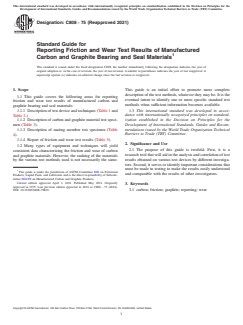
1.1 This guide covers the following areas for reporting friction and wear test results of manufactured carbon and graphite bearing and seal materials:
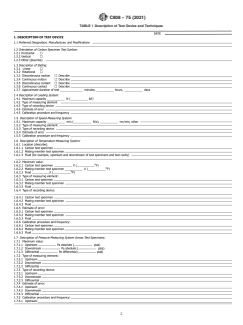
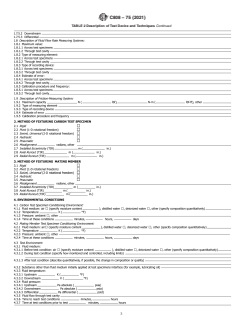
1.1.1 Description of test device and techniques (Table 1 and Table 2.)
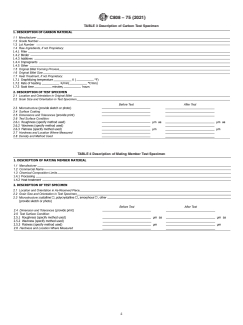
1.1.2 Description of carbon and graphite material test specimen (Table 3).
1.1.3 Description of mating member test specimen (Table 4).
1.1.4 Report of friction and wear test results (Table 5).
1.2 Many types of equipment and techniques will yield consistent data characterizing the friction and wear of carbon and graphite materials. However, the ranking of the materials by the various test methods used is not necessarily the same. This guide is an initial effort to promote more complete description of the test methods, whatever they may be. It is the eventual intent to identify one or more specific standard test methods when sufficient information becomes available.
1.3 This international standard was developed in accordance with internationally recognized principles on standardization established in the Decision on Principles for the Development of International Standards, Guides and Recommendations issued by the World Trade Organization Technical Barriers to Trade (TBT) Committee.
- Status
- Published
- Publication Date
- 31-Mar-2021
- Technical Committee
- D02 - Petroleum Products, Liquid Fuels, and Lubricants
- Drafting Committee
- D02.F0 - Manufactured Carbon and Graphite Products
Overview
ASTM C808-75(2021), Standard Guide for Reporting Friction and Wear Test Results of Manufactured Carbon and Graphite Bearing and Seal Materials, provides comprehensive guidelines for documenting and comparing the friction and wear test results of carbon and graphite materials used in bearings and seals. Developed by ASTM International, this guide is instrumental for both researchers and manufacturers, ensuring consistency and clarity in reporting test outcomes. By promoting more complete descriptions of friction and wear test methods, it supports the analysis, correlation, and understanding of material performance data among diverse stakeholders.
Key Topics
Test Device and Technique Description
The standard outlines how to detail the specifications and operational procedures of the test equipment used, emphasizing the importance of clear documentation for reproducibility and comparison.Material Test Specimen Reporting
Requirements include thoroughly describing the tested carbon and graphite materials (e.g., composition, dimensions, processing) as well as the mating member specimens.Test Results Presentation
The guide specifies how to report and present friction and wear data, including methods to ensure test results are comprehensible and readily comparable between different investigators and test methods.Consistency and Comparability
Recognizing that various equipment and techniques can yield reliable results, the guide highlights the need for standardized reporting to facilitate fair material comparison despite methodological differences.
Applications
The ASTM C808 guide holds significant value in industrial and research settings where carbon and graphite materials are used for bearings and seals, including:
Research and Development
Laboratories and R&D teams use this standard as a tool to analyze and correlate friction and wear test results from various devices, enabling meaningful comparison between data sets.Quality Assurance
Manufacturers of carbon and graphite materials apply these guidelines during product validation to ensure documentation supports product claims and meets industry expectations on material performance.Product Benchmarking and Material Selection
Engineers and technical buyers benefit from consistent test reports that support informed material selection and benchmarking against competing products.Compliance and Traceability
Following ASTM C808 facilitates compliance with international testing and reporting norms, supporting traceability and regulatory acceptance.
Related Standards
To enhance friction and wear testing and reporting practices, the following related standards may be considered:
- ASTM C695 - Standard Test Method for Compressive Strength of Carbon and Graphite Bearing Materials
- ASTM C749 - Standard Test Method for Modulus of Rupture of Carbon and Graphite
- ASTM D3702 - Standard Test Method for Wear Rate and Coefficient of Friction of Materials in Self-Lubricated Rubbing Contact
- ISO 11749 - Carbonaceous Materials Used in the Production of Aluminium - Determination of Abrasion Resistance
Conclusion
Adopting ASTM C808-75(2021) provides a structured framework for reporting the friction and wear behaviors of carbon and graphite bearings and seals. This guide fosters improved data consistency, comparability, and clarity across the industry-supporting robust research, reliable product development, and effective quality assurance practices. For anyone involved in the manufacture, testing, or evaluation of carbon and graphite materials, adherence to ASTM C808 is a best practice for assuring credible, actionable, and internationally recognized test reporting.
Get Certified
Connect with accredited certification bodies for this standard

BSMI (Bureau of Standards, Metrology and Inspection)
Taiwan's standards and inspection authority.
Sponsored listings
Frequently Asked Questions
ASTM C808-75(2021) is a guide published by ASTM International. Its full title is "Standard Guide for Reporting Friction and Wear Test Results of Manufactured Carbon and Graphite Bearing and Seal Materials". This standard covers: SIGNIFICANCE AND USE 2.1 The purpose of this guide is twofold. First, it is a research tool that will aid in the analysis and correlation of test results obtained on various test devices by different investigators. Second, it serves to identify important considerations that must be made in testing to make the results easily understood and comparable with the results of other investigators. SCOPE 1.1 This guide covers the following areas for reporting friction and wear test results of manufactured carbon and graphite bearing and seal materials: 1.1.1 Description of test device and techniques (Table 1 and Table 2.) 1.1.2 Description of carbon and graphite material test specimen (Table 3). 1.1.3 Description of mating member test specimen (Table 4). 1.1.4 Report of friction and wear test results (Table 5). 1.2 Many types of equipment and techniques will yield consistent data characterizing the friction and wear of carbon and graphite materials. However, the ranking of the materials by the various test methods used is not necessarily the same. This guide is an initial effort to promote more complete description of the test methods, whatever they may be. It is the eventual intent to identify one or more specific standard test methods when sufficient information becomes available. 1.3 This international standard was developed in accordance with internationally recognized principles on standardization established in the Decision on Principles for the Development of International Standards, Guides and Recommendations issued by the World Trade Organization Technical Barriers to Trade (TBT) Committee.
SIGNIFICANCE AND USE 2.1 The purpose of this guide is twofold. First, it is a research tool that will aid in the analysis and correlation of test results obtained on various test devices by different investigators. Second, it serves to identify important considerations that must be made in testing to make the results easily understood and comparable with the results of other investigators. SCOPE 1.1 This guide covers the following areas for reporting friction and wear test results of manufactured carbon and graphite bearing and seal materials: 1.1.1 Description of test device and techniques (Table 1 and Table 2.) 1.1.2 Description of carbon and graphite material test specimen (Table 3). 1.1.3 Description of mating member test specimen (Table 4). 1.1.4 Report of friction and wear test results (Table 5). 1.2 Many types of equipment and techniques will yield consistent data characterizing the friction and wear of carbon and graphite materials. However, the ranking of the materials by the various test methods used is not necessarily the same. This guide is an initial effort to promote more complete description of the test methods, whatever they may be. It is the eventual intent to identify one or more specific standard test methods when sufficient information becomes available. 1.3 This international standard was developed in accordance with internationally recognized principles on standardization established in the Decision on Principles for the Development of International Standards, Guides and Recommendations issued by the World Trade Organization Technical Barriers to Trade (TBT) Committee.
ASTM C808-75(2021) is classified under the following ICS (International Classification for Standards) categories: 17.040.20 - Properties of surfaces. The ICS classification helps identify the subject area and facilitates finding related standards.
ASTM C808-75(2021) is available in PDF format for immediate download after purchase. The document can be added to your cart and obtained through the secure checkout process. Digital delivery ensures instant access to the complete standard document.
Standards Content (Sample)
This international standard was developed in accordance with internationally recognized principles on standardization established in the Decision on Principles for the
Development of International Standards, Guides and Recommendations issued by the World Trade Organization Technical Barriers to Trade (TBT) Committee.
Designation: C808 − 75 (Reapproved 2021)
Standard Guide for
Reporting Friction and Wear Test Results of Manufactured
Carbon and Graphite Bearing and Seal Materials
This standard is issued under the fixed designation C808; the number immediately following the designation indicates the year of
original adoption or, in the case of revision, the year of last revision. A number in parentheses indicates the year of last reapproval. A
superscript epsilon (´) indicates an editorial change since the last revision or reapproval.
1. Scope This guide is an initial effort to promote more complete
description of the test methods, whatever they may be. It is the
1.1 This guide covers the following areas for reporting
eventual intent to identify one or more specific standard test
friction and wear test results of manufactured carbon and
methods when sufficient information becomes available.
graphite bearing and seal materials:
1.3 This international standard was developed in accor-
1.1.1 Description of test device and techniques (Table 1 and
dance with internationally recognized principles on standard-
Table 2.)
ization established in the Decision on Principles for the
1.1.2 Description of carbon and graphite material test speci-
Development of International Standards, Guides and Recom-
men (Table 3).
mendations issued by the World Trade Organization Technical
1.1.3 Description of mating member test specimen (Table
Barriers to Trade (TBT) Committee.
4).
1.1.4 Report of friction and wear test results (Table 5).
2. Significance and Use
1.2 Many types of equipment and techniques will yield
2.1 The purpose of this guide is twofold. First, it is a
consistent data characterizing the friction and wear of carbon
research tool that will aid in the analysis and correlation of test
and graphite materials. However, the ranking of the materials
results obtained on various test devices by different investiga-
by the various test methods used is not necessarily the same.
tors. Second, it serves to identify important considerations that
must be made in testing to make the results easily understood
This guide is under the jurisdiction of ASTM Committee D02 on Petroleum
and comparable with the results of other investigators.
Products, Liquid Fuels, and Lubricants and is the direct responsibil
...