

IEC TS 62898-3-5:2026
(Main)Microgrids - Part 3-5: Technical requirements - Testing for microgrid monitoring, control, and energy management systems
General Information
- Abstract
IEC TS 62898-3-5:2026 provides technical requirements for the hardware in the loop testing (HIL), commissioning testing, and periodic testing that allows the verification, and quantification of the performance of microgrid monitoring, control, and energy management systems (MMCS and MEMS). This document applies to MMCS and MEMS developed for grid-connected or isolated microgrids, or both. This document includes the following aspects:
- general technical requirements;
- hardware in the loop testing;
- commissioning testing;
- periodic testing.
- Status
- Published
- Publication Date
- 10-Jun-2026
- Technical Committee
- SC 8B - Decentralized electrical energy systems
- Drafting Committee
- WG 3 - TC 8/SC 8B/WG 3
- Current Stage
- PPUB - Publication issued
- Start Date
- 11-Jun-2026
- Completion Date
- 03-Jul-2026

Overview
IEC TS 62898-3-5:2026 is a technical specification developed by the International Electrotechnical Commission (IEC), focused on microgrids and their monitoring, control, and energy management systems (MMCS and MEMS). This standard provides comprehensive technical requirements for testing these critical systems through hardware-in-the-loop (HIL), commissioning, and periodic function tests. The document is applicable to MMCS and MEMS for both grid-connected and isolated (islanded) microgrids, supporting the verification and quantification of their performance.
Reliable MMCS and MEMS are essential for ensuring stable, efficient, and resilient operation of microgrids, especially as these systems become integral in applications such as critical infrastructure, remote communities, and renewable energy integration. Standardized testing procedures as outlined in IEC TS 62898-3-5 help manufacturers, system integrators, and operators validate major functions, minimize operational risks, and promote the adoption of interoperable solutions across the market.
Key Topics
General Technical Requirements
The specification establishes baseline requirements for the testing environment and necessary equipment documentation. A reproducible environment, proper equipment qualification, and adherence to safety and operational standards are vital for valid and effective testing.Hardware-in-the-Loop (HIL) Testing
HIL testing enables the integration of real control systems with simulated microgrid components, allowing safe and cost-effective validation of controller logic and system behavior under diverse, customizable scenarios. HIL testing is especially valuable for pre-deployment verification, as it simulates faults, disturbances, and dynamic conditions that would be risky or expensive to reproduce in real-world settings.Commissioning Testing
On-site commissioning tests evaluate the readiness and correct operation of MMCS and MEMS as installed. These tests confirm system performance metrics such as voltage deviation, harmonics, power management efficiency, and response to switching or fault events. This phase is essential to ensure the microgrid system meets its operational requirements before entering regular service.Periodic Testing
Periodic function tests verify ongoing system performance at intervals specified by the manufacturer or operator. These tests support continuous compliance, reliability, and early detection of issues, thereby extending the lifespan of microgrid assets and maintaining overall system stability.
Applications
IEC TS 62898-3-5:2026 is relevant for a broad range of stakeholders in the microgrid industry:
- Microgrid Developers and Integrators: Assists in the design, validation, and deployment of robust monitoring, control, and energy management solutions.
- System Operators and Owners: Enables ongoing assessment and optimization of microgrid functionality, especially crucial in mission-critical environments like hospitals and data centers.
- Equipment Manufacturers: Establishes a clear framework for factory acceptance testing, product validation, and regulatory compliance.
- Utilities and Regulators: Facilitates the adoption of standardized interfaces and performance benchmarks, supporting the safe and efficient integration of distributed energy resources (DERs).
- Research Institutions: Provides methodological consistency for laboratory studies and technology demonstrations involving microgrid controllers and energy management systems.
Related Standards
IEC TS 62898-3-5 aligns and interacts with other standards in the IEC 62898 microgrid series for a holistic approach to microgrid engineering:
- IEC TS 62898-3-2: Technical requirements for microgrid energy management systems (MEMS).
- IEC TS 62898-3-4: Technical requirements for microgrid monitoring and control systems (MMCS).
- IEC TS 62898-3-1 and IEC TS 62898-3-3: Cover microgrid protection, dynamic control, and dispatchable loads.
Other important references include protocols such as IEC 61850 (substation communication), IEC 60870-5-104, and industry-standard terminologies via the IEC Electropedia.
By establishing clear and repeatable procedures for HIL, commissioning, and periodic testing, IEC TS 62898-3-5:2026 strengthens microgrid system reliability, safety, and interoperability, enabling the global transition towards smarter, more resilient power systems. For up-to-date standards and related publications, visit IEC's webstore.
Get Certified
Connect with accredited certification bodies for this standard

IMQ S.p.A. (Certification)
Italian electrical product certification.

SLG Prüf- und Zertifizierungs GmbH
German testing and certification body.

UL Solutions
Global safety science company with testing, inspection and certification.
Sponsored listings
Frequently Asked Questions
IEC TS 62898-3-5:2026 is a technical specification published by the International Electrotechnical Commission (IEC). Its full title is "Microgrids - Part 3-5: Technical requirements - Testing for microgrid monitoring, control, and energy management systems". This standard covers: IEC TS 62898-3-5:2026 provides technical requirements for the hardware in the loop testing (HIL), commissioning testing, and periodic testing that allows the verification, and quantification of the performance of microgrid monitoring, control, and energy management systems (MMCS and MEMS). This document applies to MMCS and MEMS developed for grid-connected or isolated microgrids, or both. This document includes the following aspects: - general technical requirements; - hardware in the loop testing; - commissioning testing; - periodic testing.
IEC TS 62898-3-5:2026 provides technical requirements for the hardware in the loop testing (HIL), commissioning testing, and periodic testing that allows the verification, and quantification of the performance of microgrid monitoring, control, and energy management systems (MMCS and MEMS). This document applies to MMCS and MEMS developed for grid-connected or isolated microgrids, or both. This document includes the following aspects: - general technical requirements; - hardware in the loop testing; - commissioning testing; - periodic testing.
IEC TS 62898-3-5:2026 is classified under the following ICS (International Classification for Standards) categories: 29.240.01 - Power transmission and distribution networks in general. The ICS classification helps identify the subject area and facilitates finding related standards.
IEC TS 62898-3-5:2026 is available in PDF format for immediate download after purchase. The document can be added to your cart and obtained through the secure checkout process. Digital delivery ensures instant access to the complete standard document.
Standards Content (Sample)
IEC TS 62898-3-5 ®
Edition 1.0 2026-06
TECHNICAL
SPECIFICATION
Microgrids -
Part 3-5: Technical requirements - Testing for microgrid monitoring, control, and
energy management systems
ICS 29.240.01 ISBN 978-2-8327-1277-1
All rights reserved. Unless otherwise specified, no part of this publication may be reproduced or utilized in any form or
by any means, electronic or mechanical, including photocopying and microfilm, without permission in writing from either
IEC or IEC's member National Committee in the country of the requester. If you have any questions about IEC copyright
or have an enquiry about obtaining additional rights to this publication, please contact the address below or your local
IEC member National Committee for further information.
IEC Secretariat Tel.: +41 22 919 02 11
3, rue de Varembé info@iec.ch
CH-1211 Geneva 20 www.iec.ch
Switzerland
About the IEC
The International Electrotechnical Commission (IEC) is the leading global organization that prepares and publishes
International Standards for all electrical, electronic and related technologies.
About IEC publications
The technical content of IEC publications is kept under constant review by the IEC. Please make sure that you have the
latest edition, a corrigendum or an amendment might have been published.
IEC publications search - IEC Products & Services Portal - products.iec.ch
webstore.iec.ch/advsearchform Discover our powerful search engine and read freely all the
The advanced search enables to find IEC publications by a
publications previews, graphical symbols and the glossary.
variety of criteria (reference number, text, technical With a subscription you will always have access to up to date
committee, …). It also gives information on projects, content tailored to your needs.
replaced and withdrawn publications.
Electropedia - www.electropedia.org
IEC Just Published - webstore.iec.ch/justpublished The world's leading online dictionary on electrotechnology,
Stay up to date on all new IEC publications. Just Published containing more than 22 500 terminological entries in English
details all new publications released. Available online and and French, with equivalent terms in 25 additional languages.
once a month by email. Also known as the International Electrotechnical Vocabulary
(IEV) online.
IEC Customer Service Centre - webstore.iec.ch/csc
If you wish to give us your feedback on this publication or
need further assistance, please contact the Customer
Service Centre: sales@iec.ch.
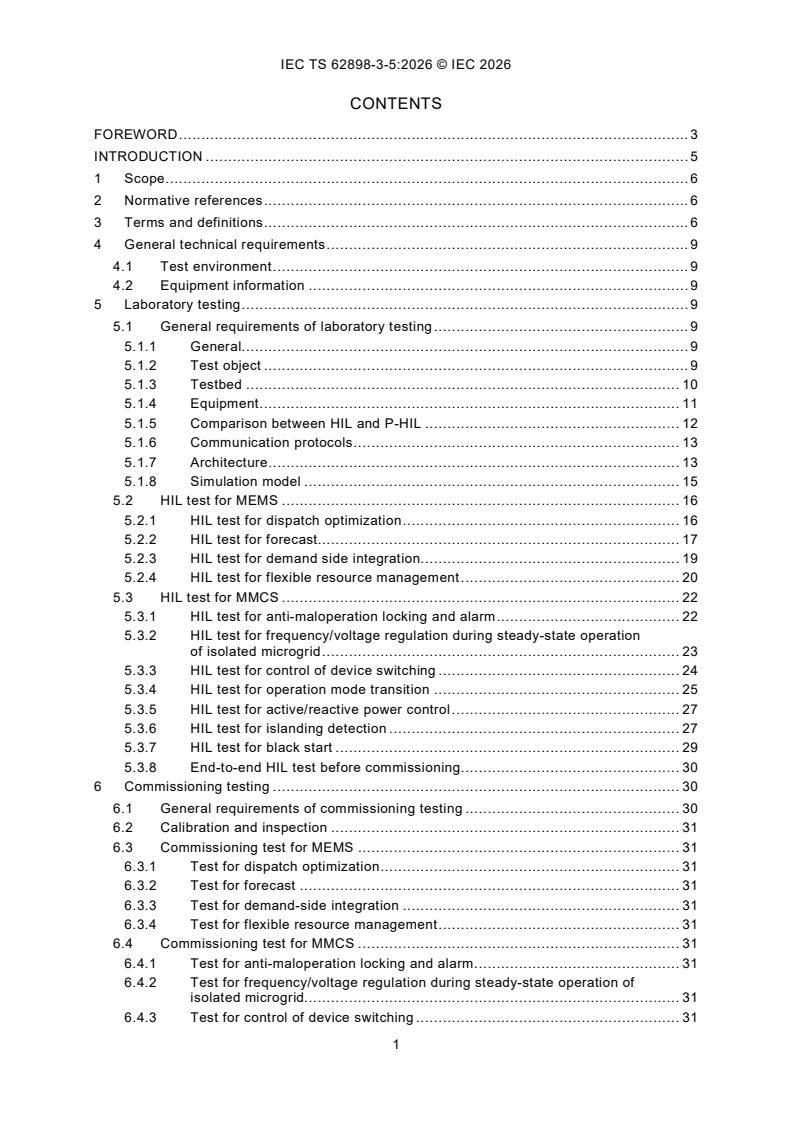
CONTENTS
FOREWORD . 3
INTRODUCTION . 5
1 Scope . 6
2 Normative references . 6
3 Terms and definitions . 6
4 General technical requirements . 9
4.1 Test environment . 9
4.2 Equipment information . 9
5 Laboratory testing . 9
5.1 General requirements of laboratory testing . 9
5.1.1 General. 9
5.1.2 Test object . 9
5.1.3 Testbed . 10
5.1.4 Equipment . 11
5.1.5 Comparison between HIL and P-HIL . 12
5.1.6 Communication protocols . 13
5.1.7 Architecture . 13
5.1.8 Simulation model . 15
5.2 HIL test for MEMS . 16
5.2.1 HIL test for dispatch optimization . 16
5.2.2 HIL test for forecast. 17
5.2.3 HIL test for demand side integration. 19
5.2.4 HIL test for flexible resource management . 20
5.3 HIL test for MMCS . 22
5.3.1 HIL test for anti-maloperation locking and alarm . 22
5.3.2 HIL test for frequency/voltage regulation during steady-state operation
of isolated microgrid . 23
5.3.3 HIL test for control of device switching . 24
5.3.4 HIL test for operation mode transition . 25
5.3.5 HIL test for active/reactive power control . 27
5.3.6 HIL test for islanding detection . 27
5.3.7 HIL test for black start . 29
5.3.8 End-to-end HIL test before commissioning . 30
6 Commissioning testing . 30
6.1 General requirements of commissioning testing . 30
6.2 Calibration and inspection . 31
6.3 Commissioning test for MEMS . 31
6.3.1 Test for dispatch optimization . 31
6.3.2 Test for forecast . 31
6.3.3 Test for demand-side integration . 31
6.3.4 Test for flexible resource management . 31
6.4 Commissioning test for MMCS . 31
6.4.1 Test for anti-maloperation locking and alarm . 31
6.4.2 Test for frequency/voltage regulation during steady-state operation of
isolated microgrid. 31
6.4.3 Test for control of device switching . 31
6.4.4 Test for operation mode transition . 31
6.4.5 Test for active/reactive power control . 32
6.4.6 Test for islanding detection . 32
6.4.7 Test for black start . 32
6.5 Periodic testing . 32
Bibliography . 33
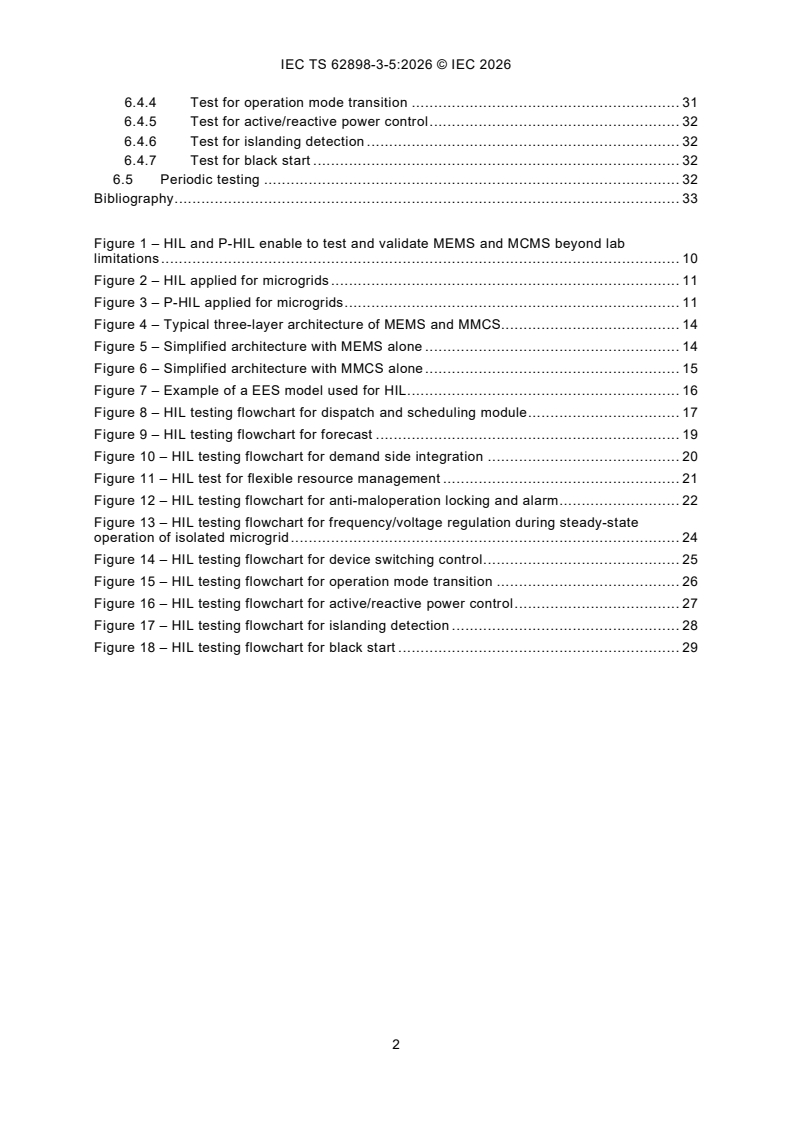
Figure 1 – HIL and P-HIL enable to test and validate MEMS and MCMS beyond lab
limitations . 10
Figure 2 – HIL applied for microgrids . 11
Figure 3 – P-HIL applied for microgrids . 11
Figure 4 – Typical three-layer architecture of MEMS and MMCS. 14
Figure 5 – Simplified architecture with MEMS alone . 14
Figure 6 – Simplified architecture with MMCS alone . 15
Figure 7 – Example of a EES model used for HIL . 16
Figure 8 – HIL testing flowchart for dispatch and scheduling module . 17
Figure 9 – HIL testing flowchart for forecast . 19
Figure 10 – HIL testing flowchart for demand side integration . 20
Figure 11 – HIL test for flexible resource management . 21
Figure 12 – HIL testing flowchart for anti-maloperation locking and alarm . 22
Figure 13 – HIL testing flowchart for frequency/voltage regulation during steady-state
operation of isolated microgrid . 24
Figure 14 – HIL testing flowchart for device switching control . 25
Figure 15 – HIL testing flowchart for operation mode transition . 26
Figure 16 – HIL testing flowchart for active/reactive power control . 27
Figure 17 – HIL testing flowchart for islanding detection . 28
Figure 18 – HIL testing flowchart for black start . 29
INTERNATIONAL ELECTROTECHNICAL COMMISSION
____________
Microgrids -
Part 3-5: Technical requirements -
Testing for microgrid monitoring, control, and energy management
systems
FOREWORD
1) The International Electrotechnical Commission (IEC) is a worldwide organization for standardization comprising
all national electrotechnical committees (IEC National Committees). The object of IEC is to promote international
co-operation on all questions concerning standardization in the electrical and electronic fields. To this end and
in addition to other activities, IEC publishes International Standards, Technical Specifications, Technical Reports,
Publicly Available Specifications (PAS) and Guides (hereafter referred to as "IEC Publication(s)"). Their
preparation is entrusted to technical committees; any IEC National Committee interested in the subject dealt with
may participate in this preparatory work. International, governmental and non-governmental organizations liaising
with the IEC also participate in this preparation. IEC collaborates closely with the International Organization for
Standardization (ISO) in accordance with conditions determined by agreement between the two organizations.
2) The formal decisions or agreements of IEC on technical matters express, as nearly as possible, an international
consensus of opinion on the relevant subjects since each technical committee has representation from all
interested IEC National Committees.
3) IEC Publications have the form of recommendations for international use and are accepted by IEC National
Committees in that sense. While all reasonable efforts are made to ensure that the technical content of IEC
Publications is accurate, IEC cannot be held responsible for the way in which they are used or for any
misinterpretation by any end user.
4) In order to promote international uniformity, IEC National Committees undertake to apply IEC Publications
transparently to the maximum extent possible in their national and regional publications. Any divergence between
any IEC Publication and the corresponding national or regional publication shall be clearly indicated in the latter.
5) IEC itself does not provide any attestation of conformity. Independent certification bodies provide conformity
assessment services and, in some areas, access to IEC marks of conformity. IEC is not responsible for any
services carried out by independent certification bodies.
6) All users should ensure that they have the latest edition of this publication.
7) No liability shall attach to IEC or its directors, employees, servants or agents including individual experts and
members of its technical committees and IEC National Committees for any personal injury, property damage or
other damage of any nature whatsoever, whether direct or indirect, or for costs (including legal fees) and
expenses arising out of the publication, use of, or reliance upon, this IEC Publication or any other IEC
Publications.
8) Attention is drawn to the Normative references cited in this publication. Use of the referenced publications is
indispensable for the correct application of this publication.
9) IEC draws attention to the possibility that the implementation of this document may involve the use of (a)
patent(s). IEC takes no position concerning the evidence, validity or applicability of any claimed patent rights in
respect thereof. As of the date of publication of this document, IEC [had/had not] received notice of (a) patent(s),
which may be required to implement this document. However, implementers are cautioned that this may not
represent the latest information, which may be obtained from the patent database available at
https://patents.iec.ch. IEC shall not be held responsible for identifying any or all such patent rights.
IEC TS 62898-3-5, which is a technical specification, has been prepared by subcommittee 8B:
Decentralized electrical energy systems, of IEC technical committee 8: System aspects of
electrical energy supply. It is a Technical Specification.
The text of this Technical Specification is based on the following documents:
Draft Report on voting
8B/277/DTS 8B/292/RVDTS
Full information on the voting for its approval can be found in the report on voting indicated in
the above table.
The language used for the development of this Technical Specification is English [change
language if necessary].
This document was drafted in accordance with ISO/IEC Directives, Part 2, and developed in
accordance with ISO/IEC Directives, Part 1 and ISO/IEC Directives, IEC Supplement, available
at www.iec.ch/members_experts/refdocs. The main document types developed by IEC are
described in greater detail at www.iec.ch/publications.
A list of all parts in the IEC 62898 series, published under the general title Microgrids, can be
found on the IEC website.
The committee has decided that the contents of this document will remain unchanged until the
stability date indicated on the IEC website under webstore.iec.ch in the data related to the
specific document. At this date, the document will be
– reconfirmed,
– withdrawn, or
– revised.
INTRODUCTION
Microgrid monitoring, control, and energy management systems (MMCS and MEMS) are
essential components of microgrid infrastructure designed to monitor, control, and optimize the
operation of a microgrid. These systems play a central role in managing distributed energy
resources (DERs), ensuring grid stability, and improving the efficiency and reliability of energy
supply within a microgrid.
The major functions of MMCS and MEMS include the control of device switching, islanding
detection, operation modes switching, active/reactive power control, black-start, anti-
maloperation locking, local power quality control, frequency/voltage regulation, tertiary control,
etc.
Microgrid systems are often deployed in critical applications, such as hospitals, data centres,
and remote communities. Providing a comprehensive testing for the MMCS and MEMS system
is critical to ensure the microgrid system's stability, even during unexpected events or
disturbances. A standardized set of testing procedures could facilitate the wide adoption of
standard MMCS and MEMS functional and performance requirements by vendors and utilities
while reducing the cost of design and construction.
The IEC 62898 series is intended to provide comprehensive guidelines and technical
requirements for microgrid projects, however, there are some standardization gaps left in this
series.
IEC TS 62898-3-1 mainly covers the requirements for microgrid protection, protection systems
for microgrids and dynamic control for transient and dynamic disturbances in microgrids.
IEC TS 62898-3-2 covers the technical requirements for microgrid energy management
systems (MEMS), but this document does not specify any testing procedures required for MEMS.
IEC TS 62898-3-3 covers the self-regulation of dispatchable loads of microgrids.
IEC TS 62898-3-4 covers the technical requirements for the monitoring and control of
microgrids, however, it does not specify any testing items or procedures for MMCS.
The IEC TS 62898-3-5 aims to provide a standardized testing procedure for MMCS and MEMS'
major functions.
This document covers the technical requirements for the hardware in the loop testing (HIL),
commissioning testing, and periodic testing that allows the verification, and quantification of the
performance of microgrid monitoring, control, and energy management systems.
The HIL test aims to verify the performance of MMCS and MEMS major functions and provide
a set of metrics to quantify the minimum requirements of different functions. This test requires
the interaction between both systems and the real-time simulation environment. HIL testing is
recommended for MW level or larger microgrids.
The commissioning test provides the performance evaluation of both systems' major functions
on-site. This test will be conducted after MMCS and MEMS are installed and ready for operation.
Certain testing items will show actual performances of the MMCS and MEMS such as voltage
deviation, harmonics, step power response, voltage/current evolution, power management
efficiency, etc.
The periodic function test is set to verify certain functions' performance after a certain time of
operation. The test interval is specified by the manufacturer, system integrator, or microgrid
owner.
1 Scope
This part of IEC 62898, which is a Technical Specification, provides technical requirements for
the hardware in the loop testing (HIL), commissioning testing, and periodic testing that allows
the verification, and quantification of the performance of microgrid monitoring, control, and
energy management systems (MMCS and MEMS). This document applies to MMCS and MEMS
developed for grid-connected or isolated microgrids, or both.
This document includes the following aspects:
– general technical requirements;
– hardware in the loop testing;
– commissioning testing;
– periodic testing.
2 Normative references
The following documents are referred to in the text in such a way that some or all of their content
constitutes requirements of this document. For dated references, only the edition cited applies.
For undated references, the latest edition of the referenced document (including any
amendments) applies.
IEC TS 62898-3-2, Microgrids - Part 3-2: Technical requirements - Energy management
systems
IEC TS 62898-3-4, Microgrids - Part 3-4: Technical requirements - Microgrid monitoring and
control systems
3 Terms and definitions
For the purposes of this document, the following terms and definitions apply.
ISO and IEC maintain terminology databases for use in standardization at the following
addresses:
– IEC Electropedia: available at https://www.electropedia.org/
– ISO Online browsing platform: available at https://www.iso.org/obp
3.1
microgrid
group of interconnected loads and distributed energy resources
with defined electrical boundaries forming a local electric power system at distribution voltage
levels, that acts as a single controllable entity and is able to operate in island mode, no matter
if it is standalone or grid-connected
Note 1 to entry: This definition covers both (utility) distribution microgrids and (customer owned) facility microgrids.
[SOURCE: IEC 60050-617:2017 [30], 617-04-22, modified – "either grid-connected or island
mode" has been changed to " in island mode, no matter if it is standalone or grid-connected"]
3.2
microgrid monitoring and control system
MMCS
computer or PLC based system performing real time monitoring and control of microgrid
Note 1 to entry: In a large grid or large microgrid, such a system is also designated by PMS (power monitoring
system).
3.3
microgrid energy management system
MEMS
system operating and controlling energy resources and loads of the microgrid
[SOURCE: IEC 60050-617:2018 [30], 617-04-25]
3.4
distributed energy resources, pl.
DER, pl.
generators (with their auxiliaries, protection and connection equipment), including loads having
a generating mode (such as electrical energy storage systems), connected to a low-voltage or
a medium-voltage network
[SOURCE: IEC 60050-617:2017 [30], 617-04-20]
3.5
renewable energy resource
RES
non-fossil energy resource such as wind, solar, hydropower, biomass, geothermal, etc
3.6
low voltage
LV
set of voltage levels used for the distribution of electricity and whose upper limit is generally
accepted to be 1 000 V for alternating current
[SOURCE: IEC 60050-601:1985 [31], 601-01-26]
3.7
medium voltage
MV
any set of voltage levels lying between low and high voltage
Note 1 to entry: The boundaries between medium- and high-voltage levels overlap and depend on local
circumstances and history or common usage. Nevertheless, the band 30 kV to 100 kV frequently contains the
accepted boundary.
[SOURCE: IEC 60050-601:1985 [31], 601-01-28]
3.8
point of connection
POC
reference point on the electric power system where the user's electrical facility is connected
[SOURCE: IEC 60050-617:2009 [30], 617-04-01]
3.9
power conversion system
PCS
device that can control the charging and discharging process of a battery storage system, and
carry out AC-DC conversion
3.10
state of charge
SOC
available capacity in a battery pack or system expressed as a percentage of rated capacity
[SOURCE: ISO 12405-4:2018 [32], 3.20]
3.11
hardware in the loop simulation
HIL
hardware in the loop testing provides real time simulation for MMCS and MEMS
3.12
commissioning test
test on an item carried out on site, to prove that it is correctly installed and can operate correctly
[SOURCE: IEC 60050-411:1996 [38], 411-53-06, modified – “a machine or equipment” has been
replaced with “an item” and “the correctness of installation and operation” has been replaced
with “that it is correctly installed and can operate correctly”.]
3.13
periodic test
periodic function test that is set to verify certain functions' performance after a certain time of
operation
3.14
generator set
GENSET
combination of an engine and electrical generator used to produce electrical power, typically as
a backup or portable source of power
3.15
photovoltaic cell
PV
device in which the photovoltaic effect is utilized
[SOURCE: IEC 60050-521:2002 [32], 521-04-34]
3.16
electrical energy storage system
EES system
grid-connected installation with defined electrical boundaries, which can include civil
engineering works, energy conversion equipment and related ancillary equipment, comprising
at least one electrical energy storage, which extracts electrical energy from an electric power
system, stores this energy internally in some manner and injects electrical energy into an
electric power system
Note 1 to entry: The EES system is controlled and coordinated to provide services to the electric power system
operators and to the electric power system users.
Note 2 to entry: In some cases, an EES system can require an additional energy source (non-electrical) during its
discharge, providing more energy to the electric power system than the energy it stored (compressed air energy
storage is a typical example where additional thermal energy is required).
[SOURCE: IEC 60050-631:2023 [34], 631-01-02]
3.17
battery energy storage system
BESS
electrical energy storage system with an accumulation subsystem based on batteries fitted with
secondary cells
Note 1 to entry: Battery energy storage systems include flow battery energy systems.
[SOURCE: IEC 60050-631:2023 [34], 631-01-03]
3.18
flywheel energy storage system
FESS
electrical energy storage system with an accumulation subsystem based on kinetic energy
stored in a rotating mass (flywheel)
Note 1 to entry: Flywheel energy storage systems store energy mechanically by accelerating a rotor (flywheel) to a
high speed and maintaining the energy in the system as rotational energy. When energy is needed, the rotational
energy is converted back into electrical energy.
Note 2 to entry: Flywheel systems typically include a motor-generator unit, power electronics, vacuum enclosure,
and magnetic or mechanical bearings.
3.19
maximum power point tracking
MPPT
maximum power point of the PV array control strategy whereby the power conditioner input
voltage is always at or near the maximum power point of the PV array
[SOURCE: IEC 61683:1999 [35], 3.8, modified – “maximum power point of the PV array” has
been added.]
4 General technical requirements
4.1 Test environment
The test environment shall be maintained within an acceptable range of environmental
conditions specified by the microgrid designer. If the environment conditions are out of the
specified range, the test shall be terminated and restart after the adjustment of the test
environment. Each test shall be carried out in a reproducible environment, in which other tests
have not created bias or noise.
The testing environment is defined as ranging from a fully simulated environment to a field
installed equipment. An acceptable simulation environment to test MMCS and MEMS is
composed of each component of the microgrid which can be simulated with a HIL approach or
with field installed equipment.
4.2 Equipment information
Microgrid designers shall provide technical documents for every relevant device and equipment
and connection requirements necessary to conduct the tests. These documents shall include
functional state diagrams, API specifications and connection requirements (if applicable). Any
specific requisites, such as the need for shielded cables or specialized cables, maximum cable
length, filter usage, and proper grounding connections, shall be clearly outlined.
Designers shall supply any supplementary devices or equipment essential for test procedures.
Given that a microgrid comprises multiple equipment units, each unit shall be accompanied by
relevant technical documentation, such as qualification records, safety certifications, type test
reports, and production test reports.
5 Laboratory testing
5.1 General requirements of laboratory testing
5.1.1 General
The test can be performed with pure lab equipment, HIL or a combination of both. HIL testing
is generally used for pre-deployment validation of products. Prior to the deployment of MMCS
and MEMS, HIL testing can simulate diverse grid conditions (such as faults, sudden load
changes, etc.) through real-time simulation to validate the response logic and performance of
controllers, protection devices, and power electronic equipment in advance. The simulator
enables real-time parameter adjustments and emulation of unexpected events, allowing
observation of the microgrid's dynamic response to mitigate operational risks in practical
scenarios. By conducting closed-loop testing in laboratory environments, HIL eliminates the
high risks and costs associated with on-site commissioning. HIL is used in combination with
real test in a laboratory for factory acceptance tests (FATs).
5.1.2 Test object
Microgrid control consists of two key components, with requirements described in
IEC TS 62898-3-4 and in IEC TS 62898-3-2. The control devices shall communicate and
exchange information as specified in IEC TS 62898-3-2 and IEC TS 62898-3-4.
5.1.3 Testbed
To develop these control systems, algorithms shall be first simulated and then implemented
into the control layers. A microgrid lab with real DER is mandatory to test and validate the full
control system. However, some devices can be fully simulated, partially simulated (e.g. only a
DER controller physically present) or fully physical (e.g. the microgrid controller or the entire
DER being tested).
A microgrid lab shall include:
– DER such as GENSET, PV, wind turbine, EES and flexible loads, physical or simulated;
– capacitor banks, fixed loads with active/reactive power, and non-linear loads, physical or
simulated;
– devices causing inrush currents (motors, transformers, etc.), physical or simulated;
– low voltage or medium voltage grid for system dynamics, physical or simulated;
– protective relays, physical or simulated;
– a physical communication network;
– a disconnection system to test resilience, using physical setup or simulation;
– real MMCS and MEMS control layers for validation.
MMCS and MEMS should be fully tested in the lab before commissioning. However, the lab can
lack all necessary DER, loads, and scenarios encountered throughout a microgrid's lifespan.
Conducting comprehensive multi-event combinations and automatic non-regression tests in a
single lab can be costly and challenging.
HIL or P-HIL, or both, enable virtual extension of the lab to simulate a wide range of DER,
induce failure conditions, and develop digital twins of customer microgrid setups. However, HIL
alone is not enough. Real lab conditions are needed to fine-tune models before using HIL or P-
HIL. DER manufacturers validate and test models during type tests, which can then be used for
creating microgrid digital twins.
HIL and P-HIL provide the following capabilities:
– integration of DER which are either unavailable or available in limited quantities in the lab;
– execution of automated tests with various event combinations to validate system
robustness;
– pre-commissioning testing to enhance quality and reduce commissioning time.
The complementary of lab, HIL and P-HIL is depicted in Figure 1:
NOTE On the left, pure lab testing. On the right lab testing combined with simulated DER (HIL or P-HIL, or both).
Figure 1 – HIL and P-HIL enable to test and validate MEMS and MCMS beyond lab
limitations
5.1.4 Equipment
HIL for microgrids involves connecting a real control system to a simulation of each component
of the microgrid, including real communication protocols, enabling full system testing in real
time. This technique has been widely used in engineering fields such as robotics, power
electronics, and automotive systems. HIL simulation is used for the development and testing of
complex real-time embedded systems incorporating electrical emulation of sensors and
actuators. This principle is described in Figure 2.
Figure 2 – HIL applied for microgrids
P-HIL extends the HIL concept by incorporating power in the loop, allowing physical testing of
electrical devices such as GENSET, BESS, and loads. As shown in Figure 3, the control system
and BESS, along with the communication protocol, are real, while the rest of the microgrid is
simulated. The interface between the real DER and simulated assets is managed through
closed-loop power amplifier.
Figure 3 – P-HIL applied for microgrids
In P-HIL, real DER can be emulated using DC or AC banks that replicate the behaviour of a PV
plant, GENSET, or the main electrical grid. The validation of microgrid control systems can
leverage P-HIL simulation, given that the accuracy of the models is sufficient. This approach
involves interconnecting real system components with simulated ones, enabling real-time
simulation, as the simulated components shall exhibit the same temporal behaviour as their real
counterparts.
While P-HIL cannot replace a real microgrid lab since real measurements are essential, it
enhances the lab's capabilities by accommodating a larger variety of DER, more complex grid
configurations, and transient events, such as grid frequency variations and voltage
surges/drops. This technology is crucial for validating solutions on a wider range of scenarios.
5.1.5 Comparison between HIL and P-HIL
HIL simulation involves connecting a real controller to a simulated environment that runs in real
time. The power system is modeled in software, while the controller hardware operates as it
would in a real-world scenario.
Advantages of HIL simulation include:
– Safety: No real power is involved, making it safe for testing edge cases and fault conditions.
– Cost-effective: Eliminates the need for physical power components, reducing setup and
operational costs.
– Repeatability: Scenarios can be precisely replicated for debugging and validation.
– Scalability: Easy to simulate large or complex systems without physical constraints.
Disadvantages of HIL simulation include:
– Lack of physical dynamics: Cannot capture real-world electrical phenomena like harmonics,
switching transients, or electromagnetic interference.
– Limited realism: The absence of actual power hardware can lead to oversimplified
assumptions.
– Interface constraints: Requires accurate modeling of I/O interfaces, which can introduce
errors if not properly configured.
P-HIL extends HIL by incorporating real power hardware into the loop. A power interface
(amplifier) connects the simulated environment to physical power components, such as
inverters or loads.
Advantages of P-HIL simulation include:
– High fidelity: Captures real electrical behavior, including non-linearities and dynamic
responses.
– Validation of power interfaces: Enables testing of power electronics and their interaction
with the controller.
– Real-world insights: Provides a more accurate representation of how the controller will
perform in the field.
Disadvantages of P-HIL simulation include:
– Complexity: Requires careful synchronization between simulation and hardware to avoid
instability.
– Cost and infrastructure: Involves expensive power amplifiers and safety measures.
– Risk: Potential for hardware damage if faults are not properly managed.
– Latency and stability: Time delays in the power interface can affect accuracy and system
stability.
The choice between HIL and P-HIL depends on the testing objectives (see Table 1):
Table 1 – Testing objectives
Objective Recommended method
Algorithm development and debugging HIL
Controller validation under fault conditions HIL
Testing power electronics and real-world dynamics P-HIL
Final-stage validation before deployment P-HIL
Both HIL and P-HIL play essential roles in the development and validation of microgrid
controllers. HIL offers a safe, flexible, and cost-effective environment for early-stage testing,
while P-HIL provides the realism needed for final validation. A hybrid approach, leveraging the
strengths of both methods, often yields the most comprehensive testing strategy.
5.1.6 Communication protocols
The communication media used in HIL testing includes fibre optic, twisted wires, and wireless
connections. The communication protocols outlined below can be applied to these media.
The HIL model supports data communication with MEMS and MMCS based on actual
configurations, using commonly implemented protocols such as IEC 60870-5-104 [25] ,
Modbus TCP, MQTT, OPC UA and IEC 61850 series [29], or other hardware interface
communication.
– IEC 60870-5-104 [25] defines a TCP/IP-based communication protocol used for data
exchange between control centres and devices, designed to provide efficient, reliable, and
real-time data transmission.
– Modbus TCP is a TCP/IP-based protocol that uses ASCII or binary encoding, offering fast,
simple, and reliable communication for local area networks or the Internet.
– The IEC 61850 series [29] is an international communication standard protocol that
achieves station-wide communication uniformity through a series of standardizations of
device functions. Widely used in the power industry, the IEC 61850 series [29] puts forward
the concept of information layering in the substation, both from the logical and physical
levels.
Common data exchanged in microgrid HIL testing includes:
– Telemetry data such as real-time active/reactive power, voltage/current RMS values for PV,
wind turbines, ESS, POC of microgrid, loads, etc.
– Telecontrol signals such as startup/shutdown status of DER, and the switching status of
POC and load breakers.
– Tele-adjustment commands such as active/reactive power setpoints of PV, wind turbines,
ESS, etc.
– Telecontrol commands such as startup/shutdown commands of DER and switching
commands for POC and load breakers.
5.1.7 Architecture
In accordance with IEC 62898-3-2 and IEC 62898-3-4, the typical microgrid architecture
incorporating MEMS and MMCS is shown in Figure 4. Within this architecture, the MMCS
exchanges data with MEMS in the microgrid. The MMCS monitors device data, ensuring that
parameters remain within predefined operating limits, and sends information to the MEMS. The
MEMS, in turn, sends operational commands to the MMCS which executes these orders by
controlling switches, DER and loads in the microgrid.
For a small, user-side microgrid, the MEMS and MMCS are often merged into a single
embedded device, known as the microgrid controller, which operates as a system-on-chip.
___________
Numbers in square brackets refer to the Bibliography.
Figure 4 – Typical three-layer architecture of MEMS and MMCS
Since the HIL test functions independently of commands from the dispatch centre, the system
architecture can be simplified by omitting the distribution dispatching system. Additionally,
certain MMCS functions can be tested alone without MEMS, and likewise, MEMS functions can
be tested without MMCS. However, an acceptable function test needs an exhaustive
representation of the microgrid device or equipment on the simulation environment to prevent
missing or conflict behaviour. The simplified architecture of MEMS integrated with the HIL
system is shown in Figure 5, and MMCS in Figure 6. This allows for direct integration of MEMS
with the HIL system, streamlining the testing process and optimizing efficiency.
Figure 5 – Simplified architecture with MEMS alone
Figure 6 – Simplified architecture with MMCS alone
5.1.8 Simulation model
5.1.8.1 General
The key factor for HIL testing is accurate models. DER models are typically provided by the
manufacturers as "black box" to protect intellectual property. DER, load, network models can
be built from a communication and machine-state specification provided by the manufacturers
or using generic models which are fine-tuned with real measurements.
The simulation model can be structured in three layers:
5.1.8.2 Communication model
This layer simulates how DER and load can be access by the microgrid controller. It should
take account of the protocol and physical link and covers not only monitoring and control signals
but also the performance of the communication system, including factors like communication
latency.
5.1.8.3 State machine model
This model defines the state machine that governs the operational behaviour of DER and load,
such as start-up sequence, shutdown sequence, mode transition, etc.
5.1.8.4 Electrical model
This layer simulates the electrical behaviour of DER and load. It can be built based on the
IEC 62786 series [36], EN 50549-10 [14], IEEE 1547-2018 [15], etc. For converter-based
generating units used in power dynamic analysis, the model can follow the guidelines outlined
in IEC 63406 . An example of an EES model used for HIL is provided in Figure 7.
___________
Under development.
Figure 7 – Example of a EES model used for HIL
5.2 HIL test for MEMS
5.2.1 HIL test for dispatch optimization
5.2.1.1 General
This test shall verify that the MEMS can minimize economic costs based on the remote dispatch
plans, power generation and load forecasting data, and real-time operational data in a HIL
environment. The initial condition and test procedure shall meet the following requirements.
5.2.1.2 Initial condition
– Enable the HIL model to follow the commands from MEMS.
– Close the POC breaker and let the microgrid operate in grid-connected mode.
– Start the EES (if applicable) in PQ mode.
– Start the PV and wind turbines (if applicable).
– Set the simulated grid price to various tariff scenarios.
5.2.1.3 Test procedure
a) Record the initial condition data (e.g. DER power, load power, POC power, ESS power,
electricity prices).
b) Verify that MEMS generates optimization scheduling curves and expected economic profits
automatically (day-ahead, intraday, real-time) and issues control commands at set intervals
(e.g. 15 min).
c) Verify that MEMS collects and stores actual operating data, including real-time power, actual
economic benefits, etc. Compare the data with expected values and record power response
deviations, response time, and benefit deviations, etc.
d) Adjust conditions such as the price curve, load curve, and generation curve in HIL, and the
above testing procedures shall be repeated.
The flowchart for HIL testing of dispatch and scheduling function is shown in Figure 8.
Figure 8 – HIL testing flowchart for dispatch and scheduling module
5.2.1.4 Evaluate results
– Observe whether the MEMS can utilize the recorded data to calculate the deviation of
command response, optimization scheduling target values, and the optimization scheduling
commands for each control moment.
– The test shall be considered unsuccessful if the deviation between the expected economic
profits and actual values exceeds the range set by microgrid operators or relevant grid code,
or if the optimization scheduling curves do not generate.
– The above evaluation shall be carried out for the results of each repeated test.
– If all the above data meet the indicators, the test shall pass
...