


ISO/IEC 13560:2009
(Main)Information technology — Telecommunications and information exchange between systems — Procedure for the registration of assigned numbers for ISO/IEC 26907 and ISO/IEC 26908
Information technology — Telecommunications and information exchange between systems — Procedure for the registration of assigned numbers for ISO/IEC 26907 and ISO/IEC 26908
ISO/IEC 13560:2009 specifies the procedure to be followed by a Registration Authority in preparing, maintaining and publishing International Registers used in ISO/IEC 26907 and ISO/IEC 26908. It does not specify any method of using any attribute or identifier registered according to ISO/IEC 13560:2009.
Technologies de l'information — Procédure d'enregistrement des numéros d'ordre pour l'ISO/CEI 26907 et l'ISO/CEI 26908
General Information
- Status
- Published
- Publication Date
- 25-Nov-2009
- Current Stage
- 9060 - Close of review
- Completion Date
- 04-Mar-2031
Overview
ISO/IEC 13560:2009 defines the procedure for registration of assigned numbers used with ISO/IEC 26907 and ISO/IEC 26908. It prescribes how a designated Registration Authority (RA) prepares, maintains and publishes International Registers of assigned values (but does not specify how those identifiers are used). The registers support identifiers for high-rate ultra‑wideband (UWB) PHY/MAC implementations and related regulatory domains.
Key topics and requirements
- Scope: Procedure for maintaining International Registers of assigned numbers and associated descriptive strings for use with ISO/IEC 26907 (high‑rate UWB PHY/MAC) and ISO/IEC 26908 (MAC–PHY interface).
- Registers defined:
- PHY ID - one octet identifying a specific PHY implementation; requestors supply a unique descriptive string for registration.
- Specifier ID - two octets identifying the owner/specifier; requestors supply a unique descriptive string.
- Regulatory Domain Number - identifies regulatory domains; the RA maintains unique strings as regulations change.
- Registration Authority duties:
- Appointed per ISO/IEC JTC 1 Directives.
- Maintain registers for registration, withdrawal and amendment events.
- Publish public register contents at no cost (e.g., via the ECMA/ISO web resources).
- Notify requestors of decisions.
- Procedures and timelines:
- Registration requests submitted via specified forms; RA reviews, requests corrections if needed, and approves or rejects.
- Decision notification within 15 business days for registrations; appeals handled with ITTF cooperation within 20 business days.
- Withdrawal: requestor may mark entry withdrawn; the entry remains in the register but is flagged with withdrawal date.
- Amendment: corrections permitted for confirmed mistakes or name changes; RA may periodically validate entries.
Applications and who uses it
- Device manufacturers and implementers of ISO/IEC 26907 and ISO/IEC 26908 (UWB PHY/MAC and MAC‑PHY interfaces) who need unique identifiers for PHY implementations or specifiers.
- Registration Authorities and standards administrators managing identifier allocations and public registers.
- Regulatory bodies tracking regulatory domain identifiers and changes.
- Test labs, system integrators, and network engineers requiring authoritative mappings between assigned numbers and descriptive strings for interoperability testing, compliance and documentation.
Related standards
- ISO/IEC 26907:2009 - High‑rate ultra‑wideband PHY and MAC standard
- ISO/IEC 26908:2009 - MAC‑PHY interface for ISO/IEC 26907
- ISO/IEC JTC 1 Directives - rules for appointment and operation of Registration Authorities
Keywords: ISO/IEC 13560:2009, registration of assigned numbers, Registration Authority, PHY ID, Specifier ID, Regulatory Domain, International Registers, ISO/IEC 26907, ISO/IEC 26908, UWB, telecommunications standards.
Get Certified
Connect with accredited certification bodies for this standard

BSI Group
BSI (British Standards Institution) is the business standards company that helps organizations make excellence a habit.

NYCE
Mexican standards and certification body.
Sponsored listings
Frequently Asked Questions
ISO/IEC 13560:2009 is a standard published by the International Organization for Standardization (ISO). Its full title is "Information technology — Telecommunications and information exchange between systems — Procedure for the registration of assigned numbers for ISO/IEC 26907 and ISO/IEC 26908". This standard covers: ISO/IEC 13560:2009 specifies the procedure to be followed by a Registration Authority in preparing, maintaining and publishing International Registers used in ISO/IEC 26907 and ISO/IEC 26908. It does not specify any method of using any attribute or identifier registered according to ISO/IEC 13560:2009.
ISO/IEC 13560:2009 specifies the procedure to be followed by a Registration Authority in preparing, maintaining and publishing International Registers used in ISO/IEC 26907 and ISO/IEC 26908. It does not specify any method of using any attribute or identifier registered according to ISO/IEC 13560:2009.
ISO/IEC 13560:2009 is classified under the following ICS (International Classification for Standards) categories: 35.110 - Networking. The ICS classification helps identify the subject area and facilitates finding related standards.
ISO/IEC 13560:2009 is available in PDF format for immediate download after purchase. The document can be added to your cart and obtained through the secure checkout process. Digital delivery ensures instant access to the complete standard document.
Standards Content (Sample)
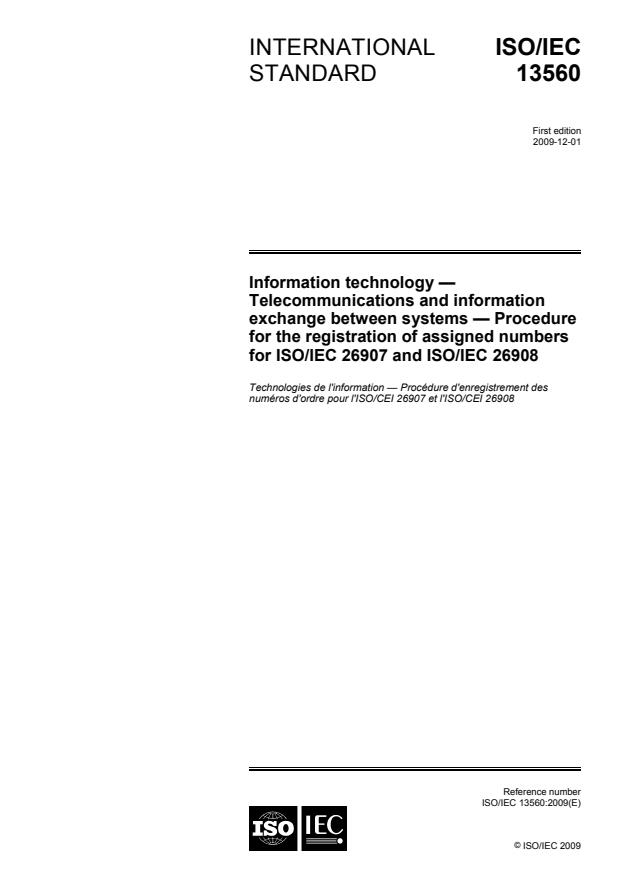
INTERNATIONAL ISO/IEC
STANDARD 13560
First edition
2009-12-01
Information technology —
Telecommunications and information
exchange between systems — Procedure
for the registration of assigned numbers
for ISO/IEC 26907 and ISO/IEC 26908
Technologies de l'information — Procédure d'enregistrement des
numéros d'ordre pour l'ISO/CEI 26907 et l'ISO/CEI 26908
Reference number
©
ISO/IEC 2009
PDF disclaimer
This PDF file may contain embedded typefaces. In accordance with Adobe's licensing policy, this file may be printed or viewed but
shall not be edited unless the typefaces which are embedded are licensed to and installed on the computer performing the editing. In
downloading this file, parties accept therein the responsibility of not infringing Adobe's licensing policy. The ISO Central Secretariat
accepts no liability in this area.
Adobe is a trademark of Adobe Systems Incorporated.
Details of the software products used to create this PDF file can be found in the General Info relative to the file; the PDF-creation
parameters were optimized for printing. Every care has been taken to ensure that the file is suitable for use by ISO member bodies. In
the unlikely event that a problem relating to it is found, please inform the Central Secretariat at the address given below.
© ISO/IEC 2009
All rights reserved. Unless otherwise specified, no part of this publication may be reproduced or utilized in any form or by any means,
electronic or mechanical, including photocopying and microfilm, without permission in writing from either ISO at the address below or
ISO's member body in the country of the requester.
ISO copyright office
Case postale 56 • CH-1211 Geneva 20
Tel. + 41 22 749 01 11
Fax + 41 22 749 09 47
E-mail copyright@iso.org
Web www.iso.org
Published in Switzerland
ii © ISO/IEC 2009 – All rights reserved
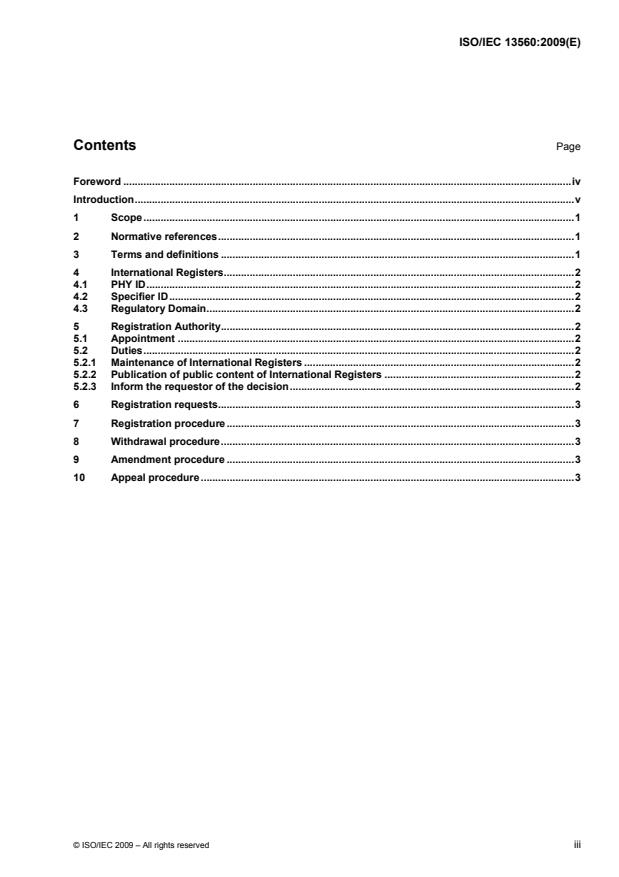
Contents Page
Foreword .iv
Introduction.v
1 Scope.1
2 Normative references.1
3 Terms and definitions .1
4 International Registers.2
4.1 PHY ID.2
4.2 Specifier ID.2
4.3 Regulatory Domain.2
5 Registration Authority.2
5.1 Appointment .2
5.2 Duties.2
5.2.1 Maintenance of International Registers .2
5.2.2 Publication of public content of International Registers .2
5.2.3 Inform the requestor of the decision.2
6 Registration requests.3
7 Registration procedure.3
8 Withdrawal procedure.3
9 Amendment procedure .3
10 Appeal procedure .3
© ISO/IEC 2009 – All rights reserved iii
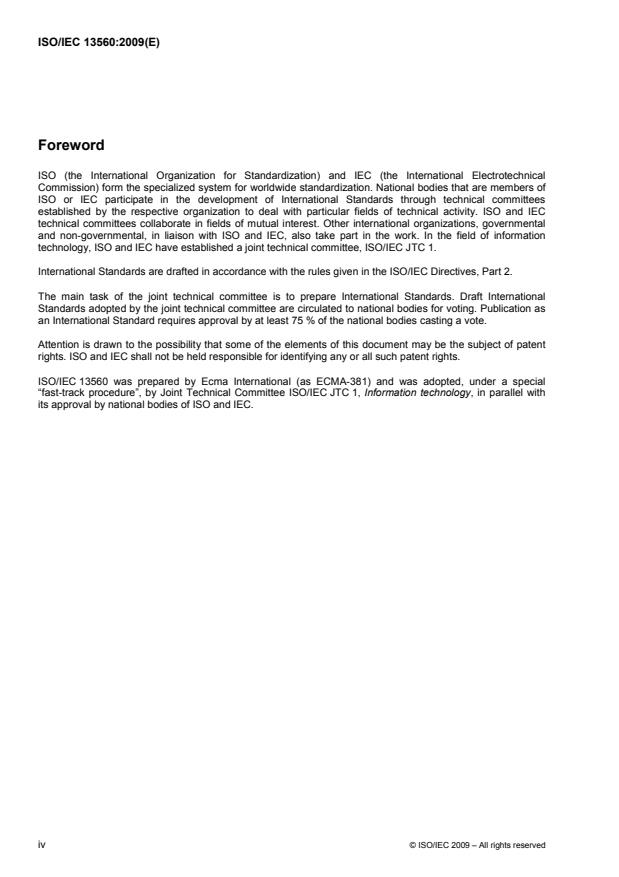
Foreword
ISO (the International Organization for Standardization) and IEC (the International Electrotechnical
Commission) form the specialized system for worldwide standardization. National bodies that are members of
ISO or IEC participate in the development of International Standards through technical committees
established by the respective organization to deal with particular fields of technical activity. ISO and IEC
technical committees collaborate in fields of mutual interest. Other international organizations, governmental
and non-governmental, in liaison with ISO and IEC, also take part in the work. In the field of information
technology, ISO and IEC have established a joint technical committee, ISO/IEC JTC 1.
International Standards are drafted in accordance with the rules given in the ISO/IEC Directives, Part 2.
The main task of the joint technical committee is to prepare International Standards. Draft International
Standards adopted by the joint technical committee are circulated to national bodies for voting. Publication as
an International Standard requires approval by at least 75 % of the national bodies casting a vote.
Attention is drawn to the possibility that some of the elements of this document may be the subject of patent
rights. ISO and IEC shall not be held responsible for identifying any or all such patent rights.
ISO/IEC 13560 was prepared by Ecma International (as ECMA-381) and was adopted, under a special
“fast-track procedure”, by Joint Technical Committee ISO/IEC JTC 1, Information technology, in parallel with
its approval by national bodies o
...
Questions, Comments and Discussion
Ask us and Technical Secretary will try to provide an answer. You can facilitate discussion about the standard in here.
Loading comments...